- Product Description Description
- Table of Contents TOC
- List of Table & Figure LOT
- Get Free Sample PDF Sample PDF
Market Size, 2025
$10.14 BnMarket Estimate, 2026
$10.77 BnMarket Forecast, 2034
$17.43 BnCAGR, 2026–2034
6.2%Executive Summary: Global Advanced Infusion Systems Market Analysis & Growth Forecast (2026-2034)
- Market Scope: Comprehensive global industry analysis covering product categories, clinical application domains, end-user settings, regional growth frameworks, and core market demand drivers.
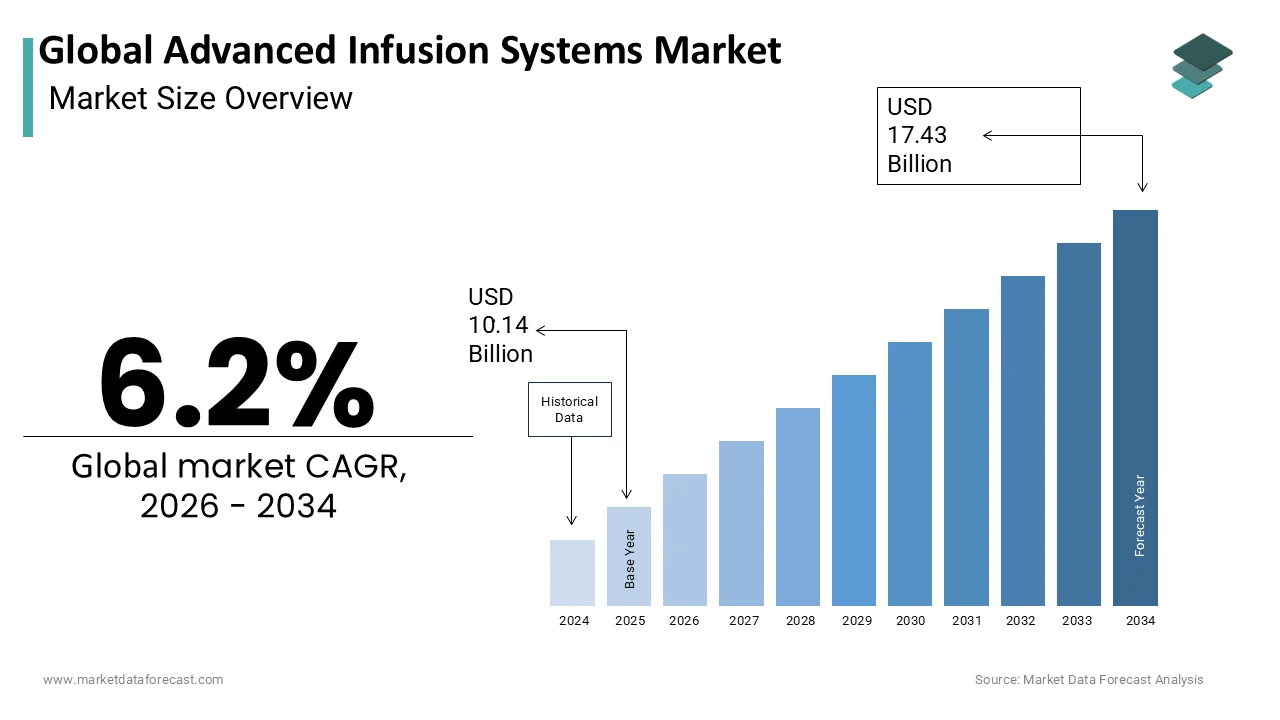
- Market Valuation: Valued at USD 10.14 billion in 2025, estimated at USD 10.77 billion in 2026, and projected to reach USD 17.43 billion by 2034, registering a steady CAGR of 6.2% from 2026 to 2034.
- Primary Growth Drivers: Escalating global prevalence of chronic diseases (diabetes, cancer, etc.), increasing healthcare spending and government R&D support, and the therapeutic benefits of enhanced safety, bioavailability, and precision delivery.
Key Global Advanced Infusion Systems Market Segment Metrics (2026-2034)
| Category | Leading Segment (2025 Position) | Fastest-Growing / High-Impact Segment |
|---|---|---|
| By Application Type | Diabetes (expected to dominate due to high global patient volume and rising insulin pump demand in home care) | Chemotherapy (contributes significant revenue share driven by cancer prevalence and emerging market adoption) |
| By Product Type | Ambulatory & Volumetric Infusion Systems (widely adopted for chronic disease management and precise acute care) | Disposable & Targeted Infusion Kits (growing rapidly alongside outpatient and home care shifts) |
| By End-Users | Hospitals and Ambulatory Surgical Centers (contribute the largest share backed by advanced equipment availability and trained professionals) | Home Care Settings (expanding rapidly due to patient preference and portable device innovations) |
| By Region | North America (commanded the largest share at 48.7% supported by well-established healthcare infrastructure and high chronic disease incidence) | Asia-Pacific (projected to offer substantial growth opportunities led by China and India's vast patient populations and rising healthcare access) |
Major Global Advanced Infusion Systems Market Players & Industry Structure
Market Structure: Highly competitive global marketplace featuring leading multinational medical technology corporations focusing on strategic partnerships, distribution expansions, and advanced safety features.
Key Companies: Hospira, Inc. (Pfizer Inc.), AngioDynamics, Inc., Medtronic, Inc., Terumo Corporation, Johnson & Johnson, CareFusion Corporation (BD), Animas Corporation, Baxter International, Inc., B. Braun Melsungen AG, I-Flow Corporation, and F. Hoffmann-La Roche Ltd.
 Download Free Sample Report
Global Advanced Infusion Systems Market Size
The Global Advanced Infusion Systems Market is projected to grow from USD 10.14 billion in 2025 to USD 10.77 billion in 2026 and reach USD 17.43 billion by 2034, registering a CAGR of 6.2% during the forecast period from 2026 to 2034.
The advanced infusion systems are medical devices designed to deliver fluids, medications,s and nutrients into the human body with high precision, safety, ety and automation capabilities. These systems include smart infusion pumps, closed-loop delivery mechanisms, and integrated software solutions that minimize human error in clinical settings. According to the Institute for Safe Medication Practices, medication errors affect at least 1.5 million people annually in the United States alone,e with incorrect dosing being a primary contributor, driving the urgent adoption of automated infusion technologies. This statistical reality underscores the critical need for systems that enforce dosage limits and provide real-time alerts. As per the World Health Organization, patient safety incidents cost healthcare systems billions of dollars globally each year, prompting hospitals to invest in technology that reduces adverse drug events through standardized delivery protocols. Integration with electronic health records allows for seamless data transfer and comprehensive patient monitoring. The shift toward value-based care models encourages facilities to adopt technologies that improve outcomes while reducing length of stay. Nursing shortages further accelerate demand for automated systems that reduce manual workload and allow staff to focus on direct patient care.
MMARKETDRIVERS
Rising Prevalence of Chronic Diseases Requiring Long-Term Therapy
The escalating burden of chronic diseases, as patients require consistent and precise administration of complex therapies over extended periods, isdrivingg the growth of the advanced infusion systems market. According to the Centers for Disease Control and Prevention, 6 in 10 adults in the United States have a chronic disease, such as diabetes or heart disease, which often necessitates regular intravenous medication or nutritional support. This high prevalence creates sustained demand for home care and outpatient infusion solutions that offer mobility and ease of use. As per the International Diabetes Federation, over 537 million adults were living with diabetes in 2021, a number projected to rise significantly, ly requiring advanced insulin delivery systems that mimic physiological release patterns. These conditions drive the development of wearable and portable infusion pumps that allow patients to maintain their daily activities while receiving treatment. Healthcare providers prefer advanced systems that can be remotely monitored, ensuring adherence to therapy protocols and early detection of complications. The aging population further amplifies this trend as older adults are more susceptible to multiple comorbidities requiring polypharmacy management. Insurance reimbursement policies increasingly cover home infusion therapies, reducing hospital readmissions and lowering overall healthcare costs.
Integration of Artificial Intelligence and Internet of Things
The incorporation of artificial intelligence and Internet of Things technologies is enhancing device intelligence, connectivity, and clinical decision support, which is fuelling the growth of the advanced infusion systems market. This technological integration allows infusion pumps to communicate directly with electronic health records, ds reducing manual entry errors and ensuring accurate documentation. Smart systems analyze historical patient data to recommend optimal flow rates and dosage adjustments, personalizing treatment plans. Wireless connectivity enables central station monitoring, allowing nurses to oversee multiple patients simultaneously from a single dashboard. Cybersecurity features protect sensitive patient data from breaches, maintaining trust and compliance with privacy regulations. The ability to update software remotely ensures devices remain current with the latest clinical guidelines without requiring physical recalls.
MAREKT RESTRAINTS
High Initial Capital Investment and Maintenance Costs
The substantial upfront costs and ongoing maintenance expenses limit accessibility for smaller healthcare facilities and resource-constrained regions, hindering the growth of the advanced infusion systems market. The high entry price forces many institutions to delay upgrades or continue using legacy equipment that lacks advanced safety features. Maintenance contracts and proprietary consumables add to the total cost of ownership, straining limited budgets. Smaller clinics often lack the technical expertise to manage complex IT infrastructure required for networked devices, resulting in underutilization of features. Budget constraints also limit the ability to purchase sufficient units to meet peak demand, resulting in equipment shortages during emergencies. Reimbursement rates for infusion therapies do not always cover the additional costs associated with advanced technology, discouraging adoption. Financial pressure compels administrators to prioritize essential services over technological enhancements,s slowing market penetration.
Cybersecurity Vulnerabilities and Data Privacy Concerns
The security risks associated with connected medical devices expose healthcare facilities to potential cyberattacks and data breaches, which is additionally slowing the growth of the advanced infusion systems market. Hackers can potentially manipulate infusion parameters remotely, causing harmful overdoses or underdoses, which poses a direct threat to patient lives. Hospitals must invest heavily in firewalls, encryption, ion and regular security audits to protect their networks,orks increasing operational complexity and cost. Fear of liability and reputational damage makes some healthcare providers hesitant to adopt fully networked solutions, despite their clinical benefits. Regulatory requirements for cybersecurity compliance are evolving rapidly,pidly requiring manufacturers to continuously update their protocols and undergo rigorous testing. Lack of standardized security frameworks across different vendors creates interoperability challenges and potential weak points in the system. Patients are increasingly concerned about the privacy of their health data, influencing their willingness to use connected home infusion devices.
MARKET OPPORTUNITIES
Expansion of Home Healthcare and Ambulatory Care Services
The growing preference for home-based treatment to develop portable and user-friendly devices for non-hospital settings is likely to promote new opportunities for the growth of the advanced infusion systems market. The shift creates demand for lightweight, battery-operated infusion pumps that are easy for patients or caregivers to operate safely. As per the Centers for Medicare and Medicaid Services, reimbursement policies increasingly favor outpatient and home-based therapies to reduce hospital readmission penalties, encouraging providers to prescribe home infusion treatments. Manufacturers can capitalize on this trend by designing devices with intuitive interfaces, remote monitoring capabilities, and robust customer support systems. Telehealth integration allows clinicians to adjust dosages and monitor adherence without requiring in-person visits, enhancing convenience and compliance. The market for chronic disease management at home offers recurring revenue streams through device rentals and consumable sales. Partnerships with home health agencies facilitate distribution and training, ensuring proper usage. Innovations in wireless connectivity enable real-time data transmission to healthcare providers, improving clinical oversight.
Development of Biologic and Specialty Drug Delivery Solutions
The rise of biologic therapies and specialty drugs is driving the need to engineer devices capable of handling complex, viscous formulations, which is also accelerating the growth of the advanced infusion systems market. These high-value medications demand advanced pumps with enhanced accuracy and stability features to prevent degradation and ensure therapeutic effectiveness. Manufacturers can develop dedicated platforms for oncology, immunology, and rare disease treatments by offering customized solutions that meet strict regulatory requirements. Collaboration with pharmaceutical companies allows for co-development of companion devices that optimize drug delivery and improve patient outcomes. Premium pricing for these specialized systems offers higher profit margins compared to standard infusion pumps. Training programs for healthcare professionals on handling biologics further strengthen manufacturer relationships. The complexity of these drugs creates barriers to entry for competitors, protecting market share for established players with proven technology.
MARKET CHALLENGES
Shortage of Skilled Healthcare Professionals
The global shortage of trained nurses and technicians, which limits the capacity to operate and manage sophisticated infusion technologies effectively,y is a major challenge for the growth of the advanced infusion systems market. According to the International Council of Nurses, the world faces a projected shortfall of 9 million nurses by 2030, exacerbating the strain on existing healthcare workers who must manage complex medical devices. This staffing crisis leads to burnout and an increased likelihood of errors, despite the presence of automated safety features. Hospitals struggle to allocate time for comprehensive training on advanced infusion pumps, resulting in underutilization of features and reliance on basic functions. High turnover rates require continuous recruitment and training efforts,s increasing operational costs and disrupting workflow consistency. Lack of familiarity with advanced features can lead to alarm fatigue, where staff ignore critical warnings due to frequent false alerts. Manufacturers must design devices that are intuitive and require minimal training to accommodate less experienced staff. However, balancing simplicity with advanced functionality remains a technical challenge.
Regulatory Complexity and Approval Delays
The stringent and varying regulatory requirements and increasing compliance costs also impede the growth of the advanced infusion systems market. According to the European Medicines Agency, the average time for CE marking approval for Class IIb medical devices has increased by 20% in recent years due to stricter clinical evidence requirements under the new Medical Device Regulation. This delay prevents manufacturers from quickly launching innovative products and responding to emerging clinical needs. Divergent standards between North America, Europe,e and Asia force manufacturers to maintain separate design and testing protocols, increasing development complexity. Changes in regulatory guidelines often require retrofitting existing products or conducting additional studies,e creating uncertainty in product lifecycle management. Compliance with cybersecurity standards adds another layer of scrutiny, requiring specialized expertise and third-party audits. Delays in approval can result in missed commercial opportunities and loss of competitive advantage.
REPORT COVERAGE
| REPORT METRIC | DETAILS |
| Market Size Available | 2025 to 2034 |
| Base Year | 2025 |
| Forecast Period | 2026 to 2034 |
| Segments Covered | By Application Type, Product Type, End Users, and Region |
| Various Analyses Covered | Global, Regional & Country-Level Analysis, Segment-Level Analysis, Drivers, Restraints, Opportunities, Challenges, ROC, PESTLE Analysis, Porter’s Five Forces Analysis, Competitive Landscape, Analyst Overview on Investment Opportunities |
| Regions Covered | North America, Europe, APAC, Latin America, Middle East & Africa |
| Key Market Players | Hospira, AngioDynamics, Inc., Medtronic, Inc., Terumo Corporation, Johnson & Johnson, CareFusion Corporation, Animas Corporation, Baxter International, Inc., B. Braun Melsungen AG, I-Flow Corporation, and F. Hoffmann-La Roche Ltd. |
SEGMENTAL ANALYSIS
By Application Insights
The chemotherapy application segment was the largest, accounting for a significant share of the advanced infusion systems market in 2025 due to the need for precise and safe delivery of highly toxic antineoplastic agents. The high disease burden creates sustained demand for volumetric and smart pumps that ensure accurate dosing within narrow therapeutic windows. As per the American Society of Clinical Oncology, over 65% of cancer patients receive intravenous chemotherapy as part of their treatment protocol, driving consistent utilization of advanced infusion devices in oncology centers. The cytotoxic nature of these drugs mandates the use of systems with air detection, occlusion alarms, and dose error reduction software to prevent life-threatening complications. Regulatory bodies enforce strict standards for chemotherapy administration, further cementing the reliance on technologically advanced equipment. Hospitals prioritize investment in oncology-specific infusion infrastructure to maintain accreditation and patient safety ratings. The complexity of multi-drug regimens requires programmable pumps capable of sequential delivery and variable flow rates. Pharmaceutical companies often develop companion devices for novel biologics, ensuring compatibility and optimal efficacy.
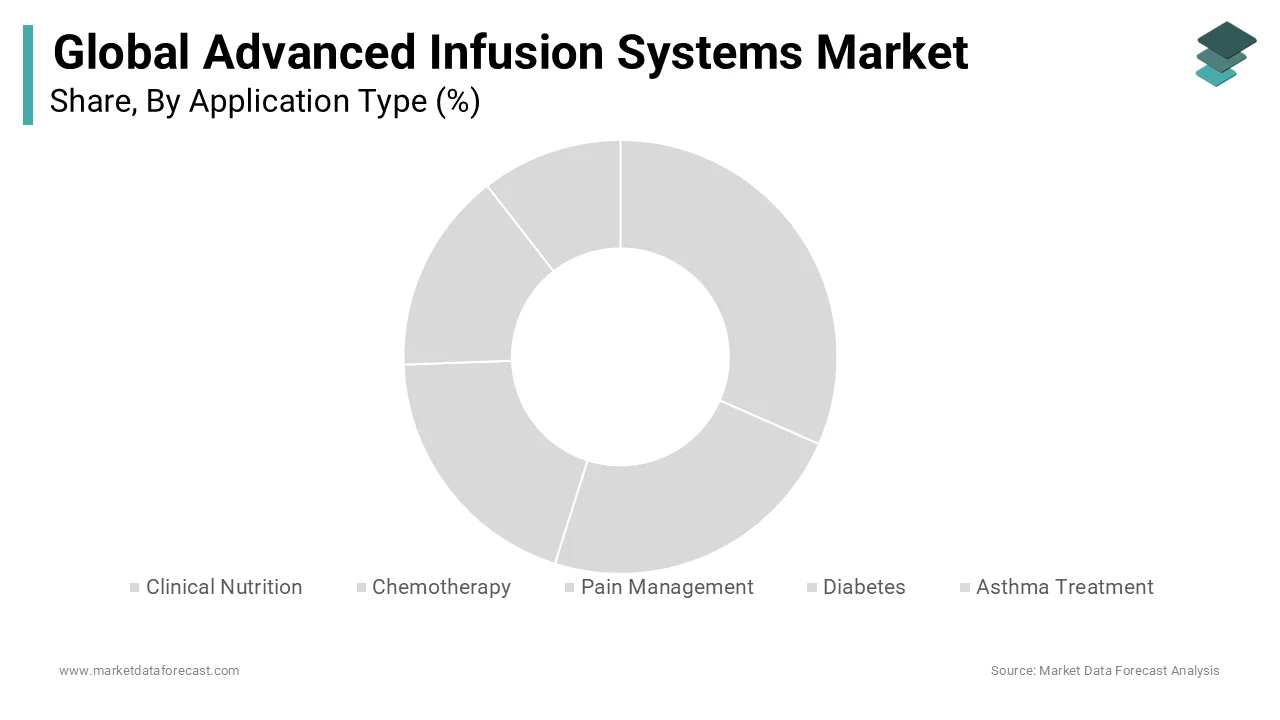
The diabetes application segment is likely to grow at the fastest CAGR of 9.8% during the forecast period, driven by the global epidemic of type 1 and insulin-dependent type 2 diabetes. According to the International Diabetes Federation, 537 million adults were living with diabetes in 2021, a figure projected to reach 643 million by 2030, creating an expanding patient base requiring continuous subcutaneous insulin infusion. This rising prevalence directly fuels demand for wearable insulin pumps and hybrid closed-loop systems that automate basal and bolus delivery. According to the Centers for Disease Control and Prevention, approximately 8.4 million people in the United States use insulin, with pump adoption rates increasing steadily among younger demographics seeking improved glycemic control and lifestyle flexibility. Technological advancements in continuous glucose monitoring integration enable real-time feedback loops by reducing hypoglycemic events and improving HbA1c outcomes. Reimbursement expansions in Europe and North America have lowered financial barriers, accelerating adoption beyond affluent populations. Patient advocacy groups actively promote pump therapy through education campaigns,s enhancing awareness and acceptance. Manufacturers are developing tubeless patch pumps and smartphone-controlled interfaces appealing to tech-savvy users.
By Product Type Insights
The volumetric infusion systems segment was the largest by holding 46.2% of the advanced infusion Systems Market share in 2025 due to their versatility and widespread use across diverse clinical applications including hydration nutrition and medication delivery. According to the study, pumps account for over 60% of all general-purpose infusion devices installed in acute care hospitals, reflecting their status as essential medical equipment. As per the Joint Commission, accreditation standards require hospitals to utilize smart infusion technology with dose error reduction systems for high-alert medications, which are predominantly volumetric platforms. Their compatibility with standard IV sets and broad drug library databases enhances operational efficiency and reduces training burdens for nursing staff. Manufacturers continuously update software to include new drug protocols and safety features, maintaining relevance in evolving clinical environments. The durability and long service life of these capital assets encourage bulk procurement contracts and long-term vendor relationships. Integration with hospital information systems enables automated documentation and billing, ng streamlining administrative workflows.
The ambulatory infusion systems segment is likely to grow at the fastest CAGR of 8.5% from 2026 to 2034 with the migration of care from hospitals to home and outpatient settings. Lightweight portable pumps enable patients to receive antibiotics, analgesics,s or biologics while maintaining daily activities,s improving quality of life and adherence. As per the study, reimbursement policies increasingly cover home infusion therapies for conditions like primary immunodeficiency and multiple sclerosis, expanding the eligible patient population. Technological miniaturization has produced discreet wearable devices that reduce stigma and enhance mobility for chronic disease management. Remote monitoring capabilities allow clinicians to track compliance and troubleshoot issues without in-person visits, addressing workforce shortages. Pharmaceutical partnerships for specialty drugs often specify ambulatory pumps as the preferred delivery method ensuring device utilization. The aging population with multiple comorbidities drives demand for complex home therapies previously restricted to hospitals. User-friendly designs with simplified programming cater to self-administration by patients or family caregivers.
By End Users Insights
The hospitals and ambulatory surgical centers segment held a dominant share of the advanced infusion systems market in 2025, as the primary sites for acute intensive and procedural care requiring sophisticated fluid management. The institutional concentration drives massive volume purchases and replacement cycles independent of economic fluctuations. Strict regulatory mandates for patient safety and interoperability compel facilities to upgrade to smart connected systems regularly. Capital budgets in large health systems accommodate high-cost advanced devices that smaller entities cannot afford. Training programs and clinical engineering support are centralized, enabling optimal utilization and maintenance. The complexity of critical care protocols necessitates devices with advanced features like multi-channel delivery and titration assistance. Bundled purchasing agreements with group purchasing organizations secure favorable pricing and supply continuity.
The diagnostic centers segment is likely to grow at a fastest CAGR of 7.9% from 2026 to 2034 with the increasing complexity of imaging procedures and contrast media administration. Power injectors and specialized infusion systems are essential for CT, MRI, and angiography procedures to achieve optimal image quality and diagnostic accuracy. Standalone imaging centers invest in advanced injection systems to compete on throughput and patient experience. Automation reduces technician workload and minimizes contrast waste,e lowering operational costs. Safety features like pressure limiting and extravasation detection protect patients during high-flow injections. The rise of interventional radiology and cardiology procedures performed in ambulatory settings further boosts device demand. Manufacturer training and certification programs ensure proper usage and compliance with radiation safety standards.
COUNTRY LEVEL ANALYSIS
North America Advanced Infusion Systems Market Analysis
North America was the top performer of the advanced infusion systems market by accounting for 33.2% of the share in 2025, with advanced healthcare infrastructure, high technology adoption, and substantial reimbursement support. According to the Centers for Medicare and Medicaid Services, national health expenditure in the United States reached 4.7 trillion dollars in 2023, providing a robust funding environment for capital medical equipment upgrades. This financial capacity enables hospitals to procure next-generation smart pumps and integrated systems at scale. The region hosts major device manufacturers, fostering innovation and early access to novel technologies. High prevalence of chronic diseases and cancer creates sustained clinical demand across all application segments. Value based payment models incentivize investments that reduce adverse events and readmissions aligning with advanced infusion capabilities. Strong intellectual property protection encourages research and development investment. Nursing shortages accelerate automation adoption to improve workflow efficiency. Regulatory clarity provides a predictable pathway for commercialization.
Europe Advanced Infusion Systems Market Analysis
Europe advanced infusion systems market was ranked second,y holding 28.1% of the share in 2025, with universal healthcare coverage and rigorous regulatory harmonization under the Medical Device Regulation. According to Eurostat, healthcare spending in the European Union averaged 10.9% of GDP in 2022, supporting widespread access to advanced medical technologies across member states. This public funding model ensures equitable distribution of infusion systems beyond wealthy urban centers. As per the European Centre for Disease Prevention and Control, antimicrobial resistance initiatives promote precise antibiotic stewardship through controlled infusion devices, reducing misuse and improving outcomes. The region leads in homecare adoption driven by aging populations and policy preferences for aging in place. Cross-border recognition of CE marking facilitates pan-European product launches and economies of scale. Strong emphasis on data privacy under GDPR influences device connectivity and cloud storage architectures. National health technology assessment bodies evaluate cost-effectiveness, rigorously shaping reimbursement decisions and market access. Local manufacturing hubs in Germany, France, and Switzerland maintain high quality standards and supply chain resilience.
Asia Pacific Advanced Infusion Systems Market Analysis
The Asia Pacific advanced infusion systems market growth is anticipated to have steady opportunities in the coming years with rapid healthcare modernization and expanding insurance coverage. This economic growth translates into tangible investments in hospital infrastructure and medical devices. Large populations in China, India, and Indonesia create immense volume potential, despite lower per-unit prices. Government initiatives like Healthy China 2030 prioritize domestic manufacturing and technology transfer, fostering local industry development. Rising medical tourism in Thailand and Singapore drives demand for international standard equipment. Urbanization concentrates patients in tertiary hospitals, facilitating efficient deployment of advanced systems. Increasing health literacy and disposable incomes boost patient willingness to pay for premium therapies. Regulatory pathways are gradually harmonizing,g though fragmentation persists.
Latin America Advanced Infusion Systems Market Analysis
Latin America advanced infusion systems market growth is likely to grow with the mix of public-private healthcare systems and economic volatility. Private hospitals in major cities serve as primary adopters, catering to insured and self-pay patients. Brazil and Mexico lead regional adoption due to larger economies and more developed healthcare infrastructure. Chronic disease burdens mirror global trends, driving the need for diabetes and oncology infusion solutions. Regulatory agencies like ANVISA and COFEPRIS are strengthening oversight, improving product safety but extending approval timelines. Public procurement processes can be slow aand bureaucraticc affecting government sales cycles. Partnerships with international NGOs sometimes facilitate technology donations for underserved areas. The market demonstrates resilience through adaptation to economic constraints while gradually expanding access to advanced care.
Middle East and Africa Advanced Infusion Systems Market Analysis
The Middle East and Africa advanced infusion systems market growth is driven by the high-income Gulf states, es contrastingsharply with resource-limitedd African nations. Wealthy Gulf Cooperation Council countries invest heavily in world-class healthcare infrastructure, importing the latest technologies to attract medical tourism and retain citizens. Donor-funded programs and global health initiatives provide essential infusion equipment for HIV, malaria, and maternal health in low-income settings. Conflict and instability disrupt supply chains and damage infrastructure in some areas. Expatriate healthcare workers bring familiarity with iinternational standardss influencing procurement preferences. Local manufacturing is nascent but encouraged by import substitution policies.
COMPETITIVE LANDSCAPE
The competition in the Advanced Infusion Systems Market is characterized by a few dominant multinational corporations and several specialized regional players vying for leadership through innovation and service excellence. Major companies leverage their extensive product portfolios and global distribution networks to secure large hospital contracts and group purchasing organization agreements. They compete on technological superiority, particularly in smart pump features,in interoperability and cybersecurity capabilities. Smaller firms differentiate themselves by focusing on niche applications such as home care or specific therapeutic areas like oncology. Price competition is moderate as healthcare providers prioritize safety and reliability over cost savings due to high liability risks. Regulatory barriers create high entry thresholds, protecting established players from new entrants. Intellectual property rights play a crucial role in maintaining competitive advantages and preventing imitation. Customer loyalty is strong due to high switching costs associated with training and integration. Service and support quality significantly influence purchasing decisions as downtime can critically impact patient care.
KEY MARKET PLAYERS
Companies leading the global advanced infusion systems market profiled in the report are
- Hospira
- AngioDynamics
- Inc., Medtronic, Inc.
- Terumo Corporation
- Johnson & Johnson
- CareFusion Corporation
- Animas Corporation
- Baxter International, Inc.
- B. Braun Melsungen AG
- I-Flow Corporation
- F. Hoffmann-La Roche Ltd.
TOP LEADING PLAYERS IN THE MARKET
- Becton Dickinson and Company maintains a leading position in the advanced infusion systems market through its comprehensive Alaris platform, which integrates smart pump technology with clinical decision support. The company focuses on interoperability,ity ensuring seamless data exchange between infusion devices and electronic health records to enhance patient safety. Recent initiatves, include launching updated software versions that reduce alarm fatigue and improve workflow efficiency for nursing staff. Becton Dickinson invests heavily in cybersecurity measures to protect connected devices from potential threats. Strategic partnerships with hospital systems facilitate large-scale deployments and training programs. The company leverages its global distribution network to reach diverse healthcare settings, including acute care and home health. Continuous innovation in drug library management supports accurate medication administration.
- ICU Medical Inc contributes significantly to the Advanced Infusion Systems Market by offering specialized solutions for critical carecare in high-acuityironments. The company emphasizes precision and safety in its Plum series of smart pumps, which feature advanced dose error reduction systems. Recent actions involve expanding its cloud-based analytics platform to provide real-time insights into infusion practices and compliance. ICU Medical collaborates with healthcare organizations to optimize medication protocols and reduce adverse events. The brand focuses on user-centered design, simplifying programming and operation for busy clinicians. Investment in research and development drives continuous improvement in device functionality and connectivity. The company supports sustainability initiatives by reducing waste through efficient consumable usage. Strong technical support services ensure minimal downtime and optimal performance.
- Fresenius Kabi AG plays a pivotal role in the Advanced Infusion Systems Market by integrating device manufacturing with pharmaceutical expertise to offer holistic therapy solutions. The company provides a wide range of infusion pumps and disposables tailored for anesthesia, oncology, and nutrition applications. Recent strategies include developingclosed-loopp systems that automate insulin delivery for diabetes management, enhancing patient quality of life. Fresenius Kabi expands its global footprint through acquisitions and joint ventures in emerging markets. The brand emphasizes standardization across its product portfolio to streamline hospital procurement and training. Investment in digital health technologies enables remote monitoring and personalized therapy adjustments.
TOP STRATEGIES USED BY KEY MARKET PARTICIPANTS
Key players in the Advanced Infusion Systems Market employ strategic integration of hardware and software to enhance clinical outcomes and operational efficiency. Companies invest heavily ininteroperability, ensuringg devices communicate seamlessly with electronic health records and hospital information systems. Product innovation focuses on reducing alarm fatigue and improving user interface design to minimize errors. Cybersecurity measures are prioritized to protect connected devices from potential breaches and maintain patient data privacy. Strategic partnerships with healthcare providers facilitate large-scale implementations and customized training programs. Expansion into home care and ambulatory settings diversifies revenue streams beyond traditional hospital accounts. Manufacturers collaborate with pharmaceutical companies to develop companion devices for specialty drugs. Sustainability initiatives reduce environmental impact through recyclable materials and energy-efficient designs.
GLOBAL ADVANCED INFUSION SYSTEMS MARKET NEWS
- In March 2020, Q Core Medical Company opened a new manufacturing unit in Europe to capitalize on the opportunities offered by the advanced infusion systems market due to the increasing geriatric population and increasing demand for the adoption of infusion systems in healthcare, therapeutic effectiveness, and reliability.
- In March 2020, Bright Springs completed the acquisition of the specialty infusion business of AdvanHealthCare. This deal's principal objective is to expand their healthcare services to the patient base of the bright springs and benefit stakeholders.
- In September 2019, the Eitan Group entered into a strategic partnership with Canadian Hospital Specialties Ltd. to expand its business operations in Canada. This collaboration's principal objective is to provide the distribution of infusion systems across Canada, which boosts the advanced infusion systems market in North America.
MARKET SEGMENTATION
This research report on the global advanced infusion systems market has been segmented and sub-segmented based on product, application, end-users, and region.
By Application Type
- Clinical Nutrition
- Chemotherapy
- Pain Management
- Diabetes
- Asthma Treatment
By Product Type
- Disposable Infusion System
- Elastomeric Infusion System
- Ambulatory Infusion System
- Volumetric Infusion System
- Patient Controlled Analgesia Pump
- Syringe Infusion System
- Implantable Infusion System
By End-Users
- Diagnostic Centers
- Hospitals and Ambulatory Surgical Centers
By Region
- North America
- Europe
- Asia-Pacific
- Latin America
- The Middle East and Africa