- Product Description Description
- Table of Contents TOC
- List of Table & Figure LOT
- Get Free Sample PDF Sample PDF
Market Size, 2025
$2.60 BnMarket Estimate, 2026
$2.78 BnMarket Forecast, 2034
$4.74 BnCAGR, 2026–2034
6.89%Executive Summary: Global Burn Care Market
- Market Scope: Comprehensive global burn care market analysis covering product categories, extent of damage, end-user settings, regional leadership frameworks, growth drivers, and treatment challenges.
- Market Valuation: Valued at USD 2.60 billion (2025), estimated at USD 2.78 billion (2026), and projected to reach USD 4.74 billion by 2034, registering a robust CAGR of 6.89% (2026–2034).
- Primary Growth Drivers: Rising burn incidence globally (estimated at 8.3 million cases and 180,000 annual deaths by WHO/BMC Public Health), increasing demand for advanced skin grafts and substitutes, rising healthcare expenditures, and growing public awareness regarding treatment options. Key operational restraints include high treatment costs and prolonged hospitalization expenses for second- and third-degree burns.
Key Market Segment Metrics (2026–2034)
| Category | Leading Segment (2025 Position) | Fastest-Growing Segment |
|---|---|---|
| By Product | Advanced Dressings (dominated with 40.8% of the global market share in 2024 due to wide wound care applications) | Biologics (driven by continuous R&D investments and new product launches) |
| By Extent of Damage | Superficial & Deep Partial-Thickness Burns (major clinical focus requiring specialized wound management and dressings) | Minor Burns (significant volume growth supported by traditional products like gauze, tapes, and bandages) |
| By End-User | Hospitals (held the highest share at 41.3% in 2023 due to high inpatient admissions and advanced burn care facilities) | Clinics & Outpatient Centres (growing rapidly as outpatient burn treatments expand) |
| By Region | North America (held a commanding 52% market share in 2025 backed by high healthcare expenditure and advanced technologies) | Asia-Pacific & UK Outpatient Markets (expanding via supportive government initiatives and large patient populations) |
Major Market Players & Market Structure
Market Structure: Highly competitive medical device and wound care market featuring established multinational corporations competing on advanced dressings, biologic skin substitutes, strategic acquisitions, and global clinical distribution networks.
Key Companies: Smith & Nephew plc, Acelity L.P, 3M Company, Molnlycke Health Care, Derma Sciences Inc., Medtronic, Coloplast A/S, and Convatec Inc.
 Download Free Sample Report
Global Burn Care Market Size
The size of the global burn care market was valued at USD 2.60 billion in 2025. The global market is further estimated to be worth USD 4.74 billion by 2034 from USD 2.78 billion in 2026, growing at a CAGR of 6.89% during the forecast period.
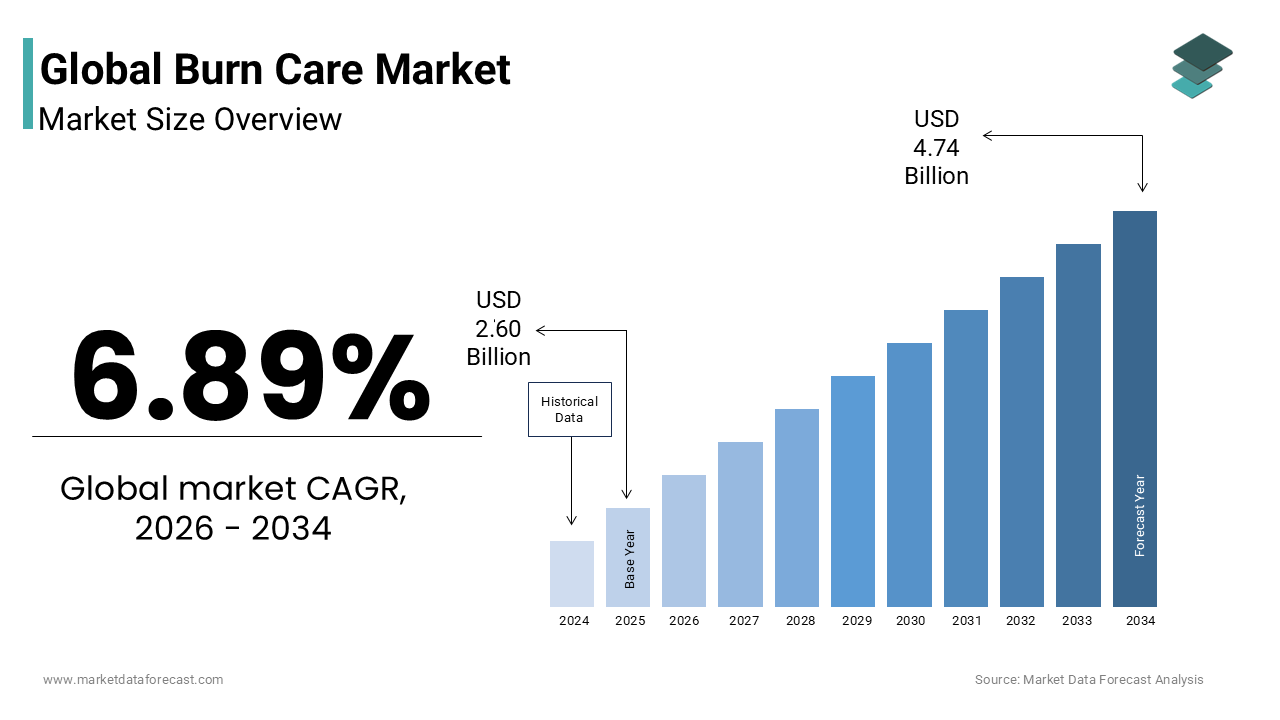
Burn care encompasses a comprehensive spectrum of medical interventions, advanced wound dressings, skin substitutes, and rehabilitation therapies designed to treat thermal, chemical, electrical, and radiation-induced injuries. As per the World Health Organization, burns result in approximately 180,000 deaths annually globally, with the majority occurring in low and middle-income countries where access to specialized care remains limited. According to the American Burn Association, over 450,000 burn injuries receive medical treatment in the United States each year, highlighting the persistent burden on healthcare systems and the critical need for effective therapeutic solutions. This market is defined by its multidisciplinary approach, integrating acute care management with long-term reconstructive surgery and psychological support. It includes products such as antimicrobial dressings, biologics, and negative pressure wound therapy devices, alongside services provided in dedicated burn units. Regulatory frameworks strictly govern the approval of bioengineered skin tissues due to their complex biological nature. The sector is driven by technological advancements in regenerative medicine and an aging population susceptible to slower healing processes. Manufacturers focus on reducing infection rates and minimizing scarring to improve patient quality of life. The definition excludes minor home-treated abrasions and focuses on clinical-grade interventions required for moderate to severe tissue damage.
MARKET DRIVERS
Rising Incidence of Industrial and Household Accidents
The escalating frequency of industrial accidents and household incidents primarily drives the burn care market expansion by creating a sustained volume of patients requiring immediate and specialized medical intervention. According to the International Labour Organization, approximately 2.78 million work-related deaths occur annually, with a significant portion attributed to hazardous workplace environments, including fires and chemical exposures in manufacturing sectors. According to the National Safety Council, unintentional injuries remain the third leading cause of death in the United States, with fire and flames accounting for a substantial percentage of emergency room visits. These statistics underscore the constant influx of trauma cases that necessitate high-quality burn care products, such as silver-impregnated dressings and hydrogel sheets. Industrial safety regulations often mandate the presence of advanced first-aid kits containing specialized burn treatments, further boosting product adoption. Additionally, the prevalence of cooking-related injuries in domestic settings ensures a steady baseline demand for outpatient care solutions. Hospitals and clinics must maintain robust inventories of burn care supplies to handle these unpredictable surges in patient volume. This consistent threat landscape drives continuous procurement of both-consumable dressings and durable medical equipment, ensuring market stability despite economic fluctuations.
Technological Advancements in Regenerative Medicine
Rapid advancements in regenerative medicine and bioengineering further fuels the burn care market growth by offering superior alternatives to traditional autografts that are limited by donor site availability. As per the Tissue Engineering and Regenerative Medicine International Society, the global development of bioengineered skin substitutes has accelerated, with over 20 new products receiving regulatory approval in the last five years for treating full-thickness burns. According to the Journal of Burn Care and Rehabilitation, patients treated with advanced cellular matrices experience 30% faster wound closure rates and reduced scarring compared to conventional methods. These clinical benefits drive adoption among plastic surgeons and burn specialists who prioritize functional and aesthetic outcomes for patients. The ability of these biologics to mimic natural skin structure and promote vascularization reduces hospital stays and overall treatment costs. Pharmaceutical companies invest heavily in research to develop allogeneic and xenogeneic grafts that minimize immune rejection risks. This innovation transforms burn care from mere wound coverage to active tissue regeneration, appealing to healthcare providers seeking evidence-based improvements in patient recovery. Consequently, the market expands beyond basic dressings to include high-value biologic products that command premium pricing due to their transformative therapeutic potential.
MARKET RESTRAINTS
High Cost of Advanced Biologic Treatments
The prohibitive cost of advanced biologic treatments and skin substitutes severely restrains the burn care market by limiting accessibility for patients in low-resource settings and those without comprehensive insurance coverage. According to the World Bank, out-of-pocket health expenditures account for over 40% of total health spending in many developing nations, making expensive regenerative therapies unaffordable for the majority of burn victims. According to the Centers for Medicare and Medicaid Services, the average cost of treating a severe burn patient can exceed 100,000 dollars, with biologic skin substitutes contributing significantly to this financial burden. High production costs associated with cell culture and sterile manufacturing processes prevent price reductions that would broaden market penetration. Healthcare providers in public hospitals often rely on cheaper traditional dressings due to budget constraints, despite the superior efficacy of modern alternatives. Insurance reimbursement policies vary widely and frequently exclude experimental or high-cost biologics, creating administrative hurdles for clinicians. This economic disparity results in unequal care standards, where only affluent patients benefit from cutting-edge innovations. Until manufacturing efficiencies improve or government subsidies increase, the high price point will continue to restrict the widespread adoption of advanced burn care technologies globally.
Stringent Regulatory Approval Processes
Rigorous regulatory scrutiny for biologic and medical device approvals restrains the burn care market by prolonging time to market and increasing development costs for manufacturers. According to the European Medicines Agency, the approval process for advanced therapy medicinal products can take up to five years due to the need for extensive clinical trials demonstrating long-term safety and efficacy. According to the United States Food and Drug Administration, detailed data on immunogenicity and sterility for skin substitutes is required, which demands significant investment in preclinical studies and manufacturing validation. These stringent requirements discourage smaller companies from entering the market, reducing competition and innovation diversity. Delays in approval mean that patients wait longer for access to novel treatments, while companies incur high operational costs without revenue generation. Variations in regulatory standards across different regions further complicate global expansion strategies, forcing manufacturers to navigate disparate compliance landscapes. The risk of post-market surveillance issues leading to recalls adds another layer of financial uncertainty. Consequently, many promising technologies remain in the pipeline rather than reaching clinical practice. This regulatory bottleneck limits the variety of available treatments and slows the overall advancement of burn care standards despite scientific breakthroughs.
MARKET OPPORTUNITIES
Expansion of Telemedicine and Remote Monitoring
The integration of telemedicine and remote monitoring technologies is a significant opportunity for the burn care market by enhancing post-discharge patient management and reducing readmission rates. According to the American Telemedicine Association, the adoption of remote patient monitoring solutions grew by 35% in 2023 as healthcare systems sought to manage chronic wound care more efficiently outside hospital settings. According to the Journal of Medical Internet Research, telehealth consultations for burn patients allow for real-time assessment of wound healing progress, enabling timely adjustments to treatment plans without requiring physical visits. This capability is particularly valuable for patients in rural areas who lack access to specialized burn centers. Manufacturers can partner with digital health platforms to offer connected dressing sensors that track moisture levels and temperature, providing data-driven insights for clinicians. Such innovations create new revenue streams through subscription-based monitoring services and smart device sales. Furthermore, improved continuity of care leads to better patient outcomes and higher satisfaction scores, which are increasingly tied to reimbursement models. By leveraging digital tools, the market can extend its reach beyond acute care facilities into home health settings, capturing a broader segment of the patient journey.
Growth in Aesthetic and Reconstructive Surgery
The growing emphasis on aesthetic outcomes and reconstructive surgery offers a major opportunity for the burn care market as patients increasingly seek treatments that minimize scarring and restore skin appearance. As per the International Society of Aesthetic Plastic Surgery, over 13 million cosmetic procedures were performed globally in 2022, with scar revision and skin resurfacing representing a rapidly growing subset. According to the American Society of Plastic Surgeons, demand for non-invasive scar management therapies, including silicone sheets and laser-assisted healing, has increased by 12% annually among burn survivors. This trend drives demand for premium topical agents and advanced dressings that promote organized collagen deposition rather than chaotic scar tissue formation. Manufacturers can develop specialized product lines targeting the aesthetic segment with claims focused on skin texture and pigmentation improvement. Collaborations with dermatologists and plastic surgeons facilitate the promotion of these high-margin products in private practices. The psychological impact of visible scars motivates patients to invest in effective solutions regardless of cost. By addressing the cosmetic dimension of burn recovery, the market can tap into a willing consumer base that values quality of life and social confidence alongside physical healing.
MARKET CHALLENGES
Risk of Infection and Antibiotic Resistance
The persistent risk of infection and rising antibiotic resistance poses a critical challenge to the burn care market by complicating wound management and increasing the complexity of treatment protocols. According to the Centers for Disease Control and Prevention, multidrug-resistant organisms, such as Pseudomonas aeruginosa and Methicillin-resistant Staphylococcus aureus, are prevalent in burn units, causing prolonged hospital stays and higher mortality rates. According to the World Health Organization, antimicrobial resistance is one of the top ten global public health threats facing humanity, rendering standard prophylactic antibiotics less effective in preventing burn wound sepsis. This environment necessitates the use of advanced antimicrobial dressings containing silver, iodine, or honey, which are more expensive than standard gauze. However, even these advanced options face challenges as bacteria develop tolerance mechanisms over time. Clinicians must constantly rotate treatment strategies to prevent resistance, further complicating care pathways. The fear of infection also delays surgical interventions, such as grafting, until wounds are deemed sterile, prolonging recovery times. Manufacturers face pressure to develop novel antimicrobial agents that do not contribute to resistance, which requires substantial research investment. Until effective solutions emerge, infection control remains a formidable barrier to optimal patient outcomes and efficient resource utilization in burn care.
Shortage of Specialized Burn Care Professionals
A global shortage of specialized burn care professionals, including surgeons, nurses, and therapists, challenges the burn care market by limiting the capacity to deliver high-quality, timely treatment to patients. According to the World Health Organization, there is a projected shortfall of 10 million health workers globally by 2030, with specialized fields like burn care being disproportionately affected due to rigorous training requirements. According to the American Burn Association, fewer than 100 hospitals in the United States have verified burn centers, creating geographic disparities in access to expert care. This scarcity leads to overcrowding in existing facilities and longer wait times for critical interventions, such as debridement and grafting. Lack of trained personnel also hinders the proper application of advanced technologies and dressings, reducing their effectiveness. Rural areas are particularly underserved, forcing patients to travel long distances for appropriate care, which delays treatment initiation. Educational institutions struggle to attract students to this demanding specialty due to high stress and emotional burden. Without adequate staffing, the market cannot fully realize the potential of new technologies, as human expertise remains essential for complex decision-making. Addressing this workforce crisis requires coordinated efforts in education and retention, which are beyond the scope of product manufacturers alone.
REPORT COVERAGE
| REPORT METRIC | DETAILS |
| Market Size Available | 2025 to 2034 |
| Base Year | 2025 |
| Forecast Period | 2026 to 2034 |
| Various Analyses Covered | Global, Regional & Country Level Analysis, Segment-Level Analysis, Drivers, Restraints, Opportunities, Challenges; PESTLE Analysis; Porter’s Five Forces Analysis, Competitive Landscape, Analyst Overview of Investment Opportunities |
| Segments Analysed | By Product, Extent of damage, and Region |
| Regions Analysed | North America, Europe, Asia Pacific, Latin America, the Middle East, and Africa |
| Market Leaders Profiled | Smith & Nephew plc (U.K.), Acelity L.P (U.S.), 3M Company (U.S.), Molnlycke Health Care (Sweden), Derma Sciences Inc. (U.S.), Medtronic (Ireland), Coloplast A/S (Denmark). |
SEGMENTAL ANALYSIS
By Product Insights
The advanced dressings segment accounted for the largest share of the global market in 2025 and is estimated to maintain their position as the leading segment in the burn care market over the forecast period due to their ability to maintain a moist wound environment, which accelerates healing and significantly reduces the risk of infection compared to traditional gauze. According to the Centers for Disease Control and Prevention, healthcare-associated infections affect approximately 1 in 31 hospital patients on any given day, with burn wounds being particularly susceptible to multidrug-resistant organisms, necessitating the use of antimicrobial advanced dressings. According to the Journal of Wound Care, the use of silver-impregnated and hydrocolloid dressings can reduce dressing change frequency by up to 50%, thereby minimizing patient pain and nursing workload while improving overall cost efficiency in long-term care. These clinical advantages drive widespread adoption in both acute hospital settings and outpatient clinics where consistent wound management is critical. Manufacturers continue to innovate with bioactive materials that interact with wound exudate to promote granulation tissue formation. The versatility of advanced dressings allows them to be used across various burn depths, making them a staple in emergency departments and specialized burn units. Regulatory support for evidence-based wound care practices further reinforces their dominance as standard-of-care protocols increasingly favor modern solutions over legacy methods. This segment benefits from strong reimbursement policies in developed markets, ensuring sustained revenue growth for key industry players.
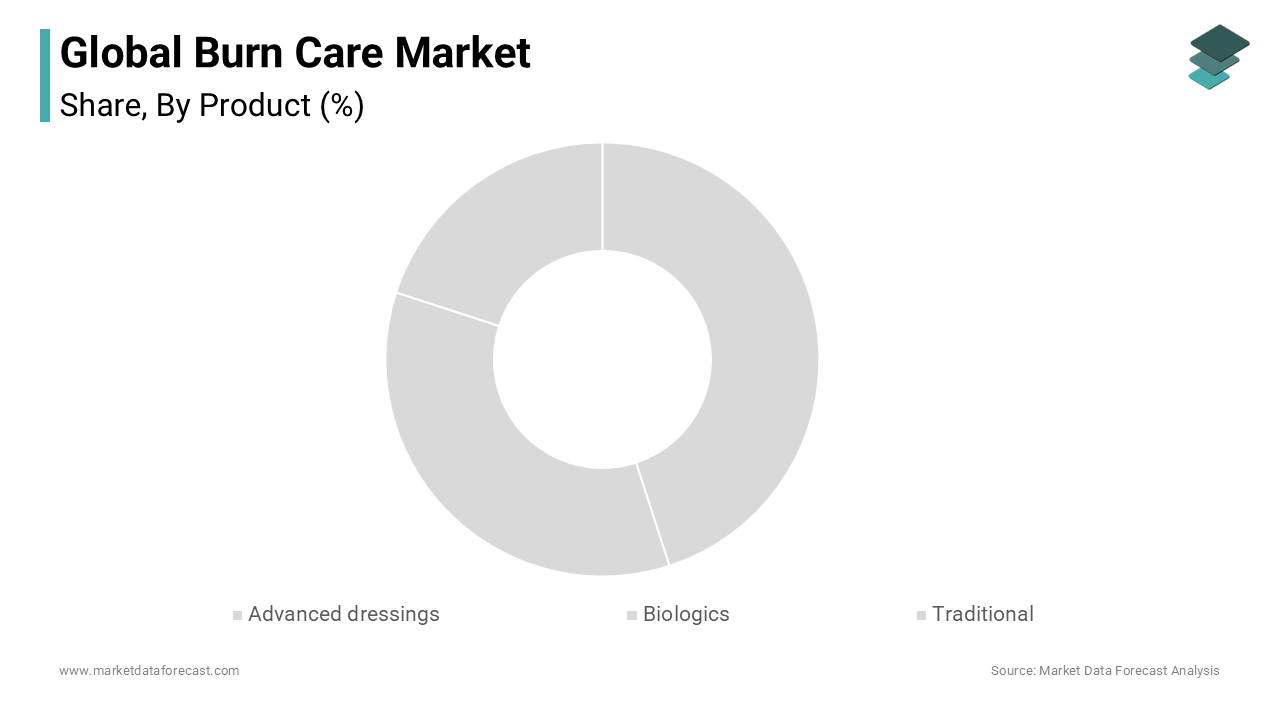
On the other end, the biologics segment represents the fastest-growing category and is predicted to witness a CAGR of 10.2% over the forecast period owing to the breakthroughs in tissue engineering and the increasing availability of bioengineered skin substitutes for severe burn cases. As per the Tissue Engineering and Regenerative Medicine International Society, the number of approved cellular and tissue-based products for wound care has doubled in the last decade, providing clinicians with viable alternatives to autografts, which are limited by donor site morbidity. According to the American Burn Association, patients treated with bilayered living cell therapy experience significantly faster wound closure times and reduced scarring compared to conventional treatments, creating strong demand among plastic surgeons and reconstructive specialists. This growth is fueled by an aging population that requires more complex wound management solutions due to slower natural healing processes. Pharmaceutical companies are investing heavily in allogeneic and xenogeneic graft development to overcome immune rejection challenges. The high efficacy of biologics in treating full-thickness burns justifies their premium pricing in healthcare systems focused on value-based outcomes. Furthermore, increased insurance coverage for regenerative therapies in North America and Europe facilitates broader access. This segment transforms burn care from passive coverage to active biological restoration, appealing to providers seeking superior functional and aesthetic results for patients.
By Extent of Damage Insights
The superficial partial-thickness burns segment occupied the largest share of the global market in 2025 because they represent the most common type of burn injury requiring medical attention yet not extensive surgical intervention. According to the World Health Organization, burns are a global public health problem, with an estimated 180,000 deaths every year, but millions more non-fatal injuries occur annually, with the majority classified as superficial or partial thickness. According to the National Safety Council, home cooking accidents and scalds account for over 60% of all burn-related emergency room visits in the United States, primarily resulting in this category of injury. These wounds typically heal within two to three weeks but require specialized dressings to prevent infection and manage pain effectively. The high volume of cases ensures consistent demand for advanced dressings and topical agents in both retail and clinical settings. Patients often seek professional care to minimize scarring and ensure proper healing, leading to significant utilization of outpatient resources. The prevalence of these injuries across all age groups creates a stable baseline market that is less susceptible to economic fluctuations than elective procedures. Manufacturers focus on user-friendly products that can be easily applied by healthcare professionals or caregivers, ensuring broad market penetration and repeat purchases for ongoing care needs.
On the other hand, the deep partial-thickness burn segment exhibits the fastest growth and is expected to grow at a CAGR of 8.5% over the forecast period as these injuries require more sophisticated care than superficial burns but may not always need immediate grafting. As per the Journal of Burn Care and Rehabilitation, deep partial-thickness burns involve damage to the deeper dermis and carry a higher risk of hypertrophic scarring and contractures if not managed aggressively with advanced therapeutics. According to the European Burn Association, early excision and coverage with bioengineered skin substitutes or advanced synthetic dressings can significantly improve functional outcomes and reduce hospital stays for these complex wounds. This clinical imperative drives the adoption of high-value products, such as negative pressure wound therapy devices and collagen-based matrices. The rising incidence of industrial accidents involving chemicals and electricity often results in this severity level, increasing the patient pool requiring specialized intervention. Healthcare providers are increasingly prioritizing early aggressive treatment to prevent progression to full-thickness injury, which is more costly and difficult to treat. Reimbursement models in developed countries support the use of premium products for these intermediate-severity burns, recognizing their long-term cost-saving potential. This segment benefits from continuous innovation in materials that mimic native skin structure, promoting faster re-epithelialization.
By End-Users Insights
The hospitals segment held a promising share of the global market in 2025 due to their capacity to provide comprehensive acute care, including surgery, intensive care, and specialized wound management for severe burn victims. According to the American Hospital Association, there are over 6,000 registered hospitals in the United States, with designated burn centers serving as regional hubs for complex trauma care requiring advanced resources and multidisciplinary teams. According to the Centers for Medicare and Medicaid Services, inpatient burn care accounts for a significant portion of hospital expenditures due to the prolonged length of stay and intensive resource utilization associated with severe thermal injuries. These facilities are the primary users of high-cost biologics, surgical instruments, and advanced monitoring systems necessary for life-saving interventions. The concentration of specialized expertise in hospitals ensures that they remain the first point of contact for major burn incidents, driving bulk procurement of medical supplies. Government funding and insurance reimbursements support the high operational costs of burn units, enabling the adoption of cutting-edge technologies. Academic medical centers also contribute to market growth through clinical trials and research partnerships with manufacturers. The critical nature of hospital-based care creates a stable and high-value revenue stream for industry participants supplying essential therapeutic solutions.
On the other end, the home care segment is expected to showcase a CAGR of 9.5% over the forecast period in the global market owing to the trend toward decentralized healthcare and the desire to reduce hospital-acquired infection risks. As per the Visiting Nurse Associations of America, home health care services have expanded significantly, with millions of patients receiving wound care support in their residences following initial hospital stabilization. According to the Journal of Telemedicine and e-Health, remote monitoring technologies enable clinicians to supervise burn wound healing at home, reducing readmission rates by up to 25% while improving patient comfort and satisfaction. This shift is supported by the development of easy-to-use advanced dressings that require less frequent changes and can be managed by trained caregivers or family members. Insurance providers increasingly favor home care models due to lower overall costs compared to prolonged hospital stays. The aging population prefers recovering in familiar environments, driving demand for home delivery of burn care products. Manufacturers are designing patient-centric packaging and educational materials to facilitate safe home administration. This segment offers significant growth potential as healthcare systems globally strive to optimize resource allocation and improve quality of life for chronic wound patients.
REGIONAL ANALYSIS
North America Burn Care Market Analysis
North America held the dominant share of the global market in 2025 is likely to experience sustained modernization and steady technological adoption over the next few years due to the advanced healthcare infrastructure, high disposable income, and robust reimbursement policies for innovative treatments. According to the American Burn Association, there are over 120 verified burn centers in the United States and Canada providing specialized care that drives demand for premium biologics and advanced dressings. According to the Centers for Disease Control and Prevention, unintentional fire and flame injuries result in thousands of hospitalizations annually, ensuring a steady patient volume for medical device and pharmaceutical companies. The region leads in the adoption of regenerative medicine technologies due to favorable regulatory pathways under the Food and Drug Administration and strong investment in research and development. High awareness of wound care best practices among healthcare professionals supports the rapid uptake of new products. Private insurance coverage facilitates access to expensive treatments, such as skin substitutes, which are often excluded in other regions. The presence of major market players headquartered in the US fosters continuous innovation and competitive pricing. Strategic partnerships between hospitals and technology firms enhance the integration of digital health solutions in burn care. This mature market environment ensures sustained growth driven by technological advancement and high standards of patient care.
Europe Burn Care Market Analysis
Europe is anticipated to achieve steady progress and robust clinical standardization over the coming years owing to the stringent regulatory standards and a strong emphasis on evidence-based medicine and cost-effectiveness. As per the European Burn Association, member countries collaborate on clinical guidelines that promote the use of advanced wound care products to improve patient outcomes and reduce long-term disability. According to the European Medicines Agency, rigorous approval processes are enforced for biologics, ensuring high safety and efficacy standards, which builds trust among clinicians and patients. Germany, France, and the United Kingdom lead in market consumption due to well-established healthcare systems and aging populations prone to chronic wounds and burns. The region shows growing interest in sustainable and eco-friendly dressing materials, aligning with broader environmental goals. Reimbursement policies vary by country but generally support the use of cost-effective advanced dressings that reduce hospital stays. Public healthcare systems prioritize preventive care and early intervention, driving demand for high-quality initial treatment products. Research institutions in Scandinavia and Central Europe contribute to innovation in tissue engineering. The market is consolidated, with key players focusing on strategic acquisitions to expand their portfolio. Regulatory harmonization under the Medical Device Regulation facilitates cross-border trade and market access.
Asia-Pacific Burn Care Market Analysis
Asia-Pacific is projected to undergo rapid expansion and infrastructural enhancement in the near future, displaying rapid growth potential in the Burn Care Market fueled by increasing industrialization, urbanization, and improving healthcare infrastructure in emerging economies. According to the World Health Organization, the South-East Asia and Western Pacific regions account for the highest burden of burn injuries globally due to high population density and reliance on open flames for cooking and heating. According to the Chinese Ministry of Health, significant investment is directed toward building specialized burn units and training medical personnel to handle the rising number of trauma cases. India and China are emerging as major manufacturing hubs for generic advanced dressings, offering cost-effective solutions for domestic and export markets. Rising disposable incomes in countries like Japan, South Korea, and Australia drive demand for premium aesthetic and reconstructive burn care products. Government initiatives to improve workplace safety are gradually reducing industrial accident rates, but the sheer volume of cases remains high. The market is fragmented, with a mix of local manufacturers and international brands competing on price and quality. E-commerce platforms are expanding access to burn care products in rural areas. Cultural preferences for traditional remedies are slowly shifting toward modern medical interventions as awareness increases. This dynamic region offers substantial opportunities for volume growth and market expansion.
Latin America Burn Care Market Analysis
Latin America is expected to display gradual development and steady healthcare modernization over the upcoming period as healthcare systems modernize and access to specialized care improves in urban centers. According to the Pan American Health Organization, burn injuries remain a significant public health issue in the region, with limited access to specialized burn centers in rural areas driving demand for effective outpatient solutions. Brazil and Mexico lead the market due to their large populations and growing medical tourism sectors, which attract patients seeking affordable reconstructive surgery and advanced wound care. Economic volatility affects purchasing power, leading to a preference for cost-effective advanced dressings over high-priced biologics. Local manufacturers are increasing production capabilities to meet domestic demand and reduce reliance on imports. Government health programs are expanding coverage for trauma care, improving access for lower-income populations. The rise of private insurance in major cities supports the adoption of premium products. Awareness campaigns regarding fire safety and first aid are helping to reduce injury severity. Distribution networks are improving, allowing better product availability in remote regions. The market is characterized by price sensitivity but shows a willingness to invest in products that prevent complications and reduce long-term care costs.
Middle East and Africa Burn Care Market Analysis
Middle East and Africa is poised for steady strategic expansion and targeted medical development in the foreseeable future constrained by varying levels of economic development but supported by government investments in healthcare infrastructure. According to the World Health Organization, the African region has the highest age-standardized death rate from burns globally, highlighting the urgent need for improved care and prevention strategies. According to the Gulf Cooperation Council, countries like Saudi Arabia and the United Arab Emirates lead in market adoption due to high healthcare spending and state-of-the-art medical facilities that attract international patients. These nations invest heavily in advanced burn care technologies, including skin substitutes and negative pressure therapy. In contrast, sub-Saharan Africa faces significant challenges, including a lack of specialized facilities and a shortage of trained personnel, limiting market growth to basic dressings and antiseptics. Non-governmental organizations play a crucial role in providing supplies and training in underserved areas. The market is driven by humanitarian aid and international development programs aiming to improve trauma care capacity. Urbanization is increasing the incidence of electrical and chemical burns, creating new demand segments. Regulatory frameworks are strengthening to ensure product quality and safety. This diverse region offers niche opportunities for affordable and durable burn care solutions.
Top Players in the Market
Smith and Nephew plc
Smith and Nephew plc maintains a prominent position in the Burn Care Market et through its extensive portfolio of advanced wound management solutions including silver impregnated dressings and negative pressure wound therapy systems. The company focuses on clinical evidence generation to validate product efficacy in reducing infection rates and accelerating healing times for burn patients. Recent initiatives involve expanding manufacturing capabilities for bioactive dressings to meet rising global demand while ensuring supply chain resilience. Smith and Nephew invests heavily in digital health integration offering remote monitoring tools that complement their physical products for home care settings. Their commitment to education programs for healthcare professionals enhances proper product utilization and improves patient outcomes. By prioritizing innovation in antimicrobial technologies and sustainable materials the company addresses critical unmet needs in burn treatment. This strategic focus on comprehensive care solutions strengthens their reputation as a trusted partner for hospitals and clinics worldwide seeking reliable and effective burn care interventions.
Mölnlycke Health Care AB
Mölnlycke Health Care AB contributes significantly to the Burn Care Market et with its specialized silicone based wound care products designed to minimize pain during dressing changes and reduce scarring. The company leverages proprietary Safetac technology to create gentle yet effective dressings that protect fragile periwound skin in burn victims. Recent actions include launching next generation foam dressings with enhanced exudate management properties specifically tailored for partial thickness burns. Mölnlycke actively collaborates with burn centers globally to conduct clinical studies demonstrating superior patient comfort and healing outcomes. Their sustainability initiatives focus on reducing carbon footprint in production aligning with hospital procurement preferences for eco friendly suppliers. The company also expands its educational outreach to train nurses on optimal dressing selection and application techniques. By combining technological innovation with patient centric design Mölnlycke strengthens its market presence as a leader in atraumatic burn wound management solutions that prioritize both clinical efficacy and quality of life.
Integra LifeSciences Corporation
Integra LifeSciences Corporation plays a pivotal role in the Burn Care Market et through its pioneering work in regenerative medicine and dermal regeneration templates. The company offers bilayer matrix wound dressings that serve as scaffolds for new tissue growth in deep partial and full thickness burns. Recent efforts involve expanding indications for existing products to include chronic wounds and traumatic injuries broadening their addressable patient population. Integra invests substantially in research and development to improve cellular integration and vascularization rates in their biologic substitutes. They maintain strategic partnerships with academic institutions to advance tissue engineering science and validate long term functional outcomes. The company also focuses on streamlining regulatory approvals in emerging markets to increase global access to advanced burn therapies. By leading innovation in bioengineered skin alternatives Integra addresses the critical shortage of autograft donor sites and sets industry standards for reconstructive burn care solutions that restore both form and function.
Top Strategies Used by Key Market Participants
Key players in the Burn Care Market et primarily employ product differentiation strategies through continuous innovation in antimicrobial and regenerative technologies to address specific clinical challenges. Companies invest heavily in clinical trials and real world evidence generation to demonstrate superior outcomes and secure favorable reimbursement status from payers. Strategic acquisitions allow firms to expand their portfolios with complementary technologies such as negative pressure therapy or digital wound monitoring platforms. Partnerships with academic medical centers facilitate early access to novel research and validation of next generation biologics. Geographic expansion into emerging markets is pursued through localized manufacturing and distribution agreements to overcome cost barriers. Sustainability initiatives including biodegradable packaging and energy efficient production are increasingly central to corporate branding and hospital procurement criteria. Education and training programs for healthcare professionals ensure proper product adoption and maximize therapeutic benefits. These combined approaches enable companies to maintain competitive advantages while navigating complex regulatory landscapes and evolving healthcare delivery models focused on value based care.
COMPETITIVE LANDSCAPE
The competitive landscape of the Burn Care Market et features a mix of established multinational corporations and specialized biotechnology firms competing on clinical efficacy and technological innovation. Large medical device companies leverage extensive distribution networks and broad product portfolios to dominate hospital contracts while smaller players focus on niche segments like pediatric burns or scar management. Competition intensifies as generic manufacturers enter the advanced dressing space offering lower cost alternatives that pressure premium pricing structures. Regulatory approval timelines create significant barriers to entry protecting incumbent positions but also slowing overall market innovation cycles. Reimbursement policies vary widely across regions influencing which products gain commercial traction and shaping R&D investment priorities. Strategic alliances between device makers and pharmaceutical companies aim to develop combination therapies that offer synergistic benefits. Digital health integration is becoming a key differentiator as providers seek data driven insights to optimize treatment protocols. The market remains fragmented with no single entity holding overwhelming dominance allowing room for specialized innovators to thrive by addressing unmet clinical needs. Success depends on balancing scientific rigor with commercial viability and maintaining agility to adapt to changing healthcare economics and patient expectations.
KEY MARKET PARTICIPANTS
Some of the notable companies leading the global burn care market profiled in the report are
- Smith & Nephew plc
- Acelity L.P
- 3M Company
- Molnlycke Health Care
- Derma Sciences Inc.
- Medtronic
- Coloplast A/S
- Convatec Inc.
RECENT MARKET DEVELOPMENTS
- In January 2021, Integra LifeSciences Holdings Corporation finalized the previously announced acquisition of ACell Inc., allowing the company to offer more comprehensive complicated wound care solutions.
- In February 2021, the American Burn Association launched National Burn Awareness Week, ranging from electrical safety to zapping. This project ran from February 7th to February 13th, 2021. According to the government, this program was launched because more than 400000 individuals are injured by burns every year. This initiative has been launched to increase awareness of the danger of burn injuries.
- In May 2020, Safeguard Medical, a renowned producer of life-saving products, announced the purchase of Water-Jel Technologies. The headquarters of World-Jel are in New Jersey. They are the world's top provider of burn care products. Due to this acquisition, safeguard Medical was able to offer life-saving goods, kitting capabilities, and training programs.
- In May 2020, Smith+Nephew and National Medical Billing Services announced a strategic collaboration to deliver revenue cycle management (RCM) solutions to ambulatory surgical centers (ASCs) across the United States.
MARKET SEGMENTATION
This research report on the global burn care market has been segmented and sub-segmented based on the product, extent of damage, and region.
By Product
- Advanced dressings
- Biologics
- Traditional
By Extent of Damage
- Minor
- Superficial Partial Thickness
- deep partial-thickness burn
By End-Users
- Hospitals
- Clinics
- Home care
By Region
- North America
- Europe
- Asia Pacific
- Latin America
- The Middle East and Africa