- Product Description Description
- Table of Contents TOC
- List of Table & Figure LOT
- Get Free Sample PDF Sample PDF
Market Size, 2025
$2.39 BnMarket Estimate, 2026
$3.27 BnMarket Forecast, 2034
$40.46 BnCAGR, 2026–2034
36.95%Latin America Ardent Spirits Market Size, Growth, Trends & Forecast (2026–2034)
The Latin America ardent spirits market size was valued at USD 2.39 billion in 2025, stands at USD 3.27 billion in 2026, and is projected to reach USD 40.46 billion by 2034, registering a compound annual growth rate (CAGR) of 36.95% during the forecast period from 2026 to 2034. Driven by deep-rooted cultural heritage, rising disposable incomes, premiumization trends, and a growing middle class favoring artisanal and aged spirits across key nations like Brazil and Mexico, the regional industry continues to expand dynamically.
Key Executive Metrics (At-a-Glance)
- 2025 Base Valuation: USD 2.39 Billion
- 2026 Current Valuation: USD 3.27 Billion
- 2034 Forecast Valuation: USD 40.46 Billion
- Compound Annual Growth Rate (CAGR): 36.95% (2026–2034)
- Dominant Distribution Channel: Supermarkets and Hypermarkets (holding 45.8% market share in 2025 due to extensive retail infrastructure)
- Fastest-Growing Distribution Channel: Online Sales (projected at a CAGR of 14.3% from 2026 to 2034)
- Dominant Product Type: Rum (backed by deep historical roots and heavy regional consumption)
- Fastest-Growing Product Type: Tequila (projected at a CAGR of 7.2% during the forecast period, driven by global popularity and premiumization)
- Dominant Country Market: Mexico (accounting for 34.2% of the market share in 2025 as a global production hub for tequila and mezcal)
Core Market Drivers
- Cultural Heritage & Social Integration: Distilled beverages acting as intrinsic symbols of national pride, history, and communal rituals across Latin America.
- Rising Disposable Income & Premiumization: Expanding middle classes in nations like Brazil and Colombia shifting preferences from volume drinking to quality-driven, aged, and artisanal spirits.
- Tourism and Hospitality Growth: International visitors seeking authentic local experiences through distillery tours, boosting domestic consumption and export footprints.
Primary Market Restraints & Challenges
- Stringent Regulations & High Taxation: Substantial excise taxes and complex regulatory policies increasing retail prices and inadvertently fueling informal/illicit markets.
- Health Consciousness & Supply Chain Volatility: Rising wellness trends reducing heavy alcohol intake among youth alongside agricultural risks (such as climate-driven crop shortages for agave and sugarcane).
Latin America Ardent Spirits Market Segmentation Breakdown
| Segment Category | Leading Sub-Segment (2025 Base) | Fastest-Growing Sub-Segment (2026–2034) |
|---|---|---|
| By Distribution Channel | Supermarkets and Hypermarkets (dominant share of 45.8% offering diverse retail selections) | Online Sales (fastest-growing at a 14.3% CAGR, accelerated by digital penetration and quick commerce) |
| By Type | Rum (holding a significant market share rooted in centuries-old sugarcane traditions) | Tequila (fastest-growing category at a 7.2% CAGR driven by premiumization and global cocktail culture) |
| By Country | Mexico (leading with 34.2% market share as a major production hub for tequila and mezcal) | Argentina & Brazil (expanding robustly via growing craft gin, imported whisky, and premium cachaça demand) |
Major Industry Players Profiled
Key enterprises shaping the Latin American ardent spirits market include Diageo, LVMH, Brown-Forman, Absolut, Bacardi Limited, Pernod Ricard, The Patrón Spirits Company, Beam Suntory, and Mast-Jägermeister.
 Download Free Sample Report
Latin America Ardent Spirits Market Size
The Latin America ardent spirits market size was valued at USD 2.39 billion in 2025 and is projected to reach USD 40.46 billion by 2034 from USD 3.27 billion in 2026, growing at a CAGR of 36.95%.
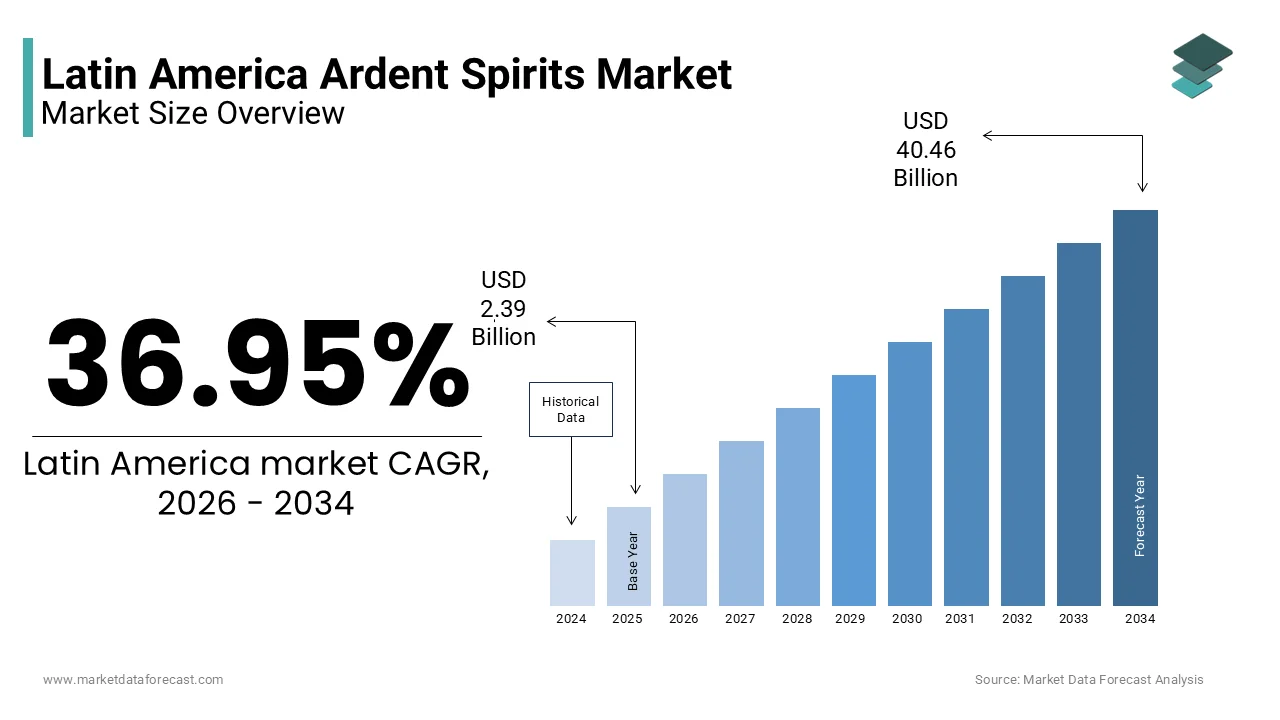
The ardent spirits are distilled alcoholic beverages, including traditional regional staples such as tequila, mezcal, pisco, cachaca, and rum alongside imported whiskies and vodkas. As per data from the Pan American Health Organization, alcohol consumption patterns in Latin America vary significantly, with certain countries exhibiting higher per capita intake of distilled spirits compared to beer or wine. The economic influences purchasing power, with a growing middle class in nations like Brazil and Mexico driving demand for premium and super premium categories. Regulatory frameworks differ across borders, affecting taxation, labeling, and distribution channels. The rise of craft distilleries has introduced artisanal products that emphasize terroir and traditional methods, appealing to discerning consumers. Tourism also plays a pivotal role, as visitors seek authentic local experiences through spirit tasting and distillery tours.
MARKET DRIVERS
Cultural Heritage and Social Integration Drive Consumption
The cultural heritage and deep social integration, as distilled beverages are intrinsic to national identities and communal rituals is a primary factor accelerating the growth of the Latin America ardent spirits market. In Mexico, tequila and mezcal are not merely drinks but symbols of pride and history, protected by designation of origin status that reinforces their prestige. Similarly, pisco in Peru and Chile and cachaca in Brazil are central to national festivities and daily social interactions. Several of these spirit making traditions are recognized as intangible cultural heritage, which elevates their status and encourages preservation and consumption. Social gatherings, family celebrations, and religious festivals often feature these spirits prominently by ensuring consistent demand regardless of economic fluctuations. The ritualistic aspect of sharing drinks fosters community bonds, making spirits a staple in household expenditures. Younger generations are reconnecting with these traditions, viewing them as authentic alternatives to globalized beverage brands. Local governments promote these industries through tourism campaigns and cultural events, further embedding them in the social fabric. The emotional connection consumers feel toward these products drives loyalty and repeat purchases.
Rising Disposable Income and Premiumization Trends Fuel Growth
The rising disposable income and the trend toward premiumization, significantly fuelling the growth of the Latin America ardent spirits market, as consumers increasingly prioritize quality over quantity. Economic stabilization in key countries such as Colombia and Peru has expanded the middle class, enabling shoppers to afford higher priced spirits with superior aging and craftsmanship. Consumers are willing to pay more for aged tequilas, small batch mezcals, and artisanal rums that offer complex flavor profiles and storytelling appeal. The proliferation of upscale bars and restaurants in urban centers provides platforms for educating consumers about premium spirits, driving trial and adoption. International exposure through travel and media has raised awareness of global spirit standards, prompting local producers to elevate their quality to compete. Brands invest in sophisticated packaging and marketing to position their products as luxury items suitable for gifting and special occasions. The shift from bulk consumption to sipping and appreciating fine spirits aligns with global wellness trends that favor moderation and quality. This premiumization trend enhances profit margins for manufacturers and encourages investment in aging facilities and quality control.
MARKET RESTRAINTS
Stringent Government Regulations and High Taxation Restrain Expansion
The stringent government regulations and high taxation, impacting affordability and informal trade dynamics is hindering the growth of the Latin America ardent spirits market. Many countries in the region impose substantial excise taxes on alcoholic beverages to generate revenue and address public health concerns related to alcohol abuse. According to the World Health Organization, alcohol taxation policies in Latin America vary widely, with some nations implementing tiered systems that disproportionately affect lower income consumers. High tax burdens increase retail prices, pushing price sensitive buyers toward illicit or unregulated markets where safety standards are nonexistent. This shadow economy undermines legitimate businesses and reduces government tax collections, creating a vicious cycle of stricter enforcement and higher evasion. Regulatory complexity regarding labeling, advertising restrictions, and distribution licenses adds operational burdens for manufacturers, particularly small craft distillers who lack legal resources. Cross border trade barriers within the region hinder the expansion of local brands into neighboring markets, limiting economies of scale. Inconsistent enforcement of intellectual property rights allows counterfeit products to flourish, damaging brand reputation and consumer trust. These regulatory and fiscal challenges constrain market growth by reducing accessibility and profitability for compliant operators.
Health Consciousness and Changing Lifestyle Preferences Limit Demand
The growing health consciousness and changing lifestyle preferences limit demand, as consumers become more aware of the adverse effects of alcohol consumption is limiting the growth of the Latin America ardent spirits market. Public health campaigns and educational initiatives have amplified links between excessive alcohol intake and chronic diseases such as liver cirrhosis, cancer, and cardiovascular issues. As per data from the Pan American Health Organization, there is a noticeable shift among younger demographics toward wellness-oriented lifestyles that prioritize physical fitness and mental clarity, leading to reduced alcohol intake. The rise of the sober curious movement encourages individuals to moderate or eliminate alcohol consumption, favoring non-alcoholic alternatives such as mocktails and functional beverages. Social stigma around drunkenness is increasing in professional and urban circles, prompting a decline in heavy drinking cultures. Retailers respond by expanding their non-alcoholic sections, diverting shelf space from traditional spirits. Manufacturers face pressure to reformulate products with lower alcohol content or promote responsible drinking messages, which may not fully offset declining volumes. The perception of spirits as unhealthy indulgences conflicts with modern values of self care and longevity.
MARKET OPPORTUNITIES
Expansion of Craft Distilling and Artisanal Production Creates Opportunities
The expansion of craft distilling and artisanal production, catering to consumers seeking unique and authentic experiences is certainly ascribed to boost new opportunities for the growth of the Latin America ardent spirits market. Small batch producers are leveraging local ingredients and traditional methods to create distinctive spirits that stand out in a crowded marketplace. The number of craft distilleries in countries like Mexico, Brazil, and Colombia has grown substantially, driven by entrepreneurial spirit and consumer curiosity, as per the study. These artisans focus on transparency, sustainability, and community engagement, appealing to ethically minded shoppers. The story behind each bottle, including the origin of agave, sugarcane, or grapes, adds value and justifies premium pricing. Tourism plays a crucial role, as distillery tours and tasting rooms provide direct to consumer sales channels and brand loyalty building opportunities. Collaborations with local chefs and mixologists help integrate craft spirits into culinary experiences, enhancing their visibility. Digital platforms allow small producers to reach niche audiences globally, bypassing traditional distribution barriers. The flexibility of craft distillers enables rapid innovation in flavors and aging techniques, keeping the product lineup fresh and exciting.
Growth of Tourism and Hospitality Sector Boosts Export Potential
The growth of the tourism and hospitality sector boosts export potential and domestic consumption that is to pose as a major challenge for the growth of the Latin America ardent spirits market. Latin America remains a top global destination, with millions of tourists visiting annually to explore its rich culture, landscapes, and gastronomy. The international tourist arrivals in the region have shown strong recovery, bringing increased foot traffic to bars, restaurants, and distilleries. Tourists often purchase local spirits as souvenirs, driving retail sales and introducing these products to international markets. Hospitality providers curate menus featuring regional spirits, educating guests about their history and production methods. This exposure creates brand ambassadors who continue to consume these products upon returning home, stimulating export demand. Duty free shops at airports capitalize on this trend, offering premium local brands to travelers. The synergy between tourism and spirit production encourages infrastructure development, such as improved distillery facilities and visitor centers. Government support for tourism promotion indirectly benefits the spirits industry by highlighting cultural assets.
MARKET CHALLENGES
Supply Chain Volatility and Agricultural Risks Impact Production
The supply chain volatility and agricultural risks impact production stability, as many spirits rely on specific crops susceptible to environmental and logistical disruptions are to inhibit the growth of the Latin America ardent spirits market. Agave for tequila and mezcal, sugarcane for rum and cachaca, and grapes for pisco require years to mature by making supply inflexible in the short term. Climate change induces extreme weather events such as droughts and floods, which can devastate harvests and spike raw material costs. The agricultural productivity in Latin America faces increasing pressure from climate variability, threatening food and beverage security. For instance, agave shortages have previously led to price surges and incentivized illegal harvesting of wild species, raising sustainability concerns. Logistical bottlenecks, including port delays and transportation strikes, further complicate the distribution of finished goods. Dependence on single source ingredients increases vulnerability, as seen in recent agave cycles. Manufacturers must invest in sustainable farming practices and diversified sourcing strategies to mitigate these risks, which involves high capital expenditure. Small producers often lack the resilience to absorb shocks, leading to market exit or consolidation. These supply side challenges create uncertainty in pricing and availability, affecting both domestic sales and export commitments.
 REPORT COVERAGE
| REPORT METRIC | DETAILS |
| Market Size Available | 2025 to 2034 |
| Base Year | 2025 |
| Forecast Period | 2026 to 2034 |
| CAGR | 36.95% |
| Segments Covered | By Distribution Channel, Type, and Region |
| Various Analyses Covered | Global, Regional, & Country Level Analysis; Segment-Level Analysis; DROC; PESTLE Analysis; Porter’s Five Forces Analysis; Competitive Landscape; Analyst Overview of Investment Opportunities |
| Regions Covered | Latin America include Brazil, Argentina, Mexico, and the Rest of Latin America |
| Market Leaders Profiled | Diageo, LVMH, Brown-Forman, Absolut, Bacardi Limited, Pernod Ricard, The Patrón Spirits Company, Beam Suntory, and Mast-Jägermeister |
SEGMENTAL ANALYSIS
By Distribution Channel Insights
The supermarkets and hypermarkets segment was the largest by holding 45.8% of the Latin America ardent spirits market share in 2025 due to their extensive retail infrastructure and the high level of consumer convenience they offer. These large format stores provide a one stop shopping experience where consumers can purchase spirits alongside groceries and other household items, reducing the need for multiple trips. The organized nature of supermarkets ensures product authenticity and consistent pricing, which builds consumer trust compared to informal retailers. Major chains like Walmart, Carrefour, and Grupo Exito have expanded their footprint across the region by offering wide assortments of both local and international spirit brands. The ability to compare prices and read labels in a controlled environment appeals to middle class shoppers, who prioritize quality and transparency. Promotional activities, such as bulk discounts and seasonal offers further drive volume sales through these channels. The strategic placement of spirit aisles near high traffic zones increases impulse purchases. Additionally, the integration of loyalty programs allows retailers to target specific consumer segments with personalized offers, enhancing customer retention.
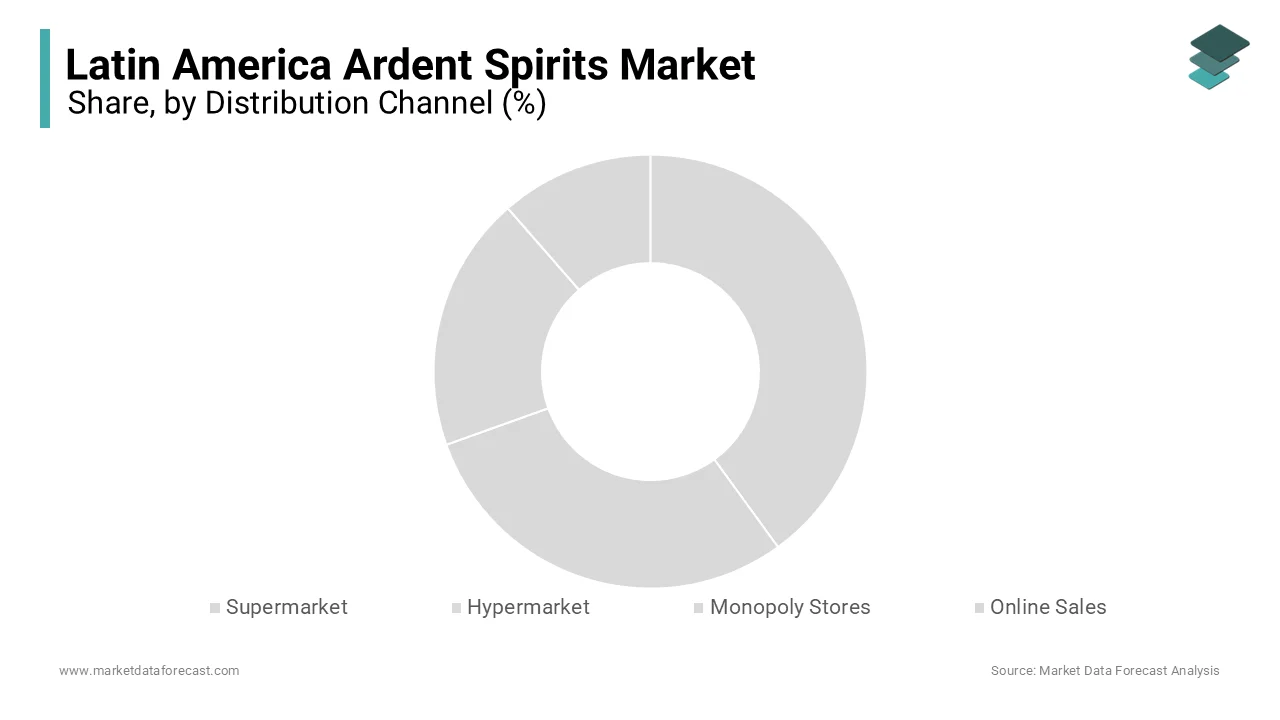
The online sales segment is likely to grow at a fastest CAGR of 14.3% from 2026 to 2034 with the rapid digital penetration and increasing e-commerce adoption across the region. The proliferation of smartphones and affordable internet access has enabled millions of consumers to shop online for the first time. According to the study, e-commerce sales in Latin America grew by 25% in 2023, with alcohol beverages emerging as a popular category among younger demographics. Consumers appreciate the convenience of home delivery, especially for heavy items like spirit bottles, and the ability to browse extensive catalogs without physical constraints. Online platforms offer detailed product descriptions, reviews, and ratings, helping consumers make informed decisions about premium and niche brands. The rise of specialized online liquor stores and quick commerce apps has reduced delivery times, making instant gratification possible. Social media integration allows brands to engage directly with consumers through targeted ads and influencer partnerships, driving traffic to online stores. The pandemic accelerated this shift, establishing online purchasing as a habitual behavior for many households.
By Type Insights
The rum segment held a significant share of the Latin America ardent spirits market in 2025 due to its deep cultural roots and historical significance in the region. Latin America is the birthplace of rum, with countries like Cuba, Jamaica, Puerto Rico, and Brazil having centuries old traditions of sugarcane cultivation and distillation. Rum is integral to national identities, featuring prominently in festivals, music, and daily social rituals. The versatility of rum allows it to be consumed neat, on the rocks, or in popular cocktails, such as the Mojito and Caipirinha, appealing to a broad demographic. Local brands enjoy strong loyalty from consumers who view rum as a heritage product. The availability of diverse styles, from light white rums to aged dark varieties, caters to different taste preferences and occasions. Government support for the sugarcane industry indirectly benefits rum producers by ensuring raw material availability. This cultural embeddedness ensures a stable and substantial baseline demand, making rum the most consumed ardent spirit in the region.
The tequila segment is expected to grow at a fastest CAGR of 7.2% during the forecast period with the surging global popularity and premiumization trends. Once considered a party drink, tequila has been repositioned as a sophisticated spirit suitable for sipping, thanks to effective marketing and education efforts. Consumers in Latin America are increasingly embracing premium and ultra-premium tequilas, willing to pay higher prices for aged varieties such as Reposado and Anejo. The designation of origin status protects the integrity of tequila by enhancing its prestige and exclusivity. International acclaim and awards have elevated the status of Mexican tequila, inspiring pride and curiosity among regional consumers. Bars and restaurants are expanding their tequila selections, offering tasting flights and pairing menus that escalate complexity and craftsmanship. This shift toward appreciation rather than just consumption drives value growth. The influence of global cocktail culture, where tequila is a star ingredient, further boosts its appeal.
COUNTRY LEVEL ANALYSIS
Mexico was the top performer in the Latin America ardent spirits market by accounting for 34.2% of the share in 2025 with its status as the global hub for tequila and mezcal production. The country’s spirit industry is deeply integrated into its economy and culture, with tequila being a major export commodity. Local consumption is high, with tequila and mezcal being staples in social and culinary contexts. The government supports the industry through designation of origin protections and promotional initiatives. Rising disposable incomes have led to increased demand for premium aged tequilas, shifting consumption patterns from volume to value. The tourism sector further boosts sales, as visitors explore distillery routes and purchase authentic products. Urbanization has expanded the reach of modern retail channels by making premium spirits more accessible. Younger generations are embracing traditional spirits with a modern twist, driving innovation in flavors and packaging.
Brazil ardent spirits market was second by holding 21.2% of the share in 2025 with the widespread popularity of cachaca and a growing interest in imported spirits. Cachaca, made from fermented sugarcane juice, is the national spirit and enjoys massive domestic consumption, particularly in the form of Caipirinha cocktails. The rising middle class is driving demand for premium cachaças and imported whiskies and vodkas. Urban centers like Sao Paulo and Rio de Janeiro host vibrant nightlife scenes that fuel spirit consumption. Government regulations on taxation and labeling are becoming stricter, formalizing the market and reducing illicit trade. Export opportunities for premium cachaça are expanding, enhancing the industry’s profile. Consumer awareness of health and moderation is influencing product choices, with some brands launching lower alcohol options.
Argentina ardent spirits market growth is expected to grow with the strong preference for whisky and local gin. While wine is the dominant alcoholic beverage, spirit consumption is steady and growing, particularly among urban professionals. The whisky imports have remained resilient, driven by a culture of appreciating premium imported brands. Local gin production has surged in recent years, with craft distilleries leveraging native botanicals to create unique profiles. The economic volatility in Argentina affects purchasing power, leading consumers to balance between affordable local options and occasional premium indulgences. Buenos Aires serves as a hub for trendy bars and mixology, influencing national trends. Consumers are increasingly educated about spirit origins and production methods, favoring transparency and quality. The decline in beer consumption among certain demographics has shifted some demand toward spirits. Regulatory frameworks support local production while allowing imports, fostering competition.
COMPETITIVE LANDSCAPE
The competition in the Latin America ardent spirits market is intense and characterized by a mix of global multinational corporations and strong regional producers. Large international firms leverage their extensive resources and brand recognition to dominate premium segments, while local players compete on price and cultural authenticity in mass markets. Differentiation occurs through aging processes, unique flavor profiles, and sustainable production claims, which appeal to discerning buyers. Private label brands from major retailers pose growing threats by offering affordable alternatives with decent quality. Regulatory compliance and tax structures vary significantly across countries, influencing pricing strategies and profitability. Informal trade remains a challenge in some regions, affecting legitimate sales volumes. Companies increasingly focus on digital engagement and experiential marketing to build emotional connections with consumers. Innovation in packaging and limited-edition releases drives excitement and trial.
KEY MARKET PLAYERS
Some of the key players in the Latin America ardent spirits market are
- Diageo
- LVMH
- Brown Forman
- Absolut
- Bacardi Limited
- Perood Ricard
- The Patron Spirit Company
- Beam Suntory
- Mast gagermeister
Top Players in the Market
- Diageo plc maintains a formidable presence in the Latin America ardent spirits market through its extensive portfolio of premium whisky, vodka, and tequila brands. The company leverages its global distribution network to ensure wide availability of products such as Johnnie Walker and Smirnoff across major urban centers. Recent strategic initiatives include significant investments in local marketing campaigns that resonate with cultural festivities and social traditions. Diageo has expanded its production capabilities in Mexico to meet the surging demand for high quality tequila. The corporation actively engages in sustainability programs to support agave farmers and reduce environmental impact. These efforts reinforce its reputation for quality and innovation while addressing evolving consumer preferences for authentic and responsibly sourced spirits in the region.
- Pernod Ricard SA contributes significantly to the market by offering a diverse range of spirits including rum, cognac, and whisky tailored to Latin American tastes. The company utilizes its strong heritage brands like Havana Club and Absolut to capture both mass and premium segments. Recent actions involve strengthening partnerships with local distributors to enhance reach in remote areas and emerging markets. Pernod Ricard has invested in craft distillery acquisitions to diversify its portfolio with artisanal products. The firm prioritizes responsible drinking initiatives to align with public health goals and regulatory expectations. Marketing strategies focus on experiential consumption through bar partnerships and music festivals. Its commitment to sustainable sourcing and community engagement fosters long term trust and brand equity among Latin American consumers.
- Bacardi Limited is a dominant force in the Latin America ardent spirits market, particularly renowned for its extensive rum portfolio and iconic brands. The family-owned company leverages its deep regional roots to connect with consumers through authentic storytelling and heritage marketing. Recent developments include the expansion of its super premium rum lines to cater to the growing trend of sipping spirits. Bacardi has enhanced its production facilities in Puerto Rico and other key locations to improve efficiency and quality control. The company actively supports local communities through agricultural development programs for sugarcane growers. Digital innovation drives direct to consumer engagement and personalized marketing efforts.
Top Strategies Used by Key Market Participants
Key players in the Latin America ardent spirits market employ several strategic approaches to maintain competitiveness and drive growth. Premiumization remains a central strategy as companies introduce aged and artisanal variants to attract affluent consumers seeking quality experiences. Expansion into rural and underserved areas through localized distribution networks ensures broader market penetration and accessibility. Strategic acquisitions of local craft distilleries allow firms to diversify portfolios and tap into niche segments effectively. Sustainability initiatives focus on ethical sourcing and environmental conservation to enhance brand reputation and comply with regulations. Partnerships with hospitality venues and event organizers create immersive brand experiences that foster loyalty.
MARKET SEGMENTATION
This research report on the Latin America ardent spirits market is segmented and sub-segmented into the following categories.
By Distribution Channel
- Supermarket
- Hypermarket
- Monopoly Stores
- Online Sales
By Type
- Gin
- Whisky
- Brandy
- Vodka
- Rum
- Tequilla
- Baijiu
- Sake
By Country
- Brazil
- Argentina
- Mexico
- Rest of Latin America