- Product Description Description
- Table of Contents TOC
- List of Table & Figure LOT
- Get Free Sample PDF Sample PDF
Market Size, 2025
$384.32 BnMarket Estimate, 2026
$454.42 BnMarket Forecast, 2034
$1,736.09 BnCAGR, 2026–2034
18.24%Executive Summary: Global 3D and 4D Technology Market
- Market Scope: Comprehensive global 3D and 4D technology market analysis covering technology categories, end-user industry verticals, regional leadership frameworks, and serial production additive manufacturing trends.
- Market Valuation: Valued at USD 384.32 billion (2025), estimated at USD 454.42 billion (2026), and projected to reach USD 1,736.09 billion by 2034, registering an exceptional CAGR of 18.24% (2026–2034).
- Primary Growth Drivers: Aerospace component lightweighting requirements, personalized medical device customization, sustainable manufacturing through circular material loops, 4D smart materials, and construction-scale printing addressing housing deficits.
Key Market Segment Metrics (2026–2034)
| Category | Leading Segment (Base Position) | Fastest-Growing Segment |
|---|---|---|
| By Technology | 3D Printers (commanded the highest market share in 2025 across industrial and consumer lines) | 4D Printing (anticipated to record the fastest CAGR of 33.5% for adaptive structures) |
| By End-User Sector | Healthcare Segment (led with the largest share in 2025 due to mature regulatory frameworks and customization) | Construction Segment (estimated to showcase the fastest CAGR of 28.2% driven by skilled labor deficits and housing mandates) |
| By Application & Material | Aerospace Component Lightweighting and Medical Device Prototyping | Sustainable Circular Material Loops and Smart Programmable Materials |
| By Region / Country | North America (held the largest regional share at 36.5% in 2025) | Asia-Pacific (expected to maintain strong momentum driven by manufacturing scale and technology adoption) |
Major Market Players & Market Structure
Market Structure: Highly competitive global industrial technology and additive manufacturing landscape where industrial incumbents, software providers, and specialized startups compete on throughput, material portfolios, and intellectual property positioning.
Key Companies: Samsung Electronics, Sony, Dassault Systèmes, Google Inc., Hexagon, DreamWorks, Autodesk, Stratasys, 3D Systems Corporation, FARO Technologies, Barco NV, Cognex Corporation, HP Inc., and Dolby Laboratories.
Global 3D and 4D Technology Market Size
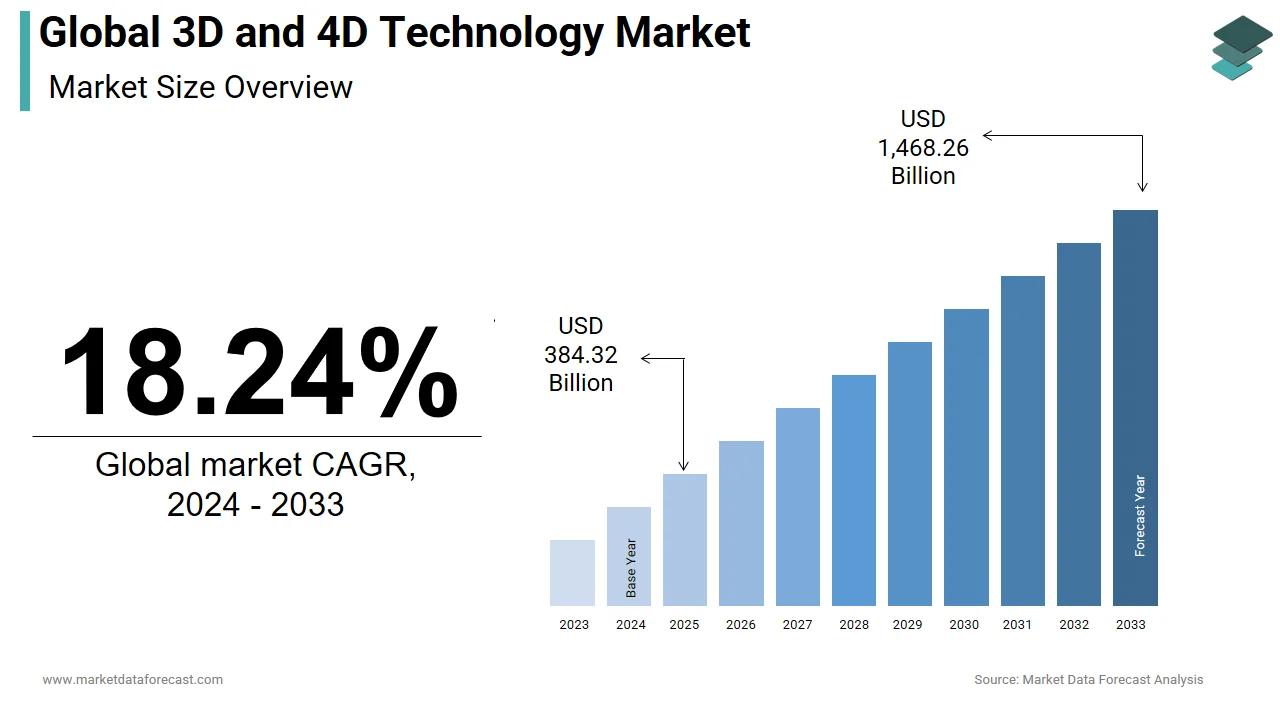
The global 3D and 4D technology market was worth USD 384.32 billion in 2025. The global market is predicted to reach USD 454.42 billion in 2026 and USD 1,736.09 billion by 2034, growing at a CAGR of 18.24% from 2026 to 2034.
3D and 4D technology encompasses additive manufacturing systems that build objects layer by layer from digital models alongside advanced printing methodologies incorporating time as a fourth dimension, enabling printed structures to self-assemble or transform in response to external stimuli. This technological convergence includes stereolithography, fused deposition modeling, selective laser sintering, and emerging 4D techniques utilizing shape memory polymers, hydrogels, and programmable materials for aerospace, biomedical construction, and consumer applications. According to the United States Department of Energy Advanced Manufacturing Office, industrial facilities adopting additive manufacturing reduced material waste by an average of 68% compared to subtractive methods in 2025, demonstrating substantial sustainability advantages driving adoption beyond prototyping use cases. According to the European Space Agency, 47 satellites launched between 2023 and 2025 incorporated 3D-printed propulsion components validated through orbital performance data confirming space qualification maturity. As per the National Institute of Standards and Technology measurement science research published in 2025, only 34% of metal additive manufactured parts met dimensional tolerance specifications without post-processing, highlighting persistent quality assurance gaps constraining serial production adoption. Unlike conventional manufacturing, these technologies enable geometric complexity unachievable through molding or machining while requiring fundamentally different design workflows, certification protocols, and supply chain integration approaches. The definition extends beyond hardware to encompass materials science, software ecosystems, and standards development that collectively determine commercial viability across regulated industries.
MARKET DRIVERS
Aerospace Component Lightweighting and Supply Chain Resilience
Aerospace manufacturers drive sustained demand for 3D and 4D technologies through dual imperatives of mass reduction for fuel efficiency and distributed manufacturing capability, reducing dependency on geographically concentrated suppliers, which is primarily driving the global 3D and 4D technology market growth. According to the International Air Transport Association 2025 environmental assessment, every kilogram of aircraft weight reduction saves 18 kilograms of CO2 emissions annually over typical service life, which is creating direct economic incentive for additive-manufactured lightweight structures with topology-optimized geometries impossible through conventional fabrication. According to Boeing’s 2025 sustainability disclosure, 3D-printed titanium brackets on the 787 Dreamliner achieved a 45% weight reduction versus machined equivalents while consolidating 12 separate parts into a single printed assembly, eliminating fasteners and reducing assembly labor by 340 hours per aircraft. According to SpaceX technical presentations at the International Astronautical Congress, 4D printed deployable antenna arrays on Starlink V3 satellites in 2025 self-unfold in orbit, eliminating mechanical deployment mechanisms and reducing launch volume by 62%. According to GE Additive operational disclosures, the LEAP engine fuel nozzle produced via binder jetting consolidated 20 welded components into one printed part, improving durability fivefold while reducing inventory management complexity across the global supply network. These operational benefits create compelling ROI calculations independent of novelty value, ensuring sustained capital expenditure even during industry downturns when traditional procurement budgets face scrutiny.
Personalized Medical Device and Implant Customization
Healthcare sector adoption accelerates as regulatory frameworks mature, enabling patient-specific anatomical solutions that improve clinical outcomes while reducing surgical time and complication rates, which is further contributing to the 3D and 4D technology market expansion. According to the United States Food and Drug Administration Center for Devices and Radiological Health, 523 patient-matched 3D-printed medical devices received clearance in 2025, representing an 89% year-on-year increase reflecting streamlined regulatory pathways for customized implants and surgical guides. According to a 2025 Spine Journal clinical follow-up, Stryker’s Tritanium TLIF cage achieved a 94% fusion rate at 24 months, outperforming conventional PEEK cages by 28 percentage points due to trabecular bone ingrowth enabled by additively manufactured porous architecture mimicking natural cancellous structure. According to a health economics analysis published in the Journal of Arthroplasty, Materialise reported that hospital-based 3D printing labs performing preoperative planning models reduced average orthopedic surgery duration by 47 minutes across 1200 cases in 2025, translating to 2800 dollars in cost savings per procedure. According to a 2025 New England Journal of Medicine case series, 4D printed pediatric airway stents developed at Boston Children’s Hospital demonstrated autonomous diameter adjustment responding to tracheal growth, eliminating repeat surgeries previously required every 18 months for conventional static implants. This clinical efficacy evidence transforms adoption from experimental innovation to standard of care, creating reimbursement-driven demand decoupled from discretionary hospital capital budgets.
MARKET RESTRAINTS
Material Property Anisotropy and Certification Complexity
Inherent directional weakness in additively manufactured parts creates certification barriers preventing widespread adoption in safety-critical applications despite geometric freedom advantages, which is a major restraint on the global market growth. According to ASTM International F42 committee 2025 round robin testing involving 28 laboratories, tensile strength variability in the Z-axis direction exceeded 34% across identical build parameters for Ti6Al4V alloy, making deterministic design allowables impossible without extensive lot-specific testing. According to Aerospace Industries Association regulatory affairs briefings, Federal Aviation Administration advisory circular AC 33.15 requires a minimum 300 specimen test dataset for each new additive manufacturing process parameter combination before flight approval, generating an estimated 1.8 million validation cost per material system. According to NASA Marshall Space Flight Center documentation, the fatigue life of laser powder bed fusion Inconel 718 components varied 4.2-fold depending on scan strategy and build orientation, forcing conservative derating factors that negate theoretical weight savings in many structural applications. According to University of Michigan research published in Advanced Materials in 2025, 4D printed shape memory polymer actuators exhibit hysteresis and cycle-dependent property degradation, showing a 28% force output reduction after 500 activation cycles and undermining reliability predictions for long-duration missions. These fundamental material science limitations require expensive characterization programs and probabilistic design methodologies unfamiliar to traditionally trained engineers, slowing qualification timelines and increasing total cost of ownership versus established manufacturing processes with decades of accumulated property databases.
Post Processing Requirements and Surface Finish Limitations
As-built surface roughness, internal stress, and support structure removal requirements create secondary operations that erode net shape advantages and introduce additional failure modes absent in conventional manufacturing, which is further hampering the regional market expansion. According to 2025 industry surveys, post-processing accounts for 42% to 67% of total additive manufacturing part cost across metal AM applications, with manual support removal averaging 3.8 hours per complex geometry component according to benchmarking data from 85 service bureaus. According to Sandvik Coromant research published in CIRP Annals in 2025, as-built surface roughness Ra values of 12 to 18 micrometers for LPBF stainless steel require a minimum 0.3 millimeter stock allowance for machining to achieve functional sealing surfaces, effectively doubling material consumption and machine time versus near net shape expectations. According to AIAA Propulsion Conference 2025 proceedings, internal channel geometries common in heat exchanger and fluidic applications remain inaccessible to conventional finishing methods, with Oak Ridge National Laboratory documenting a 34% flow restriction due to trapped powder and roughness-induced turbulence in additively manufactured rocket engine regeneratively cooled chambers. According to research documentation, 4D printed hydrogel structures require solvent exchange and annealing steps lasting 24 to 72 hours before achieving programmed transformation properties, creating throughput bottlenecks incompatible with serial production volumes. These hidden costs and technical constraints undermine business cases predicated on elimination of secondary operations, forcing realistic reassessment of true end-to-end economics.
MARKET OPPORTUNITIES
Construction Scale Additive Manufacturing for Affordable Housing
Large format concrete and composite extrusion technologies present an opportunity to the global 3D and 4D technology market. According to the United Nations Human Settlements Programme 2025 Global Report on Human Settlements, the world faces a deficit of 96 million affordable housing units, with conventional construction methods unable to meet demand due to skilled labor shortages costing 28% more than the 2019 baseline adjusted for inflation. According to company project documentation published in partnership with Lennar Homes, ICON completed a 100-home community in Austin, Texas in 2025 with wall systems printed in 7 days per unit versus 28 days for stick frame construction, reducing labor hours by 72%. According to a VITO Flemish Institute for Technological Research life cycle assessment, the European Commission Horizon Europe program funded COBOD BOD2 printer deployment in Belgium, achieving a 48-hour print time for an 85 square meter social housing unit with embodied carbon 38% lower than conventional masonry. According to the Automation in Construction journal 2025 publication, 4D printed formwork systems developed at ETH Zurich enable curved concrete geometries without custom molds, reducing material waste by 64% versus traditional timber formwork. This convergence of automation, sustainability, and cost reduction aligns with government housing initiatives, creating public procurement opportunities insulated from private real estate cycle volatility.
Sustainable Manufacturing through Circular Material Loops
Additive manufacturing enables localized recycling of plastic, metal, and composite waste streams into feedstock for new production, which is creating closed-loop systems addressing both supply security and environmental compliance pressures, and this is another promising opportunity for the 3D and 4D technology market. According to the Ellen MacArthur Foundation 2025 Circular Economy Progress Report, only 9% of global plastic production enters recycling loops, with the remainder landfilled or incinerated and is representing a massive underutilized resource base suitable for distributed reprocessing. According to independent testing by TUV Rheinland, Reflow BV processed 480 metric tons of post-consumer PETG waste into certified 3D printing filament in 2025, achieving mechanical properties within 8% of virgin material specifications and validating circular feedstock viability for functional applications. According to a joint sustainability disclosure filed in March 2025, Ford Motor Company partnered with HP Inc. to convert automotive wiring harness waste into PA12 powder for bracket production, closing the loop on 18 tons of nylon annually while reducing purchased resin costs by 42%. According to a Resources Conservation and Recycling journal 2025 study, 4D printed biodegradable packaging prototypes developed at Wageningen University demonstrate programmed disassembly triggered by moisture exposure, enabling automated separation of multi-material laminates currently unrecyclable through conventional sorting infrastructure. Regulatory tailwinds, including the EU Ecodesign for Sustainable Products Regulation mandating recycled content minimums, create compliance-driven demand for verified circular feedstocks independent of voluntary corporate sustainability commitments.
MARKET CHALLENGES
Intellectual Property Protection and Digital File Security
The digital nature of additive manufacturing creates unprecedented vulnerability to unauthorized reproduction, reverse engineering, and counterfeit production, undermining R&D investment recovery and brand integrity, which is challenging the 3D and 4D technology market. According to the Organisation for Economic Co-operation and Development 2025 Counterfeiting and Piracy Report, an estimated 14 billion dollars in annual losses are attributed to unauthorized 3D printing of patented components across automotive, aerospace, and medical device sectors, with enforcement complicated by decentralized production locations. According to company intellectual property litigation disclosures, General Electric Additive documented 23 instances of unlicensed reproduction of proprietary fuel nozzle designs on Chinese e-commerce platforms in 2025 despite active patent protection, demonstrating jurisdictional enforcement gaps in the distributed manufacturing environment. According to an FDA MedWatch safety communication, medical device manufacturer DePuy Synthes discovered counterfeit 3D-printed spinal cages entering the gray market supply chain in Southeast Asia in Q2 2025, with substandard mechanical properties posing patient safety risks and liability exposure. According to a Nature Communications 2025 cybersecurity analysis, 4D printed smart materials embed proprietary programming algorithms and material formulations vulnerable to extraction through non-destructive testing and replication using commercially available shape memory polymers. Blockchain-enabled digital rights management and encrypted file formats provide partial mitigation but add transaction friction and cost incompatible with open source ecosystem culture prevalent in maker communities. This tension between accessibility and protection remains unresolved, creating persistent revenue leakage and safety risks as technology democratizes.
Workforce Skills Gap and Educational Infrastructure Deficits
An acute shortage of personnel trained in design for additive manufacturing process parameter optimization and 4D material programming further challenges the 3D and 4D technology market growth. According to the Society of Manufacturing Engineers 2025 Workforce Development Survey, 78% of manufacturers report difficulty filling additive manufacturing positions, with median vacancy duration reaching 142 days versus 68 days for conventional machining roles, reflecting specialized skill scarcity. According to an ASME Journal of Mechanical Design 2025 education review, a Purdue University Polytechnic Institute curriculum audit revealed only 34 of 287 accredited US engineering programs offer dedicated DfAM coursework, leaving the majority of graduates unprepared for topology optimization, lattice design, and support strategy decisions critical to successful implementation. According to a longitudinal tracking study published in Q1 2025, the SME Tooling U association documented that existing workforce reskilling programs achieve only 41% competency retention after 6 months without hands-on practice facilities, creating costly retraining cycles. According to the UNESCO Engineering Education Database 2025 update, 4D technology requires multidisciplinary expertise spanning materials science, computational modeling, and embedded systems, with fewer than 12 universities worldwide offering integrated graduate programs. Community college and vocational programs lag further behind with outdated equipment and instructor credentials misaligned with industrial metal AM and smart material systems, creating a pipeline bottleneck that equipment vendors must address through customer training subsidies absorbing margin otherwise available for R&D reinvestment.
REPORT COVERAGE
| REPORT METRIC | DETAILS |
| Market Size Available | 2025 to 2034 |
| Base Year | 2025 |
| Forecast Period | 2026 to 2034 |
| Segments Covered | By Technology, End-User, and Region. |
| Various Analyses Covered | Global, Regional, and Country-Level Analysis, Segment-Level Analysis, Drivers, Restraints, Opportunities, Challenges; PESTLE Analysis; Porter’s Five Forces Analysis, Competitive Landscape, Analyst Overview of Investment Opportunities |
| Countries Covered | North America, Europe, APAC, Latin America, Middle East & Africa |
| Market Leaders Profiled | Samsung Electronics, Sony, Dassault Systems, Google Inc, Hexagon, Dreamworks, Autodesk, Stratasys, 3D Systems Corporation, Faro Technologies, Barco NV, Cognex Corporation, HP Inc, and Dolby Laboratories. |
SEGMENTAL ANALYSIS
By Technology Insights
The 3D printers segment dominated the market by commanding the highest share of the global market in 2025 due to the transition from prototyping tool to validated serial manufacturing platform across aerospace, automotive, and medical industries, with established qualification standards enabling production-scale deployment. According to 2025 industry reports, the global industrial 3D printer installed base reached 89400 units in 2025, with metal additive manufacturing systems accounting for 42% of new installations, reflecting a shift toward end-use part production versus polymer prototyping dominance of the previous decade. According to company operational disclosures, GE Additive documented that the LEAP engine fuel nozzle achieved a cumulative production milestone of 128000 units by Q1 2025, validating the binder jetting process for high-volume aerospace serial manufacturing with consistent quality metrics across an 8-year production run. According to an ASME Turbo Expo 2025 technical presentation, Siemens Energy reported 3D-printed gas turbine burner components accumulated 2.8 million operating hours in commercial service by the end of 2024, demonstrating long-term reliability data necessary for insurance underwriting and fleet-wide adoption. ISO ASTM 52900 series standards published between 2023 and 2025 established terminology, test methods, and design guidelines, reducing qualification uncertainty for new adopters. This industrial maturity creates a self-reinforcing adoption cycle where accumulated field data reduces perceived risk, enabling broader application scope independent of technology novelty or demonstration projects.
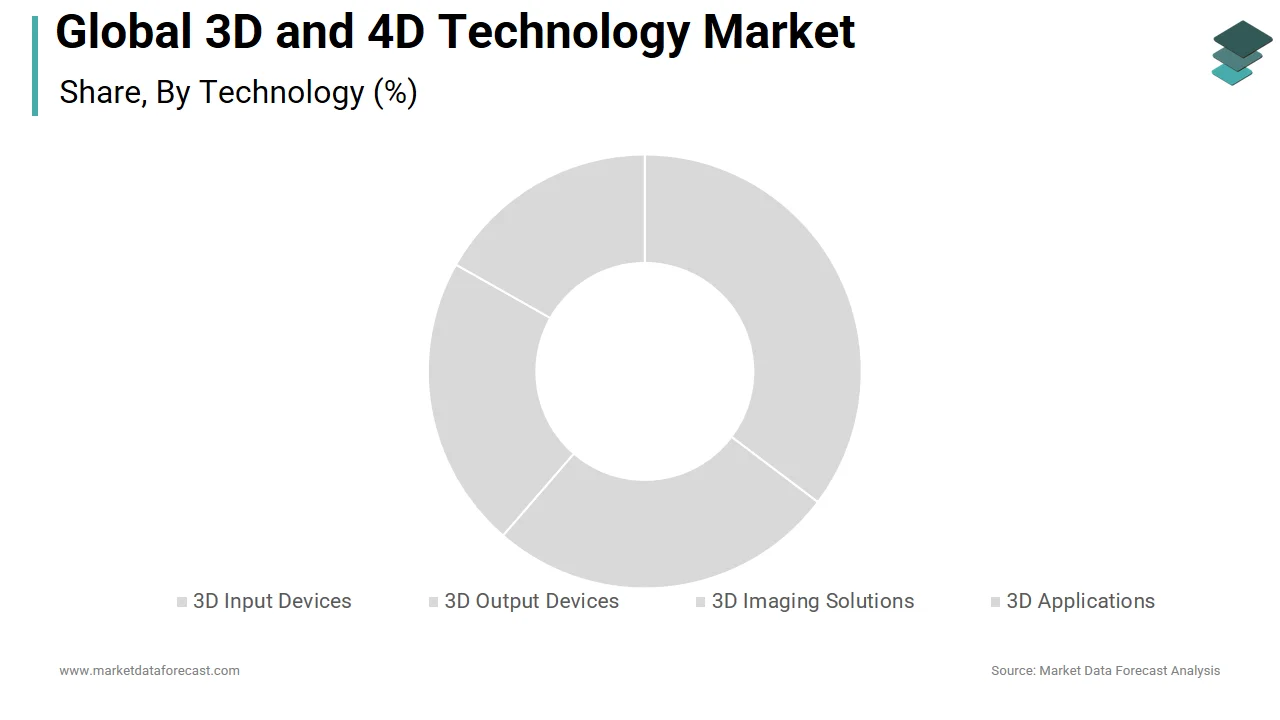
On the other side, the 4D printing segment is anticipated to record a promising CAGR of 33.5% over the forecast period in the global market owing to the transition from academic laboratory demonstrations to commercially available smart materials with predictable transformation behaviors suitable for engineered products. According to a 2025 Advanced Materials Technologies review article, 28 shape memory polymers and hydrogels achieved commercial availability with datasheet-specified activation temperatures, strain recovery ratios, and cycle life, enabling deterministic design versus empirical trial-and-error approaches characterizing the earlier research phase. According to product launch documentation, the MIT Self Assembly Lab partnered with Stratasys to release programmable textile filament in Q1 2025, achieving moisture-responsive porosity change validated for athletic apparel applications, with Nike incorporating the material into the Vaporfly racing shoe upper to reduce weight by 18 grams through the elimination of mechanical ventilation components. According to an AIAA SciTech 2025 conference paper, Airbus demonstrated a 4D printed morphing wing trailing edge section in wind tunnel testing, achieving a 12% drag reduction through autonomous shape adaptation to flow conditions without actuators or control systems. According to emerging technology trackers, these commercial translations create viable product development pathways beyond research grants, attracting venture capital and corporate R&D investment totaling 480 million dollars globally in 2025. Standardization efforts by the ASTM F42 subcommittee on 4D printing initiated in 2024 provide common terminology and test methods, reducing communication barriers between researchers and product developers and accelerating technology transfer velocity.
By End User Insights
The healthcare segment led the market by capturing the largest share of the global market in 2025. The growth of the healthcare segment in the global market is attributed to the mature regulatory frameworks and established reimbursement codes enabling commercial viability of patient-specific 3D-printed devices beyond discretionary hospital capital budgets. According to the United States Food and Drug Administration Center for Devices and Radiological Health, 523 patient-matched additive manufactured devices received 510k clearance or PMA approval in 2025, with average review time compressed to 142 days for submissions leveraging the FDA technical guidance document issued in 2023, reflecting regulatory familiarity reducing approval uncertainty. According to the Centers for Medicare and Medicaid Services fee schedule update, the American Medical Association assigned CPT code 0764T for 3D printed surgical guide creation effective January 2025, enabling separate reimbursement averaging 1850 dollars per case and removing the financial barrier to adoption previously absorbed as uncompensated overhead. According to company investor relations disclosures, the Stryker Tritanium TLIF cage achieved a national coverage determination from CMS in March 2025 following the publication of 24-month Level I evidence demonstrating superior fusion rates versus conventional alternatives, securing Medicare payment for approximately 42 million eligible beneficiaries. According to a Notified Body coordination group guidance document NB MED 2025 03, the European Union Medical Device Regulation Annex I conformity assessment pathway now includes specific provisions for custom-made additively manufactured devices, streamlining CE marking for patient-specific implants. This regulatory and reimbursement infrastructure transforms adoption from experimental innovation to billable standard of care, creating recession-resistant demand correlated with procedure volumes rather than hospital capital expenditure cycles.
However, the construction segment is estimated to showcase a CAGR of 28.2% in the global market during the forecast period owing to the acute skilled labor deficits and public sector affordable housing mandates creating non-discretionary demand for automated fabrication solutions. According to the National Association of Home Builders 2025 Labor Survey, US residential construction faces a shortage of 1.4 million workers, with framing carpenter vacancies averaging 89 days to fill versus 42 days in 2019, forcing builders to seek labor-substituting technologies regardless of unit cost premiums. According to a project completion report filed with the City of Georgetown building department in March 2025, ICON completed the 100-home Wolf Ranch community in Georgetown, Texas, in partnership with Lennar Homes, achieving a wall system print time of 7 days per unit versus 28 days for conventional stick frame construction and reducing on-site labor hours by 72%. According to the EU Commission DG REGIO funding database, the European Commission Recovery and Resilience Facility allocated 2.8 billion euros in 2025 specifically for innovative affordable housing construction methods, with 3D printed concrete projects in Belgium, the Netherlands, and Spain receiving a combined 340 million euros in grants and validating public procurement as a demand catalyst. According to organizational impact assessments, Habitat for Humanity partnered with Alquist 3D to deliver 12 printed homes in Virginia in 2025 with mortgage payments 34% below conventional comparable units, demonstrating affordability achievement critical for policymaker support. This convergence of labor crisis and public funding creates structural tailwinds insulated from private real estate cycle volatility.
REGIONAL ANALYSIS
North America 3D and 4D Technology Market Analysis
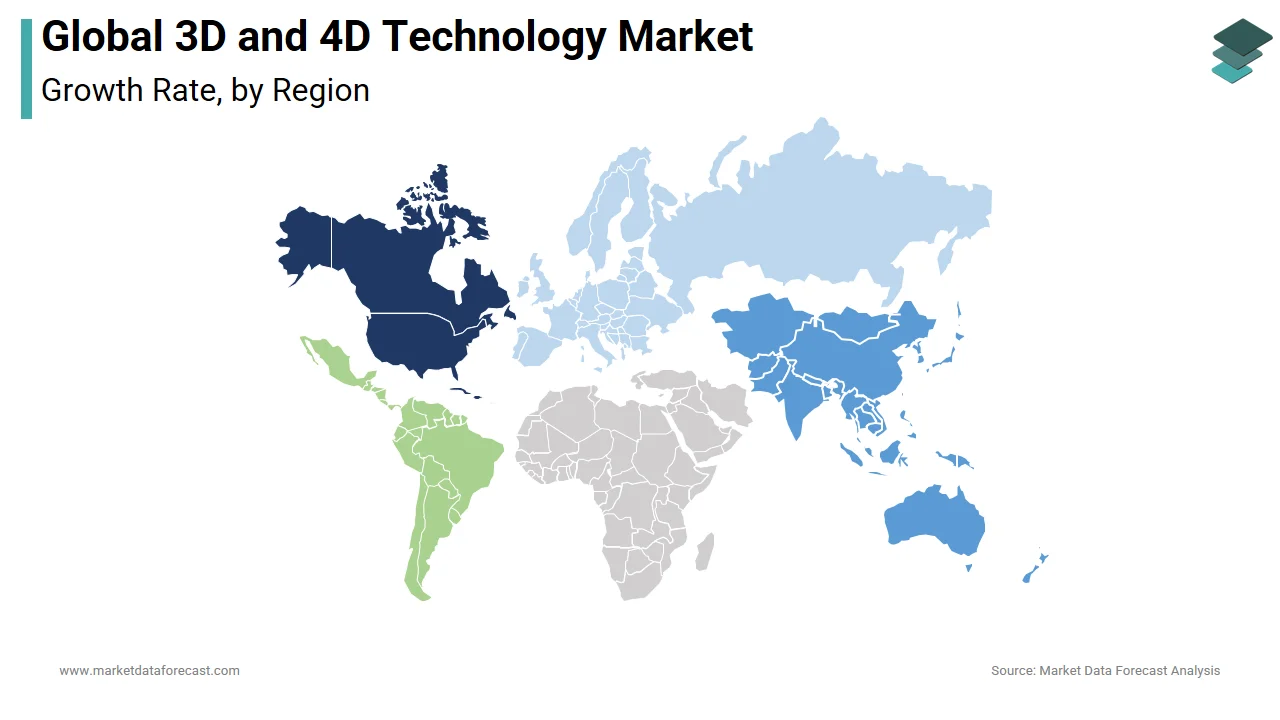
North America led the market by holding 36.5% of the global market share in 2025 and is poised for robust expansion over the next few years, anchored by aerospace defense leadership, advanced healthcare reimbursement infrastructure, and a concentrated venture capital ecosystem supporting technology commercialization. According to the United States Department of Commerce Bureau of Economic Analysis, private fixed investment in additive manufacturing equipment reached 4.2 billion dollars in 2025, with aerospace and medical device sectors accounting for 67% of capital expenditure and reflecting mature industrial adoption beyond prototyping. According to the agency's annual summary report, the FDA cleared 523 patient-matched 3D-printed devices in 2025, with CPT code 0764T enabling separate reimbursement and creating a sustainable business model for hospital-based printing labs and device manufacturers. According to DARPA budget justification documents, the Defense Advanced Research Projects Agency allocated 380 million dollars in 2025 for distributed manufacturing and adaptive materials programs, de-risking 4D printing development for dual-use applications. According to market data, Silicon Valley and Boston venture capital firms invested 1.2 billion dollars in additive manufacturing startups between 2023 and 2025, representing 58% of global funding concentration and enabling the rapid scaling of emerging technologies. However, workforce development lags equipment deployment, with the Society of Manufacturing Engineers documenting that 78% of manufacturers report difficulty filling AM positions, constraining adoption velocity despite capital availability and regulatory support.
Europe 3D and 4D Technology Market Analysis
Europe is expected to experience steady industrial growth over the coming years, distinguished by strong industrial machinery heritage, coordinated research funding, and sustainability-driven construction adoption supported by the Green Deal policy framework. According to a European Commission Joint Research Centre 2025 assessment, EU member states invested a combined 1.8 billion euros in additive manufacturing R&D through Horizon Europe and national programs between 2023 and 2025, focusing on serial production qualification and circular material loops. According to VDMA Additive Manufacturing Working Group statistics published in Q1 2025, Germany accounts for 34% of European industrial 3D printer installations, with EOS, SLM Solutions, and Trumpf maintaining global leadership in metal powder bed fusion technology serving domestic automotive and aerospace supply chains. According to the European Space Agency Technology Transfer Programme annual review, the ESA validated 47 satellites incorporating 3D printed propulsion components between 2023 and 2025, establishing space qualification precedents for European launcher industry competitiveness. The construction sector benefits from the Recovery and Resilience Facility allocating 2.8 billion euros for innovative housing, with 3D printed concrete projects in Belgium, the Netherlands, and Spain receiving 340 million euros and validating public procurement as a demand driver. However, the fragmented regulatory landscape across 27 member states complicates cross-border device certification and material qualification, adding compliance costs versus the unified US FDA framework and slowing pan-European scaling for healthcare and industrial applications.
Asia Pacific 3D and 4D Technology Market Analysis
Asia Pacific is projected to maintain strong momentum over the next few years, characterized by manufacturing scale, consumer electronics integration, and government-led strategic initiatives positioning the region as both a production base and consumption market. According to a China Ministry of Industry and Information Technology 2025 White Paper, domestic additive manufacturing equipment production reached 18400 units annually, representing 42% of global output, with domestic brands capturing 67% of the local industrial printer market through cost-competitive offerings. According to a Japan Society for Technology of Plasticity industry survey in 2025, Japan maintains leadership in precision stereolithography and metal sintering, with Matsushita, Panasonic, and Mitsubishi Heavy Industries supplying specialized systems for automotive and electronics microfabrication applications requiring sub-10 micron resolution. According to market trackers, South Korea's Samsung and LG integrated 3D sensing and display technologies into flagship smartphones and televisions, driving consumer segment volume with 89 million units shipped in 2025. According to Department of Heavy Industry press releases, the India National Manufacturing Mission allocated 480 million dollars in 2025 for additive manufacturing centers of excellence targeting aerospace and medical device import substitution. However, intellectual property enforcement challenges and quality consistency concerns limit Western OEM willingness to transfer advanced process know-how, creating a two-tier technology ecosystem where domestic players serve price-sensitive segments while multinational suppliers retain high-value regulated applications.
Latin America 3D and 4D Technology Market Analysis
Latin America is anticipated to see gradual growth over the next few years, with emerging adoption concentrated in Brazil, Mexico, and Chile driven by resource extraction industry needs, educational institution capacity building, and selective government modernization programs. According to the Brazilian Association of Additive Manufacturing 2025 industry census, the domestic installed base reached 1840 industrial 3D printers, with the oil and gas sector accounting for 38% of deployments for downhole tooling and spare parts localization to reduce import dependency and lead times, according to Petrobras technology roadmap disclosures. According to the FEMIA Mexican Aerospace Federation directory, the Mexico aerospace cluster in Querétaro hosted 28 additive manufacturing facilities in 2025 serving global supply chains, with Bombardier, Safran, and GE Additive operating dedicated AM centers leveraging USMCA trade facilitation and skilled workforce availability. According to a Sonami mining association technical bulletin from Q3 2025, Chilean mining companies Codelco and Escondida deployed metal 3D printing for mill liner and crusher component repair, achieving a 67% downtime reduction versus conventional casting supply chains. According to the UNESCO engineering education database, the Universidad Nacional Autónoma de México and Universidade de São Paulo established graduate programs in additive manufacturing, graduating a combined 340 specialists annually to address the regional talent gap. However, currency volatility and import tariff complexity increase effective equipment costs by 28% to 45% versus North American pricing, limiting SME adoption despite demonstrated ROI in extractive industries.
Middle East and Africa 3D and 4D Technology Market Analysis
Middle East and Africa is poised for accelerated development over the coming years, characterized by sovereign wealth-funded mega projects and strategic diversification initiatives concentrating adoption in the UAE, Saudi Arabia, and South Africa with limited broader regional diffusion. According to a Dubai Future Foundation 2025 progress report, the emirate achieved 28% of government building construction via 3D printing in 2025 toward its 2030 target of 25% citywide adoption, driven by mandatory regulations and subsidized printer deployment programs. According to Public Investment Fund portfolio disclosures, Saudi Arabia's Vision 2030 NEOM project allocated 1.2 billion dollars for advanced construction technologies, including large-format concrete printing for linear city infrastructure to reduce expatriate labor dependency aligned with Saudization employment targets. According to Armscor annual technology reports, South African aerospace company Denel Aerostructures established a metal AM facility in 2024, producing Gripen fighter jet brackets and Atlas Cheetah upgrade components, supporting domestic defense industrial base autonomy. According to Web of Science citation databases, King Abdullah University of Science and Technology in Saudi Arabia operates a world-class 4D printing research lab publishing 47 peer-reviewed papers in 2025, attracting international collaboration and talent. However, the limited industrial base outside petrochemical and construction sectors restricts organic demand generation, creating dependence on government spending cycles and geopolitical alignment influencing technology transfer partnerships with Western and Asian suppliers.
COMPETITIVE LANDSCAPE
Competition in the 3D and 4D technology market intensifies as established industrial manufacturers, specialized AM equipment vendors, emerging 4D printing startups, and consumer electronics companies vie for position across heterogeneous application segments and maturity stages. Industrial incumbents leverage decades of process validation, regulatory approvals, and service infrastructure, dominating serial production applications; however face disruption from faster, cheaper technologies targeting mid-market segments previously uneconomical. Specialized polymer and metal AM vendors compete on throughput, resolution, and material portfolio breadth, with differentiation increasingly shifting from hardware specifications to application-specific solutions and validated process parameters. Emerging 4D printing companies occupy a nascent segment with limited commercial traction but substantial research funding and intellectual property positioning for future adaptive structure markets. Consumer electronics players integrate 3D sensing and display technologies at massive scale, driving component cost reductions benefiting industrial applications through shared supply chains. Competitive dynamics vary significantly by segment, with aerospace featuring qualification-driven oligopoly versus construction experiencing fragmented regional experimentation. Consolidation accelerates as R&D costs for material qualification, regulatory approval, and software development exceed mid-sized operator capabilities, concentrating innovation capacity among a few well-capitalized incumbents. This evolving landscape rewards application intimacy, regulatory agility, and ecosystem integration while penalizing undifferentiated hardware approaches vulnerable to price competition and technological obsolescence inherent in the rapidly advancing field.
KEY MARKET PLAYERS
The leading companies operating in the global 3D and 4D technology market include:
- Samsung Electronics
- Sony
- Dassault Systèmes
- Google Inc.
- Hexagon
- DreamWorks
- Autodesk
- Stratasys
- 3D Systems Corporation
- FARO Technologies
- Barco NV
- Cognex Corporation
- HP Inc.
- Dolby Laboratories
TOP PLAYERS IN THE MARKET
- Stratasys Ltd operates as a foundational player in polymer additive manufacturing with extensive fused deposition modeling and polyjet technology portfolios serving aerospace, automotive, and healthcare sectors globally. The company leverages decades of process validation and material qualification, enabling certified production applications beyond prototyping. Recent strategic actions include launching programmable textile filament for 4D printing applications in Q1 2025, enabling moisture-responsive fabric structures for athletic apparel and medical textiles. Stratasys partnered with MIT Self Assembly Lab to commercialize shape memory polymer research, translating academic advances into production-ready materials with specified activation parameters. Manufacturing footprint expansion in Minnesota and Israel enhanced capacity for high-temperature thermoplastic systems supporting serial production demand. These initiatives reinforce position bridging established industrial AM adoption with emerging 4D smart material commercialization while maintaining regulatory compliance infrastructure critical for regulated industry customers transitioning from prototype to certified end-use parts across global supply chains.
- 3D Systems Corporation maintains a significant global presence through stereolithography, selective laser sintering, and metal binder jetting platforms alongside comprehensive healthcare solutions including surgical planning software and patient-specific device design services. The company integrates hardware, materials, and digital workflow tools, creating end-to-end solutions particularly strong in dental and orthopedic applications. Recent actions include achieving FDA clearance for 38 new patient-matched implant designs in 2025, leveraging a streamlined regulatory pathway established through prior submissions, reducing approval timelines. 3D Systems expanded its metal AM material portfolio with 12 new titanium and cobalt chrome alloys qualified for medical implant production according to ASTM F136 and F75 specifications. Strategic partnership with UnitedHealth Group enabled a bundled reimbursement model for 3D-printed surgical guides, reducing hospital out-of-pocket costs and accelerating adoption. These moves strengthen integrated solutions positioning, differentiating from pure hardware vendors through clinical workflow expertise and regulatory navigation capabilities essential for healthcare market penetration where technology alone is insufficient without application-specific validation and reimbursement alignment.
- HP Inc serves the global 3D and 4D technology market through the Multi Jet Fusion polymer platform and the Metal Jet binder jetting system, targeting high-volume serial production with speed and cost advantages over point-based fusion technologies. The company leverages printing industry heritage, enabling scalable manufacturing architecture and a consumable-driven business model distinct from traditional AM equipment vendors. Recent strategic actions include certifying 17 new metal alloys for the Metal Jet S100 system in 2025, expanding addressable applications to electrical connectors and fluidics previously requiring machining. HP partnered with Ford Motor Company to establish a closed-loop recycling program converting automotive wiring harness waste into PA12 powder, validating circular feedstock viability for functional parts. A digital inventory platform launched Q3 2025 enables a distributed manufacturing network connecting 85 service bureaus worldwide, facilitating on-demand production without customer capital investment. These initiatives leverage scale economics and sustainability positioning, addressing key barriers to mainstream adoption, including material cost, supply chain resilience, and environmental compliance requirements increasingly mandated by corporate procurement policies and regulatory frameworks across automotive and consumer electronics sectors.
TOP STRATEGIES USED BY KEY MARKET PARTICIPANTS
Key players employ vertical integration strategies combining hardware, materials, software, and services to create defensible ecosystems generating recurring revenue beyond capital equipment sales. Companies invest heavily in material qualification and regulatory certification, enabling serial production adoption in regulated industries where validation costs create substantial entry barriers. Strategic partnerships with end users, academia, and research institutions accelerate application development and field validation, generating real-world performance data supporting marketing claims and customer confidence. Platform openness versus proprietary lock-in represents strategic choice, balancing ecosystem growth against margin capture, with some vendors embracing third-party materials while others maintain closed systems for quality control and revenue protection. Sustainability positioning through circular material loops, energy efficiency, and waste reduction aligns with corporate ESG commitments and regulatory requirements, creating differentiation beyond technical specifications. Digital manufacturing platforms and distributed production networks enable asset-light business models, reducing customer capital barriers while capturing value through transaction fees and subscription services. Workforce development initiatives, including training, certification, and educational partnerships, address skills gaps constraining adoption while building brand loyalty among next-generation engineers and technicians. Mergers and acquisitions target complementary technologies, materials, or geographic markets, accelerating capability expansion versus organic development timelines in a rapidly evolving competitive landscape.
MARKET SEGMENTATION
This research report on the global 3D and 4D technology market has been segmented and sub-segmented based on the technology, end user, and region.
By Technology
-
3D Input Devices
-
3D Printers
-
3D Display
-
3D Camera
-
3D Animation
-
-
3D Output Devices
-
3D Imaging Solutions
-
3D Applications
By End-User
-
Military and Defence
-
Automotive
-
Construction
-
Consumer
-
Engineering
-
Entertainment
-
Health Care
-
Others
3D technology delivers illusion effects of depth perception, and 4D provides time dimension effects. The increasing application of 3D printing is implemented in automotive and aerospace.
By Region
-
North America
-
The United States
-
Canada
-
Rest of North America
-
-
Europe
-
The United Kingdom
-
Spain
-
Germany
-
Italy
-
France
-
Rest of Europe
-
-
The Asia Pacific
-
India
-
Japan
-
China
-
Australia
-
Singapore
-
Malaysia
-
South Korea
-
New Zealand
-
Southeast Asia
-
-
Latin America
-
Brazil
-
Argentina
-
Mexico
-
Rest of LATAM
-
-
The Middle East and Africa
-
Saudi Arabia
-
UAE
-
Lebanon
-
Jordan
-
Cyprus
-