- Product Description Description
- Table of Contents TOC
- List of Table & Figure LOT
- Get Free Sample PDF Sample PDF
Market Size, 2025
$2.03 BnMarket Estimate, 2026
$2.18 BnMarket Forecast, 2034
$3.84 BnCAGR, 2026–2034
7.34%Europe Hot Pot Market Report Summary
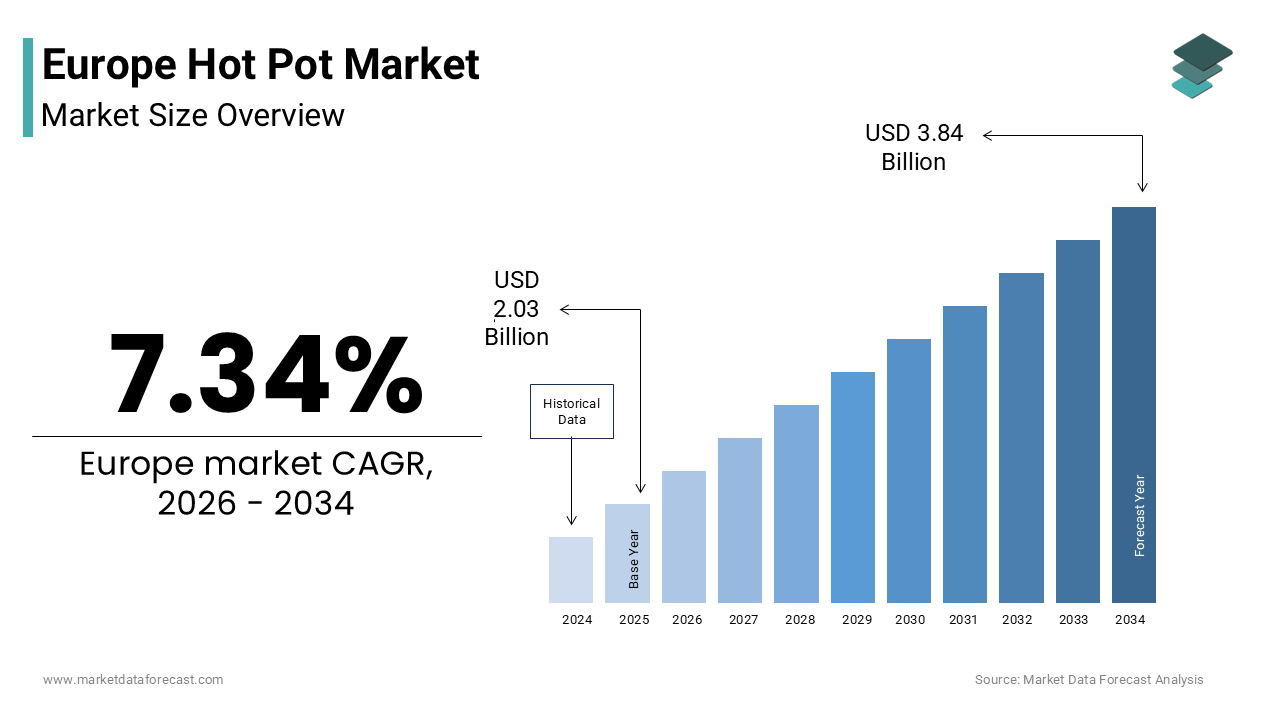
The Europe hot pot market was valued at USD 2.03 billion in 2025, is estimated to reach USD 2.18 billion in 2026, and is projected to reach USD 3.84 billion by 2034, growing at a CAGR of 7.34% during the forecast period from 2026 to 2034. The growth of the Europe hot pot market is driven by the rising popularity of experiential dining, increasing demand for social and interactive food experiences, and the expanding influence of Asian culinary culture across the region. Additionally, the growth of retail-ready hot pot kits, increasing adoption of home-based communal dining, and the expansion of Asian diaspora populations are further fueling market growth.
Key Market Trends
- Rising demand for experiential and interactive dining formats among millennials and Gen Z
- Growing popularity of home-based hot pot kits and electric cooking appliances
- Increasing influence of Asian cuisine and diaspora-driven culinary adoption
- Expansion of health-conscious and dietary-specific hot pot broth options
- Rising penetration of online platforms for hot pot equipment and ingredient purchases
Segmental Insights
- Based on type, the electric hot pot segment was the largest and held a significant share of the Europe hot pot market in 2025. The dominance of this segment is attributed to its compatibility with European housing infrastructure, safety standards, and ease of use in both residential and commercial settings.
- Based on material, the stainless steel segment accounted for 55.9% of the Europe hot pot market share in 2025, owing to its durability, corrosion resistance, and compliance with stringent European food safety regulations.
- Based on distribution channel, the supermarkets and hypermarkets segment was the largest, holding 44.7% of the Europe hot pot market share in 2025. This dominance is driven by the convenience of purchasing both appliances and fresh ingredients in a single location.
Regional Insights
The Europe hot pot market is experiencing steady growth across major countries, supported by cultural diversity, urbanization, and evolving dining preferences.
- The United Kingdom dominated the market by accounting for 28.8% of the Europe hot pot market share in 2025, driven by a multicultural population, strong Asian diaspora, and a vibrant restaurant ecosystem.
- Germany holds a significant share, supported by rising interest in experiential dining and increasing availability of premium hot pot restaurants.
- France is witnessing strong growth due to its fusion of traditional gastronomy with Asian cuisine and increasing demand for high-quality dining experiences.
- The Netherlands is emerging as a fast-growing market, driven by its role as a logistics hub for Asian ingredients and high adoption of home cooking kits.
- Spain is gaining traction due to its strong social dining culture and growing interest in international cuisines among younger consumers.
Competitive Landscape
The Europe hot pot market is highly competitive, characterized by the presence of global chains and local players competing on authenticity, customer experience, and menu innovation. Companies are focusing on localization strategies, digital integration, and expansion into retail formats such as ready-to-cook kits to strengthen their market position. Increasing adoption of automation and partnerships with local suppliers are also shaping the competitive dynamics. Key players in the Europe hot pot market include Haidilao International Holding Ltd., Little Sheep Group Limited, Xiabu Xiabu Catering Management Co., Ltd., Shabu Sai, The Dolar Shop, Happy Lamb Hot Pot, Boiling Point Group, Inc., Chongqing Dezhuang Industry Group Co., Ltd., Shu Da Xia Hot Pot, and CouCou Hotpot.
Europe Hot Pot Market Size
The Europe hot pot market size was valued at USD 2.03 billion in 2025 and is anticipated to reach USD 2.18 billion in 2026 from USD 3.84 billion by 2034, growing at a CAGR of 7.34% during the forecast period from 2026 to 2034.
Hot pot is dedicated to the communal dining experience of cooking raw ingredients in a simmering pot of soup stock at the table, a tradition rooted deeply in East Asian cultures but rapidly evolving within the European culinary landscape. This market is defined not merely by the consumption of food but by the social ritual of shared preparation, involving specific equipment such as electric multi-cookers, induction-compatible vessels, and divided pots for dual-flavor broths. The definition extends to the supply chain of specialized ingredients including thinly sliced meats, diverse seafood, tofu variants, and an array of dipping sauces that distinguish this cuisine from standard stews. According to Eurostat, the Asian population in the European Union has grown significantly, which is creating a robust demographic baseline for authentic demand. Furthermore, the rise of social dining trends is evident, as per the European Travel Commission, which noted that a majority of European diners prioritize experiential meals that foster interaction over passive service. The market also includes the retail segment where consumers purchase home kits and appliances to replicate the restaurant experience. As per the European Appliance Industry Association, sales of multi-functional electric cookers suitable for hot pot have surged, indicating a shift towards home-based communal cooking. This sector operates at the intersection of ethnic authenticity, social entertainment, and the growing consumer preference for interactive and customizable dining formats across major European urban centers.
MARKET DRIVERS
Rising Popularity of Experiential and Social Dining Concepts
The shifting consumer preference towards experiential dining where the process of cooking is as valued as the consumption itself is one of the key factors propelling the expansion of the Europe hot pot market. European diners, particularly millennials and Generation Z, increasingly seek meals that offer social engagement and customization, traits inherent to the hot pot format where individuals cook their own ingredients at the table. According to the European Food Information Council, younger consumers show a strong preference for dining options that allow personalization of flavors and ingredients, which is a core feature of hot pot establishments. For instance, restaurants offering interactive dining experiences have recorded stronger revenue growth compared to traditional venues in major cities. The communal nature of hot pot aligns with the European culture of gathering with friends and family for extended meals, which is transforming dinner into a social event rather than a mere necessity. Furthermore, the versatility of hot pot allows it to cater to diverse dietary preferences within a single group, as each diner controls their own cooking time and spice levels. This adaptability makes it an ideal choice for mixed groups, driving repeat visits and word-of-mouth promotion.
Expansion of Asian Diaspora and Cultural Integration
The substantial growth and increasing cultural integration of the Asian diaspora across Europe that serves as both a primary consumer base and a catalyst for mainstream adoption is further contributing to the Europe hot pot market growth. The presence of large communities from China, Vietnam, Thailand, and other Asian nations has established a strong foundation of authentic hot pot restaurants that preserve traditional recipes while introducing them to local populations. According to Eurostat, the number of non-EU citizens from Asian countries residing in the European Union has increased, bringing distinct culinary traditions to the forefront of the European food scene. These communities often act as cultural ambassadors, hosting festivals and events where hot pot is featured prominently, thereby educating the broader public about its nuances. For instance, culinary tourism focused on authentic ethnic experiences has been rising, with hot pot being a key attraction in cities with significant Asian quarters. The success of authentic establishments has encouraged local entrepreneurs to launch fusion concepts that blend traditional hot pot elements with European tastes, further broadening the appeal. Moreover, the availability of authentic ingredients in mainstream supermarkets has improved, with major retailers reporting increased sales of Asian specialty items like bok choy, enoki mushrooms, and hot pot bases. This accessibility lowers the barrier to entry for home cooking, expanding the market beyond the restaurant sector.
MARKET RESTRAINTS
High Operational Costs and Complex Ventilation Requirements
The growth of the European hot pot market is primarily impeded by the substantial operational cost associated with establishing and maintaining restaurants due to the complex ventilation systems required to manage steam and odours. Unlike standard dining setups, hot pot venues generate significant amounts of steam and aromatic vapours that necessitate industrial-grade extraction systems to comply with strict European health and safety regulations. According to the European Restaurant Association, the initial capital expenditure for installing compliant ventilation infrastructure in hot pot restaurants is considerably higher than for conventional eateries, which is posing a barrier to entry for small business owners. Furthermore, the ongoing energy costs to power individual induction burners at every table and run high-capacity exhaust fans contribute to elevated utility bills. As per energy regulatory bodies in Germany and France, commercial electricity prices have shown volatility, disproportionately affecting energy-intensive dining concepts like hot pot. The logistical challenge of retrofitting historic buildings with modern ventilation ducts often leads to prohibitive renovation costs or outright rejection by landlords. Additionally, the need for specialized table layouts to accommodate pots and power sources limits seating density and potentially reducing revenue per square meter compared to traditional setups.
Supply Chain Vulnerabilities for Authentic Specialized Ingredients
The fragility of the supply chain for specific authentic ingredients essential to the hot pot experience that are often difficult to source consistently within Europe is further hampering the hot pot market expansion in Europe. Key components such as thinly sliced lamb and beef, exotic mushrooms, and traditional spice pastes require specialized processing and cold chain logistics that are not always robust across the continent. According to the European Commission, imports of certain perishable Asian vegetables and meat products face stringent checks and customs delays, which is leading to occasional shortages and price volatility. For instance, the cost of importing niche hot pot ingredients has risen due to increased freight rates and regulatory compliance costs. This inconsistency forces restaurants to either compromise on authenticity by substituting local alternatives or charge premium prices that deter price-sensitive diners. The lack of a unified European distribution network for these specialized goods means that restaurants outside major metropolitan hubs struggle to maintain a consistent menu. Furthermore, the short shelf life of many fresh hot pot ingredients increases food waste, adding to operational inefficiencies. Until a more resilient and localized supply chain for these commodities is established, the market will remain constrained by logistical bottlenecks that hinder scalability and uniform quality assurance.
MARKET OPPORTUNITIES
Innovation in Health-Conscious and Dietary-Specific Broths
The development and marketing of health-conscious broth options that cater to the growing European demand for functional and dietary-specific foods is a promising opportunity in the Europe hot pot market. As consumers become increasingly aware of nutritional intake, there is a rising desire for hot pot experiences that offer low-sodium, organic, vegan, and keto-friendly broth bases without compromising on flavor. According to the European Health and Nutrition Association, many European consumers actively seek meals that align with specific health goals, which is creating a vast untapped market for specialized hot pot menus. Restaurants and ready-to-cook kit manufacturers can capitalize on this by introducing broths enriched with collagen, probiotics, or herbal remedies traditional in Asian medicine but novel to the European palate. For instance, the plant-based food sector in Europe is projected to grow strongly, suggesting potential for vegan hot pot sets featuring mushroom-based umami broths and plant protein slices. Furthermore, the transparency of the hot pot cooking method allows diners to control exactly what goes into their bowl, which is a feature that can be marketed to health-conscious individuals who wish to avoid hidden sugars and fats. By collaborating with nutritionists to certify broth recipes and highlighting the use of locally sourced organic vegetables and operators can position hot pot as a wellness-oriented dining choice.
Expansion of Retail Ready-to-Cook Hot Pot Kits
The rapid expansion of the retail sector through ready-to-cook hot pot kits presents a lucrative opportunity to bring the communal dining experience directly into European homes. With the continued popularity of home cooking and the desire for restaurant-quality meals without extensive preparation, pre-packaged hot pot kits containing pre-sliced meats, washed vegetables, noodles, and concentrated broth bases offer immense convenience. As per the European Retail Forum, meal kits in Europe have sustained strong growth, with ethnic cuisine kits showing the highest engagement rates among young urban professionals. Supermarkets and online grocery platforms can leverage this trend by offering curated hot pot boxes tailored for two or four people, complete with electric pots or compatible accessories. Subscription models where customers receive monthly deliveries of seasonal ingredients and exclusive broth recipes foster loyalty and recurring revenue. Additionally, partnerships with appliance manufacturers to bundle electric hot pot cookers with ingredient kits can lower the barrier to entry for first-time users. Market analysis suggests that the convenience factor combined with the social aspect of home hot pot parties resonates strongly with European families. By optimizing packaging for freshness and providing clear digital instructions via QR codes, retailers can demystify the process and make hot pot a staple in the European freezer aisle.
MARKET CHALLENGES
Stringent Food Safety Regulations Regarding Raw Ingredients
One of the significant challenges confronting the Europe hot pot market is navigating the rigorous food safety regulations concerning the serving and consumption of raw or semi-raw ingredients, which is central to the dining style. European food safety authorities enforce strict guidelines on the handling, storage, and presentation of raw meats and seafood to prevent foodborne illnesses, requiring restaurants to implement meticulous protocols that can be operationally burdensome. According to the European Food Safety Authority, lapses in cold chain maintenance of thinly sliced meats displayed on tables can lead to severe penalties and reputational damage, which is forcing operators to invest heavily in specialized refrigeration display units. Ethnic restaurants specializing in raw ingredient dining face higher scrutiny and more frequent inspections than their counterparts. Furthermore, varying regulations across different EU member states create a fragmented compliance landscape, which is making it difficult for chains to standardize operations across borders. The cultural perception of risk associated with eating raw ingredients, even when cooked at the table, can also deter cautious consumers, requiring constant education and reassurance.
Intense Competition from Diverse Ethnic and Local Dining Options
The Europe hot pot market faces intense competition from a saturated landscape of diverse ethnic cuisines and established local dining concepts that vie for the same discretionary spending of European consumers. The continent boasts a rich tapestry of culinary options ranging from Italian trattorias and Spanish tapas bars to Indian curry houses and Japanese sushi outlets, all of which offer strong social dining elements that compete directly with the communal appeal of hot pot. According to the European Hospitality Sector, the density of restaurant openings in major urban centers has reached record highs, leading to fierce competition for prime real estate and customer attention. As per consumer behavior studies, while interest in Asian cuisine is high, the frequency of dining out for hot pot is lower compared to more familiar options like pizza or burgers due to perceived complexity and higher average check sizes. Additionally, the rise of fast-casual dining concepts that offer high-quality food at lower price points and faster turnover rates poses a significant threat to the traditional hot pot model. To survive, hot pot establishments must constantly innovate their menus, ambiance, and service speed to differentiate themselves in a crowded market where consumer loyalty is fleeting and options are abundant.
REPORT COVERAGE
| REPORT METRIC | DETAILS |
| Market Size Available | 2025 to 2034 |
| Base Year | 2025 |
| Forecast Period | 2026 to 2034 |
| CAGR | 7.34% |
| Segments Covered | By Type, Material, Distribution Channel and Region. |
| Various Analyses Covered | Global, Regional & Country Level Analysis, Segment-Level Analysis, DROC, PESTLE Analysis, Porter’s Five Forces Analysis, Competitive Landscape, Analyst Overview of Investment Opportunities |
| Country Covered | UK, France, Spain, Germany, Italy, Russia, Sweden, Denmark, Switzerland, the Netherlands, Turkey, the Czech Republic, and the Rest of Europe |
| Market Leaders Profiled | Haidilao International Holding Ltd., Little Sheep Group Limited, Xiabu Xiabu Catering Management Co., Ltd., Shabu Sai, The Dolar Shop, Happy Lamb Hot Pot, Boiling Point Group, Inc., Chongqing Dezhuang Industry Group Co., Ltd., Shu Da Xia Hot Pot, and CouCou Hotpot |
SEGMENTAL ANALYSIS
By Type Insights
The electric hot pot segment led the market by commanding for 61.5% of the European market share in 2025. The growth of the electric segment in the European market is driven by the seamless integration of electrical heating elements into dining tables and portable units, which aligns perfectly with European safety standards and the infrastructure of modern apartments that often lack gas connections or robust ventilation for open flames. The primary factor propelling the electric segment is its compatibility with the dense urban housing stock across Europe, where gas usage indoors is increasingly restricted or unavailable. A significant majority of European residents live in apartment complexes where installing gas lines for individual dining tables is prohibitively expensive and often prohibited by building codes. According to Eurostat, most of the EU population resides in flats, creating a natural demand for plug-and-play cooking solutions that do not require complex utility modifications. As per the European Committee for Electrotechnical Standardization, compliance certifications for electric kitchen appliances are more streamlined than those for gas equipment, accelerating market entry for manufacturers. Furthermore, the precision of electric induction technology allows for exact temperature control, which is crucial for cooking delicate ingredients like thinly sliced meats and seafood. This technological advantage, combined with ease of installation in both restaurants and homes, secures the dominance of electric models over traditional gas-fired alternatives in the European landscape.
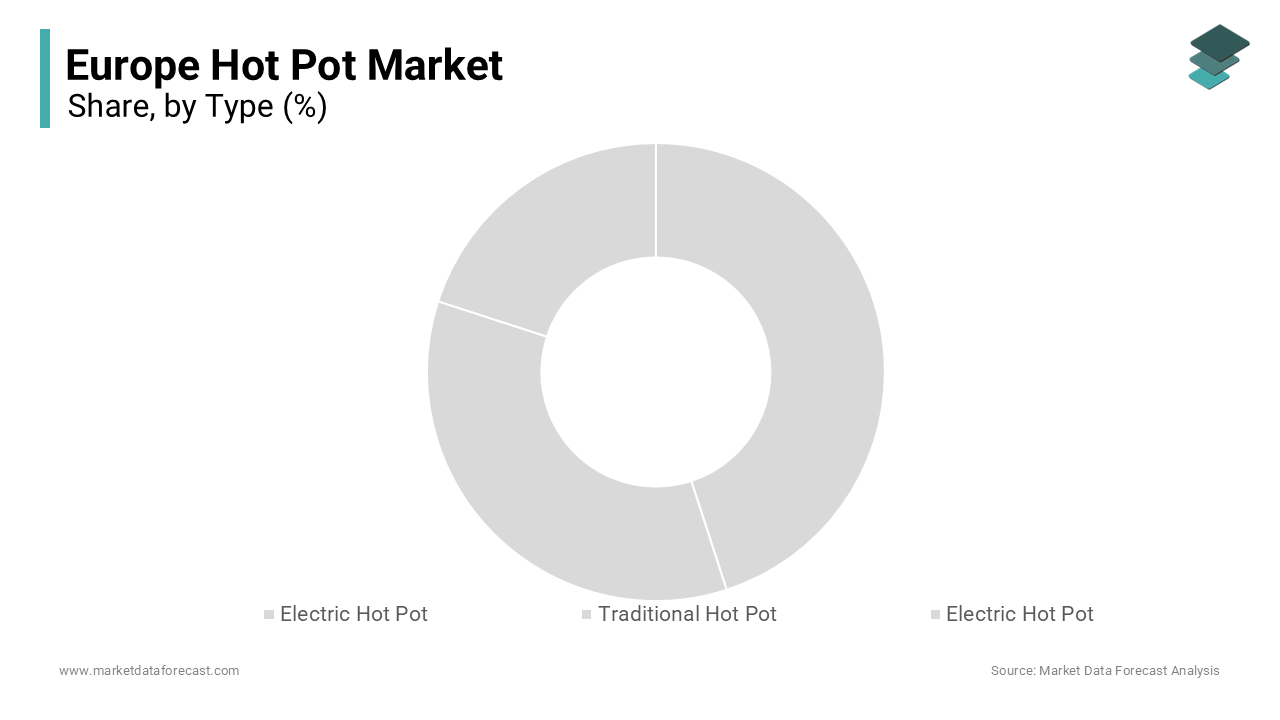
However, the traditional hot pot segment is projected to be the fastest-growing type and register a CAGR of 10.5% over the forecast period in the European market owing to the intensifying demand for authentic culinary experiences that purists argue can only be achieved through flame-based cooking. The surge in growth for traditional hot pots is also driven by a dedicated cohort of culinary enthusiasts and diaspora communities who believe that gas or charcoal fires impart a unique flavor that electric elements cannot replicate. As per the European Food Culture Institute, there has been an increase in the number of high-end authentic Asian restaurants in major European cities that explicitly market their use of traditional flame-based cooking methods as a premium differentiator. These establishments attract food tourists and locals willing to pay a premium for the perceived superiority of flavor derived from direct flame contact with the pot. For instance, many frequent hot pot diners prefer the ambiance and ritualistic aspect of managing a flame, viewing it as an integral part of the social event. This desire for genuineness drives the establishment of specialized venues equipped with advanced ventilation to handle gas or charcoal, which is fostering a luxury niche that is expanding rapidly despite higher operational complexities.
By Material Insights
The stainless-steel segment led the market by accounting for 55.9% of the European market share in 2025. The leading position of stainless-steel segment in the European market can be credited to the material's exceptional durability, resistance to corrosion, and compatibility with the rigorous hygiene standards enforced across the European food service industry. The growth of the stainless-steel segment is further attributed to its unparalleled ability to meet the stringent hygiene and food safety regulations mandated by European authorities. Stainless steel is non-porous, preventing the absorption of bacteria, flavors, and odours, which is critical when handling raw meats and diverse broths in a communal setting. According to the European Food Safety Authority, materials used in food contact must undergo rigorous testing to ensure they do not leach harmful substances, a standard that high-grade stainless steel consistently meets. As per health inspection agencies in Germany and the UK, restaurants using stainless steel cookware report fewer hygiene-related violations compared to those using porous or reactive materials. Furthermore, stainless steel is resistant to rust and corrosion even when exposed to salty broths and acidic dipping sauces, ensuring a long operational lifespan. This reliability reduces replacement costs for businesses and assures consumers of a safe dining environment.
On the other hand, the ceramic segment is emerging as the fastest-growing material type and is expected to expand at a CAGR of 11.4% over the forecast period owing to a growing consumer preference for natural, non-reactive cooking surfaces and the aesthetic versatility that ceramic offers in premium dining settings. The rising consumer demand for cooking materials that are completely non-reactive and free from metal leaching concerns is further contributing to the growth of the ceramic segment in the European market. According to the European Consumer Organisation, there is a rising trend in purchasing kitchenware made from natural clay and ceramic due to perceptions of purity and safety. Ceramic glazes create an inert barrier that ensures the taste of the broth remains unadulterated, a feature highly valued by purists and chefs focusing on flavor integrity. As per retail sales data in France and Italy, ceramic cookware purchases have been increasing, which is driven by marketing campaigns highlighting the health benefits of earth-derived materials. Furthermore, ceramic retains heat exceptionally well and keeping broths simmering gently even after the heat source is lowered, which enhances the cooking experience for delicate ingredients. This alignment with wellness trends and the desire for authentic, unmodified flavors positions ceramic as the preferred choice for a growing segment of discerning consumers, which is fuelling its rapid market expansion.
By Distribution Channel Insights
The supermarkets and hypermarkets segment held the dominant position in the Europe hot pot market in 2025 with 44.7% of the regional market share. This dominance is driven by the one-stop shopping convenience they offer, allowing consumers to purchase both the hardware (pots) and the perishable ingredients (meats, vegetables, broths) required for a complete hot pot meal in a single trip. The unique ability of these large-format retailers to consolidate the purchase of durable goods like hot pot appliances with fresh, perishable ingredients under one roof is further contributing to the dominance of supermarkets and hypermarkets segment in the European market. Hot pot is a meal format that requires a specific ecosystem of items including thinly sliced meats, leafy greens, noodles, and dipping sauces, which are predominantly found in the fresh food sections of major grocery chains. According to the European Retail Round Table, a majority of European households prefer to buy all components of a complex meal from a single retailer to save time and ensure compatibility. Supermarkets have capitalized on this by creating dedicated Asian food aisles and seasonal displays that feature electric pots alongside pre-packaged hot pot ingredient kits, simplifying the planning process for consumers. As per consumer behavior analysis, basket size increases significantly when hardware and fresh food are co-located, driving higher revenue per visit. Furthermore, the trust associated with established supermarket brands regarding food safety and quality assurance encourages families to experiment with hot pot at home. This comprehensive sourcing capability cements the position of supermarkets as the primary gateway for hot pot adoption in Europe.
On the other hand, the online stores segment is the fastest-growing distribution channel and is estimated to record a CAGR of 13.3% over the forecast period owing to the increasing complexity of hot pot equipment requiring detailed research, the rise of niche ingredient delivery services, and the convenience of home delivery for heavy appliances. The wide variety of specialized hot pot equipment and the availability of detailed product information that aids informed purchasing decisions are further favouring the expansion of the online retail segment in the European market. Unlike physical stores where shelf space limits the range of models, online platforms offer an extensive selection of electric pots with specific features such as dual-divided bowls, variable temperature controls, and premium materials that may not be stocked locally. According to Digital Commerce 360, most consumers research kitchen appliances online before buying, relying on video demonstrations, customer reviews, and comparison tools to understand the nuances of different hot pot systems. The ability to read verified feedback from other users regarding performance, durability, and ease of cleaning is crucial for high-involvement purchases like cooking appliances. Market analysis shows that conversion rates for niche kitchenware are higher on platforms that provide rich multimedia content and Q&A sections. Furthermore, online retailers often carry exclusive brands and innovative models from Asian manufacturers that have not yet entered physical European retail chains. This depth of assortment and informational transparency empowers consumers to find the perfect solution for their specific needs, which is driving a rapid shift towards digital channels for acquiring hot pot hardware.
REGIONAL ANALYSIS
United Kingdom Hot Pot Market Analysis
The United Kingdom dominated the European hot pot market in 2025 by capturing 28.8% of the regional market share. The dominance of the UK in the European market is bolstered by a highly multicultural population, particularly in London and Manchester, and a vibrant food scene that eagerly embraces global dining trends. The UK market is characterized by a high density of authentic hot pot restaurants ranging from budget-friendly chains to premium establishments, which is catering to both the large Asian diaspora and local foodies. According to the Office for National Statistics, the Asian community in the UK has grown steadily, creating a robust baseline demand for traditional flavors. Furthermore, the British love for social dining and the night-out culture aligns perfectly with the communal nature of hot pot. As per the UK Hospitality Sector, Asian cuisine restaurants have seen strong growth in footfall, with hot pot venues leading this expansion. The presence of major international hot pot chains establishing their European headquarters in London further validates the market's maturity. Additionally, the widespread adoption of food delivery apps has made hot pot ingredients and ready-to-eat kits accessible to a wider audience, driving home consumption.
Germany Hot Pot Market Analysis
Germany held a promising share of the Europe hot pot market in 2025. The German market is defined by a strong appreciation for high-quality ingredients and a growing interest in experiential dining among its urban population. German consumers are increasingly seeking interactive meal options that allow for customization, a core feature of the hot pot experience. According to the Federal Statistical Office of Germany, expenditure on out-of-home dining has recovered strongly, with Asian cuisines ranking among the top choices for young professionals in cities like Berlin, Munich, and Frankfurt. The country's strict food safety standards have led to the development of high-end hot pot venues that emphasize hygiene and premium sourcing, appealing to the discerning German palate. Industry reports note that the number of specialized hot pot restaurants in Germany has increased significantly, reflecting a rapid mainstreaming of the cuisine. Furthermore, the German retail sector has responded by expanding Asian food aisles in major supermarkets, making ingredients more accessible for home cooking.
France Hot Pot Market Analysis
France is predicted to account for a prominent share of the Europe hot pot market during the forecast period owing to its unique fusion of traditional French gastronomy with Asian culinary influences. The French market is characterized by a sophisticated approach to hot pot, where emphasis is placed on the quality of the broth and the provenance of ingredients, mirroring the country's broader food values. Paris serves as an epicentre for this trend, hosting numerous upscale hot pot restaurants that cater to both locals and tourists. According to the French Ministry of Agriculture, imports of Asian vegetables and specialty meats have increased, which is signalling deeper integration of these ingredients into the national diet. The French penchant for long, leisurely meals align naturally with the slow-paced, social nature of hot pot dining. As per tourism boards, culinary tourism focused on exotic experiences is a key driver, with visitors actively seeking authentic Asian dining options. Additionally, the rise of fusion cuisine in France has led to innovative hot pot variations that incorporate local products like cheese and wine-infused broths, attracting a broader demographic.
Netherlands Hot Pot Market Analysis
The Netherlands is estimated to showcase a healthy CAGR in the Europe hot pot market during the forecast period due to its strategic position as a logistics hub and its historically diverse population with strong ties to Asia, particularly Indonesia and China. The Dutch market is characterized by openness to international cuisines and a pragmatic approach to dining that values both quality and convenience. The Netherlands serves as a key entry point for Asian food products into Europe, ensuring a steady and diverse supply of fresh ingredients for the hot pot sector. According to port authority data, Rotterdam handles a significant volume of perishable goods from Asia, facilitating availability for domestic restaurants and retailers. The country's dense urban centers like Amsterdam and Rotterdam boast a high concentration of Asian eateries per capita, fostering a competitive and innovative dining scene. Market data shows that adoption of home cooking kits for hot pot is higher in the Netherlands than in many other European nations, which is driven by practicality and a love for gathering at home.
Spain Hot Pot Market Analysis
Spain accounts for a notable share of the Europe hot pot market over the forecast period and is distinguishing itself through a vibrant social dining culture that closely mirrors the communal ethos of hot pot. The Spanish market status is defined by the integration of hot pot into the existing tradition of late-night social eating and tapas-style sharing. While traditionally focused on Mediterranean flavors, Spanish consumers, especially in Madrid and Barcelona, have shown strong appetite for Asian culinary experiments. According to the Spanish Confederation of Hotels and Tourist Accommodations, the number of Asian-themed restaurants has surged, with hot pot gaining popularity as a novel group dining option. The climate in Spain also supports year-round dining, with hot pot enjoyed in air-conditioned interiors during summers and as a warming meal in winters. As per consumer surveys, younger Spaniards are the primary drivers of this trend, seeking new experiences beyond traditional paella and tapas. The strong tourism sector further amplifies demand, as international visitors seek familiar Asian comforts or locals look to impress guests with exotic dining choices.
COMPETITIVE LANDSCAPE
The competition in the Europe hot pot market is characterized by a dynamic mix of established international chains and emerging local startups who vie for dominance in a rapidly evolving culinary sector. Major global brands leverage their strong reputation and standardized operational models to attract customers seeking reliable and authentic experiences while local players compete by offering unique fusion flavors and personalized service tailored to specific regional tastes. The market sees intense rivalry in the premium segment where differentiation is achieved through exceptional customer service, innovative broth recipes, and high quality ingredient sourcing. New entrants often focus on niche concepts such as single serve pots or health oriented organic options to carve out distinct positions against larger competitors. Established companies continuously invest in technology and staff training to maintain high service standards and operational efficiency. The competitive landscape is further shaped by the growing influence of food delivery platforms which expand reach but increase pressure on pricing and speed. Success in this environment requires a delicate balance between preserving cultural authenticity and adapting to local consumer preferences and regulatory requirements.
KEY MARKET PLAYERS
Some of the companies that are playing a dominating role in the Europe Hot Pot Market include
- Haidilao International Holding Ltd.
- Little Sheep Group Limited
- Xiabu Xiabu Catering Management Co., Ltd.
- Shabu Sai
- The Dolar Shop
- Happy Lamb Hot Pot
- Boiling Point Group, Inc.
- Chongqing Dezhuang Industry Group Co., Ltd.
- Shu Da Xia Hot Pot
- CouCou Hotpot
Top Players in the Market
Haidilao International Holding
Haidilao International Holding stands as a globally recognized leader in the hot pot sector, originating from China and establishing a formidable presence across major European cities. The company contributes to the global market by setting unprecedented standards for customer service, offering complimentary manicures, and providing an immersive dining atmosphere that transcends mere food consumption. In Europe, Haidilao has strengthened its position by opening flagship locations in London, Paris, and Berlin that cater specifically to local tastes while maintaining authentic Sichuan flavors. Recent actions include the implementation of advanced robotics for food delivery within restaurants to enhance efficiency and hygiene standards. The company also launched exclusive European menu items featuring locally sourced ingredients to appeal to regional palates. By focusing on extreme personalization and high quality control, Haidilao continues to define the premium segment of the market and attract a diverse international clientele seeking a unique social dining experience.
Xiabu Xiabu Catering Management
Xiabu Xiabu Catering Management is a prominent player known for pioneering the one person one pot concept which has gained significant traction in the European market due to its alignment with hygiene consciousness and individual portion control. The company contributes to the global industry by innovating fast casual hot pot formats that combine speed with quality, making the cuisine accessible for quick lunches and casual dinners. In Europe, Xiabu Xiabu has expanded its footprint by adapting its supply chain to ensure fresh ingredient availability across different countries. Recent actions to strengthen their market position involve the introduction of digital ordering systems and mobile applications that streamline the dining process and reduce wait times. They have also partnered with local agricultural suppliers to source organic vegetables and meats, ensuring compliance with strict European food safety regulations. This focus on convenience, safety, and localized sourcing allows Xiabu Xiabu to capture a broad demographic including busy professionals and health conscious consumers.
Little Sheep Group
Little Sheep Group is a renowned entity in the global hot pot landscape, famous for its distinctive mutton based broths and traditional Mongolian style hot pot which offers a unique alternative to the spicy Sichuan varieties dominant in Europe. The company contributes to the global market by preserving and promoting authentic northern Chinese culinary traditions through its extensive international network of franchises. In Europe, Little Sheep has solidified its presence by targeting communities with a preference for mild and savory flavors, expanding into key markets like the United Kingdom and France. Recent actions include the renovation of existing outlets to create more modern and inviting atmospheres that appeal to younger generations. The group has also invested in centralized processing facilities to maintain consistent quality of their signature soup bases and meat slices across all locations. By emphasizing authenticity and flavor consistency, Little Sheep continues to attract loyal customers who value traditional tastes and high quality ingredients in their dining experiences.
Top Strategies Used by Key Market Participants
Key players in the Europe hot pot market primarily employ strategies focused on localization of menus to suit European taste preferences while maintaining the authenticity of the core dining experience. Companies are heavily investing in supply chain integration to secure direct partnerships with local farmers and suppliers ensuring fresh and compliant ingredients are available daily. Another major strategy involves the adoption of advanced technology such as automated serving robots and digital ordering platforms to improve operational efficiency and enhance customer engagement. Market participants are also expanding their physical footprint by selecting high visibility locations in major urban centers and shopping districts to maximize brand exposure. Furthermore, firms are diversifying their revenue streams by launching retail lines of hot pot bases and ingredient kits for home consumption. Sustainability initiatives including waste reduction programs and eco friendly packaging are increasingly used to appeal to environmentally conscious European consumers and build brand loyalty.
MARKET SEGMENTATION
This research report on the Europe Hot Pot Market has been segmented and sub-segmented based on the following categories.
By Type
- Electric Hot Pot
- Traditional Hot Pot
- Electric Hot Pot
By Material
- Stainless Steel
- Aluminum
- Ceramic
- Others
By Distribution Channel
- Online Stores
- Supermarkets/Hypermarkets
- Specialty Stores
- Others
By Country
- UK
- France
- Spain
- Germany
- Italy
- Russia
- Sweden
- Denmark
- Switzerland
- Netherlands
- Turkey
- Czech Republic
- Rest of Europe