- Product Description Description
- Table of Contents TOC
- List of Table & Figure LOT
- Get Free Sample PDF Sample PDF
Market Size, 2025
$1.56 BnMarket Estimate, 2026
$1.80 BnMarket Forecast, 2034
$5.75 BnCAGR, 2026–2034
15.6%Global Active Network Management Market Size, Growth, Trends & Forecast (2026–2034)
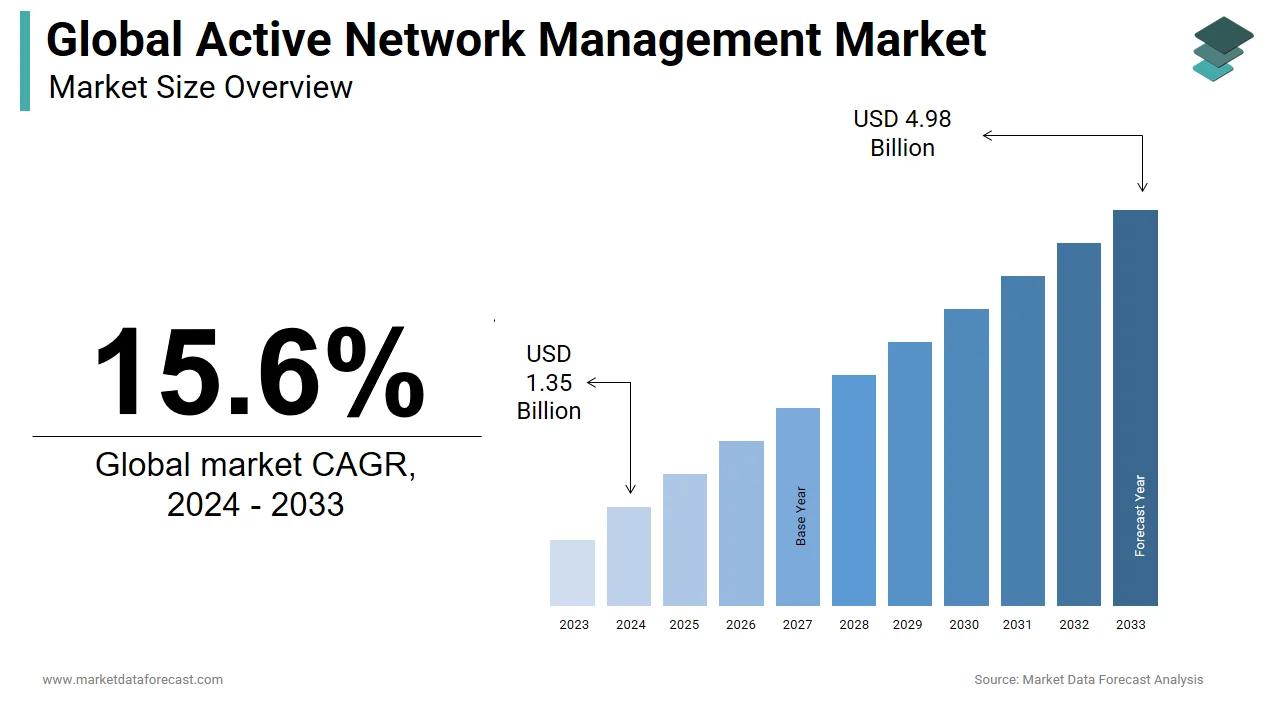
The global active network management market was valued at USD 1.56 billion in 2025, is estimated to reach USD 1.80 billion in 2026, and is projected to scale up to USD 5.75 billion by 2034, registering a compound annual growth rate (CAGR) of 15.6% during the forecast period from 2026 to 2034. Driven by the accelerated integration of renewable energy sources, electric vehicle adoption, grid modernization initiatives, and the deployment of AI-driven analytics, the global electrical distribution optimization sector continues to experience dynamic growth.
Key Executive Metrics (At-a-Glance)
- 2025 Base Valuation: USD 1.56 Billion
- 2026 Current Valuation: USD 1.80 Billion
- 2034 Forecast Valuation: USD 5.75 Billion
- Compound Annual Growth Rate (CAGR): 15.6% (2026–2034)
- Dominant Component Segment: Software (accounted for 56.6% of total revenue in 2025, anchored in real-time monitoring and digital twin integration)
- Fastest-Growing Component Segment: Services (recording an 11.8% CAGR driven by outsourcing, consulting, and compliance support)
- Dominant Application Segment: Automation (represented 37.1% of total revenue in 2025 due to smart substations and feeder control systems)
- Fastest-Growing Application Segment: Real-time Monitoring (projected at a 12.4% CAGR fueled by advanced sensing technologies and IoT grid sensors)
- Dominant Region: North America (held an estimated 34.1% market share in 2025, backed by federal infrastructure investments and DER expansion)
Core Market Drivers
- Renewable Energy Integration: Decentralized generation from solar and wind farms demanding real-time balancing, voltage control, and dynamic load redistribution.
- Grid Resilience & Real-Time Monitoring: Mitigation of extreme weather disruptions, aging infrastructure risks, and cyber-physical threats through automated fault isolation.
- Supportive Regulatory Mandates: Clean Energy Package and government funding frameworks compelling utilities to enhance flexibility and responsiveness.
Primary Market Restraints & Challenges
- High Capital Expenditure: Substantial outlays required for substation upgrades, legacy system integration, and communication network modernization.
- Cybersecurity Vulnerabilities: Increased exposure of operational technology (OT) systems and SCADA platforms to cyber threats and data privacy regulations.
- Interoperability Hurdles: Fragmentation across proprietary vendor protocols, plus technical complexities in managing distributed energy resources (DERs) at scale.
Global Active Network Management Market Segmentation Breakdown
| Segment Category | Leading Sub-Segment / Base Share | Fastest-Growing Sub-Segment |
|---|---|---|
| By Component | Software (56.6% share in 2025, driven by cloud and AI analytics) | Services (11.8% CAGR driven by managed support and consulting) |
| By Application | Distribution Automation / Automation (37.1% share in 2025) | Real-time Monitoring (12.4% CAGR fueled by PMUs and IoT sensors) |
| By Deployment Type | Cloud-based and On-premises | Cloud-based Solutions |
| By End User | Utilities (primary foundational deployment vertical) | Industrial and Commercial Microgrids |
| By Region | North America (34.1% share in 2025, led by grid modernization) | Asia-Pacific (rapid smart meter and renewable expansion) |
Major Industry Players Profiled
Key technology leaders shaping the global active network management market include ABB Ltd, Chemtrols Industries Pt. Ltd., Cisco Systems, Inc., General Electric (GE Renewable Energy – Grid Solutions), IBM Corporation, Kelvatek Ltd., Oracle Corporation, Schneider Electric SE, Siemens Energy / Siemens AG, and Smarter Grid Solution.
 Download Free Sample Report
Global Active Network Management Market Size
The global active network management market was valued at USD 1.56 billion in 2025, is estimated to reach USD 1.80 billion in 2026, and is projected to reach USD 5.75 billion by 2034, growing at a CAGR of 15.6% from 2026 to 2034.
The Active Network Management Market refers to a dynamic set of technologies and systems used by utility operators to monitor, control, and optimize the performance of electrical distribution networks in real time. Unlike traditional passive network management, which relies on static configurations and manual adjustments, active network management employs advanced digital tools such as smart sensors, IoT-enabled grid devices, AI-driven analytics, and automated control systems to ensure efficient power flow, reduce losses, and integrate renewable energy sources seamlessly.
This market has gained significant traction globally due to the increasing complexity of modern power grids driven by decentralized generation, electric vehicle adoption, and fluctuating demand patterns. In regions undergoing energy transition, active network management is becoming essential for maintaining system stability amid high penetration of intermittent renewables like solar and wind.
Besides, the push for decarbonization and the rise in cyber-physical threats have intensified the need for intelligent monitoring and adaptive control mechanisms. With utilities striving to meet sustainability goals while ensuring reliable service delivery, the demand for active network management systems continues to grow across both developed and emerging markets worldwide.
MARKET DRIVERS
Rising Integration of Renewable Energy Sources into Power Grids
One of the primary drivers of the active network management market is the accelerated integration of renewable energy sources, particularly solar and wind power, into national and regional electricity grids. Unlike conventional centralized power generation, renewable energy systems often operate on a decentralized basis, leading to fluctuations in supply and increased grid instability. According to the International Renewable Energy Agency (IRENA), global renewable electricity capacity reached over 4,000 gigawatts in 2023, with Europe and North America collectively accounting for nearly 30% of this expansion.
To manage these variable inputs effectively, grid operators are increasingly deploying active network management systems that enable real-time balancing, demand-side response, and dynamic load redistribution. These technologies allow for precise control over voltage levels, frequency regulation, and reactive power compensation, ensuring grid reliability even under high renewable penetration.
Moreover, regulatory mandates such as the Clean Energy Package in the European Union have mandated greater flexibility and responsiveness from distribution system operators, further encouraging investment in active network control. The combination of policy support, technological advancement, and growing renewable deployment makes this a key catalyst for the ongoing expansion of the active network management sector.
Increasing Demand for Grid Resilience and Real-Time Monitoring Capabilities
Another critical driver propelling the active network management market is the growing emphasis on enhancing grid resilience and enabling real-time monitoring capabilities to combat rising disruptions caused by extreme weather events, aging infrastructure, and cyber threats.
To mitigate these risks, utility providers are turning to active network management solutions equipped with advanced sensing, automation, and predictive analytics tools that can detect anomalies, reroute power flows, and restore service rapidly during outages. For instance, the U.S. Federal Energy Regulatory Commission (FERC) has emphasized the need for smart grid technologies that can withstand climate-induced disturbances such as hurricanes, wildfires, and severe winter storms.
In addition, the adoption of digital twin technology and artificial intelligence in network control centers is enabling utilities to simulate potential failure scenarios and take preventive actions before disruptions occur. With governments and regulators prioritizing energy security and digital infrastructure protection, the demand for robust and responsive grid management systems is expected to continue surging in the coming years.
MARKET RESTRAINTS
High Capital Investment and Infrastructure Modernization Costs
A major restraint affecting the Active Network Management Market is the high capital investment required for infrastructure modernization and system deployment, particularly in regions with aging electrical grids. Implementing active network management solutions involves extensive upgrades to substations, control centers, communication networks, and field equipment, all of which necessitate substantial financial outlays.
In developing economies and smaller municipalities, budget constraints and limited access to financing options often delay or prevent the adoption of advanced grid technologies. Even in developed nations, securing funding for large-scale deployments remains a complex process involving regulatory approvals, stakeholder negotiations, and multi-year planning cycles.
Moreover, the integration of new digital systems with legacy infrastructure presents technical challenges and compatibility issues, further increasing implementation costs. As reported by the U.S. Department of Energy, retrofitting older substations with smart grid capabilities can cost more than installing them in newly built facilities. Until cost barriers are mitigated through subsidies, public-private partnerships, or innovative financing models, widespread adoption of active network management systems will remain constrained.
Cybersecurity Risks and Data Privacy Concerns in Digital Grid Systems
Another key restraint impacting the Active Network Management Market is the increasing exposure to cybersecurity risks and data privacy concerns associated with digital grid systems. As power networks become more interconnected and reliant on real-time data exchange, they also become more vulnerable to cyberattacks targeting critical infrastructure.
These threats include unauthorized access to operational technology (OT) systems, ransomware attacks on supervisory control and data acquisition (SCADA) platforms, and manipulation of grid-balancing algorithms. As per a report by ENISA (European Union Agency for Cybersecurity), nearly 45% of surveyed energy operators in Europe identified cyber threats as a top concern when implementing digital grid solutions.
Furthermore, the collection and processing of consumer usage data through smart meters and grid-edge devices raise privacy issues, prompting regulatory scrutiny. The European General Data Protection Regulation (GDPR) and similar frameworks impose strict requirements on how personal energy consumption data is handled, stored, and shared. As per the International Electrotechnical Commission (IEC), compliance with evolving cybersecurity standards adds complexity and cost to active network management implementations.
Until stronger safeguards, standardized protocols, and industry-wide best practices are established, cybersecurity concerns will continue to hinder market growth and slow down technology adoption across key regions.
MARKET OPPORTUNITIES
Expansion of Smart Grid Investments and Government Policy Support
A major opportunity driving the Active Network Management Market is the expansion of smart grid investments supported by strong government policy frameworks and funding initiatives. Governments around the world are increasingly recognizing the importance of resilient, flexible, and sustainable power infrastructure, leading to a surge in national-level smart grid programs. Also, the European Union’s Clean Energy Package mandates enhanced grid flexibility and real-time monitoring, encouraging member states to deploy active network solutions at scale.
Moreover, several Asian countries, including China and Indi,a have launched aggressive electrification and digitalization campaigns, creating vast opportunities for active network management providers. With regulatory mandates, financial incentives, and strategic partnerships accelerating the adoption of smart grid technologies, the active network management sector is poised for sustained growth across multiple geographies.
Integration of Artificial Intelligence and Predictive Analytics in Grid Operations
An emerging opportunity for the Active Network Management Market is the integration of artificial intelligence (AI) and predictive analytics into grid operations, transforming how utilities monitor, manage, and optimize power distribution. Traditional grid management relies on reactive responses to faults and inefficiencies, but AI-powered systems offer proactive insights by analyzing historical and real-time data to forecast potential disruptions and optimize resource allocation.
According to the Electric Power Research Institute (EPRI), AI applications in grid management can reduce outage durations by up to 30% by predicting equipment failures and enabling condition-based maintenance. Machine learning algorithms are being used to analyze sensor data from transformers, transmission lines, and substations to identify early signs of wear and tear, preventing costly downtime.
Apart from these, AI-driven demand forecasting models help utilities balance supply and demand dynamically, especially with the growing share of intermittent renewable energy sources. As per McKinsey & Company, AI-enhanced grid management could lead to annual savings of up to $15 billion globally by improving asset utilization and reducing energy waste.
As AI and big data analytics mature, their incorporation into active network management systems is expected to drive innovation, improve operational efficiency, and unlock new value for utility providers and consumers alike.
MARKET CHALLENGES
Interoperability Issues Across Diverse Grid Technologies and Vendors
One of the foremost challenges confronting the Active Network Management Market is the lack of interoperability across diverse grid technologies and vendor-specific systems, which complicates seamless integration and limits scalability. Modern power grids incorporate a wide array of hardware and software components from different manufacturers, including smart meters, sensors, SCADA systems, and grid automation tools. However, these systems often operate on proprietary protocols and communication standards, making it difficult to achieve unified control and data exchange.
According to the International Electrotechnical Commission (IEC), achieving true interoperability requires harmonized technical specifications, common data formats, and open communication architectures. Without standardized interfaces, utility operators face difficulties in aggregating and interpreting real-time data from disparate sources, ultimately hindering effective decision-making.
Furthermore, fragmented system designs increase the risk of operational silos and complicate cybersecurity management. This issue is particularly pronounced in cross-border grid projects where multiple stakeholders must coordinate despite differing regulatory and technical environments.
Addressing these interoperability hurdles demands industry-wide collaboration, regulatory alignment, and the adoption of open-source or modular platform approaches that facilitate plug-and-play integration of active network management solutions.
Complexity in Managing Distributed Energy Resources at Scale
Another critical challenge for the active network management market is the increasing complexity of managing distributed energy resources (DERs) at scale, including rooftop solar panels, small wind turbines, battery storage units, and electric vehicles. As DER penetration grows, distribution system operators (DSOs) face unprecedented challenges in maintaining grid stability, voltage regulation, and frequency control due to the decentralized and variable nature of these assets.
According to the National Renewable Energy Laboratory (NREL), the number of DER-connected nodes in the U.S. grid grew by over 25% in 2023, significantly increasing the volume of bidirectional power flows that must be monitored and controlled in real time. Traditional grid management tools are not designed to handle such dynamic conditions, necessitating advanced active network solutions capable of orchestrating thousands of distributed assets simultaneously.
Moreover, as per the U.S. Department of Energy, managing DERs requires sophisticated coordination between utility operators, prosumers (producer-consumers), and third-party aggregators, introducing complexities in data governance, incentive structures, and real-time dispatch protocols.
Without scalable and intelligent control mechanisms, the integration of DERs could lead to grid congestion, power quality issues, and inefficient resource utilization.
REPORT COVERAGE
| REPORT METRIC | DETAILS |
| Market Size Available | 2025 to 2034 |
| Base Year | 2025 |
| Forecast Period | 2026 to 2034 |
| CAGR | 15.6% |
| Segments Covered | By Component, Application, Deployment Type, End-user, and Region |
|
Various Analyses Covered | Global, Regional & Country Level Analysis, Segment-Level Analysis, DROC, PESTLE Analysis, Porter’s Five Forces Analysis, Competitive Landscape, Analyst Overview on Investment Opportunities |
| Regions Covered | North America, Europe, APAC, Latin America, Middle East & Africa |
|
Market Leaders Profiled | ABB Ltd, Chemtrols Industries Pt. Ltd., Cisco Systems, Inc., General Electric, IBM Corporation, Kelvatek Ltd., Oracle Corporation, Schneider Electric SE, Siemens AG Smarter Grid Solution, and Others. |
SEGMENTAL ANALYSIS
By Component Insights
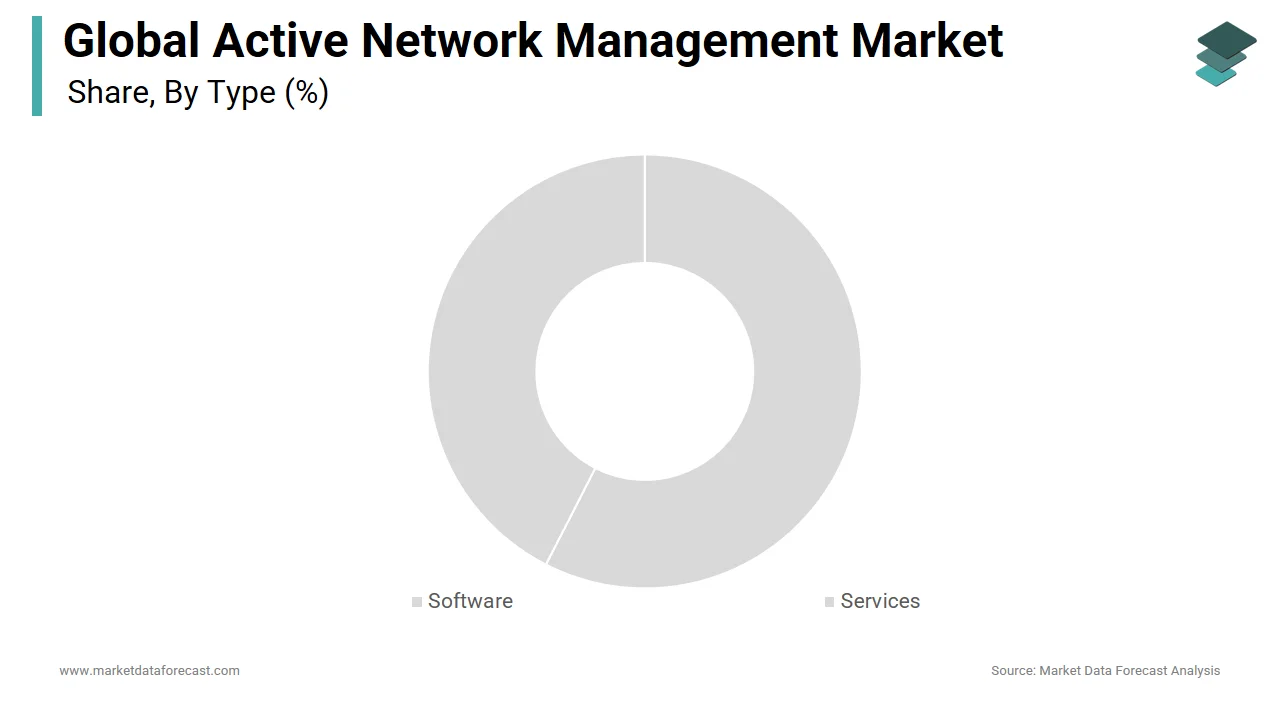
The Software segment held the largest share of the active network management market, accounting for 56.6% of total market revenue in 2025. This dominance is primarily attributed to the increasing reliance on intelligent software platforms that enable real-time grid monitoring, optimization, and control. One key driver behind this segment’s leadership is the rising deployment of AI-driven analytics and digital twin technologies, which allow utility operators to simulate network behavior, predict failures, and optimize energy flows dynamically. According to the International Energy Agency (IEA), over 40% of global utility companies have initiated digital transformation projects incorporating active network management software to improve system efficiency and reliability.
Besides, the integration of cloud-based solutions into grid management systems has further strengthened the adoption of software components. These advancements support utilities in managing complex power distribution networks with high penetration of renewable energy sources and distributed generation units.
Moreover, regulatory mandates requiring real-time data transparency and automated response capabilities are compelling grid operators to invest heavily in advanced software modules. With growing demand for intelligent decision-making tools, the software segment remains at the forefront of the active network management ecosystem.
The Services segment is growing at the fastest pace, recording a CAGR of 11.8% in the coming years. This rapid expansion reflects the increasing need for professional support in deploying, integrating, and maintaining complex active network management systems. A primary growth driver is the rising demand for managed services and consulting support, particularly among emerging economies where in-house technical expertise is limited.
Furthermore, the increasing complexity of cybersecurity protocols and compliance requirements is fueling demand for outsourced maintenance and security monitoring services. This shift toward outcome-based service contracts enhances operational efficiency while reducing capital expenditure, making the services segment one of the most dynamic areas of the active network management market.
By Application Insights
The automation accounted for the maximum share, representing 37.1% of total market revenue in 2025. The prominence of this segment stems from the increasing need for autonomous control mechanisms that enhance grid responsiveness and reduce manual intervention. One major factor contributing to its dominance is the widespread adoption of smart substations and automated feeder control systems, which enable real-time switching, fault isolation, and load balancing. According to the U.S. Department of Energy, automation technologies have helped reduce outage durations by up to 25% in several regions by enabling faster restoration of power supply following disruptions.
Another key driver is the integration of distributed energy resources (DERs) such as solar inverters, battery storage, and electric vehicle charging stations, which require advanced automation to maintain grid stability. As per the National Renewable Energy Laboratory (NREL), DER integration has grown by over 20% annually in recent years, necessitating intelligent automation to manage bidirectional power flows and voltage fluctuations.
Also, regulatory mandates in the European Union and North America are pushing for higher levels of grid automation to support decarbonization goals and ensure reliable energy delivery. Given these factors, the automation segment continues to lead the active network management landscape and drive overall market expansion.
The Real-time Monitoring segment is coming up as the booming application in the Active Network Management Market, registering a CAGR of 12.4%. This robust growth is driven by the increasing emphasis on enhancing situational awareness and ensuring proactive grid management.
One of the key drivers is the adoption of advanced sensing technologies such as phasor measurement units (PMUs) and IoT-enabled grid sensors, which provide granular insights into power flow, frequency deviations, and equipment health. As per the International Electrotechnical Commission (IEC), PMU deployments have increased globally since 2020, supporting more accurate and timely grid interventions.
Also, the integration of edge computing and real-time data analytics has enabled utilities to process vast amounts of information locally, reducing latency and improving decision-making speed. According to a white paper published by ENTSO-E (European Network of Transmission System Operators for Electricity), real-time monitoring systems have improved fault detection accuracy, allowing for quicker corrective actions.
Moreover, regulatory bodies such as FERC in the U.S. and ACER in Europe have mandated greater transparency and responsiveness in grid operations, further reinforcing the need for continuous monitoring solutions. With rising investments in smart grid infrastructure and digital transformation, the real-time monitoring segment is expected to maintain its high-growth trajectory.
REGIONAL ANALYSIS
North America Active Network Management Market Insights
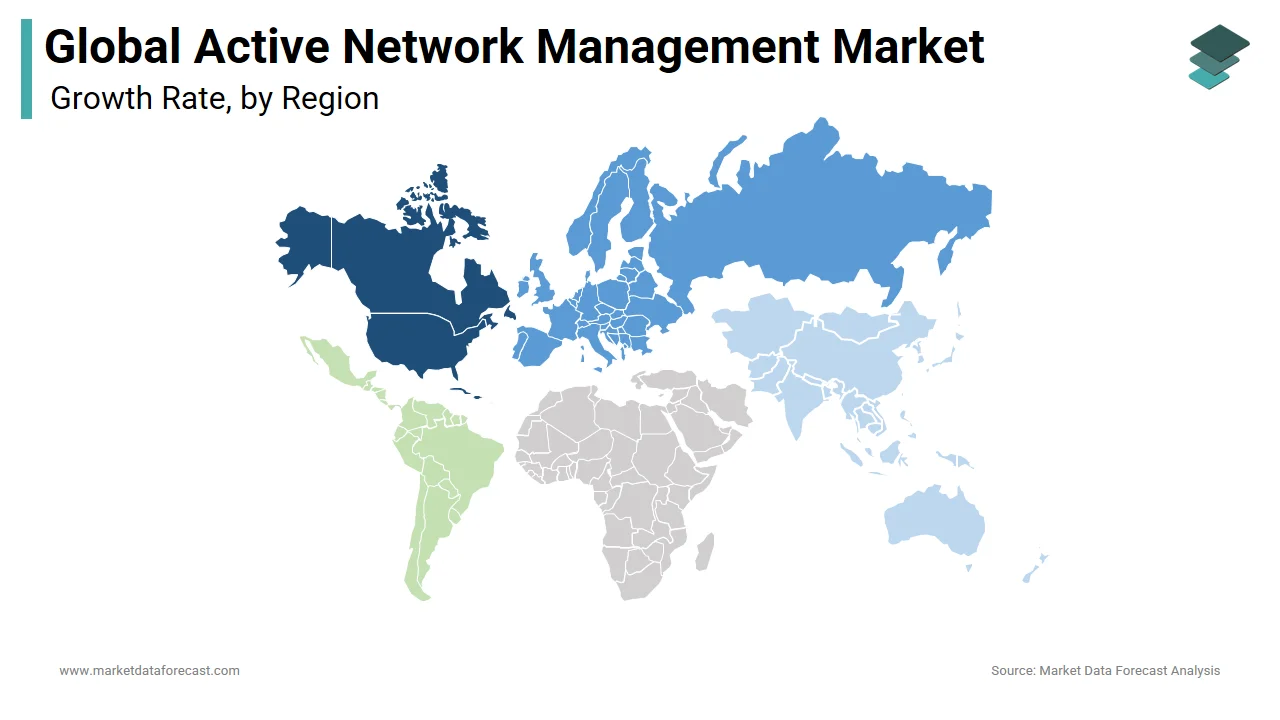
North America maintained a dominant position in the Active Network Management Market, holding an estimated share of 34.1% in 2025. The region’s position is underpinned by substantial investments in grid modernization, aggressive renewable energy integration, and supportive federal and state-level policies. One of the key growth drivers is the expansion of smart grid initiatives backed by government funding, including the Grid Modernization Initiative and the Bipartisan Infrastructure Law, which allocated substantial amount for energy infrastructure improvements. These programs encourage the deployment of advanced monitoring and control systems across transmission and distribution networks.
Also, the increasing penetration of distributed energy resources (DERs) such as rooftop solar, wind farms, and battery storage has heightened the need for active network management solutions. With leading technology vendors, strong research institutions, and proactive regulatory frameworks, North America continues to set the pace for innovation and large-scale implementation of active network management systems.
Europe Active Network Management Market Insights
Europe is another key market for active network management technologies. The region's structured policy environment and commitment to climate neutrality have made it a hub for advanced grid technologies and digital infrastructure development. A major growth driver is the implementation of the Clean Energy Package, which mandates enhanced grid flexibility, real-time monitoring, and consumer participation in energy markets. Furthermore, the EU’s Digital Grid Initiative promotes cross-border collaboration on digital infrastructure, fostering the development of interoperable active network management solutions. With ambitious carbon reduction targets and increasing decentralization of power generation, Europe remains at the forefront of adopting next-generation active network management systems tailored for a sustainable energy future.
Asia-Pacific Active Network Management Market Insights
Asia-Pacific occupies a notable position in the global Active Network Management Market. The region’s rapid urbanization, industrialization, and expanding renewable energy footprint are driving demand for intelligent grid management solutions. One of the primary enablers is the large-scale deployment of smart meters and digital substations in China and India, which are investing heavily in modernizing their aging electricity infrastructure. Also, the growing share of solar and wind energy in the power mix is creating new challenges for grid stability, prompting utilities to adopt active network management tools for real-time balancing and congestion management. With governments prioritizing energy security and sustainability, and private players entering the grid technology space, Asia-Pacific is positioned as a rapidly evolving and highly competitive market for active network management solutions.
Latin America Active Network Management Market Insights
Latin America holds a modest but growing presence in the global Active Network Management Market. While still in the early stages of digital grid adoption, the region is witnessing increasing interest in smart infrastructure due to rising energy demand and efforts to reduce transmission losses. One of the main growth catalysts is the expansion of smart metering and distribution automation projects, particularly in Brazil and Mexico. Moreover, regulatory reforms promoting competition and private investment in electricity distribution are encouraging utilities to explore active network management tools. As noted by CEPAL (United Nations Economic Commission for Latin America and the Caribbean), several national regulators have introduced performance-based incentives linked to grid reliability and customer satisfaction. Despite financial and infrastructural constraints, Latin America presents untapped potential for active network management providers, especially as regional governments seek to modernize aging infrastructure and integrate more renewable energy sources.
Middle East and Africa Active Network Management Market Insights
The Middle East and Africa collectively account for descent portion of the global Active Network Management Market. While historically lagging in digital grid adoption, both sub-regions are undergoing gradual transformation driven by economic diversification and electrification goals. In the Middle East, the push for active network management is largely fueled by ambitious Vision 2030 programs in countries like Saudi Arabia and the UAE, which aim to integrate solar and wind power into national grids while reducing reliance on fossil fuels. Also, in Africa, the focus is on enhancing grid reliability and expanding access to electricity, particularly in Sub-Saharan nations where electrification rates remain low. Though adoption remains uneven, increasing investment in digital infrastructure and regulatory modernization is laying the groundwork for broader uptake of active network management solutions across the region.
KEY MARKET PLAYERS
The major players described in the global active network management market report are ABB Ltd, Chemtrols Industries Pt. Ltd., Cisco Systems, Inc., General Electric, IBM Corporation, Kelvatek Ltd., Oracle Corporation, Schneider Electric SE, Siemens AG, and Smarter Grid Solution. The report examines the key strategies adopted by the companies along with a detailed analysis of current trends, future opportunities, and restraints in the global active networking market along with detailed information about their impacts.
TOP LEADING PLAYERS IN THE MARKET
Siemens Energy
Siemens Energy is a global leader in energy technology and plays a pivotal role in shaping the future of active network management through its comprehensive digital grid solutions. The company offers advanced software platforms, automation systems, and real-time monitoring tools that enable utilities to optimize power distribution, integrate renewable sources, and enhance grid resilience. With a strong presence across Europe, North America, and Asia-Pacific, Siemens has been instrumental in deploying intelligent grid technologies that support decarbonization and digital transformation strategies worldwide.
General Electric (GE) Renewable Energy – Grid Solutions
GE’s Grid Solutions division is a key player in the active network management space, providing end-to-end technologies for smart grid operations, including control systems, substation automation, and analytics-driven network optimization. The company's focus on innovation and strategic partnerships has enabled it to deliver scalable solutions tailored for modernizing aging infrastructure and managing complex power flows. GE continues to influence market trends by integrating AI, IoT, and cybersecurity into its offerings, ensuring secure and adaptive grid performance across global markets.
Schneider Electric
Schneider Electric is at the forefront of digital transformation in the energy sector, offering cutting-edge active network management solutions under its EcoStruxure platform. The company emphasizes sustainability and efficiency by enabling real-time data analytics, demand response, and distributed energy resource integration. Its commitment to open architecture and interoperability makes its solutions adaptable to diverse utility needs. Schneider's global reach and emphasis on edge computing have positioned it as a major contributor to the evolution of intelligent grid ecosystems around the world.
TOP STRATEGIES USED BY KEY MARKET PARTICIPANTS
One of the primary strategies adopted by leading players in the Active Network Management Market is continuous technological innovation, with companies investing heavily in R&D to develop next-generation solutions such as AI-powered analytics, digital twins, and cloud-native platforms. These innovations allow utilities to manage increasingly complex power networks with greater precision and responsiveness.
Another crucial approach is strategic acquisitions and partnerships, where companies acquire smaller tech firms or collaborate with research institutions and energy regulators to expand their solution portfolios and gain deeper market insights. These alliances help accelerate product development and ensure alignment with evolving regulatory standards and customer requirements.
Lastly, customer-centric service models are gaining traction, with vendors offering managed services, consulting, and predictive maintenance packages that reduce operational burdens for utilities. By shifting from product-based to outcome-driven offerings, companies strengthen long-term relationships and ensure sustained value delivery in a rapidly transforming energy landscape.
COMPETITION OVERVIEW
The competition in the Active Network Management Market is marked by a convergence of established industrial giants, emerging digital innovators, and regional specialists striving to capture a growing share of this rapidly evolving sector. Major players leverage their global expertise, extensive R&D capabilities, and deep industry knowledge to maintain leadership positions while adapting to the dynamic demands of modern power grids. The market is witnessing intensified rivalry as companies race to integrate artificial intelligence, machine learning, and automation into their offerings to provide real-time insights, proactive diagnostics, and optimized grid performance.
In addition to technological prowess, differentiation is being driven through system interoperability, cybersecurity enhancements, and modular deployment models suited for both developed and emerging economies. Strategic acquisitions and cross-industry collaborations are also playing a vital role in consolidating market power and expanding solution portfolios. As governments and utilities prioritize grid modernization and renewable integration, the competitive landscape continues to evolve, pushing companies to innovate rapidly and deliver value-added services tailored to diverse operational environments. This ongoing transformation underscores the importance of agility, adaptability, and customer-centric innovation in securing a sustainable competitive edge.
RECENT MARKET DEVELOPMENTS
- In February 2023, Siemens Energy launched a new version of its Spectrum PowerTM energy management system, incorporating AI-enhanced forecasting and automated dispatch capabilities aimed at improving grid flexibility and renewable integration across Europe and North America.
- In June 2023, General Electric’s Grid Solutions division partnered with a leading cybersecurity firm to embed advanced threat detection and response mechanisms into its active network management platforms, reinforcing security for critical infrastructure operators in the U.S. and Canada.
- In November 2023, Schneider Electric introduced an expanded suite of cloud-based grid analytics tools under its EcoStruxure Grid platform, designed to support real-time decision-making and remote monitoring for utilities transitioning toward decentralized energy models.
- In January 2024, ABB announced a strategic collaboration with a major cloud provider to deploy edge-integrated grid control solutions that enable faster data processing and reduced latency for utility operators in Asia-Pacific and Latin American markets.
- In September 2024, Eaton Corporation acquired a specialized grid analytics startup to enhance its portfolio of intelligent load management and predictive maintenance solutions, strengthening its foothold in the active network management domain.
MARKET SEGMENTATION
This research report on the global active network management market has been segmented and sub-segmented based on the component, application, deployment type, end-user, and region.
By Component
- Hardware
- Software
- Services
By Application
- Demand Response Management
- Distribution Automation
- Volt/VAR Optimization
- Fault Location, Isolation, and Service Restoration (FLISR)
By Deployment Type
- On-premises
- Cloud-based
By End User
-
Utilities
-
Industrial
-
Commercial
By Region
- North America
- Europe
- Asia-Pacific
- Latin America
- The Middle East and Africa