- Product Description Description
- Table of Contents TOC
- List of Table & Figure LOT
- Get Free Sample PDF Sample PDF
Africa Fire Suppression Market Size
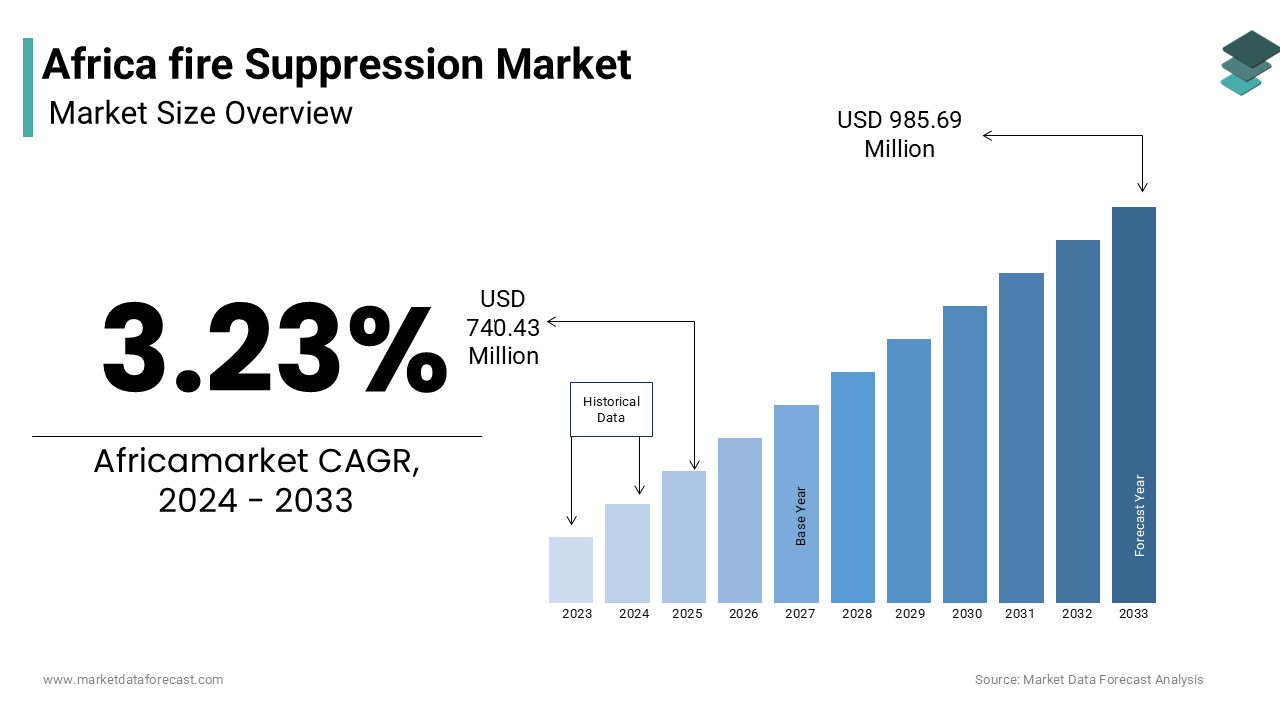
The Africa fire Suppression Market is estimated to grow from USD 740.43 million in 2024 to USD 985.69 million in 2033, representing a CAGR of 3.23%.
The fire suppression system is designed to detect, control, and extinguish fires across commercial, industrial, residential, and public infrastructure sectors. According to the World Health Organization, fire-related injuries account for over 18,000 deaths annually in Africa, the highest regional fatality rate globally, with a significant proportion occurring in informal settlements and poorly regulated commercial buildings. The African Union’s Department of Infrastructure and Energy reports that only 37% of urban buildings in sub-Saharan Africa comply with basic fire safety codes, leaving vast populations vulnerable.
MARKET DRIVERS
Expansion of Industrial and Manufacturing Infrastructure
Africa’s growing industrial base is in mining, petrochemicals, and manufacturing zones is solely propelling the growth of the Africa fire suppression market. These facilities, often housing flammable materials and high-energy processes, require robust fire suppression systems to meet insurance and regulatory requirements. In South Africa, the Department of Mineral Resources reports that 92% of deep-level mines now operate automated fire detection and suppression units due to the high risk of underground combustion. Similarly, Nigeria’s Dangote Refinery, the largest in Africa, has deployed advanced foam and gas-based suppression systems across its 2,000-hectare site, setting a benchmark for industrial safety.
Urbanization and Growth of High-Rise Commercial and Residential Buildings
The proliferation of multi-story buildings in major African cities is accelerating the growth of the fire suppression market. According to the United Nations Human Settlements Programme (UN-Habitat), over 40% of Africa’s population now resides in urban areas, a figure projected to reach 50% by 2035. This shift has led to a surge in high-density construction Nairobi recorded a 22% increase in high-rise developments between 2021 and 2023, as reported by the Kenya Urban Research Organization. In Lagos, over 150 buildings exceeding 15 floors are under construction, many incorporating sprinkler systems and smoke control mechanisms.
MARKET RESTRAINTS
Low Compliance with Fire Safety Regulations in Informal and Semi-Formal Sectors
A significant portion of Africa’s built environment operates outside formal regulatory oversight, which is restraining the growth of fire suppression market. According to the International Labour Organization, over 85% of businesses in informal markets across Ghana, Kenya, and Cameroon lack basic fire extinguishers or evacuation plans. In Kibera, Nairobi’s largest informal settlement, fewer than 5% of commercial kiosks have fire suppression equipment, as documented by the African Safety and Health Network. The absence of enforcement mechanisms allows non-compliance to persist—even where regulations exist, inspection capacity is limited.
High Cost and Limited Local Manufacturing of Fire Suppression Systems
The import dependency and high equipment costs is hampering the growth of the Africa fire suppression market. This reliance inflates prices fire suppression control panels cost 35–50% more in African markets than in manufacturing hubs, according to the UN Economic Commission for Africa. Inland distribution further escalates expenses are transporting a single suppression unit from Mombasa to Kampala adds USD 1,200 in logistics costs, as noted by the East African Shippers’ Council. Additionally, local manufacturing capacity is minimal only South Africa and Egypt have limited production of fire extinguishers and hose reels.
MARKET OPPORTUNITIES
Integration of Fire Suppression Systems in Renewable Energy Infrastructure
The rapid deployment of renewable energy projects across Africa is creating new opportunities for the growth of the Africa fire suppression market. As per the International Renewable Energy Agency (IRENA), Africa added 4.3 GW of solar and wind capacity in 2023, with battery storage systems becoming integral to grid stability. Similarly, Kenya’s Lake Turkana Wind Power project employs automated detection and suppression in transformer stations. The African Clean Energy Corridor initiative, spanning 20 countries, mandates fire safety integration in all new renewable plants.
Public-Private Partnerships for Fire Safety Modernization in Infrastructure
The governments across Africa are increasingly partnering with private firms to upgrade fire suppression in hospitals, airports, and transport hubs. Similarly, Rwanda’s Kigali International Airport completed a suppression system overhaul in 2023, incorporating VESDA (Very Early Smoke Detection Apparatus) and pre-action sprinklers, as confirmed by the Rwanda Civil Aviation Authority. The African Union’s Agenda 2063 emphasizes resilient infrastructure, prompting countries like Senegal and Côte d'Ivoire to include fire suppression in major port and rail modernization projects. These partnerships reduce fiscal burden on governments while enabling technology transfer and long-term maintenance contracts for private vendors.
MARKET CHALLENGES
Shortage of Trained Technicians for Installation and Maintenance
The Africa fire suppression market growth is slowing down with the shortage of certified professionals capable of installing and servicing advanced systems. According to the International Fire Engineers Association, Africa has fewer than 8,000 certified fire protection engineers, with one technician per 500,000 people in most countries. This skills gap leads to improper installations, system failures, and increased liability. In 2022, a fire at a shopping mall in Accra spread rapidly due to a disabled sprinkler system that had not been serviced in over two years.
Inconsistent Power Supply and Its Impact on Active Suppression Systems
Many fire suppression technologies, particularly automated detection and pump-driven sprinkler systems, rely on uninterrupted power, a major constraint in regions with unstable electricity grids. In Zambia, the national grid experiences an average of 14 power outages per month, as reported by ZESCO, jeopardizing the functionality of electrically dependent suppression systems. Diesel-powered pumps are often used as backups, but fuel shortages and maintenance neglect render them unreliable. A 2023 audit by the Tanzanian Fire and Rescue Services found that 61% of commercial buildings with sprinkler systems had non-functional pumps due to power or fuel issues.
SEGMENTAL ANALYSIS
By Product Insights
The fire extinguisher segment was the largest and held 52.3% of the Africa fire suppression market share in 2024 with its affordability, portability, and regulatory requirement in both formal and informal sectors. According to the International Labour Organization, over 90% of small and medium enterprises (SMEs) across Nigeria, Kenya, and Ghana rely on fire extinguishers as their primary fire response mechanism due to limited access to advanced suppression systems. Additionally, national fire codes in countries like South Africa and Egypt mandate at least one extinguisher per 200 square meters in commercial buildings, ensuring widespread deployment.
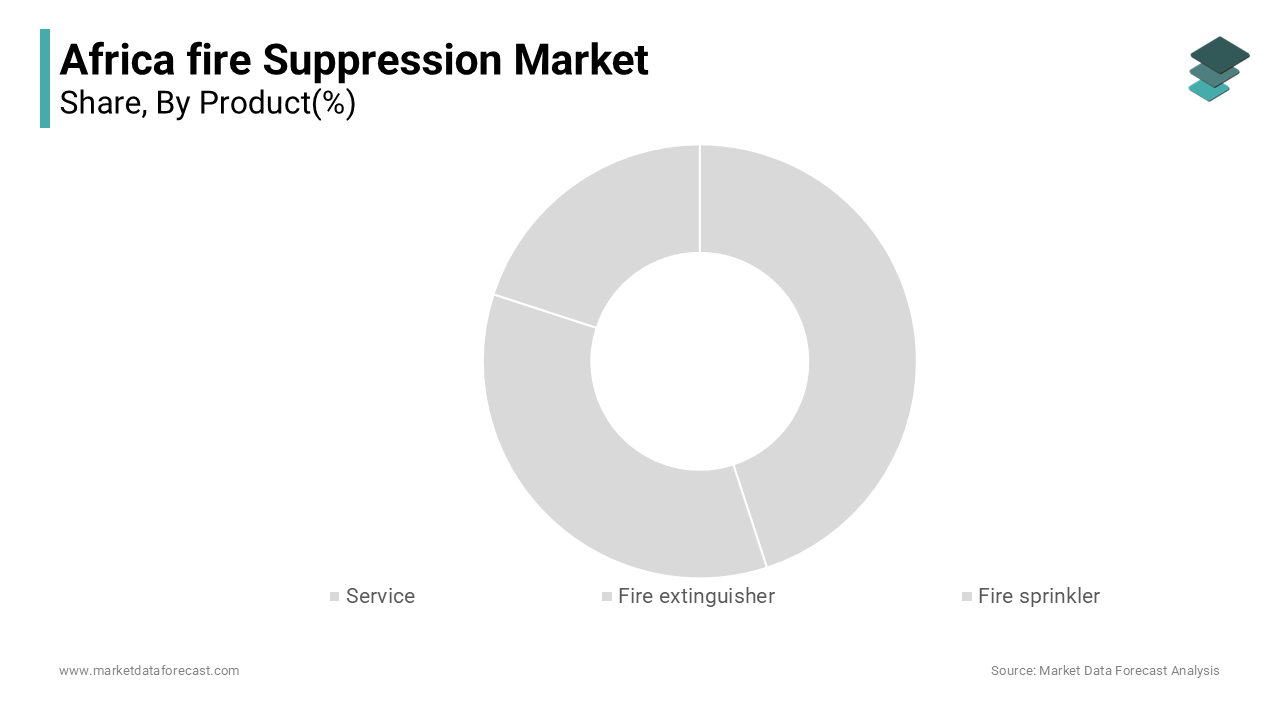
The fire sprinkler segment is projected to grow with an expected CAGR of 9.4% during the forecast period owing to the rising construction of high-rise buildings and industrial facilities requiring automated suppression systems. In South Africa, the National Building Regulations now require automatic sprinklers in all new structures exceeding 18 meters in height, a policy introduced after the 2022 Pinnacle Towers fire in Johannesburg, as confirmed by the Department of Public Works and Infrastructure.
By End Use Insights
The industrial segment was the largest by accounting for 46.5% of the Africa fire suppression market share in 2024 with the high-risk nature of industrial operations, particularly in mining, oil and gas, manufacturing, and chemical processing. Nigeria’s Dangote Refinery, the continent’s largest, has deployed over 300 suppression units across its processing and storage zones. The International Association of Oil and Gas Producers emphasizes that fire suppression is a non-negotiable component of operational licensing in high-hazard facilities by ensuring consistent investment even during economic downturns.
The commercial segment is anticipated to grow with CAGR of 8.7% in the next coming years with the rapid expansion of retail complexes, office towers, hotels, and mixed-use developments in major urban centers. In Ghana, the Accra Metropolitan Assembly now requires fire suppression audits for all buildings over 10 meters before occupancy certification.
REGIONAL ANALYSIS
South Africa was the largest contributor of the Africa fire suppression market by capturing 31.3% of share in 2024 with relatively advanced regulatory frameworks, a mature industrial base, and higher insurance penetration compared to other African nations. The Department of Labour reports that 68% of industrial facilities in Gauteng and KwaZulu-Natal comply with NFPA-equivalent standards. Additionally, South Africa hosts the continent’s most developed fire safety manufacturing sector, producing extinguishers, control panels, and detection systems for regional export.
Egypt was next with 18.3% of the Africa fire suppression market share in 2024. Additionally, Egypt’s Ministry of Housing reports that over 1.2 million new housing units were constructed between 2020 and 2023, many incorporating basic fire safety equipment. The country also hosts regional manufacturing facilities for fire extinguishers, reducing import dependency.
Nigeria fire suppression market growth is anticipated to grow with it as a high-potential market constrained by implementation gaps. The country’s fire suppression demand is driven by its large population, expanding industrial sector, and growing urban density, particularly in Lagos and Abuja. However, enforcement remains weak only 22% of commercial buildings in Lagos have functional suppression systems, as reported by the Lagos State Fire Service. Informal markets, which house over 70% of SMEs, largely operate without fire safety equipment.
KEY MARKET PLAYERS AND COMPETITIVE LANDSCAPE
The key players in the Africa fire suppression market include Johnson Controls, Siemens, Honeywell, Minimax Viking, Tyco, Bosch, Halma, Hochiki, Fireboy-Xintex, Marioff, Advanced Fire Global, AFEX, Bizzy Fire, Booyco Electronics, Brigit, Centa Group, Delta Blue East Africa, Expert Mining Solutions, Failsafe Fire Projects, Fire and Security Techniques, FirePro, IntelliSEC, Jachris, Ruhrpumpen, and SafeQuip.
The competition in the Africa fire suppression market is characterized by a mix of multinational corporations, regional manufacturers, and local service providers operating in a fragmented and unevenly regulated environment. Global players like Johnson Controls and Siemens dominate high-end industrial and commercial projects through technological superiority and international certifications, while indigenous firms such as Kimtech and Safetech Africa compete on affordability, localized service, and faster deployment. Regulatory enforcement varies widely South Africa and Egypt have structured codes and inspection regimes, whereas many countries lack consistent oversight, creating disparities in system adoption.
Top Players in the Africa Fire Suppression Market
Johnson Controls maintains a strong presence in the Africa fire suppression market through its integrated safety and building management systems, particularly in commercial and industrial sectors. The company has deployed its Tyco-branded fire sprinkler, detection, and suppression systems across major infrastructure projects in South Africa, Kenya, and Egypt, including airports, data centers, and high-rise developments. In 2023, Johnson Controls partnered with the Ghana Investment Promotion Centre to retrofit fire suppression systems in six regional industrial zones, enhancing safety compliance for over 200 manufacturers. It has also launched localized training programs in Johannesburg and Nairobi to certify technicians in system installation and maintenance. By integrating fire safety with smart building technologies, the company is positioning itself as a holistic provider of resilient infrastructure solutions. Its collaboration with African insurers to offer risk-based premium discounts for compliant buildings further strengthens market penetration and client retention.
Siemens AG has established a strategic footprint in Africa’s fire suppression landscape by focusing on high-value industrial and transportation infrastructure. The company’s Cerberus PRO fire detection and suppression control systems are installed in facilities such as the Cairo Metro, Kigali Convention Centre, and multiple power plants across West Africa. In 2023, Siemens launched a regional fire safety innovation lab in Casablanca, designed to adapt its suppression technologies to African environmental conditions, including dust, heat, and intermittent power supply.
Kimtech Industrial Services stands as a leading indigenous player in the African fire suppression market, with a focus on localized manufacturing, installation, and maintenance across East and Southern Africa. Based in Kenya, the company produces fire extinguishers, hose reels, and suppression system components tailored to regional needs and regulatory standards. In 2023, Kimtech secured a contract to supply and service fire suppression units for Ethiopia’s new industrial parks, covering over 12 facilities under a five-year maintenance agreement.
Top Strategies Used by the Key Market Participants
Key players in the Africa fire suppression market are adopting multifaceted strategies to navigate regulatory fragmentation, infrastructure limitations, and cost sensitivity. Major approaches include localization of manufacturing and service networks to reduce import dependency and response times. Companies are investing in technician training and certification programs to address the shortage of skilled personnel. Strategic partnerships with governments and insurers are being leveraged to align suppression system deployment with regulatory compliance and risk reduction incentives. Integration of digital monitoring platforms enables remote diagnostics and predictive maintenance, particularly in off-grid or high-risk sites. Product adaptation is another priority, with firms developing dust-resistant, heat-tolerant, and low-power systems suited to African operating conditions.
RECENT MARKET DEVELOPMENTS
- In March 2023, Johnson Controls launched a fire safety training academy in Nairobi, Kenya, in partnership with the International Labour Organization, which is aiming to certify 1,000 African technicians in fire suppression system installation and maintenance by 2025.
- In July 2023, Siemens AG deployed its Cerberus PRO fire detection and suppression system across the new Kigali International Financial Centre in Rwanda by establishing a benchmark for smart building safety in East Africa.
- In October 2023, Kimtech Industrial Services inaugurated a fire extinguisher manufacturing plant in Addis Ababa, Ethiopia, with an annual capacity of 150,000 units by reducing reliance on imports and lowering costs for regional clients.
- In February 2024, Tyco Fire & Security partnered with the Lagos State Government to retrofit automatic sprinkler systems in 40 public hospitals by enhancing fire resilience in healthcare infrastructure.
- In June 2024, Honeywell announced the integration of its fire suppression controls with solar-powered backup systems in new industrial zones across Ghana and Senegal by ensuring operational continuity despite grid instability.
MARKET SEGMENTATION
This research report on the Africa fire Suppression Market is segmented and sub-segmented into the following categories.
By Product
- Service
- Fire extinguisher
- Capacity
- 5 kg
- 5-15 kg
- > 15 kg
- Chemical
- Dry chemical
- Foam
- Clean agents
- Capacity
- Fire sprinkler
By End Use
- Industrial
- Residential
- Commercial
By Country
- South Africa
- Nigeria
- Rest of Africa