- Product Description Description
- Table of Contents TOC
- List of Table & Figure LOT
- Get Free Sample PDF Sample PDF
Africa Molecular Diagnostics Market Size
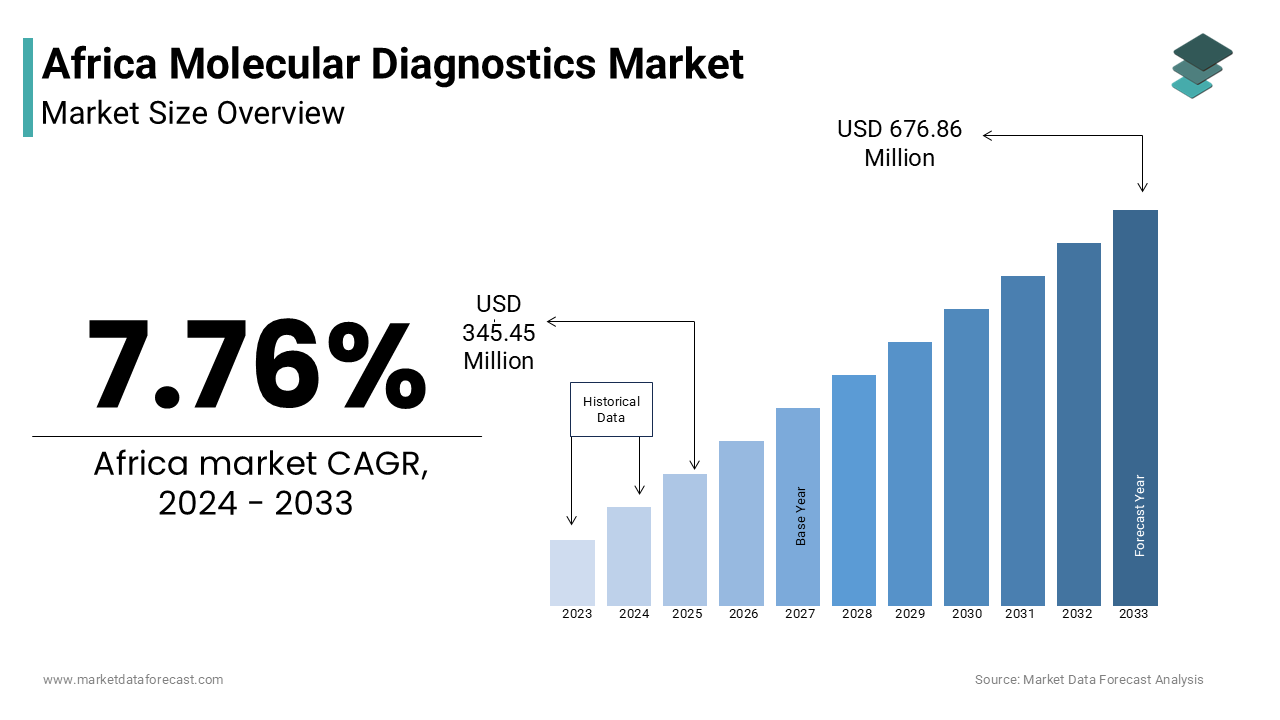
The Africa molecular diagnostics market is projected to grow from USD 345.45 million in 2024 to USD 676.87 million by 2033, at a CAGR of 7.76%.
Molecular diagnostics is part of medical testing that utilizes molecular techniques such as polymerase chain reaction (PCR), sequencing, and nucleic acid amplification to detect genetic material for diagnosing diseases. This market plays a crucial role in managing infectious diseases like HIV, tuberculosis, and malaria, which remain prevalent across many African countries. Apart from these, increasing awareness about early disease detection, rising prevalence of chronic illnesses, and growing investments in healthcare infrastructure are contributing to the expansion of this sector.
Also, Africa bears a significant portion of the global burden of infectious diseases, making accurate and rapid diagnostic tools essential for effective treatment and disease control. As per the African Society for Laboratory Medicine (ASLM), strengthening laboratory networks and integrating molecular diagnostics into national health systems have become key priorities for several governments.
Moreover, international partnerships and funding initiatives from organizations such as the Bill & Melinda Gates Foundation, the Global Fund, and the U.S. President's Emergency Plan for AIDS Relief (PEPFAR) have played a pivotal role in expanding access to molecular diagnostic technologies across sub-Saharan Africa. These efforts have supported the deployment of point-of-care devices and portable PCR systems in remote and underserved regions.
Technological advancements, coupled with local manufacturing and training programs, are further enabling the adoption of molecular diagnostics in both public and private healthcare settings. So, the molecular diagnostics market is gaining strategic importance in improving patient outcomes and strengthening disease surveillance systems across Africa.
MARKET DRIVERS
Rising Prevalence of Infectious Diseases
The high prevalence of infectious diseases such as HIV/AIDS, tuberculosis (TB), malaria, and viral hepatitis, is one of the primary drivers of the africa molecular diagnostics market. According to the Joint United Nations Programme on HIV/AIDS (UNAIDS), nearly 25.6 million people were living with HIV in eastern and southern Africa by the end of 2023, representing over half of the global total. Early and accurate diagnosis is critical for effective treatment and prevention, making molecular diagnostics an essential tool in disease management.
Besides, as per the World Health Organization (WHO), Africa accounted for approximately 24% of the global TB burden in 2023, with drug-resistant strains posing a major public health challenge. Molecular tests such as GeneXpert, which can detect TB and rifampicin resistance within two hours, have been widely deployed across the continent with support from PEPFAR and The Global Fund.
Furthermore, the emergence of outbreaks such as Ebola, Lassa fever, and more recently, mpox, has pointed out the need for rapid diagnostic capabilities. These factors together drive sustained demand for advanced diagnostic solutions across the region.
Expansion of Diagnostic Infrastructure and Government Initiatives
The expansion of diagnostic infrastructure supported by government-led health reforms and international funding is another key driver fueling the growth of the Africa molecular diagnostics market. Several African nations have prioritized strengthening their laboratory networks to improve disease surveillance and ensure timely diagnosis. According to the African Society for Laboratory Medicine (ASLM), over 20 African countries have implemented national laboratory strategic plans since 2020, aimed at enhancing diagnostic capacity and quality assurance.
Governments in countries such as Nigeria, Kenya, and Ethiopia have invested in establishing regional reference laboratories equipped with molecular diagnostic capabilities.
International development agencies have also played a significant role. For instance, the Clinton Health Access Initiative (CHAI) has partnered with African ministries of health to scale up access to affordable molecular diagnostics for maternal and child health conditions.
MARKET RESTRAINTS
Limited Healthcare Budgets and Funding Gaps
The limited availability of public healthcare funding and inconsistent donor support is a major restraint affecting the Africa molecular diagnostics market. Many African governments allocate a small percentage of their national budgets to healthcare, constraining investments in advanced diagnostic infrastructure.
This financial constraint limits the procurement of high-cost molecular diagnostic equipment and reagents, especially in low-income countries where primary healthcare remains underfunded. As per the African Development Bank, only a handful of African nations meet the Abuja Declaration target of allocating 15% of annual budgets to health, resulting in fragmented implementation of diagnostic programs.
Moreover, reliance on external donors such as The Global Fund and PEPFAR introduces volatility in funding cycles. As per a 2024 report by Médecins Sans Frontières (MSF), disruptions in donor financing have led to intermittent shortages of diagnostic kits and maintenance services for molecular platforms in several regions.
Lack of Skilled Personnel and Training Programs
The shortage of trained laboratory professionals and inadequate technical training programs is another critical barrier to the widespread adoption of molecular diagnostics in Africa. Molecular diagnostics require specialized expertise in sample handling, assay interpretation, and instrument maintenance—skills that are not uniformly available across the continent.
As per the African Society for Laboratory Medicine (ASLM), less than 30% of African countries have formalized training curricula for molecular biology techniques in medical education programs. This gap results in a heavy dependence on expatriate experts or centralized facilities, limiting access in rural and resource-limited settings.
Apart from these, the high turnover of skilled personnel due to migration and limited career development opportunities further exacerbates the problem.
MARKET OPPORTUNITIES
Integration of Point-of-Care Molecular Diagnostics
The integration of point-of-care (POC) molecular testing, particularly in remote and underserved areas is major opportunity emerging in the Africa molecular diagnostics market. Traditional molecular diagnostics often require centralized labs with sophisticated infrastructure, but advances in miniaturization and automation have enabled the development of portable, battery-powered diagnostic devices that can be used at the bedside or in field settings.
According to the Foundation for Innovative New Diagnostics (FIND), molecular POC platforms such as Xpert MTB/RIF Ultra and SAMBA have demonstrated high accuracy in detecting TB and HIV in decentralized settings, eliminating the need for complex lab environments. These innovations are particularly beneficial in regions with poor transportation networks and limited access to centralized testing.
Growth of Genomics and Precision Medicine Initiatives
The growing emphasis on genomics and precision medicine presents a transformative opportunity for the Africa molecular diagnostics market. With increasing recognition of genetic diversity among African populations, there is a push to develop locally relevant diagnostic tools and therapies tailored to regional disease profiles.
Initiatives such as the Human Heredity and Health in Africa (H3Africa) consortium, funded by the Wellcome Trust and the National Institutes of Health (NIH), are advancing genomic research across the continent. As per H3Africa, over 50 research projects have been launched since 2012 to map genetic data and improve understanding of diseases prevalent in African populations, including sickle cell anemia, malaria, and certain cancers.
In addition, the African Genome Variation Project and the recent launch of the African Pathogen Genomics Initiative (aPGI) by Africa CDC are accelerating the use of molecular diagnostics for infectious disease surveillance.
MARKET CHALLENGES
Regulatory Fragmentation and Standardization Issues
Regulatory fragmentation poses a significant challenge to the harmonization and scalability of molecular diagnostics across Africa. Each country operates under different regulatory frameworks governing the approval, importation, and use of diagnostic devices, leading to delays in market entry and inconsistent quality standards.
According to the World Health Organization (WHO), only a minority of African countries have fully functional regulatory authorities capable of evaluating in vitro diagnostic (IVD) products, resulting in reliance on foreign approvals and limited post-market surveillance. This situation increases the risk of substandard or expired diagnostic kits entering the supply chain.
Furthermore, disparities in licensing requirements hinder cross-border collaboration and the deployment of standardized diagnostic protocols. Like, efforts to establish regional regulatory harmonization through bodies like the East African Community (EAC) and Southern African Development Community (SADC) are still in progress, requiring greater coordination to streamline approvals and ensure product consistency.
Supply Chain and Logistics Constraints
Supply chain inefficiencies and logistical challenges severely impact the availability and reliability of molecular diagnostic supplies in Africa. Delays in customs clearance, poor road infrastructure, and unreliable cold-chain storage systems hinder the consistent delivery of temperature-sensitive reagents and consumables.
As reported by PATH, a global health organization, many African countries experience stockouts of essential diagnostic materials due to fragmented procurement processes and weak distribution networks, particularly in rural and conflict-affected zones. This inconsistency disrupts testing schedules and compromises patient care. Apart from these, the lack of centralized inventory management and real-time monitoring systems complicates supply forecasting and allocation.
SEGMENTAL ANALYSIS
By Technology Insights
The Polymerase Chain Reaction (PCR) segment dominated the Africa molecular diagnostics market by accounting for 35.1% of total market revenue in 2024. Its high sensitivity, specificity, and widespread adoption across public health programs targeting infectious diseases which keeps PCR segment at the forefront. Further, the extensive use of PCR-based assays in national diagnostic programs for HIV, tuberculosis (TB), and hepatitis is another major driver of the PCR segment. According to the World Health Organization (WHO), PCR-based viral load testing is now standard for monitoring antiretroviral therapy among HIV patients in sub-Saharan Africa, with millions of tests conducted annually under PEPFAR-supported initiatives.
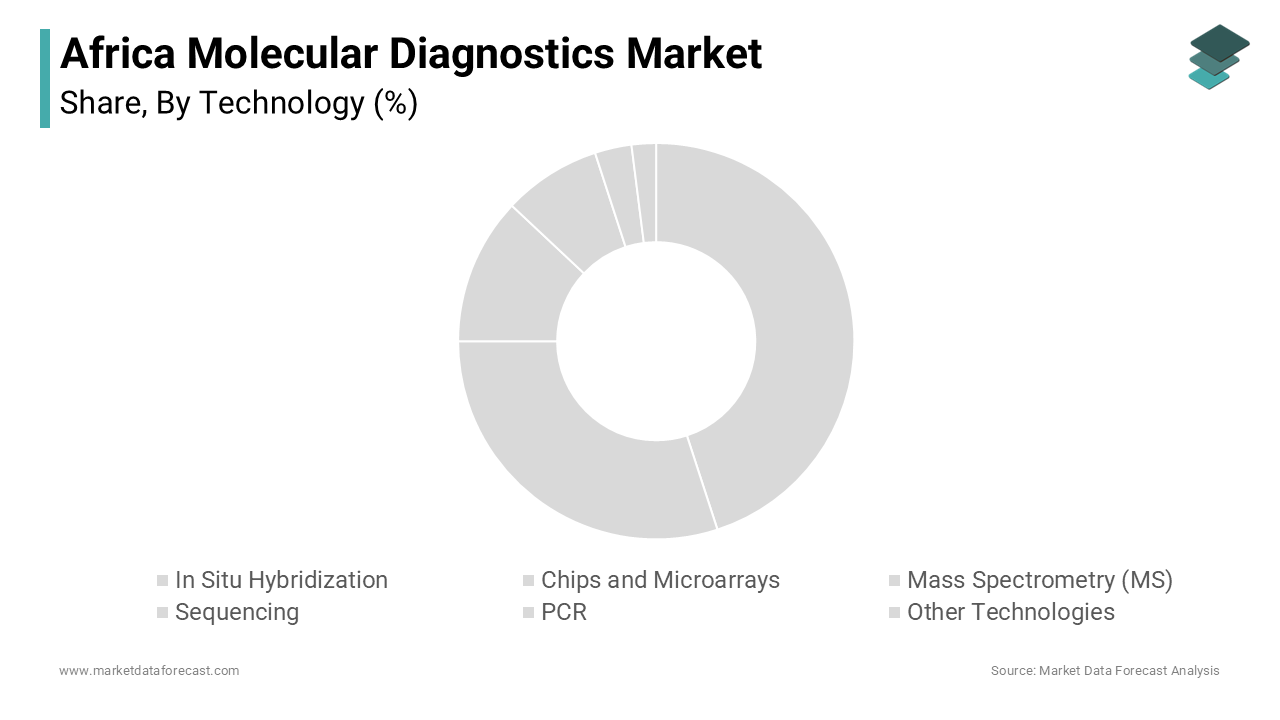
Besides, the deployment of real-time PCR systems such as GeneXpert has transformed TB diagnosis across the continent. As per the African Society for Laboratory Medicine (ASLM), over 15,000 Xpert MTB/RIF machines have been installed in African countries since 2010, significantly improving case detection rates. The scalability of PCR platforms and their integration into decentralized testing networks further strengthen their dominance in the regional market.
The sequencing technologies segment is growing at the fastest rate in the Africa molecular diagnostics market and is recording a CAGR of 18.7% during the forecast period. The expanding genomics research initiatives and increasing demand for pathogen surveillance, particularly during outbreaks like Ebola and SARS-CoV-2 is primarily propelling the surge of sequencing technologies segment. In addition, the rise of local genome sequencing capabilities supported by international partnerships further contributes to rise of sequencing technologies segment.
Moreover, academic institutions and research centers are increasingly adopting next-generation sequencing (NGS) for studies on genetic diversity, cancer biomarkers, and inherited diseases. As per H3Africa (Human Heredity and Health in Africa), more than 50 NGS-based research projects have been launched since 2012, enhancing both scientific understanding and clinical application.
By Application Insights
The infectious diseases application segment led the Africa molecular diagnostics market by contributing a 55.5% of total revenue in 2024. This dominance is attributed to The region's heavy burden of communicable diseases such as HIV/AIDS, tuberculosis, malaria, and viral hepatitis, which require accurate and timely diagnosis for effective treatment is attributing to the dominance of infectious diseases application segment.
According to UNAIDS, approximately 25.6 million people were living with HIV in eastern and southern Africa in 2023, necessitating large-scale molecular testing for early detection and viral load monitoring. Apart from these, WHO reports that Africa accounts for about 24% of global TB cases, making rapid diagnostics critical in controlling transmission and managing drug-resistant strains.
Furthermore, recurrent outbreaks of diseases such as Lassa fever, cholera, and mpox have prompted governments and international agencies to scale up molecular diagnostics for outbreak response.
The oncology application segment is experiencing the fastest growth in the Africa molecular diagnostics market and is registering a CAGR of 16.4% in the coming years. The rising awareness of cancer screening, increased availability of targeted therapies, and growing investments in early detection programs is rapidly expanding the growth of oncology application segment. Moreover, the escalating incidence of cancers such as cervical, breast, prostate, and leukemia in African populations is a further key driver of this segment. As per the International Agency for Research on Cancer (IARC), nearly 1 million new cancer cases are diagnosed annually in Africa, with mortality rates disproportionately high due to late-stage diagnosis.
Besides, advancements in molecular profiling of tumors are enabling more personalized treatment approaches. Programs such as the Human Heredity and Health in Africa (H3Africa) initiative are supporting research into cancer genomics tailored to African populations. As per The Lancet Oncology, the integration of HPV DNA testing into cervical cancer screening campaigns has significantly improved early detection rates, signaling a broader shift toward molecular diagnostics in oncology care.
By Product Insights
The reagents segment represented the biggest portion of the Africa molecular diagnostics market and captured 52.5% of total product sales in 2024. The recurring nature of reagent consumption. Unlike capital-intensive instruments that are purchased once, reagents must be replenished regularly based on testing volume is one major reason for the dominance of reagents segment. These are essential consumables used in various molecular assays, including PCR, sequencing, and hybridization techniques, making them indispensable for continuous diagnostic operations. Apart from these, the expansion of point-of-care and decentralized testing models has increased demand for ready-to-use or lyophilized reagents that can withstand challenging storage conditions. In addition, portable molecular test kits with integrated reagents are gaining traction in remote settings where cold chain logistics are limited, further boosting this segment’s growth trajectory.
The instruments segment is emerging as the fastest-growing component of the Africa molecular diagnostics market and is registering a CAGR of 15.9% in the future. This growth is being driven by
The increased procurement of automated and portable molecular diagnostic equipment, especially in response to pandemic preparedness and chronic disease management needs is driving the growth of instruments segment. A further significant factor behind this trend is the expansion of laboratory infrastructure supported by donor funding and government initiatives. Besides, technological innovations such as miniaturized PCR systems and isothermal amplification devices are enabling cost-effective diagnostics in resource-limited environments.
By End User Insights
The laboratories segment commanded the Africa molecular diagnostics market by accounting for 44.2% of total end-user revenue in 2024. The reliance on well-equipped labs for processing PCR-based and sequencing diagnostics, which require controlled environments and specialized personnel is one of the primary reasons for the commanding position of laboratories segment. National reference laboratories, private diagnostic centers, and research institutions form the backbone of molecular diagnostics delivery, particularly for centralized testing and high-complexity assays. Moreover, the establishment of regional hub-and-spoke laboratory models has enhanced sample referral systems and turnaround times. As per the African Society for Laboratory Medicine (ASLM), over 200 molecular-capable labs have been accredited across Africa since 2020, strengthening diagnostic capacity. These developments make laboratories the most influential end-user category in shaping the regional market landscape.
The hospitals segment is growing at the fastest pace in the Africa molecular diagnostics market and is recording a CAGR of 14.6% between 2025 and 2033. The increasing emphasis on precision medicine and real-time diagnostics within hospital settings contributes to the rise of this segment. The integration of molecular diagnostics into hospital-based clinical decision-making, particularly in oncology, intensive care, and infectious disease wards is also accelerating the progress of hospitals segment. Like, many tertiary hospitals in urban African centers are adopting rapid molecular tests to improve patient outcomes in sepsis, pneumonia, and antimicrobial resistance management. Moreover, hospital procurement of point-of-care molecular systems is rising, especially in maternity units and neonatal care departments where quick diagnosis is critical.
REGIONAL ANALYSIS
South Africa Molecular Diagnostics Market Insights
South Africa maintained the leading position in the Africa molecular diagnostics market by capturing 25.2% of total market revenue in 2024. A major growth driver is the country’s comprehensive HIV and TB control programs, which integrate molecular diagnostics into routine patient care. It boasts one of the most advanced healthcare infrastructures on the continent, with a robust network of national and private laboratories equipped with cutting-edge molecular testing capabilities. Also, South Africa is a hub for genomic research and innovation, hosting several Centers of Excellence in molecular biology. As per the Human Heredity and Health in Africa (H3Africa) initiative, South African researchers lead numerous studies on cancer genomics and infectious disease evolution, positioning the country as a regional leader in molecular diagnostics.
Nigeria Molecular Diagnostics Market Insights
Nigeria is rapidly expanding in the Africa molecular diagnostics market. Despite infrastructural challenges, it is witnessing strong growth due to rising prevalence of infectious diseases, increasing government focus on health system modernization, and donor-funded diagnostics programs. A key driver is the high burden of HIV, TB, and maternal-child health conditions, which has prompted expanded molecular testing coverage. Apart from these, the Nigerian Centre for Disease Control (NCDC) has strengthened molecular surveillance capabilities to respond to outbreaks such as Lassa fever and monkeypox. These developments indicate a growing footprint of molecular diagnostics in the country.
Kenya Molecular Diagnostics Market Insights
Kenya occupies a prominent position in the Africa molecular diagnostics market. It serves as a regional leader in diagnostic innovation, with strong collaboration between public institutions, academic research centers, and international partners. A major growth driver is the expansion of molecular diagnostics in maternal and child health programs, including early infant diagnosis of HIV and neonatal sepsis screening. Besides, Kenya has invested in establishing a national pathogen sequencing network under the African Pathogen Genomics Initiative (aPGI). These efforts solidify Kenya’s influence in the molecular diagnostics space.
Ethiopia Molecular Diagnostics Market Insights
Ethiopia is an emerging player in the Africa molecular diagnostics market. The country is undergoing rapid expansion of its diagnostic infrastructure, largely driven by government-led health reforms and international donor support. A key factor is the scaling up of molecular diagnostics for TB and HIV under the Ethiopian Public Health Institute (EPHI). Apart from these, Ethiopia is investing in decentralized testing models to enhance access in rural areas. With continued investment in lab capacity building and workforce training, Ethiopia is strengthening its molecular diagnostics footprint.
Rest of Africa Molecular Diagnostics Market Insights
The “Rest of Africa” category, encompassing countries like Ghana, Tanzania, Uganda, Rwanda, and Morocco, collectively contributes a descent share of total market revenue in 2024. While individually smaller than Nigeria or South Africa, these nations exhibit strong potential due to increasing healthcare investments and supportive policy frameworks. A notable growth driver is the expansion of regional diagnostic hubs and cross-border collaborations. For example, Rwanda has established a state-of-the-art biomedical center that supports molecular diagnostics for neighboring countries. Morocco, too, is advancing rapidly with its national biotechnology strategy aimed at strengthening diagnostics for non-communicable diseases. With increasing donor coordination and local manufacturing interest, the Rest of Africa segment is positioned for long-term growth.
KEY MARKET PLAYERS AND COMPETITIVE LANDSCAPE
Roche Diagnostics, Abbott Laboratories, Thermo Fisher Scientific, BioMérieux, Cepheid (a Danaher company), Qiagen, Illumina, Hologic, and Siemens Healthineers. Additionally, regional laboratories and distributors such as Lancet Laboratories, NHLS (National Health Laboratory Service, South Africa), and PathCare are some of the key market players.
The competition in the Africa molecular diagnostics market is intensifying as multinational corporations, regional biotech firms, and public-private partnerships vie for influence in a rapidly evolving sector. While global players such as Roche, Abbott, and BD maintain strong footholds through established technologies and extensive distribution networks, emerging local manufacturers are gaining traction by offering cost-effective alternatives tailored to African healthcare settings. The market is also witnessing increased collaboration between international donors and domestic institutions to expand access to diagnostics in underserved regions. Innovation is shifting toward portable and automated testing platforms that can function in low-resource environments, making technology adaptability a critical differentiator. Further, the growing emphasis on genomic research and pathogen surveillance is attracting new entrants into the space, further diversifying the competitive landscape. Regulatory harmonization efforts and regional integration initiatives are shaping how companies operate across borders, influencing market expansion strategies. As demand for precision medicine and early disease detection grows, competition is expected to evolve beyond product sales toward comprehensive diagnostic ecosystem development, including data management, training, and digital health integration
Top Players in the Africa Molecular Diagnostics Market
Roche Diagnostics
Roche is a global leader in diagnostics and has played a pivotal role in advancing molecular testing capabilities across Africa. The company supplies advanced PCR-based diagnostic systems and viral load monitoring tools, particularly for HIV and hepatitis programs. Roche collaborates with public health agencies to support large-scale screening initiatives, ensuring access to high-quality diagnostics in resource-limited settings.
Abbott Laboratories
Abbott is a key player in the African molecular diagnostics landscape, known for its portable and easy-to-use molecular testing platforms. The company’s focus on point-of-care diagnostics has enabled decentralized testing in rural and remote areas. Abbott actively supports national disease control programs by providing cost-effective, scalable solutions tailored to the needs of African healthcare systems.
Becton, Dickinson and Company (BD)
BD contributes significantly to strengthening laboratory infrastructure and infectious disease diagnostics in Africa. The company offers integrated molecular diagnostic systems that enhance disease detection and antimicrobial resistance surveillance. BD works closely with governments and global health organizations to improve diagnostic accessibility, particularly for TB, HIV, and maternal-child health conditions across sub-Saharan Africa.
Top Strategies Used by Key Market Participants
Deployment of Point-of-Care and Portable Diagnostic Systems
Leading players are prioritizing the development and distribution of compact, battery-operated molecular diagnostic devices suited for use in remote and off-grid locations. These systems reduce reliance on centralized labs and enable faster diagnosis at the patient’s bedside or in field clinics.
Partnerships with Governments and Global Health Organizations
To ensure sustainable market presence, companies are forming strategic alliances with ministries of health, NGOs, and donor-funded agencies. These collaborations help scale up diagnostic coverage, align product offerings with public health priorities, and facilitate procurement through bulk funding mechanisms.
Localization of Manufacturing and Distribution Networks
Major players are investing in localized supply chains, service centers, and training hubs to enhance product availability and after-sales support. By establishing regional offices and logistics partnerships, they aim to reduce turnaround times, lower costs, and build long-term relationships with local stakeholders.
RECENT MARKET DEVELOPMENTS
- In June 2024, Roche Diagnostics partnered with the African Society for Laboratory Medicine (ASLM) to launch a training initiative aimed at enhancing molecular testing skills among lab professionals across East and West Africa, reinforcing its commitment to capacity building.
- In September 2023, Abbott Laboratories introduced a new version of its portable molecular diagnostic device designed specifically for use in remote African clinics, expanding access to rapid HIV and TB testing without requiring sophisticated laboratory infrastructure.
- In March 2024, Becton, Dickinson and Company (BD) expanded its regional technical support center in South Africa, aiming to improve after-sales service and maintenance for its molecular diagnostics equipment used in public health programs across sub-Saharan Africa.
- In November 2023, QIAGEN launched a mobile molecular diagnostics unit in partnership with a leading Nigerian university hospital, enabling real-time pathogen detection and supporting outbreak response efforts in high-risk communities.
- In February 2024, Thermo Fisher Scientific announced a collaborative agreement with a Ghanaian medical research institute to develop locally relevant diagnostic assays for tropical diseases, strengthening its footprint in the West African molecular diagnostics market.
MARKET SEGMENTATION
This research report on the Africa molecular diagnostics market is segmented and sub-segmented into the following categories.
By Technology
- In Situ Hybridization
- Chips and Microarrays
- Mass Spectrometry (MS)
- Sequencing
- PCR
- Other Technologies
By Application
- Infectious Diseases
- Oncology
- Pharmacogenomics
- Microbiology and Genetic Disease Screening
- Human Leukocyte Antigen Typing
- Blood Screening
By Product
- Instruments
- Reagents
- Other Products
By End User
- Hospitals
- Laboratories
- Other End Users
By Country
- South Africa
- Nigeria
- Rest of Africa