- Product Description Description
- Table of Contents TOC
- List of Table & Figure LOT
- Get Free Sample PDF Sample PDF
Market Size, 2025
$7.54 BnMarket Estimate, 2026
$8.16 BnMarket Forecast, 2034
$15.33 BnCAGR, 2026–2034
8.2%Executive Summary: Global Aircraft Insulation Market Analysis
- Market Scope: Comprehensive analysis of the global aircraft insulation industry, assessing segmentation by material type, insulation type, applications across airframes and propulsion systems, and key regional performances.
- Market Valuation: Valued at USD 7.54 billion in 2025, estimated at USD 8.16 billion in 2026, and projected to scale up to USD 15.33 billion by 2034, growing at a robust compound annual growth rate (CAGR) of 8.2% during the forecast period from 2026 to 2034.
- Primary Growth Drivers: Surging commercial aircraft shipments, rising preference for ultra-lightweight composite and foam insulators, enhanced emphasis on acoustic comfort, and stringent requirements for refractory materials.
Key Market Segment Metrics (2026–2034)
| Category | Leading Segment (2025 Position) | Fastest-Growing / Prominent Segment |
|---|---|---|
| By Type | Thermal Insulation (critical for managing heat transfer, maintaining cabin climate control, and ensuring safety) | Acoustic & Vibration Insulation (vital for reducing engine noise and structural vibrations to optimize passenger comfort) |
| By Material | Foamed Plastics (leads with major market volume via polyimide and polyurethane options used extensively in cushions and panels) | Ceramic & Advanced Composites (surging due to high-temperature resistance needs in modern propulsion and engine compartments) |
| By Region | North America (retains dominance as an established hub for OEMs, tier-1 suppliers, and major aviation maintenance providers) | Asia-Pacific (projected to showcase the highest regional growth rate fueled by thousands of commercial aircraft deliveries in China, India, and Japan) |
Major Market Players & Industry Structure
Market Structure: Highly consolidated market ecosystem driven by chemical manufacturers, aerospace composite leaders, and specialized defense contractors complying with strict FAA and EASA regulations.
Key Companies: BASF SE, Duracote Corporation, DuPont, Triumph Group Inc., Zodiac Aerospace, Esterline Technologies Corporation, Polymer Technologies Inc., Zotefoams Inc., InsulTech LLC, and Morgan Advanced Materials.
 Download Free Sample Report
Global Aircraft Insulation Market Size
The global aircraft insulation market was valued at USD 7.54 billion in 2025 and is anticipated to reach USD 8.16 billion in 2026 to reach USD 15.33 billion by 2034, growing at a CAGR of 8.2% during the forecast period from 2026 to 2034.
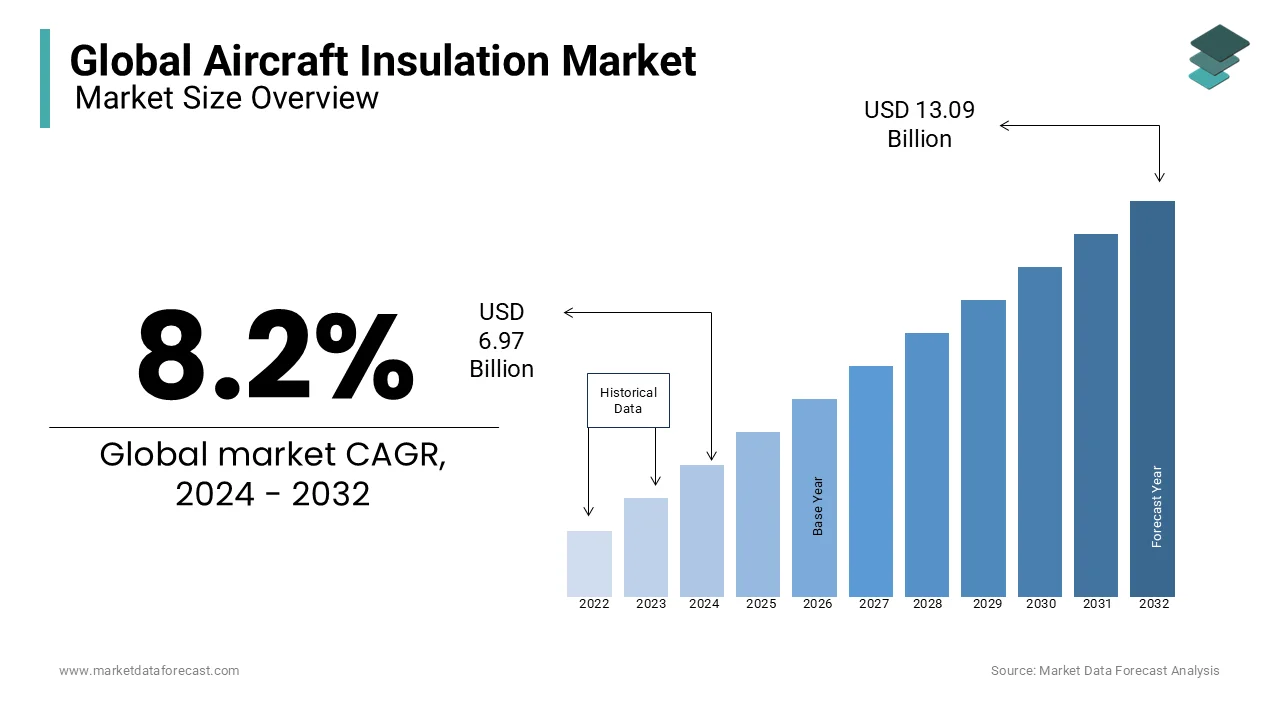
The aerodynamic movement and noise of aircraft engines have been a cause for concern. The need for a safer trip and transparent communication within the aircraft covers has been expanded and prioritized in recent years. Giving sufficient importance to the safety of aircraft, the use of insulation has become famous for its ability to ensure the safety and comfort of passengers.
MARKET DRIVERS
The growing demand for commercial aircraft shipments, the increased demand for light insulation, and the increased demand for advanced acoustics and refractory materials are some of the factors that will drive the growth of the global aircraft insulation market.
The market for aircraft insulation depends mostly on the fact that chemical companies and paint manufacturers are witnessing a massive demand for light insulators in modern aircraft. Excellent and lightweight insulators help outside and inside the plane against leaks of rain, dust, and dirt, reducing noise and vibration. The demand for light insulators among aircraft manufacturers is driving the market for aircraft insulation technology. In addition, the sharp drop in the price of composite materials allows aircraft manufacturers to use them as aircraft insulation. The composite material is lightweight and can withstand various parameters, such as heat, vibration, and noise. These benefits generate interest in composite insulation in aircraft. This factor is also strengthening the growth of the aircraft insulation market.
The aircraft insulation business is expected to grow due to several conductors, but demand for the use of composite materials acquired in the general aviation industry is likely to overtake it in the coming years, as they help to reduce noise significantly. The commercial aviation industry is increasing the demand for insulation compounds to minimize noise and vibration. Therefore, the need for compounds in commercial aviation is presumed to strengthen the aircraft insulation industry.
MARKET RESTRAINTS
The main challenges in the aircraft insulation market are those related to reduced life and compound recycling. Chemical companies and paint manufacturers adhere to the strict rules established by various aviation authorities, such as the Federal Aviation Administration (FAA) and the European Aviation Safety Agency (EASA). Compounds, paints, or chemicals manufactured by insulation companies have a short shelf life and must be replaced regularly, and cannot be recycled for reuse. This factor is causing problems for companies, which in turn hinders market growth.
REPORT COVERAGE
| REPORT METRIC | DETAILS |
| Market Size Available | 2025 to 2034 |
| Base Year | 2025 |
| Forecast Period | 2026 to 2034 |
| CAGR | 8.2% |
| Segments Covered | By Type, Material, and Region |
| Various Analyses Covered | Global, Regional & Country Level Analysis, Segment-Level Analysis, DROC, PESTLE Analysis, Porter’s Five Forces Analysis, Competitive Landscape, Analyst Overview on Investment Opportunities |
| Regions Covered | North America, Europe, APAC, Latin America, Middle East & Africa |
| Market Leaders Profiled | BASF SE, Duracote Corporation, DuPont, Triumph Group Inc., Zodiac Aerospace, Esterline Technologies Corporation, Polymer Technologies Inc., Zotefoams Inc., InsulTech LLC, Morgan Advanced Materials, etc. |
SEGMENTAL ANALYSIS
By Type Insights

The global aircraft insulation market is divided into thermal insulation, vibration and acoustic insulation, and electrical insulation. Increasing the use of materials with low thermal conductivity can reduce heat transfer between other components and components of the aircraft, and ensure a high level of safety during the operation of the plane. The insulation system maintains a comfortable indoor environment while the aircraft is in flight and significantly reduces noise levels and vibrations.
By Material Insights
The global aircraft insulation market is divided into foamed plastics, fiberglass, mineral wool, ceramic materials, and other materials. Material-based foam segments are assumed to lead the aircraft insulation business. Plastic foam is widely used to absorb heat, noise insulation, vibrations, etc, in the rooms of the cushions and mattresses of the seats. The aerospace industry uses a variety of materials. Polyimide and polyurethane foam are used as acoustic and thermal insulation in aircraft cabins for wall coverings and panels, and as resting areas or insulating blankets for aircraft doors.
REGIONAL ANALYSIS
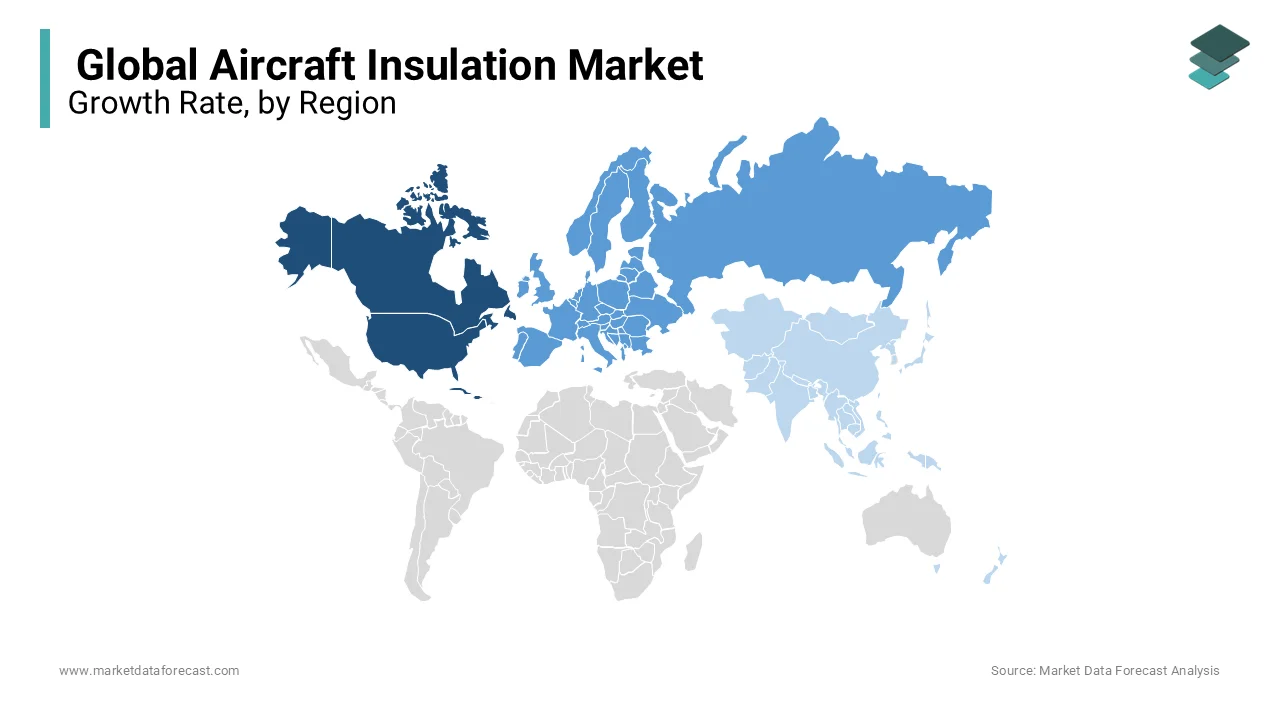
On the provincial side, the North American aircraft insulation market will continue to be the most dominant for the global industry during the forecast period. The area is the center of the aviation industry with several aircraft insulation manufacturers, aircraft OEMs, tier players, airlines, aircraft leasing companies, MRO companies, and raw material suppliers.
Europe aircraft insulation market is expected to experience healthy growth over the next five years, due to the increasing production speed of the main Airbus commercial aircraft program and Irkut's entry into the retail aircraft sector.
It is estimated that the Asia-Pacific aircraft insulation market will have the highest growth rate during the same period. Boeing predicts that around 20,930 commercial and regional aircraft will be delivered to the Asia-Pacific region, mainly in China, Japan, and India.
KEY MARKET PLAYERS
These are some of the main players in the market.
- BASF SE
- Duracote Corporation
- DuPont
- Triumph Group Inc.
- Zodiac Aerospace
- Esterline Technologies Corporation
- Polymer Technologies, Inc.
- Zotefoams Inc
- InsulTech LLC
- Morgan Advanced Materials, etc.
RECENT MARKET NEWS
- The Turkish-Belgian joint venture to establish a thermal insulation manufacturing plant in Alsózsolca, Hungary, serves as an essential perspective for the future.
- DuPont, the industry-leading aircraft insulation, opened an innovation center in Silicon Valley to support innovation in the Bay Area to deliver efficient products.
- The acquisition of Dunmore by Steel Partners gives the latter a growth platform. The agreement will help improve aerospace services while increasing penetration into the isolation market and opening new adjacent markets for existing capabilities and technologies.
- July 2019: the Indian airline IndiGo has booked a total of 237 flights to the region, extending its destination to the Middle East. The airline is also considering adding new aircraft, including the long-distance A321neo LR on Airbus and the next model, the A321 XLR.
MARKET SEGMENTATION
This research report on the global aircraft insulation market has been segmented and sub-segmented based on type, material, and region.
By Type
- Thermal
- Acoustic and Vibration
- Electric
By Material
- Foamed Plastics
- Fiberglass
- Mineral Wool
- Ceramic-based
By Region
- North America
- Europe
- Asia-Pacific
- Latin America
- The Middle East and Africa