- Product Description Description
- Table of Contents TOC
- List of Table & Figure LOT
- Get Free Sample PDF Sample PDF
Market Size, 2025
$3.07 BnMarket Estimate, 2026
$3.17 BnMarket Forecast, 2034
$4.12 BnCAGR, 2026–2034
3.32%Global Alkyd Resin Market Report Summary
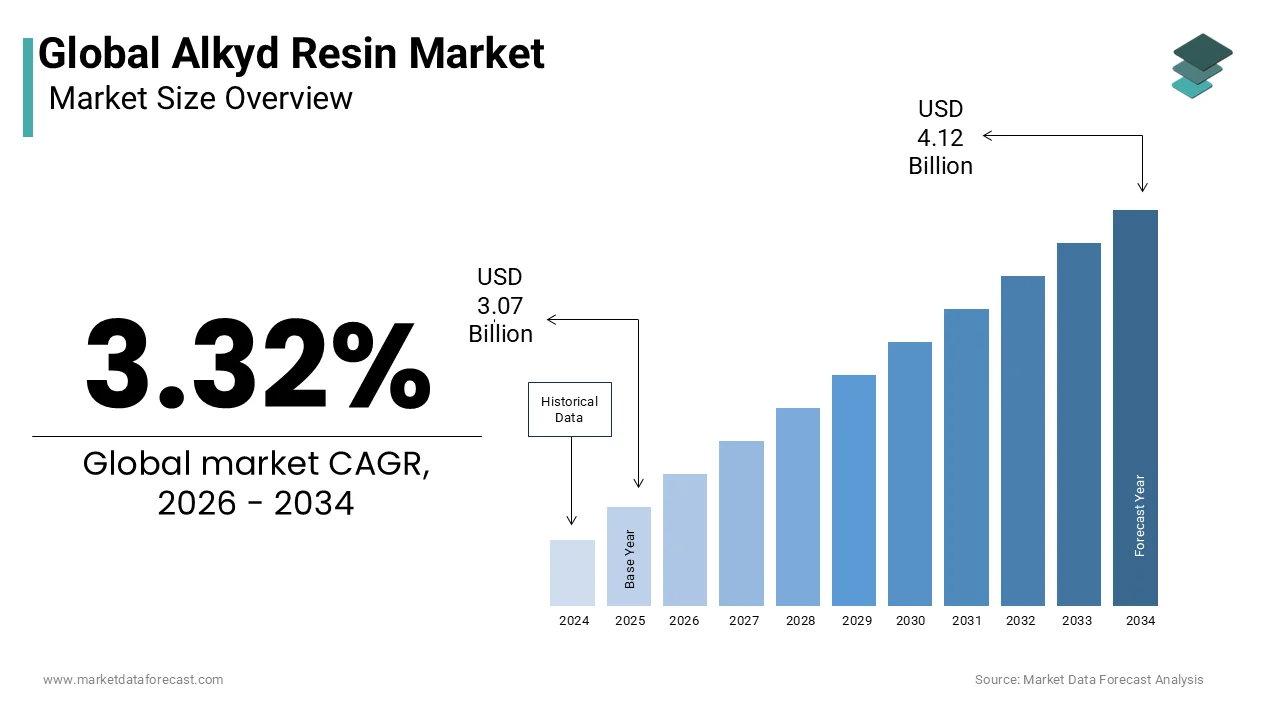
The global alkyd resin market was valued at USD 3.07 billion in 2025, is estimated to reach USD 3.17 billion in 2026, and is projected to reach USD 4.12 billion by 2034, growing at a CAGR of 3.32% during the forecast period. Market growth is driven by increasing demand for coatings in construction, automotive, and industrial applications. Alkyd resins are widely used due to their excellent adhesion, durability, and cost effectiveness. The steady expansion of infrastructure development and refurbishment activities is further supporting consistent market growth globally.
Key Market Trends
- Rising demand for coatings in construction and infrastructure is driving market growth.
- Increasing use of durable and cost effective resin systems is boosting adoption.
- Growing refurbishment and renovation activities are supporting market expansion.
- Expansion of industrial and automotive coatings applications is enhancing demand.
- Technological advancements in resin formulations are improving performance.
Segmental Insights
- Based on resin type, the drying alkyd resins segment dominated the global alkyd resin market in 2025. This dominance is attributed to their suitability for oxidative curing coatings widely used in construction and maintenance applications.
- Based on process type, the fatty acid process segment held a major share of the global alkyd resin market in 2025, driven by its efficiency and widespread industrial adoption.
- Based on formulation type, the solvent borne segment led the market in 2025, supported by strong performance in heavy duty and industrial environments.
- Based on end use, the architectural segment dominated the global alkyd resin market in 2025, driven by increasing residential and commercial construction activities.
Regional Insights
- The global alkyd resin market is experiencing steady growth across regions, supported by construction and industrial demand.
- China and India are expected to lead regional growth over the forecast period, driven by large scale infrastructure projects, rapid urbanization, and increasing housing demand.
Competitive Landscape
The global alkyd resin market is moderately competitive, with key players focusing on product innovation, performance enhancement, and expansion of production capacities to strengthen their market position. Companies are investing in advanced coating technologies and sustainable resin solutions. Prominent players in the global alkyd resin market include Polynt SpA, Nord Composites, Mancuso Chemicals Limited, D.S.V Chemicals Pvt Ltd., Macro Polymers, BASF SE, Spolchemie, DowDuPont Inc., DSM, Arkema SA, and Cytech Solvay Group.
Global Alkyd Resin Market Size
The global alkyd resin market size was valued at USD 3.07 billion in 2025 and is projected to reach USD 4.12 billion by 2034 from USD 3.17 billion in 2026, growing at a CAGR of 3.32%.
Alkyd resins represent a class of synthetic polyesters modified with fatty acids that serve as fundamental binders in solvent based and water borne coatings. These polymers are derived from the reaction of polyols polybasic acids and fatty acids or oils which imparts exceptional gloss retention durability and ease of application. The chemical structure allows for versatility in formulation making them indispensable in architectural decorative and industrial paint segments. As per the European Coatings Federation, the coatings industry in Europe consumes significant volumes of binding agents annually with alkyds maintaining a robust presence due to their cost effectiveness and performance balance. According to the United States Department of Agriculture, the global production of vegetable oils in the 2023/24 season reached approximately 222.83 million metric tons. This abundant supply of natural feedstocks such as soybean linseed and sunflower oil ensures steady input availability for resin manufacturers. Furthermore, the International Paint and Printing Ink Council states that protective coatings account for nearly 40% of total coating usage in industrialized regions, highlighting the critical role of durable binders like alkyds. The inherent ability of these resins to cure via oxidation when exposed to air makes them particularly suitable for maintenance coatings where long term protection against corrosion is paramount. Their compatibility with various pigments and additives further enhances their utility across diverse substrates including wood metal and masonry.
MARKET DRIVERS
Propelling Market Expansion
The growing demand for architectural and decorative coatings drives the expansion of the alkyd resin sector significantly, which is one of the major factors propelling the global alkyd resin market. Residential renovation activities and new construction projects across urban centers necessitate high quality finishes that offer both aesthetic appeal and longevity. Alkyd based enamels are preferred for trim doors and windows due to their superior leveling properties and hard durable film formation. According to Eurostat, construction investment fell by over 2% in the European Union in 2024, marking a clear reversal after two years of modest growth. This growth directly correlates with higher consumption of surface coatings where alkyds remain a staple choice for interior and exterior applications. The European Construction Industry Federation notes that renovation activities accounted for 27.3% of the total European construction market, emphasizing the need for reliable repaint solutions. Alkyd resins provide excellent adhesion to previously coated surfaces which is crucial for refurbishment projects. Additionally, consumer preference for high gloss and semi-gloss finishes in residential spaces supports the continued use of oil modified polyesters. The ease of application using brushes or rollers without requiring specialized equipment makes these resins accessible to professional painters and DIY enthusiasts alike. As urbanization rates climb and housing stocks age, the recurring need for maintenance painting sustains a consistent demand base for alkyd formulations ensuring their relevance in the architectural segment despite the emergence of alternative technologies.
Industrial Maintenance and Protective Coating Applications
Industrial maintenance and protective coating applications substantially fuel the requirement for alkyd resins due to their corrosion resistance capabilities, which is further boosting the expansion of the global alkyd resin market. Infrastructure assets such as bridges pipelines storage tanks and heavy machinery require robust protective layers to withstand harsh environmental conditions including moisture salt spray and chemical exposure. Alkyd resins, especially medium and long oil varieties, offer an optimal balance of flexibility and hardness which is essential for protecting metal substrates from rust and degradation. According to NACE International, annual damage from corrosion is estimated to be $2.5 trillion, which is equivalent to roughly 3.4% of the world gross domestic product. Industries such as oil and gas marine and manufacturing rely heavily on maintenance coatings to extend the service life of their assets. Alkyd based primers and topcoats are widely specified in these sectors due to their proven track record and cost efficiency compared to more expensive epoxy or polyurethane systems. Furthermore, the ability of alkyds to tolerate surface preparation imperfections makes them practical for field applications where ideal blasting conditions are not always achievable. Regulatory standards for industrial safety and asset integrity continue to tighten prompting regular repainting cycles. This regulatory pressure combined with the extensive installed base of industrial infrastructure ensures a steady stream of demand for alkyd resins in the protective coatings domain reinforcing their strategic importance in industrial maintenance protocols.
MARKET RESTRAINTS
VOC Regulations Restraining Alkyd Resin Market
Stringent environmental regulations regarding volatile organic compound emissions are impeding the global alkyd resin market growth. Solvent based alkyd coatings typically contain high levels of organic solvents which evaporate during application and curing contributing to air pollution and smog formation. The European Union Industrial Emissions Directive mandates strict limits on VOC content in decorative paints and varnishes compelling manufacturers to reformulate products or switch to low emission alternatives. As per the European Environment Agency, industrial facilities must comply with increasingly rigorous emission thresholds which has led to a decline in the usage of conventional high VOC alkyd systems. Many member states have implemented national taxes on VOC containing products further increasing the cost burden for end users and formulators. This regulatory landscape favors water borne acrylics and other low VOC technologies that can meet environmental standards without compromising performance. While water reducible alkyds exist, they often face challenges related to drying time and early water sensitivity which can limit their adoption in certain professional applications. The transition away from solvent based chemistries requires substantial investment in research and development for resin manufacturers to create compliant yet performant products. Consequently, the market share of traditional alkyds is under pressure as specifiers and consumers increasingly prioritize eco-friendly options. This regulatory headwind forces the industry to innovate rapidly or risk obsolescence in key segments where environmental compliance is non-negotiable.
Volatility in Raw Material Prices and Supply Chain Instability
Volatility in raw material prices particularly for natural oils and petrochemical derivatives creates financial instability for alkyd resin producers, which is further hindering the global market expansion. The cost structure of alkyd resins is heavily dependent on the availability and pricing of fatty acids such as linseed soybean and tall oil fatty acids as well as phthalic anhydride and pentaerythritol. Fluctuations in agricultural yields due to weather conditions geopolitical tensions or trade policies can cause sudden spikes in vegetable oil prices. According to the Food and Agriculture Organization of the United Nations, the vegetable oil price index climbed to its highest level since July 2022 in November 2024, despite varying trajectories in earlier months. Such unpredictability complicates inventory management and pricing strategies for resin manufacturers who operate on thin margins. Additionally, phthalic anhydride a key component derived from ortho xylene is subject to crude oil price fluctuations which adds another layer of cost uncertainty. When raw material costs rise sharply, manufacturers often struggle to pass these increases fully to customers due to competitive pressures and long term supply contracts. This squeeze on profitability can lead to reduced investment in capacity expansion or innovation. Smaller players in particular may find it difficult to hedge against commodity price risks leading to market consolidation or exit. The inability to guarantee stable pricing can also deter formulators from committing to alkyd based formulations if cheaper or more stable alternatives are available. Thus, raw material volatility remains a persistent operational challenge that impacts the competitiveness and sustainability of the alkyd resin business model.
MARKET OPPORTUNITIES
Development of Bio Based and Sustainable Alkyd Variants
Development of bio based and sustainable alkyd variants offers a lucrative opportunity for the global market growth. Consumers and industrial buyers are increasingly seeking environmentally responsible products that reduce carbon footprints and reliance on fossil fuels. Alkyd resins inherently possess a bio based character due to their derivation from renewable vegetable oils which can be leveraged to meet green building standards and sustainability certifications. Manufacturers are innovating by incorporating higher percentages of bio based content and utilizing waste cooking oil or non-edible oil sources to enhance the ecological profile of their products. As per the European Bioplastics Association, the market for bio based polymers is expanding as industries strive to align with circular economy principles. Formulators can market these advanced alkyds as sustainable alternatives to purely synthetic resins appealing to eco conscious architects and contractors. Certification schemes such as LEED and BREEAM award points for using materials with recycled or bio based content which drives specification of green alkyds in commercial projects. Furthermore, advancements in catalysis and processing technologies enable the production of alkyds with improved performance characteristics such as faster drying times and lower odor without sacrificing sustainability. This dual benefit of environmental compliance and functional excellence positions bio based alkyds as a premium segment within the broader coatings market. Companies that successfully brand and distribute these innovative resins can capture value from the growing demand for green construction materials thereby offsetting declines in traditional solvent based segments.
Expansion into Emerging Economies with Growing Infrastructure
Expansion into emerging economies with growing infrastructure and industrial bases offers significant growth potential for alkyd resin suppliers. Regions such as Asia Pacific Latin America and parts of Eastern Europe are experiencing rapid urbanization and industrialization which drives demand for protective and decorative coatings. In these markets, cost effectiveness remains a primary purchasing criterion making alkyd resins an attractive option compared to higher priced epoxy or polyurethane systems. According to the Asian Development Bank, developing Asia will need to invest $1.7 trillion per year in infrastructure until 2030 to maintain its growth momentum and tackle poverty. Local manufacturing setups or strategic partnerships with regional distributors can facilitate market penetration and ensure supply chain reliability. Additionally, the lack of stringent VOC regulations in some emerging markets allows for the continued use of traditional solvent based alkyds which are well understood and widely accepted by local applicators. As middle class populations expand in these regions, the demand for home improvement and aesthetically pleasing finishes rises further supporting the sales of alkyd based decorative paints. Technical support and training programs for local formulators can help optimize alkyd formulations for specific climatic conditions such as high humidity or extreme temperatures. By tailoring product offerings to meet the specific needs and economic constraints of these developing regions, resin manufacturers can diversify their revenue streams and reduce dependence on mature saturated markets in Western Europe and North America.
MARKET CHALLENGES
Intense Competition from Alternative Resin Technologies
Intense competition from alternative resin technologies such as acrylics epoxies and polyurethanes challenges the market position of alkyd resins. These competing materials often offer superior performance characteristics in specific applications such as faster drying times enhanced chemical resistance or greater flexibility. Water borne acrylics have gained significant traction in the architectural segment due to their low odor quick recoat times and ease of cleanup which appeals to both professional painters and DIY consumers. According to the American Chemical Society, waterborne paints now account for approximately 80% of all the architectural coatings sold today. In industrial settings, epoxy and polyurethane coatings provide exceptional durability and chemical resistance that alkyds cannot match particularly in aggressive environments like chemical plants or marine off shore structures. Although alkyds are cost effective, the performance gap in high end applications limits their addressable market. Manufacturers of alternative resins continuously invest in innovation to lower costs and improve sustainability further eroding the competitive advantage of alkyds. The perception of alkyds as older technology can also hinder adoption among younger specifiers who prioritize modern high performance solutions. To remain competitive, alkyd producers must constantly demonstrate value through cost performance ratios and niche applications where their unique properties such as wetting and adhesion are unmatched. However, the relentless advancement of competing chemistries requires alkyd manufacturers to defend their territory aggressively through product differentiation and targeted marketing efforts.
Complexity in Recycling and Disposal of Coating Waste
Complexity in recycling and disposal of alkyd based coatings creates environmental and logistical challenges for the global alkyd resin market. Unlike thermoplastic materials, alkyd resins cure through a cross linking process that forms a thermoset network which is irreversible and difficult to break down. This characteristic makes spent alkyd coatings and contaminated packaging hazardous waste that requires specialized treatment rather than simple recycling. The European Waste Framework Directive classifies many solvent based paint residues as hazardous waste imposing strict handling and disposal requirements on contractors and waste management firms. As per the European Environment Agency, only a small fraction of paint waste is currently recycled with the majority being incinerated or landfilled. This limited end of life options contradicts the growing emphasis on circular economy principles where materials are kept in use for as long as possible. Formulators and users face increasing pressure to minimize waste generation and manage disposal responsibly which can increase operational costs. Development of recyclable or biodegradable alkyd variants remains technically challenging due to the inherent chemistry of cross linked polyesters. Research into enzymatic degradation or chemical recycling methods is ongoing but has not yet reached commercial viability at scale. Consequently, the environmental footprint of alkyd resins extends beyond their production and application phases to include problematic waste management issues. Addressing this challenge requires collaborative efforts across the value chain to develop take back schemes or innovative recycling technologies that can handle thermoset coating wastes effectively thereby mitigating regulatory and reputational risks associated with waste disposal.
REPORT COVERAGE
| REPORT METRIC | DETAILS |
| Market Size Available | 2025 to 2034 |
| Base Year | 2025 |
| Forecast Period | 2026 to 2034 |
| CAGR | 3.32% |
| Segments Covered | By Resin Type, Process Type, Formulation Type, Application, End-Use Industry, and Region. |
| Various Analyses Covered | Global, Regional & Country Level Analysis, Segment-Level Analysis, DROC, PESTLE Analysis, Porter’s Five Forces Analysis, Competitive Landscape, Analyst Overview of Investment Opportunities |
| Regions Covered | North America, Europ, Asia Pacific, Latin America, Middle East and Africa. |
| Market Leaders Profiled | Polynt SpA, Nord Composites, Mancuso Chemicals Limited, D.S.V Chemicals Pvt Ltd., Macro Polymers, BASF SE, Spolchemie, DowDuPont Inc., DSM, Arkema SA, Cytech Solvay Group, and others. |
SEGMENTAL ANALYSIS
By Resin Type Insights
The drying alkyd resins segment dominated the market in 2025 and is expected to maintain its dominant share for the next several years as construction refurbishment remains a steady driver for oxidative curing coatings. Drying alkyd resins command the dominant position in the global market holding an estimated share of 58% due to their widespread application in architectural and industrial coatings. The primary driver for this dominance is the superior film forming capability and oxidative curing mechanism that provides a hard durable finish essential for exterior surfaces. These resins are extensively used in decorative paints where gloss retention and weather resistance are critical performance metrics. According to the European Coatings Journal, drying alkyds account for the majority of solvent based enamel formulations used in residential refurbishment projects across Europe. The construction sector's reliance on these resins for wood and metal protection further solidifies their market leadership. As per Eurostat, non residential construction accounts for around 31% of the total European construction market, indicating a massive volume of infrastructure requiring durable binders. Drying alkyds offer a cost effective solution for these large scale applications compared to high performance alternatives like polyurethanes. Additionally, the compatibility of drying alkyds with various driers and additives allows formulators to customize drying times and hardness levels to suit specific climatic conditions. This versatility ensures their continued preference among professional painters and industrial applicators who require reliable performance without complex application procedures. The established supply chain and extensive technical knowledge base surrounding drying alkyds also contribute to their entrenched market position making them the default choice for general purpose maintenance and decorative coating needs globally.
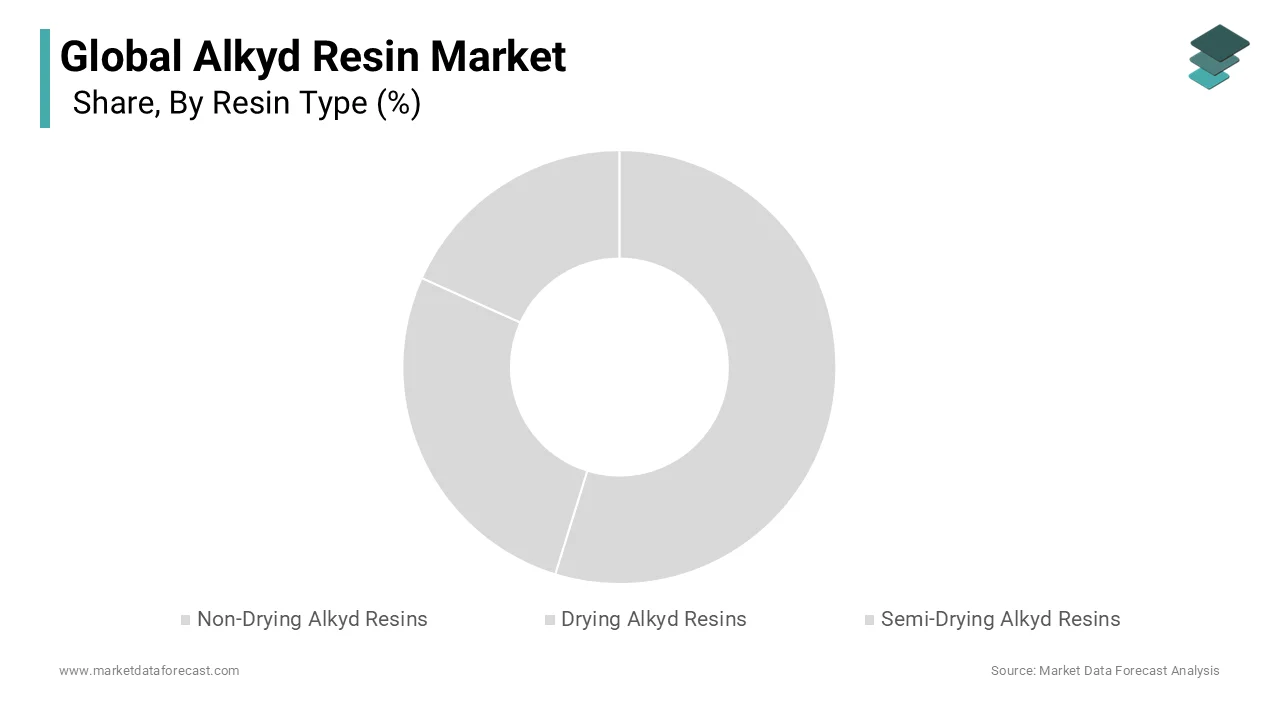
On the other side, the semi-drying alkyd resin segment is poised for high growth in the coming years due to increasing demand for flexible industrial primers in developing infrastructure. Semi-drying alkyd resins are projected to register the highest compound annual growth rate of 4.2% during the forecast period driven by their balanced properties and expanding use in industrial maintenance coatings. The growth is fueled by the increasing demand for coatings that offer moderate drying speeds and flexibility which are ideal for primers and undercoats in heavy duty applications. These resins provide excellent adhesion to metal substrates and serve as effective binders in anti corrosive systems used in infrastructure projects. According to the International Energy Agency, robust investment in oil and gas infrastructure is crucial to maintaining energy security worldwide. The expansion of oil and gas pipelines and storage facilities in emerging economies further boosts the consumption of these resins. As per the International Energy Agency, global natural gas demand increased by 2.7% in 2024, driving the need for additional storage and pipeline infrastructure. Semi-drying alkyds are preferred in these applications because they allow for thicker film builds without sagging and provide sufficient open time for application in large industrial settings. Furthermore, their ability to be overcoated with faster drying topcoats makes them integral to multi-layer coating systems. The ongoing modernization of industrial assets in Asia Pacific and Latin America coupled with strict safety regulations regarding asset integrity ensures a robust growth trajectory for semi-drying alkyd resins in the protective coatings segment.
By Process Type Insights
The fatty acid process segment held the major share of the global alkyd resin market in 2025 and is likely to remain the preferred method for resin production over the next few years as manufacturers focus on premium grade products for precision applications. The fatty acid process segment holds the leading market share of approximately 65% owing to its superior control over resin quality and versatility in formulation. This method involves the direct esterification of polyols with fatty acids and polybasic acids allowing for precise manipulation of molecular weight and oil length. The resulting resins exhibit consistent viscosity and color characteristics which are critical for high quality decorative and industrial coatings. According to the American Chemical Society, the fatty acid process is fundamental to producing high performance coatings with tailored properties. This technical advantage makes it the preferred choice for manufacturers producing premium grade alkyds for automotive and appliance coatings. The ability to incorporate a wide variety of fatty acids including those from non traditional sources such as tall oil and soybean oil enhances the flexibility of this process. As per the United States Department of Agriculture, the production of soybean oil was approximately 61.89 million tons in the 2023/24 marketing year. Additionally, the fatty acid process facilitates the creation of water reducible alkyds which are increasingly demanded due to environmental regulations. The process allows for better integration of hydrophilic groups into the polymer backbone improving compatibility with water borne systems. This adaptability to evolving regulatory standards and consumer preferences for sustainable products ensures the continued dominance of the fatty acid process in the global alkyd resin market.
The glyceride process segment will likely see accelerated adoption in price sensitive emerging markets as manufacturers seek to utilize locally sourced crude oils for affordable coatings. The glyceride process is anticipated to grow at a compound annual growth rate of 3.8% driven by its cost effectiveness and suitability for producing standard grade alkyd resins. This method involves the alcoholysis of triglycerides with polyols followed by esterification with polybasic acids which is a simpler and less capital intensive procedure compared to the fatty acid process. The growing demand for cost competitive coatings in emerging markets where price sensitivity is high supports the adoption of this process. According to the Asian Development Bank, developing Asia is expected to maintain its growth momentum, driving the need for affordable infrastructure materials. The glyceride process is particularly advantageous for manufacturing long oil alkyds used in architectural paints where extreme precision in molecular structure is less critical than in industrial applications. As per the Ministry of Chemicals and Fertilizers in India, industrial chemical production has been on a general growth trend to support domestic infrastructure needs. The process allows manufacturers to utilize crude or refined oils directly reducing preprocessing costs. Furthermore, advancements in catalyst technology have improved the consistency and quality of resins produced via the glyceride process narrowing the performance gap with fatty acid derived resins. This combination of economic efficiency and improving quality metrics positions the glyceride process for accelerated growth in price sensitive segments of the global coatings industry.
By Formulation Type Insights
The solvent borne formulations segment led the market in 2025 and is expected to retain their leadership in heavy duty industrial applications over the next few years due to their unmatched performance in aggressive environments. Solvent borne alkyd coatings retain the largest market share of 52% due to their established performance profile and widespread acceptance in industrial and marine applications. These formulations offer superior wetting properties adhesion and flow characteristics which are difficult to replicate with water borne alternatives. The ability of solvent borne systems to cure effectively in high humidity and low temperature environments makes them indispensable for maintenance painting in harsh climates. According to the International Organization of Motor Vehicle Manufacturers, global automobile production expanded to nearly 94 million units in 2023, requiring vast amounts of high performance coatings. The oil and gas sector also relies heavily on solvent borne alkyds for protecting offshore platforms and pipelines where exposure to salt spray and extreme weather is constant. As per the Society for Protective Coatings, the use of solvent based systems remains extensive in sectors where asset durability is the highest priority. The ease of application and tolerance to surface preparation variations further reinforce their dominance in sectors where operational efficiency is paramount. Although environmental regulations are tightening, many industrial applications still permit the use of solvent borne coatings due to the lack of viable alternatives that match their performance in extreme conditions. The existing infrastructure for handling and applying solvent based products also reduces the barrier to entry for contractors. Consequently, despite the shift towards eco-friendly options, solvent borne alkyd coatings remain the backbone of the protective coatings industry ensuring their leading market position.
However, the waterborne alkyd systems segment is projected to be the fastest expanding segment during the forecast period as global environmental standards increasingly mandate the reduction of solvent emissions. Waterborne alkyds are experiencing the fastest growth with a compound annual growth rate of 5.5% driven by stringent environmental regulations and increasing consumer preference for low volatile organic compound products. Governments worldwide are implementing stricter limits on VOC emissions from coatings prompting formulators to transition from solvent based to water borne systems. The European Union REACH regulation has significantly accelerated this shift by restricting the use of hazardous solvents in decorative and industrial paints. According to the European Environment Agency, industrial emission controls are being tightened across member states to meet air quality targets. Waterborne alkyds offer a compromise between the environmental benefits of acrylics and the performance advantages of traditional alkyds such as gloss and adhesion. Technological advancements in emulsion polymerization have improved the stability and drying characteristics of waterborne alkyds making them viable for a broader range of applications. As per the American Chemical Society, waterborne paints account for approximately 80% of all the architectural coatings sold today. The development of hybrid systems that combine alkyd resins with acrylic dispersions has further enhanced performance attributes such as early water resistance and hardness. These innovations are expanding the use of waterborne alkyds into previously solvent dominated segments like industrial maintenance and wood coatings. The growing awareness of indoor air quality and health impacts among consumers also drives demand for low odor water borne solutions in residential applications.
By End Use Insights
The architecture segment dominated the market in 2025 and is likely to dominate the market for the next several years as urban population growth continues to drive massive residential and commercial construction. The architecture industry accounts for the largest share of 45% in the alkyd resin market driven by the extensive use of alkyd based paints in residential and commercial building projects. Alkyd enamels are preferred for interior and exterior trim doors windows and cabinetry due to their smooth finish durability and ease of cleaning. The global construction sector continues to expand with urbanization and population growth driving demand for new housing and commercial spaces. According to the United Nations Department of Economic and Social Affairs, 68% of the world population is projected to live in urban areas by 2050. In developed regions, renovation and refurbishment of existing buildings constitute a major portion of architectural coating demand. As per the European Construction Industry Federation, renovation works constitute a significant portion of construction activities in mature markets. Alkyd resins provide the necessary aesthetic qualities such as high gloss and levelness that are highly valued in architectural finishes. Their compatibility with various substrates including wood metal and plaster makes them versatile for diverse architectural applications. The DIY segment also contributes significantly to this demand as homeowners prefer alkyd based products for their forgiving application characteristics and professional looking results. The steady growth in real estate development and home improvement expenditures globally ensures that the architecture industry remains the primary consumer of alkyd resins sustaining its leading market position.
However, the automotive segment is expected to see rapid growth over the next few years as global production volumes recover and manufacturers adopt advanced primer technologies. The automotive industry is projected to be the fastest growing end-use segment with a compound annual growth rate of 4.8% driven by the increasing production of vehicles and the need for high performance coatings. Alkyd resins are used in primer surfacers and chip resistant coatings due to their excellent adhesion and flexibility. The global automotive production is recovering and expanding particularly in Asia Pacific where manufacturing hubs are growing. According to the International Organization of Motor Vehicle Manufacturers, global automobile production reached approximately 94 million units in 2023. The trend towards lightweight vehicles and electric vehicles also influences coating requirements with a focus on durability and corrosion protection. Alkyd modified resins offer a cost effective solution for meeting these performance standards while maintaining processing efficiency. As per the Society of Automotive Engineers, advanced coatings are essential for the protection of vehicle bodies against environmental degradation. The expansion of automotive manufacturing facilities in emerging economies such as India and China further boosts the consumption of alkyd resins. Additionally, the aftermarket segment for vehicle refinishing contributes to growth as consumers seek to maintain the appearance and value of their vehicles. The continuous innovation in alkyd formulations to improve drying times and compatibility with automated application processes supports their adoption in modern automotive manufacturing lines.
REGIONAL ANALYSIS
China Alkyd Resin Market Analysis
China and India are expected to lead regional growth over the next few years as large scale infrastructure projects and middle class housing demand continue to surge. The region is the largest producer and consumer of coatings due to its massive construction and manufacturing sectors. According to the Asian Development Bank, developing Asia will need to invest $1.7 trillion per year in infrastructure until 2030 to maintain growth momentum. China remains the largest market within the region supported by its extensive chemical manufacturing base and growing automotive industry. The Indian government initiatives such as Smart Cities Mission and Housing for All are boosting construction activities thereby increasing the consumption of alkyd based paints. As per the Ministry of Statistics and Programme Implementation in India, the construction sector saw growth as the nation invests heavily in urban development. The availability of raw materials such as vegetable oils and petrochemical derivatives at competitive prices further strengthens the regional market. Local manufacturers are expanding capacity to meet domestic demand and export opportunities. The rising middle class and increasing disposable incomes are also driving demand for home improvement products including high quality paints. Environmental regulations are becoming stricter, but the sheer volume of construction and industrial activity ensures continued growth. The region's focus on infrastructure development and manufacturing expansion positions it as the key growth engine for the global alkyd resin market.
Europe Alkyd Resin Market Analysis
European nations will likely focus on the shift toward bio-based alkyd chemistry over the next few years as regional environmental policies prioritize the reduction of petrochemical dependencies. The market in Europe is primarily driven by high standards for architectural finishes and a strong emphasis on industrial maintenance. According to Eurostat, GDP grew by 1.0% in the European Union in 2024, providing a stable economic backdrop for industrial activity. The region's commitment to sustainability is prompting a transition toward low VOC and waterborne alkyd technologies. As per the European Environment Agency, emission control measures are a central part of the region's environmental strategy. Despite a mature market profile, the need for renovation of aging infrastructure and residential buildings provides steady opportunities for alkyd resin suppliers. The established presence of leading chemical companies in Europe fosters innovation in sustainable and high performance alkyd variants.
COMPETITIVE LANDSCAPE
The alkyd resin market features intense competition among established chemical giants and specialized resin manufacturers. Competitive dynamics are driven by the need to balance cost efficiency with performance and environmental compliance. Major players differentiate themselves through innovation in sustainable technologies such as water borne and bio based alkyds. The market is fragmented with numerous regional producers competing on price and local service capabilities. Large corporations leverage their global distribution networks and research capabilities to offer comprehensive solutions. Smaller firms focus on niche applications and customized products to retain customer loyalty. Regulatory pressures regarding volatile organic compounds force continuous adaptation and investment in cleaner technologies. Price volatility of raw materials like vegetable oils and petrochemical derivatives adds complexity to competitive strategies. Companies must navigate these challenges by optimizing supply chains and enhancing product value propositions. The shift towards green coatings creates opportunities for those who can successfully innovate while maintaining profitability. Strategic alliances and acquisitions are common tactics to expand market reach and technological expertise. This competitive landscape demands agility and forward thinking to sustain growth and relevance in the global coatings industry.
Key Market Players
The major key players in the global alkyd resin market
- Polynt SpA
- Nord Composites
- Mancuso Chemicals Limited
- D.S.V Chemicals Pvt Ltd.
- Macro Polymers
- BASF SE
- Spolchemie
- DowDuPont Inc.
- DSM
- Arkema SA
- Cytech Solvay Group
Top Players in the Market
- Allnex Technologies BV stands as a prominent global supplier of specialty resins including alkyds for coatings and inks. The company focuses on innovation and sustainability by developing bio based and low volatile organic compound solutions. Allnex has expanded its production capabilities in Europe and Asia to meet growing demand for high performance binders. Recent initiatives include the launch of new water borne alkyd emulsions that offer improved drying times and durability. These advancements help formulators comply with stringent environmental regulations while maintaining coating quality. The company actively collaborates with customers to create customized resin solutions for specific applications such as architectural and industrial maintenance coatings. This customer centric approach strengthens its position as a preferred partner in the global coatings industry.
- DSM Coating Resins is a leading innovator in the development of sustainable coating solutions including advanced alkyd technologies. The company leverages its extensive research and development capabilities to create resins that reduce environmental impact without compromising performance. DSM has introduced a range of bio based alkyd resins derived from renewable feedstocks which appeal to eco conscious markets. Recent actions include the expansion of its production facilities in North America to enhance supply chain reliability. The company also invests in digital tools to assist customers in selecting optimal resin formulations. By focusing on circular economy principles DSM strengthens its market presence through products that support sustainability goals and regulatory compliance across various regions.
- Arkema SA is a major player in the specialty chemicals sector with a strong portfolio of alkyd resins for diverse coating applications. The company emphasizes innovation and sustainability by integrating bio sourced materials into its resin production processes. Arkema has recently upgraded its manufacturing sites in Europe to increase efficiency and reduce carbon emissions. The company launched new high solids alkyd resins that enable formulators to meet strict volatile organic compound limits. Arkema also engages in strategic partnerships with raw material suppliers to secure sustainable feedstock sources. These efforts enhance its ability to provide consistent high quality products to global customers. By prioritizing technological advancement and environmental responsibility Arkema maintains a competitive edge in the evolving alkyd resin market.
Top Strategies Used by Key Market Participants
Key players in the alkyd resin market primarily focus on product innovation and sustainability to maintain competitive advantage. Companies invest heavily in research and development to create bio based and low volatile organic compound formulations that meet stringent environmental regulations. Strategic expansions of production facilities in emerging markets allow manufacturers to cater to growing demand in Asia Pacific and Latin America. Partnerships with raw material suppliers ensure stable access to renewable feedstocks such as vegetable oils. Additionally firms engage in collaborations with coating formulators to develop customized solutions for specific applications. Digitalization of supply chains enhances operational efficiency and customer service. These strategies collectively strengthen market positions by addressing regulatory pressures and evolving consumer preferences for eco friendly products.
MARKET SEGMENTATION
This research report on the global alkyd resin market has been segmented and sub-segmented based on resin type, process type, formulation type, application, end-use, and region.
By Resin Type
- Non-Drying Alkyd Resins
- Drying Alkyd Resins
- Semi-Drying Alkyd Resins
By Process Type
- Fatty Acid Process
- Glyceride Process
By Formulation Type
- High-Solids Alkyds
- Waterborne Alkyds
- Modifying Alkyds
- Solvent Borne Coatings
- Powder Coatings
- Others
By Application
- Automotive Refinishing Primers Coil Coatings
- Drum
- Metal Container Coating
- Electrical Insulating Enamels
- Exterior Trim Paints
- Maintenance Paint
- Packaging
- Others
By End-Use
- Automotive Industry
- Architecture Industry
- Marine Industry
- Food and Beverage Industry
- Appliances
- Others
By Region
- North America
- Europe
- Asia Pacific
- Latin America
- Middle East & Africa