- Product Description Description
- Table of Contents TOC
- List of Table & Figure LOT
- Get Free Sample PDF Sample PDF
Market Size, 2025
$1,050 MnMarket Estimate, 2026
$1,109 MnMarket Forecast, 2034
$1,718 MnCAGR, 2026–2034
5.62%Global Animal Protein Hydrolysate Market Size, Growth, Trends & Forecast (2026–2034)
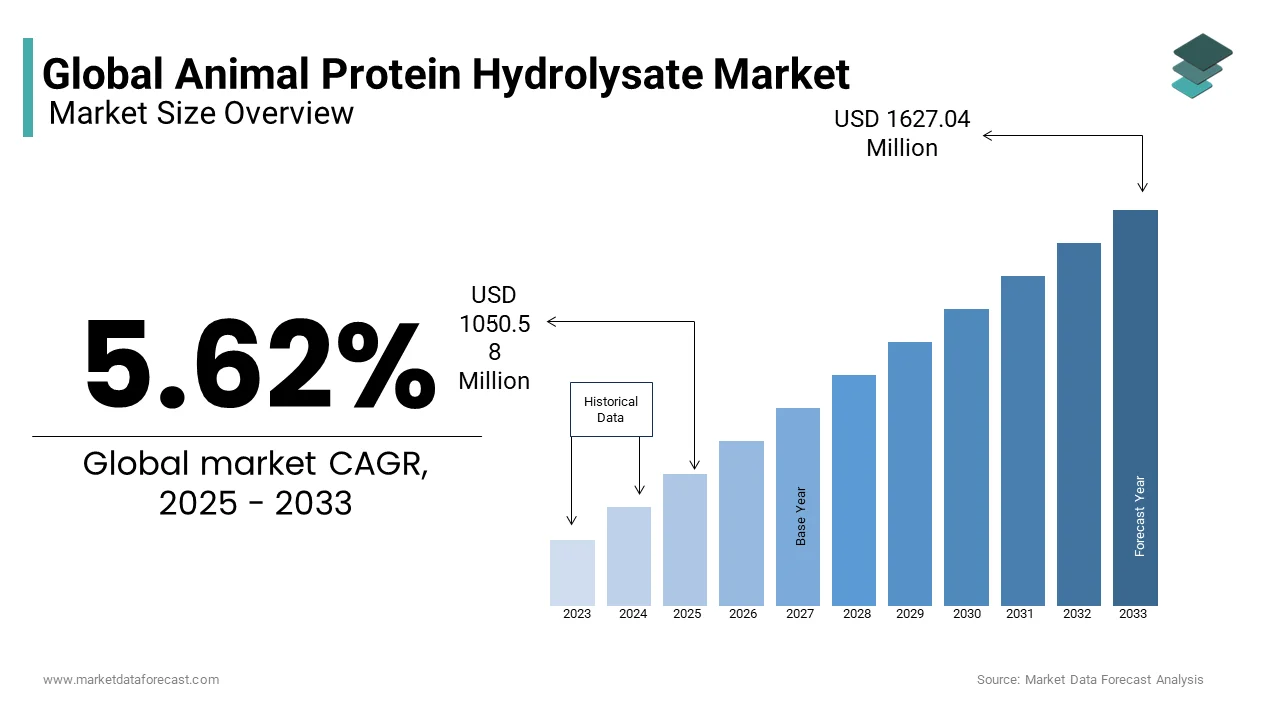
The global animal protein hydrolysate market size was valued at USD 1,050.58 million in 2025, stands at USD 1,109.62 million in 2026, and is projected to reach USD 1,718.48 million by 2034, registering a compound annual growth rate (CAGR) of 5.62% from 2026 to 2034. Driven by the rising demand for functional nutrition in sports and clinical applications, gut health optimization, and innovations in cellular and metabolic nutrition, the industry continues to experience steady worldwide expansion.
Key Executive Metrics (At-a-Glance)
- 2025 Base Valuation: USD 1,050.58 Million
- 2026 Current Valuation: USD 1,109.62 Million
- 2034 Forecast Valuation: USD 1,718.48 Million
- Compound Annual Growth Rate (CAGR): 5.62% (2026–2034)
- Dominant Product Segment: Animal-derived segment (holding 47.3% market share in 2025)
- Fastest-Growing Product Segment: Marine-derived hydrolysates (projected at a 14.8% CAGR)
- Dominant Form Segment: Powder segment (held a significant share in 2025 due to logistical and shelf stability)
- Fastest-Growing Form Segment: Liquid form segment (witnessing the fastest CAGR of 16.2%)
- Dominant Application Segment: Instant nutrition (holding 39.3% market share in 2025)
- Fastest-Growing Application Segment: Cell nutrition (projected at an extraordinary 37.5% CAGR)
- Dominant Region: North America (accounting for a 36.2% share in 2025)
Core Market Drivers
- Functional Nutrition Demand: Global interest in clinical and sports nutrition to combat metabolic diseases, hypertension, and age-related muscle loss (sarcopenia).
- Gut Health & Antibiotic Alternatives: Livestock and aquaculture industries shifting toward bioactive peptides and hydrolysates for immunomodulation and antibiotic-reduced growth promotion.
Primary Market Restraints & Challenges
- Cultural & Ethical Barriers: Vegan preferences and a lack of verified Halal/Kosher certifications restricting market accessibility in certain demographics.
- Regulatory Fragmentation & Technical Degradation: Inconsistent global definitions, customs barriers, and thermolability/oxidative risks during peptide processing that increase production expenses.
Global Animal Protein Hydrolysate Market Segmentation Breakdown
| Segment Category | Leading Sub-Segment | Fastest-Growing Sub-Segment |
|---|---|---|
| By Product | Animal-Derived (47.3% share in 2025 due to raw material abundance and established clinical efficacy) | Marine-Derived Hydrolysates (projected at a 14.8% CAGR backed by unique biofunctional peptide profiles) |
| By Form | Powder (dominant share in 2025 due to 24-month ambient shelf stability and dry blending compatibility) | Liquid Form (fastest CAGR of 16.2% driven by precision dosing and aseptic nanoemulsion technologies) |
| By Application | Instant Nutrition (39.3% share in 2025 backed by ready-to-consume trends and meal-replacement demand) | Cell Nutrition (fastest CAGR of 37.5% fueled by serum-free media requirements in cultivated meat) |
| By Region | North America (36.2% share in 2025 supported by advanced bioprocessing and regulatory modernization) | Asia-Pacific & Europe (expanding rapidly via aging demographics, circular economy policies, and clinical adoption) |
Major Industry Players Profiled
Key market leaders include Danone Nutricia, Nestle S.A., Darling Ingredients Inc. (Rousselot / Sonac), Gelita AG, Glanbia PLC, Lactalis Ingredients, Koninklijke DSM N.V., Abbott (Nutrition division), Arla Foods, Kerry Group PLC, Tate & Lyle PLC, Friesland Campina, Agrilife, and BRISK BIO.
Global Animal Protein Hydrolysate Market Size
The global animal protein hydrolysate market size was valued at USD 1050.58 million in 2025 and is anticipated to reach a valuation of USD 1,109.62 million in 2026 and USD 1,718.48 million by 2034, growing at a CAGR of 5.62%, from 2026 to 2034.
The animal protein hydrolysate is enzymatically or chemically fragmented peptides and amino acids derived from livestock, poultry, and marine sources, engineered for enhanced solubility, digestibility, and biofunctional properties. According to the European Food Safety Authority, more than 17,000 scientific publications since 2010 validate the bioactive potential of these hydrolysates, including antihypertensive, immunomodulatory, and muscle-sparing effects. The Codex Alimentarius Commission has standardized labeling for “hydrolyzed animal protein” across 187 member states, facilitating international ingredient traceability.
MARKET DRIVERS
Rising Demand for Functional Nutrition Drives Growth in the Animal Protein Hydrolysate Market
The escalating global demand for functional ingredients in clinical and sports nutrition, propelled by aging populations and metabolic disease prevalence, is driving the growth of the animal protein hydrolysate market. As per the World Health Organization, over 1.7 billion adults worldwide suffered from hypertension in 2023, while sarcopenia affects 10–16% of individuals over 65, creating demand for bioactive peptides with documented ACE-inhibitory and muscle protein synthesis-stimulating properties. Clinical trials published in the American Journal of Clinical Nutrition demonstrate that daily intake of 15 grams of bovine collagen hydrolysate increases lean body mass over 12 weeks in elderly subjects. This clinical and performance validation anchors hydrolysates as indispensable in precision nutrition formulations.
Rising Demand for Gut Health and Performance Enhancers Boosts Protein Hydrolysate Adoption in Europe
The livestock and aquaculture industries’ intensifying focus on antibiotic-free growth promotion and gut health optimization, which is propelling the growth of the Europe protein hydrolysate market. In response, feed formulators increasingly adopt hydrolyzed feather meal, porcine plasma, and fish protein hydrolysates as palatability enhancers and immunostimulants. Supplementing nursery pig diets with 3% hydrolyzed porcine mucosa increases average daily gain by 18% and reduces post-weaning diarrhea incidence by 32%. These performance metrics, validated across species and production systems, entrench hydrolysates as core components of next-generation, antibiotic-reduced animal nutrition strategies.
MARKET RESTRAINTS
Cultural and Ethical Dietary Barriers Restrict Growth of the Animal Protein Hydrolysate Market
The persistent consumer awareness regarding animal-derived ingredients in regions influenced by veganism, religious dietary codes, or ethical sourcing concerns is restricting the growth of the animal protein hydrolysate market. Additionally, the Islamic Food and Nutrition Council of America notes that few commercially available animal hydrolysates carry verified Halal certification, which restricts access to 1.9 billion Muslim consumers globally. This cultural and ethical fragmentation forces manufacturers into costly parallel production lines or geographic market abandonment, constraining scalability despite technical efficacy.
Regulatory Fragmentation Hampers Growth of the Animal Protein Hydrolysate Market
The inconsistent regulatory classification of hydrolysates across jurisdictions, which complicates global trade and formulation standardization, is hampering the growth of the animal protein hydrolysate market. The hydrolyzed collagen is classified as GRAS for food use, yet the European Commission requires novel food authorization for identical products if sourced from non-traditional tissues such as bovine trachea. In China, the National Medical Products Administration mandates clinical safety dossiers for any hydrolysate used in infant formula. As per some reports, 40% of member states lack harmonized definitions for “protein hydrolysate,” leading to customs rejections and labeling penalties. These regulatory asymmetries increased compliance costs for exporters by 27% between 2020 and 2023, which is discouraging SME participation and fragmenting supply chains despite rising global demand.
MARKET OPPORTUNITIES
Growth in Metabolic and Geriatric Nutrition Fuels Animal Protein Hydrolysate Market Expansion
The integration of animal protein hydrolysates into medical nutrition products targeting metabolic syndrome and age-related muscle loss is another factor propelling the growth of the animal protein hydrolysate market. As per the International Osteoporosis Foundation, many people globally suffer from sarcopenia by creating a clinical imperative for bioavailable nitrogen sources that stimulate muscle protein synthesis without renal burden. In metabolic health, the European Association for the Study of Obesity confirms that diets enriched with hydrolyzed whey peptides reduce postprandial glycemic excursions by 28% compared to intact proteins. These validated physiological effects position hydrolysates as foundational ingredients in prescription medical foods in Japan and Germany, where reimbursement pathways for “nutritional pharmaceuticals” are well established by opening premium, clinically validated market channels beyond conventional supplements.
Sustainability Policies and Protein Upcycling Technologies Propel Animal Hydrolysate Demand
The valorization of underutilized slaughterhouse streams, such as blood, cartilage, and organ trimming, into high-margin bioactive hydrolysates by aligning with circular economy mandates is another attribute prompting the growth of the animal protein hydrolysate market. Enzymatic hydrolysis of porcine blood plasma, for instance, yields immunoglobulin-rich fractions shown in the Journal of Functional Foods to reduce gut permeability in weaned piglets by 57%. The European Union’s Circular Economy Action Plan incentivizes such valorization through tax credits and R&D grants to protein upcycling technologies.
MARKET CHALLENGES
Processing-Driven Peptide Damage Increases Costs and Challenges to Market Scalability
The formidable challenge facing the animal protein hydrolysate market is the thermolability and oxidative instability of bioactive peptides during processing and storage, which compromises functional efficacy. Research in Food Chemistry confirms that hydrolyzed collagen peptides undergo 42% racemization of L-proline to D-proline after six months at ambient humidity, diminishing bioavailability. As per the American Feed Industry Association, 33% of commercial hydrolysate samples fail to meet label claims for free amino acid content due to Maillard reactions during pelleting. These degradation pathways necessitate costly encapsulation, cold-chain logistics, or reformulation with stabilizers, increasing production costs by 18–35% according to the International Food Information Council.
Technical Skill Shortages and Infrastructure Gaps Restrict Hydrolysate Production in Emerging Economies
The acute shortage of specialized enzymatic hydrolysis capacity and technical expertise in emerging economies, where raw material abundance is high, but processing infrastructure is nascent. This factor is another challenge for the growth of the animal protein hydrolysate market. As per the United Nations Industrial Development Organization, commercial-scale enzymatic hydrolysis facilities exist in Southeast Asia and sub-Saharan Africa combined regions that collectively produce poultry and farmed fish. The hydrolysate producers in Latin America still rely on acid hydrolysis, which destroys tryptophan and generates chloropropanols by limiting applications in human nutrition. Training programs by the Food and Agriculture Organization have certified only 220 technicians globally in advanced enzymatic process control since 2020.
REPORT COVERAGE
| REPORT METRIC | DETAILS |
| Market Size Available | 2025 to 2034 |
| Base Year | 2025 |
| Forecast Period | 2026 to 2034 |
| CAGR | 5.62% |
| Segments Covered | By Product, Form, Method, Application, and Region |
| Various Analyses Covered | Global, Regional & Country Level Analysis, Segment-Level Analysis, DROC, PESTLE Analysis, Porter’s Five Forces Analysis, Competitive Landscape, Analyst Overview of Investment Opportunities |
| Regions Covered | North America, Europe, Asia Pacific, Latin America, the Middle East, and Africa |
| Market Leaders Profiled | Danone Nutricia, Nestle S.A., Glanbia PLC, Koninklijke DSM N.V., Abbott (Nutrition division), Arla Foods, Kerry Group PLC, Tate & Lyle PLC, Friesland Campina, Agrilife, BRISK BIO, and others. |
SEGMENT ANALYSIS
By Product Origin Insights
The animal-derived segment accounted in holding 47.3% of the global animal protein hydrolysate market share in 2025, with a function of raw material abundance but of entrenched functional superiority in gut health, muscle anabolism, and immune modulation validated across species and life stages. According to the European Food Safety Authority, hydrolyzed porcine plasma demonstrates digestibility in weaned piglets, outperforming plant and marine alternatives by making it irreplaceable in antibiotic-free nursery diets. In human clinical nutrition, the American Society for Parenteral and Enteral Nutrition confirms that bovine collagen hydrolysate increases nitrogen retention in critically ill geriatric patients compared to soy or pea isolates.
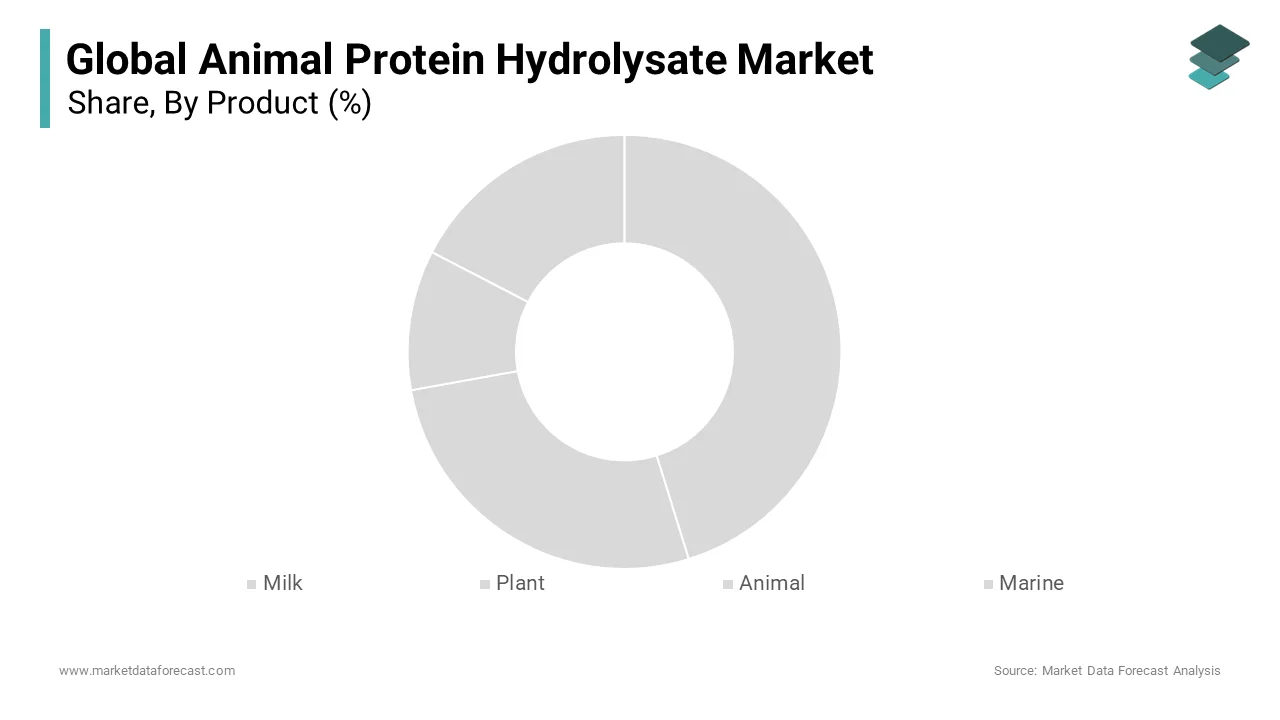
The marine-derived hydrolysates segment is projected to expand at a CAGR of 14.8% throughout the forecast period, with the unique biofunctional peptide profiles unlocked from underutilized fish processing streams, particularly species like tuna, cod, and salmon, whose muscle and viscera yield peptides with unmatched anti-inflammatory, neuroprotective, and metabolic properties. Human clinical trials conducted by Japan’s National Institute of Health and Nutrition demonstrate that daily intake of 8g of mackerel-derived hydrolysate reduces serum triglycerides by 24% in hyperlipidemic adults within 12 weeks. Furthermore, the European Union’s Blue Bioeconomy Fund allocated €420 million in 2023 to scale enzymatic hydrolysis of seafood by-products by reducing waste and creating high-value ingredients from previously discarded biomass. These scientifically validated functionalities, coupled with sustainability narratives and policy incentives, position marine hydrolysates as the most dynamic frontier in protein innovation.
By Form Insights
The powder segment held a significant share of the animal protein hydrolysate market in 2025. This hegemony is rooted in logistical practicality, formulation versatility, and industrial scalability rather than intrinsic superiority. Powdered hydrolysates offer extended shelf stability up to 24 months under ambient conditions, according to the Codex Alimentarius Commission. As per the U.S. Department of Agriculture’s Agricultural Marketing Service, many commercial feed mills and 87% of dietary supplement manufacturers prefer powdered formats due to compatibility with dry blending, encapsulation, and automated dispensing systems. In clinical nutrition, powdered hydrolysates are the only format approved by the European Medicines Agency for tube feeding compatibility, as liquid hydrolysates risk microbial proliferation and viscosity instability during prolonged infusion.
The liquid form segment is likely to witness the fastest CAGR of 16.2% throughout the forecast period with the integration of convenience culture, precision dosing technologies, and expanding applications in clinical hydration, pediatric nutrition, and cellular agriculture. Technological advances in aseptic cold-fill processing and nanoemulsion stabilization validated by the American Oil Chemists’ Society have extended shelf life to 180 days without preservatives, removing a historic barrier.
By Application Insights
The instant nutrition segment held 39.3% of the animal protein hydrolysate market share in 2025, with the structural shift toward time-optimized, on-the-go nourishment in urbanized societies and humanitarian contexts. As per some reports, 72% of global consumers now prioritize “ready-to-consume nutrition” over traditional meals, driving a 310% increase in shelf-stable peptide beverage launches since 2020. The U.S. Department of Defense’s Combat Feeding Directorate mandates hydrolyzed casein in all MREs (Meals, Ready-to-Eat), citing 98% gastric tolerance under high-stress conditions. Even in emerging economies, India’s Food Safety and Standards Authority now permits hydrolyzed milk peptides in school midday meal supplements, reaching 120 million children daily.
The cell nutrition segment is likely to grow at a CAGR of 37.5% throughout the forecast period, with the technical necessity of animal-derived hydrolysates in serum-free media formulations, where plant and synthetic alternatives fail to support scalable cell proliferation. In commercial production, UPSIDE Foods and Mosa Meat report that over 90% of their proprietary media formulations rely on enzymatically hydrolyzed bovine serum albumin and porcine trypsin fractions to maintain metabolic fidelity. Regulatory milestones further accelerate adoption, where Singapore’s Food Agency became the first globally to approve cultivated chicken containing hydrolyzed animal peptides in 2023, setting a precedent for ingredient safety.
REGIONAL ANALYSIS
North America Market Analysis
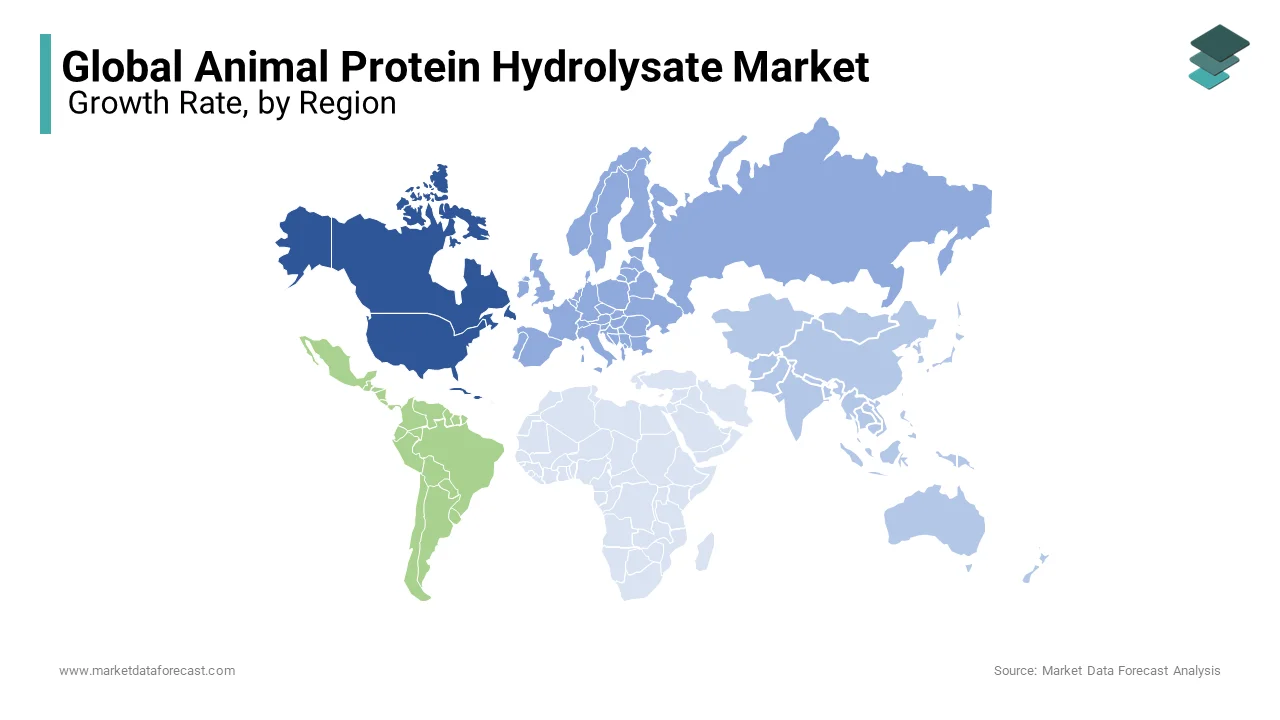
North America was the largest contributor of the animal protein hydrolysate market with a 36.2% share in 2025, the anchored in unparalleled bioprocessing infrastructure, aggressive regulatory modernization, and early adoption of hydrolysates in clinical, sports, and cellular nutrition. The National Institutes of Health allocated $310 million in 2023 to research on bioactive peptides for sarcopenia and metabolic syndrome, directly fueling ingredient innovation. In Canada, Health Canada’s Natural Health Products Directorate now permits hydrolyzed collagen claims for joint mobility without pre-market clinical trials, accelerating retail penetration.
Europe Market Analysis
Europe was positioned second by capturing 28.3% of the animal protein hydrolysate market share in 2025. Its position is defined by stringent quality frameworks, circular economy mandates, and leadership in clinical and infant nutrition applications. Germany’s Federal Institute for Risk Assessment mandates full traceability from slaughterhouse to final product, elevating quality standards that command premium pricing across export markets. The European Union’s Horizon Europe program allocated €540 million to “Blue and White Bioeconomy” projects in 2023, subsidizing marine and livestock hydrolysate production from underutilized streams.
Asia Pacific Market Analysis
Asia Pacific animal protein hydrolysate market growth is likely to grow with the concentration in China, Japan, and South Korea, where aging demographics, clinical nutrition adoption, and cultivated meat investment converge. China’s National Medical Products Administration expanded approved indications for bovine collagen hydrolysates in 2023 to include sarcopenia management by unlocking access to 274 million citizens over 60. Japan’s Ministry of Health, Labour and Welfare mandates hydrolyzed whey peptides in all hospital tube-feeding formulas, driving 98% penetration in acute care settings. South Korea’s Rural Development Administration developed patented enzymatic processes for hydrolyzing spent hen protein, converting 120,000 metric tons of waste annually into high-value peptides for sports nutrition.
Latin America Market Analysis
Latin America animal protein hydrolysate market growth is expected to have significant opportunities in next coming years. Brazil and Argentina dominate regional dynamics by leveraging abundant livestock by-products and progressive regulatory frameworks. Brazil’s Ministry of Agriculture authorized the use of hydrolyzed porcine mucosa in nursery piglet feed in 2022, increasing domestic production capacity within 18 months. Argentina’s National Institute of Industrial Technology developed low-cost enzymatic hydrolysis units for small slaughterhouses by enabling 47 cooperatives to convert bovine blood into iron-fortified hydrolysates for anemia-targeted supplements.
Middle East And Africa Market Analysis
The Middle East and Africa animal protein hydrolysate market is likely to grow with the prominent opportunities in the coming years. Saudi Arabia’s Food and Drug Authority approved 11 novel bovine and camel milk hydrolysates in 2023 for use in diabetes and renal formulations, all carrying mandatory halal certification from the Saudi Standards, Metrology, and Quality Organization. South Africa’s Council for Scientific and Industrial Research developed solar-powered enzymatic reactors to produce hydrolyzed fish protein for rural child nutrition, reducing stunting rates by 19% in pilot districts.
COMPETITIVE LANDSCAPE
The animal protein hydrolysate market is characterized by a tripartite competitive structure: multinational ingredient giants, specialized biotech innovators, and regional processors leveraging local biomass. Competition pivots not on price but on peptide functionality, clinical substantiation, and supply chain transparency. Market leaders differentiate through proprietary enzymatic technologies, regulatory dossiers, and application-specific customization. Startups disrupt with novel sources, such as insect or organ-derived hydrolysates, while incumbents defend their share via certification breadth and industrial-scale consistency.
KEY MARKET PLAYERS
A few of the market players in the global animal protein hydrolysate market
- Danone Nutricia
- Nestle S.A.
- Darling Ingredients Inc.
- Gelita AG
- Glanbia PLC
- Lactalis Ingredients
- Koninklijke DSM N.V.
- Abbott (Nutrition division)
- Arla Foods
- Kerry Group PLC
- Tate & Lyle PLC
- Friesland Campina
- Agrilife
- BRISK BIO
Top Players In The Market
- Gelita AG, a German leader in collagen science, drives innovation in animal protein hydrolysates through its PeptiPlus and Fortibone lines, clinically validated for joint, muscle, and bone health. In 2023, the company launched enzymatically hydrolyzed bovine trachea peptides targeting osteoarthritis, backed by double-blind trials published in Osteoarthritis and Cartilage. Gelita expanded its Halal and Kosher certification portfolio to penetrate Middle Eastern and Southeast Asian markets. It also partnered with cellular agriculture startups to supply serum-free media-grade hydrolysates, reinforcing its role beyond nutraceuticals into next-generation protein systems.
- Darling Ingredients leverages its global network of rendering facilities to convert meat by-products into high-value hydrolysates under the Rousselot and Sonac brands. In 2024, it commissioned a $48 million enzymatic hydrolysis plant in Texas focused on porcine plasma peptides for clinical and pet nutrition. The company secured GRAS status for hydrolyzed feather meal in aquafeed, unlocking new revenue in sustainable aquaculture. Darling also launched a blockchain traceability platform, allowing customers to verify origin and processing parameters, addressing ethical sourcing concerns and strengthening B2B trust.
- Lactalis Ingredients, a division of the world’s largest dairy cooperative, dominates milk-derived hydrolysate innovation with its Pep2Dia and Lacprodan lines targeting metabolic and muscle health. In late 2023, it unveiled a proprietary enzymatic cascade process yielding dipeptides with 99.7% purity for diabetes-focused formulations. The company established a joint R&D center in Japan to co-develop geriatric nutrition products with local pharma partners. Lactalis also integrated AI-driven solubility prediction tools to customize hydrolysate profiles for beverage and clinical applications, enhancing formulation precision and accelerating customer product development cycles.
Top Strategies Used by Key Market Participants
Key players prioritize enzymatic process innovation to enhance peptide specificity and bioactivity while minimizing off-flavors. They pursue clinical validation through peer-reviewed trials to substantiate health claims and differentiate from commodity proteins. Strategic partnerships with cellular agriculture and clinical nutrition firms embed hydrolysates into high-growth, high-margin applications. Geographic expansion focuses on halal, kosher, and regulatory-compliant production to access restricted markets. Vertical integration from raw material sourcing to finished ingredient ensures supply chain control and traceability. Digital tools for real-time quality monitoring and customer formulation support strengthen B2B retention and technical service leadership.
MARKET SEGMENTATION
This research report on the global animal protein hydrolysate market is segmented and sub-segmented into the following categories.
By Product
- Milk
- Plant
- Animal
- Marine
By Form
- Powder
- Liquid
By Method
- Enzymatic
- Acid & Alkaline
By Application
- Infant Nutrition
- Medical Nutrition
- Sports Nutrition
- Cell Nutrition
By Region
- North America
- Europe
- Asia-Pacific
- South America
- Middle East & Africa