- Product Description Description
- Table of Contents TOC
- List of Table & Figure LOT
- Get Free Sample PDF Sample PDF
Market Size, 2025
$6.17 BnMarket Estimate, 2026
$6.85 BnMarket Forecast, 2034
$15.79 BnCAGR, 2026–2034
11.0%Global Antimicrobial Coatings Market Report Summary
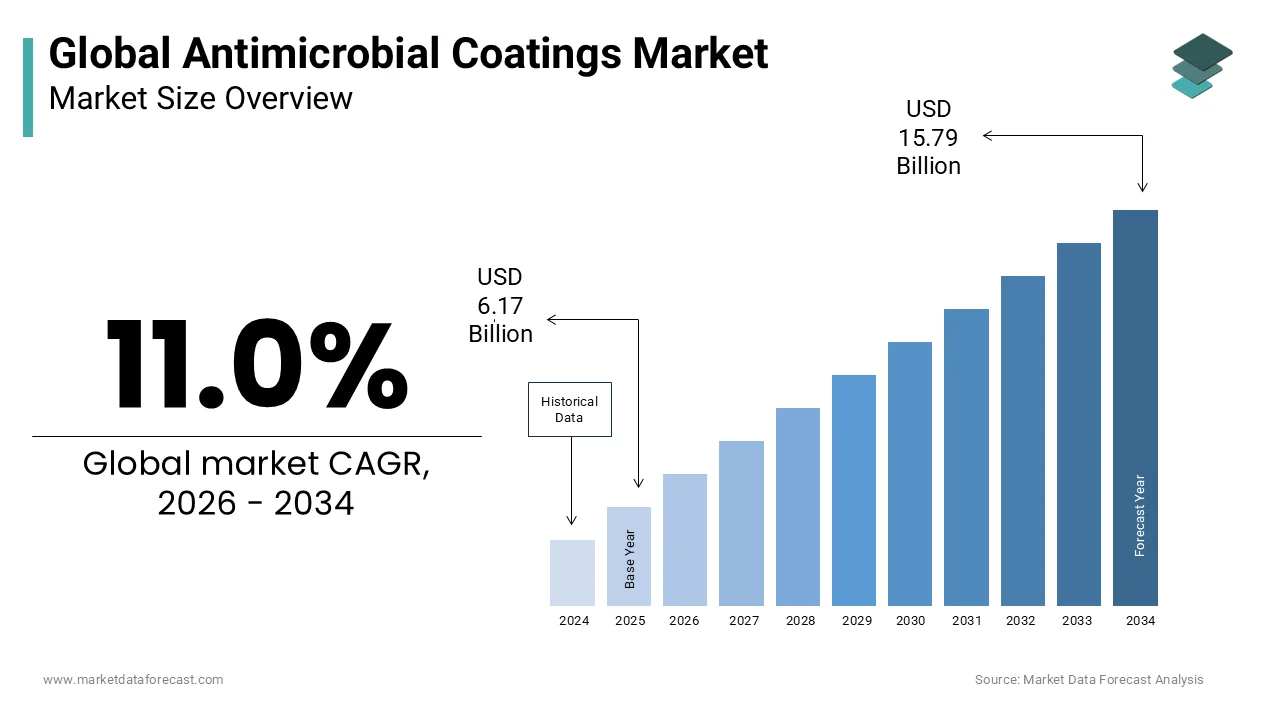
The global antimicrobial coatings market was valued at USD 6.17 billion in 2025, is estimated to reach USD 6.85 billion in 2026, and is projected to reach USD 15.79 billion by 2034, growing at a CAGR of 11.0% during the forecast period. Market growth is driven by increasing awareness of hygiene and infection control, rising demand in healthcare and public infrastructure, and growing applications across multiple industries. Antimicrobial coatings are widely used to inhibit the growth of microorganisms on surfaces, enhancing safety and durability. The expansion of healthcare infrastructure and heightened focus on sanitation is further supporting strong global market growth.
Key Market Trends
- Rising awareness of hygiene and infection prevention is driving market growth.
- Increasing demand in healthcare and medical applications is boosting adoption.
- Growing use in public infrastructure and high touch surfaces is supporting market expansion.
- Expansion of antimicrobial solutions in consumer and industrial products is enhancing demand.
- Technological advancements in coating formulations are improving effectiveness and durability.
Segmental Insights
- Based on type, the silver segment was the largest and dominated the global antimicrobial coatings market in 2025. This dominance is attributed to its broad spectrum antimicrobial efficacy and established use in medical and consumer applications.
- Based on application, the healthcare segment led the global antimicrobial coatings market in 2025, driven by the critical need to prevent healthcare associated infections and ensure patient safety.
Regional Insights
- The global antimicrobial coatings market is experiencing strong growth across regions, supported by increasing hygiene standards and industrial demand.
- North America was the largest contributor in 2025, driven by advanced healthcare infrastructure, high awareness of infection control, and strong adoption of antimicrobial technologies.
Competitive Landscape
The global antimicrobial coatings market is highly competitive, with key players focusing on product innovation, research and development, and expansion of application areas to strengthen their market position. Companies are investing in advanced coating technologies, sustainable solutions, and strategic partnerships. Prominent players in the global antimicrobial coatings market include AkzoNobel, Nippon Paint Company, Dow Chemical Company, Diamond Vogel, Sherwin Williams, BASF SE, Axalta Coating Systems, RPM International, Lonza Group, and Royal DSM.
 Download Free Sample Report
Global Antimicrobial Coatings Market Size
The global antimicrobial coatings market size was valued at USD 6.17 billion in 2025 and is projected to reach USD 15.79 billion by 2034 from USD 6.85 billion in 2026, growing at a CAGR of 11.0%.
Antimicrobial coatings are specialized surface treatments designed to inhibit or kill harmful microorganisms like bacteria, viruses, fungi, and mold. These coatings function by integrating active agents like silver ions copper zinc or organic compounds into paints polymers and textiles creating a protective barrier that enhances hygiene standards. The application scope extends across healthcare facilities food processing units public transportation and residential spaces where contamination control is paramount. According to the World Health Organization healthcare associated infections affect approximately 1 in 10 patients globally underscoring the critical need for effective surface sanitation solutions. This statistic drives the adoption of antimicrobial surfaces in hospital environments to reduce cross contamination risks. The market definition includes both additive based formulations where agents are mixed into the coating matrix and surface applied treatments that bond chemically to existing structures. Regulatory bodies such as the European Chemicals Agency strictly monitor the safety and efficacy of biocidal products ensuring that only approved substances enter the commercial sphere. According to the Centers for Disease Control and Prevention and supporting clinical studies, pathogens in high-touch areas can harbor on surfaces for weeks or even months, highlighting the importance of continuous protection rather than intermittent cleaning. The integration of these coatings into building materials reflects a broader shift towards preventive health infrastructure. Consumer awareness regarding indoor air quality and surface hygiene has surged post pandemic accelerating demand for self sanitizing surfaces in commercial and private sectors. This technological evolution represents a convergence of material science and public health strategy aiming to create safer living and working environments through passive protection mechanisms.
MARKET DRIVERS
Escalating Healthcare Associated Infection Rates and Hospital Hygiene Protocols
The rising incidence of healthcare associated infections is the main reason for the growth of the Antimicrobial Coatings Market. This necessitates advanced infection control measures in medical facilities. Hospitals and clinics are high risk environments where multidrug resistant organisms pose significant threats to patient safety and operational efficiency. Traditional cleaning protocols often fail to eliminate pathogens from complex surfaces leading to persistent contamination cycles. According to the European Centre for Disease Prevention and Control approximately 3.2 million patients acquire at least one healthcare associated infection annually in acute care hospitals across the European Union. This substantial burden places immense pressure on healthcare systems to adopt proactive prevention strategies beyond standard disinfection routines. Antimicrobial coatings offer a continuous layer of protection on high touch surfaces such as bed rails door handles and medical equipment reducing the microbial load between cleaning intervals. A study indicates that the implementation of antimicrobial copper surfaces in intensive care units reduced infection rates by 58 percent compared to standard surfaces. This empirical evidence supports the clinical value of coated surfaces in mitigating transmission risks. Healthcare administrators are increasingly allocating budgets for infrastructure upgrades that incorporate these technologies to improve patient outcomes and reduce length of stay. The financial impact of infections which can cost hospitals thousands of dollars per case further justifies the investment in preventive coatings. As per the Society for Healthcare Epidemiology of America guidelines emphasize the role of environmental surfaces in pathogen transmission reinforcing the strategic adoption of antimicrobial solutions. This regulatory and clinical endorsement accelerates market penetration in the healthcare sector driving sustained demand for specialized coating products.
Stringent Food Safety Regulations and Supply Chain Hygiene Standards
Stringent food safety regulations and the imperative for supply chain hygiene are the top factors boosting the expansion of the antimicrobial coatings market. These regulations drive growth for the market within the food and beverage industry. Contamination during processing packaging and storage can lead to widespread foodborne illnesses resulting in severe public health consequences and economic losses for manufacturers. Regulatory frameworks such as the Food Safety Modernization Act in the United States and similar directives in the European Union mandate rigorous hazard analysis and critical control points to prevent contamination. According to the World Health Organization an estimated 600 million people fall ill after eating contaminated food each year highlighting the global scale of the issue. Antimicrobial coatings applied to conveyor belts processing equipment and packaging materials provide an additional safeguard against bacterial growth such as Salmonella and E coli. Coatings that inhibit biofilm formation on machinery surfaces reduce the frequency of deep cleaning and minimize downtime enhancing operational efficiency. As per the International Association for Food Protection studies show that antimicrobial surfaces can reduce bacterial counts by up to 99.9 percent within two hours of contact. This efficacy supports compliance with strict hygiene standards and reduces the risk of product recalls. Manufacturers are increasingly adopting these technologies to protect brand reputation and ensure consumer trust. The integration of antimicrobial agents into packaging also extends shelf life reducing waste and improving sustainability metrics. This alignment with regulatory requirements and operational goals drives robust adoption across the food processing sector.
MARKET RESTRAINTS
Regulatory Hurdles and Biocidal Product Registration Complexities
Regulatory hurdles and the complexity of biocidal product registration are major restraints for the Antimicrobial Coatings Market. This increases time to market and compliance costs. Governments worldwide impose strict evaluations on antimicrobial agents to ensure they do not pose risks to human health or the environment. In the European Union the Biocidal Products Regulation requires extensive testing and documentation for approval which can take several years and involve significant financial investment. According to the European Chemicals Agency (ECHA), the average cost for registering a new active substance under the Biocidal Products Regulation (BPR) typically ranges from €5 million to €10 million, creating a substantial barrier for smaller innovators. This rigorous process limits the number of new entrants and slows down the introduction of novel formulations. Additionally varying regulatory standards across different regions complicate global expansion strategies for manufacturers. As per the United States Environmental Protection Agency the registration process for antimicrobial pesticides involves multiple phases including efficacy toxicity and environmental fate studies which can delay product launches by 18 to 24 months. Uncertainty regarding long term environmental impacts of certain metals like silver and copper has led to increased scrutiny and potential restrictions. According to the World Health Organization antimicrobial resistance is one of the top 10 global public health threats facing humanity with resistant infections causing millions of deaths annually. These challenges discourage investment in research and development for new antimicrobial technologies. Companies must navigate a complex landscape of changing laws and scientific opinions which creates operational uncertainty. The risk of non compliance penalties further incentivizes caution over innovation. Consequently the market experiences slower growth rates as firms prioritize existing approved products over developing new solutions. This regulatory inertia stifles technological advancement and limits the diversity of available options for end users.
Emergence of Antimicrobial Resistance and Efficacy Concerns
The emergence of antimicrobial resistance and concerns regarding long term efficacy remain a significant restraint for the Antimicrobial Coatings Market. This challenges the perceived reliability of these technologies. Continuous exposure to low levels of antimicrobial agents can potentially select for resistant bacterial strains undermining the effectiveness of the coatings over time. Scientific debate persists regarding the real world performance of these surfaces compared to traditional cleaning methods. According to the World Health Organization antimicrobial resistance is one of the top 10 global public health threats facing humanity with resistant infections causing millions of deaths annually. This context raises questions about the contribution of surface coatings to the broader resistance crisis. Some studies suggest that certain antimicrobial coatings may lose potency due to wear and tear or accumulation of organic matter which shields microbes from the active agents. Research published by the American Society for Microbiology indicates that biofilm formation acts as a physical and chemical barrier that can reduce the efficacy of silver-based coatings by up to 100 to 1,000 times compared to planktonic cells, depending on the maturity of the biofilm. This variability in performance creates skepticism among potential adopters who seek guaranteed protection. Healthcare facilities and food processors may hesitate to invest in technologies that require frequent reapplication or monitoring to maintain effectiveness. As per the World Health Organization (WHO) and various ISO technical committees, the lack of standardized testing protocols for antimicrobial surface coatings under "real-world" conditions makes it difficult to compare products and verify efficacy claims. This lack of clarity hinders procurement decisions and slows market adoption. Manufacturers face the challenge of proving sustained efficacy without contributing to resistance development. The need for ongoing validation and potential liability issues adds to the operational burden. These scientific and practical concerns temper market enthusiasm and restrict widespread implementation in critical environments.
MARKET OPPORTUNITIES
Integration with Smart Building Technologies and IoT Systems
The integration of antimicrobial coatings with smart building technologies and Internet of Things systems offers a substantial opportunity for the Antimicrobial Coatings Market. This enables real time hygiene monitoring and management. Smart buildings utilize sensors to detect occupancy temperature and humidity which can influence microbial growth patterns. Combining these data streams with antimicrobial surface performance allows for dynamic hygiene management strategies. According to sources, the global landscape for smart building technologies is projected to reach substantial level by 2026, driven by demand for energy efficiency and occupant safety. Antimicrobial coatings can be part of a holistic health focused building ecosystem where surface integrity is monitored alongside air quality. This integration provides facility managers with actionable insights to optimize cleaning schedules and maintenance routines. Data from the Green Building Council indicates that buildings with enhanced health features command higher rental premiums and occupancy rates. By linking coating performance to digital dashboards stakeholders can verify hygiene standards and demonstrate compliance with health regulations. As per research, connected sensors can reduce cleaning costs by up to 30 percent by targeting high-use areas identified through data analytics. This efficiency gain enhances the value proposition of antimicrobial coatings beyond passive protection. Manufacturers can offer service based models where coating performance is guaranteed through continuous monitoring. This shift from product to service creates recurring revenue streams and deeper customer engagement. The synergy between physical coatings and digital intelligence opens new avenues for innovation and differentiation. Companies that develop compatible technologies can capture early mover advantage in the emerging smart hygiene sector. This convergence aligns with broader trends towards digitalization and proactive health management in commercial real estate.
Expansion into Consumer Electronics and Personal Care Devices
The expansion of antimicrobial coatings into consumer electronics and personal care devices creates a pathway for the growth of the Antimicrobial Coatings Market. This addresses hygiene concerns in high touch personal items. Smartphones tablets keyboards and wearable devices are frequently handled and can harbor large amounts of bacteria making them potential vectors for disease transmission. Consumers are increasingly aware of this risk and seek products that offer built in protection. According to a study by the University of Arizona, smartphone screens can carry up to 10 times more bacteria than most toilet seats, highlighting the urgency for hygiene solutions. Antimicrobial coatings applied to device casings and accessories provide continuous protection without affecting functionality or aesthetics. Major electronics manufacturers are incorporating antimicrobial agents into plastics and glass used in device construction to meet consumer demand for healthier products. As per research, hygiene-centric features are becoming a key differentiator in purchasing decisions, particularly among health-conscious demographics. The personal care sector including electric toothbrushes razors and beauty tools also benefits from these coatings by preventing mold and bacterial buildup. This application extends product lifespan and enhances user safety. Manufacturers can leverage this trend to premiumize their offerings and justify higher price points. Partnerships between coating suppliers and electronics giants facilitate rapid adoption and scale. The growing prevalence of remote work and digital connectivity further amplifies the importance of clean personal devices. This segment offers high growth potential due to the rapid turnover of consumer electronics and increasing health awareness.
MARKET CHALLENGES
Durability and Long Term Performance Stability Issues
Durability and long term performance stability issues constitute a serious impediment for the Antimicrobial Coatings Market. This limits the practical utility and cost effectiveness of these products. Many antimicrobial coatings degrade over time due to mechanical abrasion chemical exposure or ultraviolet light reducing their efficacy. In high traffic areas such as hospitals and public transport hubs surfaces undergo frequent cleaning and physical contact which can wear away the active layer. According to the National Institute of Standards and Technology, standard testing methods are designed to provide a reliable baseline for coating durability, though researchers continue to develop new "combined effects" tests to better simulate complex real-world environmental stressors. ASTM International provides the standardized protocols for measuring antimicrobial efficacy (such as ASTM E2180). This degradation necessitates frequent reapplication which increases maintenance costs and operational disruption. End users may become disillusioned if the promised protection does not persist throughout the expected lifespan of the substrate. As per the Facility Management Journal inconsistent performance leads to skepticism among facility managers who prefer reliable and predictable solutions. The challenge is compounded by the lack of universal standards for measuring longevity and efficacy in diverse environments. Manufacturers struggle to balance cost durability and effectiveness often compromising on one aspect to optimize another. Developing coatings that bond permanently to substrates while maintaining high antimicrobial activity remains a technical hurdle. Research into nano encapsulation and self healing materials is ongoing but commercial viability is limited. This technical limitation restricts market expansion in demanding applications where long term reliability is critical. Overcoming these durability challenges is essential for widespread acceptance and trust in antimicrobial technologies.
High Initial Costs and Economic Viability Constraints
High initial costs and economic viability constraints pose a significant challenge for the Antimicrobial Coatings Market. This hinders adoption among price sensitive sectors and small businesses. The formulation and application of advanced antimicrobial coatings involve expensive raw materials such as silver nanoparticles and specialized manufacturing processes. These costs are passed on to consumers making coated products significantly more expensive than conventional alternatives. According to the Small Business Administration small enterprises often lack the capital budget for premium hygiene solutions prioritizing immediate operational needs over long term preventive measures. The Construction Industry Institute indicates that while advanced materials can improve lifecycle performance, the additional cost of antimicrobial coatings is typically a marginal percentage of the overall building material budget, varying by the specific scope of application. This price premium discourages widespread adoption in residential and commercial real estate where margins are tight. While the long term benefits include reduced cleaning costs and lower infection rates the upfront investment remains a barrier. As per the Healthcare Financial Management Association hospitals operating under strict budget constraints may delay infrastructure upgrades despite the potential for savings. The return on investment for antimicrobial coatings is difficult to quantify precisely making it harder for decision makers to justify the expense. Economic downturns further exacerbate this challenge as organizations cut discretionary spending. Manufacturers face pressure to reduce prices while maintaining quality which squeezes profit margins. The lack of insurance incentives or government subsidies for preventive hygiene measures also limits financial motivation. Without clear economic incentives the market remains confined to high value segments where cost is less of a concern. Bridging the gap between cost and perceived value is crucial for broader market penetration and sustainability.
REPORT COVERAGE
| REPORT METRIC | DETAILS |
| Market Size Available | 2025 to 2034 |
| Base Year | 2025 |
| Forecast Period | 2026 to 2034 |
| CAGR | 11.0% |
| Segments Covered | By Type, Application, and Region. |
| Various Analyses Covered | Global, Regional & Country Level Analysis, Segment-Level Analysis, DROC, PESTLE Analysis, Porter’s Five Forces Analysis, Competitive Landscape, Analyst Overview of Investment Opportunities |
| Regions Covered | North America, Europe, Asia Pacific, Latin America, Middle East & Africa. |
| Market Leaders Profiled | AkzoNobel, Nippon Paint Company, DOW Chemical Company, Damond Vogel, Sherwin Williams, BASF SE, Axalta Coating Systems, RPM International, Lonza Group, Royal DSM, and Others. |
SEGMENTAL ANALYSIS
By Type Insights
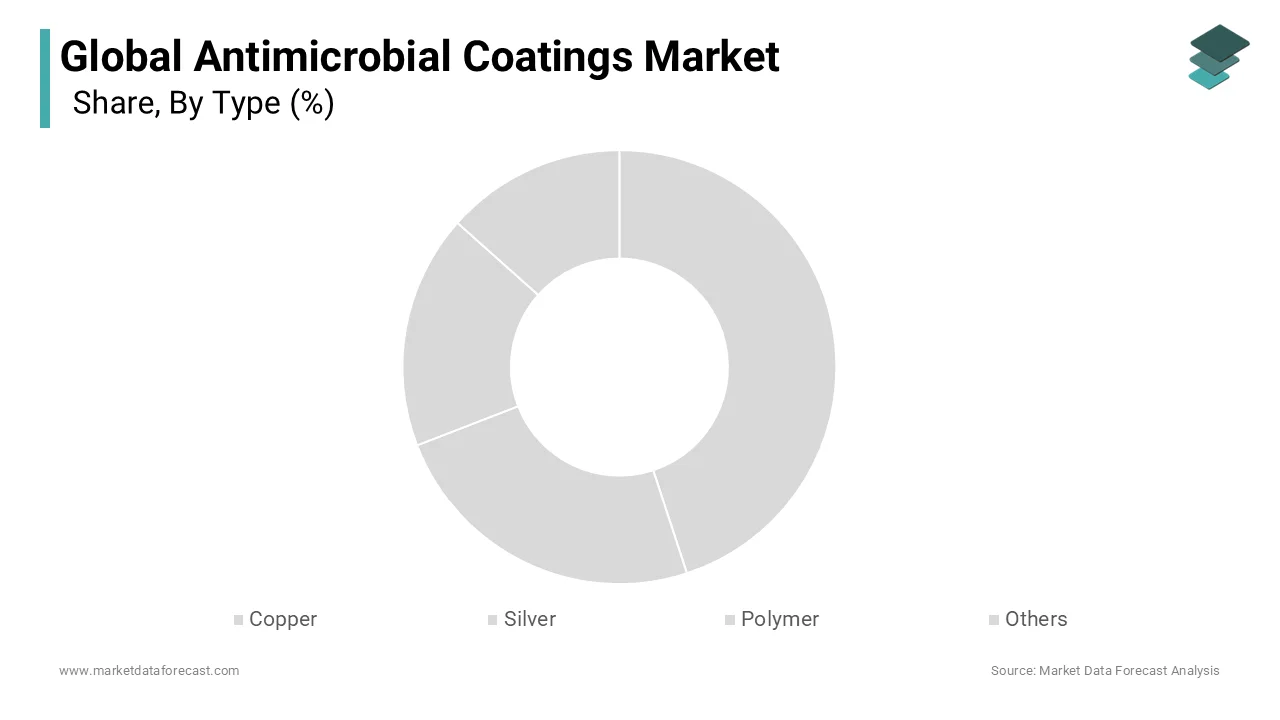
The silver segment dominated the Antimicrobial Coatings Market in 2025. This dominance of the segment is driven by its broad spectrum efficacy against bacteria viruses and fungi along with its established history of safe use in medical and consumer applications. The segment benefits from high consumer trust and extensive regulatory approvals which facilitate widespread adoption across diverse industries. Moreover, the growth of silver based coatings is primarily driven by their proven ability to disrupt microbial cell walls and interfere with DNA replication ensuring effective pathogen control. Silver ions exhibit oligodynamic effects meaning they are toxic to microorganisms even at low concentrations making them ideal for long lasting surface protection. According to the American Chemical Society silver nanoparticles can reduce bacterial populations by up to 99.9 percent within hours of contact providing reliable hygiene solutions for high touch surfaces. This scientific validation supports their extensive use in healthcare settings where infection control is critical. Research indicates that silver nanoparticle coatings provide sustained antibacterial effects for extended periods on medical devices and hospital surfaces, though specific longevity varies by application method. The versatility of silver allows it to be integrated into various matrices including paints plastics and textiles without compromising material integrity. As per the Environmental Protection Agency silver is registered as a pesticide with a strong safety profile when used according to guidelines which encourages manufacturer confidence. The widespread acceptance of silver in consumer products such as refrigerators washing machines and air purifiers further solidifies its market leadership. Consumers associate silver with purity and cleanliness driving demand in residential and commercial sectors. The established supply chain for silver nanoparticles ensures consistent availability and competitive pricing compared to newer alternatives. This combination of efficacy safety and accessibility makes silver the preferred choice for manufacturers seeking reliable antimicrobial solutions. The extensive regulatory acceptance of silver based antimicrobial agents significantly contributes to its market leadership by reducing barriers to entry and accelerating product commercialization. Unlike novel antimicrobial technologies that face lengthy approval processes silver has a well documented safety record recognized by global health authorities. According to the European Chemicals Agency silver compounds are listed in the Biocidal Products Regulation allowing for streamlined registration across member states. This regulatory clarity enables manufacturers to launch products with greater speed and lower compliance costs. The Silver Institute indicates that silver industrial demand reached a record high in 2024, largely driven by structural gains in the green economy and electronics, with antimicrobial properties remaining a staple for healthcare and water purification applications. The mature supply chain for silver ensures stable pricing and consistent quality which is crucial for large scale manufacturing. As per the World Silver Survey and USGS data, global silver mine production was approximately 25,000 metric tons in 2024. The availability of standardized testing protocols for silver efficacy simplifies quality assurance processes for end users. Healthcare facilities and food processors prefer silver coated products because they meet stringent hygiene standards without requiring specialized handling or disposal procedures. The familiarity of procurement teams with silver specifications facilitates easier integration into existing supply chains. This operational ease combined with regulatory support creates a favorable environment for sustained market dominance. Manufacturers can leverage existing infrastructure to scale production efficiently meeting growing global demand for hygienic surfaces.
The copper segment is estimated to register the fastest CAGR of 9.2% from 2026 to 2034 due to its ability to kill pathogens rapidly and its natural origin which appeals to sustainability conscious consumers. Copper surfaces offer continuous protection without the need for chemical replenishment. The rapid growth of the copper segment is fueled by its unique contact killing mechanism which destroys microorganisms within minutes of exposure offering superior protection compared to other materials. Copper ions penetrate cell membranes and generate reactive oxygen species leading to immediate cell death. According to the Environmental Protection Agency copper alloys are the first solid surface materials registered to kill more than 99.9 percent of disease causing bacteria within two hours. This rapid efficacy makes copper ideal for high traffic areas such as hospitals schools and public transportation hubs where frequent contamination occurs. The University of Southampton demonstrates that copper surfaces can inactivate 99.9 percent of certain respiratory viruses within four hours, highlighting their effectiveness against emerging pathogens. The self sanitizing nature of copper reduces reliance on chemical disinfectants aligning with green building initiatives. As per the International Copper Association, over 500 healthcare and public facilities worldwide have installed copper touch surfaces to enhance infection control protocols. The durability of copper ensures long term performance without degradation making it a cost effective solution despite higher initial costs. Consumers increasingly prefer natural antimicrobial agents over synthetic chemicals driving demand for copper based coatings. The aesthetic appeal of copper also allows for architectural integration enhancing interior design while providing functional benefits. This dual value proposition accelerates adoption in both commercial and residential sectors. Manufacturers are developing innovative copper alloy coatings that retain antimicrobial properties while resisting tarnishing further expanding application possibilities. The sustainability and eco friendly attributes of copper significantly drive its growth in the Antimicrobial Coatings Market as consumers and regulators prioritize environmentally responsible materials. Copper is a naturally occurring element that is fully recyclable and does not persist in the environment like some synthetic biocides. According to the United Nations Environment Programme copper is essential for circular economy strategies due to its infinite recyclability without loss of performance. This environmental benefit resonates with green building certifications such as LEED and BREEAM which encourage the use of sustainable materials. The Copper Development Association and International Copper Association indicates that approximately two-thirds of all copper ever mined is still in use today, demonstrating its longevity and resource efficiency. Antimicrobial copper coatings contribute to reduced chemical usage in cleaning processes lowering the environmental footprint of facility maintenance. As per research, buildings incorporating copper surfaces can achieve significant reductions in microbial burden, which supplements standard cleaning protocols and supports green building health initiatives. The non toxic nature of copper ensures safety for humans and ecosystems addressing concerns about chemical runoff and pollution. Regulatory bodies are increasingly favoring natural antimicrobial agents over synthetic alternatives promoting copper adoption in public infrastructure projects. Manufacturers are leveraging these sustainability credentials to differentiate their products and capture market share among eco conscious buyers. The alignment with global sustainability goals positions copper as a future proof solution for hygiene challenges. This strategic advantage drives investment in copper coating technologies and expands their application in diverse sectors.
By Application Insights
The healthcare segment led the Antimicrobial Coatings Market in 2025 because of the critical need to prevent healthcare associated infections and protect vulnerable patient populations. Hospitals and clinics prioritize surface hygiene to comply with strict regulatory standards and improve patient outcomes. The growth trajectory of the healthcare segment is anchored in the urgent need to reduce healthcare associated infections which pose significant risks to patient safety and increase healthcare costs. Antimicrobial coatings provide a continuous layer of protection on high touch surfaces such as bed rails door handles and medical equipment reducing microbial load between cleaning intervals. According to the Centers for Disease Control and Prevention one in 31 hospital patients has at least one healthcare associated infection on any given day highlighting the scale of the problem. This statistic drives healthcare administrators to invest in advanced prevention technologies including antimicrobial surfaces. Data published in Infection Control & Hospital Epidemiology (Salgado et al.) shows that the implementation of antimicrobial copper surfaces in intensive care units reduced healthcare-acquired infections by 58 percent. The financial burden of infections which can cost hospitals thousands of dollars per case further justifies the investment in preventive measures. The Society for Healthcare Epidemiology of America (SHEA) guidelines emphasize the role of environmental surfaces in pathogen transmission but prioritize rigorous manual cleaning and disinfection protocols over the primary adoption of antimicrobial coatings. Regulatory agencies such as the Joint Commission mandate strict hygiene protocols encouraging the use of certified antimicrobial products. The aging population and increasing prevalence of chronic diseases also increase hospital admissions driving demand for safer healthcare environments. Manufacturers focus on developing coatings that meet rigorous medical standards ensuring compatibility with sterilization processes. This focus on patient safety and regulatory compliance sustains the leadership of the healthcare segment. Stringent regulatory mandates and accreditation standards significantly propel the adoption of antimicrobial coatings in the healthcare sector by enforcing high hygiene benchmarks. Healthcare facilities must comply with regulations set by bodies such as the Occupational Safety and Health Administration and the Environmental Protection Agency to ensure safe operating environments. The World Health Organization global guidelines on infection prevention and control emphasize environmental cleaning and disinfection but do not currently recommend the routine use of antimicrobial surfaces due to a lack of high-quality evidence. This international guidance influences national policies and hospital procurement decisions. The European Centre for Disease Prevention and Control indicates that countries with multimodal infection prevention and control programs report lower infection rates, though they emphasize surveillance and antibiotic stewardship over specific preventive technologies. Accreditation organizations such as DNV GL and Bureau Veritas assess hospitals on their infection control practices rewarding facilities that implement advanced hygiene solutions. According to the Healthcare Facilities Management Journal, hospitals that prioritize integrated environmental hygiene report higher HCAHPS (patient satisfaction) scores and lower risks associated with HAI-related litigation. The pressure to maintain accreditation status drives continuous investment in hygiene infrastructure including antimicrobial coatings. Manufacturers collaborate with healthcare providers to develop products that meet specific regulatory requirements ensuring seamless integration into clinical workflows. The emphasis on transparency and accountability in healthcare operations further supports the adoption of verified antimicrobial technologies. This regulatory framework creates a stable demand base for antimicrobial coatings in the healthcare sector.
The food and beverages segment is anticipated to witness the fastest CAGR of 8.5% over the forecast period owing to stringent food safety regulations and the need to minimize spoilage and contamination in processing facilities. Antimicrobial coatings help extend shelf life and ensure product integrity. The swift growth of the food and beverages segment is driven by strict food safety regulations that mandate rigorous hygiene standards to prevent contamination and foodborne illnesses. Antimicrobial coatings applied to processing equipment conveyor belts and packaging materials provide an additional safeguard against bacterial growth. According to the World Health Organization an estimated 600 million people fall ill after eating contaminated food each year emphasizing the global urgency for effective safety measures. This public health concern drives food manufacturers to adopt advanced hygiene technologies. According to the FAO, an estimated 13.2 percent of food is lost between harvest and the retail level; however, this figure covers all causes of loss (physical damage, climate, etc.), not just microbial spoilage alone. Antimicrobial coatings help reduce these losses by inhibiting biofilm formation on machinery surfaces. This efficacy supports compliance with regulations such as the Food Safety Modernization Act which requires proactive hazard prevention. The ability to extend shelf life through antimicrobial packaging also reduces waste and improves sustainability metrics. Manufacturers are increasingly adopting these technologies to protect brand reputation and ensure consumer trust. The growing demand for fresh and minimally processed foods further amplifies the need for effective preservation methods. This alignment with regulatory and operational goals drives robust adoption across the food processing sector. The growing emphasis on supply chain hygiene and consumer trust significantly accelerates the adoption of antimicrobial coatings in the food and beverages industry. Consumers are increasingly aware of food safety issues and prefer brands that demonstrate commitment to hygiene and quality. This shift in consumer behavior drives manufacturers to implement transparent and effective hygiene measures. Data from the Grocery Manufacturers Association indicates that product recalls due to contamination cost the industry an average of 10 million dollars per incident highlighting the financial risks of poor hygiene. Antimicrobial coatings help mitigate these risks by providing continuous protection throughout the supply chain. As per the Food Marketing Institute retailers are prioritizing suppliers with certified hygiene protocols ensuring that only safe products reach shelves. The integration of antimicrobial agents into packaging also enhances consumer confidence by offering visible proof of protection. Brands that leverage these technologies in their marketing campaigns gain competitive advantage and build loyalty. The rise of e commerce in grocery shopping further emphasizes the need for durable and safe packaging that protects products during transit. This focus on end to end hygiene drives innovation and adoption in the food and beverages segment.
REGIONAL ANALYSIS
North America Snack Product Market Analysis
North America outperformed other regions in the global Antimicrobial Coatings Market in 2025. This leading position of the North American market is supported by advanced healthcare infrastructure stringent regulatory frameworks and high consumer awareness regarding hygiene. The region is a hub for innovation and early adoption of new technologies. Also, the United States spearheads the regional market driven by substantial investments in healthcare infrastructure and strict food safety regulations. According to the Centers for Disease Control and Prevention healthcare associated infections affect one in 31 hospital patients daily prompting widespread adoption of antimicrobial surfaces. The Environmental Protection Agency registration of copper alloys as antimicrobial materials has accelerated market growth in public and commercial spaces. The presence of major coating manufacturers and research institutions fosters continuous innovation and product development. According to the American Hospital Association, there are 6,120 hospitals in the U.S., many of which prioritize antibiotic stewardship and infection prevention, though the exact number specifically adopting antimicrobial coatings remains unverified. The food and beverage industry also contributes significantly with companies adopting antimicrobial packaging to meet consumer demands for safety and freshness. The regulatory environment supports the use of approved antimicrobial agents ensuring product safety and efficacy. Consumer awareness campaigns by health organizations further drive demand in residential and commercial sectors. The region benefits from a robust supply chain and distribution network ensuring wide availability of products. Technological advancements in nano coatings and smart surfaces also originate in North America influencing global trends. The combination of regulatory support technological leadership and high demand sustains the region's market dominance.
Europe Snack Product Market Analysis
Europe was the second largest region in the global Antimicrobial Coatings Market in 2025. This expansion of the European market is credited to strict environmental regulations and a strong focus on sustainable and safe building materials. The region prioritizes eco friendly solutions and public health protection. Germany and the United Kingdom lead the European market driven by advanced healthcare systems and stringent hygiene standards. According to the European Centre for Disease Prevention and Control, healthcare-associated infections affect approximately 4.3 million patients annually in the EU/EEA, significantly driving the need for improved infection prevention and control. The Biocidal Products Regulation ensures that only safe and effective antimicrobial agents are used promoting consumer trust. The food processing industry in Europe adheres to strict hygiene directives encouraging the use of antimicrobial surfaces in production facilities. As per the German Federal Ministry of Health public awareness campaigns on hygiene have increased demand for antimicrobial products in homes and schools. The region also benefits from strong research capabilities in material science leading to innovative coating solutions. Regulatory pressure to reduce chemical usage drives the adoption of natural antimicrobial agents such as copper and silver. The aging population in Europe increases healthcare utilization further boosting market growth. Retailers and manufacturers collaborate to promote hygienic products aligning with consumer preferences for safety and sustainability. The emphasis on circular economy principles supports the development of recyclable and durable antimicrobial coatings. This focus on quality and environmental responsibility sustains the region's competitive position.
Asia Pacific Snack Product Market Analysis
Asia-Pacific is a quickly expanding region in the global antimicrobial coatings market, owing to urbanization, increasing healthcare expenditure, and rising awareness of hygiene standards. The region offers vast opportunities for market expansion. China and India are key drivers of growth in the Asia Pacific region due to large populations and expanding healthcare infrastructure. According to the World Health Organization the burden of infectious diseases remains high in the region prompting governments to invest in hygiene technologies. The Chinese National Health Commission indicates that healthcare resources continued to grow in 2024, with the total number of medical institutions surpassing 1.09 million, focusing on smart hospital construction and high-quality services. The growing middle class in Asia Pacific drives demand for premium home appliances and building materials with antimicrobial properties. As per the Indian Ministry of Health and Family Welfare public health initiatives focus on improving sanitation and infection control in medical facilities. The food and beverage industry in the region is expanding rapidly requiring advanced hygiene solutions to meet export standards. Manufacturing hubs in Southeast Asia adopt antimicrobial coatings to enhance product quality and competitiveness. Government initiatives such as Healthy China 2030 promote preventive health measures supporting market growth. The availability of cost effective manufacturing capabilities attracts global players to establish production facilities in the region. Rising disposable incomes enable consumers to purchase hygienic products contributing to market expansion. The increasing prevalence of chronic diseases also drives demand for safer healthcare environments. This combination of demographic economic and regulatory factors fuels robust growth in the Asia Pacific market.
Latin America Snack Product Market Analysis
Latin America expanded steadily in the global Antimicrobial Coatings Market due to growing healthcare investments and increasing awareness of food safety standards. The region is witnessing gradual adoption of advanced hygiene technologies. Brazil and Mexico lead the regional market driven by expanding healthcare infrastructure and regulatory improvements. According to the Pan American Health Organization healthcare associated infections remain a challenge in the region prompting hospitals to adopt preventive measures. The Brazilian Ministry of Health reported a significant budget increase to 218 billion reais for 2024, a nearly 28 percent increase over 2023, with 56 percent allocated to hospital care. The food processing industry in Latin America is growing to meet domestic and export demands requiring adherence to international hygiene standards. As per the Mexican Federal Commission for Protection against Sanitary Risk (COFEPRIS), regulations are increasingly focused on tech-enabled traceability and preventive practices to reduce foodborne diseases through international safety partnerships. Urbanization and rising income levels drive demand for modern housing and appliances with hygiene features. The tourism industry in countries like Mexico and Costa Rica also contributes to market growth by demanding high hygiene standards in hospitality sectors. Local manufacturers are partnering with global companies to introduce advanced coating technologies. Government initiatives to improve public health infrastructure support market development. The increasing awareness of infectious diseases among consumers drives demand for hygienic products in residential and commercial sectors. Economic stability in key markets facilitates investment in healthcare and construction sectors. This gradual but steady adoption pattern positions Latin America as an emerging market with significant growth potential.
Middle East and Africa Snack Product Market Analysis
The Middle East and Africa region is expected to be the most lucrative region in the global Antimicrobial Coatings Market over the forecast period owing to infrastructure development and increasing focus on public health initiatives. The region is investing in modern healthcare and construction projects. Also, the United Arab Emirates and Saudi Arabia are key markets in the Middle East driven by ambitious vision plans that prioritize healthcare and tourism infrastructure. According to the World Bank healthcare expenditure in the Gulf Cooperation Council countries is projected to grow by 6 percent annually supporting the adoption of advanced hygiene technologies. Data from the Saudi Ministry of Health indicates that hospital construction projects under Vision 2030 incorporate antimicrobial surfaces to meet international standards. The tourism sector in Dubai and Abu Dhabi demands high hygiene levels in hotels and public spaces driving market growth. In Africa South Africa leads the market with increasing investments in healthcare infrastructure. As per the African Union Agenda 2063 priorities include improving health systems and sanitation which supports the adoption of antimicrobial coatings. The growing urban population in the region increases demand for modern housing and commercial buildings with hygiene features. Government initiatives to combat infectious diseases such as tuberculosis and malaria also drive demand for hygienic surfaces. International aid and partnerships facilitate the introduction of advanced technologies in the region. The construction boom in major cities creates opportunities for antimicrobial coatings in residential and commercial projects. Increasing awareness of hygiene among consumers and businesses supports market expansion. This focus on infrastructure and public health positions the region for future growth.
COMPETITIVE LANDSCAPE
The competition in the Europe snack product market is intense and characterized by the presence of established multinational corporations alongside emerging artisanal brands. Major players leverage their extensive distribution networks and strong brand recognition to maintain dominance while smaller competitors focus on niche segments such as organic gluten free or vegan options. Innovation serves as a key differentiator with companies continuously launching new flavors and healthier formulations to attract health conscious consumers. Price competition remains significant particularly in the mass market segment where private label products from major retailers pose a substantial threat to branded items. Sustainability has become a critical competitive factor as consumers increasingly prefer brands with transparent and ethical supply chains. Regulatory pressures regarding sugar content and labeling further shape competitive dynamics forcing companies to reformulate products. Digital marketing and e commerce capabilities are essential for reaching broader audiences and enhancing customer engagement. The market sees frequent strategic alliances and acquisitions as firms seek to expand their portfolios and geographic reach. This dynamic environment requires constant adaptation and investment in technology and sustainability to sustain competitive advantage and meet evolving consumer demands effectively.
KEY MARKET PLAYERS
The major key players in the global antimicrobial coatings market are
- AkzoNobel
- Nippon Paint Company
- DOW Chemical Company
- Damond Vogel
- Sherwin Williams
- BASF SE
- Axalta Coating Systems
- RPM International
- Lonza Group
- Royal DSM
Top Players in the Market
- PPG Industries Inc is a global leader in the Antimicrobial Coatings Market leveraging its extensive portfolio of protective and marine coatings. The company integrates silver and zinc based antimicrobial agents into architectural and industrial paints to enhance surface hygiene. PPG recently launched specialized healthcare coatings that meet stringent hospital sanitation standards. These products help reduce pathogen transmission in critical care environments. The corporation invests heavily in research and development to improve coating durability and efficacy. Strategic partnerships with healthcare providers enable PPG to tailor solutions for specific medical needs. The company also focuses on sustainable formulations aligning with green building certifications. PPG expands its production capabilities in Asia Pacific to meet growing regional demand. Its strong distribution network ensures widespread availability of antimicrobial products. By prioritizing innovation and sustainability PPG strengthens its competitive position and supports global public health initiatives through advanced surface protection technologies.
- AkzoNobel N.V. contributes significantly to the Antimicrobial Coatings Market through its premium decorative and performance coatings brands. The company offers a range of antimicrobial paint solutions designed for residential commercial and healthcare applications. AkzoNobel recently introduced new product lines featuring enhanced biocidal properties that provide long lasting protection against bacteria and mold. The corporation emphasizes sustainability by developing water based and low volatile organic compound formulations. Strategic collaborations with architects and designers promote the adoption of hygienic surfaces in modern buildings. AkzoNobel invests in digital tools to help customers select appropriate antimicrobial coatings for their projects. The company also expands its manufacturing footprint in emerging markets to capture growth opportunities. Its commitment to quality and innovation ensures compliance with international safety standards. AkzoNobel actively engages in educational campaigns to raise awareness about the benefits of antimicrobial surfaces. These efforts reinforce its reputation as a trusted provider of high performance hygiene solutions globally.
- The Sherwin Williams Company plays a vital role in the Antimicrobial Coatings Market with its diverse range of protective and architectural coatings. The company integrates antimicrobial technology into its popular paint brands to offer continuous protection against microbial growth. Sherwin Williams recently expanded its healthcare specific coating portfolio to address infection control challenges in hospitals and clinics. The corporation focuses on developing durable and easy to clean surfaces that withstand rigorous sanitation protocols. Strategic acquisitions of specialty coating manufacturers enhance its technological capabilities and market reach. Sherwin Williams leverages its extensive retail and commercial distribution networks to make antimicrobial products accessible to a broad customer base. The company also prioritizes environmental responsibility by offering eco friendly antimicrobial options. Investment in research and development drives innovation in coating formulations and application methods. Sherwin Williams collaborates with industry experts to validate the efficacy of its products. These actions solidify its position as a key player in the global antimicrobial coatings landscape.
Top Strategies Used by the Key Market Participants
Key players in the Europe Snack Product Market primarily employ product innovation and premiumization strategies to differentiate their offerings. Companies invest heavily in research and development to create unique flavors and healthier formulations such as reduced sugar or organic variants. Sustainability initiatives form another core strategy with firms focusing on ethical sourcing of cocoa and eco friendly packaging solutions to meet regulatory standards and consumer expectations. Digital transformation is crucial as brands enhance their e commerce presence and utilize data analytics for personalized marketing. Strategic partnerships and collaborations with retailers ensure optimal shelf placement and visibility. Mergers and acquisitions allow companies to expand their portfolios and enter new niche segments. Brands also leverage influencer marketing and social media campaigns to engage younger demographics and build brand loyalty. These multifaceted approaches help participants navigate competitive pressures and adapt to evolving consumer preferences while maintaining profitability and market relevance in the dynamic European landscape.
MARKET SEGMENTATION
This research report on the global antimicrobial coatings market has been segmented and sub-segmented based on type, application, and region.
By Type
- Copper
- Silver
- Polymer
- Others
By Application
- Healthcare
- Building And Construction
- Indoor Home Appliances
- Mold Remediation
- Food And Beverages
- Textiles
- Cosmetics
- Others
By Region
- North America
- Europe
- Asia Pacific
- Latin America
- Middle East and Africa