- Product Description Description
- Table of Contents TOC
- List of Table & Figure LOT
- Get Free Sample PDF Sample PDF
Market Size, 2025
$2.40 BnMarket Estimate, 2026
$2.56 BnMarket Forecast, 2034
$4.34 BnCAGR, 2026–2034
6.80%Asia Pacific Acne Drugs Market Size, Growth, Trends & Forecast (2026–2034)
The acne drugs market size in Asia-Pacific was valued at USD 2.40 billion in 2025, is estimated to reach USD 2.56 billion in 2026, and is projected to scale up to USD 4.34 billion by 2034, registering a compound annual growth rate (CAGR) of 6.8% during the forecast period from 2026 to 2034. Driven by rising lifestyle stressors, high prevalence among youth demographics, increasing disposable incomes, and heightened aesthetic consciousness, the regional market continues to expand steadily.
Key Executive Metrics (At-a-Glance)
- 2025 Base Valuation: USD 2.40 Billion
- 2026 Current Valuation: USD 2.56 Billion
- 2034 Forecast Valuation: USD 4.34 Billion
- Compound Annual Growth Rate (CAGR): 6.8% (2026–2034)
- Dominant Product Type: Prescription Drugs (holding the major market share due to severe acne presentations requiring targeted clinical intervention)
- Fastest-Growing Product Type: Over-The-Counter (OTC) Drugs (expanding rapidly due to convenient access and preventative skincare routines)
- Dominant Administration Route: Topical (leading market share supported by ease of use and localized treatment efficacy)
- Fastest-Growing Administration Route: Oral (fastest-growing category for systemic acne management)
- Dominant Region: China (holding the largest market share backed by high healthcare expenditure and advanced therapy launches)
Core Market Drivers
- Lifestyle and Dietary Factors: High consumption of junk food, abnormal hormone growth, lack of sleep, smoking, and high stress levels triggering acne vulgaris.
- Rising Personal Care Spending: Augmenting per capita income motivating consumers to invest heavily in advanced skincare and cosmetic treatments.
- Technological and Product Innovations: Frequent product launches and virtual dermatologist consultations improving tailored treatment access across developing economies.
Primary Market Restraints & Challenges
- Self-Medication and Alternatives: Rising preference for over-the-counter substitute therapies, home remedies, and self-medication without professional consultation obstructing branded product sales.
Asia Pacific Acne Drugs Market Segmentation Breakdown
| Segment Category | Leading Sub-Segment (2025 Base) | Fastest-Growing Sub-Segment (2026–2034) |
|---|---|---|
| By Type | Prescription Drugs (dominant share for moderate-to-severe clinical acne treatments) | OTC Drugs (fastest-growing category driven by preventative retail skincare trends) |
| By Route of Administration | Topical (dominant share for localized creams, gels, and ointments) | Oral (fastest-growing route for systemic antibiotic and retinoid therapies) |
| By Drug Class | Topical & Oral Antibiotics (leading baseline acne management class) | Retinoids & Combination Drugs (fastest-growing class due to targeted anti-inflammatory properties) |
| By Country | China (dominant market leader with extensive product launches and rising healthcare spend) | India (fastest-growing regional market expanding at a 9.2% CAGR with over 200 million sufferers) |
Major Industry Players Profiled
Key enterprises shaping the Asia Pacific acne drugs market include Pfizer, Inc., GlaxoSmithKline plc, Novartis AG, Merck & Co. Inc., Amgen, Inc., Abbott Laboratories, AstraZeneca, Eli Lilly and Company, Mylan N.V., and Daiichi Sankyo Company, Ltd.
 Download Free Sample Report
Asia Pacific Acne Drugs Market Size
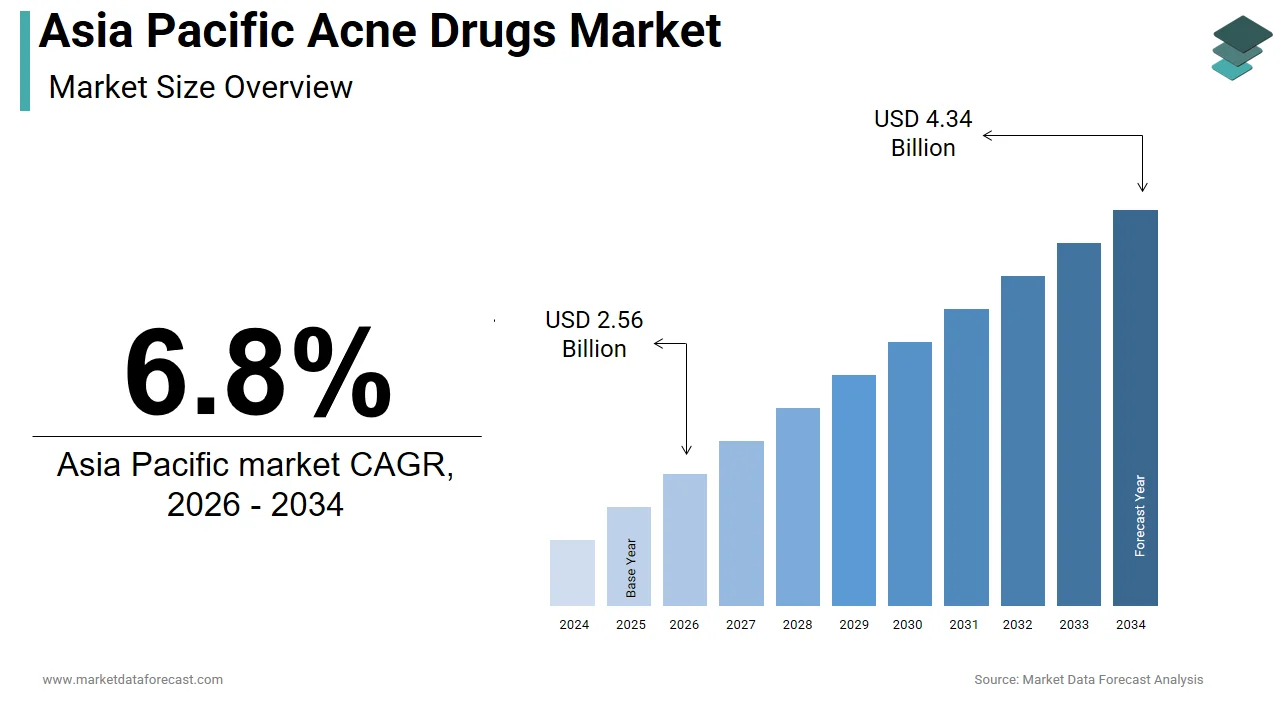
The acne drugs market size in Asia-Pacific was worth USD 2.40 billion in 2025. The regional market is further projected to grow at a CAGR of 6.8% from 2026 to 2034 and be worth USD 4.34 billion by 2034, up from USD 2.56 billion in 2026.
MARKET SCENARIO
Factors such as Lack of sleep, high intake of smoking and alcohol consumption, misusage of drugs, and emotional and work-related stress are propelling the acne drugs market in the APAC region. According to the Global Burden of Disease Study, acne vulgaris affects nearly 85% of people aged 12-25 years. The increasing demand for minimally invasive cosmetic treatment procedures is mounting remarkably. Escalating demand for brisk treatments and swift results is projected to drive the need for equipment-based procedures like laser treatments. In addition, rising awareness of acne issues among the single and consciousness regarding the present and upcoming treatments, advanced technologies, and augmenting per capita income motivating the customers to spend more on personal care are anticipated to boost the demand for acne drugs in this region.
The usability of alternatives for acne drugs and therapies served by local players, lack of experienced and skilled dermatologists is predicted to restrain the market growth. In addition, the rising demand for self-medication without a doctor’s prescription and the significance of substitute therapies for nursing acne have been obstructing the sales of branded acne products.
REGIONAL ANALYSIS
The Asia-Pacific market for acne drugs is anticipated to have rapid growth in the global market in terms of revenue because of common skin diseases and conditions like abnormal hormone growth, high intake of carbohydrates, massive consumption of junk food, and excessive intake of fat creating foods.
The Indian acne drugs market is anticipated to expand at 9.2% CAGR during the forecast period. There are around 200-300 million acne sufferers, finally aiding the market growth in India. In addition, the market is attributed to the growing demand of the population in expending on facial.
The Chinese acne drugs market is expected to lead the APAC market over the forecast period. Increase in many product launches, growing demand for acne therapies, and uplift in healthcare expenses and awareness relevant to newly enhanced therapies that can substitute conventional acne treatment in this region. Rising behavior and unhealthy eating habits, and increasing income bolstered market growth during the analysis period. Moreover, the accessibility of experienced and knowledgeable dermatologists involving the patients virtually in treatment design is anticipated to add fuel to the development of acne treatment in terms of income. India and China are expected to have rapid growth in the region.
KEY MARKET PLAYERS
Some of the major companies dominating the Asia Pacific acne drugs market by their products and services include Pfizer, Inc., GlaxoSmithKline plc, Novartis AG, Merck & Co. Inc., Amgen, Inc., Abbott Laboratories, AstraZeneca, Eli Lilly and Company, Mylan N.V., and Daiichi Sankyo Company, Ltd.
MARKET SEGMENTATION
This research report on the Asia Pacific acne drugs market has been segmented & sub-segmented into the following categories
By Type
- OTC drugs
- Prescription drugs
By Route of Administration
- Topical
- Oral
By Drug Class
- Antibiotics
- Anti-Inflammatory Drugs
- Anti-Microbial
- Combination Drugs
- Hormonal Agents
- Oral Retinoid
- Topical Retinoid
By Country
- India
- China
- Japan
- South Korea
- Australia
- New Zealand
- Thailand
- Malaysia
- Vietnam
- Philippines
- Indonesia
- Singapore
- Rest of APAC