- Product Description Description
- Table of Contents TOC
- List of Table & Figure LOT
- Get Free Sample PDF Sample PDF
Market Size, 2025
$218 MnMarket Estimate, 2026
$238 MnMarket Forecast, 2034
$482 MnCAGR, 2026–2034
9.20%Asia Pacific Cold Pressed Juices Market Report Summary
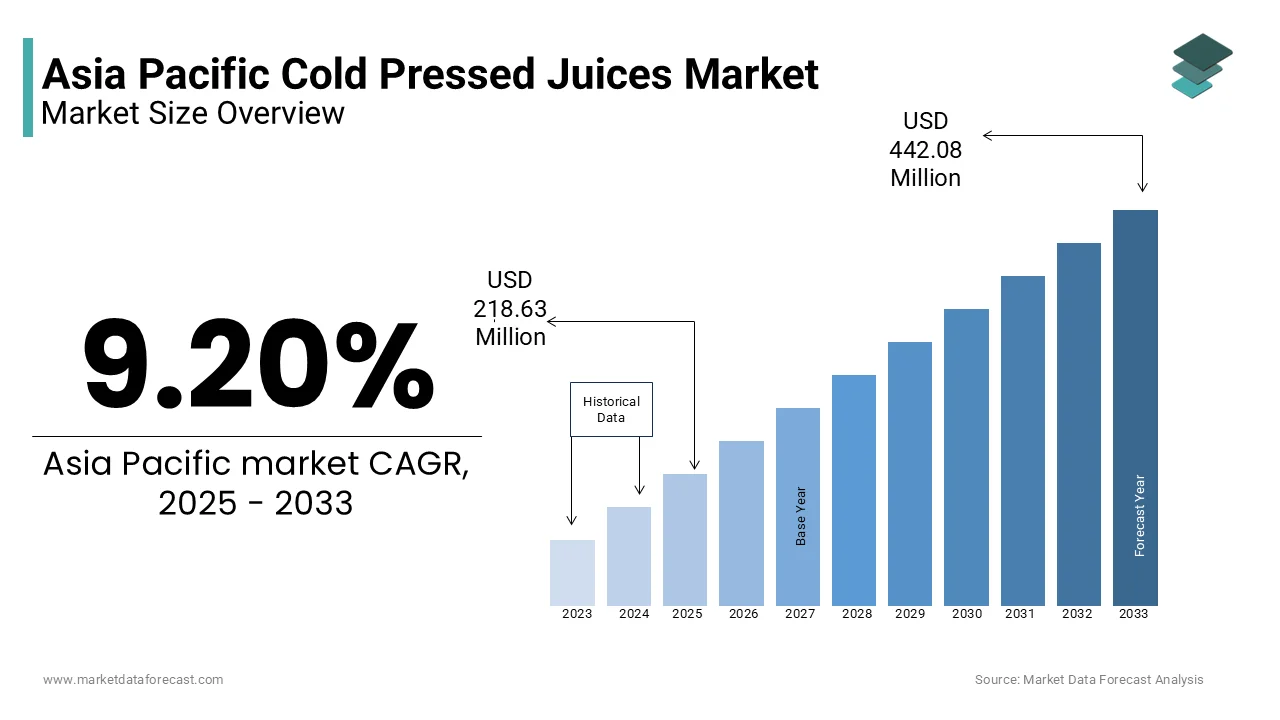
The Asia Pacific cold pressed juices market was valued at USD 218.63 million in 2025, is estimated to reach USD 238.74 million in 2026, and is projected to reach USD 482.73 million by 2034, growing at a CAGR of 9.20% during the forecast period. Market growth is driven by increasing consumer preference for healthy beverages, rising awareness of natural and minimally processed products, and growing demand for nutrient rich drinks. Cold pressed juices are gaining popularity due to their high vitamin retention, absence of preservatives, and perceived health benefits. The expansion of urban lifestyles, along with increasing adoption of wellness oriented diets, is further supporting market growth across Asia Pacific.
Key Market Trends
- Rising demand for natural and minimally processed beverages is driving market growth.
- Increasing health and wellness awareness is boosting consumption of nutrient rich juices.
- Growing preference for clean label and preservative free products is supporting market expansion.
- Expansion of organized retail and e commerce channels is improving product availability.
- Innovation in flavors and functional ingredients is enhancing product appeal.
Segmental Insights
- Based on nature, the conventional segment was the largest and held 61.3% of the Asia Pacific cold pressed juices market share in 2025. This dominance is attributed to wider availability and cost effectiveness compared to organic variants.
- Based on type, the fruits segment accounted for 58.5% of the Asia Pacific cold pressed juices market share in 2025. The segment’s growth is driven by high consumer preference for fruit based beverages due to taste, nutrition, and familiarity.
- Based on distribution channel, the hypermarkets and supermarkets segment dominated with 41.5% of the Asia Pacific cold pressed juices market share in 2025, supported by strong retail presence and consumer convenience.
Regional Insights
- The Asia Pacific cold pressed juices market is experiencing strong growth across key countries, supported by rising health awareness and urbanization.
- China was the largest contributor, accounting for 36.1% of the Asia Pacific cold pressed juices market share in 2025, driven by increasing disposable income, growing health conscious population, and expanding retail infrastructure.
Competitive Landscape
The Asia Pacific cold pressed juices market is moderately competitive, with key players focusing on product innovation, premium offerings, and expansion of distribution networks to strengthen their market position. Companies are investing in organic sourcing, cold press technology, and branding strategies to attract health conscious consumers. Prominent players in the Asia Pacific cold pressed juices market include Pressed Juicery, Suja Life, PepsiCo Inc, Liquiteria, Evolution Fresh, Evergreen Juices Inc, Hain BluePrint Inc LLC, JustPressed, Juice Generation, Organic Avenue, and Organic Press Juices.
Asia Pacific Cold Pressed Juices Market Size
The Asia Pacific cold-pressed juices market size was valued at USD 218.63 million in 2025, and the market size is expected to reach USD 482.73 million by 2034 from USD 238.74 million in 2026. The market's promising CAGR for the predicted period is 9.20%.
Cold pressed juice represents a dynamic and rapidly evolving segment within the regional beverage industry, characterized by the extraction of juice using hydraulic pressure to preserve nutritional integrity. This method avoids heat and oxidation, ensuring that enzymes, vitamins, and minerals remain intact, offering a superior alternative to traditional centrifugal juices. The market is defined by its focus on premium health-conscious consumers who prioritize clean label products, free from additives and preservatives. In Asia Pacific, the definition extends to include locally sourced tropical fruits and vegetables, such as dragon fruit, lychee, and kale, which are unique to the region. According to the World Health Organization, noncommunicable diseases account for 62% of all deaths in the South East Asia Region, driving a urgent shift towards preventive nutrition. Furthermore, the Food and Agriculture Organization of the United Nations notes that Asia is the largest producer of fruits and vegetables globally, providing abundant raw materials for this industry. However, the lack of standardized cold chain infrastructure in many developing nations poses significant logistical hurdles. As per the Asian Development Bank, only 35% of perishable food in developing Asia reaches consumers in good condition due to poor logistics. This statistic underscores the critical importance of robust supply chain management in defining the operational scope of the market. The industry is also shaped by rising urbanization and disposable incomes, which enable consumers to afford premium wellness products. Regulatory frameworks regarding food safety and labeling are becoming stricter, influencing production standards and consumer trust. The market, thus, operates at the intersection of traditional agricultural abundance and modern health consciousness, requiring innovative solutions to bridge infrastructure gaps.
MARKET DRIVERS
Rising Prevalence of Lifestyle Diseases and Preventive Healthcare Awareness
The growing burden of lifestyle-related diseases, such as diabetes, obesity, and hypertension is primarily driving the growth of the Asia-pacific cold pressed juices market. Governments and health organizations across the region are actively promoting preventive healthcare measures, emphasizing the role of diet in disease management. According to the International Diabetes Federation, the Western Pacific Region has the highest number of adults living with diabetes globally, totaling over 206 million people in 2021. This alarming statistic has prompted consumers to seek healthier beverage alternatives that do not contribute to blood sugar spikes. Cold pressed juices, particularly those made from low glycemic index vegetables like cucumber and celery, are perceived as beneficial for metabolic health. The World Health Organization reports that physical inactivity and poor diet are leading risk factors for global mortality, urging a shift towards nutrient-dense foods. In countries like India and China, where rapid urbanization has led to sedentary lifestyles, there is a growing awareness of the benefits of raw nutrition. Medical professionals increasingly recommend plant-based diets rich in antioxidants, which cold pressed juices conveniently provide. This alignment with public health initiatives validates the product's health claims, encouraging regular consumption among at-risk populations. Consequently, the market benefits from sustained demand due to the urgent need for effective dietary interventions against prevalent health crises in the region.
Rapid Urbanization and Expansion of the Affluent Middle Class
Rapid urbanization, coupled with the expansion of the affluent middle class in Asia Pacific, which is significantly drives the demand for premium convenience foods, including cold pressed juices. As more people migrate to cities, their lifestyles become faster paced, increasing the need for quick, yet healthy, meal replacements. According to the United Nations Department of Economic and Social Affairs, 54% of the population in Asia is projected to live in urban areas by 2050, creating a massive consumer base for convenient health products. This demographic shift is accompanied by rising disposable incomes, which enable consumers to prioritize quality and wellness over cost. In China, the middle class is expected to comprise 70% of the population by 2030, according to the Brookings Institution, fostering a culture of premium consumption. Urban consumers are more exposed to global wellness trends through digital media and travel, leading to greater awareness of cold pressed juice benefits. Retail infrastructure in cities, such as Shanghai, Mumbai, and Jakarta, is expanding with modern supermarkets and specialty stores offering diverse health beverage options. The convenience of ready-to-drink formats appeals to busy professionals who lack time for home juicing. Additionally, the presence of international health brands in urban centers influences local preferences and raises standards for product quality. This convergence of economic prosperity, urban density, and health consciousness creates a fertile environment for market growth and innovation in the Asia Pacific region.
MARKET RESTRAINTS
Inadequate Cold Chain Infrastructure and Logistics Challenges
The lack of robust cold chain infrastructure in many Asia Pacific countries is negatively affecting the growth of the Asia-pacific cold pressed juices market. Since these products are unpasteurized or minimally processed, they require strict temperature control throughout the supply chain to prevent spoilage and microbial growth. According to the Asian Development Bank, post-harvest losses for perishable goods in developing Asia can reach up to 40% due to inadequate refrigeration and transportation facilities. This high rate of wastage increases operational costs and limits the geographic reach of producers to major urban centers with advanced logistics. In rural areas and smaller cities, the absence of reliable cold storage facilities makes it difficult to distribute fresh juices effectively. The World Bank highlights that infrastructure gaps in logistics contribute significantly to higher food prices and reduced availability of fresh products. For small and medium enterprises, the cost of investing in private cold chain solutions is prohibitive, restricting their ability to scale. Retailers face challenges in maintaining consistent product quality, leading to consumer dissatisfaction and reduced trust. Furthermore, power fluctuations in some regions pose additional risks to refrigeration systems, compromising product safety. These logistical barriers hinder the penetration of cold pressed juices into broader markets, keeping them as niche luxury items in metropolitan areas. Until infrastructure improvements are made, the market will struggle to achieve widespread accessibility and affordability.
High Price Sensitivity and Limited Affordability in Developing Economies
High price sensitivity among consumers in developing economies within Asia Pacific restricts the mass adoption of cold pressed juices, which is another significant impediment to the regional market. The production process, involving hydraulic pressing and cold chain logistics, results in significantly higher costs compared to conventional juices and tap water. According to the World Bank, a substantial portion of the population in countries like Indonesia, Vietnam, and the Philippines lives on less than $5.50 a day, limiting their ability to purchase premium health beverages. A single bottle of cold pressed juice can cost between 3 and 6 dollars, which is equivalent to a full meal for many households. This price disparity makes cold pressed juices inaccessible to the majority of the population, who prioritize basic necessities over wellness luxuries. The International Labour Organization notes that wage growth in many Asian countries has not kept pace with inflation, further squeezing household budgets. Consequently, the market remains confined to affluent urban elites, excluding large segments of potential consumers. Local competitors offering cheaper pasteurized juices dominate the mass market, making it difficult for cold pressed brands to compete on volume. Economic volatility and currency fluctuations also impact the affordability of imported equipment and ingredients, adding to production costs. Without strategies to reduce costs or introduce smaller, affordable pack sizes, the market will face limitations in achieving broad-based growth in price-sensitive regions.
MARKET OPPORTUNITIES
Integration of Indigenous Superfoods and Local Flavor Profiles
The integration of indigenous superfoods and local flavor profiles presents a significant opportunity for the Asia-pacific cold pressed juices market. Consumers are increasingly interested in products that reflect their cultural heritage and offer unique health benefits associated with traditional ingredients. Fruits and vegetables, such as turmeric, ginger, moringa, jackfruit, and mangosteen, are native to the region and renowned for their medicinal properties. According to the Food and Agriculture Organization of the United Nations, Asia is home to a vast diversity of edible plants, many of which are underutilized in commercial beverages. By incorporating these ingredients, brands can create distinct products that appeal to local tastes while leveraging the global popularity of superfoods. For instance, turmeric is widely recognized for its anti-inflammatory effects, making it a valuable addition to wellness juices. The Global Wellness Institute highlights the growing trend of localized wellness practices, which supports the use of traditional ingredients in modern formats. Collaborating with local farmers ensures a steady supply of fresh produce and supports sustainable agriculture, enhancing brand credibility. This strategy also allows companies to command premium prices by offering exclusive and authentic flavors. Marketing campaigns that educate consumers about the health benefits of indigenous ingredients can drive trial and loyalty. By embracing local biodiversity, the market can expand its appeal beyond generic fruit blends and establish a strong cultural connection with consumers.
Expansion of E-Commerce and Direct-to-Consumer Subscription Models
The rapid growth of e-commerce and direct-to-consumer subscription models offers a lucrative opportunity for the Asia-pacific cold pressed juices market to overcome geographical and logistical barriers. Digital platforms enable brands to reach customers directly, bypassing traditional retail constraints and offering personalized shopping experiences. According to the United Nations Conference on Trade and Development, e-commerce sales in Asia and the Pacific have surged, driven by increased internet penetration and smartphone usage. Subscription services allow companies to deliver fresh juices regularly to subscribers, ensuring convenience and consistent revenue streams. This model reduces inventory waste by enabling precise demand forecasting and just-in-time production. As per McKinsey and Company, subscription businesses in the region are gaining traction as consumers value the automation of routine purchases. Brands can leverage data analytics to understand consumer preferences and customize offerings, enhancing satisfaction and retention. Partnerships with third-party logistics providers, specializing in last-mile delivery, ensure timely and temperature-controlled transport. Social media marketing and influencer collaborations drive traffic to online stores, building brand awareness and community engagement. This digital transformation lowers entry barriers for new players, who can niche target specific health segments. The convenience of home delivery appeals to busy urban professionals, who prioritize health but lack time for shopping. By embracing digital strategies, the market can expand its reach and build loyal customer bases across diverse geographic locations.
MARKET CHALLENGES
Regulatory Complexity and Food Safety Compliance Issues
The Asia-pacific cold pressed juices market faces significant challenges related to regulatory complexity and stringent food safety compliance requirements. Since cold pressed juices are often unpasteurized, they are subject to rigorous oversight by health authorities to prevent foodborne illnesses. According to the World Health Organization, foodborne diseases affect an estimated 600 million people annually, with a higher burden in low and middle income countries. This reality prompts governments to enforce strict hygiene and processing standards, which can be difficult for small producers to meet. In countries like Japan and Australia, regulatory frameworks are highly developed, requiring detailed hazard analysis and critical control points implementation. However, in emerging markets, regulations may be inconsistent or poorly enforced, creating uncertainty for businesses operating across borders. The Association of Southeast Asian Nations is working towards harmonizing food safety standards, but progress is slow. Non-compliance can result in product recalls, fines, and reputational damage, which are detrimental to brand equity. The cost of maintaining compliance, including regular testing and audits, increases operational expenses. Small businesses may lack resources to meet these demanding standards, limiting their competitiveness. Furthermore, changing regulatory landscapes require constant monitoring and adaptation, straining managerial resources. Ensuring consistent quality and safety across batches is challenging due to the natural variability of raw ingredients. These regulatory hurdles necessitate robust quality assurance frameworks, posing a persistent challenge to market participants aiming for sustainable growth.
Supply Chain Volatility and Climate Change Impact on Agriculture
The reliance on fresh fruits and vegetables makes the Asia-pacific cold pressed juices market highly vulnerable to supply chain disruptions and climate change-induced agricultural instability, which is also challenging the expansion of the regional market. Extreme weather events, such as typhoons, droughts, and floods, are becoming more frequent in the region, affecting crop yields and quality. According to the Intergovernmental Panel on Climate Change, Asia is one of the most vulnerable regions to climate impacts, with significant risks to agricultural productivity. These disruptions lead to shortages and price spikes for key ingredients, complicating procurement planning and cost management. The Asian Development Bank reports that climate change could reduce agricultural yields in some Asian countries by up to 50% by 2050, if no adaptation measures are taken. Seasonal fluctuations further restrict the availability of certain ingredients, forcing brands to reformulate products frequently, which can confuse consumers. Sourcing organic produce exacerbates these challenges, as supply is limited and more susceptible to environmental stresses. Building resilient supply chains requires diversifying suppliers and investing in sustainable farming practices, which involve significant capital. Dependence on specific geographic regions for premium ingredients increases exposure to local disruptions. These supply-side uncertainties threaten production continuity and profitability, requiring strategic risk management and innovation in sourcing strategies. Companies must balance cost efficiency with reliability, often facing trade-offs that impact final product pricing and availability. Mitigating these risks is essential for long-term stability in a region prone to environmental volatility.
REPORT COVERAGE
| REPORT METRIC | DETAILS |
| Market Size Available | 2025 to 2034 |
| Base Year | 2025 |
| Forecast Period | 2026 to 2034 |
| CAGR | 9.20% |
| Segments Covered | By Nature, Type, Distribution Channel, and Region |
| Various Analyses Covered | Global, Regional, & Country Level Analysis; Segment-Level Analysis; DROC; PESTLE Analysis; Porter’s Five Forces Analysis; Competitive Landscape; Analyst Overview of Investment Opportunities |
| Regions Covered | India, China, Japan, South Korea, Australia, New Zealand, Thailand, Malaysia, Vietnam, Philippines, Indonesia, Singapore, and the Rest of Asia-Pacific |
| Market Leaders Profiled | Pressed Juicery, Suja Life, PepsiCo Inc., Liquiteria, Evolution Fresh, Evergreen Juices Inc., Hain BluePrint, Inc., LLC, JustPressed , Juice Generation, Organic Avenue, and others. |
SEGMENTAL ANALYSIS
By Nature Insights
The conventional segment dominated the market by holding 61.3% of the regional market share in 2025. The dominance of conventional segment in this regional market is primarily driven by the lower price point, compared to organic alternatives, which is making it accessible to a broader consumer base, including the expanding middle class in emerging economies. Conventional cold pressed juices utilize standard agricultural produce, which is significantly cheaper to source than certified organic ingredients, allowing for competitive pricing. According to the Food and Agriculture Organization of the United Nations, conventional farming methods yield higher volumes at lower costs, which translates to more affordable retail prices for consumers. This price accessibility is crucial in price-sensitive markets, like India and Indonesia, where disposable income for premium health products is limited. Retailers prefer stocking conventional variants because they offer faster inventory turnover and appeal to first-time buyers, who are hesitant to commit to high premium pricing. The availability of conventional fruits and vegetables is also more consistent throughout the year, ensuring stable supply chains and reducing the risk of stockouts. As per NielsenIQ data, mainstream grocery stores in Asia allocate significantly more shelf space to conventional health beverages, reflecting their higher volume sales. Marketing efforts for conventional brands often focus on taste, convenience, and immediate health benefits, rather than ethical sourcing, which resonates with casual health enthusiasts. The lower barrier to entry for producers using conventional ingredients allows for a wider variety of brands and flavors, further saturating the market. This combination of economic accessibility and supply stability ensures that the conventional segment remains the cornerstone of the industry in the region.

However, the organic segment is projected to witness a promising CAGR of 12.2% over the forecast period in the Asia-pacific cold pressed juices market owing to the increasing consumer awareness regarding the harmful effects of pesticide residues and synthetic fertilizers found in conventional farming, particularly among affluent urban populations. Health-conscious individuals are willing to pay a premium for organic cold pressed juices, perceived as safer and more nutrient dense. According to the Research Institute of Organic Agriculture, global organic farmland has increased to over 76 million hectares, with Asia contributing to this growth as consumers demand transparency in food sourcing. In developed markets, like Australia, Japan, and South Korea, strict regulatory standards for organic certification provide assurance of quality, boosting consumer trust. The Soil Association reports that millennial and Generation Z consumers in Asia are driving the shift towards clean label products, free from genetically modified organisms. Social media campaigns, highlighting the benefits of organic farming and its positive environmental impact, further amplify demand among digitally native shoppers. Retailers are responding by expanding their organic beverage sections in premium supermarkets and offering promotions to attract loyal customers. The alignment of organic cold pressed juices with holistic wellness lifestyles ensures sustained growth, as consumers increasingly view food choices as integral to personal and planetary health. Additionally, the rise of e-commerce platforms facilitates the distribution of niche organic brands to health-conscious consumers across vast geographic areas.
By Type Insights
The fruits segment led the market by holding 58.5% of the regional market share in 2025. The inherent sweetness and appealing flavor profiles of tropical fruits that make them more palatable to a wider audience, including children and those new to healthy eating is propelling the growth of the fruits segment in this regional market. Fruit-based cold pressed juices, such as orange, pineapple, mango, and apple, are perceived as tasty treats rather than medicinal drinks, encouraging regular consumption. According to the Food and Agriculture Organization of the United Nations, Asia is the largest producer of tropical fruits globally, providing abundant and diverse raw materials for juice extraction. The natural sugars in fruits provide a quick energy boost, making these juices popular among students and busy professionals. Retail data from Euromonitor International indicates that fruit-flavored beverages consistently outperform vegetable-based ones in terms of volume sales, due to their universal appeal. The versatility of fruits allows for numerous flavor combinations and blends with spices, like ginger or turmeric, enhancing sensory experience. Consumer preference for familiar tastes reduces the hesitation associated with trying new health products. Additionally, fruits have relatively longer shelf lives and are available year-round in tropical climates, ensuring consistent production capabilities. The marketing of fruit juices often emphasizes refreshment and vitality, which aligns with lifestyle branding strategies in hot and humid Asian climates. This broad acceptance and ease of integration into daily diets ensure that the fruit segment remains the primary revenue generator for cold pressed juice manufacturers in the region.
However, the vegetables segment is a promising segment and is estimated to record a CAGR of 13.6% over the forecast period in this regional market owing to the rising popularity of detox cleanses and low sugar diets among health-conscious consumers in urban centers. Vegetable-based juices, such as kale, cucumber, celery, and beetroot, are marketed as powerful tools for cleansing the body and reducing inflammation, without the calorie load of fruit sugars. According to the World Health Organization, noncommunicable diseases, such as diabetes, are rising sharply in Asia, prompting consumers to seek low glycemic index beverage options. The ketogenic and paleo dietary trends, which emphasize low carbohydrate intake, have further boosted demand for green juices, as they provide essential nutrients without spiking blood glucose levels. Influencers and wellness experts, in countries like China and India, frequently promote vegetable juices for their alkalizing properties and high mineral content. As per the Global Wellness Institute, the wellness economy in Asia values preventive health measures highly, and vegetable juices fit squarely into this paradigm. Manufacturers are innovating with blends that mask the earthy taste of vegetables, using small amounts of lemon or ginger, making them more approachable. Retailers are dedicating specific sections to green juices and cleanse kits, catering to this niche, but growing, demographic. The perception of vegetable juices as functional health supplements, rather than mere beverages, drives their premium positioning and rapid adoption among dedicated wellness enthusiasts in the region.
By Distribution Channel Insights
The hypermarkets and supermarkets segment occupied 41.5% of the regional market share in 2025. This dominance is attributed to the convenience of one-stop shopping, where consumers can purchase groceries and health beverages in a single trip. These retail giants offer extensive shelf space and prominent placement for cold pressed juices, often near fresh produce or health food sections, increasing visibility. According to NielsenIQ, hypermarkets account for the majority of packaged food and beverage sales in Asia, due to their wide reach and competitive pricing strategies. The ability to physically inspect product labels and expiration dates builds consumer trust, particularly for perishable items like cold pressed juices. Major chains, such as Walmart in China and Reliance Fresh in India, have expanded their private label organic and cold pressed juice offerings, providing affordable options that drive volume. The established cold chain infrastructure of supermarkets ensures product quality and safety, which is critical for maintaining consumer confidence. Promotional activities, such as discounts and bundle offers in these stores, stimulate impulse purchases and trial among new customers. As per the Food Marketing Institute, supermarket shoppers in urban Asia visit stores weekly, ensuring consistent foot traffic and repeat purchases. The integration of loyalty programs further enhances customer retention, by offering personalized deals on health products. This combination of accessibility, variety, and trust makes hypermarkets and supermarkets the primary channel for cold pressed juice distribution in the region.
However, the online retailing segment is the fastest growing distribution channel in the Asia Pacific cold pressed juices market and is expected to exhibit a CAGR of 15.5% over the forecast period owing to the increasing adoption of e-commerce platforms and the popularity of subscription-based delivery models that offer unparalleled convenience. Consumers appreciate the ability to order fresh juices from home and have them delivered directly to their doorsteps, saving time and effort. According to the United Nations Conference on Trade and Development, e-commerce sales in Asia and the Pacific have surged, driven by increased internet penetration and smartphone usage. Subscription services allow brands to predict demand accurately, reducing waste and ensuring fresh product delivery on a regular basis. As per McKinsey and Company, subscription businesses in the region are gaining traction, as consumers value the automation of routine purchases. Online platforms enable brands to reach customers in areas without access to specialized health stores, expanding their market reach. Digital marketing strategies, including social media influencers and targeted ads, drive traffic to online stores effectively. The ability to provide detailed product information and customer reviews online helps build trust and educate consumers about the benefits of cold pressed juices. Partnerships with third-party delivery services ensure timely and temperature-controlled transport, addressing previous logistical concerns. This digital transformation empowers smaller brands to compete with larger players, by leveraging direct-to-consumer relationships and data-driven insights.
REGIONAL ANALYSIS
China Cold Pressed Juices Market Analysis
China stood as the largest and most dynamic market for cold pressed juices in Asia-pacific with 36.1% of the regional market share in 2025. The rapid urbanization, a growing middle class that is increasingly health-conscious, the rising prevalence of lifestyle diseases and government initiatives promoting healthy eating habits are primarily driving the dominance of China in the Asia-pacific market. According to the National Health Commission of China, chronic diseases account for over 88% of total deaths, prompting a shift towards preventive nutrition. Consumers in tier-one cities, like Shanghai and Beijing, are willing to pay premiums for high quality organic and cold pressed juices. The presence of international brands and local startups creates a competitive landscape focused on innovation and quality. E-commerce platforms, such as Alibaba and JD.com, play a crucial role in distribution, enabling brands to reach a wide audience efficiently. The trend towards clean label products, free from additives, is strong among younger demographics. However, challenges include food safety concerns and the need for robust cold chain logistics. Government regulations on food labeling and safety are becoming stricter, influencing production standards. The market is expected to grow steadily, as health awareness spreads to lower-tier cities. Investment in local sourcing and sustainable packaging is increasing, as brands seek to differentiate themselves. China’s massive population and economic growth provide a solid foundation for long-term market expansion.
Japan Cold Pressed Juices Market Analysis
Japan held a promising share of the Asia-pacific cold pressed juices market in 2025 due to the high consumer awareness and strict quality standards, driven by a culture that values health and longevity. The aging population that seeks nutrient-dense foods to maintain health and vitality is further likely to drive the growth of the Japanese market during the forecast period. According to the Ministry of Health, Labour and Welfare, life expectancy in Japan is among the highest globally, with the population aged 65 and over reaching 29% in 2023, leading to sustained demand for preventive health products. Consumers prefer premium organic juices with transparent sourcing and minimal processing. Retailers, such as Seven-Eleven and Lawson, offer high quality cold pressed options, catering to busy urbanites. The concept of shokiku, or food education, promotes awareness of nutritional benefits, supporting market growth. Innovation in functional ingredients, such as enzymes and probiotics, is common, appealing to health-conscious shoppers. Regulatory frameworks are stringent, ensuring high safety standards, which build consumer trust. The market is characterized by brand loyalty and willingness to pay for quality. Challenges include a shrinking population and saturated market conditions. However, the focus on premiumization and functional benefits offers opportunities for growth. Japanese consumers are early adopters of new health trends, influencing regional preferences. The market remains stable, with steady demand for high-quality wellness beverages.
India Cold Pressed Juices Market Analysis
India represents an emerging and high-potential market for cold pressed juices. The Indian market is nascent, but growing rapidly, driven by increasing health awareness and urbanization. The primary driver is the rising incidence of diabetes and obesity, which has prompted consumers to seek healthier beverage alternatives. According to the International Diabetes Federation, India has over 74 million adults living with diabetes as of 2021, creating a significant demand for low sugar natural juices. Urban centers, like Mumbai, Delhi, and Bangalore, are seeing a surge in juice bars and specialty stores, offering cold pressed options. The availability of diverse tropical fruits provides a cost advantage for local producers. Social media and influencer marketing play a key role in educating consumers about the benefits of raw nutrition. However, price sensitivity remains a challenge, limiting the market to affluent segments. Infrastructure limitations in cold chain logistics affect distribution efficiency. Local startups are innovating with affordable pack sizes and subscription models to overcome barriers. Government initiatives, like Fit India Movement, support the shift towards healthy lifestyles. The market is fragmented, with many small players competing on price and quality. As disposable incomes rise and health consciousness spreads, the market is poised for significant growth.
Australia Cold Pressed Juices Market Analysis
Australia and New Zealand hold a developed position in the Asia-pacific cold pressed juices market. The market status is mature, with high consumer awareness and strong demand for organic and sustainable products. The primary driver is the well-established wellness culture and high disposable income. According to the Australian Bureau of Statistics, over 65% of adults in Australia are overweight or obese, driving a focus on health and wellness spending as consumers prioritize preventive care. Consumers prefer locally sourced organic juices with clear labeling and ethical certifications. Retailers, such as Woolworths and Coles, dedicate significant shelf space to premium health beverages. The trend towards plant-based diets supports the growth of cold pressed products.
COMPETITIVE LANDSCAPE
The competition in the Asia Pacific Cold Pressed Juices Market is characterized by a dynamic mix of multinational corporations and agile local startups. Large beverage conglomerates leverage their extensive distribution networks and financial resources to dominate mainstream retail channels. They compete on brand recognition and economies of scale offering consistent quality and wide availability. Local niche brands differentiate themselves through artisanal craftsmanship unique flavor profiles and strong community engagement. These smaller players often appeal to discerning consumers seeking authenticity and localized sourcing. Innovation in functional ingredients and sustainable packaging serves as a key battleground for competitive advantage. Price sensitivity remains a challenge prompting companies to balance premium positioning with affordability. Regulatory compliance regarding food safety and labeling adds complexity requiring robust quality assurance systems. Digital presence and direct to consumer models are increasingly critical for building brand loyalty. The market sees frequent collaborations and partnerships as entities seek to enhance their capabilities. This dynamic environment demands continuous adaptation and strategic agility to maintain relevance and profitability in a rapidly evolving landscape.
KEY MARKET PLAYERS
Some of the notable companies in the Asia Pacific cold-pressed juices market are
- Pressed Juicery
- Suja Life
- PepsiCo Inc.
- Liquiteria
- Evolution Fresh
- Evergreen Juices Inc.
- Hain BluePrint, Inc., LLC
- JustPressed
- Juice Generation
- Organic Avenue
- Organic Press Juices
Top Players in the Market
- Dole plc is a global leader in fresh produce and juices with a significant presence in the Asia Pacific Cold Pressed Juices Market. The company leverages its extensive supply chain and agricultural expertise to source high quality fruits across the region. Dole has recently expanded its portfolio of premium cold pressed offerings by introducing new functional blends tailored to Asian consumer preferences. The company invests heavily in sustainable farming practices and advanced High Pressure Processing technology to ensure product safety and nutrient retention. Strategic partnerships with major retail chains in China and Japan have enhanced its distribution network. Dole continues to innovate with eco friendly packaging solutions aligning with regional sustainability goals. Its strong brand recognition and commitment to quality solidify its position as a key player driving growth and setting industry standards for health and wellness beverages in the dynamic Asia Pacific market.
- Coca Cola Europacific Partners plays a pivotal role in the Asia Pacific beverage landscape including the growing cold pressed juice segment. Although primarily known for soft drinks the company has diversified into premium health beverages through strategic acquisitions and brand launches. In markets like Australia and Japan it distributes specialized cold pressed juice brands that cater to health conscious consumers. Recent actions include investing in local production facilities to reduce carbon footprint and improve supply chain efficiency. The company utilizes its vast distribution network to place these premium products in convenience stores and supermarkets across the region. By leveraging data analytics and consumer insights Coca Cola Europacific Partners tailors its marketing strategies to highlight the natural benefits of cold pressed juices. This approach strengthens its competitive edge and expands its reach in the evolving health and wellness sector throughout Asia Pacific.
- Raw Pressery is a prominent homegrown brand in India that has significantly influenced the Asia Pacific Cold Pressed Juices Market. The company pioneered the concept of clean label cold pressed juices in the region focusing on transparency and purity. Raw Pressery uses proprietary technology to extract juice without heat or preservatives ensuring maximum nutritional value. Recent expansions include entering new international markets within Asia and launching innovative product lines such as nut milks and wellness shots. The brand actively engages with consumers through digital platforms and educational campaigns about the benefits of raw nutrition. Partnerships with leading e commerce giants and premium retail outlets have boosted its visibility and accessibility. Raw Pressery commitment to sustainability is evident in its recyclable packaging initiatives. Its agile approach and deep understanding of local tastes enable it to compete effectively against global giants fostering a culture of healthy living across the region.
Top Strategies Used by the Key Market Participants
Key players in the Asia Pacific Cold Pressed Juices Market primarily focus on product innovation by incorporating indigenous superfoods and functional ingredients to differentiate their offerings. Companies invest heavily in strengthening cold chain logistics to ensure product freshness and extend shelf life without compromising quality. Strategic partnerships with local farmers secure consistent supplies of high quality organic produce while supporting sustainable agriculture. Brands leverage digital marketing and direct to consumer subscription models to build loyal customer bases and gather valuable consumer insights. Expansion into emerging markets through joint ventures and acquisitions allows companies to tap into growing middle class demographics. Emphasis on eco friendly packaging solutions addresses environmental concerns and aligns with regulatory requirements. These strategies collectively enable participants to navigate logistical challenges and meet the evolving health consciousness of consumers in the diverse Asia Pacific region.
MARKET SEGMENTATION
This research report on the Asia Pacific cold pressed juices market has been segmented and sub-segmented into the following categories.
By Nature
- Conventional
- Organic
By Type
- Fruits
- Vegetables
By Distribution Channel
- Hypermarket/Supermarket
- Convenience Stores
- Specialty Outlet
- Grocery Store
- Online Retailing
- Hypermarket/Supermarket
By Country
- India
- China
- Japan
- South Korea
- Australia
- New Zealand
- Thailand
- Malaysia
- Vietnam
- Philippines
- Indonesia
- Singapore
- Rest of APAC