- Product Description Description
- Table of Contents TOC
- List of Table & Figure LOT
- Get Free Sample PDF Sample PDF
Market Size, 2025
$16.82 BnMarket Estimate, 2026
$18.43 BnMarket Forecast, 2034
$38.20 BnCAGR, 2026–2034
9.54%Executive Summary: Asia Pacific Edible Mushroom Market
- Market Scope: Comprehensive evaluation of the Asia Pacific edible mushroom sector, analyzing cultivation types (button, shiitake, oyster), fresh and processed applications, functional food and nutraceutical integration, controlled environment agriculture, and regional country dynamics across China, India, Japan, South Korea, and Australia.
- Market Valuation: Valued at USD 16.82 billion in 2025, reaching USD 18.43 billion in 2026, and projected to expand to USD 38.20 billion by 2034, growing at a robust CAGR of 9.54% from 2026 to 2034.
- Primary Growth Drivers: Rising prevalence of lifestyle-related chronic diseases (diabetes and cardiovascular disorders), expanding vegetarian and vegan demographics driving protein substitution trends, and the high cultural significance of fungi in traditional medicine and preventive healthcare.
Key Market Segment Metrics
| Category | Leading Segment (Base Position) | Fastest-Growing / High-Growth Segment |
|---|---|---|
| By Type | Button Mushrooms (held a prominent share in 2025, driven by widespread culinary acceptance, high industrial yields, and versatile neutral flavor profiles) | Shiitake Mushrooms (projected to record the fastest CAGR of 11.8% driven by growing consumer awareness of medicinal properties, lentinan content, and immune support) |
| By Application | Fresh Mushrooms (largest segment holding a dominant share in 2025, supported by cultural preferences for fresh ingredients, nutritional integrity, and daily market visits) | Processed Mushrooms (fastest-growing segment anticipating a CAGR of 9.8% propelled by rapid urbanization, busy lifestyles, and high demand for shelf-stable convenience foods) |
| By Region | China (top regional performer holding 32.4% market share in 2025, backed by strong government support for agricultural modernization, smart farming, and traditional medicine integration) | India & South Korea (high-growth hubs experiencing rapid expansion driven by large vegetarian populations, organized e-commerce retail, and deep-rooted functional mushroom consumption) |
Major Market Players & Industry Landscape
Market Structure: Fragmented market featuring numerous small-scale local producers alongside large multinational corporations leveraging advanced vertical farming, automated harvesting systems, and strategic distribution partnerships.
Key Companies: Costa Group, Okechamp S.A., Monterey Mushrooms Inc., Monaghan Mushrooms, Drinkwater’s Mushroom Ltd., The Mushroom Company, Shanghai Finc Bio-Tech Inc., CMP Mushrooms, Greenyard NV (Lutèce), and Bonduelle SA.
 Download Free Sample Report
Asia Pacific Edible Mushroom Market Size
The Asia Pacific edible mushroom market size was valued at USD 16.82 billion in 2025, and the market size is expected to reach USD 38.20 billion by 2034 from USD 18.43 billion in 2026. The market is growing at a CAGR of 9.54% during the forecast period.

The edible mushroom is fungal species consumed for nutritional and culinary purposes, across countries such as China, India, Japan, South Korea, and Australia. The definition extends beyond fresh produce to include dried canned and value added extracts that cater to modern consumer preferences for convenience and health. The cultural significance of fungi in traditional medicine further amplifies demand as consumers increasingly seek natural remedies for immune support. According to the World Health Organization, noncommunicable diseases account for 81% of all deaths in the Western Pacific Region which drives interest in functional foods like mushrooms that offer preventive health benefits. The integration of mushrooms into daily diets is supported by their low calorie content and high protein levels making them an ideal substitute for meat in vegetarian populations. The market landscape is characterized by a mix of smallholder farms and large scale commercial enterprises that utilize advanced substrate technologies.
MARKET DRIVERS
Rising Prevalence of Lifestyle Related Diseases Fuels Demand for Functional Food Alternatives
The escalating burden of chronic illnesses, such as diabetes, hypertension, and cardiovascular disorders is majorly propelling the growth of Asia Pacific mushroom market. Consumers are actively seeking dietary interventions that can help manage these conditions without relying solely on pharmaceuticals. Mushrooms are rich in beta glucans antioxidants and essential minerals which contribute to improved metabolic health and immune function. According to the International Diabetes Federation, the number of adults living with diabetes in the Western Pacific Region reached 206 million in 2021 representing nearly half of the global total. This staggering figure has prompted a shift towards low glycemic index foods where mushrooms play a crucial role due to their minimal impact on blood sugar levels. Furthermore, as per the World Heart Federation cardiovascular diseases remain the leading cause of death globally taking more than 17 million lives each year with a significant portion occurring in Asia. The high fiber content in mushrooms aids in lowering cholesterol levels thereby reducing the risk of heart disease. Nutritional guidelines issued by national health ministries in countries like Japan and South Korea increasingly recommend the inclusion of fungi in daily meals to combat obesity and metabolic syndrome. The awareness regarding the preventive properties of ergothioneine a unique antioxidant found in mushrooms has also grown among urban populations.
Expansion of Vegetarian and Vegan Demographics Drives Protein Substitution Trends
The rapid growth of the vegetarian and vegan demand with increasing prominence as a prime source of plant based protein is attributed in boosting the growth of Asia pacific edible mushroom market. Cultural religious and ethical motivations are converging with environmental concerns to shift dietary patterns away from animal derived products. Mushrooms offer an umami rich texture and substantial protein content that makes them an ideal meat substitute in various culinary applications. According to the Euromonitor International data, the number of flexitarians individuals who primarily eat a plant based diet but occasionally consume meat or fish has risen sharply in countries like Thailand and Vietnam where traditional diets are already vegetable centric. In India, home to the largest vegetarian population globally approximately 30% of the population identifies as vegetarian as per surveys conducted by the National Family Health Survey. This demographic relies heavily on diverse protein sources including legumes and fungi to meet nutritional requirements. The versatility of mushrooms allows them to be processed into meat analogues burgers and sausages, which appeals to younger consumers seeking convenient and ethical food options. Additionally, the rise of quick service restaurants offering plant based menus have integrated mushrooms as a key ingredient further normalizing their consumption. As per the Good Food Institute Asia Pacific alternative protein investments have surged indicating strong industry confidence in this segment. The alignment of mushroom consumption with sustainability goals resonates with environmentally conscious consumers, who recognize that fungal cultivation requires significantly less water and land compared to livestock farming thus reinforcing its position as a sustainable protein source.
MARKET RESTRAINTS
Fragmented Supply Chain Infrastructure Leads to Post Harvest Losses
The fragmented nature of the supply chain, which results in substantial post-harvest losses and inconsistent product quality is hampering the growth of Asia pacific edible mushroom market. The majority of mushroom production in the region is carried out by small scale farmers who lack access to advanced cold storage facilities and efficient transportation networks. Mushrooms are highly perishable commodities with a short shelf life requiring immediate cooling after harvest to maintain freshness and prevent spoilage. The inefficiency not only reduces the income of farmers but also limits the availability of high quality fresh mushrooms in distant urban markets. The lack of standardized grading systems further complicates trade as buyers often receive inconsistent product sizes and qualities which hinders the development of premium export channels. In rural areas of Indonesia and the Philippines poor road connectivity exacerbates the problem by delaying transit times and exposing the produce to unfavorable temperature fluctuations. As per the Food and Agriculture Organization of the United Nations, improving post harvest management could significantly enhance food security and farmer livelihoods yet investment in this area remains limited. The absence of integrated logistics solutions means that much of the production is confined to local markets preventing producers from capitalizing on higher value opportunities in metropolitan centers or international markets.
Stringent Regulatory Standards for Food Safety Impede Small Producer Compliance
The implementation of stringent food safety regulations and quality standards for small and medium sized mushroom producers is hampering the growth of Asia pacific edible mushroom market. Governments are increasingly enforcing rigorous limits on pesticide residues heavy metals and microbial contamination to protect consumer health and facilitate international trade. Compliance with these standards requires significant investment in testing laboratories certification processes and improved agricultural practices which many smallholders cannot afford. In Japan and South Korea, where consumer awareness regarding food safety is exceptionally high regulatory bodies conduct frequent inspections and impose strict penalties for non-compliance. This creates a barrier to entry for smaller players who struggle to maintain the detailed record keeping and hygiene protocols required. Producers exporting to markets like Australia and New Zealand face additional hurdles due to their biosecurity laws, which prohibit certain substrates and packaging materials. The complexity of navigating these diverse regulatory landscapes discourages innovation and limits the ability of local producers to scale up operations.
MARKET OPPORTUNITIES
Integration of Mushrooms into Functional Food and Nutraceutical Products
The burgeoning functional food and nutraceutical sector by enabling value addition through specialized extracts and supplements is certainly a major factor to escalate new opportunities for the growth of Asia Pacific edible mushroom market. Consumers are increasingly prioritizing preventive healthcare and seeking natural ingredients that offer specific health benefits such as immune enhancement stress reduction and cognitive support. Mushrooms like reishi lion s mane and cordyceps are renowned for their bioactive compounds which are being incorporated into a wide array of products including beverages capsules and snack bars. Pharmaceutical and food companies are collaborating to develop innovative formulations that leverage the therapeutic properties of fungi. The scientific validation of health claims through clinical trials is further boosting consumer confidence and expanding the customer base beyond traditional users. Retailers are dedicating more shelf space to these premium products reflecting the shift towards holistic health solutions. The opportunity extends to e-commerce platforms, where targeted marketing can reach health conscious consumers directly.
Adoption of Controlled Environment Agriculture and Vertical Farming Technologies
The adoption of controlled environment agriculture and vertical farming technologies by enhancing yield consistency and resource efficiency is additionally to bolster the growth of Asia Pacific edible mushroom market. Urbanization and land scarcity in major cities like Singapore Tokyo and Shanghai are driving the need for localized food production systems that minimize transportation costs and carbon footprints. Vertical farms utilize stacked layers and climate-controlled environments to optimize growth conditions resulting in faster crop cycles and higher productivity per square meter. According to the Association for Vertical Farming the Asia Pacific region is expected to account for over 30% of the global vertical farming market by 2030 due to rapid urban expansion and government support for smart agriculture. These technologies allow for year round production regardless of external weather conditions which mitigates the risks associated with climate variability. Energy efficient LED lighting and automated irrigation systems reduce water usage by up to 95% compared to traditional farming methods as per studies cited by the United Nations Environment Programme. This sustainability angle appeals to environmentally conscious consumers and corporate buyers committed to green supply chains. Furthermore, the precision offered by these systems ensures uniform product quality which is critical for meeting the demands of high end retail and hospitality sectors. Investment in agri tech startups focusing on fungal cultivation is increasing as venture capitalists recognize the potential for scalable and profitable urban farming models. This technological advancement not only secures food supply for growing urban populations but also opens new avenues for research into novel mushroom varieties tailored for specific nutritional profiles.
MARKET CHALLENGES
Climate Change Induced Weather Volatility Disrupts Cultivation Cycles
The climate change induced weather volatility by disrupting traditional cultivation cycles and affecting substrate availability is one of the challenges for the growth of Asia pacific edible mushroom market. Mushrooms are highly sensitive to temperature and humidity fluctuations, which are becoming increasingly unpredictable due to global warming. Extreme weather events such as typhoons heatwaves and unseasonal rains can devastate outdoor and semi controlled farms leading to significant crop failures. According to the Intergovernmental Panel on Climate Change the frequency and intensity of extreme weather events in the Asia Pacific region have increased markedly threatening agricultural stability. For instance, prolonged droughts in parts of India and Australia reduce the availability of key raw materials like straw and sawdust which are essential for substrate preparation. This scarcity drives up production costs and forces farmers to seek alternative materials that may not yield the same quality or quantity of produce. The rising ambient temperatures also increase the incidence of pests and diseases which further compromise crop health and require additional inputs for management. These environmental pressures undermine the reliability of supply chains and create price volatility that affects both producers and consumers. Adapting to these changes requires substantial investment in climate controlled facilities and resistant strains which many small operators cannot afford.
Labor Shortages in Rural Agricultural Sectors Hinder Production Scalability
The persistent labor shortages in rural agricultural sectors is another factor to decline the growth of the Asia Pacific edible mushroom market. The migration of young workers to urban centers in search of better employment opportunities has left an aging workforce in rural areas lacking the physical stamina and technical skills required for intensive farming activities. Mushroom cultivation involves labor intensive tasks, such as substrate preparation spawning harvesting and packing which must be performed with precision to ensure quality. According to the International Labour Organization, the agricultural workforce in countries like Japan and South Korea is shrinking rapidly with the average age of farmers exceeding 65 years. This demographic shift leads to reduced productivity and limits the ability of farms to expand operations or adopt new technologies that require skilled operation. In China the rural labor force has declined by millions over the past decade as per data from the National Bureau of Statistics forcing many small farms to abandon production or consolidate into larger entities. The shortage is exacerbated by the perceived low status of agricultural work which discourages new entrants from joining the sector. The reliance on manual labor also makes the industry vulnerable to seasonal fluctuations and health crises, such as pandemics which can abruptly halt operations.
REPORT COVERAGE
| REPORT METRIC | DETAILS |
| Market Size Available | 2025 to 2034 |
| Base Year | 2025 |
| Forecast Period | 2026 to 2034 |
| CAGR | 9.54% |
| Segments Covered | By Type, Application, and Region |
| Various Analyses Covered | Regional & Country Level Analysis, Segment-Level Analysis, DROC, PESTLE Analysis, Porter’s Five Forces Analysis, Competitive Landscape, Analyst Overview on Investment Opportunities |
| Regions Covered | India, China, Japan, South Korea, Australia, New Zealand, Thailand, Malaysia, Vietnam, Philippines, Indonesia, Singapore, and the Rest of Asia-Pacific |
| Market Leaders Profiled | Costa Group, Okechamp S.A, Monterey Mushrooms Inc, Monaghan Mushrooms, Drinkwater’s Mushroom Ltd, The Mushroom Company, Shanghai Finc Bio-Tech Inc, CMP Mushrooms Greenyard NV (Lutèce), Bonduelle SA |
SEGMENTAL ANALYSIS
By Type Insights
The button mushrooms segment was accounted in holding a prominent share of the Asia pacific edible mushroom market in 2025 with their widespread acceptance in diverse culinary traditions and the ability of producers to achieve high yields through standardized industrial cultivation. The neutral flavor profile and firm texture of button mushrooms make them a versatile ingredient suitable for salads soups stir fries and processed food applications across various cultures. According to the Food and Agriculture Organization of the United Nations button mushrooms account for approximately 35% of global mushroom production which translates to millions of tons annually with China being the largest producer. The scalability of Agaricus bisporus cultivation allows for year round production in controlled environments ensuring consistent supply to large retail chains and food service providers. In countries like India and Australia, the adoption of modern composting techniques has increased yield per square meter by up to 20%, as per data from the National Research Centre for Mushroom in India. This efficiency lowers the cost per unit making button mushrooms an affordable protein source for mass markets. The integration of button mushrooms into quick service restaurant menus further solidifies demand as these establishments require uniform sized produce for consistent presentation. As per Euromonitor International the food service sector in Asia Pacific is expanding at a robust pace driving bulk purchases of standard mushroom varieties. The established supply chains for button mushrooms also reduce logistical risks compared to more delicate varieties ensuring that retailers can maintain steady stock levels without significant spoilage losses.
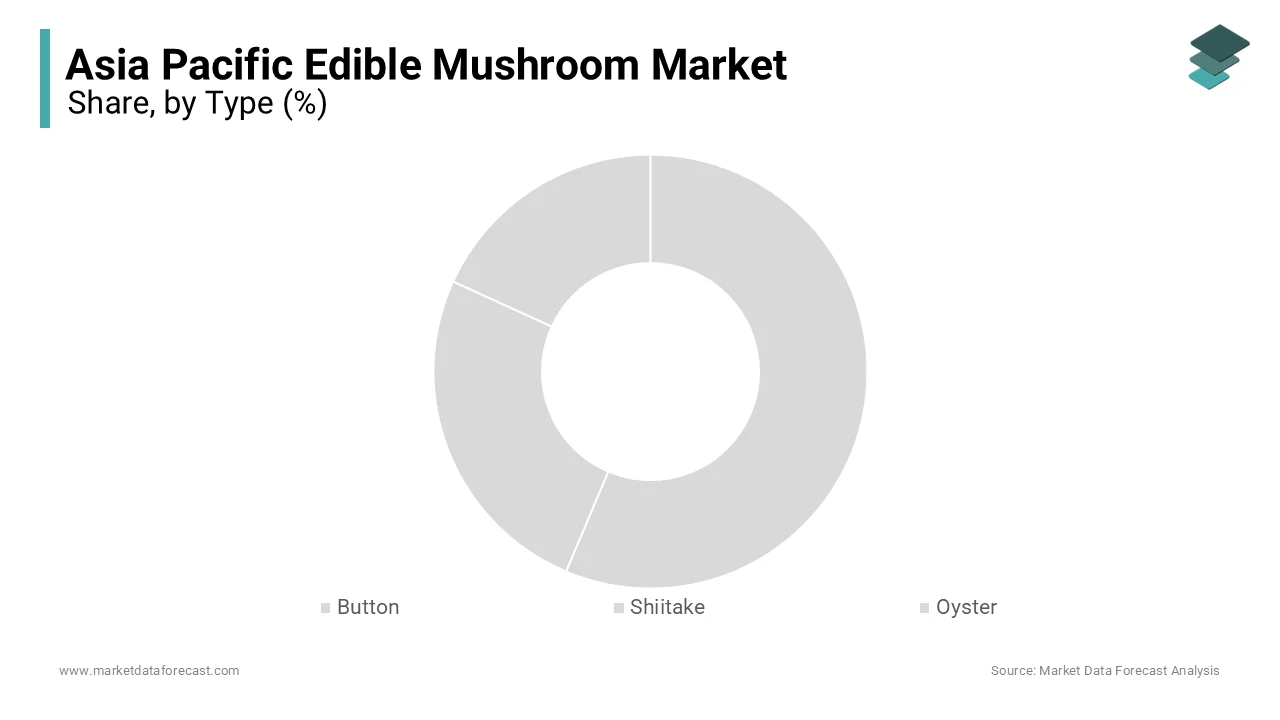
The shiitake mushrooms segment is anticipated to witness a fastest CAGR of 11.8% from 2026 to 2034. The increasing consumer awareness of their medicinal properties and role in immune support is majorly fuelling the growth of the segment. Rich in lentinan, a beta glucan known for its immunomodulatory effects shiitake mushrooms are increasingly consumed not just for nutrition but for preventive health benefits. According to the World Health Organization, the focus on preventive healthcare in the Western Pacific Region has intensified following recent global health crises leading to a surge in demand for functional foods. As per the Journal of Ethnopharmacology scientific studies validating the antiviral and anticancer properties of shiitake extracts have boosted consumer confidence and spurred product i The premium pricing of shiitake compared to button mushrooms also attracts higher margin opportunities for producers encouraging investment in specialized cultivation facilities. The trend towards holistic wellness among millennials and Gen Z consumers in urban centers further accelerates adoption.
By Application Insights
The fresh mushrooms segment was the largest by holding a dominant share of the Asia Pacific edible mushroom market due to the strong consumer preference for nutritional integrity and culinary versatility in home cooking. Fresh produce is perceived to retain higher levels of vitamins minerals and antioxidants compared to processed alternatives, which aligns with the health conscious attitudes of Asian consumers. According to the Food and Agriculture Organization of the United Nations, the majority of mushroom consumption in the region occurs in fresh form particularly in countries with strong agricultural traditions like China and India. The cultural practice of daily market visits for fresh ingredients ensures a steady demand for locally sourced mushrooms. In Japan and South Korea, fresh mushrooms are integral to traditional dishes such as hot pots and soups where texture and freshness are paramount. As per the Korean Rural Economic Institute, household expenditure on fresh vegetables and fungi has remained resilient despite economic fluctuations indicating inelastic demand. The short supply chain from farm to table in many Asian countries minimizes the need for preservation methods allowing consumers to access high quality fresh products at reasonable prices. Retailers are enhancing this appeal by introducing pre washed and packaged fresh mushrooms that cater to the convenience needs of urban shoppers without compromising on freshness.
The processed mushrooms segment is anticipated to witness a fastest CAGR of 9.8% from 2026 to 2034 owing to the rising urbanization and the escalating demand for convenience foods. As more people move to cities and adopt faster paced lifestyles the time available for food preparation decreases leading to a preference for ready to cook and ready to eat options. According to the United Nations Department of Economic and Social Affairs, the urban population in Asia Pacific is projected to increase by 1.2 billion by 2050 creating a massive market for convenient food solutions. Processed mushrooms offer extended shelf life and ease of use making them ideal for busy consumers who still seek nutritious ingredients. Dried shiitake and oyster mushrooms are staple pantry items in many Asian households used to add depth to soups and stews without the need for immediate preparation. As per the Institute of Food Technologists the global market for dried fruits and vegetables is expanding with Asia Pacific contributing significantly due to traditional preservation practices. Frozen mushrooms are gaining traction in the food service industry where consistency and reduced waste are critical operational factors. Canned mushrooms are also seeing renewed interest in export markets and among younger consumers experimenting with Western cuisines. The convenience factor combined with the retention of key nutrients in modern processing techniques drives this segment's rapid growth.
REGIONAL ANALYSIS
China Edible Mushroom Market Analysis
China was the top performer in the Asia Pacific edible mushroom market by accounting for 32.4% of share in 2025. The strong government support for agricultural modernization and a deep cultural integration of mushrooms into traditional medicine and cuisine is also levelling up the growth of Asia pacific edible mushroom market. The Chinese government has implemented policies to promote sustainable farming practices and improve supply chain efficiency, which has boosted productivity. According to the National Bureau of Statistics of China, the output value of the edible fungus industry has grown steadily reaching billions of yuan annually. The rising middle class is demanding higher quality and diverse mushroom varieties leading to innovation in strain development and processing technologies. Export activities are also a significant driver with China being a major supplier of dried shiitake and black fungus to international markets. As per the General Administration of Customs of China agricultural exports including mushrooms have shown resilience despite global trade tensions. The integration of digital technologies in farming known as smart agriculture is further enhancing yields and reducing resource usage.
India Edible Mushroom Market Analysis
India edible mushroom market was ranked second by holding 21.2% of share in 2025 with the large population and increasing awareness of nutritional benefits. According to the National Research Centre for Mushroom, India produces over 200 thousand metric tons of mushrooms annually with button mushrooms constituting the majority of this volume. The rising prevalence of lifestyle diseases has spurred demand for low calorie high fiber foods making mushrooms an attractive dietary choice. The expansion of organized retail and e commerce platforms has improved market access for farmers allowing them to reach urban consumers directly. The young demographic profile of India also contributes to growth as younger consumers are more open to experimenting with different mushroom varieties and recipes. Additionally, the export potential for dried mushrooms to Middle Eastern and European markets is being explored by Indian agri businesses.
Japan Edible Mushroom Market Analysis
Japan edible mushroom market growth is propelled with the advanced cultivation technologies and premium product offerings. According to the Ministry of Agriculture Forestry and Fisheries of Japan, domestic production of mushrooms remains stable with a focus on high tech facility based farming to ensure year round supply. The aging population that prioritizes health and longevity leading to high consumption of functional foods like maitake and reishi. Japanese consumers are willing to pay a premium for domestically produced mushrooms due to strict food safety standards and perceived superior taste. As per the Japan External Trade Organization, imports of mushrooms are also significant to meet demand during off seasons or for specific varieties not widely grown locally. The integration of mushrooms into traditional washoku cuisine which is recognized by UNESCO as an intangible cultural heritage sustains steady domestic demand. Innovation in packaging and ready to eat meals featuring mushrooms caters to the busy lifestyles of urban residents. The regulatory framework ensures rigorous testing for pesticides and contaminants which builds consumer trust.
South Korea Edible Mushroom Market Analysis
South Korea edible mushroom market growth is driven by the strong culture of mushroom consumption integrated into daily meals and traditional medicine. According to the Korean Rural Economic Institute, mushrooms are among the top consumed vegetables in South Korea with oyster and shiitake being particularly popular. The health benefits associated with mushrooms are well recognized in Korean society leading to their inclusion in various health supplements and functional foods. The popularity of Korean cuisine globally has also boosted demand for specific mushroom varieties used in dishes like bibimbap and bulgogi. The rise of single person households has increased demand for small packaged and convenient mushroom products.
Australia and New Zealand Edible Mushroom Market Analysis
Australia and New Zealand edible mushroom market growth is likely to grow with the emphasis on sustainable and organic production. According to the Australian Bureau of Statistics, domestic mushroom production is concentrated in several key states with Victoria and New South Wales being the largest producers. The prevalence of vegetarian and vegan diets in both countries has increased demand for mushrooms as a meat substitute in various culinary applications. The retail sector is dominated by major supermarket chains that prioritize consistent supply and quality leading to long term contracts with large growers. Export opportunities to Asia particularly for premium dried and processed mushrooms are being explored by local producers. As per New Zealand Trade and Enterprise agricultural exports including specialty crops are a key focus area for economic growth. The limited arable land and high labor costs drive innovation in automation and vertical farming technologies.
Thailand Edible Mushroom Market Analysis
Thailand edible mushroom market growth is likely to grow with its tropical climate and strong agricultural base. According to the Office of Agricultural Economics of Thailand, mushroom farming is a key activity for rural communities providing income and employment opportunities. The driving factors include the popularity of mushrooms in Thai cuisine where they are used in soups curries and stir fries. The government supports mushroom cultivation through extension services and training programs aimed at improving productivity and quality. The tourism sector also drives demand for fresh and high quality mushrooms in hotels and restaurants catering to international visitors. The export market for canned and dried mushrooms is significant with Thailand being a key supplier to neighboring countries and beyond. As per the Department of International Trade Promotion agricultural exports including processed mushrooms contribute to the national economy.
COMPETITIVE LANDSCAPE
The competition in the Asia Pacific edible mushroom market is characterized by a fragmented landscape comprising numerous small scale local producers alongside a few large multinational corporations. This dual structure creates a dynamic environment where price sensitivity often dictates market dynamics in rural areas while brand reputation and quality drive preferences in urban centers. Local farmers dominate the supply of fresh mushrooms due to their proximity to markets and lower operational costs yet they face challenges in meeting stringent safety standards required by modern retail chains. Large corporate players leverage advanced technologies and integrated supply chains to offer consistent quality and extended shelf life products which appeals to supermarket retailers and food service providers. Competitive intensity is heightened by the low barriers to entry for basic cultivation leading to frequent new entrants in the sector. However differentiation through organic certification specialty varieties and value added processing allows established brands to command premium prices. The race for innovation in sustainable farming practices and digital supply chain management further distinguishes leading companies.
Key Market Players
Some of the key players in Asia Pacific edible mushroom market are
- Costa Group
- Okechamp S.A
- Monterey Mushrooms Inc
- Monaghan Mushrooms
- Drinkwater’s Mushroom Ltd
- The Mushroom Company
- Shanghai Finc Bio-Tech Inc
- CMP Mushrooms Greenyard NV (Lutèce)
- Bonduelle SA
Top Players in the Market
- Monaghan Mushrooms stands as a prominent global entity with significant operations influencing the Asia Pacific edible mushroom sector through strategic partnerships and technology transfer. The company focuses on sustainable cultivation practices and advanced substrate formulations that enhance yield quality. Recent initiatives include collaborations with local Asian growers to introduce high efficiency farming techniques that reduce environmental impact. Monaghan Mushrooms actively invests in research and development to create resilient mushroom strains suitable for diverse climatic conditions found across the region. Their involvement extends to supplying premium fresh and processed products to retail and food service channels. This approach strengthens their position as a key knowledge provider and supplier while fostering long term relationships with regional distributors and agricultural stakeholders who seek reliable and consistent production methods.
- Greenyard operates as a major international player contributing to the Asia Pacific market through its extensive portfolio of fresh frozen and prepared mushroom products. The company emphasizes innovation in packaging solutions that extend shelf life and maintain nutritional value. Recent actions include expanding their distribution networks in key Asian cities to ensure faster delivery of fresh produce. Greenyard actively promotes sustainable sourcing by working closely with local farmers to implement best practices in water and energy usage. Their strategic focus on value added products such as seasoned and ready to cook mushroom blends appeals to urban consumers seeking convenience. The company also engages in joint ventures with regional processors to enhance local manufacturing capabilities.
- Costa Group Holdings serves as a leading agricultural enterprise in Australia with a strong presence in the Asia Pacific edible mushroom market. The company utilizes state of the art controlled environment agriculture to produce high quality button mushrooms year round. Recent strategies involve significant investments in automation and robotics to address labor shortages and improve operational efficiency. Costa Group actively expands its retail partnerships across Australia and New Zealand ensuring wide availability of fresh and packaged mushroom products. They also focus on sustainability initiatives such as waste reduction and renewable energy adoption in their farming facilities. The company engages in consumer education campaigns highlighting the health benefits of mushrooms to drive demand.
Top Strategies Used by Key Market Participants
Key players in the Asia Pacific edible mushroom market primarily employ product innovation and strategic partnerships to strengthen their competitive positioning. Companies increasingly invest in research and development to create value added products such as mushroom based snacks supplements and meat alternatives that cater to evolving consumer preferences for health and convenience. Strategic collaborations with local farmers and distributors enable firms to secure stable supply chains and expand their geographic reach into rural and urban areas alike. Adoption of advanced cultivation technologies including vertical farming and automated harvesting systems helps producers enhance yield efficiency and reduce labor costs. Sustainability initiatives form another core strategy as companies highlight eco friendly practices to appeal to environmentally conscious consumers. Marketing efforts focus on educating customers about the nutritional benefits of mushrooms to drive consumption growth. Additionally, firms diversify their product portfolios by introducing exotic and medicinal mushroom varieties to capture premium market segments and differentiate themselves from competitors offering standard commodity products.
MARKET SEGMENTATION
This research report on the Asia Pacific edible mushroom market is segmented and sub segmented into following categories
By Type
- Button
- Shiitake
- Oyster
By Application
- Fresh Mushrooms
- Processed Mushrooms
- Dried
- Frozen
- Canned
By Region
- China
- India
- Japan
- South Korea