- Product Description Description
- Table of Contents TOC
- List of Table & Figure LOT
- Get Free Sample PDF Sample PDF
Market Size, 2025
$191.62 MnMarket Estimate, 2026
$206.01 MnMarket Forecast, 2034
$367.39 MnCAGR, 2026–2034
7.51%Executive Summary: Asia Pacific Gibberellins Market
- Market Scope: Comprehensive regional market analysis covering manufacturing methods, product shapes, country-level adoption, distribution networks, and agricultural growth drivers.
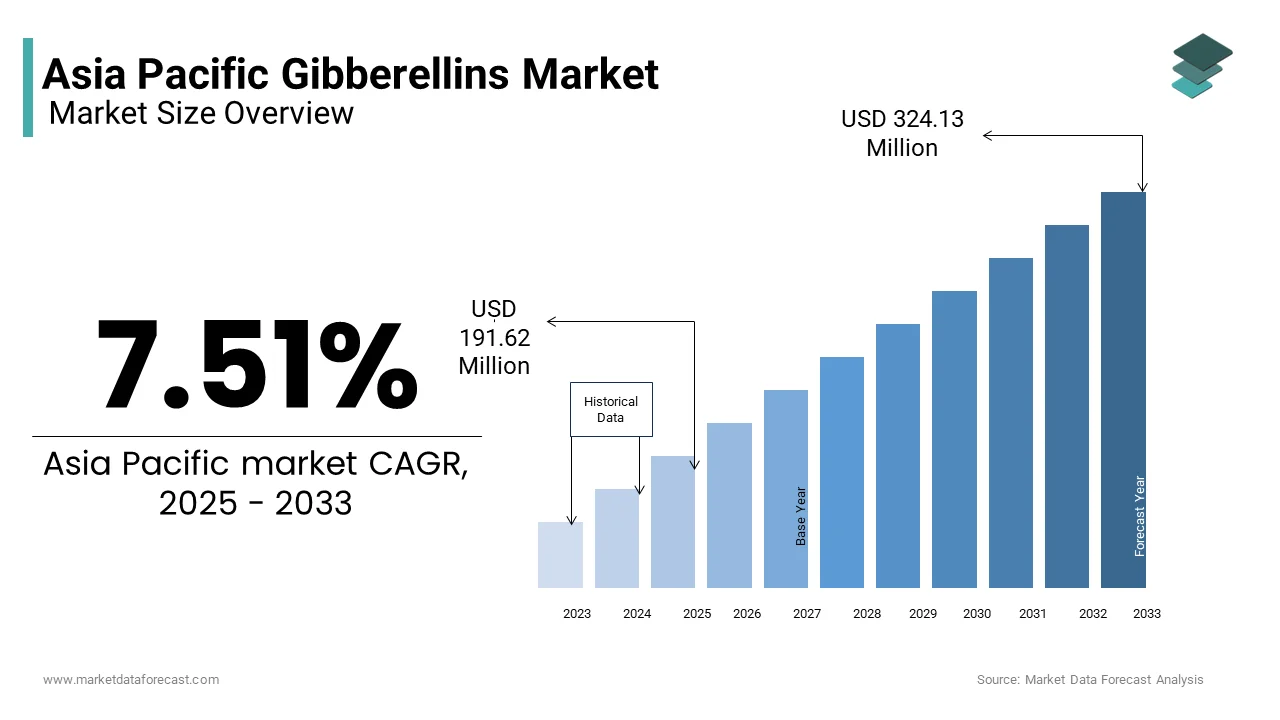
- Market Valuation: Valued at USD 191.62 million (2025), estimated at USD 206.01 million (2026), and projected to reach USD 367.69 million by 2034, registering a CAGR of 7.51% (2026–2034).
- Primary Growth Drivers: Surging demand for high-yield agriculture driven by population growth, shrinking arable land in emerging economies (such as China, India, and Vietnam), and the rapid expansion of controlled environment agriculture (CEA) and precision farming in countries like Japan and South Korea.
Key Market Segment Metrics (2026–2034)
| Category | Leading Segment (2025 Position) | Fastest-Growing Segment |
|---|---|---|
| By Manufacturing Method | MEP Pathway (dominated with 65.3% of total market share in 2025) | GGDP Pathway (projected to grow at a CAGR of 9.3% from 2025 to 2033) |
| By Shape | Liquid form (holds the largest share of 50% of total sales in 2025) | Granules (expected to grow at a CAGR of 10.1% from 2025 to 2033) |
| By Country | China (held the largest share of 28.3% of total demand in 2025) | India and emerging Southeast Asian agricultural markets |
Major Market Players & Market Structure
Market Structure: Highly competitive landscape featuring a mix of regional manufacturers and global agrochemical leaders competing through product innovation, strategic partnerships, localized distribution networks, and advanced biostimulant formulations.
Key Companies: Zhejiang Qianjiang Biochemical Co., Ltd., Shanghai Pengteng Fine Chemical Co., Jiangsu Fengyuan Bioengineering Co., BASF SE, UPL Limited, and Corteva Agriscience.
 Download Free Sample Report
Asia Pacific Gibberellins Market Size
The Asia Pacific gibberellins market size was valued at USD 191.62 million in 2025 and is anticipated to reach a valuation of USD 206.01 million in 2026 and USD 367.69 million by 2034, growing at a CAGR of 7.51%, from 2026 to 2034.
Gibberellins are a class of plant hormones that play a critical role in regulating growth and development, including stem elongation, germination, flowering, and fruit maturation. These phytohormones are widely used in agriculture to enhance crop yield, improve seed germination rates, and manipulate plant growth cycles. In the Asia Pacific region, the demand for gibberellins has surged due to the increasing need for high-yield agricultural output driven by population growth and shrinking arable land. Countries such as China, India, and Japan have been at the forefront of adopting gibberellin-based agricultural practices, particularly in fruit cultivation, rice farming, and greenhouse horticulture.
The Asia Pacific Gibberellins Market is witnessing a transformation as biotechnological advancements facilitate the synthesis and application of these growth regulators in more efficient and environmentally friendly ways. According to the Food and Agriculture Organization (FAO), the region accounts for over 50% of the global agricultural output, making it a key consumer of agrochemicals and plant growth regulators. Additionally, the growing shift toward precision agriculture and sustainable farming practices in countries like Australia and South Korea has further catalyzed the adoption of gibberellins.
MARKET DRIVERS
Increasing Demand for High-Yield Agriculture in Emerging Economies
The growing demand for high-yield agriculture in emerging economies such as India, Indonesia, and Vietnam is one of the primary drivers of the Asia Pacific Gibberellins Market. These countries are experiencing rapid population growth, which has led to an increased demand for food and agricultural commodities. Gibberellins play a crucial role in enhancing crop productivity by promoting seed germination, increasing fruit size, and improving flowering rates. For instance, in India, where agriculture contributes approximately 16% to the country’s GDP and employs nearly 44% of the workforce, gibberellins are increasingly being used in grape, rice, and sugarcane cultivation to boost yield and quality.
Moreover, in Vietnam, which is one of the world’s leading exporters of rice and coffee, gibberellins are being used to reduce the time required for flowering and to enhance fruit set in high-value crops. As per the Ministry of Agriculture and Rural Development in Vietnam, the adoption of plant growth regulators, including gibberellins, has contributed to a 12% increase in rice yield over the last decade. This growing integration of gibberellins into mainstream farming practices across the region is a key factor driving market growth, as farmers seek to maximize productivity while dealing with limited arable land and climate variability.
Expansion of Controlled Environment Agriculture (CEA)
The rapid expansion of controlled environment agriculture (CEA), particularly in countries like Japan, South Korea, and Singapore, is another key driver of the Asia Pacific Gibberellins Market. CEA encompasses technologies such as hydroponics, vertical farming, and greenhouse cultivation, which allow for year-round crop production with minimal land and water usage. In these systems, gibberellins are used to regulate plant growth, optimize flowering cycles, and enhance fruit development under artificial conditions. According to the Japan Plant Factory Association, the number of commercial plant factories in Japan has grown by over 35% since 2020, with many of them integrating plant growth regulators into their production protocols.
In Singapore, where arable land is extremely limited, the government has been actively promoting urban farming initiatives to achieve food security. These trends reflect a broader shift toward technologically advanced farming practices that rely on precise hormonal regulation of plant development, thereby boosting the demand for gibberellins across the Asia Pacific region.
MARKET RESTRAINTS
Regulatory Constraints and Stringent Approval Processes
The presence of stringent regulatory frameworks and approval processes for plant growth regulators, including gibberellins, is a key restraint in the Asia Pacific Gibberellins Market. Many countries in the region, such as Australia, New Zealand, and South Korea, enforce rigorous compliance standards for the registration and application of agricultural chemicals. These regulations are designed to ensure environmental safety and human health protection,n but often result in prolonged approval timelines and increased costs for manufacturers. According to the Australian Pesticides and Veterinary Medicines Authority (APVMA), the average time required for the approval of a new plant growth regulator in the country exceeds 18 months, which discourages smaller players from entering the market.
In addition, the lack of harmonized regulatory policies across Asia Pacific countries complicates the distribution and commercialization of gibberellin-based products. For example, while China and India have relatively streamlined processes for the approval of agricultural biostimulants, countries like Indonesia and the Philippines impose additional field trials and residue testing requirements, increasing the time-to-market. These regulatory hurdles hinder market expansion and limit the availability of gibberellin products to smallholder farmers who could benefit the most from their use.
Limited Awareness and Technical Expertise Among Farmers
The limited awareness and technical expertise among smallholder farmers regarding the effective use of plant growth regulators is another significant restraint in the Asia Pacific Gibberellins Market. Despite the increasing availability of gibberellins in the region, many farmers remain unfamiliar with their application methods, dosage requirements, and optimal timing for use. This lack of knowledge often leads to improper application, which can result in diminished crop performance or even phytotoxicity. According to the International Rice Research Institute (IRRI), only 30% of smallholder rice farmers in Southeast Asia are trained in the use of plant growth regulators, with most relying on traditional farming practices passed down through generations.
In countries like Cambodia, Nepal, and Papua New Guinea, extension services that provide agricultural education and training are limited, especially in rural areas. This knowledge gap restricts the widespread adoption of gibberellins, particularly among resource-constrained farmers who are hesitant to invest in unfamiliar technologies. Additionally, misinformation and the prevalence of counterfeit agricultural products further erode trust in gibberellin-based solutions, slowing down market growth in several Asia Pacific countries.
MARKET OPPORTUNITY
Integration of Gibberellins in Organic and Sustainable Farming Practices
The integration of gibberellins into organic and sustainable farming practices is a major opportunity in the Asia Pacific Gibberellins Market. With the growing consumer preference for organic produce and the increasing emphasis on environmentally friendly agricultural methods, there is a rising demand for natural plant growth regulators. Gibberellins, being naturally derived or bio-fermented compounds, align well with organic farming standards and are increasingly being incorporated into certified organic production systems. According to the Research Institute of Organic Agriculture (FiBL), the Asia Pacific region accounted for over 40% of the global growth in organic farmland between 2019 and 2022, with countries like India, China, and Australia leading the expansion.
Technological Advancements in Biostimulant Formulations
Technological advancements in biostimulant formulations represent a key opportunity for the Asia Pacific Gibberellins Market. Innovations in formulation technologies, such as microencapsulation, nano-formulations, and controlled-release systems, are enhancing the efficacy and application efficiency of gibberellins in agriculture. These advanced formulations allow for targeted delivery, improved stability, and reduced environmental impact, making gibberellins more attractive to both commercial and smallholder farmers.
In Japan, for instance, companies like Sumitomo Chemical and Mitsui & Co. are investing heavily in R&D to develop next-generation gibberellin-based biostimulants that can be used in precision agriculture. These technological developments are opening new avenues for market growth and enhancing the competitiveness of gibberellins in the evolving agricultural input landscape.
MARKET CHALLENGES
Environmental Concerns and Ecological Impact
Growing concern over the environmental and ecological impact of plant growth regulators is a key challenge facing the Asia Pacific Gibberellins Market. Although gibberellins are naturally occurring hormones, their synthetic analogs and excessive use can lead to unintended consequences on soil health, water systems, and non-target plant species. In countries like China and India, where intensive farming practices are prevalent, reports of soil degradation and water contamination due to over-application of agricultural inputs have prompted stricter environmental regulations.
In addition, environmental watchdogs and regulatory agencies are increasingly scrutinizing the use of plant growth regulators, including gibberellins, in agricultural operations. For instance, the National Institute for Environmental Studies in Japan has raised concerns about the long-term impact of gibberellin residues on aquatic ecosystems, prompting research into alternative, eco-friendly growth regulators. Additionally, in Australia, the Department of Agriculture, Water and the Environment has issued guidelines limiting the use of certain gibberellin formulations near water bodies and sensitive habitats. These environmental concerns are compelling manufacturers and policymakers to reassess application practices and develop sustainable usage protocols, which may slow down market growth in the short term.
Price Volatility and Supply Chain Disruptions
The issue of price volatility and supply chain disruptions, particularly for raw materials used in the production of gibberellins, is another significant challenge in the Asia Pacific Gibberellins Market. The synthesis of gibberellins involves fermentation processes using specific fungal strains, primarily Gibberella fujikuro, and any disruptions in the availability of these biological inputs can affect production timelines and costs.
Moreover, the market is heavily dependent on a few key suppliers in China and India for the production of gibberellin-based formulations. Any regulatory changes, labor shortages, or logistical constraints in these countries can lead to significant delays and price fluctuations. However, until a more stable and resilient supply chain is established, price volatility remains a critical challenge for the Asia Pacific Gibberellins Market.
REPORT COVERAGE
| REPORT METRIC | DETAILS |
| Market Size Available | 2025 to 2034 |
| Base Year | 2025 |
| Forecast Period | 2026 to 2034 |
| CAGR | 7.51% |
| Segments Covered | By Manufacturing, Shape, and By Country |
| Various Analyses Covered | Global, Regional & Country Level Analysis, Segment-Level Analysis, DROC, PESTLE Analysis, Porter’s Five Forces Analysis, Competitive Landscape, Analyst Overview on Investment Opportunities |
| Regions Covered | India, China, Japan, South Korea, Australia, New Zealand, Thailand, Malaysia, Vietnam, Philippines, Indonesia, Singapore, and the Rest of APAC |
| Market Leaders Profiled | Zhejiang Qianjiang Biochemical Co., Ltd., Shanghai Pengteng Fine Chemical Co., and Jiangsu Fengyuan Bioengineering Co. |
SEGMENTAL ANALYSIS
By Manufacturing Method Insights
The MEP Pathway segment dominated the market by accounting for 65.3% of the total market share in 2025. Its high efficiency and cost-effectiveness in large-scale production, especially in countries like China and India, where agricultural inputs are manufactured at scale, is a key driver for the growth of MEP Pathway. This dominance is also attributed to its widespread application in the biosynthesis of gibberellins, particularly in agricultural and horticultural formulations across the region. Additionally, the pathway’s broad substrate specificity enables the synthesis of multiple gibberellin isoforms, enhancing its versatility in various crop applications. Moreover, the growing adoption of bio-based agricultural inputs in countries like Japan and South Korea is further boosting the demand for gibberellins produced via the MEP Pathway.
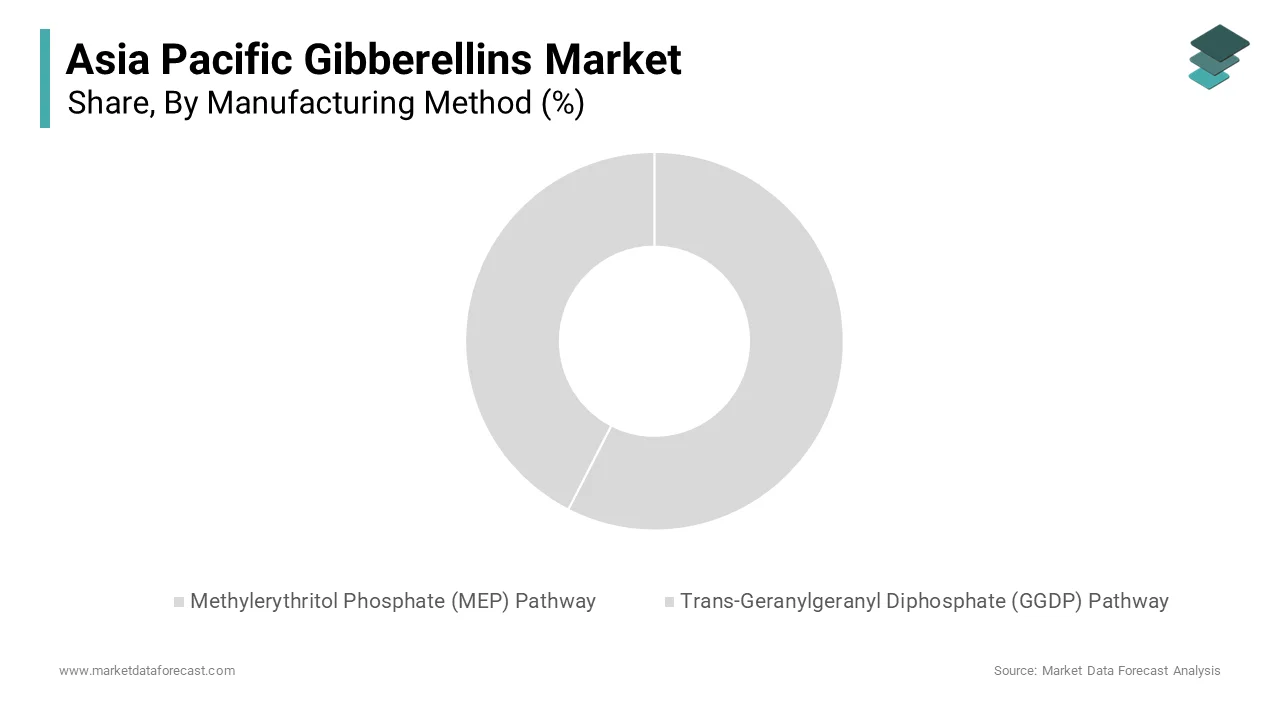
The fastest-growing segment in the Asia Pacific Gibberellins Market by manufacturing method is the GGDP Pathway and is projected to grow at a CAGR of 9.3% from 2025 to 2033. Its superior specificity in synthesizing targeted gibberellin derivatives, which is particularly valuable in high-value crop production such as fruits, vegetables, and ornamental plants, is one of the primary growth drivers for the GGDP Pathway. While it currently holds a smaller market share than the MEP Pathway, its growth trajectory is accelerating due to increasing research into specialty crop applications and precision agriculture technologies. According to the Indian Institute of Horticultural Research, the use of GGDP-derived gibberellins in grape and citrus cultivation has increased by 25% in recent years, driven by their ability to regulate flowering and fruit set with minimal side effects. Additionally, the rising investment in biotechnological R&D across the Asia Pacific region is propelling the GGDP Pathway’s adoption. For instance, in South Korea, the Rural Development Administration (RDA) has funded multiple projects aimed at optimizing GGDP-based gibberellin synthesis for use in plant factories and tissue culture systems.
By Shape Insights
The Liquid form segment holds the largest share of 50% of total sales in 2025. Their compatibility with existing agricultural equipment, including drip irrigation systems and precision sprayers, is a major factor driving the preference for liquid gibberellins. This trend is also prevalent in India and China, where large-scale horticulture and rice farming operations rely heavily on liquid gibberellin applications to enhance flowering and fruit development. This growth is also due to the high solubility and ease of application of liquid gibberellin formulations, especially in foliar sprays, seed treatments, and fertigation systems widely used in intensive farming practices. The increased adoption of liquid gibberellins in greenhouse and hydroponic farming, particularly in Japan and South Korea, is another key driver. As per the Japan Plant Factory Association, liquid formulations accounted for 75% of all plant growth regulator applications in controlled environment agriculture in 2023, due to their rapid absorption and minimal residue.
The fastest-growing segment in the Asia Pacific Gibberellins Market by shape is the Granules segment and is expected to grow at a CAGR of 10.1% from 2025 to 2033. The increasing demand for user-friendly and safe application methods in rural farming communities is one of the primary reasons for the granules segment’s rapid growth. While currently holding a smaller market share compared to liquid formulations, granular gibberellins are gaining traction due to their controlled-release properties and ease of storage, making them ideal for smallholder and subsistence farming. In countries like Vietnam, Indonesia, and the Philippines, granular formulations are preferred due to their low handling complexity and reduced risk of phytotoxicity compared to liquid sprays. According to the International Rice Research Institute (IRRI), granular gibberellin use in rice paddies has increased by 22% since 2020, particularly in rain-fed and flood-prone areas where liquid formulations are less effective. Additionally, the rise of bio-fortified and slow-release fertilizers in the region is driving the integration of gibberellin granules into composite agricultural inputs. This growing integration is expected to sustain the segment’s high growth rate in the coming years.
COUNTRY-LEVEL ANALYSIS
China
China held the largest share of the Asia Pacific Gibberellins Market of 28.3% of total demand in 2025. As the world’s largest agricultural producer, China’s demand for gibberellins is driven by its intensive farming practices, especially in staple crops like rice, wheat, and corn, as well as high-value horticultural crops such as grapes and citrus fruits. A major driver of gibberellin use in China is the government’s push toward modernizing agriculture through the use of biostimulants and plant growth regulators. Additionally, the presence of domestic manufacturers like Sinochem and Zhejiang NHSPA has facilitated the local production and affordability of gibberellins, further boosting market penetration. As per the China Agricultural Chemicals Association, domestic production capacity for gibberellins reached 1,800 metric tons in 2023, with over 70% consumed domestically, reinforcing China’s leadership in the regional market.
India
India is seeing rapid expansion in the Asia Pacific Gibberellins Market. The country’s growing agricultural sector, coupled with increasing investments in biostimulant technology, has fueled the demand for gibberellins, particularly in cash crops like sugarcane, cotton, and fruits. One of the key drivers of market growth in India is the rising adoption of gibberellins in sugarcane cultivation, where it is used to enhance internode elongation and improve yield. Moreover, the National Mission for Sustainable Agriculture (NMSA) has been promoting the use of plant growth regulators as part of its climate-resilient farming initiatives. These factors strengthen India’s strong position in the regional gibberellins market.
Japan
Japan held a significant share of the Asia Pacific Gibberellins Market, which is driven by its high-tech agricultural sector and widespread use of gibberellins in controlled-environment farming and specialty crops. Despite its relatively small land area, Japan has one of the most advanced agricultural biotechnology ecosystems in the region. A key factor supporting the market in Japan is the expansion of plant factories and vertical farming systems, where gibberellins are used to regulate plant growth under artificial conditions. Additionally, the growing demand for high-quality fruits and vegetables has led to increased use of gibberellins in orchards and vineyards. As per the National Agriculture and Food Research Organization (NARO), gibberellin treatments in grape cultivation increased fruit size and bunch weight by 12, contributing to higher export volumes. These trends highlight Japan’s unique position as a high-value, innovation-driven market for gibberellins.
South Korea
South Korea accounts for a notable portion of the Asia Pacific Gibberellins Market and is driven by its focus on precision agriculture and advanced horticultural practices. The country’s limited arable land and high labor costs have led to the adoption of intensive farming technologies, where gibberellins play a crucial role in optimizing plant growth and productivity. One of the major growth drivers is the government’s support for smart farming initiatives, which include the use of plant growth regulators in greenhouse and hydroponic systems. Additionally, the integration of gibberellins into biostimulant formulations has gained momentum in recent years.
Australia
Australia holds a decent share of the Asia Pacific Gibberellins Market and is supported by its strong regulatory framework and growing emphasis on organic and sustainable farming practices. The country’s agricultural sector is highly mechanized and export-oriented, making it a key adopter of plant growth regulators like gibberellins. A key driver in Australia is the use of gibberellins in viticulture and horticulture, particularly in wine grape production. Additionally, the Australian Organic Growers Society (AOGS) has approved the use of certain gibberellin formulations in certified organic farming, encouraging their adoption in sustainable agriculture.
KEY MARKET PLAYERS
Zhejiang Qianjiang Biochemical Co., Ltd., Shanghai Pengteng Fine Chemical Co., and Jiangsu Fengyuan Bioengineering Co. are the market leaders in the Asia Pacific Gibberellins market.
Top Players In The Market
One of the leading players in the Asia Pacific Gibberellins Market is BASF SE. The company has a strong presence in the agricultural biostimulants sector and offers a wide range of plant growth regulators, including gibberellin-based formulations. BASF has been actively involved in developing innovative solutions that enhance crop yield and quality. Its extensive R&D network and strategic partnerships with local agricultural institutions have enabled it to maintain a competitive edge in the region.
Another major player is UPL Limited, one of the largest agrochemical companies in India. UPL has significantly expanded its portfolio of biostimulants and plant growth regulators, including gibberellins, through both internal development and acquisitions. The company focuses on sustainable agricultural practices and has been promoting the use of gibberellins in high-value crops such as fruits, vegetables, and sugarcane across Asia Pacific markets.
Corteva Agriscience is also a key participant in the market, known for its advanced agricultural biotechnology solutions. The company has integrated gibberellins into several of its crop protection and enhancement product lines. Corteva’s emphasis on research-driven development and its strong distribution network across Asia Pacific have helped it establish a solid market position and support farmer adoption of gibberellin-based applications.
Top Strategies Used By Key Market Participants
One of the primary strategies adopted by key players in the Asia Pacific Gibberellins Market is product innovation and R&D investment . Companies are continuously developing new formulations and application methods to improve the efficacy and sustainability of gibberellin-based products. These innovations help meet the evolving needs of modern agriculture, especially in precision and controlled-environment farming.
Another key strategy is strategic partnerships and collaborations with research institutions, agricultural cooperatives, and government bodies. These alliances help companies gain insights into regional crop requirements and facilitate the adoption of gibberellins through training and demonstration programs. Such collaborations also aid in regulatory approvals and market penetration.
Lastly, market expansion through localized distribution networks is a major focus for leading players. By strengthening their presence in rural and emerging agricultural markets, companies ensure better accessibility and affordability of gibberellin-based solutions. This approach supports widespread adoption and long-term market growth.
COMPETITION OVERVIEW
The Asia Pacific Gibberellins Market is characterized by a mix of global agrochemical giants and regional specialty chemical manufacturers, all vying for a stronger foothold in a rapidly expanding sector. The competition is driven by continuous product innovation, strategic collaborations, and aggressive market expansion efforts. As demand for high-yield and sustainable agricultural practices grows, companies are intensifying their focus on developing more effective and environmentally friendly gibberellin formulations. The market also sees increasing participation from biotechnology firms integrating gibberellins into advanced plant growth solutions. With regulatory landscapes varying across countries, players are adapting their strategies to align with local compliance standards while enhancing their supply chain efficiencies. This evolving competitive environment is fostering a dynamic marketplace where technological advancement and localized market understanding are key to gaining a competitive edge.
RECENT HAPPENINGS IN THE MARKET
- In March 2024, ASF SE launched a new line of gibberellin-based biostimulant products tailored for high-density orchards in Southeast Asia. The launch was aimed at addressing the growing demand for plant growth regulators in tropical fruit cultivation, particularly in Thailand and Vietnam.
- In July 2023, UPL Limited entered into a strategic partnership with a leading agricultural research institute in India to develop next-generation gibberellin formulations for smallholder farmers. This initiative was designed to enhance accessibility and affordability of plant growth regulators in rural farming communities.
- In November 2023, Corteva Agriscience introduced a digital advisory platform for farmers in Japan, integrating gibberellin application recommendations based on real-time crop data. This move was intended to support precision agriculture and improve adoption rates among high-tech farming operations.
- In January 2024, a leading Chinese agrochemical firm expanded its gibberellin production capacity by setting up a new fermentation unit in Shandong Province. The expansion was aimed at meeting rising domestic and export demand from neighboring Southeast Asian countries.
- In September 2023, a South Korean biotech startup collaborated with a Japanese plant factory operator to integrate gibberellin-based growth regulators into automated hydroponic systems. The collaboration focused on optimizing flowering and fruiting cycles in controlled-environment agriculture.
MARKET SEGMENTATION
This research report on the gibberellins market is segmented and sub-segmented and sub-segmented into the following categories.
By Manufacturing Method
- Methylerythritol Phosphate (MEP) Pathway
- Trans-Geranylgeranyl Diphosphate (GGDP) Pathway
By Type
- 19-Carbon Gibberellins
- 20-Carbon Gibberellins
By Shape
- Powder
- Granules
- Liquid
By Country
- India
- China
- Japan
- South Korea
- Australia
- New Zealand
- Thailand
- Malaysia
- Vietnam
- Philippines
- Indonesia
- Singapore
- Rest of APAC