- Product Description Description
- Table of Contents TOC
- List of Table & Figure LOT
- Get Free Sample PDF Sample PDF
Market Size, 2025
$211 MnMarket Estimate, 2026
$234.63 MnMarket Forecast, 2034
$549 MnCAGR, 2026–2034
11.2%Executive Summary: Asia-Pacific Inferior Vena Cava (IVC) Filter Market
- Market Scope: Regional analysis encompassing product types, clinical applications, material composition, end-user settings, and country-level adoption across the Asia-Pacific region.
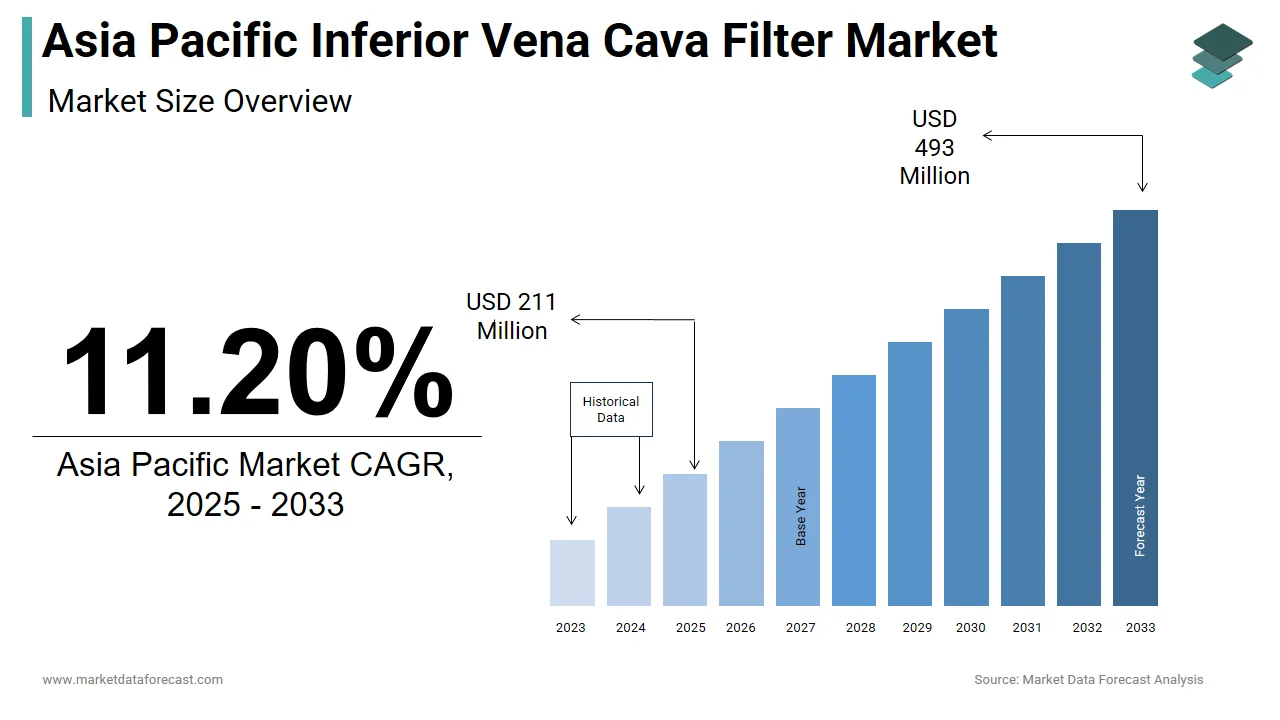
- Market Valuation: Valued at USD 211 million (2025), estimated at USD 234.63 million (2026), and projected to reach USD 549 million by 2034, registering a CAGR of 11.20% (2026–2034).
- Primary Growth Drivers: Rising incidence of venous thromboembolism (VTE) due to aging populations and sedentary lifestyles, expansion of interventional radiology infrastructure, and growing adoption in trauma and high-risk surgical care.
Key Market Segment Metrics (2026–2034)
| Category | Leading Segment (2025 Position) | Fastest-Growing Segment |
|---|---|---|
| By Product Type | Retrievable IVC Filters (held 60.3% share in 2025 for temporary, flexible thromboprophylaxis) | Permanent IVC Filters (projected at a 7.2% CAGR for chronic conditions and limited follow-up settings) |
| By Application | Treatment of Venous Thromboembolism (held 55.7% share in 2025 for patients contraindications to anticoagulants) | Preventive Pulmonary Embolism (projected at an 8.3% CAGR in high-risk surgical and trauma settings) |
| By Material & End User | Non-Ferromagnetic Materials (nitinol/titanium for MRI compatibility) & Hospitals (dominant institutional user) | Ambulatory Surgical Centers (projected at a 9.1% CAGR driven by outpatient vascular interventions) |
| By Country | China (accounted for 28.5% share in 2025 backed by healthcare initiatives and an aging demographic) | Japan & South Korea (noted for rapid adoption of next-gen retrievable devices and advanced imaging protocols) |
Major Market Players & Market Structure
Market Structure: Specialized and competitive medical device ecosystem featuring global med-tech conglomerates and emerging regional players focusing on clinical training, product safety innovations, and MRI-compatible material designs.
Key Companies: C.R. Bard, Boston Scientific, Cardinal Health, Cook Medical, B. Braun, ALN, Braile Biomedica, Philips Volcano, Argon Medical Devices, VENITI, and Terumo Corporation.
Asia-Pacific Inferior Vena Cava Filter Market Size
The size of the Asia Pacific inferior vena cava filter market was worth USD 211 million in 2025. The Asia Pacific market is anticipated to grow at a CAGR of 11.20% from 2026 to 2034, reaching USD 549 million by 2034, up from USD 234.63 million in 2026.
The inferior vena cava (IVC) filter market in the Asia-Pacific region is evolving due to increasing awareness about venous thromboembolic disorders and growing adoption of minimally invasive treatment options. IVC filters are small medical devices implanted into the inferior vena cava to prevent pulmonary embolism by trapping blood clots before they reach the lungs. These filters are primarily used for patients who cannot tolerate anticoagulant therapy or continue to experience clotting despite medication.
According to the World Thrombosis Day initiative, venous thromboembolism (VTE) affects millions globally, with rising incidence rates observed across Asia-Pacific due to aging populations, sedentary lifestyles, and increasing hospitalization-related risks. Moreover, improvements in healthcare infrastructure and regulatory support for advanced vascular interventions have further stimulated market activity. However, while the market shows potential, it also faces challenges related to device retrieval complications and shifting clinical guidelines.
MARKET DRIVERS
Rising Incidence of Venous Thromboembolism (VTE)
A primary driver of the Asia-Pacific inferior vena cava filter market is the growing prevalence of venous thromboembolism, particularly in high-risk patient groups such as post-surgical, trauma, and immobilized individuals.
According to the international society on thrombosis and Haemostasis (ISTH), VTE contributes significantly to morbidity and mortality in hospitalized patients across Asia-Pacific, with studies showing an upward trend in deep vein thrombosis cases in recent years. In china alone, as per the research published in thrombosis research, over 2 million people are affected by VTE annually, many of whom are unsuitable candidates for long-term anticoagulation therapy. This necessitates alternative preventive strategies, including the placement of IVC filters.
Besides, increased awareness among physicians regarding the role of IVC filters in preventing life-threatening pulmonary embolisms has spurred adoption in both emergency and elective settings. The integration of IVC filter placement into standard protocols for high-risk patients in major hospitals further reinforces this growth trajectory.
Expansion of interventional radiology infrastructure
The rapid development of interventional radiology facilities across Asia-Pacific is another key factor driving the inferior vena cava filter market.
In japan and south korea, where healthcare systems emphasize technological advancement, the use of image-guided interventions has become standard practice for managing thromboembolic conditions.
Furthermore, government initiatives aimed at improving diagnostic and therapeutic capabilities in public hospitals have led to increased procurement of vascular devices, including retrievable and permanent IVC filters. Private healthcare providers are also investing in state-of-the-art catheterization labs, supporting higher procedural volumes. With these infrastructural advancements, the market is witnessing strong momentum, especially in urban centers where patient volumes and physician expertise align with the need for advanced thromboprophylaxis.
MARKET RESTRAINTS
Complications related to device retrieval and safety concerns
Among the most significant restraints affecting the Asia-Pacific inferior vena cava filter market is the growing concern around complications associated with device retrieval and long-term safety.
In addition, failure to retrieve retrievable filters within the recommended time frame has resulted in adverse outcomes, leading to increased scrutiny and litigation in some markets. As per a study published in cardiovascular interventional radiology, retrieval rates for IVC filters remain suboptimal in several Asia-Pacific countries due to lack of follow-up protocols and limited patient awareness. These safety concerns have prompted regulatory bodies and professional societies to issue stricter guidelines, which in turn have influenced physician behavior and slowed adoption rates in certain regions. Consequently, market expansion is being hindered by the cautious approach taken by healthcare providers toward IVC filter utilization.
Shifting clinical guidelines and preference for anticoagulant therapy
Another critical restraint impacting the Asia-Pacific inferior vena cava filter market is the evolving stance of clinical guidelines, which increasingly favor anticoagulant therapy over prophylactic filter placement.
As per recommendations from the american college of chest physicians (accp), endorsed by regional counterparts like the singapore general hospital’s department of vascular surgery, the routine use of IVC filters is discouraged unless absolute contraindications to anticoagulation exist. In australia and new zealand, national health authorities have emphasized improved risk stratification and better adherence to pharmacological prophylaxis, reducing the perceived necessity of IVC filters.
Moreover, the availability of novel oral anticoagulants (noacs) with fewer bleeding risks has shifted the treatment paradigm, making physicians more reluctant to deploy filters. In emerging markets like india and vietnam, where cost considerations play a crucial role, generic anticoagulants offer a more economical alternative. These trends collectively contribute to slower market uptake and pose a challenge to sustained growth in the Asia-Pacific region.
MARKET OPPORTUNITIES
Development of next-generation retrievable filters
A promising opportunity for growth in the Asia-Pacific inferior vena cava filter market lies in the development and adoption of next-generation retrievable filters designed for improved safety, ease of removal, and reduced complication rates.
Moreover, as per the Australian Medical Devices Industry Association, regulatory reforms are encouraging the approval of advanced filter technologies that meet international standards. These developments not only enhance patient outcomes but also restore physician confidence in the modality. As awareness grows and reimbursement policies evolve, next-generation IVC filters are poised to capture a larger share of the Asia-Pacific market, particularly in private healthcare settings.
Increasing adoption of outpatient-based vascular interventions
The shift toward outpatient-based vascular interventions presents a significant growth opportunity for the Asia-Pacific inferior vena cava filter market.
Also, there has been a steady rise in the performance of minimally invasive procedures outside traditional hospital settings, driven by cost-efficiency, shorter recovery times, and improved patient convenience. In australia and singapore, ambulatory surgical centers (ascs) are increasingly offering IVC filter placements under local anesthesia, reducing hospital admissions and enhancing procedural accessibility. In india and indonesia, telemedicine and mobile diagnostic services are facilitating early identification of high-risk patients, enabling timely referrals for filter insertion.
These trends indicate a favorable environment for expanding the use of IVC filters beyond conventional inpatient settings, unlocking new avenues for market growth.
MARKET CHALLENGES
Regulatory hurdles and variability in reimbursement policies
A major challenge confronting the Asia-Pacific inferior vena cava filter market is the inconsistency in regulatory frameworks and reimbursement structures across different countries.
For instance, while Japan maintains a rigorous evaluation process akin to the fda's standards, other countries in southeast asia have less structured pathways, resulting in uneven product availability.
Apart from these, as per the health insurance review & assessment service (hira) of south korea, coverage for IVC filter procedures remains fragmented, with some insurers excluding retrievable filters unless specific clinical criteria are met. In india, where out-of-pocket expenditure dominates healthcare spending, affordability remains a barrier to widespread adoption. These regulatory and financial complexities create uncertainty for manufacturers and discourage investment in smaller or less-regulated markets, ultimately impeding market expansion.
Limited physician awareness and training in peripheral vascular interventions
Another pressing challenge for the Asia-Pacific inferior vena cava filter market is the insufficient training and awareness among physicians regarding peripheral vascular interventions, particularly in rural and semi-urban areas.
According to the journal of vascular surgery, there is a significant disparity in the number of trained interventional radiologists and vascular surgeons across Asia-Pacific nations. In countries like the philippines and nepal, the scarcity of specialized training programs limits the casia-pacificity to perform complex IVC filter placements and retrievals safely. Even in more developed markets such as malaysia and indonesia, inconsistent exposure to vascular intervention techniques during medical education results in low adoption rates.
Without adequate physician preparedness, the full potential of IVC filter utilization cannot be realized, posing a substantial barrier to market penetration.
REPORT COVERAGE
| REPORT METRIC | DETAILS |
| Market Size Available | 2025 to 2034 |
| Base Year | 2025 |
| Forecast Period | 2026 to 2034 |
| Segments Covered | By Product Type, Application, Material, End User, and country. |
| Various Analyses Covered | Global, Regional and Country-Level Analysis, Segment-Level Analysis, Drivers, Restraints, Opportunities, Challenges; PESTLE Analysis; Porter’s Five Forces Analysis, Competitive Landscape, Analyst Overview of Investment Opportunities |
| Countries Covered | India, China, Japan, South Korea, Australia, New Zealand, Thailand, Malaysia, Vietnam, Philippines, Indonesia, Singapore, Rest of APAC |
| Market Leaders Profiled | C.R. Bard, Boston Scientific, Cardinal Health, Cook Medical, B.Braun, ALN, Braile Biomedica, Philips Volcano, Argon Medical Devices, and VENITI. |
SEGMENTAL ANALYSIS
By Product Type Insights
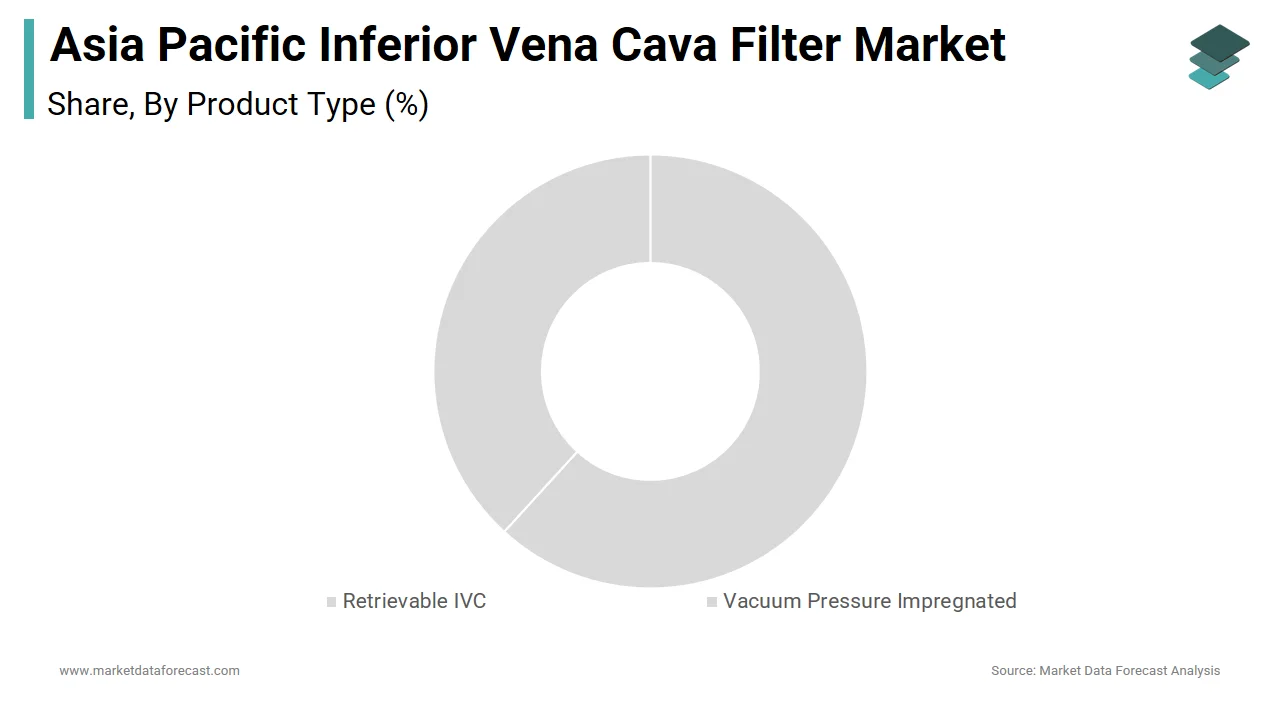
The retrievable IVC filter segment held the largest share of 60.3% in the Asia-Pacific market in 2025. This dominance is primarily driven by increasing awareness regarding the benefits of temporary thromboprophylaxis and rising adoption of filters that can be removed once the risk of pulmonary embolism subsides.
As per the journal of vascular surgery, retrievable filters are preferred for patients with transient contraindications to anticoagulation therapy, such as trauma victims, postpartum women, and those recovering from major surgeries. In countries like japan and south korea, where patient safety and procedural efficiency are prioritized, physicians are increasingly opting for retrievable models to minimize long-term complications associated with permanent implants.
Additionally, growing emphasis on device retrieval programs and better follow-up mechanisms in private healthcare institutions has reinforced this trend. With ongoing improvements in filter design and retrieval techniques, the segment continues to lead the Asia-Pacific market.
Despite holding a smaller market share, permanent IVC filters are projected to grow at the fastest CAGR of 7.2%. This growth is attributed to their continued use in patients with chronic contraindications to anticoagulant therapy, especially in elderly populations and those with recurrent deep vein thrombosis. In india and indonesia, where access to advanced retrieval infrastructure remains limited, permanent filters are often deployed due to cost considerations and lack of follow-up systems.
Moreover, in patients with extensive clot burden or malignancies, where long-term protection is essential, permanent filters remain the standard of care. As healthcare systems in these regions expand vascular intervention capabilities, demand for durable, low-maintenance solutions is expected to rise steadily.
By Application Insights
The treatment of venous thromboembolism constituted the biggest application segment in the Asia-Pacific inferior vena cava filter market, capturing 55.7% of total usage. This is largely because IVC filters are frequently used in patients who have already developed deep vein thrombosis or pulmonary embolism but cannot receive anticoagulants due to bleeding risks or other contraindications.
In china and australia, where hospital-based thromboprophylaxis protocols are well established, IVC filters are commonly integrated into VTE management strategies.
Also, the rising incidence of obesity and sedentary lifestyles is contributing to higher rates of VTE, further fueling demand. The continued reliance on mechanical prophylaxis in acute care settings ensures that this segment maintains its leading position in the regional market.
The preventive pulmonary embolism segment is witnessing the highest growth rate, expanding at a CAGR of nearly 8.3%. This surge is driven by an increasing focus on preemptive measures in high-risk surgical and trauma patients, particularly in urban centers across japan, singapore, and south korea.
Moreover, preventive IVC filter placement is becoming more common in patients undergoing bariatric surgery, orthopedic procedures, and neurosurgery, where immobilization increases clotting risks. Moreover, the growing adoption of evidence-based guidelines that support early intervention in trauma units is boosting utilization. In india, where road traffic accidents contribute significantly to trauma admissions, preventive filter placements are gaining traction in tertiary hospitals. As awareness among clinicians about the importance of early mechanical thromboprophylaxis grows, this segment is poised for sustained expansion across the Asia-Pacific region.
By Material Insights
Non-ferromagnetic materials accounted for the majority of the Asia-Pacific IVC filter market in 2025. These materials, including nitinol and titanium alloys, are favored for their compatibility with magnetic resonance imaging (MRI), allowing safer post-procedural monitoring. In countries like japan and australia, where MRI is a preferred modality for assessing vascular conditions, the demand for non-ferromagnetic IVC filters is particularly high. Also, regulatory agencies in south korea and singapore have encouraged the adoption of MRI-compatible filters to improve patient outcomes. With the increasing integration of multimodal diagnostics in vascular care, this material segment is expected to maintain its dominance while setting new standards for safety and performance.
Although a smaller segment, ferromagnetic materials are experiencing notable growth, expanding at a CAGR of approximately 5.5%. This growth is primarily observed in budget-conscious healthcare settings in india and southeast asia, where older-generation filters made from stainless steel remain in use due to cost advantages. While these materials are not MRI compatible, they offer structural durability and are still widely used in facilities lacking advanced imaging capabilities. Moreover, certain legacy systems and emergency departments prefer these filters for ease of deployment and familiarity among staff. As newer alternatives gain traction, the ferromagnetic segment is evolving through incremental upgrades aimed at improving biocompatibility without compromising affordability.
By End user Insights
Hospitals dominate the Asia-Pacific inferior vena cava filter market. This is primarily due to the complex nature of IVC filter placement, which requires specialized interventional radiology suites and skilled medical personnel typically found in hospital settings.
In China and South Korea, government investments in hospital infrastructure have expanded vascular intervention capabilities, supporting increased adoption of IVC filters. Furthermore, hospitals serve as primary referral centers for high-risk patients, ensuring consistent procedural volumes. With strong physician networks and centralized procurement systems, hospitals remain the most influential end-user segment in theAsia-Pacific market.
Ambulatory surgical centers are emerging as the fastest-growing end-user segment, projected to expand at a CAGR of around 9.1%. This growth is fueled by the increasing shift toward outpatient vascular interventions, particularly in Australia, Japan, and Singapore, where ASCs are adopting minimally invasive techniques for select patient groups. In India and Malaysia, mobile vascular clinics and satellite centers are expanding access to IVC filter placements in semi-urban areas.
Besides, advancements in filter technology, such as ultra-low-profile retrievable models, are enabling safer outpatient deployments. As regulatory support and reimbursement policies evolve, ambulatory centers are expected to play an increasingly prominent role in the Asia-Pacific IVC filter landscape.
COUNTRY-LEVEL ANALYSIS
China Inferior Vena Cava Filter Market Insights
China accounted for 28.5% of the Asia-Pacific inferior vena cava filter market in 2025. As the country’s aging population expands and lifestyle-related vascular diseases increase, demand for thromboprophylaxis solutions has surged. The chinese government has been actively investing in vascular disease prevention under its Healthy China 2030 initiative, promoting early diagnosis and interventional treatments. Additionally, domestic manufacturers are entering the IVC filter space, offering cost-effective alternatives to global brands. With growing hospital infrastructure and increasing physician expertise, china remains a key driver of market growth in the region.
Japan Inferior Vena Cava Filter Market Insights
Japan is known for its high healthcare expenditure and rapid adoption of innovative medical technologies. Japan has one of the most mature markets for vascular interventions in the region. According to the national cerebral and cardiovascular center, japan sees a significant number of elderly patients prone to thromboembolic events, necessitating both permanent and retrievable IVC filters. The country also leads in the adoption of next-generation retrievable filters designed for improved safety and easier removal. Regulatory reforms by the pharmaceuticals and medical devices agency (pmda) have streamlined approvals for advanced filter models, encouraging widespread clinical use. With robust r&d activity and a focus on precision medicine, japan continues to set trends for the broader Asia-Pacific market.
India Inferior Vena Cava Filter Market Insights
India is rapidly expanding in the Asia-Pacific inferior vena cava filter market, according to the indian journal of vascular and endovascular surgery. The country's market is being driven by a growing burden of venous thromboembolism, particularly in urban hospitals catering to trauma and post-surgical patients. Additionally, increasing awareness among vascular surgeons and interventional radiologists is boosting the adoption of IVC filters, especially in private healthcare facilities. Government initiatives like the ayushman bharat scheme are improving access to vascular interventions for lower-income groups. Although device penetration remains limited outside metropolitan areas, india’s market is poised for substantial growth as healthcare infrastructure expands.
South Korea Inferior Vena Cava Filter Market Insights
South korea is a notable player in the Asia-Pacific IVC filter market. The country is known for its highly regulated yet technologically advanced healthcare system, where IVC filters are integrated into standardized thromboprophylaxis protocols. South korea also benefits from a strong presence of academic research institutions focused on vascular interventions, contributing to continuous innovation in filter design and deployment methods. With increasing collaboration between local and international manufacturers, south korea serves as a model for efficient and safe IVC filter utilization across Asia-Pacific.
Australia Inferior Vena Cava Filter Market Insights
Australia commands a decent share of the Asia-Pacific IVC filter market. The country has implemented stringent guidelines emphasizing the appropriate use and timely retrieval of IVC filters to mitigate complications. Also, the national health system promotes regular audits and tracking of filter retrievals, enhancing patient outcomes. Moreover, australia has seen increased adoption of MRI-compatible filters due to the country’s preference for advanced imaging modalities. With a well-developed healthcare ecosystem and proactive regulatory oversight, australia plays a pivotal role in shaping best practices for IVC filter utilization in the Asia-Pacific region.
COMPETITIVE LANDSCAPE
The competition in the Asia-Pacific inferior vena cava filter market is shaped by the coexistence of global medical device giants and emerging regional players striving to capture a growing share of this specialized vascular market. Multinational corporations such as boston scientific, becton dickinson, and terumo dominate due to their established brand reputation, extensive distribution networks, and continuous investment in r&d. These firms lead in innovation, offering technologically advanced filters that comply with international safety and performance standards. However, domestic manufacturers from china and india are gaining traction by providing cost-effective alternatives suited for budget-conscious healthcare systems. The market is also witnessing increased competition due to shifting clinical perspectives on IVC filter usage, prompting companies to differentiate through product safety, ease of retrieval, and integration with diagnostic imaging. Additionally, regulatory variations across Asia-Pacific countries create both challenges and opportunities for market entrants. As healthcare providers emphasize patient safety and evidence-based practice, vendors must continuously innovate while ensuring compliance with stringent quality benchmarks. This dynamic landscape fosters both collaboration and rivalry, ultimately driving advancements in vascular care across the region.
KEY MARKET PLAYERS
Some of the key players of the Asia Pacific inferior vena cava filter market include
- C.R. Bard
- Boston Scientific
- Cardinal Health
- Cook Medical
- B. Braun
- ALN
- Braile Biomedica
- Philips Volcano
- Argon Medical Devices
- VENITI
TOP LEADING PLAYERS IN THE MARKET
- Boston scientific is a global leader in medical devices and holds a strong presence in the Asia-Pacific inferior vena cava (IVC) filter market. The company offers a diverse portfolio of retrievable and permanent IVC filters designed for optimal safety and efficacy. Known for its innovation in vascular intervention technologies, boston scientific contributes to the global market by setting standards in filter design, deployment techniques, and retrieval protocols. Its commitment to clinical research and physician education enhances the adoption of advanced IVC filters across hospitals and specialty clinics in Asia-Pacific.
- Bd plays a pivotal role in the Asia-Pacific vena cava filter market through its strategic focus on improving patient outcomes in thromboprophylaxis. The company provides cutting-edge vascular access and filtration solutions that integrate seamlessly into interventional radiology workflows. Bd supports healthcare systems in Asia-Pacific by offering training programs, technical support, and partnerships with local institutions to enhance awareness and appropriate use of IVC filters. Its emphasis on product reliability and procedural efficiency strengthens its position as a trusted provider in the global vascular device landscape.
- Terumo, a japanese multinational, has a significant influence in the Asia-Pacific region due to its deep understanding of regional healthcare dynamics and vascular disease trends. The company delivers high-quality IVC filters tailored to meet the needs of both urban and semi-urban healthcare settings. Terumo’s contributions extend beyond product development to include collaborations with regulatory bodies and participation in clinical studies aimed at improving thromboembolic management. Its localized approach ensures better accessibility and adaptability in the Asia-Pacific market.
TOP STRATEGIES USED BY KEY MARKET PARTICIPANTS
Key players in the Asia-Pacific inferior vena cava filter market are leveraging strategic partnerships and collaborations with hospitals, academic institutions, and government agencies to expand their reach and align with evolving clinical guidelines. These alliances help companies stay ahead of regulatory changes and gain early insights into emerging clinical practices.
Another major strategy involves product innovation and differentiation, where manufacturers are focusing on developing next-generation retrievable filters with enhanced safety profiles, improved imaging compatibility, and streamlined deployment mechanisms. This enables them to cater to specific regional requirements and differentiate themselves in a competitive environment.
Lastly, companies are investing in physician education and training initiatives to increase awareness about appropriate filter usage, retrieval protocols, and best practices. By supporting continuing medical education and hands-on workshops, they ensure greater acceptance and proper utilization of IVC filters among clinicians across Asia-Pacific.
RECENT MARKET DEVELOPMENTS
- In June 2023, Boston Scientific launched a new generation of ultra-low-profile retrievable IVC filters in Japan, specifically designed for minimally invasive outpatient procedures, enhancing adoption in ambulatory surgical centers.
- In October 2023, Becton Dickinson partnered with a leading indian hospital chain to conduct nationwide training workshops focused on safe IVC filter placement and retrieval techniques, aiming to improve clinical outcomes in high-risk patients.
- In February 2024, Terumo Corporation introduced an MRI-compatible IVC filter model tailored for the Australian market, addressing the growing demand for imaging-friendly vascular devices in post-procedural monitoring.
- In August 2024, Cook Medical expanded its manufacturing facility in Singapore to increase local production capacity for IVC filters, strengthening supply chain resilience and reducing lead times across Southeast Asia.
- In January 2025, Medtronic collaborated with a South Korean university hospital to initiate a multi-center clinical study evaluating the long-term safety and efficacy of next-generation retrievable filters in asian patient populations.
MARKET SEGMENTATION
This Asia Pacific inferior vena cava filter market research report is segmented and sub-segmented into the following categories.
By Product Type
- Retrievable IVC
- Permanent IVC
By Application
- Treatment of Venous Thromboembolism
- Preventive Pulmonary Embolism
By Material
- Non-Ferromagnetic Material
- Ferromagnetic Material
By End User
- Hospitals
- Ambulatory Surgical Centers
- Others
By Country
- India
- China
- Japan
- South Korea
- Australia
- New Zealand
- Thailand
- Malaysia
- Vietnam
- Philippines
- Indonesia
- Singapore
- Rest of APAC