- Product Description Description
- Table of Contents TOC
- List of Table & Figure LOT
- Get Free Sample PDF Sample PDF
Market Size, 2025
$201.85 MnMarket Estimate, 2026
$252.03 MnMarket Forecast, 2034
$1488.81 MnCAGR, 2026–2034
24.86%Executive Summary: Asia Pacific Laser Hair Removal Market
- Market Scope: Comprehensive regional analysis of the Asia Pacific laser hair removal sector, covering laser types, end-use applications, and country-level growth across non-surgical aesthetic procedures.
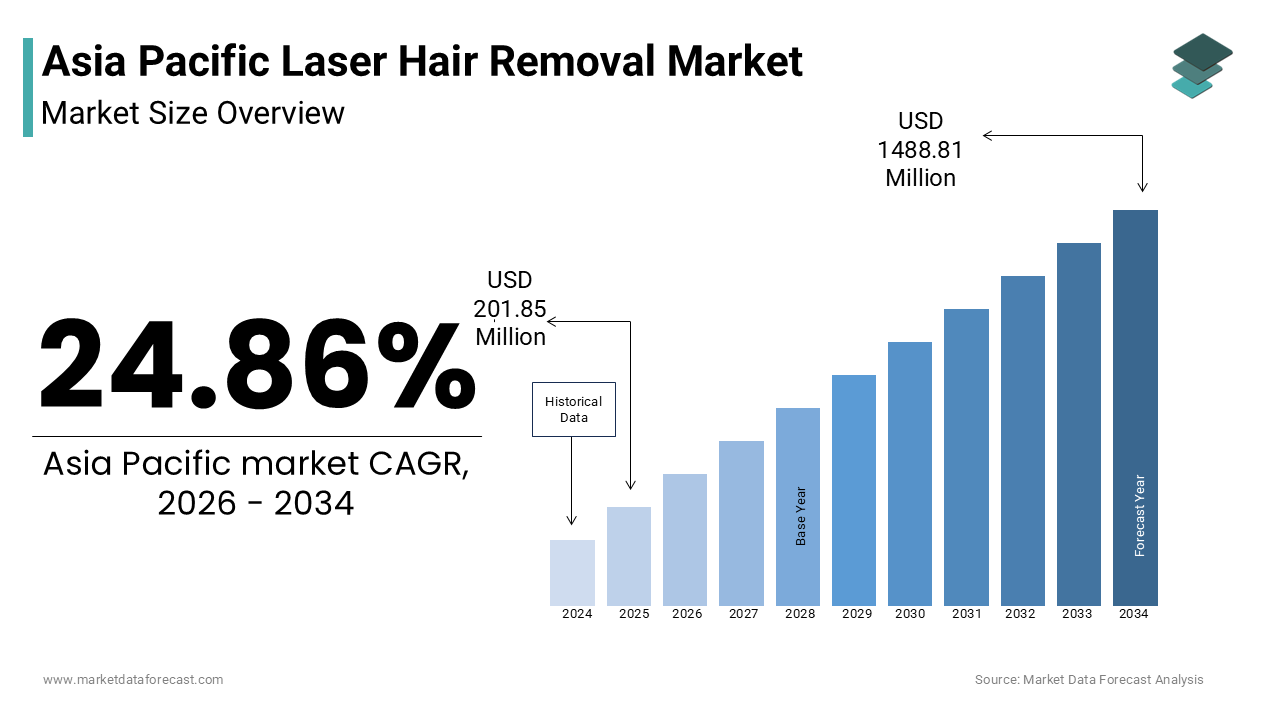
- Market Valuation: Valued at USD 201.85 million in 2025, reaching USD 252.03 million in 2026, and projected to scale up to USD 1488.81 million by 2034, registering an exceptional compound annual growth rate (CAGR) of 24.86% across the forecast period.
- Primary Growth Drivers: Increasing urbanization, powerful social media and digital marketing influence on beauty standards, and rising disposable incomes across developing economies.
Key Market Segment Metrics
| Category | Leading Segment (Base Position) | Fastest-Growing / High-Growth Segment |
|---|---|---|
| By Laser Type & End-Use | Diode Laser (holding 55.5% share in 2025 for diverse skin types and efficiency) & Beauty Clinics (holding 50.9% share in 2025 with extensive urban center networks) | Nd:YAG Laser (exhibiting a noteworthy 12.5% CAGR for very dark skin types) & Home Use (projected at 15.2% CAGR driven by compact, handheld consumer devices) |
| By Region | China (leading with a 30.3% market share in 2025, boosted by rapid urbanization and digital marketing) | Asia-Pacific Emerging Markets (driven by expanding middle-class disposable income) |
Major Market Players & Industry Landscape
Market Structure: Highly competitive regional landscape featuring global medical aesthetic device innovators and manufacturers focusing on advanced technological innovations, pain-free devices, and enhanced safety profiles.
Key Companies: Cynosure, Inc., Cutera, Inc., Lumenis Ltd., Syneron Medical Ltd., Alma Lasers (Sisram Medical Ltd.), Hologic, Inc., Bausch Health Companies Inc., Sciton, Inc., Fotona d.o.o., InMode Ltd., Sharplight Technologies Ltd., and Mentor Worldwide LLC.
 Download Free Sample Report
Asia Pacific Laser Hair Removal Market Size
The Asia Pacific laser hair removal market size was valued at USD 201.85 million in 2025 and is anticipated to reach USD 252.03 million in 2026 from USD 1488.81 million by 2034, growing at a CAGR of 24.86% during the forecast period from 2026 to 2034.
Laser hair removal is a medical-aesthetic procedure that uses a concentrated beam of light (laser) to remove or significantly reduce unwanted body hair. This technology targets melanin in hair follicles causing thermal damage that inhibits future growth. The region is experiencing a paradigm shift in beauty standards driven by urbanization and the widespread influence of digital media. ISAPS data confirms that hair removal consistently ranks among the top five non-surgical procedures globally, while market analysts identify it as a key gateway treatment for consumers in the Asia Pacific region entering the aesthetic landscape. Studies indicate that aesthetic treatments in South Korea are deeply integrated into personal grooming routines, with particularly high penetration rates observed among young adults. Similarly, research highlights a surge in dermatological clinics offering laser services in China, driven by rising disposable incomes and growing demand for non-invasive "light medical beauty" treatments. The Asian Development Bank (ADB) highlights that the expanding middle class in developing Asia is creating a massive consumer base with increased capacity for discretionary spending on lifestyle and personal care. Furthermore the prevalence of hirsutism and polycystic ovary syndrome in countries like India and Australia drives medical necessity for these treatments. Clinical studies published in the IJDVL indicate that cosmetic skin and hair concerns are increasingly becoming leading drivers for patient visits to dermatology clinics across India. These sociocultural and economic dynamics underscore the transition of laser hair removal from a luxury service to a mainstream grooming essential across the diverse demographics of the Asia Pacific region.
MARKET DRIVERS
Influence of Social Media and Evolving Beauty Standards
The pervasive influence of social media and evolving beauty standards contributes to the growth of the Asia Pacific Laser Hair Removal Market. Digital platforms such as Instagram TikTok and Xiaohongshu have standardized hairless skin as a key component of modern aesthetics particularly among millennials and Generation Z. Multiple studies on digital adoption show that the online population in Southeast Asia has grown to include more than half a billion users, with social media platforms becoming primary drivers for the consumption of cosmetic and wellness-related content. According to industry trade analysts, the Japanese beauty market is increasingly shaped by digital marketing strategies that emphasize skin clarity as a key element of personal grooming and professional presentation. Research on Japanese aesthetic services indicates that demand for energy-based treatments, particularly laser hair removal, is expanding at a steady annual rate, with high interest among younger female demographics seeking efficient personal care solutions. A study of Chinese e-commerce platforms suggests that the rise of live streaming has significantly lowered information barriers for medical aesthetic services, allowing specialized clinics to reach vast audiences through interactive promotional content. This digital exposure creates psychological pressure to conform to idealized images driving demand for efficient and long lasting solutions. Sources indicate that the systematic management of physical appearance is widely perceived as an essential life skill, contributing to the high societal acceptance of aesthetic procedures. The immediacy of visual feedback on social platforms encourages individuals to seek visible improvements in their appearance. Consequently laser hair removal has become a routine maintenance procedure rather than an occasional treatment sustaining consistent demand across urban centers in the region.
Rising Disposable Income and Urbanization
The rising disposable income and rapid urbanization across the region fuel the expansion of the Asia Pacific laser hair removal market. As economies develop consumers allocate a larger portion of their budget to personal care and wellness activities. According to research, the middle class in Asia is expanding at an unprecedented rate and is expected to constitute the vast majority of the world's middle-class population by the end of the decade. Data on private consumption in India indicates a steady rise in urban discretionary spending, allowing households to allocate more resources toward personal wellness and grooming services. The Indian Society of Aesthetic Medicine notes that tier one and tier two cities are witnessing a proliferation of dermatology clinics offering affordable laser packages. Research on Southeast Asian retail highlights that the introduction of flexible payment modules and consumer credit has significantly lowered the entry barrier for cosmetic procedures among younger consumers. The Vietnamese Society of Dermatology highlights that the availability of financing options and installment plans has made laser treatments accessible to younger demographics. Sources confirm that Thailand remains a premier global destination for medical travelers, with a highly developed infrastructure that offers a wide array of dermatological and aesthetic treatments to a diverse international and domestic clientele. The convenience of urban infrastructure allows for easy access to certified clinics. This economic empowerment combined with geographic accessibility ensures that laser hair removal transitions from a niche luxury to a widespread consumer habit driving robust market expansion.
MARKET RESTRAINTS
High Cost of Treatment and Limited Insurance Coverage
The high cost of laser hair removal treatments and the lack of insurance coverage impede the growth of the Asia Pacific laser hair removal market. Unlike medically necessary procedures laser hair removal is classified as an elective cosmetic service meaning patients must bear the full financial burden. Research confirms that while out-of-pocket spending on essential health remains a burden in developing Asia, the affordability of multi-session aesthetic treatments is primarily tracked by private sector market analysts as a gauge of discretionary household income. In Indonesia the Ministry of Health states that basic health insurance schemes do not cover aesthetic procedures making them inaccessible to the majority of the population. In the Philippines the Philippine Health Insurance Corporation excludes cosmetic treatments from its benefits package forcing patients to pay upfront. In rural areas of India and China the cost of travel to urban clinics adds to the financial burden. Study of the Chinese beauty sector reveals a high concentration of specialized aesthetic clinics in major metropolitan areas, contrasting sharply with rural regions where access to advanced cosmetic laser technology remains minimal. This economic barrier restricts the market to affluent urban demographics slowing down mass adoption and limiting the overall growth potential of the industry in emerging economies.
Safety Concerns and Risk of Adverse Effects
Safety concerns and the risk of adverse effects associated with improper laser usage inhibit the expansion of the Asia Pacific Laser Hair Removal Market. Incorrect settings or untrained operators can cause burns hyperpigmentation hypopigmentation and scarring particularly in individuals with darker skin tones common in South and Southeast Asia. Industry bodies like the International Society of Aesthetic Plastic Surgery (ISAPS) and national medical associations report that the lack of standardized training for aesthetic practitioners in unregulated markets significantly increases the likelihood of patient complications. The Indian Journal of Dermatology, Venereology and Leprology (IJDVL) highlights cases of post-inflammatory hyperpigmentation and burns resulting from inappropriate laser parameters used by non-specialists. The Indian Association of Dermatologists Venereologists and Leprologists emphasizes the need for strict regulatory oversight and certified training programs. In Malaysia the Ministry of Health has issued warnings against unlicensed beauty salons offering laser services without medical supervision. The Malaysian Society of Aesthetic Medicine notes that consumer trust is eroded by negative experiences and visible side effects. In Australia the Therapeutic Goods Administration regulates laser devices strictly but illegal imports and backyard operations remain a concern. The Australasian College of Dermatologists highlights that complications from amateur treatments, such as burns and scarring, often require extensive corrective medical care. In China the National Medical Products Administration has cracked down on counterfeit devices but enforcement challenges persist. These safety risks create hesitation among potential customers who fear permanent skin damage. The fear of adverse outcomes discourages trial and repeat usage thereby restraining market growth and necessitating rigorous consumer education and professional standardization.
MARKET OPPORTUNITIES
Expansion of Medical Tourism in Aesthetic Hubs
The expansion of medical tourism in key regional countries provides avenues for the Asia Pacific laser hair removal market. Nations such as Thailand South Korea and Singapore have established themselves as global destinations for high quality and affordable aesthetic procedures. According to the Medical Tourism Association, Thailand draws a significant volume of international patients each year, with cosmetic surgeries and wellness check-ups being the most frequently sought-after services. The Thai Ministry of Public Health reports that international patients appreciate the combination of advanced technology skilled practitioners and competitive pricing. In South Korea the Korea Health Industry Development Institute indicates that the government actively promotes medical tourism with streamlined visa processes for aesthetic patients. The Korean Society of Laser Medicine and Surgery and industry analysts note that global K-beauty trends primarily fuel demand for advanced skin rejuvenation and non-invasive clinical treatments that focus on achieving a healthy, glowing complexion. In Singapore the Singapore Tourism Board highlights the nation's reputation for safety and excellence in medical care attracting high net worth individuals from neighboring countries. The Ministry of Health Singapore supports the development of integrated healthcare hubs that offer comprehensive aesthetic services. In Malaysia the Malaysia Healthcare Travel Council reports steady growth in visitors seeking affordable laser treatments. The availability of multilingual staff and international accreditation enhances the appeal of these destinations. This influx of foreign patients boosts revenue for local clinics and encourages investment in state of the art laser technologies driving market growth and enhancing the regional reputation for aesthetic excellence.
Technological Advancements in Pain Free and Safe Devices
Technological advancements in laser devices, offering pain-free treatments and enhanced safety for diverse skin types, are creating significant prospects for the Asia Pacific laser hair removal market. Innovations such as diode lasers with contact cooling and Nd YAG lasers have minimized discomfort and reduced the risk of pigmentation issues in darker skin tones. According to the American Society for Laser Medicine and Surgery newer technologies allow for effective hair removal across all Fitzpatrick skin types which is crucial for the diverse Asian population. In Japan the Ministry of Economy Trade and Industry supports research into next generation laser systems that prioritize patient comfort and efficacy. The Japanese Society of Clinical Laser Medicine notes that the adoption of pain free devices has increased patient retention and satisfaction rates. In China the National Medical Products Administration has approved several advanced laser platforms that feature real time skin temperature monitoring to prevent burns. The Chinese Society of Laser Medicine and Surgery highlights that these safety features build consumer confidence and expand the addressable market. In Australia the Therapeutic Goods Administration encourages the introduction of innovative devices that improve clinical outcomes. The Australasian College of Dermatologists supports the use of evidence based technologies that minimize side effects. In India the introduction of affordable yet advanced diode lasers has made treatments accessible to a broader demographic. The Association of Cutaneous Surgeons of India observes that advancements in laser delivery systems have significantly shortened the duration of treatment sessions, making the procedures more convenient for patients and practitioners alike. These technological improvements address previous barriers related to pain and safety driving wider adoption and market expansion.
MARKET CHALLENGES
Regulatory Fragmentation and Lack of Standardization
The fragmentation of regulatory frameworks and the lack of standardized licensing requirements for laser practitioners slows down the growth of the Asia Pacific Laser Hair Removal Market. Each country has distinct regulations regarding who can operate laser devices leading to inconsistencies in service quality and patient safety. In Indonesia the Ministry of Health struggles to enforce regulations on the thousands of beauty salons offering laser services without proper medical oversight. Besides, in Vietnam the Ministry of Health has implemented stricter rules but enforcement in remote areas remains challenging. In the Philippines the Food and Drug Administration regulates devices but monitoring practitioner qualifications is difficult. The Philippine Dermatological Society advocates for stricter licensing to protect consumers. In India the Central Drugs Standard Control Organization regulates devices but state level enforcement varies significantly. The Indian Association of Dermatologists Venereologists and Leprologists highlights the need for uniform national guidelines. This regulatory inconsistency creates an uneven playing field where legitimate clinics compete with unregulated entities. The lack of standardization undermines consumer trust and hinders the professionalization of the industry requiring concerted efforts from governments and professional bodies to establish unified safety and practice standards.
Cultural Stigma and Gender Norms
Cultural stigma and traditional gender norms are serious hurdles for the Asia Pacific laser hair removal market. These factors particularly inhibit growth regarding male grooming and body hair acceptance. In many conservative societies body hair is traditionally viewed as a sign of masculinity or natural beauty creating resistance to hair removal practices. In India the Indian Journal of Community Medicine notes that while female hair removal is widely accepted male grooming faces social scrutiny in rural and semi urban areas. The Indian Society of Aesthetic Medicine reports that men are increasingly seeking treatments but often hesitate due to fear of judgment. In Indonesia the Ministry of Religious Affairs influences social norms where modesty and natural appearance are emphasized. The Indonesian Society of Dermatology and Venereology highlights that religious interpretations can affect the acceptance of cosmetic alterations. In Japan while grooming is important excessive hair removal may be seen as unnatural by older generations. The Japanese Society of Aesthetic Surgery notes a generational divide in acceptance levels. In China traditional views on body image are evolving but stigma persists in certain demographics. The Chinese Society of Dermatology emphasizes the need for culturally sensitive marketing. These deep rooted cultural beliefs limit the potential customer base and require nuanced educational campaigns to shift perceptions. Overcoming these social barriers is essential for unlocking the full market potential particularly among male consumers and in conservative regions.
REPORT COVERAGE
| REPORT METRIC | DETAILS |
| Market Size Available | 2025 to 2034 |
| Base Year | 2025 |
| Forecast Period | 2026 to 2034 |
| CAGR | 24.86% |
| Segments Covered | By Laser Type, End-Use, and Region |
| Various Analyses Covered | Global, Regional, & Country Level Analysis; Segment-Level Analysis, Drivers, Restraints, Opportunities, Challenges, PESTLE Analysis, Porter’s Five Forces Analysis, Competitive Landscape, Analyst Overview of Investment Opportunities |
| Regions Covered | India, China, Japan, South Korea, Australia, New Zealand, Thailand, Malaysia, Vietnam, the Philippines, Indonesia, Singapore, and the Rest of Asia-Pacific |
| Key Market Players | Cynosure, Inc., Cutera, Inc., Lumenis Ltd., Syneron Medical Ltd., Alma Lasers (Sisram Medical Ltd.), Hologic, Inc., Bausch Health Companies Inc., Sciton, Inc., Fotona d.o.o., InMode Ltd., Sharplight Technologies Ltd., and Mentor Worldwide LLC |
SEGMENTAL ANALYSIS
By Laser Type Insights
The diode laser segment remained in the lead in the Asia Pacific Laser Hair Removal Market by holding a share of 55.5% in 2025. This leadership is driven by its versatility across diverse skin types prevalent in the region and its balance of efficacy and patient comfort. One of the major drivers for the dominance of this segment is its exceptional suitability for the wide range of skin tones found in the Asia Pacific region particularly Fitzpatrick skin types III to V. Unlike Alexandrite lasers which are best suited for lighter skin Diode lasers operate at a wavelength of 808 nanometers that penetrates deeper into the dermis while minimizing absorption by epidermal melanin. The Indian Journal of Dermatology highlights that Diode lasers provide consistent hair reduction with minimal side effects in these demographics. In China the Chinese Society of Laser Medicine and Surgery notes that Diode technology is preferred in major urban clinics for its reliability across mixed ethnic populations. The National Medical Products Administration has approved numerous Diode systems reflecting their clinical acceptance. In Southeast Asian countries like Indonesia and Malaysia where darker skin tones are common the Ministry of Health guidelines often recommend longer wavelength lasers for safety. The Indonesian Society of Dermatology and Venereology emphasizes the importance of using devices that protect the epidermis. This broad applicability ensures that Diode lasers remain the most widely installed and utilized technology in the region sustaining their market leadership. A further key factor contributing to the leadership of the Diode laser segment is its cost effectiveness and operational efficiency which appeal to both clinic owners and patients. Diode laser systems generally have lower maintenance costs and longer lifespans compared to other laser technologies making them a profitable investment for aesthetic practices. In Thailand the Thai Society of Laser Medicine and Surgery notes that Diode lasers allow for faster treatment sessions due to large spot sizes and rapid pulse rates. The Thai Ministry of Public Health reports that this efficiency enables clinics to serve more patients per day reducing the cost per session for consumers. In Vietnam the Vietnamese Society of Dermatology highlights that affordable Diode systems have facilitated the expansion of laser services into tier two cities. The Ministry of Health indicates that lower equipment costs translate to more accessible pricing for the middle class. In the Philippines the Philippine Dermatological Society notes that Diode lasers are the most common entry level device for new aesthetic clinics. The Food and Drug Administration regulates these devices ensuring quality while keeping prices competitive. In Australia the Therapeutic Goods Administration approves efficient Diode systems that reduce chair time. This economic advantage drives widespread adoption among providers and affordability for patients maintaining the segments dominant position.
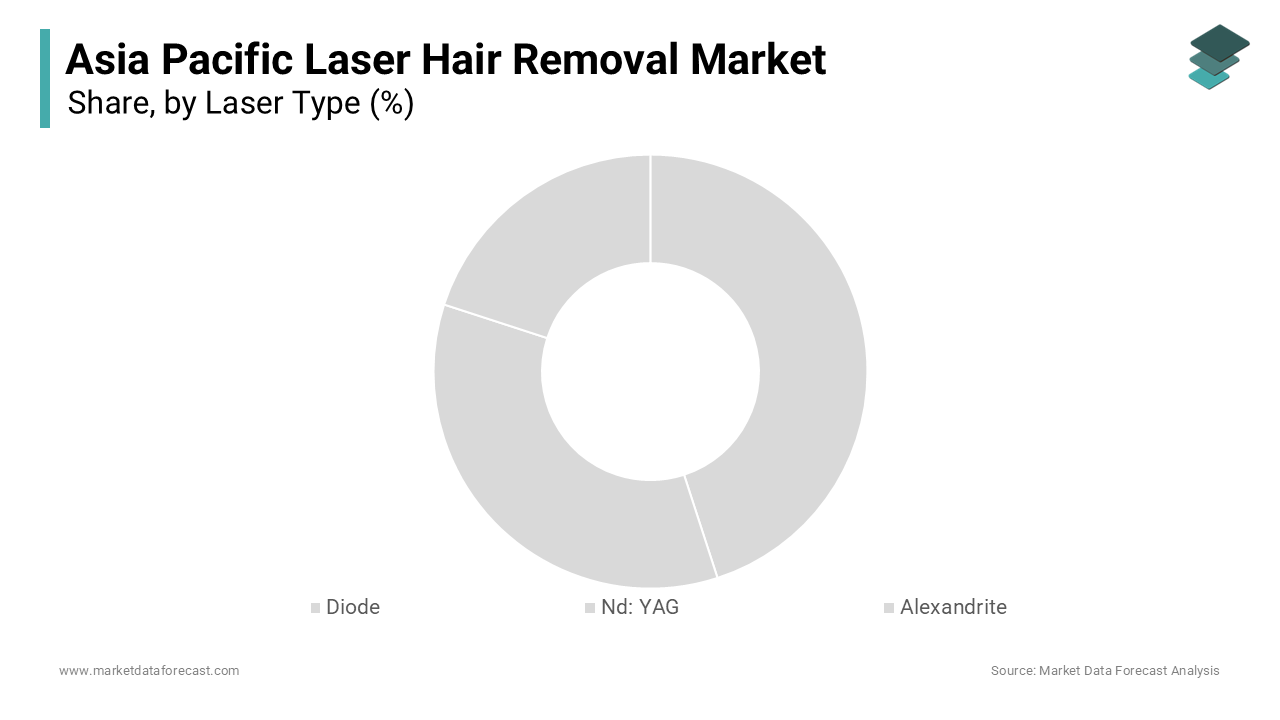
The Nd: YAG Laser segment is expected to exhibit a noteworthy CAGR of 12.5% over the forecast period due to its superior safety profile for very dark skin types and increasing awareness of specialized treatments. This rapid growth of this segment is driven by its unparalleled safety profile for individuals with very dark skin tones Fitzpatrick types V and VI who are at higher risk of complications with other lasers. Operating at a wavelength of 1064 nanometers Nd: YAG lasers bypass epidermal melanin almost entirely targeting the hair follicle directly. In Australia the Australasian College of Dermatologists recommends Nd: YAG lasers for patients with pigmented skin to avoid burns and dyspigmentation. The Therapeutic Goods Administration notes an increase in the registration of Nd: YAG devices specifically marketed for safe ethnic hair removal. Moreover, the Indian Journal of Dermatology highlights that awareness campaigns by dermatologists are shifting patient preference towards safer options. In Malaysia the Malaysian Society of Aesthetic Medicine notes that the diverse population includes many individuals with deep skin tones who require specialized care. The Ministry of Health supports the use of evidence based technologies for safe outcomes. In Indonesia the Indonesian Society of Dermatology and Venereology emphasizes the need for specialized training in Nd: YAG usage. As consumer awareness of skin safety increases the demand for this specialized technology grows rapidly driving the segments expansion. The increasing adoption of Nd: YAG lasers in medical and dermatological settings rather than just beauty salons is another key factor accelerating the growth of this segment. Nd: YAG lasers are often classified as medical devices requiring professional operation which aligns with the trend towards medicalizing aesthetic procedures. In Japan the Ministry of Health Labour and Welfare strictly regulates laser usage requiring medical supervision for high power devices. The Japanese Society of Clinical Laser Medicine notes that Nd: YAG lasers are predominantly used in hospitals and specialized dermatology clinics. The Pharmaceuticals and Medical Devices Agency approves these devices for medical indications including hirsutism associated with polycystic ovary syndrome. In South Korea the Korean Society of Laser Medicine and Surgery reports that Nd: YAG lasers are integral to comprehensive dermatological practices. The Ministry of Food and Drug Safety facilitates the approval of advanced medical grade lasers. In Singapore the Health Sciences Authority classifies Nd: YAG lasers as prescription only devices ensuring they are used by qualified professionals. The Singapore Medical Council supports this regulatory framework to protect patients. In China the National Health Commission encourages the use of medical grade equipment in certified institutions. This regulatory environment fosters trust and drives the adoption of Nd: YAG lasers in professional medical settings fueling the segments robust growth.
By End-use Insights
The beauty clinics segment held the majority share of 50.9% of the Asia Pacific Laser Hair Removal Market in 2025 because of the high density of aesthetic centers and the positioning of laser hair removal as a routine grooming service. Apart from these, a key factor behind the dominance of the Beauty Clinics segment is the high density and widespread accessibility of aesthetic centers across urban and semi urban areas in the Asia Pacific region. These clinics offer convenient locations flexible hours and competitive pricing making laser hair removal easily accessible to consumers. In South Korea the Ministry of Health and Welfare reports that Seoul has the highest concentration of aesthetic clinics per capita globally. The Korean Consumer Agency notes that competition among these clinics drives down prices and offers promotional packages attracting young consumers. In addition, the Chinese Society of Aesthetic Medicine highlights that these clinics are often located in shopping malls and commercial districts enhancing visibility. In Thailand the Thai Society of Laser Medicine and Surgery notes that beauty clinics in Bangkok and tourist hubs offer affordable laser packages. The Tourism Authority of Thailand supports this sector as part of the medical tourism ecosystem. In India the Indian Society of Aesthetic Medicine reports a surge in chain clinics expanding into tier two cities. This extensive network ensures that consumers have easy access to services sustaining the segments market leadership. An additional factor contributing to the leadership of the Beauty Clinics segment is the aggressive marketing strategies and attractive package deals offered by these establishments. Beauty clinics frequently utilize social media influencers and digital advertising to promote limited time offers and bulk session discounts. According to the Datareportal social media penetration in Southeast Asia is high with beauty content driving consumer engagement. In Indonesia the Ministry of Communication and Informatics notes that Instagram and TikTok are major channels for promoting aesthetic services. The Indonesian Society of Dermatology and Venereology highlights that package deals make long term treatments more affordable for middle income consumers. In Vietnam the Vietnamese Society of Dermatology reports that beauty clinics offer membership programs that encourage repeat visits. The Ministry of Health indicates that competitive pricing strategies are key to customer retention. In the Philippines the Philippine Dermatological Society notes that bundled services including facial treatments and laser hair removal are popular. The Food and Drug Administration monitors advertising claims to ensure accuracy. In Malaysia the Malaysian Society of Aesthetic Medicine emphasizes the role of promotions in driving volume. The Ministry of Health supports transparent pricing practices. In Singapore the Competition and Consumer Commission of Singapore monitors fair trading practices. These marketing efforts create a perception of value and convenience driving high foot traffic and revenue for beauty clinics thereby maintaining their dominant position in the market.
The home use segment is predicted to witness the highest CAGR of 15.2% from 2026 to 2034 owing to technological advancements in handheld devices and the desire for privacy and convenience. This swift expansion of the segment is supported by significant technological advancements in handheld laser and intense pulsed light IPL devices that have improved their efficacy and safety for consumer use. Modern home devices feature energy levels closer to professional machines and include skin tone sensors to prevent misuse. In Japan the Ministry of Economy Trade and Industry reports that compact and user friendly beauty devices are highly popular among busy professionals. The Japanese Society of Clinical Laser Medicine notes that while home devices are less powerful than clinical lasers improvements in technology have made them viable for maintenance. The Pharmaceuticals and Medical Devices Agency regulates these devices ensuring they meet safety standards. In China the National Medical Products Administration has approved several home use IPL devices from domestic brands like Ulike and Smoothskin. The Chinese Internet Network Information Center highlights that e commerce platforms drive sales through detailed product demonstrations. In South Korea the Korean Consumer Agency reports that home beauty devices are a trending gift item. The Ministry of Food and Drug Safety ensures product safety. In Australia the Therapeutic Goods Administration lists various home use devices for consumer purchase. The Australasian College of Dermatologists advises on proper usage. These technological improvements build consumer confidence and drive the adoption of home use devices fueling the segments fast growth. The desire for privacy and convenience is another key factor accelerating the growth of the Home Use segment. Many consumers prefer the discretion of treating themselves at home rather than visiting clinics due to cultural modesty or busy schedules. According to the Nielsen IQ report the demand for private personal care solutions has increased particularly among younger demographics. In India the Indian Society of Aesthetic Medicine notes that cultural norms regarding body exposure make home devices appealing to many women. The Indian Journal of Community Medicine highlights that privacy concerns are a significant barrier to clinic visits in conservative areas. In Indonesia the Ministry of Religious Affairs influences social norms where modesty is valued. The Indonesian Society of Dermatology and Venereology reports that home devices allow for discreet grooming. In Malaysia the Malaysian Society of Aesthetic Medicine notes that working professionals appreciate the time savings of home treatments. The Ministry of Health supports consumer education on safe home use. In the Philippines the Philippine Dermatological Society highlights the convenience of home devices for students and young workers. The Food and Drug Administration provides guidelines for safe usage. In Vietnam the Vietnamese Society of Dermatology notes the rising popularity of online tutorials for home treatments. The Ministry of Health supports digital health literacy. This combination of privacy and convenience drives the robust expansion of the Home Use segment.
REGIONAL ANALYSIS
China Laser Hair Removal Market Analysis
China outperformed other countries in the Asia Pacific Laser Hair Removal Market and occupied a 30.3% share in 2025. The demand for this medical-aesthetic procedure in China is driven by the rising disposable income and strong influence of social media on beauty standards. The market in China is seeing rapid growth in both professional clinics and home use devices. According to the National Health Commission the number of medical aesthetic institutions has grown exponentially. As per the Chinese Society of Aesthetic Medicine laser hair removal is one of the most popular entry level procedures. E commerce giants like Alibaba and JD com drive sales of home devices. The Chinese Internet Network Information Center notes high engagement with beauty content online. Urbanization has increased access to clinics in tier one and tier two cities. The Chinese Society of Laser Medicine and Surgery promotes professional standards. These factors combine to sustain Chinas dominant position driven by scale digital influence and expanding middle class consumption.
Japan Laser Hair Removal Market Analysis
Japan was the second largest country in the Asia Pacific Laser Hair Removal Market and accounted for a 18.7% share in 2025. This position of the Japanese market is attributed to the established culture of personal grooming and strict regulatory oversight. The market is in a stable phase, prioritizing superior quality and safety protocols. According to the Ministry of Health Labour and Welfare aesthetic treatments are widely accepted and regulated. As per the Japanese Society of Clinical Laser Medicine laser hair removal is a standard service in dermatology clinics. The Pharmaceuticals and Medical Devices Agency ensures strict safety standards for devices. The Japanese Society of Aesthetic Surgery notes high demand among both men and women. The Ministry of Economy Trade and Industry supports innovation in home beauty devices. Consumers prefer reputable brands and certified clinics. The culture of meticulous personal care drives consistent demand. These factors maintain Japans stable and sophisticated market position focused on quality and regulatory compliance.
India Laser Hair Removal Market Analysis
India continues to be a key contributor to the Asia Pacific region due to the large young population and rising interest in personal grooming. The market status is emerging with significant growth potential driven by increasing awareness and affordability. According to the Indian Society of Aesthetic Medicine the number of aesthetic clinics is growing rapidly in urban centers. As per the Indian Association of Dermatologists Venereologists and Leprologists laser hair removal is increasingly sought for medical and cosmetic reasons. The Central Drugs Standard Control Organization regulates devices to ensure safety. The rise of chain clinics and financing options makes treatments more accessible. The Indian Journal of Dermatology highlights the impact of social media on beauty trends. Rural urban migration increases exposure to aesthetic services. These dynamics position India as a high growth market with a focus on volume and accessibility.
South Korea Laser Hair Removal Market Analysis
South Korea holds a significant position in the Asia Pacific Laser Hair Removal Market owing to the deeply ingrained beauty culture and government support for the medical aesthetics industry. The market status is advanced with the highest density of aesthetic clinics globally. According to the Ministry of Health and Welfare aesthetic procedures are common among young adults. As per the Korean Society of Laser Medicine and Surgery laser hair removal is a routine grooming practice. The Ministry of Food and Drug Safety regulates devices strictly. The Korean Consumer Agency notes high consumer sophistication and demand for advanced technologies. Medical tourism also contributes to market size. The influence of K beauty trends drives global and local demand. These factors contribute to South Koreas significant market share characterized by innovation and high utilization.
Australia Laser Hair Removal Market Analysis
Australia is predicted to expand notably in the Asia Pacific Laser Hair Removal Market over the forecast period due to the high prevalence of fair skin and hair which responds well to laser treatment. The market status is developed with high healthcare standards and robust regulatory frameworks. According to the Australasian College of Dermatologists laser hair removal is a widely accepted cosmetic procedure. As per the Therapeutic Goods Administration strict regulations ensure device safety and efficacy. The Australian Society of Aesthetic Medicine notes high consumer awareness and spending on personal care. The presence of qualified practitioners ensures high quality services. The culture of outdoor living increases demand for hair removal. These factors maintain Australias stable market position driven by quality care and regulatory oversight.
COMPETITIVE LANDSCAPE
The competition in the Asia Pacific Laser Hair Removal Market is characterized by the presence of established multinational corporations and emerging local manufacturers vying for dominance through innovation and strategic expansion. Leading companies differentiate themselves by integrating advanced technologies such as multi wavelength platforms and cooling systems into their devices. This technological edge allows for safer treatments on darker skin types which is a key competitive advantage in the region. The market sees intense rivalry in the professional segment where brands compete on efficacy speed and patient comfort. Local manufacturers in countries like China are gaining traction by offering affordable alternatives that cater to price sensitive clinics. Strategic collaborations with dermatologists and aesthetic centers are common tactics to enhance market penetration. Furthermore companies are investing in digital marketing and social media campaigns to reach younger demographics directly. The rise of home use devices adds a new layer of competition as consumer electronics brands enter the space. Regulatory variations across countries also influence competitive strategies requiring firms to adapt to local requirements. Overall the market remains dynamic with continuous innovation and strategic initiatives shaping the competitive landscape.
KEY MARKET PLAYERS
Some of the companies that are playing a dominating role in the Asia Pacific laser hair removal market include
- Cynosure, Inc.
- Cutera, Inc.
- Lumenis Ltd.
- Syneron Medical Ltd.
- Alma Lasers (Sisram Medical Ltd.)
- Hologic, Inc.
- Bausch Health Companies Inc.
- Sciton, Inc.
- Fotona d.o.o.
- InMode Ltd.
- Sharplight Technologies Ltd.
- Mentor Worldwide LLC
Top Players in the Market
Cynosure LLC
Cynosure LLC is a global leader in aesthetic laser technology with a strong presence in the Asia Pacific Laser Hair Removal Market. The company is renowned for its Elite iQ and Elite+ systems which utilize both Alexandrite and Nd YAG wavelengths. Cynosure contributes to the global market by setting high standards for efficacy and safety in hair removal treatments. In the Asia Pacific region the company has strengthened its position by expanding its distribution network and providing comprehensive training programs for practitioners. Recent actions include launching upgraded software features that enhance treatment precision and patient comfort. The company also engages in strategic partnerships with leading dermatology clinics to promote best practices. By focusing on technological innovation and professional education Cynosure ensures its devices remain the preferred choice for medical aestheticians. These initiatives help the company maintain its reputation for quality and drive adoption across diverse clinical settings in the region.
Lumenis Ltd
Lumenis Ltd is a pioneering medical technology company that plays a significant role in the Asia Pacific Laser Hair Removal Market through its LightSheer diode laser series. The company contributes to the global market by delivering reliable and efficient solutions for permanent hair reduction. In the Asia Pacific region Lumenis has expanded its footprint by establishing local support centers and collaborating with key opinion leaders. Recent actions include introducing the LightSheer DUET which offers faster treatment times and improved patient experience. The company also invests in marketing campaigns that highlight the clinical benefits of diode laser technology. Lumenis focuses on building trust among healthcare providers through evidence based data and robust after sales service. By leveraging its extensive experience and innovative product portfolio Lumenis strengthens its competitive position. These efforts enable the company to address the growing demand for safe and effective hair removal solutions in the dynamic Asia Pacific healthcare landscape.
Alma Lasers Ltd
Alma Lasers Ltd a subsidiary of Sisram Medical is a major player in the Asia Pacific Laser Hair Removal Market known for its Soprano Ice platform. The company contributes to the global market by popularizing pain free hair removal technology using Super Hair Removal technique. In the Asia Pacific region Alma Lasers has strengthened its position through aggressive expansion into emerging markets and strategic acquisitions. Recent actions include launching the Soprano Titanium which combines three wavelengths for enhanced efficacy on all skin types. The company also focuses on digital marketing and influencer collaborations to reach younger demographics. Alma Lasers supports practitioners with extensive training and business development tools. By prioritizing patient comfort and operational efficiency the company appeals to both clinics and consumers. These strategic moves help Alma Lasers maintain its leadership in the non invasive aesthetic sector and drive growth in the Asia Pacific region.
Top Strategies Used by the Key Market Participants
Key players in the Asia Pacific Laser Hair Removal Market primarily focus on product innovation and strategic partnerships to enhance their competitive positions. Companies are increasingly investing in research and development to create safer and more efficient laser systems suitable for diverse skin types. Expanding distribution networks through collaborations with local distributors and clinics helps reach broader customer bases in diverse geographic regions. Educational initiatives aimed at practitioners raise awareness about proper usage and safety protocols driving product adoption. Regulatory compliance and obtaining approvals from local health authorities remain critical strategies for market entry. Manufacturers also emphasize branding and marketing campaigns that highlight pain free experiences and quick results. Additionally companies are exploring direct to consumer sales of home use devices to capture new segments. These multifaceted approaches enable participants to navigate the complex landscape and meet the growing demand for aesthetic solutions in the region.
MARKET SEGMENTATION
This research report on the Asia Pacific laser hair removal market has been segmented and sub-segmented into the following categories.
By Laser Type
- Diode
- Nd: YAG
- Alexandrite
By End-use
- Beauty Clinics
- Dermatology Clinics
- Home Use
By Country
- India
- China
- Japan
- South Korea
- Australia
- New Zealand
- Thailand, Malaysia
- Vietnam
- Philippines
- Indonesia
- Singapore
- Rest of APAC