- Product Description Description
- Table of Contents TOC
- List of Table & Figure LOT
- Get Free Sample PDF Sample PDF
Market Size, 2025
$154.32 MnMarket Estimate, 2026
$169.86 MnMarket Forecast, 2034
$365.96 MnCAGR, 2026–2034
10.05%Executive Summary: Asia-Pacific Liver Cancer Therapeutics Market
- Market Scope: Comprehensive industry evaluation of the Asia-Pacific (APAC) liver cancer therapeutics sector, detailing cancer classifications (primary, secondary, benign), therapeutic indications/treatments (hepatocellular carcinoma, cholangiocarcinoma, hepatoblastoma, targeted therapies), patient end-users (pediatrics, adults), and country-level frameworks across 13 major regional markets.
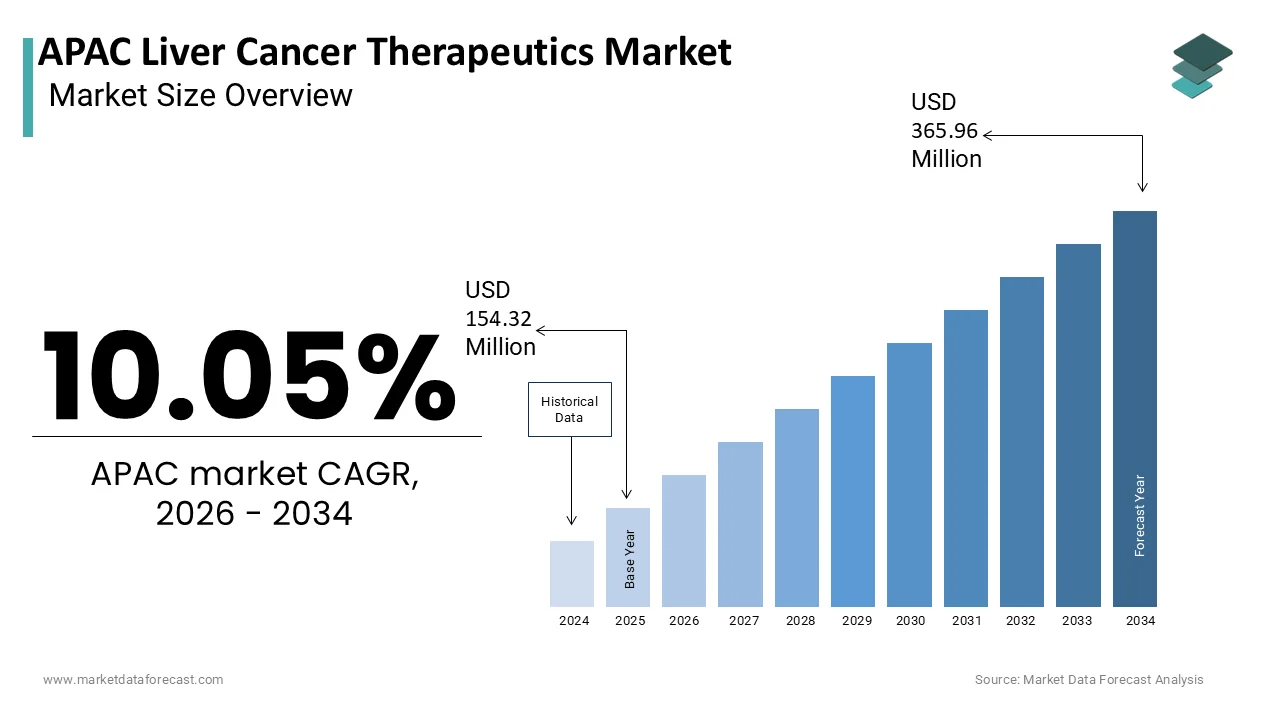
- Market Valuation: Valued at USD 154.32 million in 2025, standing at USD 169.86 million in 2026, and projected to reach USD 365.96 million by 2034, registering a strong compound annual growth rate (CAGR) of 10.05% from 2026 to 2034.
- Primary Growth Drivers: High regional prevalence of secondary metastatic cancers (spreading from breast, colon, and lung sites), climbing incidence of chronic liver conditions (NAFLD, cirrhosis, hepatitis linked to lifestyle, alcohol, and smoking), and robust clinical pipelines paired with growing government and international health investments.
Key Market Segment Metrics & Regional Outlook (2026–2034)
| Segment Category | Key Classifications / Scope | Market Context & Dynamics |
|---|---|---|
| By Type & Therapeutics | Primary (e.g., Hepatocellular Carcinoma accounting for 90% of liver cancer), Secondary (Metastatic), Benign Growths, Cholangiocarcinoma, Hepatoblastoma, & Targeted Therapy | Driven by rising FDA approvals for HCC treatments, advanced targeted medications, and high frequency of metastatic cases originating from lung, colon, and breast cancers. |
| By End Users | Pediatrics and Adults | Adult demographics command the majority share due to lifestyle factors, aging populations, alcohol-induced cirrhosis, and cumulative chronic hepatitis risks. |
| By Country & Region | India, China, Japan, South Korea, Australia, New Zealand, Thailand, Malaysia, Vietnam, Philippines, Indonesia, Singapore, and Rest of APAC | China acts as a primary focal point, reporting roughly 360,000 new primary liver cancer cases and 350,000 annual deaths, propelled by massive target patient populations and fast-improving health infrastructure. |
Major Market Participants & Competitive Landscape
Market Structure: Highly dynamic market featuring major global biopharmaceutical corporations and targeted oncology innovators focusing on advanced clinical pipelines, novel molecular entities, and addressing unmet clinical demands across dense demographic zones in Asia.
Key Companies: Alnylam Pharmaceuticals Inc., ImClone Systems Inc., Onyx Pharmaceuticals Inc., F. Hoffmann-La Roche Ltd., Pfizer Inc., ArQule Inc., Jennerex Biotherapeutics Inc., Celsion Corp., Bayer Schering Pharma AG, 4SC AG, and Bristol-Myers Squibb Company.
APAC Liver Cancer Therapeutics Market Size
The Asia-Pacific Liver Cancer Therapeutics Market is projected to grow from USD 154.32 million in 2025 to USD 169.86 million in 2026 and reach USD 365.96 million by 2034, registering a CAGR of 10.05% during the forecast period from 2026 to 2034.
Liver cancer therapeutics refer to the diverse array of medical treatments, surgical procedures, and targeted interventions used to manage, shrink, or cure primary and secondary malignancies originating in or spreading to the liver. The market is a rapidly evolving clinical and commercial sector focused on pharmaceutical interventions, targeted biologic agents, and combination immunotherapies dedicated to managing hepatic malignancies across the Asia-Pacific region. According to the International Agency for Research on Cancer, Asia accounts for over 70% of the global liver cancer burden, creating an urgent medical necessity for advanced oncological treatments and specialised therapeutic drugs. As per the Global Cancer Observatory, high regional prevalences of chronic viral hepatitis infections significantly increase liver cancer risk, highlighting the ongoing public health need for targeted healthcare strategies and disease management. Market stakeholders increasingly prioritize regional clinical trials and local manufacturing capabilities to address unique viral etiologies and genetic tumor profiles prevalent among Asian patient demographics. Healthcare modernisation initiatives across emerging economies continue to improve patient access to advanced systemic therapies, thereby expanding commercial opportunities for global pharmaceutical developers. Consequently, this dynamic geographic market remains central to shaping international oncology guidelines and improving long-term survival metrics for patients afflicted with primary hepatic cancers.
MARKET DRIVERS
High Prevalence of Chronic Viral Hepatitis Infections
The widespread endemicity of chronic hepatitis B and hepatitis C viruses across densely populated nations in the region is the main factor behind the APAC liver cancer therapeutics market growth. This accelerates procedural and pharmaceutical consumption within the regional therapeutic sector. According to the World Health Organisation, approximately 254 million people were living with chronic hepatitis B and 50 million with hepatitis C globally, with a disproportionately high concentration residing within the Asia-Pacific region. This staggering epidemiological burden directly correlates with market expansion because viral hepatitis serves as the leading precursor to liver cirrhosis and subsequent hepatocellular carcinoma, ensuring a continuous stream of patients requiring long-term antiviral and antineoplastic interventions. Furthermore, as per the National Cancer Centre of China, over 410,000 individuals are diagnosed with primary liver cancer annually in China alone, highlighting the immense patient volume driving regional drug procurement. As a direct result, regional healthcare systems persistently scale up their procurement of advanced targeted therapies and specialized molecular diagnostics to support extensive cohorts of high-risk patients.
Rapid Expansion of Advanced Immunotherapy and Combination Regimens
The clinical shift toward sophisticated biological agents and multi-drug treatment protocols fundamentally transforms therapeutic standards, which further boosts the expansion of the APAC liver cancer therapeutics market. This change heavily impacts specialized regional oncology centers. According to research, late-stage diagnostic presentations necessitate systemic therapies capable of arresting aggressive tumor proliferation, driving high clinical demand for immune checkpoint inhibitors and tyrosine kinase combinations. This trend directly links to market growth because novel combination regimens demonstrate superior objective response rates and extended overall survival benefits compared to traditional monotherapies, encouraging widespread clinical adoption by regional oncologists. Additionally, as per studies, there has been a steady increase in the utilization of advanced biologic oncology drugs across major metropolitan hospitals in East Asia to address growing oncological treatment requirements..Consequently, pharmaceutical enterprises experience robust revenue acceleration as progressive treatment algorithms become fully integrated into national public health reimbursement frameworks.
MARKET RESTRAINTS
Prohibitive Costs of Novel Biological Treatments
The substantial financial expenditure required to procure modern targeted therapies and complex immunotherapeutic formulations hampers the growth of the APAC liver cancer therapeutics market. This severely limits widespread patient adoption across resource-constrained healthcare environments in the region. According to the World Bank, out-of-pocket health expenditures account for significant percentages of total medical spending in several developing Asian nations, rendering premium-priced oncology drugs unaffordable for average households without extensive financial assistance. This severe economic barrier directly restricts market volume by forcing local clinicians to rely on older, less effective systemic chemotherapy alternatives instead of state-of-the-art biological options. Furthermore, as per sources, financial constraints and limited insurance coverage in lower-middle-income Asian countries significantly impact access to advanced medical care and novel oncology treatments for patients with advanced liver cancer. Thus, these extreme affordability obstacles compel pharmaceutical developers to navigate complex pricing pressures and restrict broader commercial penetration.
Stringent and Fragmented Regulatory Frameworks
Complex administrative hurdles and varying approval protocols enforced by individual national health authorities create substantial delays in bringing breakthrough diagnostic and therapeutic products to the APAC liver cancer therapeutics market. According to studies, the administrative review and commercial authorization timelines for novel therapeutic compounds vary widely across Southeast Asian jurisdictions depending on local healthcare infrastructure and priority pathways. This bureaucratic friction directly restrains rapid market revenue generation by inflating pre-market compliance expenditures for international biotechnology firms attempting multi-country commercial launches. Moreover, as per research, varying local clinical trial data requirements often lead to additional data submission or bridging studies across different regions, which can affect the timeline of product availability. Therefore, prolonged authorization processes prevent timely patient access to life-saving medications and hinder uniform market growth across the wider regional landscape.
MARKET OPPORTUNITIES
Rise of Precision Oncology and Biomarker-Driven Drug Development
The paradigm shift toward individualized molecular profiling opens unprecedented avenues for targeted drug development and companion diagnostic integration across advanced clinical networks, which is likely to promote the growth of the APAC liver cancer therapeutics market. According to the Personalised Medicine Coalition, oncology compounds represent approximately 73% of the biopharmaceutical drug development pipeline, reflecting an industry-wide commitment to targeted, personalised therapies over traditional treatments. This precision medicine trend directly correlates with market growth because companion diagnostics enable physicians to identify specific genetic mutations, such as fibroblast growth factor receptor alterations, and match them with highly efficacious targeted inhibitors. Furthermore, as per sources, biomarker-guided therapies and precision medicine pathways are increasingly investigated to evaluate improvements in survival outcomes for patients with refractory hepatocellular carcinoma. Hence, biotechnology firms are heavily investing in localized genomic sequencing infrastructure to capture lucrative shares of the expanding precision oncology market.
Expansion of Interventional Oncology and Locoregional Therapies
The clinical validation and technological refinement of image-guided transarterial chemoembolization and hepatic arterial infusion chemotherapy create transformative commercial potential for medical device and drug manufacturers operating in the APAC liver cancer therapeutics market. According to sources, advanced locoregional therapies, such as transarterial chemoembolization or thermal ablation, serve as key treatment choices achieving local disease control in intermediate-stage patients unsuitable for surgical resection. This therapeutic advancement directly drives market expansion by establishing bridging therapies that stabilise patients while they await systemic treatments or liver transplants, thereby increasing overall therapeutic consumption. Additionally, as per research, hospital deployment and clinical utilization of advanced interventional oncology tools have steadily grown across Asian cancer networks to support specialized treatment delivery. As a result, medical technology and pharmaceutical manufacturers enjoy sustained revenue streams as these progressive interventional protocols become standard practice.
MARKET CHALLENGES
High Prevalence of Underlying Comorbidities and Impaired Liver Function
The complex physiological status of regional patients frequently complicates systemic treatment administration due to advanced underlying cirrhosis and compromised hepatic reserve, which impedes the growth of the APAC liver cancer therapeutics market. According to studies, a substantial portion of patients diagnosed with hepatocellular carcinoma present with concurrent chronic liver conditions, including advanced liver fibrosis or metabolic dysfunction-associated steatotic liver disease. This clinical complication directly restricts market potential because severe hepatic impairment disqualifies a large percentage of the patient population from receiving aggressive systemic chemotherapies or novel immunotherapies due to unacceptable toxicity risks. Moreover, as per sources, the management of advanced liver cancer therapies frequently requires dose reductions or therapy modifications due to severe treatment-related side effects and systemic toxicity. Therefore, clinicians face ongoing difficulties in managing therapeutic windows, creating a persistent clinical bottleneck that dampens optimal drug utilization rates.
Rapid Emergence of Acquired Drug Resistance Mechanisms
The multi-faceted genetic adaptability of advanced hepatic tumours frequently triggers resistance to molecularly targeted agents, which inhibits the expansion of the APAC liver cancer therapeutics market. This dynamic complicates long-term disease management and shortens the duration of response. According to research, patients undergoing systemic treatment with tyrosine kinase inhibitors frequently develop drug resistance over prolonged periods of continuous administration. This biological obstacle directly restricts market potential by necessitating frequent second-line treatment switches, which exhaust available clinical options and inflate overall disease management costs. Moreover, as per studies, tumor microenvironment factors such as regional hypoxia and the activation of alternative molecular pathways can facilitate tumor progression and reduce the efficacy of targeted therapies. Consequently, researchers face ongoing difficulties in formulating durable second-line therapeutic solutions, creating a persistent clinical challenge that limits long-term market growth sustainability.
REPORT COVERAGE
| REPORT METRIC | DETAILS |
| Market Size Available | 2025 to 2034 |
| Base Year | 2025 |
| Forecast Period | 2026 to 2034 |
| Segments Covered | By Type, Therapeutics, End User, and Region |
| Various Analyses Covered | Global, Regional, and Country-Level Analysis, Segment-Level Analysis, Drivers, Restraints, Opportunities, Challenges; PESTLE Analysis; Porter’s Five Forces Analysis, Competitive Landscape, Analyst Overview of Investment Opportunities |
| Countries Covered | India China Japan South Korea |
| Market Leaders Profiled | Alnylam Pharmaceuticals, Inc., ImClone Systems Inc. |
SEGMENTAL ANALYSIS
By Type Insights
The primary liver cancer segment dominated the APAC market and accounted for a substantial share in 2025. This dominance of the segment directly correlates with epidemiological studies demonstrating that primary liver tumours originate directly from chronic underlying tissue damage, ensuring a permanent pool of patients needing systemic pharmacological care. According to the World Health Organisation, hepatocellular carcinoma constitutes the overwhelming majority of primary liver cancer cases globally. While its heavy disease burden is concentrated in specific regions like Eastern Asia and Northern Africa, managing this malignancy requires a comprehensive healthcare approach ranging from preventative vaccines to advanced antineoplastic medications for late-stage patients. Furthermore, as per the International Agency for Research on Cancer, primary liver cancer age-standardised incidence rates in Eastern Asia reach 17.8 cases per 100,000 individuals, driving heavy regional consumption of prescription therapeutics. Consequently, pharmaceutical manufacturers heavily prioritise primary liver cancer drug formulations to capture the highest volume of therapeutic procurement across hospital networks.
The secondary liver cancer segment is anticipated to witness the fastest CAGR of 6.8% from 2026 to 2034. This swift growth aligns with clinical data indicating that liver metastases demand aggressive, multi-modal treatment strategies, such as combined targeted therapies and regional chemotherapy. According to the Global Cancer Observatory, gastrointestinal cancer burdens show distinct geographic patterns where gastric cancer incidence has generally decreased while colorectal cancer incidence has increased. Moreover, as per studies, hospital admissions related to liver conditions are heavily driven by chronic liver diseases, advanced comorbidities, and hepatic complications like cirrhosis. Therefore, oncology drug developers are intensely prioritizing specialized systemic regimens tailored specifically to secondary metastatic pathways to capture this fast-growing commercial opportunity.
By Therapeutics Insights
The hepatocellular carcinoma segment led the APAC liver cancer therapeutics market and captured a significant share in 2025. This leading position of the segment was attributed to strict clinical practice guidelines that mandate immediate systemic pharmacological intervention upon confirming malignant hepatocyte proliferation. According to the Asian Pacific Association for the Study of the Liver, this specific indication achieves overwhelming clinical focus because hepatocellular carcinoma represents more than 80% of all primary liver cancer diagnoses across major Asian countries. Furthermore, as per sources, healthcare infrastructure budgets across major Asian nations are continuously adapting to meet the high clinical and economic demands of managing chronic liver diseases. Consequently, specialized clinics continually procure advanced tyrosine kinase inhibitors and monoclonal antibodies specifically indicated for hepatocellular carcinoma treatment to maintain clinical compliance and meet physician demands.
The targeted therapy segment is on the rise and is expected to be the fastest-growing segment in the market, witnessing a CAGR of 7.5% during the forecast period. This rapid expansion is propelled by the clinical necessity of halting advanced disease progression using oral multi-kinase inhibitors that offer superior survival benefits over conventional chemotherapy. According to research, the expansion of oncology therapeutics is heavily driven by the shift toward precision medicines and targeted therapies that inhibit specific molecular signaling pathways. Additionally, as per studies, physician adoption of targeted therapies for advanced or refractory hepatic tumors has expanded significantly due to the evolution of precision-guided medical guidelines. As a result, advanced biological pharmaceutical compounds and oral targeted formulations are experiencing unprecedented adoption rates across specialised regional oncology hubs.
By End Users Insights
In 2025, the adults segment held the majority share in the APAC liver cancer therapeutics market. This supremacy of the segment aligns with epidemiological data, which demonstrates that decades of exposure to viral hepatitis and metabolic dysfunction typically culminate in clinical symptoms during middle and older adulthood. According to the World Health Organisation, adult patient populations bear the overwhelming brunt of chronic lifestyle and viral risk factors, resulting in a high incidence of hepatic malignancies among individuals aged 45 and older. Furthermore, as per sources, adult populations represent the vast majority of cancer patients receiving systemic cancer therapies due to the significantly higher incidence of malignancies in older age cohorts. Consequently, healthcare providers and pharmaceutical distributors dedicate the vast majority of their commercial supply chains and promotional campaigns toward adult-centric oncology care facilities.
The Paediatrics segment is likely to experience the fastest CAGR of 6.2% between 2026 and 2034. This segment is expanding rapidly because data show that childhood liver tumours are highly treatable. When diagnosed early, they respond remarkably well to intensive modern chemotherapy protocols. According to the International Society of Paediatric Oncology guidelines, hepatoblastoma is the most common childhood liver tumour, with its staging utilising a system based on pretreatment tumour extension within the liver. Moreover, as per research, paediatric oncology networks have prioritized expanding dedicated clinical trial infrastructure to improve treatment and survival outcomes for rare childhood malignancies. Therefore, specialised pharmaceutical developers are actively formulating child-friendly therapeutic delivery mechanisms to capture this fast-growing clinical niche.
COUNTRY LEVEL ANALYSIS
India Liver Cancer Therapeutics Market Analysis
India is rapidly emerging in the APAC liver cancer therapeutics market. This growth of the Indian market is driven by massive population density and progressive expansions in public healthcare insurance coverage for oncological care. According to the Indian Council of Medical Research, the country records thousands of new hepatic malignancy cases annually, creating a high-volume patient base that steadily drives commercial pharmaceutical consumption. This prominent national position directly correlates with the rising penetration of specialized corporate hospital networks across metropolitan centers, facilitating broader access to advanced systemic treatments. Furthermore, as per the Ministry of Health and Family Welfare, the compound annual growth rate of the Ministry's overall expenditure reached 12% between 2016-17 and 2024-25, though budget allocations fluctuate year over year. Consequently, international pharmaceutical corporations view India as a vital hub for affordable oncology drug distribution and clinical trial execution.
China Liver Cancer Therapeutics Market Analysis
China outperformed other countries in the APAC liver cancer therapeutics market and occupied a 45.2% share in 2025. This prominence of the Chinese market was propelled by aggressive government healthcare reforms, including the inclusion of innovative targeted immunotherapy drugs into the National Reimbursement Drug List. According to the National Cancer Centre of China, the nation registers hundreds of thousands of new liver cancer diagnoses each year, largely driven by the historical endemicity of chronic hepatitis B infections. Additionally, as per studies, China's National Medical Products Administration has extensively deployed expedited mechanisms to accelerate the entry of innovative oncology therapies into the domestic market. Therefore, global pharmaceutical leaders aggressively invest in local joint ventures and clinical facilities within major Chinese urban clusters to capture unmatched consumer volume.
Japan Liver Cancer Therapeutics Market Analysis
Japan is a mature player in the APAC liver cancer therapeutics market. The country’s market is supported by a super-aging demographic profile and universal healthcare access. According to sources, elderly citizens aged 65 and older account for over 28% of the national population, sustaining a steady, high-level demand for geriatric oncology management. This mature market status directly correlates with early clinical adoption rates for cutting-edge molecular therapies and advanced interventional radiology procedures. Furthermore, as per research, the Pharmaceuticals and Medical Devices Agency has actively implemented reforms to reduce historical drug approval lags for oncology therapies down to a median of about 100 days by the 2020s. Consequently, Japanese medical institutions consistently set high benchmarks for clinical efficacy and post-market therapeutic surveillance across the broader sector.
South Korea Liver Cancer Therapeutics Market Analysis
South Korea is also a key player in the APAC liver cancer therapeutics market. It is a highly sophisticated and innovative national market, fueled by world-class hospital infrastructure and aggressive integration of precision medicine frameworks. According to population-based data evaluating the National Cancer Screening Program in Korea, the 5-year relative survival rate for liver cancer has steadily increased by 18.8 percentage points, rising from 20.6% in 2001–2005 to 39.4% in 2018–2022. This advanced market position directly links to high per capita healthcare expenditures and rapid adoption of robotic surgical systems and companion diagnostics. Additionally, as per research, total drug expenditures for costly oncology and immunotherapy products experienced a cumulative increase of over 15-fold between 2012 and 2023. Therefore, South Korea serves as a crucial launchpad for testing high-end immunotherapeutic combinations before wider regional commercialisation.
Australia Liver Cancer Therapeutics Market Analysis
Australia is expanding gradually in the APAC liver cancer therapeutics market. It functions as a stable and medically advanced region characterized by strict regulatory standards and comprehensive public subsidy schemes for life-saving pharmaceuticals. According to the Australian Institute of Health and Welfare, regional cancer control policies ensure that diagnosed patients receive equitable access to multidisciplinary specialist care and modern systemic therapies. This established market standing directly correlates with high baseline health literacy and robust preventative vaccination programs targeting viral hepatitis vectors. Furthermore, as per sources, the Therapeutic Goods Administration expedites the registration of novel oncology compounds that address unmet medical needs through fast-track mechanisms like the Priority Review and Provisional Approval pathways. Consequently, Australian clinical research networks regularly contribute significant multi-centre trial data to global liver cancer therapeutic databases.
New Zealand Liver Cancer Therapeutics Market Analysis
New Zealand is steadily growing in the APAC liver cancer therapeutics market. This growth is guided by centralized public health management and targeted regional equity initiatives that progressively modernize the national market. According to the Ministry of Health of New Zealand, national oncology strategies focus heavily on improving early diagnostic referral pathways for remote and indigenous communities afflicted with chronic liver conditions. This developing market position directly links to increased government pharmaceutical purchasing budgets managed through Pharmac, which expands access to specialized targeted medications. Additionally, as per studies, the national cancer control agency works continuously to establish robust clinical targets that optimize wait times and structured consultation pathways for cancer patients. Therefore, New Zealand presents a reliable, highly regulated commercial environment for specialised therapeutic suppliers.
COMPETITIVE LANDSCAPE
The competitive landscape of the sector is characterized by intense rivalry among deeply entrenched global pharmaceutical giants and innovative biotechnology enterprises striving for clinical differentiation. Market participants continuously vie for dominance by introducing advanced combination immunotherapy regimens, high-resolution diagnostic imaging software, and precision-guided molecular testing platforms that redefine established standards of patient care. Strategic positioning heavily relies on robust clinical trial outcomes, regulatory speed, and the ability to demonstrate superior progression-free survival metrics over older systemic treatments. Pricing pressures, stringent reimbursement criteria imposed by health authorities, and complex patent expirations compel companies to continuously optimize their product portfolios and pursue aggressive geographic expansion into high-growth emerging economies. Furthermore, smaller biotechnology firms frequently challenge established market leaders by introducing disruptive targeted molecules and localized delivery systems designed to capture earlier-stage patient cohorts. Consequently, sustained market leadership demands substantial capital allocation toward research and development, persistent technological adaptation, and proactive navigation of evolving healthcare regulations to maintain a distinct competitive edge.
KEY MARKET PLAYERS
Some of the companies that are playing a dominating role in the APAC Liver Cancer Therapeutics Market include:
- Alnylam Pharmaceuticals, Inc.
- ImClone Systems Inc.
- Onyx Pharmaceuticals, Inc.
- F. Hoffmann-La Roche Ltd.
- Pfizer Inc.
- ArQule, Inc.
- Jennerex Biotherapeutics, Inc.
- Celsion Corporation
- Bayer Schering Pharma AG
- 4SC AG
- Bristol-Myers Squibb Company
TOP LEADING PLAYERS IN THE MARKET
- Bayer maintains a formidable presence in the sector through its pioneering oral multikinase inhibitors that interrupt tumor angiogenesis and cellular proliferation in advanced hepatocellular carcinoma cases. The organization contributes extensively to clinical management by establishing foundational first-line systemic treatment benchmarks for patients ineligible for curative surgical interventions. To enhance its commercial positioning, the enterprise actively pursues label expansions and collaborative clinical trials evaluating combination therapies with immune checkpoint blockers. Furthermore, the company invests heavily in precision biomarker initiatives designed to identify responsive patient subsets. Through sustained research commitments and global clinical networks, the firm preserves its position as a cornerstone provider of targeted hepatic oncology medications.
- Eisai drives significant clinical impact across the regional landscape via the worldwide commercialization of flagship oral receptor tyrosine kinase inhibitors engineered specifically for complex oncological indications. The enterprise contributes deeply to the market by providing standard therapeutic options that significantly extend overall survival and progression-free survival for patients with unresectable liver tumors. To fortify its competitive standing, the organization routinely publishes extensive real-world evidence and conducts late-stage combination studies partnering its core molecules with novel immunotherapies. Additionally, the company engages in targeted digital health initiatives and educational campaigns to assist patients in navigating complex treatment pathways. These strategic operational maneuvers enable the business to maintain strong clinical relevance across diverse healthcare systems.
- Bristol Myers Squibb influences the therapeutic sector through the continuous advancement of innovative immune checkpoint inhibitors and biologic combination regimens designed to harness patient immune responses against hepatic malignancies. The corporation contributes substantially to the market by transforming standard therapeutic algorithms from conventional chemotherapy toward advanced immuno-oncology protocols. To strengthen its commercial posture, the enterprise executes high-value corporate acquisitions and establishes expansive clinical research partnerships with premier academic institutions across key Asian territories. Moreover, the firm prioritizes adaptive clinical trials to evaluate dual checkpoint blockade mechanisms that overcome acquired drug resistance. Through these proactive pipeline enhancements, the organization secures a resilient footing in precision-driven cancer care.
TOP STRATEGIES USED BY THE KEY MARKET PARTICIPANTS
Key market participants operating within the regional therapeutic sector deploy sophisticated multi-faceted approaches to maintain competitive advantages and expand their clinical footprints. Major pharmaceutical developers heavily prioritize strategic mergers, corporate acquisitions, and cross-border licensing agreements to consolidate proprietary pipelines and integrate cutting-edge molecular technologies rapidly. Organizations routinely establish robust research partnerships with prominent academic institutions and specialized oncology centers to accelerate clinical trial recruitment for combination therapies and next-generation immunotherapy regimens. Furthermore, leading entities execute aggressive regulatory navigation strategies, seeking expedited review designations from major international health authorities to secure first-mover advantages in emerging regional markets. Companies also focus intensively on precision oncology initiatives, deploying companion diagnostics alongside targeted therapeutics to validate clinical efficacy and secure favorable reimbursement terms from institutional payers. Additionally, active lifecycle management, aggressive patent portfolio fortification, and targeted promotional campaigns directed at specialized hepatobiliary oncologists remain central operational tactics utilized to drive consistent prescription volumes and maximize long-term commercial returns across all target geographies.
MARKET SEGMENTATION
This research report on the APAC liver cancer therapeutics market has been segmented and sub-segmented into the following categories
By Type
- Primary
- Secondary
- Benign Liver growths
By Therapeutics
- Hepatocellular Carcinoma
- Cholangiocarcinoma
- Hepatoblastoma
- Targeted Therapy
By End Users
- Pediatrics
- Adults
By Country
- India
- China
- Japan
- South Korea
- Australia
- New Zealand
- Thailand
- Malaysia
- Vietnam
- Philippines
- Indonesia
- Singapore
- Rest of APAC