- Product Description Description
- Table of Contents TOC
- List of Table & Figure LOT
- Get Free Sample PDF Sample PDF
Market Size, 2025
$4.94 BnMarket Estimate, 2026
$5.29 BnMarket Forecast, 2034
$9.18 BnCAGR, 2026–2034
7.14%Executive Summary: Asia Pacific Slow and Controlled Release Pesticides Market
- Market Scope: Overview of the Asia Pacific slow and controlled release pesticides market covering application sectors, pesticide types, regulatory drivers, and key regional country markets.
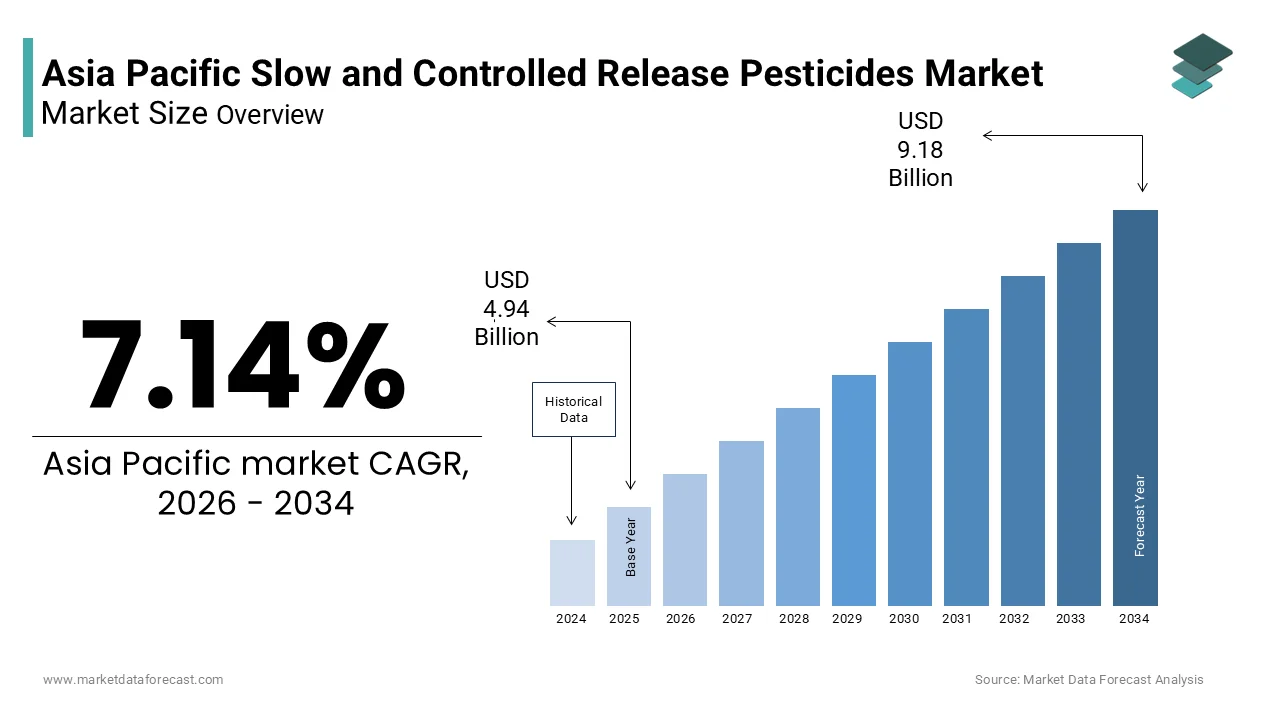
- Market Valuation: Valued at USD 4.94 billion in 2025, estimated at USD 5.29 billion in 2026, and projected to reach USD 9.18 billion by 2034, growing at a robust CAGR of 7.14% over the forecast period from 2026 to 2034.
- Primary Growth Drivers: Strict environmental regulations and sustainability mandates reducing chemical runoff; rising demand for high-value crops and precision agriculture; and the integration of nanotechnology and biodegradable polymers in farming practices.
Key Market Segment Metrics (2026–2034)
| Category | Leading Segment (Base Position) | Fastest-Growing Segment |
|---|---|---|
| By Application | Agriculture (commanding dominant market share driven by extensive staple crop cultivation and food security needs) | Precision Agriculture & Horticultural Applications (expanding rapidly due to high-value crop production demands) |
| By Pesticide Type | Insecticides (captures leading market share supported by continuous protection needs against tropical and subtropical pests) | Fungicides (projected at a fastest CAGR of 10.3% driven by climate-related moisture issues and fungal disease prevalence) |
| By Country / Region | China (dominates with 34.3% market share in 2025 backed by state-driven green agriculture and zero-growth action plans) | India & Southeast Asia (growing through agricultural modernization programs and integrated pest management adoption) |
Major Market Players & Industry Landscape
Market Structure: Intense competition characterized by global agrochemical giants leveraging advanced microencapsulation/nanotechnologies and regional players providing cost-effective solutions for smallholders.
Key Companies: BASF SE, Sumitomo Chemical Co. Ltd., DuPont, ADAMA Agricultural Solutions Ltd., The Dow Chemical Company, Syngenta, Monsanto Company (Bayer AG), and related innovators focusing on sustainable formulations.
Asia Pacific Slow and Controlled Release Pesticides Market Size
The Asia Pacific slow and controlled release pesticides market size was valued at USD 4.94 billion in 2025, and is expected to be worth USD 9.18 billion by 2034 from USD 5.29 billion by 2026. The market is growing at a CAGR of 7.14% during the forecast period.
The Asia Pacific region is central to this market due to its extensive agricultural base and an increasing focus on sustainable farming practices. According to the Food and Agriculture Organization, Asia accounts for approximately 30% of global rice production, which relies on effective pest management strategies to ensure food security. As per the World Bank, agriculture contributes nearly 10% to the GDP of developing economies in the region, highlighting the sector's economic significance. Regulatory bodies such as the Ministry of Agriculture and Rural Affairs in China have implemented stricter guidelines on pesticide residues, prompting a shift toward advanced delivery systems. As per the data from the Asian Development Bank, smallholder farmers in Southeast Asia face significant yield losses due to pests, which can affect up to 20% to 40% of potential harvests. The integration of nanotechnology and biodegradable polymers in pesticide formulations is gaining traction as researchers seek eco-friendly alternatives. These developments underscore the critical role of slow and controlled release mechanisms in balancing productivity with environmental stewardship across diverse climatic and cropping conditions in the Asia Pacific region.
MARKET DRIVERS
Stringent Environmental Regulations and Sustainability Mandates Drive Adoption
Strict environmental regulations and sustainability mandates imposed by governments across the Asia Pacific region significantly drive the adoption of slow and controlled release pesticides, which is a key market driver. Traditional pesticide applications often result in excessive chemical runoff, contaminating water bodies and harming non target organisms, which has prompted regulatory authorities to enforce tighter controls. According to the United Nations Environment Programme, agricultural runoff and nutrient loading contribute significantly to water quality issues in the region, leading to stringent laws limiting conventional pesticide usage. In China, the Ministry of Ecology and Environment has mandated a significant reduction in the chemical footprint of agriculture, encouraging the adoption of efficient delivery systems that minimize waste. Slow and controlled release formulations allow for precise dosage application, reducing the total volume of chemicals required while maintaining efficacy. Data from the Japanese Ministry of Agriculture, Forestry and Fisheries shows that farms using controlled release technologies report a measurable decrease in soil contamination levels compared to traditional methods. Furthermore, international trade standards for residue limits on exported produce compel farmers to adopt safer alternatives to avoid rejection of shipments. The European Union’s strict maximum residue limits also influence Asian exporters who must comply with access lucrative markets. These regulatory pressures create a compelling business case for manufacturers and farmers to transition toward advanced pesticide technologies that align with global sustainability goals and local legal frameworks.
Rising Demand For High Value Crops And Precision Agriculture
The rising demand for high value crops and the adoption of precision agriculture techniques is further propelling the growth of the Asia-pacific slow and controlled release pesticides market. As disposable incomes increase in countries like India, China, and Southeast Asian nations, consumer preferences shift toward premium fruits, vegetables, and organic produce, which require meticulous pest management to maintain quality and appearance. According to the Asian Development Bank, the value of high value agricultural exports from the region has grown steadily over the past few years, necessitating superior crop protection solutions. Slow and controlled release pesticides provide consistent protection throughout the growing season, reducing the risk of pest damage during critical growth stages. Precision agriculture technologies such as drone spraying and sensor based monitoring integrate seamlessly with these advanced formulations, allowing for targeted application and reduced labor costs. Data from the International Rice Research Institute indicates that farmers using controlled release nitrogen and pesticide technologies can achieve yield increases of up to 10% to 15% due to optimized nutrient and pest management. The ability to reduce application frequency is particularly beneficial for labor scarce regions where manual spraying is becoming increasingly expensive. Additionally, the protection of high value crops like strawberries, grapes, and tea from specific pests ensures higher market prices and profitability for farmers. This economic incentive drives widespread adoption of sophisticated pesticide delivery systems that maximize return on investment while minimizing resource input.
MARKET RESTRAINTS
High Initial Costs And Limited Awareness Among Smallholder Farmers
High initial costs and limited awareness among smallholder farmers are impeding the expansion of the Asia-pacific slow and controlled release pesticides market. Advanced formulations involving polymer encapsulation or nano carriers are inherently more expensive to produce than conventional pesticides, creating a price barrier for resource constrained farmers. According to the World Bank, approximately 80% of farms in Asia are smallholdings with less than 2 hectares of land, operating on thin margins that make premium inputs unaffordable without subsidies. The upfront cost of slow release pesticides can be 30% to 50% higher than standard options, deterring adoption despite long term savings. Furthermore, there is a significant knowledge gap regarding the benefits and application methods of these technologies. Data from the Food and Agriculture Organization reveals that access to formal agricultural extension services that educate farmers on new technologies remains inconsistent across Southeast Asia. Misinformation and reliance on traditional practices further hinder acceptance, as farmers may not perceive the immediate visible benefits of controlled release mechanisms. The lack of demonstration plots in local communities exacerbates skepticism. Without adequate financial support or educational programs, many farmers continue to rely on cheaper, albeit less efficient, conventional pesticides. This economic and informational barrier restricts market penetration primarily to large commercial farms, leaving a vast segment of the agricultural population underserved.
Complex Manufacturing Processes and Supply Chain Limitations
Complex manufacturing processes and supply chain limitations present substantial restraints for the Asia-pacific slow and controlled release pesticides market. Producing these advanced formulations requires specialized equipment and technical expertise in polymer chemistry and microencapsulation, which are not widely available in all Asia Pacific countries. According to the Asian Chemical Council, only a few major manufacturers in China, Japan, and India possess the capability to produce high quality controlled release agents at scale, leading to supply bottlenecks. The dependency on imported raw materials, such as specific biodegradable polymers, increases production costs and exposes manufacturers to currency fluctuations and trade disruptions. Data from the International Trade Centre indicates that global logistics challenges can lead to lead time fluctuations for specialized chemical imports, affecting regional availability. Additionally, the stability of these formulations under diverse climatic conditions in Asia, ranging from tropical humidity to arid heat, requires rigorous testing and quality control, adding to development time and costs. Distribution networks in rural areas often lack the infrastructure to handle sensitive chemical products, requiring temperature controlled storage that is frequently unavailable. These logistical hurdles limit the geographic reach of products and increase the risk of product degradation before reaching the end user. Consequently, smaller local manufacturers struggle to compete with established players, restricting market diversity and innovation.
MARKET OPPORTUNITIES
Expansion into Organic And Sustainable Farming Practices
The expansion into organic and sustainable farming practices is a significant opportunity for the Asia-pacific slow and controlled release pesticides market, as consumers and regulators increasingly favor eco-friendly agricultural inputs. While strictly organic certification may exclude synthetic pesticides, there is a growing segment of semi organic or integrated pest management systems that allow for minimal use of advanced low toxicity formulations. According to the Organic Trade Association, the market for sustainable food products in Asia has seen double digit growth, driven by health conscious urban consumers. Slow and controlled release technologies can utilize natural active ingredients, such as botanical extracts or biopesticides encapsulated in biodegradable matrices, offering a bridge between conventional and organic farming. This approach reduces the environmental footprint while providing effective pest control. According to the data from the Indian Council of Agricultural Research, farms adopting integrated pest management with controlled release biopesticides can see a significant reduction in total chemical usage. Governments in countries like Thailand and Vietnam are promoting sustainable agriculture through subsidies and training programs, creating a favorable policy environment. Manufacturers can capitalize on this trend by developing green formulations that meet organic standards or near organic criteria. Partnerships with certification bodies and NGOs can help validate the efficacy and safety of these products, building trust among farmers and consumers. This strategic alignment with sustainability trends opens new revenue streams and enhances brand reputation in a rapidly evolving market.
Technological Advancements in Nanotechnology and Smart Delivery Systems
Technological advancements in nanotechnology and smart delivery systems offer substantial opportunities for innovation and growth in the Asia-pacific slow and controlled release pesticides market. Nano encapsulation allows for the creation of ultra-small particles that enhance the solubility, stability, and targeted delivery of active ingredients, reducing the required dosage and minimizing off target effects. According to the National Nanotechnology Initiative, research funding for agricultural nanotechnology in Asia continues to show robust growth, reflecting strong institutional support. Smart delivery systems, responsive to environmental triggers such as pH, temperature, or enzyme activity, enable precise release of pesticides only when pests are active, further improving efficiency. As per the data from the Chinese Academy of Sciences, nano pesticide formulations can improve pest control efficacy by up to 40% compared to conventional methods in field trials. These innovations appeal to tech savvy farmers and large agribusinesses seeking competitive advantages through superior crop protection. Collaborations between universities and private companies accelerate the commercialization of these technologies, bringing cutting edge solutions to market. Additionally, the integration of digital tools for monitoring release rates and pest pressure allows for data driven decision making. By investing in research and development, manufacturers can differentiate their offerings and command premium prices. The potential for patent protection and exclusive rights further incentivizes innovation, positioning early adopters as market leaders in this high growth segment.
MARKET CHALLENGES
Regulatory Heterogeneity across Diverse Markets
Regulatory heterogeneity across diverse markets in the Asia Pacific region poses a significant challenge for manufacturers of slow and controlled release pesticides. Each country has its own distinct registration requirements, safety standards, and approval timelines, creating a complex compliance landscape. According to the Asia Pacific Economic Cooperation forum, harmonizing pesticide regulations remains an ongoing goal, with significant variations in data requirements and evaluation criteria among member economies. For instance, registering a new formulation in China may take several years, whereas in other Southeast Asian nations, the process might be faster but less transparent. Data from CropLife Asia Pacific indicates that regulatory inconsistencies increase compliance costs for companies operating in multiple countries. This fragmentation hinders economies of scale and delays market entry for innovative products. Manufacturers must navigate differing definitions of what constitutes a controlled release agent and varying limits on residual polymers. The lack of mutual recognition agreements means that data generated in one country may not be accepted in another, requiring redundant testing. Small and medium sized enterprises often lack the resources to manage these complex regulatory burdens, limiting their ability to expand regionally. Until greater harmonization is achieved, companies face prolonged time to market and increased operational risks, stifling innovation and competition.
Climate Variability and Unpredictable Weather Patterns
Climate variability and unpredictable weather patterns are further challenging the regional market expansion. These formulations are designed to release active ingredients at specific rates based on expected environmental conditions, but extreme weather events can disrupt this balance. According to the Intergovernmental Panel on Climate Change, the frequency of intense rainfall and droughts in Asia has increased, affecting pesticide performance. Heavy rains can wash away surface applied controlled release granules before they have a chance to function, while extreme heat can accelerate polymer degradation, leading to premature release and potential phytotoxicity. Data from the Australian Bureau of Meteorology shows that temperature fluctuations in key agricultural zones have become more erratic, complicating the calibration of release mechanisms. Farmers may experience reduced efficacy if the release rate does not match pest pressure influenced by changing microclimates. This unpredictability makes it difficult for manufacturers to guarantee performance claims, leading to liability issues and loss of farmer trust. Adapting formulations to withstand diverse and changing climatic conditions requires extensive and costly field testing across multiple regions. The lack of standardized protocols for evaluating climate resilience further complicates product development. Addressing this challenge requires robust research into climate adaptive materials and flexible formulation strategies.
REPORT COVERAGE
| REPORT METRIC | DETAILS |
| Market Size Available | 2025 to 2034 |
| Base Year | 2025 |
| Forecast Period | 2026 to 2034 |
| CAGR | 7.14% |
| Segments Covered | By Application, Pesticide Type, and Region |
| Various Analyses Covered | Global, Regional, & Country Level Analysis, Segment-Level Analysis, DROC, PESTLE Analysis, Porter’s Five Forces Analysis, Competitive Landscape, Analyst Overview on Investment Opportunities |
| Regions Covered | India, China, Japan, South Korea, Australia, New Zealand, Thailand, Malaysia, Vietnam, Philippines, Indonesia, Singapore and Rest of APAC |
| Market Leaders Profiled | BASF SE, Sumitomo Chemical Co. Ltd., DuPont, ADAMA, Agricultural Solutions Ltd., The Dow Chemical Company, Syngenta, Monsanto Company. |
SEGMENT ANALYSIS
By Application Insights
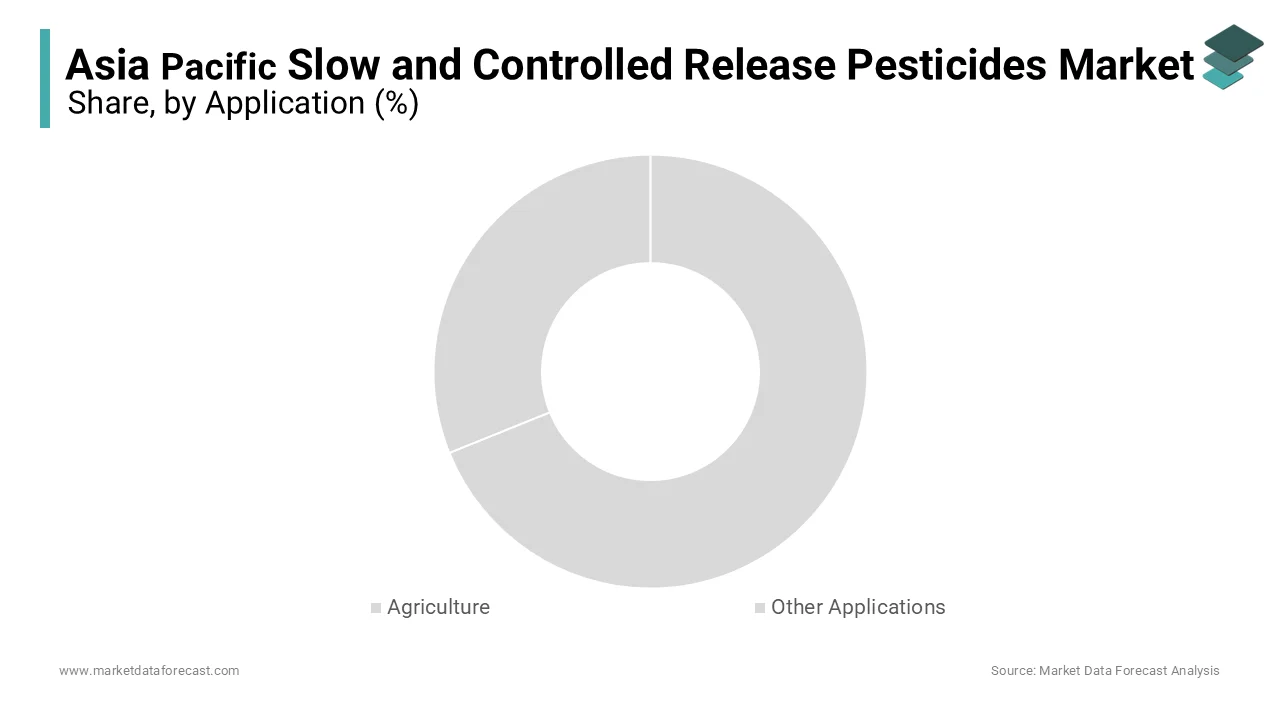
The agriculture segment held the commanding position in the Asia-pacific slow and controlled release pesticides market in 2025. The dominance of agriculture segment in the Asia-pacific market is majorly driven by the critical need to secure food supplies for the region's massive population. With Asia Pacific being home to over 60% of the world's arable land dedicated to staple crops such as rice, wheat, and corn, efficient pest management is non-negotiable. According to the Food and Agriculture Organization, crop losses due to pests in the region average between 20% and 40% annually, necessitating robust protection strategies that minimize reapplication frequency. Slow and controlled release formulations are particularly valuable in large scale farming operations where labor costs are rising and precision is required to prevent chemical runoff into water systems.
As per the data from the Chinese Ministry of Agriculture, the adoption of advanced pesticide delivery systems has increased consistently in major grain producing provinces as part of national sustainability goals. The ability of these products to maintain consistent efficacy over extended periods aligns with the seasonal cycles of key crops, reducing the risk of application errors during peak growing seasons. Furthermore, government subsidies in countries like India and Vietnam encourage the use of eco-friendly agricultural inputs to meet export standards. The sheer volume of agricultural activity ensures that this segment remains the primary revenue generator for manufacturers who tailor their innovations to suit diverse cropping patterns and climatic conditions across the continent.
By Pesticide Type Insights
The insecticide segment dominated the market by capturing the leading share of the Asia-pacific slow and controlled release pesticides market in 2025 and is expected to continue its market leadership, supported by a shift toward bio-based slow-release solutions over the next few years due to the pervasive threat of insect pests to both staple crops and high value horticultural produce. The tropical and subtropical climates of much of Asia Pacific provide ideal breeding grounds for a wide variety of destructive insects, including stem borers, aphids, and whiteflies, which can devastate yields if not managed effectively. According to the International Rice Research Institute, insect pests cause approximately 37% of potential rice yield losses in Asia, making effective insecticide application a priority for farmers. Slow release insecticides offer a distinct advantage by providing continuous protection during critical growth stages when plants are most vulnerable. Data from the Indian Council of Agricultural Research indicates that the use of controlled release neem based insecticides has shown promise in reducing pest incidence in organic farming trials. The shift toward integrated pest management practices favors insecticides that target specific pests while minimizing harm to beneficial organisms, a feature enhanced by controlled release mechanisms. Furthermore, the rise of resistant pest strains necessitates more sophisticated delivery systems that maintain optimal concentration levels over time, preventing resistance development. Manufacturers are focusing on developing bio based insecticides with controlled release properties to meet the growing demand for safer alternatives. This segment's dominance is reinforced by the high frequency of insect outbreaks and the economic imperative to protect crop value in a region heavily dependent on agricultural exports.
On the other side, the fungicides segment is poised for significant expansion and is estimated to register a CAGR of 10.3% during the forecast period as climate-related moisture issues continue to impact crop health over the next few years. Increased humidity and erratic rainfall associated with climate change have led to a higher prevalence of fungal diseases such as blast, rust, and mildew, which thrive in moist conditions. According to the Australian Bureau of Agricultural and Resource Economics, fungal infections in wheat and barley crops are a persistent threat during wetter harvest seasons. Slow and controlled release fungicides are essential for managing these diseases as they provide prolonged protection during periods of high infection pressure without the need for repeated spraying, which is often impractical during rainy seasons. The growth of the floriculture and fruit export industries in countries like Thailand and Vietnam further accelerates demand, as these high value crops are highly susceptible to fungal spoilage which affects marketability. Data from the Thai Department of Agriculture shows that flower exporters have increasingly adopted controlled release fungicides to meet strict international quality standards regarding residue limits. Additionally, the development of nano encapsulated fungicides enhances penetration and efficacy, allowing for lower dosage rates. As farmers seek to mitigate climate related risks and protect premium produce, the adoption of advanced fungicide formulations will continue to surge, driving significant market expansion.
COUNTRY ANALYSIS
China Slow and Controlled Release Pesticides Market Analysis
China accounted for 34.3% of the Asia-pacific market share in 2025 and is expected to remain the market cornerstone, with policy-driven adoption of green pesticides set to rise over the next few years. The Chinese government has implemented aggressive policies under the Zero Growth Action Plan for Pesticide Use to reduce chemical dependency and promote green agriculture. According to the Ministry of Agriculture and Rural Affairs, China aims to increase the utilization rate of green pesticides significantly by 2025, creating a favorable regulatory environment for advanced formulations. The vast scale of rice, wheat, and corn cultivation requires efficient pest management solutions that reduce labor and environmental impact. Data from the China National Agrochemical Corporation indicates that sales of controlled release fertilizers and pesticides show consistent growth as large state owned farms adopt modern technologies. The presence of leading domestic manufacturers and strong research infrastructure supports continuous innovation in polymer coating technologies. Additionally, rising consumer awareness regarding food safety drives demand for produce with lower pesticide residues, encouraging the adoption of precise delivery systems. The integration of digital agriculture platforms further facilitates the monitoring and optimization of controlled release applications. These factors collectively sustain China's leadership position as it transitions toward sustainable and high efficiency agricultural practices.
India Slow and Controlled Release Pesticides Market Analysis
India is likely to witness sustained market growth as agricultural modernization programs continue to reach a broader base of farmers over the next few years. The Indian government promotes Integrated Pest Management through various subsidy schemes and extension services, aiming to reduce the overall volume of chemical pesticides used. According to the Ministry of Agriculture and Farmers Welfare, the production of bio pesticides and controlled release formulations continues to rise, reflecting policy support. With a large population dependent on agriculture, ensuring food security while protecting soil health is a national priority. Data from the Federation of Indian Chambers of Commerce and Industry shows that the adoption of neem based controlled release pesticides has expanded significantly in states like Maharashtra and Punjab. The diverse agro climatic zones in India require versatile solutions that can withstand varying weather conditions, making slow release technologies attractive. Rising exports of spices, fruits, and vegetables to Europe and North America compel farmers to adhere to strict residue limits, driving demand for compliant pest management tools. Local manufacturers are increasingly investing in R&D to develop cost effective formulations suitable for small landholdings. These dynamics position India as a key growth engine in the regional market.
Japan Slow and Controlled Release Pesticides Market Analysis
Japan is expected to maintain its reputation as a technology leader, focusing on high-end precision agriculture solutions over the next few years. The Japanese agricultural sector focuses on high value crops such as fruits, vegetables, and rice, where quality and safety are paramount. According to the Ministry of Agriculture, Forestry and Fisheries, Japan consistently maintains one of the highest per capita expenditures on agricultural inputs in Asia, reflecting the premium placed on precision farming. The aging farmer population drives demand for labor saving technologies, including controlled release pesticides that reduce the frequency of application. Data from the Japan Crop Science Society indicates that a majority of professional farmers use advanced pesticide delivery systems to ensure consistent crop quality. Strict regulations on chemical residues and environmental protection encourage the use of eco-friendly and biodegradable formulations. The country is a hub for innovation in nanotechnology and polymer science, leading to the development of highly efficient and targeted pesticide products. Consumer preference for organic and low residue produce further supports the market for sophisticated pest management solutions. Japan's mature market serves as a testing ground for new technologies before they are scaled for broader regional adoption.
South Korea Slow and Controlled Release Pesticides Market Analysis
South Korea is projected to advance its smart farming ecosystem, with controlled-release pesticides becoming a key component of its digital agriculture strategy over the next few years. The government actively supports the digital transformation of agriculture through initiatives like the Smart Farm Innovation Valley, which integrates IoT sensors with advanced input applications. According to the Rural Development Administration, the adoption of smart farming techniques is growing, facilitating the use of controlled release pesticides that can be monitored and adjusted remotely. The focus on high value greenhouse crops, such as strawberries, peppers, and ginseng, requires precise pest management to maximize yield and quality. Data from the Korea Agro Fisheries and Food Trade Corporation shows that exports of premium agricultural products have grown steadily, driving farmers to adopt best practices, including advanced pesticide formulations. Environmental consciousness among consumers and strict regulatory frameworks promote the use of safe and efficient pest control methods. The presence of leading chemical companies fosters local innovation in controlled release technologies. South Korea's advanced infrastructure and tech savvy farming community create a conducive environment for the rapid uptake of next generation pesticide solutions.
Australia Slow and Controlled Release Pesticides Market Analysis
Australia is expected to continue focusing on large-scale sustainable farming, particularly in mitigating runoff in sensitive ecological regions over the next few years, driven by the need for sustainable practices in extensive broadacre farming systems. The vast scale of wheat, barley, and canola production requires efficient pest management solutions that minimize environmental impact and labor inputs. According to the Australian Bureau of Agricultural and Resource Economics and Sciences, conservation agriculture practices are widely adopted to preserve soil health and water resources. Controlled release pesticides help reduce runoff into sensitive ecosystems, such as the Great Barrier Reef catchment areas, addressing regulatory and community concerns. Data from Grain Producers Australia indicates that farmers are increasingly adopting integrated weed and pest management strategies that include slow release formulations to combat resistance. The dry climate in many regions necessitates products that remain stable and effective under harsh conditions. Strong research collaborations between universities and industry players drive innovation in drought tolerant and efficient pesticide delivery systems. Export markets for Australian grains demand high quality and low residue standards, further incentivizing the use of precise application technologies. These factors ensure steady demand for advanced pesticide solutions in the Australian agricultural sector.
COMPETITIVE LANDSCAPE
The competition in the APAC slow and controlled release pesticides market is intense and characterized by the presence of global agrochemical giants alongside emerging regional manufacturers. Large multinational corporations leverage their extensive research budgets and established distribution networks to dominate the premium segment with advanced microencapsulation and nano technologies. They focus on differentiation through superior efficacy data and sustainability credentials to appeal to regulated export markets. Regional players compete by offering cost effective alternatives tailored to the specific needs of smallholder farmers who are price sensitive. Innovation remains a key battleground as companies race to develop biodegradable polymers and bio based active ingredients that meet strict environmental regulations. Price competition is significant in commoditized segments prompting manufacturers to optimize production efficiencies. Strategic alliances with local entities help navigate complex regulatory landscapes and cultural nuances. Customer loyalty is driven by proven field performance and technical support services. The market sees continuous consolidation as larger firms acquire specialized technology startups to enhance their portfolios. Regulatory compliance acts as a barrier to entry ensuring that only reputable players with robust quality control can operate effectively. Emerging economies present growth opportunities but require adaptable strategies to address infrastructure and awareness gaps.
KEY MARKET PLAYERS
Some of the key players in the Asia Pacific slow and controlled release pesticides market are
- BASF SE
- Sumitomo Chemical Co. Ltd.
- DuPont
- ADAMA Agricultural Solutions Ltd.
- The Dow Chemical Company
- Syngenta
- Monsanto Company
Top Players in the Market
- Syngenta Group Co Ltd stands as a pivotal entity in the Asia Pacific slow and controlled release pesticides landscape leveraging its extensive research capabilities and strong regional presence. The company focuses on developing innovative formulations that enhance crop protection while minimizing environmental impact through precise delivery systems. Recent initiatives include the launch of advanced microencapsulation technologies tailored for tropical climates to ensure stability and efficacy. Syngenta actively collaborates with local agricultural institutions to educate farmers on sustainable practices and integrated pest management. Their strategic partnerships with distributors ensure wide availability of products across rural markets in India and Southeast Asia. By investing in digital farming tools Syngenta enables precision application which complements controlled release mechanisms. These efforts collectively reinforce its leadership position and drive adoption of high efficiency pesticide solutions among diverse farming communities throughout the region.
- Bayer AG plays a crucial role in the Asia Pacific market by offering a comprehensive portfolio of crop science solutions including slow release insecticides and fungicides. The company leverages its global expertise to adapt products for specific regional pests and climatic conditions ensuring optimal performance. Recent actions include the expansion of production facilities in China to meet growing demand for eco friendly agricultural inputs. Bayer prioritizes sustainability by developing biodegradable polymer coatings that reduce soil contamination and improve safety profiles. The company engages in extensive farmer training programs to demonstrate the economic benefits of reduced application frequency. By integrating data analytics with product offerings Bayer helps optimize usage patterns for maximum yield protection. These strategies solidify its reputation as a trusted partner for modernizing agriculture and promoting responsible pesticide use across key Asian markets.
- UPL Limited contributes significantly to the Asia Pacific slow and controlled release pesticides market through its focus on sustainable agriculture and open innovation model. The company specializes in creating cost effective formulations that address the needs of smallholder farmers who dominate the regional landscape. Recent developments include the introduction of nano based pesticide delivery systems that enhance bioavailability and reduce dosage requirements. UPL actively acquires niche technology firms to expand its portfolio of controlled release ingredients and application methods. The company strengthens its distribution network in Southeast Asia and India to ensure last mile connectivity for advanced products. By emphasizing community engagement and regulatory compliance UPL builds trust with local stakeholders. These actions enhance its competitive edge and support the transition toward more efficient and environmentally sound pest management practices in the region.
Top Strategies Used By Key Market Participants
Key players in the APAC slow and controlled release pesticides market primarily focus on product innovation and strategic localization to maintain competitive advantage. Companies invest heavily in research and development to create formulations that withstand diverse climatic conditions while ensuring consistent active ingredient release. Strategic partnerships with local distributors and agricultural cooperatives facilitate deeper market penetration and farmer education. Manufacturers also prioritize sustainability by developing biodegradable carriers and reducing toxic load to align with regulatory standards. Digital integration is increasingly important as firms offer precision farming tools that complement controlled release applications. Capacity expansion in key manufacturing hubs like China and India helps reduce costs and improve supply chain resilience. Additionally companies engage in advocacy and training programs to overcome awareness barriers among smallholder farmers. These multifaceted approaches ensure sustained growth and adherence to evolving environmental and safety norms in the dynamic Asia Pacific agricultural sector.
MARKET SEGMENTATION
This research report on the Asia Pacific slow and controlled release pesticides market is segmented and sub-segmented into the following categories.
By Application
- Agriculture
- Other Applications
By Pesticide Type
- Insecticides
- Herbicides
- Fungicides
By Country
- India
- China
- Japan
- South Korea
- Australia
- New Zealand
- Thailand
- Malaysia
- Vietnam
- Philippines
- Indonesia
- Singapore
- Rest of Asia Pacific