- Product Description Description
- Table of Contents TOC
- List of Table & Figure LOT
- Get Free Sample PDF Sample PDF
Market Size, 2025
$86.73 BnMarket Estimate, 2026
$93.95 BnMarket Forecast, 2034
$178.02 BnCAGR, 2026–2034
8.33%Global Aseptic Packaging Market Summary
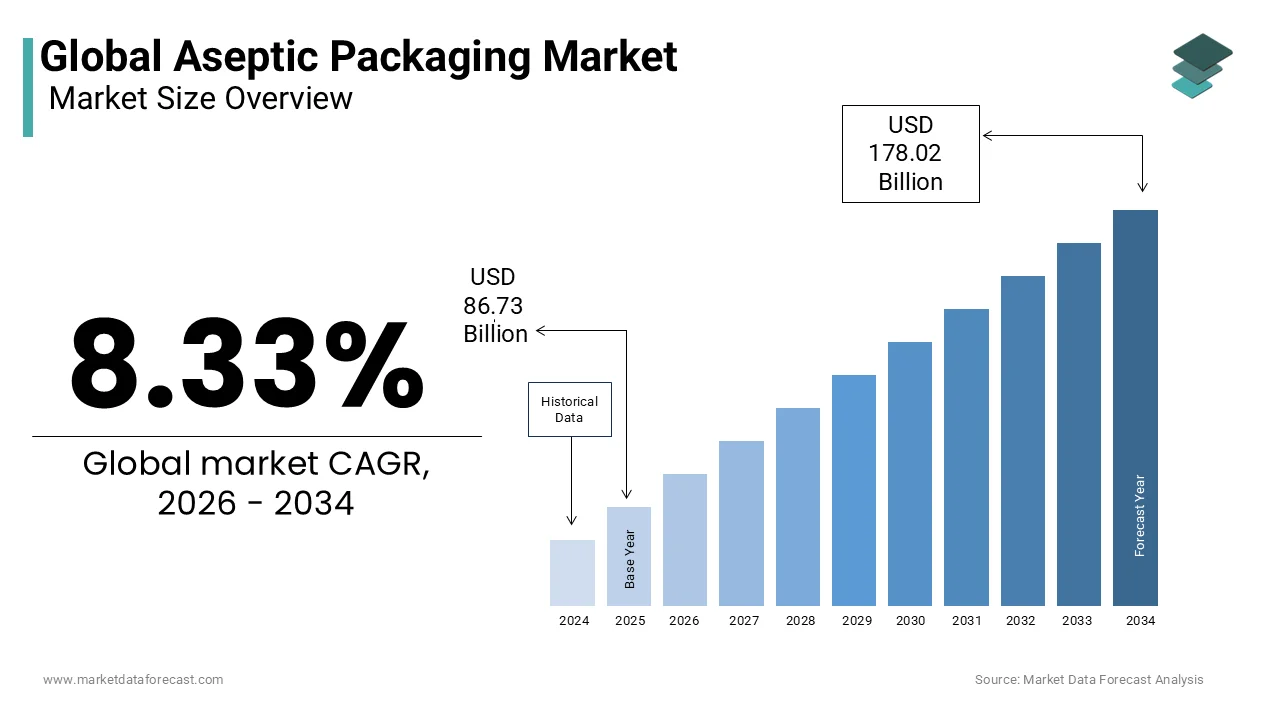
The global aseptic packaging market was valued at USD 86.73 billion in 2025, is estimated to reach USD 93.95 billion in 2026, and is projected to surge to USD 178.02 billion by 2034, registering a CAGR of 8.33% from 2026 to 2034, driven by rising demand for shelf-stable, preservative-free foods, rapid expansion of biologics manufacturing, and increasing e-commerce penetration in food distribution.
Key Market Highlights
- 2025 Market Size: USD 86.73 billion
- 2026 Estimate: USD 93.95 billion
- 2034 Forecast: USD 178.02 billion
- CAGR (2026–2034): 8.33%
- Core Applications: UHT milk, juices, RTD beverages, sterile injectables, vaccines
- Primary Materials: Paperboard-polyethylene-aluminum laminates, PET, bio-based polymers
Quick Growth Drivers
- Growing preference for preservative-free and minimally processed foods
- Rising global consumption of shelf-stable dairy and plant-based beverages
- Expansion of biologics, vaccines, and sterile injectables
- Increased online grocery and direct-to-consumer food delivery
- Cold-chain cost reduction through ambient packaging
Principal Restraints
- High capital investment for aseptic filling lines and sterile validation
- Limited affordability in emerging dairy markets
- Complex multilayer material recycling challenges
- Underdeveloped carton recovery infrastructure in many regions
High-Value Opportunities
- Development of aluminum-free barrier technologies
- Bio-based polyethylene and compostable cartons
- Growth of aseptic PET bottles for premium beverages
- Expansion into single-use sterile pharma bags and pouches
- Digital traceability integration via IoT-enabled filling systems
Key Market Challenges
- Stringent sterility validation and media fill testing requirements
- Regulatory fragmentation across developing economies
- Risk of microbial contamination due to biofilm formation
- Sustainability pressure under global packaging waste regulations
Fastest-Growing Segments
- Pharmaceutical Applications: 12.3% CAGR — biologics, mRNA, sterile injectables
- Bags & Pouches: 10.8% CAGR — lightweight, flexible formats
- Plastics (Aseptic PET): 9.4% CAGR — recyclable barrier improvements
- Cartons: Largest share (62.2% in 2025)
- Beverages: Dominant application segment
What Wins Commercially (Competitive Edge)
- Proven sterility validation and regulatory compliance track record
- Investment in recyclable and bio-based barrier technologies
- Integration of digital monitoring in filling operations
- Lightweight design reducing carbon footprint
- Strong partnerships with dairy cooperatives and biopharma firms
Top Strategic Ask for Executives
- Accelerate aluminum-free and mono-material R&D programs
- Expand aseptic capacity in Asia Pacific and Latin America
- Align packaging portfolios with circular economy regulations
- Strengthen pharma-grade sterile packaging capabilities
- Deploy IoT-enabled filling systems for predictive quality assurance
Leading Players
Some of the companies that are playing a dominating role in the global aseptic packaging market include:
- Tetra Pak
- Amcor plc
- SIG Combibloc Group AG
- Elopak AS
- Sealed Air Corporation
- Greatview Aseptic Packaging Co., Ltd.
- DS Smith Plc
Global Aseptic Packaging Market Size
The global aseptic packaging market was valued at USD 86.73 billion in 2025 and is estimated to reach USD 178.02 billion by 2034 from USD 93.95 billion in 2026, growing at a CAGR of 8.33% from 2026 to 2034.
The aseptic packaging is the advanced food and pharmaceutical packaging methodology in which sterilized products are filled into pre-sterilized containers under completely hygienic conditions, eliminating the need for refrigeration and preservatives while ensuring prolonged shelf stability. This technology relies on multilayered composite materials, typically combinations of paperboard, polyethylene, and aluminum foil that protect contents from light, oxygen, and microbial contamination. Aseptic packaging is widely used for liquid foods such as milk, juices, and soups, as well as sensitive biopharmaceuticals.
MARKET DRIVERS
Rising Demand for Shelf-Stable, Preservative-Free Food Products
Consumers are increasingly favoring minimally processed foods with extended shelf life and no chemical preservatives, which is propelling the growth of the aseptic packaging market. According to the International Food Information Council, 68% of global consumers in 2023 indicated a preference for products labeled “no artificial preservatives,” with aseptic processing enabling such claims through flash sterilization and sterile packaging. The technology preserves nutritional integrity and flavor while allowing ambient-temperature storage, reducing logistics costs.
Expansion of Healthcare and Biopharmaceutical Applications
Aseptic packaging is becoming indispensable in the biopharmaceutical sector, where sterility and contamination control are non-negotiable, which is expected to fuel the growth of the aseptic packaging market. Aseptic filling is used for parenteral drugs, with the U.S. Food and Drug Administration citing microbial contamination as a leading cause of drug recalls over 120 sterile injectable products were recalled in 2022 due to potential microbial presence. The rise of personalized medicine and cell and gene therapies, which require sterile, small-batch packaging, has intensified demand for flexible aseptic solutions.
MARKET RESTRAINTS
High Capital and Operational Costs of Aseptic Processing Lines
The implementation of aseptic packaging systems requires substantial investment in sterile environments, specialized filling machines, and rigorous validation protocols, while restricting the growth of the aseptic packaging market. In emerging markets such as Nigeria and Bangladesh, fewer than 10% of dairy processors can afford aseptic technology, relying instead on pasteurization and refrigeration, which limit shelf life and geographic reach.
Environmental Concerns Over Multilayer Material Disposal
Aseptic packaging is composed of complex multilayer laminates, typically paper, polyethylene, and aluminum, that are difficult to separate and recycle, raising sustainability concerns. According to the United Nations Environment Programme, less than 20% of aseptic cartons are recycled globally, with the remainder ending in landfills or incinerators. In the European Union, only 42% of beverage cartons were collected for recycling in 2023, as reported by Eurostat, falling short of the 65% target under the Packaging and Packaging Waste Directive. The aluminum-plastic fraction often ends up as residual waste due to inadequate separation infrastructure. While companies like Tetra Pak have invested in hydropulping and aluminum recovery, the process remains energy-intensive and limited in geographic reach.
MARKET OPPORTUNITIES
Growth of E-Commerce and Direct-to-Consumer Food Delivery
The surge in online grocery and meal kit delivery services is solely to level up the growth of the aseptic packaging market. According to Market Data Forecast, global online grocery sales reached USD 660 billion in 2023, with Asia Pacific accounting for over 55% of transactions, where last-mile refrigeration remains inconsistent. Aseptic packaging allows brands to ship soups, sauces, and dairy-based beverages directly to consumers with a shelf life of up to 12 months, reducing spoilage and expanding market reach. In China, Alibaba’s Freshippo reported a 40% reduction in delivery-related product damage after switching to aseptic formats for ready-to-eat meals.
Development of Recyclable and Bio-Based Aseptic Materials
Innovations in sustainable materials are unlocking new growth potential for the aseptic packaging sector. Companies are developing fully recyclable or bio-based cartons to address environmental criticisms. In 2023, Elopak launched the “Pure-Pak Infinite,” a paperboard-based carton with a bio-polyethylene barrier derived from sugarcane, certified compostable in industrial facilities. According to the European Bioplastics Association, bio-based polyethylene production reached 1.2 million metric tons globally in 2023, sufficient to replace conventional plastics in select aseptic applications. Tetra Pak has committed to sourcing 100% renewable or recycled materials by 2030, with pilot plants in Sweden using plasma coating to replace aluminum in barrier layers, enhancing recyclability.
MARKET CHALLENGES
Stringent Regulatory Compliance and Validation Requirements
Aseptic packaging operations are subject to rigorous regulatory oversight, requiring continuous validation of sterility, environmental controls, and personnel hygiene, which complicates scaling and global harmonization. According to the U.S. FDA’s 2023 inspection data, over 30% of warning letters issued to pharmaceutical and food facilities cited deficiencies in aseptic processing, including inadequate cleanroom monitoring and improper media fill testing. The European Medicines Agency mandates that aseptic lines undergo media simulation runs at least twice annually to verify sterility assurance, a process that halts production and incurs significant downtime. In developing nations, regulatory frameworks are often inconsistent or poorly enforced, leading to variable quality standards. The Codex Alimentarius Commission notes that only 45 of 180 member countries have established specific guidelines for aseptic food packaging, creating trade barriers and compliance uncertainty.
Risk of Microbial Contamination Despite Advanced Controls
The microbial breaches due to human error, equipment malfunction, or undetected contamination in raw materials are degrading the growth of the aseptic packaging market. According to a 2023 study published in the Journal of Food Protection, 12% of aseptic processing failures were traced to biofilm formation in filling nozzles, which evade standard sterilization cycles. In 2022, the U.S. Centers for Disease Control and Prevention linked a multi-state outbreak of Cronobacter sakazakii to contaminated powdered infant formula, highlighting the consequences of lapses in aseptic integrity. The pathogen, though not requiring oxygen, can survive in dry environments and proliferate if moisture is introduced during packaging. The International Dairy Federation reports that spore-forming bacteria like Bacillus and Clostridium remain a persistent challenge, as they can withstand ultra-high-temperature (UHT) treatment if not properly controlled.
REPORT COVERAGE
| REPORT METRIC | DETAILS |
| Market Size Available | 2025 to 2034 |
| Base Year | 2025 |
| Forecast Period | 2026 to 2034 |
| Segments Covered | By Product, Material, Application, and Region. |
| Various Analyses Covered | Global, Regional, and Country-Level Analysis, Segment-Level Analysis, Drivers, Restraints, Opportunities, Challenges; PESTLE Analysis; Porter’s Five Forces Analysis, Competitive Landscape, Analyst Overview of Investment Opportunities |
| Countries Covered | Asia Pacific Europe North America Latin America Middle East & Africa |
| Market Leaders Profiled | Tetra Pak International S.A., SIG Group AG, Amcor plc, Elopak ASA, Greatview Aseptic Packaging Co., Ltd., Mondi plc, Scholle IPN (SIG Group), DS Smith Plc, WestRock Company, Smurfit Westrock plc, Sealed Air Corporation, UFlex Limited. |
SEGMENTAL ANALYSIS
By Product Insights
The cartons segment dominated the aseptic packaging market by capturing 62.2% of the share in 2025, with its widespread use for liquid food products such as milk, juice, and plant-based beverages, where shelf stability and ambient storage are crucial. Cartons are typically composed of layered paperboard, polyethylene, and aluminum, offering an optimal balance of barrier protection, lightweight design, and distribution efficiency. According to the International Dairy Federation, over 130 billion liters of milk were packaged in aseptic cartons globally in 2023, with penetration exceeding 80% in Latin America and Southeast Asia.
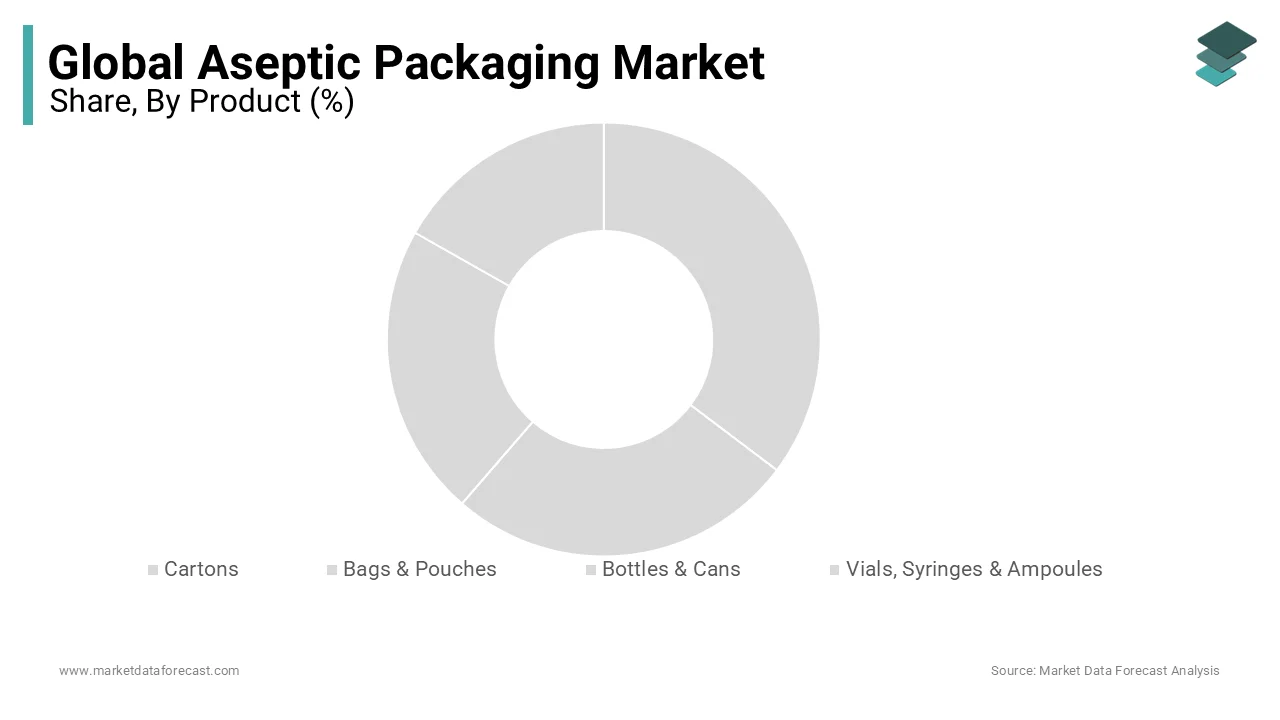
The bags and pouches segment is projected to grow at a CAGR of 10.8% from 2025 to 2033, with the rising demand for flexible, lightweight, and portion-controlled packaging in both food and pharmaceutical applications. In the food sector, stand-up pouches are increasingly used for soups, sauces, and baby food due to their ease of storage, resealability, and reduced material usage. According to the U.S. Department of Agriculture, flexible aseptic pouches reduce transportation emissions by 50% compared to rigid containers due to lower weight and higher packing density. In healthcare, multi-layer sterile pouches are essential for single-dose biologics and IV nutrition, with the World Health Organization highlighting their role in reducing contamination risks during field administration. Companies like Amcor and Sealed Air have introduced fully recyclable aseptic pouch prototypes using mono-material structures, addressing sustainability concerns.
By Material Insights
The composite laminates segment accounted for a dominant share of the aseptic packaging material market in 2025. These multi-material structures, typically combining paperboard, polyethylene, and aluminum foil, are the foundation of most aseptic cartons, delivering superior barrier properties against oxygen, light, and moisture. The aluminum layer is often just 6–8 microns thick, preventing microbial ingress and oxidation, enabling shelf lives of six to twelve months without refrigeration. According to the Institute of Food Technologists, oxygen transmission rates in composite laminates are below 0.1 cm³/m²/day, far outperforming monolayer plastics. Their use is especially in tropical climates where high humidity and temperature accelerate spoilage. In Brazil, Embrapa Food Technology reports that composite-based cartons have reduced dairy waste by 35% in off-grid regions.
The plastics segment is likely to grow at a CAGR of 9.4% during the forecast period, with these technological advancements enabling aseptic filling of rigid plastic containers, which offer durability, reusability, and improved consumer ergonomics. According to the Association of Plastic Recyclers, over 58% of post-consumer PET was recycled in the U.S. in 2023, compared to less than 20% for composite cartons. Major brands like Danone and Coca-Cola have launched aseptic PET bottles for premium juices and functional beverages, citing improved brand image and alignment with circular economy goals. Additionally, innovations in oxygen-scavenging additives and plasma coatings now allow PET to match the barrier performance of laminates, which is expanding its viability in sensitive applications such as plant-based milk and liquid supplements.
By Application Insights
The beverage segment was the largest and held a dominant share of the aseptic packaging market in 2025, with the global shift toward ready-to-drink (RTD) products that require long shelf life without refrigeration, including UHT milk, fruit juices, plant-based drinks, and functional beverages. According to the Food and Agriculture Organization, over 180 billion liters of beverages were aseptically packaged in 2023, with Asia Pacific and Latin America leading volume growth. The rise of premium RTD coffee and tea, particularly in convenience formats, has further expanded the application base. In South Africa, aseptic juice pouches have become a staple in school feeding programs due to their durability and ease of distribution. The beverage sector’s reliance on ambient logistics, coupled with high-volume production, ensures its continued dominance in shaping packaging innovation and scale.
The pharmaceuticals segment is anticipated to grow at a CAGR of 12.3% during the forecast period, with the rising production of biologics, vaccines, and sterile liquid drugs that require contamination-free packaging. The global biologics market, valued at USD 420 billion in 2023 according to IQVIA, depends heavily on aseptic filling for monoclonal antibodies, gene therapies, and mRNA-based treatments. The World Health Organization emphasizes that aseptic vials, syringes, and cartridges are essential for maintaining sterility in vaccine distribution, particularly in tropical and off-grid regions where cold chain logistics are unreliable. In 2022, UNICEF distributed over 2.4 billion doses of aseptically packaged vaccines globally, many in single-dose formats to prevent cross-contamination. Additionally, the U.S. FDA’s push for continuous manufacturing in pharma has increased demand for single-use, pre-sterilized bags and containers.
REGIONAL ANALYSIS
Asia Pacific Aseptic Packaging Market Insights
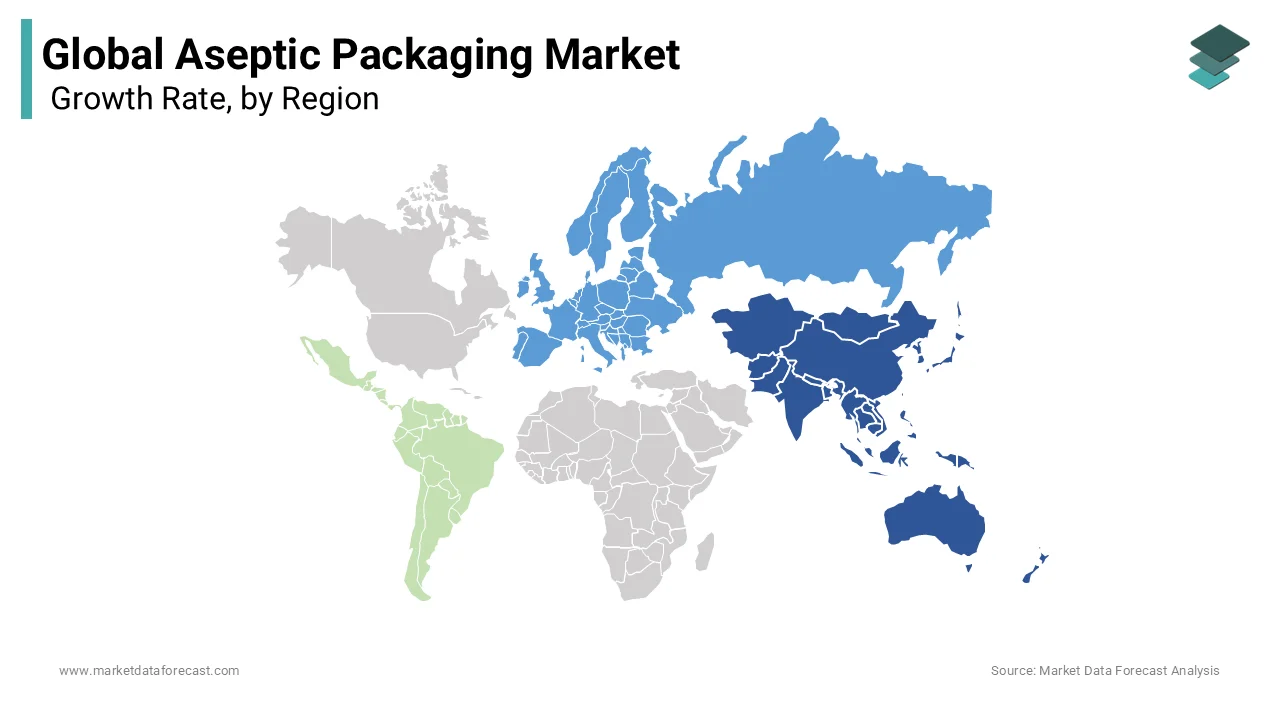
Asia Pacific was the top performer in the global aseptic packaging market by holding 45.3% of the share in 2025, owing to the rapid urbanization, rising disposable incomes, and expanding middle-class consumption of packaged foods and beverages. China has become the world’s largest market for plant-based beverages, with aseptic packaging enabling nationwide distribution of soy, oat, and almond milk. The Southeast Asian dairy sector, particularly in Vietnam and Indonesia, is investing heavily in UHT processing to overcome refrigeration gaps. Additionally, government initiatives like India’s PMFBY (Pradhan Mantri Formalization of Micro Food Processing Enterprises) are subsidizing aseptic lines for small producers, accelerating adoption.
Europe Aseptic Packaging Market Insights
Europe is expected to grow with the technologically advanced and sustainability-driven position in the aseptic packaging landscape. The region is characterized by mature dairy and beverage markets with high penetration of aseptic cartons, particularly in countries like Germany, France, and Spain, where ambient milk has long been a staple. However, the focus has shifted toward environmental performance, with the European Union mandating that all packaging be reusable or recyclable by 2030 under the Packaging and Packaging Waste Directive. As per Eurostat, only 42% of beverage cartons were recycled in 2023, prompting companies like Elopak and Tetra Pak to invest in fiber-based barriers and aluminum-free designs. The EU’s Green Deal and Digital Product Passport initiative are also pushing for traceable, low-impact packaging.
North America Aseptic Packaging Market Insights
North America is driven by the increasing disposable income and rising awareness. The United States and Canada have traditionally favored refrigerated distribution, but shifting consumer preferences for shelf-stable, on-the-go formats are accelerating aseptic adoption. Additionally, the FDA’s increasing scrutiny of sterile drug manufacturing has boosted demand for aseptic vials and single-use bioprocessing bags in the biopharma sector. Companies like PepsiCo and Danone have launched aseptic lines for premium juices in response to e-commerce logistics demands.
Latin America Aseptic Packaging Market Insights
Latin America is driven by the highest adoption rates of aseptic cartons for milk and juice, with over 85% of long-life dairy products packaged in brick-style cartons. According to Brazil’s Ministry of Agriculture, aseptic distribution has reduced milk spoilage by 38% in rural areas since 2020, where refrigeration is limited. The popularity of shelf-stable formats is further reinforced by high ambient temperatures and logistical challenges in remote regions. Private-label brands and government nutrition programs also rely on aseptic packaging for school milk and fortified beverages.
Middle East & Africa Aseptic Packaging Market Insights
Middle East & Africa aseptic packaging market growth is a rapidly expanding segment, capturing around 2% of the global aseptic packaging market in 2023, as reported by the Gulf Standardization Organization. The United Arab Emirates and Saudi Arabia are at the forefront, driven by Vision 2030 initiatives that prioritize food security and supply chain resilience. In Saudi Arabia, the Ministry of Environment, Water and Agriculture reports that 30% of perishable food is lost due to inadequate preservation, a gap that aseptic packaging is helping to close. South Africa has emerged as a regional hub, with aseptic cartons widely used for milk and fortified beverages in public health programs. UNICEF’s 2023 nutrition report highlights that aseptic pouches for therapeutic milk and vitamin-fortified drinks have improved delivery efficiency in drought-affected regions of East Africa.
COMPETITIVE LANDSCAPE
KEY MARKET PLAYERS
Some of the companies that are playing a dominating role in the Global Aseptic Packaging Market include
- Tetra Pak International S.A.
- SIG Group AG
- Amcor plc
- Elopak ASA
- Greatview Aseptic Packaging Co., Ltd.
- Mondi plc
- Scholle IPN (SIG Group)
- DS Smith Plc
- WestRock Company
- Smurfit Westrock plc
- Sealed Air Corporation
- UFlex Limited
TOP STRATEGIES USED BY THE KEY MARKET PARTICIPANTS
Key players in the aseptic packaging market are prioritizing sustainable material innovation, investing heavily in renewable, recyclable, and mono-material structures to meet tightening environmental regulations. Companies are expanding regional manufacturing and technical service centers in high-growth markets to reduce lead times and enhance customer support. Strategic partnerships with food and pharmaceutical producers enable co-development of application-specific packaging formats. Digital integration through IoT-enabled filling systems and blockchain traceability platforms is improving operational efficiency and consumer trust. Firms are also advancing lightweight designs and alternative barriers to reduce reliance on aluminum and plastic. Additionally, lifecycle assessments and carbon footprint labeling are being adopted to strengthen brand credibility and comply with ESG reporting standards across global supply chains.
COMPETITION OVERVIEW
The aseptic packaging market is defined by a competitive duality with technological advancements in sterility assurance and escalating pressure to deliver sustainable, circular solutions. While established players dominate through decades of process expertise and global infrastructure, differentiation now hinges on environmental performance and adaptability to regional supply chain needs. The Asia Pacific region has become a battleground for innovation, where companies must balance cost-effective scalability with compliance to diverse regulatory frameworks. New entrants leveraging bio-based materials and digital traceability are challenging legacy designs, forcing incumbents to accelerate R&D. Competition is less about price and more about lifecycle integrity, recyclability, and C.
TOP LEADING PLAYERS IN THE MARKET
Tetra Pak International S.A.
Tetra Pak has been a transformative force in the aseptic packaging landscape across the Asia Pacific, pioneering UHT processing and carton-based distribution systems that have redefined liquid food accessibility. The company collaborates closely with national dairy cooperatives, government nutrition programs, and private brands in India, China, and Southeast Asia to expand the reach of shelf-stable milk, fortified beverages, and plant-based products. In 2023, it launched the "Tetra Recart" technology in Thailand a carton-based alternative to canned foods by enabling aseptic packaging of soups and sauces with a 50% lower carbon footprint. It also partnered with India’s Amul to modernize filling lines and integrate digital traceability for rural supply chains.
SIG Combibloc Group AG
SIG has established a strong foothold in the Asia Pacific aseptic market by focusing on innovative, sustainable flexible packaging solutions tailored to regional consumption trends. The company’s aseptic bag-in-box and pouch formats are widely adopted in fast-growing markets like Indonesia, Vietnam, and the Philippines for dairy, beverages, and culinary products. It also commissioned a new aseptic filling line in Malaysia to serve Southeast Asian beverage brands seeking eco-conscious packaging. SIG’s digital platform, "SIG Connect," enables real-time monitoring of filling operations, enhancing efficiency for local manufacturers.
Elopak AS
Elopak has emerged as a key player in the Asia Pacific aseptic sector by championing environmentally responsible packaging without compromising sterility or functionality. The company’s Pure-Pak® cartons, made from responsibly sourced paperboard and bio-based polymers, are increasingly adopted by premium dairy and plant-based beverage brands in Australia, South Korea, and Singapore seeking alignment with ESG goals. It also expanded its partnership with New Zealand’sA22 Milk Company to enhance sustainable packaging for export markets. Elopak’s commitment to circularity is reinforced by its collaboration with local recyclers to develop fiber recovery infrastructure in Oceania.
Integration with smart manufacturing. Strategic alliances with dairy cooperatives, e-commerce platforms, and health agencies are redefining market influence.
MARET SEGMENTATION
This research report on the global aseptic packaging market is segmented and sub-segmented into the following categories.
By Product
- Cartons
- Bags & Pouches
- Bottles & Cans
- Vials, Syringes & Ampoules
- Others
By Material
- Composite Laminates
- Plastics
- Glass
- Metals
- Others
By Application
- Beverages
- Pharmaceuticals
- Food
- Dairy Products
- Others
By Region
- Asia Pacific
- Europe
- North America
- Latin America
- Middle East & Africa