- Product Description Description
- Table of Contents TOC
- List of Table & Figure LOT
- Get Free Sample PDF Sample PDF
Market Size, 2025
$1.75 BnMarket Estimate, 2026
$1.88 BnMarket Forecast, 2034
$3.40 BnCAGR, 2026–2034
7.67%Executive Summary: Asia Pacific Animal Disinfectants Market
- Market Scope: In-depth regional evaluation of the Asia Pacific animal disinfectants sector, covering chemical types, form factors, livestock applications, and country-level production and biosecurity frameworks.
- Market Valuation: Valued at USD 1.75 billion in 2025, reaching USD 1.88 billion in 2026, and projected to scale up to USD 3.40 billion by 2034, growing at a solid CAGR of 7.67% from 2026 to 2034.
- Primary Growth Drivers: Exponential growth in livestock populations and intensive farming practices, stringent government regulations, rising concerns over zoonotic disease outbreaks (such as avian influenza and foot-and-mouth disease), and commercial modernization of agricultural operations.
Key Market Segment Metrics (2026–2034)
| Category | Leading Segment (2025 Position) | Fastest-Growing Segment |
|---|---|---|
| By Type | Phenolic acid segment (holding a leading 46.4% share in 2025 due to broad-spectrum efficacy, cost-effectiveness, and stability in organic matter) | Lactic acid and eco-friendly organic acids (projected to grow at a fastest CAGR of 6.8%, driven by organic farming and sustainability shifts) |
| By Form | Liquid form segment (holding 36.4% share in 2025 owing to ease of application, precision dilution control, and automated spray system compatibility) | Powder form segment (expanding at a fastest CAGR of 9.1% due to extended storage stability and lower long-distance transportation costs) |
| By Application | Poultry sector (accounting for 36.4% share in 2025 as the regional hub for high-density poultry operations and short production cycles) | Aquaculture sector (growing at a fastest CAGR of 7.2% driven by intensive fish/shrimp farming and export sanitation standards) |
| By Country / Region | China (holding a massive 38.2% market share in 2025 driven by heavy pork/poultry production and strict post-ASF biosecurity laws) and India (21.2%) | Japan and South Korea (accelerating with advanced automated disinfection systems, strict food safety laws, and preventive healthcare) |
Major Market Players & Market Structure
Market Structure: Highly competitive landscape featuring global chemical conglomerates and specialized regional enterprises competing through technological innovation, integrated hygiene services, and localized pricing strategies for smallholder vs. commercial farms.
Key Companies: Ecolab Inc., BASF SE, Kersia Group, Stepan Company, Nufarm Limited, Shandong Daming Disinfection Technology Co. Ltd., and Neogen Corporation.
 Download Free Sample Report
Asia Pacific Animal Disinfectants Market Size
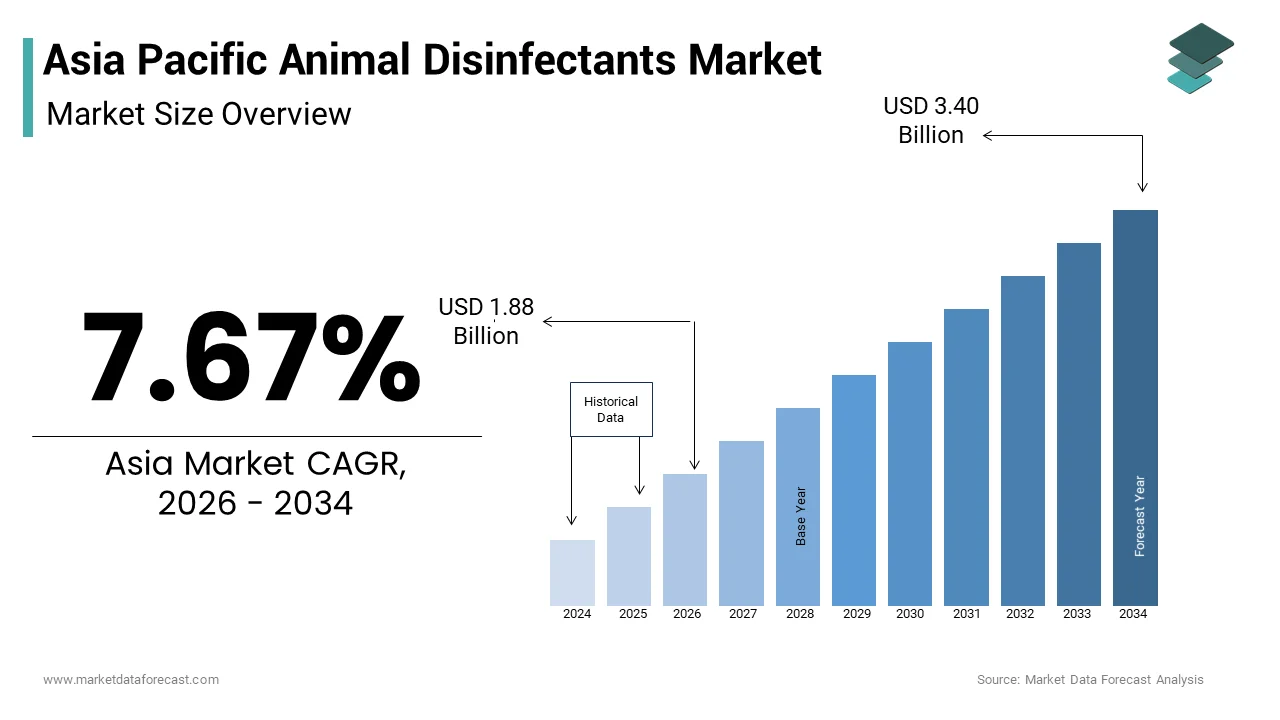
The Asia Pacific animal disinfectants market size was valued at USD 1.75 billion in 2025 and is anticipated to reach USD 1.88 billion in 2026 to reach USD 3.40 billion by 2034, at a CAGR of 7.67% from 2026 to 2034.
Introduction to the Asia Pacific Animal Disinfectants Market
The animal disinfectants are veterinary hygiene products designed to eliminate pathogens in livestock facilities, poultry houses, and companion animal environments. These chemical agents play a critical role in preventing zoonotic disease transmission and ensuring biosecurity across agricultural operations. Rapid urbanization has intensified livestock production in confined spaces, thereby increasing the risk of infectious outbreaks that necessitate rigorous disinfection protocols. Countries, such as China and India account for over 50% of the world’s pig population, which further amplifies the need for robust antimicrobial treatments in swine farming operations as per data from the Organisation for Economic Co-operation and Development. The prevalence of foot and mouth disease and avian influenza remains a persistent threat in several Southeast Asian nations, compelling governments to enforce stricter hygiene standards. This intensification requires consistent application of disinfectants to maintain herd health and comply with international export regulations.
MARKET DRIVERS
Surging Livestock Population and Intensification of Farming Practices
The exponential growth in livestock numbers is certainly fuelling the growth of the Asia pacific animal disinfectants market. As per the Food and Agriculture Organization, the region is home to more than 70% of the global poultry population and approximately 55% of the world’s swine herd. This dense concentration of animals creates ideal conditions for the rapid spread of infectious diseases by making regular disinfection not merely a best practice but an operational necessity. In countries like Vietnam and Thailand, intensive farming systems have replaced traditional backyard methods, leading to higher stocking densities that significantly elevate biosecurity risks. The average farm size in these nations has decreased while output per unit area has increased, resulting in greater accumulation of organic waste and pathogens. Consequently, farmers must apply disinfectants more frequently to maintain sanitary conditions. The livestock production in Southeast Asia has grown by 4% annually over the past decade, driven by rising domestic demand for protein. This intensification means that even minor lapses in hygiene can lead to substantial economic losses due to mortality and reduced productivity. Therefore, the sheer volume of animals requiring protection directly correlates with the consumption of disinfectant products. Furthermore, the shift toward commercial scale operations in India and Indonesia has standardized hygiene protocols, mandating the use of certified disinfectants to meet quality assurance benchmarks.
Stringent Government Regulations and Biosecurity Mandates
Governmental interventions and strict biosecurity mandates constitute another significant driver propelling the growth of the Asia Pacific animal disinfectants market. Following recent outbreaks of avian influenza and foot and mouth disease, regulatory bodies across the region have implemented rigorous sanitation requirements for livestock facilities. Member countries in Asia have strengthened their veterinary services and enforcement mechanisms to prevent cross border disease transmission. For instance, China introduced new animal epidemic prevention laws that mandate regular disinfection of farms and transport vehicles, directly boosting the procurement of approved disinfectant agents. Similarly, the Australian Department of Agriculture enforces strict biosecurity zones that require comprehensive cleaning and disinfection protocols for all entry points into livestock areas. These regulations are not limited to large commercial entities but also extend to smallholder farmers who must comply with national standards to participate in formal supply chains. The Japanese Ministry of Agriculture Forestry and Fisheries requires detailed records of disinfection activities for all poultry farms, ensuring traceability and accountability. Such regulatory frameworks create a compliant market environment where the use of ineffective or unapproved products is prohibited. Additionally, international trade agreements often require exporting nations to demonstrate high levels of biosecurity, which includes verified disinfection practices. As per the International Trade Centre, compliance with sanitary and phytosanitary measures is essential for accessing premium markets in Europe and North America.
MARKET RESTRAINTS
High Cost of Advanced Disinfectant Formulations
The elevated cost of advanced disinfectant formulations, particularly among smallholder farmers is hindering the growth of the Asia pacific animal disinfectants market. Many modern disinfectants incorporate sophisticated active ingredients, such as quaternary ammonium compounds and peracetic acid, which offer superior efficacy but come at a premium price point. These farmers often prioritize immediate feed and labor costs over preventive hygiene measures, viewing expensive disinfectants as discretionary expenditures. The fluctuating prices of raw materials used in disinfectant production, such as chlorine and alcohol derivatives, further exacerbate affordability issues. This financial pressure forces many farmers to resort to cheaper, less effective alternatives like lime or basic bleach, which may not provide adequate pathogen control. Additionally, the lack of access to credit facilities prevents small scale operators from investing in bulk purchases that could reduce unit costs. In rural areas of India and Indonesia, distribution margins add further to the final retail price, making branded disinfectants inaccessible to a large segment of the market. The economic disparity between large commercial farms and smallholders creates a fragmented demand landscape where price sensitivity severely limits the adoption of high-performance disinfectant products.
Lack of Awareness and Technical Knowledge Among Farmers
The lack of awareness and technical knowledge regarding proper disinfection protocols is also declining the growth of the Asia Pacific animal disinfectants market. Many farmers in rural areas do not fully understand the difference between cleaning and disinfection, often believing that visible cleanliness equates to microbial safety. According to the Food and Agriculture Organization, extension services in several Asian countries reach less than 30% of smallholder livestock producers, leaving a vast majority without access to expert guidance on biosecurity. This knowledge gap leads to improper application of disinfectants, such as using incorrect dilution ratios or failing to allow sufficient contact time, which renders the products ineffective. In regions like rural China and parts of Southeast Asia, traditional practices often outweigh scientific recommendations, with farmers relying on anecdotal evidence rather than proven methodologies. The inadequate training in animal hygiene contributes to the persistence of zoonotic diseases, yet educational programs remain underfunded and sporadic. Furthermore, the complexity of modern disinfectant labels, which often contain technical jargon, confuses users who lack formal veterinary education. This misunderstanding results in inconsistent usage patterns and awareness about product efficacy, discouraging repeat purchases. In addition, language barriers in multilingual countries hinder the dissemination of accurate information through packaging and marketing materials. This educational deficit creates a market environment where demand is suppressed not by lack of need but by lack of understanding, limiting the potential for widespread adoption of effective animal disinfectant solutions.
MARKET OPPORTUNITIES
Expansion of Organic and Free Range Farming Practices
The rapid expansion of organic and free-range farming practices is likely to set up new opportunities for the growth of the Asia Pacific animal disinfectants market. Consumers in countries, such as Australia, Japan, and South Korea are increasingly demanding ethically produced and chemical free animal products, driving a shift away from conventional intensive farming. Organic certification standards strictly prohibit the use of synthetic antibiotics and harsh chemical disinfectants by creating a niche demand for natural and eco-friendly alternatives. Manufacturers can capitalize on this trend by developing disinfectants based on plant extracts, essential oils, and probiotics that meet organic compliance criteria. The Japanese Agricultural Standard and Australian Certified Organic regulations provide clear guidelines for approved substances by offering a roadmap for product development. Furthermore, free range systems, which are gaining popularity in Thailand and Vietnam, require disinfectants that are safe for animals with outdoor access and minimal environmental impact. As per the International Federation of Organic Agriculture Movements, the area under organic management in Asia has doubled in the last five years, indicating a robust and growing customer base. This shift allows companies to differentiate their offerings and command premium pricing for specialized products.
Technological Advancements in Nano Based Disinfectants
The technological advancements in nano based disinfectants is another attribute to enhance the growth of the Asia Pacific animal disinfectants market. Nanotechnology enables the creation of particles with enhanced surface area and reactivity, allowing for lower dosage requirements and improved efficacy against resistant pathogens. The nano silver and nano copper formulations exhibit superior antimicrobial properties compared to conventional counterparts by making them ideal for high risk environments, such as poultry hatcheries and swine nurseries. These advanced products can penetrate biofilms more effectively, addressing a major challenge in livestock hygiene where bacteria often hide in protective layers. The growing research and development investments in countries like China and India are accelerating the commercialization of these innovative solutions. Additionally, nano based disinfectants often have longer residual activity, reducing the frequency of application and lowering labor costs for farmers. This efficiency appeal is particularly relevant in large scale operations where time and resource optimization are critical. The ability to offer sustained protection with minimal environmental residue aligns with tightening regulatory standards on chemical runoff. Companies that pioneer these technologies can establish first mover advantages and secure intellectual property rights, creating barriers to entry for competitors.
MARKET CHALLENGES
Inconsistent Regulatory Frameworks Across Countries
The inconsistent regulatory frameworks is to act as a major challenge for the growth of the animal disinfectants market. Each nation maintains its own set of approval processes, labeling requirements, and permitted active ingredients, creating a complex compliance landscape for multinational manufacturers. The non-tariff barriers related to sanitary regulations vary widely between members, hindering the seamless flow of goods within the region. For instance, a disinfectant approved for use in Australia may not meet the registration criteria in Indonesia or Vietnam due to differences in toxicity assessments and environmental impact evaluations. This fragmentation forces companies to conduct duplicate testing and submit separate dossiers for each market, significantly increasing time to market and operational costs. The regulatory harmonization efforts have progressed slowly, with only limited mutual recognition agreements in place for veterinary products. The lack of standardized guidelines also creates confusion for distributors and end users who operate across borders. In some cases, conflicting regulations lead to the availability of substandard or unregulated products in certain markets, undermining trust in established brands. Furthermore, frequent changes in local laws require constant monitoring and adaptation, straining corporate resources. This regulatory uncertainty discourages smaller players from entering multiple markets and limits the diversity of products available to consumers.
Environmental Concerns and Resistance to Chemical Runoff
The growing environmental concerns and resistance to chemical runoff is also to decline the growth of the Asia Pacific animal disinfectants market. Intensive livestock farming generates substantial volumes of wastewater containing residual disinfectants, which can contaminate soil and water bodies if not properly managed. The agricultural runoff is a leading cause of water pollution in Asia, affecting aquatic ecosystems and human health. Activists and local communities are increasingly opposing the discharge of chemical laden effluent from farms, pressuring governments to impose stricter discharge limits. This scrutiny forces farmers to invest in expensive waste treatment systems or switch to biodegradable alternatives, which may be less effective or more costly. The persistence of certain disinfectant residues in the environment also contributes to the development of antimicrobial resistance are global health crisis. In countries like China and India, where water scarcity is a critical issue, the reuse of contaminated water for irrigation poses additional risks. As per reports from regional environmental agencies, monitoring of agricultural pollutants has intensified, with penalties for non-compliance becoming more severe. This regulatory and social pressure compels manufacturers to reformulate products to minimize environmental impact, a process that requires significant research and development investment. Balancing efficacy with ecological safety remains a complex technical challenge. Failure to address these concerns can result in reputational damage and loss of market access by making environmental stewardship a critical factor for long term viability in the Asia Pacific animal disinfectants sector.
REPORT COVERAGE
| REPORT METRIC | DETAILS |
| Market Size Available | 2025 to 2034 |
| Base Year | 2025 |
| Forecast Period | 2026 to 2034 |
| CAGR | 7.67% |
| Segments Covered | By Type, Form, Application, and By Country |
| Various Analyses Covered | Global, Regional & Country Level Analysis, Segment-Level Analysis, DROC, PESTLE Analysis, Porter’s Five Forces Analysis, Competitive Landscape, Analyst Overview on Investment Opportunities |
| Regions Covered | India, China, Japan, South Korea, Australia, New Zealand, Thailand, Malaysia, Vietnam, Philippines, Indonesia, Singapore, and the Rest of APAC |
| Market Leaders Profiled | Stepan Company, Nufarm Limited, Shandong Daming Disinfection Technology Co ltd, Neogen Bio-Scientific Technology Co., Ltd, and others. |
SEGMENTAL ANALYSIS
By Type Insights
The phenolic acid segment was the largest by holding 46.4% of the Asia Pacific animal disinfectants market share in 2025 due to their broad spectrum efficacy and cost effectiveness. These agents are highly effective against a wide range of bacteria, viruses, and fungi by making them indispensable for general farm hygiene. The extensive use of phenolics in swine and poultry operations where high pathogen loads are common. According to the study, the Asia Pacific region accounts for over 55% of global pork production, creating a massive demand for robust disinfectants that can withstand organic matter interference. Phenolic compounds remain active in the presence of soil and manure, which is a critical advantage in intensive farming systems where complete cleaning is challenging. Additionally, the low cost of phenolic formulations compared to newer alternatives makes them accessible to smallholder farmers who constitute a significant portion of the agricultural landscape in countries like India and Vietnam. The small scale livestock producers often operate on thin margins, necessitating affordable hygiene solutions. The established supply chain and familiarity with phenolic products among veterinarians and farmers further cement their market leadership. Regulatory approvals for phenolic compounds are widespread across the region, facilitating easy procurement and usage.
The lactic acid segment is deemed to grow at a fastest CAGR of 6.8% during the forecast period with the increasing preference for eco-friendly and biodegradable disinfectants that align with sustainable farming practices. Lactic acid is a natural organic acid that effectively lowers pH levels by inhibiting bacterial growth without leaving harmful residues. According to the study, the demand for organic livestock products in Asia has surged by 15% annually, prompting farmers to adopt safer disinfection methods. The safety profile of lactic acid allows its use in food processing areas and around animals without stringent withdrawal periods by enhancing operational flexibility. Furthermore, regulatory bodies in countries like Japan and Australia are tightening restrictions on synthetic chemicals, encouraging the shift toward natural alternatives. As per the Japanese Ministry of Agriculture Forestry and Fisheries, guidelines for residual chemical limits in meat products have become stricter, favoring natural acids. The effectiveness of lactic acid against biofilms, which are prevalent in dairy and poultry facilities, also contributes to its adoption. Technological advancements have improved the stability and efficacy of lactic acid formulations, making them competitive with traditional disinfectants.
By Form Insights
The liquid form segment was the largest by holding 36.4% of the Asia Pacific animal disinfectants market share in 2025 due to its ease of application and versatility in various farming environments. Liquid disinfectants can be easily diluted and applied using spray systems, foamers, or foggers, ensuring comprehensive coverage of large surface areas. According to the International Livestock Research Institute, over 70% of commercial farms in Southeast Asia utilize automated spraying systems for routine sanitation, which require liquid formulations. The ability to mix liquid disinfectants with water allows for precise concentration control, optimizing efficacy while minimizing waste. This flexibility is crucial in diverse agricultural settings ranging from large scale poultry houses to small dairy farms. The immediate availability of ready to use or concentrate liquid products reduces preparation time for farmers, enhancing operational efficiency. The labor shortages in rural areas have increased the adoption of labor saving technologies, which is including easy to apply liquid disinfectants. The compatibility of liquid forms with existing infrastructure, such as water lines and misting systems, further supports their dominance. Additionally, liquid disinfectants penetrate cracks and crevices more effectively than powders by ensuring thorough pathogen elimination.
The powder form segment is expected to witness a fastest CAGR of 9.1% from 2026 to 2034 with the advantages in storage stability and transportation efficiency. Powdered disinfectants have a longer shelf life compared to liquids, as they are less susceptible to degradation from temperature fluctuations and light exposure. The shipping costs for powdered goods are approximately 30% lower than for liquids due to reduced weight and volume, making them economically attractive for remote rural areas, as per study. This cost efficiency is particularly beneficial in countries with vast geographical spreads like India and Indonesia, where logistics infrastructure may be limited. Farmers in these regions prefer powders because they can be stored for extended periods without losing potency, reducing the frequency of purchases. The post-harvest losses and spoilage of agricultural inputs are significant concerns in developing economies, and stable powder forms mitigate this risk. The ability to mix powders with water on site allows for customized concentrations based on specific hygiene needs. Recent innovations in soluble powder technologies have improved dissolution rates, addressing previous usability concerns. The growing awareness of total cost of ownership among commercial farmers is driving the shift toward powder forms, which offer better value proposition in terms of storage and transport, thereby accelerating their market penetration.
By Application Insights
The poultry segment was accounted in holding 36.4% of the Asia Pacific animal disinfectants market share in 2025 with the region's status as the global hub for poultry production. High stocking densities in poultry farms create ideal conditions for disease outbreaks, necessitating rigorous and frequent disinfection protocols. The susceptibility of birds to diseases such as avian influenza and Newcastle disease mandates strict biosecurity measures, including regular application of disinfectants in houses, equipment, and transport vehicles. The short production cycle of broilers means that farms undergo multiple cleanup and disinfection cycles annually, sustaining high demand for hygiene products. As per the survey, recent avian influenza outbreaks in Southeast Asia have led to mandatory disinfection zones that is further boosting the growth of the segment. The intensification of poultry farming, with larger flock sizes per unit area, increases the biological load and the need for powerful disinfectants. Commercial integrators, who dominate the sector, enforce standardized hygiene protocols across their supply chains, ensuring consistent product usage.
The aquaculture segment is esteemed to grow at a fastest CAGR of 7.2% during the forecast period with the rising demand for seafood and the expansion of intensive fish and shrimp farming practices. The high density of aquatic species in ponds and tanks, increases the risk of bacterial and viral infections, such as early mortality syndrome in shrimp, which requires effective water and equipment disinfection. Traditional methods are increasingly being replaced by specialized disinfectants that are safe for aquatic life and do not disrupt water quality. The export oriented nature of the industry in countries like Vietnam imposes strict international hygiene standards, compelling farmers to use certified disinfectants. The growing awareness of antibiotic resistance is also driving the shift toward preventive hygiene measures using disinfectants instead of therapeutic drugs.
COUNTRY LEVEL ANALYSIS
China Animal Disinfectants Market Analysis
China was the largest contributor in the Asia pacific animal disinfectants market by holding 38.2% of the share in 2025. The growth of the market is driven by its massive livestock industry and stringent government regulations. The country is the world’s largest producer of pork and poultry by creating an immense baseline demand for hygiene products. The livestock sector contributes significantly to the agricultural economy, with millions of tons of meat produced annually. The African swine fever outbreak in recent years transformed the industry by leading to the consolidation of farms and the implementation of strict biosecurity protocols. This regulatory push has standardized the use of high quality disinfectants across the country. Additionally, the growing middle class is demanding higher quality and safer animal products, prompting producers to invest in better hygiene practices. The presence of major domestic and international disinfectant manufacturers ensures a competitive market with diverse product offerings. Government subsidies for modernizing livestock facilities also encourage the adoption of advanced disinfection technologies.
India Animal Disinfectants Market Analysis
India animal disinfectants market held second position with 21.2% of share in 2025 with the large smallholder base and growing commercial farming sector. The country has the largest cattle population in the world, which drives demand for disinfectants in dairy and beef production. According to the study, the livestock sector is a key source of income for rural households, supporting millions of farmers. The prevalence of foot and mouth disease and other infectious diseases necessitates regular disinfection to protect animal health and productivity. The government has launched initiatives, such as the National Animal Disease Control Program, which includes provisions for hygiene and biosecurity improvements. Awareness campaigns are increasing the adoption of scientific farming practices among smallholders. The rise of organized dairy cooperatives and poultry integrators is standardizing hygiene protocols by creating a structured demand for branded disinfectants. Urbanization and rising income levels are boosting consumption of animal protein, further stimulating production and associated hygiene needs.
Japan Animal Disinfectants Market Analysis
Japan animal disinfectants is esteemed to grow at a fastest CAGR in coming years with high standards for animal welfare and food safety. Japan imports a significant portion of its meat but maintains strict domestic production standards for dairy and pork. The aging farmer population and labor shortages have driven the adoption of automated disinfection systems and high efficiency products. Japanese consumers are highly conscious of food safety, prompting producers to use premium disinfectants that leave minimal residues. The regulatory framework is stringent, with rigorous testing required for product approval, ensuring only high-quality items enter the market. As per the research, there is a strong emphasis on preventive healthcare, including regular disinfection, to reduce antibiotic use. The market is dominated by established brands that offer specialized formulations for specific pathogens. Environmental regulations also influence product choices, favoring biodegradable and eco friendly options.
South Korea Animal Disinfectants Market Analysis
South Korea animal disinfectants market growth is driven by the intense biosecurity measures following past disease outbreaks. The country has a compact but intensive livestock sector, particularly in pork and poultry production. The government has implemented strict zoning and disinfection protocols to prevent the spread of African swine fever and avian influenza. These measures include mandatory disinfection stations at farm entrances and regular monitoring of hygiene practices. The high density of farms in certain regions increases the risk of disease transmission, necessitating robust disinfection strategies. Farmers are increasingly investing in advanced disinfection technologies and consulting services to comply with regulations. The consumer demand for safe and high-quality meat products also drives producers to maintain high hygiene standards. Collaboration between government agencies, research institutions, and private companies fosters continuous improvement in biosecurity practices.
Australia Animal Disinfectants Market Analysis
Australia animal disinfectants growth is likely to grow with the export-oriented livestock industry and strict biosecurity borders. The country is a major exporter of beef, sheep, and dairy products, requiring adherence to international hygiene standards. This necessitates rigorous disinfection of farms, transport vehicles, and processing facilities. The large scale of Australian farms often involves extensive land areas, requiring efficient and durable disinfectant solutions. The industry bodies promote best practice guidelines for biosecurity, including regular disinfection, to maintain market access. The focus on sustainability and environmental protection is driving the adoption of eco-friendly disinfectants that minimize impact on soil and water resources. The market is mature with a high level of professionalization among farmers who view disinfection as a critical investment. The presence of major global and local manufacturers ensures a wide range of products tailored to specific needs.
COMPETITIVE LANDSCAPE
The competition in the Asia Pacific animal disinfectants market is characterized by a mix of global giants and specialized regional players vying for dominance through innovation and localized strategies. Multinational corporations leverage their extensive research capabilities and brand recognition to offer premium products with proven efficacy. These companies often compete on technological superiority and comprehensive service offerings including technical support and biosecurity consulting. Local manufacturers counter with cost effective solutions tailored to the specific needs and budget constraints of smallholder farmers, who dominate the agricultural landscape in many Asian countries. Regulatory compliance serves as a significant barrier to entry favoring established players with resources to navigate complex approval processes. Competitive dynamics are further influenced by the rising demand for sustainable and natural products prompting firms to innovate rapidly. Strategic alliances and joint ventures are common as companies seek to combine local market knowledge with global expertise to capture emerging opportunities in this fragmented, yet rapidly growing sector.
KEY MARKET PLAYERS
Some of the key players of the Asia Pacific Animal Disinfectants Market are
- Stepan Company
- Nufarm Limited
- Ecolab Inc
- BASF SE
- Kersia Group
- Shandong Daming Disinfection Technology Co ltd
- Neogen BBio-Scientific o Ltd
- others.
Top Players In The Market
- Ecolab Inc maintains a strong presence in the Asia Pacific animal disinfectants market through its comprehensive portfolio of hygiene solutions. The company focuses on providing integrated water and sanitation services to livestock and poultry producers across the region. Ecolab recently expanded its technical service teams in China and India to support farmers with customized biosecurity protocols. Their recent actions include launching advanced enzymatic cleaners that reduce environmental impact while maintaining high efficacy against pathogens. By partnering with local agricultural cooperatives, Ecolab enhances accessibility for smallholder farmers. The company invests heavily in research and development to create sustainable products that align with tightening regional regulations. This strategic focus on innovation and customer support strengthens their position as a trusted partner for commercial farming operations seeking reliable and eco friendly disinfection solutions.
- BASF SE contributes significantly to the Asia Pacific animal disinfectants market by leveraging its extensive chemical expertise and broad distribution network. The company offers a wide range of active ingredients and formulated products designed for various livestock applications. BASF recently strengthened its manufacturing capabilities in Southeast Asia to ensure consistent supply and faster delivery to customers. They have introduced novel quaternary ammonium compounds that offer improved stability and effectiveness in challenging environmental conditions. The company actively collaborates with veterinary experts to develop evidence based hygiene programs. BASF also emphasizes digital tools that help farmers monitor and optimize their disinfection practices. These initiatives demonstrate their commitment to enhancing farm productivity and animal health through superior chemical solutions and technical guidance tailored to the specific needs of the Asia Pacific region.
- Kersia Group is a specialized player in the Asia Pacific animal disinfectants market with a strong focus on veterinary hygiene and biosecurity. The company provides targeted solutions for poultry, swine, and aquaculture sectors, addressing specific pathogen challenges prevalent in the region. Kersia recently expanded its production facilities in Thailand to serve the growing demand in Southeast Asian markets. They have launched innovative organic acid based disinfectants that are safe for animals and the environment. The group actively engages in educational programs to raise awareness about proper disinfection techniques among farmers. Their recent investments in local research and development enable them to adapt quickly to emerging disease threats and regulatory changes in the dynamic Asia Pacific agricultural landscape.
Top Strategies Used By Key Market Participants
Key players in the Asia Pacific animal disinfectants market primarily employ product innovation and strategic partnerships to maintain competitive advantage. Companies invest heavily in research and development to create eco-friendly and highly effective formulations that comply with stringent environmental regulations. This includes developing nano based and organic acid disinfectants that offer superior performance with minimal ecological impact. Strategic collaborations with local distributors and veterinary service providers enhance market penetration and ensure timely delivery to remote rural areas. Manufacturers also focus on expanding their production capacities within the region to reduce logistics costs and improve supply chain resilience. Educational initiatives and technical support programs are widely used to build trust and encourage adoption among smallholder farmers. Additionally, companies pursue mergers and acquisitions to broaden their product portfolios and access new customer segments.
MARKET SEGMENTATION
This research report on the Asia Pacific animal disinfectants market is segmented and sub-segmented into the following categories.
By Type
- Hydrogen Peroxide
- Phenolic Acid
- Iodine
- Lactic Acid
- Others
By Form
- Powder
- Liquid
By Application
- poultry
- dairy cleaning
- swine
- equine
- dairy and ruminants
- aquaculture
By Country
- India
- China
- Japan
- South Korea
- Australia
- New Zealand
- Thailand
- Malaysia
- Vietnam
- Philippines
- Indonesia
- Singapore
- Rest of APAC