- Product Description Description
- Table of Contents TOC
- List of Table & Figure LOT
- Get Free Sample PDF Sample PDF
Market Size, 2025
$920.00 MnMarket Estimate, 2026
$980.00 MnMarket Forecast, 2034
$1,650.00 MnCAGR, 2026–2034
6.76%Executive Summary: Asia Pacific Betaine Market
- Market Scope: Comprehensive regional analysis of the Asia Pacific betaine market, detailing chemical types, formulation variants, end-use industrial applications, and key country-level demand profiles.
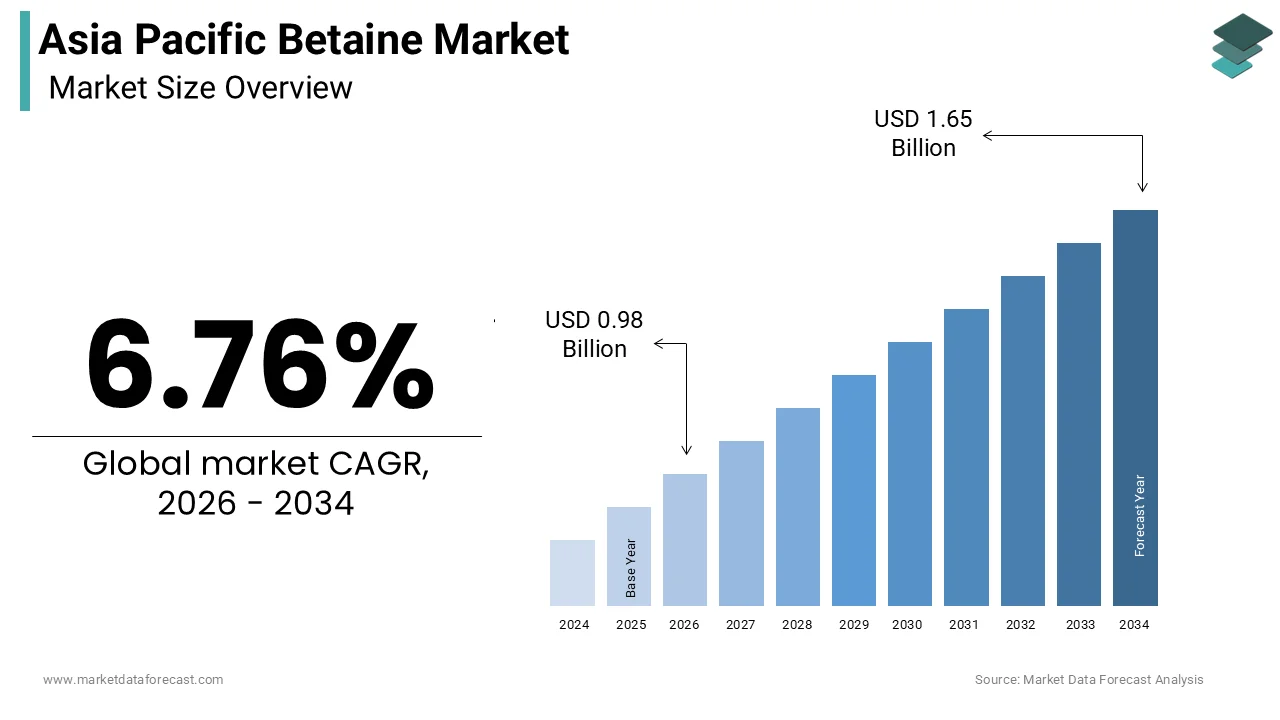
- Market Valuation: Valued at USD 920 million in 2025, reaching USD 980 million in 2026, and projected to expand to USD 1,650 million by 2034, growing at a robust CAGR of 6.76% from 2026 to 2034.
- Primary Growth Drivers: Large-scale industrial adoption across Asian economies, rising consumer preference for safe cosmetic formulations containing nutritive ingredients over synthetics, and expanded use in animal feed and metabolic health supplements.
Key Market Segment Metrics
| Category | Leading Segment (Base Position) | Fastest-Growing / High-Growth Segment |
|---|---|---|
| By Type | Natural Betaine (anchored by widespread extraction from sugar beets, cereals, and plant sources for clean-label alignment) | Natural Betaine (driven by surging demand for chemical-free, organic beauty ingredients and natural health supplements) |
| By Form | Betaine Anhydrous (held dominant position supported by widespread use in dietary and metabolic health formulations) | Cocamidopropyl Betaine (projected at a high growth rate, propelled by personal care sector pivoting to mild surfactants) |
| By Application | Pharmaceuticals (accounted for the highest revenue share of the overall regional industry) | Cosmetics and Detergents (projected to witness a massive growth rate due to rising demand for nutritive skin and hair care products) |
| By Region / Country | China (market leader dominating with over 25% of the overall regional market share) | India (experiencing rapid demand expansion driven by booming aquaculture feed applications and e-commerce beauty retail) |
Major Market Players & Industry Landscape
Market Structure: Highly competitive landscape characterized by major chemical producers, agricultural processors, and specialized ingredient suppliers scaling production capacities to meet diverse regional demands across personal care and animal nutrition.
Key Companies: BASF SE, DuPont, Nutreco N.V., Solvay S.A., Amino GmbH, Kao Corporation, Stepan Company, American Crystal Sugar Company, Sunwin Chemicals, and Associated British Foods Plc.
 Download Free Sample Report
Asia Pacific Betaine Market Size
The Asia Pacific Betaine Market size was calculated to be USD 920 million in 2025 and is anticipated to be worth USD 1,650 million by 2034, from USD 980 million in 2026, growing at a CAGR of 6.76% during the forecast period.
Betaine (also known as trimethylglycine or TMG) is a naturally occurring, sweet-tasting chemical compound derived from the amino acid glycine. It was first isolated from sugar beets (Beta vulgaris), which is how it got its name. According to ACS Omega, natural betaine is commercially extracted from sugar beets (Beta vulgaris) or the byproducts of beet molasses processing. This abundant raw material base directly supports local manufacturing capabilities and reduces import dependency for regional end users. As per the Asian Development Bank, the livestock sector in Asia contributes from about 10 per cent to about one third of agriculture's gross added value. These macroeconomic and agricultural indicators define the operational environment for the Asia Pacific Betaine Market, where supply chain proximity to sugar processing centres offers distinct logistical advantages. Manufacturers leverage this geographic synergy to serve both domestic feed mills and export-oriented nutraceutical companies. The convergence of traditional agriculture with modern bioprocessing establishes a unique foundation for market development distinct from Western regions reliant on sugar beet cultivation.
MARKET DRIVERS
Intensification of Poultry Production Necessitates Osmolyte Adoption
The rapid intensification of poultry farming across Southeast Asia fuels the growth of the Asia Pacific betaine market. This trend is driven by producers who urgently require dietary solutions to mitigate heat stress in tropical environments. According to sources, livestock product exports from Vietnam have shown dynamic expansion in recent years, including an increase in high-value processed poultry products targeting strict international regulations. Betaine supplementation is critical in these settings because it maintains cellular hydration and electrolyte balance when ambient temperatures exceed optimal ranges for broilers. As per PMC, dietary betaine works effectively as a zwitterionic osmolyte to mitigate heat stress, improve water retention, and enhance feed conversion ratios (FCR) across poultry species. The measurable loss drives integrators to incorporate betaine as a standard nutritional insurance policy rather than an optional additive. The compound also spares methionine, allowing nutritionists to reduce expensive synthetic amino acids in formulations while maintaining performance targets. As climate variability increases the frequency of heat waves across the region, the functional necessity of betaine becomes embedded in baseline feed specifications. This structural demand ensures consistent volume consumption independent of short-term price fluctuations or economic cycles.
Regulatory Bans on Antibiotic Growth Promoters Accelerate Alternative Uptake
Strict regulatory prohibitions on antibiotic growth promoters throughout the region create favourable conditions for betaine as a proven gut health modulator in commercial rations, which further boosts the expansion of the Asia Pacific betaine market. According to the Ministry of Agriculture and Rural Affairs of China, the national government enacted a complete ban on the manufacture and sale of commercial animal feeds containing growth-promoting pharmaceutical additives, effective July 2020. The legislative shift forced millions of farmers to reformulate diets using functional additives that support intestinal integrity and immune competence naturally. According to sources, the widespread regulatory removal of prophylactic antibiotics from animal diets has accelerated research into alternative nutritional vectors, including organic acids, plant extracts, and osmoprotective additives to manage herd health. Betaine enhances mucosal barrier function and nutrient absorption efficiency, which compensates for the removal of antimicrobial performance enhancers. Government agencies actively promote such alternatives through extension services to ensure food safety compliance without sacrificing productivity. The regulatory mandate transforms betaine from a premium niche ingredient into a mainstream compliance tool for large-scale integrators. This policy-driven adoption creates a high floor for demand that persists regardless of voluntary consumer preferences or marketing trends.
MARKET RESTRAINTS
Price Sensitivity Among Smallholder Farmers Limits Premium Additive Penetration
Widespread price sensitivity among smallholder livestock producers restricts the Asia Pacific Betaine Market. This limitation persists despite the clear technical benefits of osmolyte supplementation. According to sources, smallholder livestock producers across developing Asian economies face tight operating margins and high vulnerability to volatile feed and input costs. Betaine is often perceived as a discretionary expense compared to basal nutrients like protein and energy, leading to inconsistent usage during periods of low commodity prices. As per studies, adoption rates of specialised feed additives among small-scale poultry producers in Southeast Asia are constrained by limited working capital and restricted access to formal credit. This fragmentation prevents manufacturers from achieving economies of scale in distribution and education efforts targeting the bottom of the pyramid. Even when betaine demonstrates positive return on investment in trials, the upfront cash outlay deters adoption by resource-constrained operators. Manufacturers must absorb higher per-unit servicing costs to reach this vast but economically fragile segment. Rural incomes must rise, or subsidy programs must expand to change the current landscape. Until then, the addressable market remains strictly capped at commercial and semi-commercial tiers.
Inconsistent Raw Material Quality Impedes Standardised Manufacturing
Variability in molasses quality from diverse sugar processing sources complicates extraction consistency and increases purification costs, which hinders the expansion of the Asia-Pacific betaine market. According to PMC, sugarcane molasses typically exhibits a fermentable sugar and carbohydrate content ranging from 45 to 55%. The inconsistency forces manufacturers to constantly adjust processing parameters, leading to batch-to-batch variation in final betaine purity and yield. As per research, cane molasses contains higher concentrations of non-sugar impurities and ash relative to beet molasses, requiring additional clarification and energy expenditures during downstream processing. Higher processing costs erode competitiveness against imported European products derived from more uniform feedstocks. End users in pharmaceutical and premium cosmetic sectors demand strict specification adherence, which some local producers struggle to guarantee reliably. This quality gap confines many Asian manufacturers to lower-value feed applications where tolerance for variation is higher. Achieving consistent pharma-grade output requires significant capital investment in advanced chromatography and crystallisation technologies that smaller players cannot afford.
MARKET OPPORTUNITIES
Expansion of Aquaculture Sector Opens New Application Frontiers
The booming aquaculture industry across Asia unlocks potential for the Asia Pacific betaine market. Fish farmers are looking for sustainable solutions to improve survival and growth in intensive systems. According to the Food and Agriculture Organisation (FAO), Asia-Pacific aquaculture production forms the overwhelming driver of worldwide farming output, contributing approximately 90 per cent of the total volume of farmed aquatic animals globally. Betaine serves dual functions in aquatic feeds as both an osmoregulator helping fish cope with salinity changes and as a potent attractant enhancing the palatability of plant-based diets replacing costly fishmeal. As per PMC, feed inputs represent the leading operational cost category in commercial aquaculture operations, frequently exceeding 50 to 60 per cent of production costs, which creates significant interest in metabolic additives like betaine that act as feeding stimulants and improve nutrient absorption. Betaine inclusion has been shown to reduce nitrogen excretion, improving water quality and reducing environmental compliance risks for exporters. Governments in Vietnam, Thailand, and India are actively promoting sustainable aquaculture practices, aligning perfectly with betaine’s functional profile. As wild catch stagnates and farming intensifies, the volume potential for specialised aquatic additives expands exponentially. Early movers establishing technical credibility in this sector can capture long-term loyalty from major feed mills serving export-oriented shrimp and tilapia industries.
Rising Geriatric Population Drives Nutraceutical Demand for Metabolic Health
Demographic ageing across developed economies in the region creates substantial opportunity for betaine in nutraceuticals and is expected to drive the growth of the Asia Pacific market. These products specifically target cardiovascular and cognitive health concerns prevalent in elderly populations. According to research, East Asian nations are undergoing rapid demographic shifts characterised by an expanding senior citizen population, accelerating structural demand for healthy ageing formulations, nutraceuticals, and functional medical dietary products. Elevated homocysteine levels associated with ageing are increasingly recognised as modifiable risk factors for stroke and dementia, driving consumer interest in methyl donor supplements like betaine. As per reports, betaine acts as an essential methyl donor in the human body, helping to lower plasma homocysteine levels, which is closely linked to cardiovascular wellness and vascular support applications in mature consumer markets. Ageing consumers possess higher disposable income and greater health literacy, making them ideal targets for premium functional ingredients. Pharmaceutical and supplement companies are reformulating products to address specific geriatric needs, including sarcopenia prevention and liver protection. Regulatory harmonisation efforts across ASEAN facilitate cross-border trade of standardised nutraceuticals, expanding addressable markets beyond single countries. This demographic tailwind provides stable long-term growth insulated from agricultural commodity cycles.
MARKET CHALLENGES
Fragmented Regulatory Frameworks Complicate Regional Trade Harmonisation
Divergent regulatory standards across nations in the region challenge the Asia Pacific betaine market. This fragmentation creates complex compliance burdens for manufacturers seeking regional scale. According to the Association of Southeast Asian Nations, member states collaborate under framework agreements on Mutual Recognition Arrangements (MRAs), though national regulatory regimes maintain distinct technical requirements, maximum levels, and standards for food and feed inputs across individual member nations. A product compliant in Thailand may require reformulation or additional testing for sale in the Philippines or Malaysia, increasing time to market and administrative costs. As per sources, regulatory approval timelines and risk assessment protocols for feed additives vary widely across Asia-Pacific jurisdictions, often spanning from several months to several years. This fragmentation discourages investment in centralised manufacturing hubs optimised for regional supply. Companies must maintain multiple product SKUs and documentation packages, reducing operational efficiency. Smaller exporters lacking dedicated regulatory affairs teams face disproportionate barriers, limiting competition and innovation. Deeper harmonisation must occur through initiatives like the Regional Comprehensive Economic Partnership (RCEP) to unify the region. Until then, the market will remain a collection of isolated national segments rather than a unified trading bloc.
Climate Change Induced Agricultural Volatility Threatens Feedstock Security
The increasing frequency of extreme weather events linked to climate change is an existential risk to the Asia-Pacific betaine market. This volatility destabilises sugar cane yields and molasses availability. According to the Intergovernmental Panel on Climate Change (AR4 WGII), crop productivity is projected to decrease at lower latitudes, especially in seasonally dry and tropical regions, for even small local temperature increases. Since betaine production is intrinsically tied to sugar processing volumes, any disruption in cane harvests directly constrains raw material supply for extraction plants. As per studies, severe drought, erratic monsoons, and extreme weather events in 2023 caused widespread agricultural output declines and billions of dollars in economic damages across South and Southeast Asian agricultural corridors. Unlike European beet processors who benefit from temperate climate buffers, Asian cane millers face higher volatility, translating to unpredictable molasses pricing and allocation. Manufacturers unable to secure long-term supply contracts face production shutdowns during poor harvest years. Diversifying feedstock sources or investing in synthetic fermentation routes requires massive capital expenditure that not all players can justify. This systemic vulnerability undermines investor confidence and long-term strategic planning for capacity expansion.
REPORT COVERAGE
| REPORT METRIC | DETAILS |
| Market Size Available | 2025 to 2034 |
| Base Year | 2025 |
| Forecast Period | 2026 to 2034 |
| CAGR | 6.76% |
| Segments Covered | By Type, Application, Form, and Region |
| Various Analyses Covered | Global, Regional, & Country-Level Analysis; Segment-Level Analysis; DROC; PESTLE Analysis; Porter’s Five Forces Analysis; Competitive Landscape; Analyst Overview of Investment Opportunities |
| Regions Covered | India, China, Japan, South Korea, Australia, New Zealand, Thailand, Malaysia, Vietnam, Philippines, Indonesia, Singapore and Rest of APAC |
| Market Leaders Profiled | BASF SE, DuPont, Nutreco N.V., Solvay S. A., Amino GmbH, Kao Corporation, Stepan Company, American Crystal Sugar Company, Sunwin Chemicals, and Associated British Food Plc |
SEGMENTAL ANALYSIS
By Type Insights
The natural betaine segment maintained prominence in 2025 and occupied a commanding share of the Asia Pacific betaine market. This prominence was credited to the region's vast sugar cane processing infrastructure, which provides abundant and cost-effective molasses feedstock. According to FAOSTAT, the Americas lead global sugar cane production with 962 million tonnes, followed by Asia with 770 million tonnes, while commercial natural betaine is industrially extracted from sugar beet molasses. This geographic advantage allows local manufacturers to produce natural betaine at competitive prices compared to imported synthetic alternatives. As per the International Sugar Organisation (ISO), sugar beet production remains concentrated in temperate European regions, whereas tropical regions like Asia produce sugarcane, making industrial extraction from sugar beet molasses the primary commercial source for natural betaine globally. Consumers and regulators in key markets like Japan and Australia increasingly prefer plant-derived ingredients for food and pharmaceutical applications, driving demand for certified natural variants. The clean label trend in urban centres across Southeast Asia further supports premium pricing for natural betaine in human nutrition sectors. Manufacturers leverage this preference to differentiate their products in crowded supplement aisles. The established supply chain from mill to refinery minimises logistical costs and carbon footprint, aligning with corporate sustainability goals. This structural alignment between agricultural output and industrial processing secures the dominance of natural betaine in the regional market landscape.
The synthetic betaine segment is predicted to witness the highest CAGR of 9.2% during the forecast period, owing to expanding industrial applications and cost sensitivity in large-scale animal feed operations. According to research, synthetic betaine hydrochloride offers a cost-effective, non-seasonal alternative to natural betaine extraction for the animal feed sector, where feed costs represent a major percentage of livestock operations. As per EFSA, chemically synthesized betaine hydrochloride is manufactured to maintain a certified purity level of at least 98% on an anhydrous basis. The technical parity removes quality barriers that previously limited synthetic adoption in premium sectors. Regulatory approvals for synthetic betaine in feed additives across China and South Korea have accelerated its uptake as a reliable alternative to volatile agricultural supplies. The ability to scale production independently of seasonal harvest cycles ensures consistent availability for global supply chains. Industrial users prioritise batch consistency and supply security, which synthetic processes deliver more reliably than agricultural extraction. These factors collectively drive the rapid expansion of the synthetic segment across diverse end-use industries.
By Application Insights
In 2025, the animal feed segment held the largest share in the Asia Pacific betaine market because of the region's status as the global centre for intensive livestock and aquaculture production. According to sources, Asia generates the vast majority of the world's aquaculture output, fueling a substantial market for functional feed additives like osmolytes to enhance aquatic survival rates. Betaine serves as a critical attractant and stress reliever in aquatic feeds, helping farmers maintain productivity in high-density pond systems. According to studies, expanding urbanisation and income growth across Asia have steadily raised aggregate poultry meat demand, driving the requirement for higher feed conversion efficiency. Integrators incorporate betaine to mitigate heat stress in tropical climates where ambient temperatures frequently exceed optimal ranges for broilers. The ban on antibiotic growth promoters in China and Vietnam has further accelerated the adoption of functional additives like betaine that support gut health naturally. Feed mills formulate specific premixes to address these regulatory and environmental challenges, ensuring steady volume consumption. The economic pressure to reduce feed costs while maintaining growth rates makes betaine an indispensable component in modern ration formulations across the region.
The cosmetics and personal care application segment is estimated to register the fastest CAGR of 10.5% from 2026 to 2034, due to the booming beauty industry in East and Southeast Asia. As per research, the Asia Pacific skincare segment represents a substantial multi-billion-dollar market driven by escalating consumer demand for gentle, high-performance cleansing solutions. Cocamidopropyl betaine, a derivative of betaine, offers excellent foaming properties and skin compatibility, which aligns with the strong consumer preference for sulfate-free shampoos and facial cleansers in Japan and South Korea. As highlighted by formulations within the cosmetic industry, personal care products containing betaine derivatives show significantly lower irritation potential, making them ideal for sensitive skin products popular among younger demographics. The rise of K-beauty and J-beauty trends globally has increased demand for innovative ingredients that provide both efficacy and safety. Brands in Thailand and Malaysia are reformulating existing lines to include natural betaine extracts appealing to eco-conscious buyers. Marketing campaigns emphasising hydration and barrier protection leverage the moisturising properties of betaine to attract premium customers. The expansion of e-commerce platforms facilitates the launch of niche beauty brands that prioritise unique ingredient stories. This dynamic environment fosters rapid adoption of betaine in diverse cosmetic applications across the region.
By Form Insights
The betaine anhydrous segment dominated the Asia Pacific betaine market and accounted for a substantial share in 2025. This leading position was driven by its high concentration stability and suitability for pharmaceutical and premium nutritional applications. The United States Pharmacopoeia established strict monographs for betaine anhydrous, ensuring its purity and efficacy for medical use, which influences regulatory standards in developed Asian markets like Japan and Australia. This regulatory alignment builds trust among healthcare providers and patients who require precise dosing for treating metabolic disorders. The European Medicines Agency (EMA) regulates betaine anhydrous (under approved designations like Cystadane) as an established orphan drug for managing the rare inherited metabolic disease homocystinuria, providing baseline framework data mirrored by advanced international healthcare authorities. The absence of water content allows for longer shelf life in humid tropical climates, reducing the risk of clumping and degradation during storage and distribution. Pharmaceutical manufacturers in India and China prefer anhydrous forms to maximise active ingredient load per unit in tablet and capsule formulations. Its stability under various storage conditions ensures product integrity until consumption, which is critical for export-oriented businesses. The premium pricing of anhydrous betaine reflects its specialised processing requirements and higher purity levels. This form commands significant value share despite lower volume compared to hydrated variants due to its critical medical and high-end nutritional applications.
The cocamidopropyl betaine segment is anticipated to witness the fastest CAGR of 11.1% over the forecast period. This expansion is propelled by its versatility as a mild surfactant in liquid personal care products. According to sources, the market for liquid formatting segments like body wash and specialised hair cleansers in the Asia Pacific region has steadily advanced, driven by consumer evolution away from traditional block soaps. Cocamidopropyl betaine provides the necessary viscosity and foam stability required for these products while maintaining a gentle feel on the skin, which is highly valued in humid climates. Its compatibility with other surfactants allows formulators to create complex blends that offer superior cleaning and conditioning performance for hair and body care. The rise of baby care products featuring tear-free formulas in countries like Indonesia and the Philippines relies heavily on this form due to its non-irritating properties. Manufacturers in China are expanding production capacity to meet the surging demand from local and international personal care brands. The biodegradability of cocamidopropyl betaine aligns with environmental regulations restricting persistent surfactants in wastewater discharge. Innovation in hair styling products such as mousses and gels also utilises this form for its holding and conditioning capabilities. This operational convenience combined with functional benefits drives its rapid adoption across diverse personal care categories.
REGIONAL ANALYSIS
China Betaine Market Analysis
China led the Asia Pacific betaine market and captured a significant share in 2025. This dominance was attributed to its massive livestock industry and stringent food safety regulations. According to sources, regulations implemented by the Ministry of Agriculture and Rural Affairs (MARA) regarding restrictions on veterinary pharmaceuticals in livestock feeds have fundamentally accelerated the structural market pivot toward protective functional additives. This regulatory mandate forces integrators to adopt alternative solutions for gut health and performance, ensuring sustained demand. As noted in regional agricultural maps, domestic sugar beet cultivation across China's northern provinces establishes a domestic crop foundation capable of supporting localised agricultural processing and extraction methods to supply regional commercial demands. This agricultural base supports a robust manufacturing sector capable of serving both domestic and export markets. Rising disposable incomes in urban areas drive the growth of the human nutraceutical sector, where betaine is marketed for liver health and cardiovascular support. The presence of major multinational feed companies in China ensures high quality standards and consistent supply chains. Government initiatives to modernise agriculture encourage the use of technologies that enhance crop yields, such as betaine-based biostimulants. The sheer scale of China’s animal agriculture and population size makes it the primary volume driver for the regional market.
India Betaine Market Analysis
India is witnessing rapid growth in the Asia-Pacific betaine market because of its status as a major global producer of sugarcane and poultry. According to the Indian Sugar Mills Association (ISMA), India's actual domestic sugar production for the 2022/23 crop year reached approximately 32 million metric tons. This abundant raw material base supports local manufacturing capabilities and keeps production costs competitive for domestic feed mills. As per studies, domestic poultry production and livestock industries in India have scaled steadily upward, driven heavily by expanding middle-class consumption patterns and dietary protein market growth. This growth creates immense volume demand for cost-effective feed additives that improve feed conversion ratios in hot and humid climates. Betaine helps birds cope with heat stress, which is prevalent in many parts of the country, ensuring consistent productivity. The rising awareness of health benefits among urban consumers boosts demand for betaine supplements in the nutraceutical sector. Local manufacturers are investing in purification technologies to meet export quality standards for pharmaceutical grades. Government support for ethanol production from molasses sometimes competes with betaine feedstock, but overall availability remains sufficient. India’s dual strength in agriculture and livestock positions it as a key growth engine for the regional market.
Japan Betaine Market Analysis
Japan plays a key role in the Asia Pacific betaine market due to advanced healthcare systems and premium consumer preferences. According to the Ministry of Internal Affairs and Communications (MIC), Japan's elderly population aged 65 and older reached a record share exceeding 29% of the total population, creating expanding consumer demand for dietary and functional health supplements. Betaine is widely recognised in clinical settings for its ability to lower homocysteine levels, making it a staple in geriatric nutrition formulations. As per research, betaine has been investigated for its capacity to reduce circulating homocysteine levels, which are associated with vascular and metabolic function. Consumers in Japan prioritise high purity and safety, leading to robust demand for pharmaceutical-grade betaine anhydrous. The cosmetics industry in Japan leverages betaine derivatives for their moisturising and gentle cleansing properties in premium skincare lines. Strict regulatory standards ensure only high-quality products enter the market, fostering trust among buyers. Domestic manufacturers focus on innovation and value addition rather than volume production. The stable economic environment and high health literacy sustain steady demand for specialised betaine applications. Japan serves as a benchmark for quality and innovation, influencing trends in neighbouring developed markets.
South Korea Betaine Market Analysis
South Korea holds a noteworthy position in the Asia Pacific betaine market owing to its influential beauty industry and advanced animal nutrition sector. According to the Ministry of Food and Drug Safety, South Korea's cosmetics export value reached 8.5 billion USD in 2023. The K-beauty trend emphasises skin barrier protection and hydration, which aligns perfectly with the functional properties of betaine derivatives. This cultural export drives domestic production and innovation in personal care ingredients. In the agricultural sector, the Ministry of Agriculture, Food and Rural Affairs reported that intensive livestock farming requires efficient feed additives to maintain productivity in limited land areas. Betaine is widely used in swine and poultry feeds to improve meat quality and reduce stress. The government supports research into functional food ingredients, promoting betaine’s role in metabolic health. High consumer awareness and willingness to pay for premium health and beauty products sustain strong demand. Local companies invest heavily in R&D to develop novel betaine applications for both internal and external use. South Korea’s blend of technological advancement and cultural influence makes it a key innovator in the regional market.
Australia Betaine Market Analysis
Australia is expanding steadily in the Asia Pacific betaine market, propelled by high-quality agricultural outputs and strict regulatory standards. According to the Australian Bureau of Agricultural and Resource Economics and Sciences (ABARES), the livestock and meat processing sectors form a critical component of national agricultural export earnings, necessitating cost-effective feeding systems and feedlot programs to remain competitive internationally. Betaine is used extensively in cattle and sheep feeds to improve weight gain and carcass quality under varying climatic conditions. The Therapeutic Goods Administration enforces rigorous standards for therapeutic goods, ensuring that betaine supplements meet high purity and safety criteria. This regulatory framework supports a premium market for pharmaceutical-grade betaine used in sports nutrition and clinical settings. Consumers in Australia are increasingly health-conscious, driving demand for natural and organic supplements containing betaine. The dry climate in many regions makes osmolytes particularly valuable for maintaining animal hydration and performance. Local manufacturers focus on sustainability and traceability, appealing to eco-conscious buyers. The proximity to Asian markets facilitates export opportunities for high-value betaine products. Australia’s reputation for quality and safety enhances the credibility of its betaine offerings in the regional market.
COMPETITION OVERVIEW
The competition in the Asia Pacific Betaine Market is characterized by a mix of established multinational chemical giants and specialized regional agricultural processors who vie for dominance through innovation and supply chain efficiency. Major players leverage their extensive distribution networks and technical expertise to serve diverse end-use industries ranging from animal feed to personal care. The market sees intense rivalry in product quality and purity levels as customers in developed economies like Japan and Australia increasingly demand pharmaceutical-grade ingredients for sensitive applications. Companies differentiate themselves by offering sustainable and natural variants which command premium pricing due to consumer preference for clean label products. Price competition remains significant in the animal feed segment, where cost sensitivity is high, prompting manufacturers to optimize production processes. Strategic acquisitions and partnerships are common as firms seek to expand their geographic footprint and product portfolios. The entry of new biotech firms using fermentation technologies adds pressure on traditional extractors to innovate. Regulatory compliance serves as a barrier to entry, favoring large incumbents with resources to navigate complex approval processes. Overall, the market dynamics encourage continuous improvement in efficiency and product development.
Key Players in the Market
Major Key Players in the APAC Betaine Market are
- BASF SE
- DuPont
- Nutreco N.V
- Solvay S.A
- Amino GmbH
- Kao Corporation
- Stepan Company
- American Crystal Sugar Company
- Sunwin Chemicals
- Associated British Food Plc
Top Strategies Used by Key Market Participants
Key players in the Asia Pacific Betaine Market primarily employ vertical integration strategies to secure raw material supplies and reduce production costs. Companies invest in sugar processing facilities or establish long term contracts with agricultural cooperatives to ensure consistent access to molasses. This approach mitigates price volatility and enhances supply chain resilience in a region prone to climatic variations. Product differentiation is another critical strategy where manufacturers focus on developing high-purity grades for pharmaceutical and premium cosmetic applications. Innovation in biotechnological production methods allows firms to offer synthetic alternatives that are cost-effective and scalable. Strategic partnerships with local research institutions help validate health claims and expand application possibilities in diverse cultural contexts. Geographic expansion into emerging markets such as Vietnam and Indonesia enables companies to tap into growing demand from expanding livestock and nutraceutical sectors. Marketing efforts emphasize sustainability and natural origin to appeal to eco conscious consumers. These combined strategies strengthen competitive positioning and drive long term growth in the dynamic regional market.
Leading Players in the Asia Pacific Betaine Market
- Associated British Foods leverages its extensive global sugar processing network to supply high quality natural betaine to the Asia Pacific region. The company integrates betaine extraction into its existing operations, ensuring cost efficiency and sustainable sourcing practices from sugar beet and cane molasses. Recent investments in purification technologies have enabled the production opharmaceutical-gradede betaine anhydrous meeting stringent regulatory standards in Japan and Australia. This strategic focus on value added byproducts strengthens their position in the nutraceutical and premium feed sectors across the region. The company actively collaborates with research institutions to validate health benefits supporting marketing efforts in human nutrition. Their commitment to environmental sustainability appeals to eco conscious consumers and industrial buyers seeking green supply chains. By optimizing yield from molasses they maintain competitive pricing while delivering superior product consistency. This operational excellence allows them to serve diverse industries, including animal feed food, and personal care, with reliable supply.
- DuPont de Nemours utilizes its advanced biotechnology capabilities to develop innovative betaine solutions for animal nutrition and industrial applications in Asia Pacific. The company focuses on creating specialized formulations that enhance livestock performance under stress conditions prevalent in tropical climates. Recent expansions in their fermentation facilities have increased production capacity for synthetic betaine derivatives to meet growing demand in China and Vietnam. This expansion supports intensive farming practices where consistent supply is critical for large-scale integrators. DuPont invests heavily in research to discover new applications for betaine in crop protection and soil health. Their global distribution network ensures timely delivery to customers worldwide, maintaining strong relationships with key accounts. The company emphasizes technical support and education helping farmers optimize feed formulations for maximum return on investment. This customer centric approach drives loyalty and long term partnerships in competitive markets across the region.
- BASF SE applies its chemical engineering expertise to produce high-purity betaine for various industrial and consumer applications in the Asia Pacific market. The company integrates betaine into its broader portfolio of care chemicals serving the rapidly growing personal care industry in South Korea and Japan. Recent innovations in surfactant technology have led to the development of milder and more effective cleansing agents containing betaine derivatives. These products align with consumer trends towards gentle and sustainable skincare solutions popular in the region. BASF collaborates with cosmetic brands to create customized formulations that meet specific performance criteria. Their commitment to responsible care principles ensures safe and environmentally friendly production processes. The company continuously improves manufacturing efficiency, reducing energy consumption and waste generation. This focus on sustainability enhances their reputation among environmentally conscious buyers. BASF leverages its global presence to introduce betaine based innovations in emerging markets driving growth.
MARKET SEGMENTATION
This research report on the Asia Pacific betaine market has been segmented and sub-segmented based on type, form, application, and region.
By Type
- Synthetic betaine
- Natural betaine
By Form
- Betaine Anhydrous
- Cocamidopropyl Betaine
- Betaine Monohydrate
By Application
- Food & Beverages
- Animal Feed
- Pharmaceuticals
- Cosmetics and Detergents
By Region
- India
- Japan
- China
- Australia
- Singapore
- Malaysia
- South Korea
- New Zealand
- Southeast Asia