- Product Description Description
- Table of Contents TOC
- List of Table & Figure LOT
- Get Free Sample PDF Sample PDF
Market Size, 2025
$2.91 BnMarket Estimate, 2026
$3.10 BnMarket Forecast, 2034
$5.15 BnCAGR, 2026–2034
6.54%Executive Summary: Asia Pacific Butterfly Valve Market
- Market Scope: Comprehensive regional market analysis covering valve functions, end-use sectors, country-level leadership frameworks, infrastructure investments, and industrial automation/IIoT metrics for the Asia-Pacific butterfly valve sector.
- Market Valuation: Valued at USD 2.91 billion (2025), estimated at USD 3.10 billion (2026), and projected to reach USD 5.15 billion by 2034, registering a robust CAGR of 6.54% (2026–2034).
- Primary Growth Drivers: Rapid urbanization, infrastructure investments ($1.7 trillion annual needs through 2030 per ADB), water/power facility modernization, smart valve IIoT integration, and government water supply initiatives in China and India. Market challenges include raw material price volatility (stainless steel and ductile iron), while opportunities lie in LNG infrastructure expansion, cryogenic applications, and predictive maintenance systems.
Key Market Segment Metrics (2026–2034)
| Category | Leading Segment Position | Fastest-Growing Segment |
|---|---|---|
| By Function / End-Use Sector | Manual butterfly valves segment (dominated with 55.1% demand in 2025) & Oil & gas sector (held largest share with 44.6% demand in 2025) | Electric-actuated butterfly valves segment (projected CAGR of 9.4% from 2025–2033) & Water & wastewater treatment segment (expected CAGR of 10.2%) |
| By Region / Country | China (undisputed leader capturing estimated 34.2% share in 2025 supported by industrial base and manufacturing ecosystem) | India (emerged as second-largest market driven by large-scale infrastructure development and facility modernizations) |
Major Market Players & Market Structure
Market Structure: Highly competitive Asia-Pacific butterfly valve landscape centering on production capacity expansions, actuation integration centers, cryogenic LNG terminal line rollouts, and real-time IoT valve diagnostics partnerships.
Key Companies: KITZ Corporation, AVK Holding A/S, Crane Co., Alfa Laval Corporate AB, Curtiss-Wright Corporation, Flowserve Corporation, Emerson Electric Co., Pentair PLC, Weir Group PLC, Schlumberger Limited, Velan, Inc., KSB SE & Co. KGaA, and Honeywell International Inc.
Asia Pacific Butterfly Valve Market Size
The Asia Pacific butterfly valve market was valued at USD 2.91 billion in 2025 and is anticipated to reach USD 3.10 billion in 2026 and USD 5.15 billion by 2034, growing at a CAGR of 6.54% during the forecast period from 2026 to 2034.
Butterfly valves are employed to regulate, isolate, or modulate fluid flow in pipelines across sectors such as water treatment, power generation, oil & gas, and chemical processing. Characterized by their compact design, cost-efficiency, and low maintenance requirements, butterfly valves are increasingly favored in medium-to-large diameter applications. The region’s expanding urban infrastructure and industrial modernization have intensified demand for reliable and scalable fluid management solutions.
As per the Asian Development Bank, infrastructure investment needs in developing Asia are estimated at $1.7 trillion annually through 2030, underscoring the foundational role of industrial components like butterfly valves. Additionally, the United Nations Economic and Social Commission for Asia and the Pacific highlights that over 1.2 billion people in the region will be added to urban centers by 2050, accelerating the construction of water distribution and wastewater networks. These demographic and developmental shifts are directly influencing the deployment of advanced valve technologies. Countries such as China, India, and Indonesia are prioritizing smart city initiatives and industrial automation, further embedding butterfly valves into next-generation utility and process systems. The integration of corrosion-resistant materials and actuated variants is also gaining traction, driven by the need for durability in harsh operating environments.
MARKET DRIVERS
Expansion of Urban Water Infrastructure and Municipal Water Treatment Networks
The rapid expansion and modernization of urban water supply and wastewater treatment systems a primary catalysts propelling the Asia Pacific butterfly valve market. With urban populations surging across the region, municipal authorities are under mounting pressure to upgrade aging water networks and ensure uninterrupted, safe water delivery. In India, the Jal Jeevan Mission aims to provide tap water connections to all rural households by 2025, with an outlay exceeding $50 billion, directly increasing demand for pipeline control components such as butterfly valves. Similarly, China’s 14th Five-Year Plan allocates substantial funding for urban water recycling and sewage treatment, targeting a 95% municipal wastewater treatment rate by 2025, up from 92% in 2020. Butterfly valves are particularly suited for such applications due to their lightweight construction and ability to handle high-volume water flow with minimal pressure drop. In large-diameter pipelines common in water transmission mains, these valves offer operational efficiency and reduced installation costs compared to gate or globe valves. As per the Asian Water Development Bank, annual investment in water infrastructure across Asia Pacific is projected to exceed $120 billion by 2025, reinforcing the sustained deployment of butterfly valves in pumping stations, reservoirs, and filtration plants. Their compatibility with automated control systems further enhances their utility in smart water grid development.
Growth in Power Generation Capacity and Industrial Process Automation
The region’s aggressive expansion in power generation capacity, particularly in thermal, renewable, and nuclear energy sectors, coupled with rising adoption of industrial automation,n is another significant driver of the Asia Pacific butterfly valve market. As economies like Vietnam, Indonesia, and India strive to meet escalating electricity demand driven by industrialization and digitalization, new power plants are being commissioned at a rapid pace. Butterfly valves play a crucial role in steam, cooling water, and flue gas systems within thermal power stations due to their ability to provide tight shutoff and reliable modulation under high-temperature conditions. In combined cycle plants, large-diameter butterfly valves are deployed in condenser and circulating water systems, where operational efficiency and space optimization are paramount. Furthermore, the integration of digital control systems in power plants has elevated demand for actuated and smart butterfly valves capable of remote monitoring and predictive maintenance. This shift toward intelligent valve systems enhances system reliability and reduces downtime, making butterfly valves a preferred choice in modern power and process facilities across the region.
MARKET RESTRAINTS
Fluctuating Raw Material Prices and Supply Chain Volatility
The persistent volatility in raw material prices, particularly for metals such as stainless steel, ductile iron, and brass, which constitute the primary materials in valve manufacturing, is one of the most pressing restraints affecting the Asia Pacific butterfly valve market. The production of high-performance butterfly valves relies heavily on these alloys, and their price fluctuations directly impact manufacturing costs and profit margins. According to the World Bureau of Metal Statistics, the average price of stainless steel surged in 2022 due to energy crises in Europe and export restrictions in key producing nations, with ripple effects across Asian manufacturing hubs. These cost escalations force manufacturers to either absorb margins or pass on price increases to end-users, potentially dampening procurement in price-sensitive markets. Additionally, geopolitical tensions and logistical disruptions, such as port congestion in Shanghai and Singapore during the post-pandemic recovery phase, have led to extended lead times for material delivery. Such supply chain instability hampers just-in-time production models and complicates inventory planning for valve producers, particularly small and medium-sized enterprises lacking vertical integration. The reliance on imported specialty alloys further exacerbates vulnerability, limiting the ability of regional manufacturers to maintain consistent output and pricing.
Stringent Regulatory Compliance and Certification Requirements
The growing complexity and divergence of regulatory standards and certification requirements across Asia Pacific nations, which impose significant compliance burdens on butterfly valve manufacturers, is a critical challenge inhibiting market expansion. While countries like Japan and South Korea enforce rigorous adherence to international standards such as API 609, ISO 5208, and ASME B16.34, emerging markets, including Indonesia and the Philippines, are in the process of harmonizing their industrial safety and environmental regulations, leading to inconsistent enforcement and prolonged approval timelines. In Australia, the adoption of the Pressure Equipment Safety Act mandates third-party inspections and material traceability, increasing time-to-market for imported valves. Moreover, the European Union’s updated Pressure Equipment Directive (PED 2014/68/EU), which influences standards in export-oriented economies like India and Thailand, requires full technical documentation and CE marking, entailing substantial investment in testing and quality assurance. This regulatory fragmentation discourages smaller manufacturers from entering high-standard markets and slows down innovation cycles. As environmental regulations tighten, particularly in chemical and oil & gas sectors, valves must also meet fugitive emission standards such as ISO 15848, further compounding compliance complexity and operational costs.
MARKET OPPORTUNITY
Rising Adoption of Smart Valves in Industrial IoT and Digital Twin Applications
The integration of smart valve technologies with Industrial Internet of Things (IIoT) platforms and digital twin systems, enabling predictive maintenance, real-time monitoring, and enhanced operational efficiency, is a transformative opportunity within the Asia Pacific butterfly valve market. As industries across the region accelerate digital transformation, butterfly valves equipped with sensors, actuators, and communication modules are increasingly deployed in critical infrastructure. In smart water networks, butterfly valves with integrated position feedback and leakage detection systems allow utilities to remotely manage flow and respond to anomalies, reducing non-revenue water losses. Singapore’s Public Utilities Board has implemented such systems across its NEWater plants, achieving a reduction in maintenance costs. Similarly, in the oil & gas sector, digital twin models of pipeline networks utilize data from smart valves to simulate performance under varying conditions, improving safety and uptime. The shift toward Industry 4.0 in China, supported by the Ministry of Industry and Information Technology’s Smart Manufacturing Development Guidelines, further incentivizes the adoption of intelligent flow control devices. So, Asia Pacific is poised to lead adoption, driven by government-backed digitalization initiatives and rising cybersecurity investments in industrial networks.
Expansion of LNG Infrastructure and Cryogenic Applications
The burgeoning development of liquefied natural gas (LNG) infrastructure across the Asia Pacific presents a significant growth avenue for high-performance butterfly valves designed for cryogenic and high-pressure environments. As nations seek to diversify energy sources and reduce carbon emissions, LNG has emerged as a transitional fuel, driving investments in regasification terminals, storage facilities, and pipeline networks. These facilities require specialized butterfly valves capable of withstanding temperatures as low as -196°C while maintaining leak-tight integrity. Advanced cryogenic butterfly valves with extended bonnets, vacuum-jacketed bodies, and fluoropolymer seals are increasingly specified in LNG transfer lines and boil-off gas management systems. In India, the government’s plan to increase the share of natural gas in the energy mix from 6% to 15% by 2030 involves constructing over 10,000 kilometers of gas pipelines, creating sustained demand for durable flow control solutions. So, the demand for technically advanced butterfly valves is set to rise sharply in the coming decade.
MARKET CHALLENGES
Intense Price Competition and Proliferation of Low-Cost, Substandard Valves
The saturation of low-cost, substandard valves that undermine product quality, system safety, and long-term market sustainability is a persistent challenge confronting the Asia Pacific butterfly valve market. While the region hosts globally recognized manufacturers such as KITZ Corporation and AVK, a significant portion of the market is dominated by small-scale producers in China, India, and Vietnam, offering valves at aggressively discounted prices. These valves often use inferior materials, lack proper certification, and exhibit premature failure in critical applications. This proliferation not only damages the reputation of legitimate manufacturers but also increases lifecycle costs for end-users through frequent replacements and unplanned downtime. Furthermore, public procurement policies in several countries prioritize lowest bid selection, discouraging investment in high-performance valves. As per the Asian Development Bank, procurement inefficiencies in infrastructure projects lead to an increase in long-term operational expenses. The absence of stringent enforcement mechanisms allows substandard products to remain in circulation, particularly in rural and semi-urban installations. This challenge is compounded by limited awareness among buyers about technical specifications, enabling unscrupulous vendors to exploit information asymmetry. Addressing this issue requires coordinated efforts in standardization, third-party testing, and buyer education.
Skilled Labor Shortage in Valve Installation and Maintenance
The acute shortage of skilled technicians capable of installing, commissioning, and maintaining advanced valve systems, particularly in automation and cryogenic applications, is a critical operational challenge within the Asia Pacific butterfly valve market. Despite rapid industrial growth, technical training infrastructure has not kept pace with the complexity of modern valve technologies. The skills gap leads to improper installation, misalignment, and incorrect torque application, resulting in premature wear and system leaks. The situation is exacerbated in remote or offshore installations, where access to qualified personnel is limited. Moreover, the transition toward digital valve systems requires competencies in data interpretation, network integration, and cybersecurity—areas where current vocational curricula remain underdeveloped. Without targeted upskilling initiatives and industry-academia collaboration, the performance and reliability of butterfly valve installations will remain compromised, constraining the market’s full technological potential.
REPORT COVERAGE
| REPORT METRIC | DETAILS |
| Market Size Available | 2025 to 2034 |
| Base Year | 2025 |
| Forecast Period | 2026 to 2034 |
| CAGR | 6.54% |
| Segments Covered | By Function, End-User, Country |
| Various Analyses Covered | Global, Regional and Country Level Analysis; Segment-Level Analysis; DROC; PESTLE Analysis; Porter’s Five Forces Analysis; Competitive Landscape; Analyst Overview of Investment Opportunities |
| Regions Covered | India, China, Japan, South Korea, Australia, New Zealand, Thailand, Malaysia, Vietnam, Philippines, Indonesia, Singapore, and the Rest of APAC |
| Market Leaders Profiled | Alfa Laval Corporate AB, Curtiss-Wright Corporation, Flowserve Corporation, Emerson Electric Co., Pentair PLC, Weir Group PLC, AVK Group A/S, Crane Company, Schlumberger Limited, Velan, Inc., KSB SE & Co. KGaA, Honeywell International Inc. |
SEGMENTAL ANALYSIS
By Function Insights
The manual butterfly valves segment dominated the Asia Pacific market by accounting for 55.1% of total demand in 2025. Their widespread adoption is due to cost efficiency and suitability for non-critical applications across decentralized infrastructure. A primary driver of this dominance is their extensive deployment in municipal water networks, particularly in developing economies where capital expenditure constraints favor simple, reliable solutions. These valves are frequently installed in pump stations and reservoirs where automated control is not operationally necessary. Additionally, their compatibility with low-pressure pipelines, common in rural water supply schemes, enhances applicability. The absence of electrical or pneumatic actuators also reduces vulnerability to power outages and cyber risks, a critical consideration in regions with unstable grid infrastructure. Furthermore, local manufacturing ecosystems in China and Vietnam produce millions of manual butterfly valves annually, supported by mature foundry networks. This entrenched cost-performance advantage ensures continued dominance despite the rise of automation.
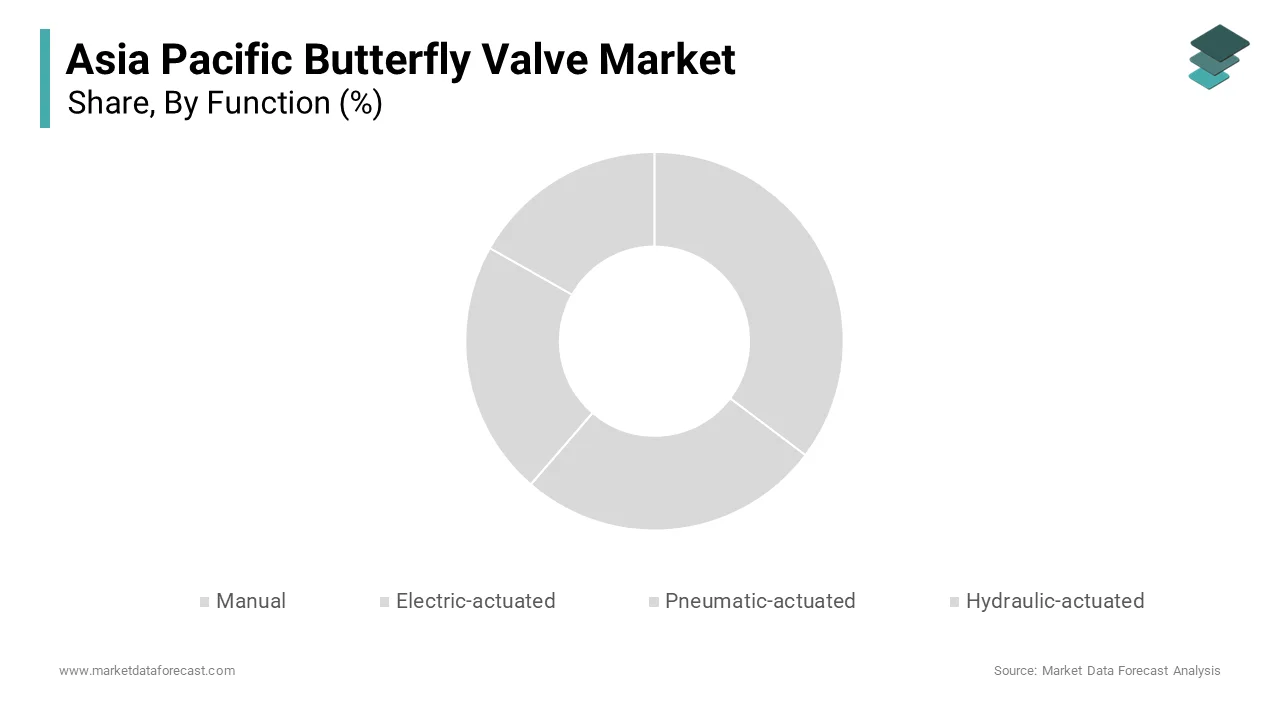
The electric-actuated butterfly valves segment is the fastest-growing in the Asia Pacific market and is projected to expand at a CAGR of 9.4% from 2025 to 2033. This surge is driven by increasing integration of automated control systems in industrial and utility applications. The rapid modernization of process industries, particularly in chemical and pharmaceutical manufacturing, where precise flow modulation and remote operation are essential, is one key factor. These valves offer superior repeatability and integration with SCADA platforms, enabling real-time adjustments and data logging. A further major driver is the expansion of smart water grids, where electric actuators allow utilities to dynamically manage pressure and flow to minimize leakage. Additionally, regulatory mandates for energy efficiency in HVAC systems in commercial buildings are accelerating adoption. The declining cost of electric actuators, down since 2020 due to advancements in motor miniaturization and local production in China, further enhances affordability.
By End Use Insights
The oil & gas sector held the largest share of the Asia Pacific butterfly valve market with 44.6% of total demand in 2025. This dominance is primarily driven by the region’s extensive refining capacity and midstream infrastructure development. These valves are widely used in non-critical isolation applications due to their compactness and rapid shutoff capability, making them ideal for large-diameter pipelines in compressor stations and tank farms. A further critical factor is the ongoing expansion of offshore and onshore gas fields, particularly in the South China Sea and the Krishna-Godavari basin in India. The valves’ compatibility with corrosive and high-temperature environments, when constructed with duplex stainless steel or coated internals, enhances their utility in sour gas service. Additionally, the shift toward modular plant construction in Australia’s LNG projects has increased demand for prefabricated valve skids, where butterfly valves are favored for their lightweight design. Despite environmental pressures, the region’s reliance on fossil fuels for energy security ensures sustained demand, particularly in emerging markets with growing petrochemical industries.
The water & wastewater treatment segment is the fastest-growing end-use sector for butterfly valves in the Asia Pacific and is projected to grow at a CAGR of 10.2% from 2025 to 2033. This acceleration is fueled by unprecedented investments in urban water infrastructure and regulatory mandates for wastewater recycling. The rapid urbanization across South and Southeast Asia is a pivotal driver. This demographic shift necessitates the construction of new water treatment plants and sewer networks, all of which require large-volume flow control devices. An additional significant factor is the rising adoption of membrane bioreactor (MBR) and reverse osmosis (RO) systems, where butterfly valves regulate influent and backwash flows with minimal pressure loss. Additionally, aging infrastructure in Japan and South Korea is undergoing rehabilitation, with butterfly valves replacing obsolete gate valves due to their superior sealing and space efficiency. With water stress intensifying, the expansion of treatment capacity ensures sustained momentum.
COUNTRY-LEVEL ANALYSIS
China
China stood as the undisputed leader in the Asia Pacific butterfly valve market by capturing an estimated 34.2% share in 2025. The country’s dominance is anchored in its vast industrial base, extensive domestic manufacturing ecosystem, and strategic infrastructure investments. As the world’s largest producer of valves, China hosts over 2,500 valve manufacturing enterprises, with Zhejiang and Jiangsu provinces serving as primary hubs. The sector benefits from strong government backing under the Made in China 2025 initiative, which prioritizes high-end fluid control equipment for advanced manufacturing. The country’s aggressive push in urban water supply and wastewater recycling has also driven procurement. Additionally, China’s leadership in renewable energy has increased demand for butterfly valves in cooling and auxiliary systems. Local manufacturers such as Tianjin Tangshan Valve and Shanghaisanlin are expanding export operations, supplying cost-competitive products to Southeast Asia and Africa. However, the market faces challenges from overcapacity and quality inconsistencies, prompting a shift toward premium-grade, smart valves in high-end applications.
India
India has emerged as the second-largest market for butterfly valves in the Asia Pacific. The country’s growth is propelled by large-scale infrastructure development and energy transition initiatives. According to the Ministry of Jal Shakti, over 120 million tap water connections have been installed under the Jal Jeevan Mission since 2019. Another key driver is the expansion of the oil & gas sector. Additionally, the rise of smart cities has boosted demand for electric-actuated variants. The government’s Production-Linked Incentive scheme for advanced manufacturing is also encouraging domestic valve production, reducing import dependence. With a growing focus on sustainability, butterfly valves are being integrated into zero-liquid discharge plants in industrial clusters, further expanding their application base.
Japan
Japan holds a significant share of the Asia Pacific butterfly valve market. The country’s position is defined by technological sophistication, stringent quality standards, and a focus on high-performance applications. Unlike emerging markets driven by volume, Japan’s demand is concentrated in advanced industrial and municipal systems requiring precision and reliability. The country’s aging infrastructure is undergoing extensive rehabilitation. Another critical factor is Japan’s leadership in industrial automation and robotics, where butterfly valves are integrated into semiconductor fabrication and pharmaceutical production lines. The country’s commitment to energy efficiency also plays a role; butterfly valves are widely used in district cooling systems and combined heat and power plants. Japanese manufacturers like KITZ Corporation and Miyawaki dominate the premium segment, exporting globally. With limited domestic growth, innovation and export competitiveness remain central to market dynamics.
South Korea
South Korea accounts for a notable share of the Asia Pacific butterfly valve market. The country’s market is characterized by high technological integration, strong industrial demand, and government-led digital transformation. A key driver is the advanced state of its petrochemical and semiconductor industries, which require precise fluid control in cleanroom and high-purity environments. Additionally, South Korea’s leadership in semiconductor manufacturing demands ultra-clean, leak-tight valves in cooling and gas delivery systems. The government’s Digital New Deal initiative further accelerates the adoption of smart valves in water and energy networks. Moreover, the country’s push for hydrogen economy infrastructure, including hydrogen refueling stations and liquid hydrogen storage, is creating demand for cryogenic butterfly valves. With domestic manufacturers like Youngsun Industrial advancing R&D in smart materials and digital integration, South Korea remains a hub for high-value valve innovation.
Indonesia
Indonesia is another key player in the Asia Pacific butterfly valve market. The country’s market is rapidly expanding, driven by urbanization, industrialization, and large-scale infrastructure development. Another major driver is the expansion of the oil & gas sector, particularly in offshore fields in East Kalimantan and Natuna. Additionally, the government’s push for downstream industrialization, converting raw minerals into value-added products, has spurred the construction of smelters and refineries, where butterfly valves are used in cooling and slurry systems. However, the market faces challenges in standardization and technical expertise, with many projects relying on imported valves for critical applications. Local manufacturers are beginning to emerge, supported by industrial parks and vocational training programs, signaling long-term growth potential.
KEY MARKET PLAYERS
Alfa Laval Corporate AB, Curtiss-Wright Corporation, Flowserve Corporation, Emerson Electric Co., Pentair PLC, Weir Group PLC, AVK Group A/S, Crane Company, Schlumberger Limited, Velan, Inc., KSB SE & Co. KGaA, and Honeywell International Inc. are the market players that are dominating the Asia Pacific butterfly valve market.
Top Players In The Market
KITZ Corporation
KITZ Corporation, headquartered in Japan, is a leading force in the Asia Pacific butterfly valve market, renowned for its engineering excellence and extensive product range. The company has deep integration across critical sectors, including water treatment, power generation, and oil & gas, supplying high-integrity valves compliant with international standards such as API, JIS, and ISO. KITZ has strengthened its regional footprint through localized manufacturing in China, Thailand, and India, enabling faster delivery and cost efficiency. In 2023, the company expanded its production capacity at its Suzhou facility to meet rising demand for corrosion-resistant duplex stainless steel valves used in desalination and offshore applications. KITZ has also invested in digital valve diagnostics, launching smart butterfly valves with integrated sensors for predictive maintenance in collaboration with Japanese industrial IoT firms. Its participation in mega-infrastructure projects, including LNG terminals in Malaysia and water recycling plants in Singapore, underscores its technical credibility. By aligning with Japan’s Society 5.0 initiative, KITZ is advancing automation and sustainability in valve operations, reinforcing its reputation as a technology leader in high-performance fluid control solutions across the region.
AVK Holding A/S
AVK, though headquartered in Denmark, maintains a formidable presence in the Asia Pacific butterfly valve market through its extensive regional network and localized operations. The company has strategically positioned itself as a trusted supplier for municipal water and wastewater infrastructure, with strong engagements across Australia, India, and Southeast Asia. AVK operates manufacturing facilities in India and China, allowing it to deliver customized, large-diameter resilient-seated butterfly valves tailored to regional pipeline standards. In 2023, AVK launched a new actuation integration center in Chennai, enhancing its ability to supply fully assembled, smart valve packages for automated water networks. The company has actively supported urban water resilience projects, including flood control systems in Jakarta and leakage reduction programs in Sydney. AVK’s focus on sustainability is evident in its ISO 15848-certified low-emission designs and use of recycled ductile iron in casting. It collaborates closely with public utilities and engineering firms to provide lifecycle support, from design to maintenance. Through technical training programs for engineers and contractors across the region, AVK has built long-term relationships and brand loyalty, solidifying its role as a solutions provider rather than just a valve manufacturer.
Crane Co. (Crane Valtek)
Crane Co., through its Valtek division, plays a pivotal role in the Asia Pacific butterfly valve market by delivering high-performance, engineered flow control solutions for demanding industrial environments. The company is particularly influential in the oil & gas, chemical, and power sectors, where its valves are specified for critical service in high-temperature, high-pressure, and corrosive conditions. Crane has established technical centers in Shanghai and Singapore to support local engineering, testing, and commissioning activities, ensuring compliance with regional codes and project timelines. In 2023, Crane introduced a new series of cryogenic butterfly valves designed for LNG applications, which were rapidly adopted in new regasification terminals in Vietnam and Bangladesh. The company has also enhanced its digital capabilities by integrating valve health monitoring systems with cloud-based analytics platforms, enabling predictive maintenance for clients in Japan and South Korea. Crane actively participates in major energy infrastructure projects, including offshore platforms in the South China Sea and combined-cycle power plants in Thailand. By combining advanced materials science with digital diagnostics, Crane is shaping the future of intelligent valve deployment across the region, reinforcing its reputation for reliability and innovation.
Top Strategies Used by the Key Market Participants
Key players in the Asia Pacific butterfly valve market are deploying a range of strategic initiatives to consolidate their positions and respond to evolving industry demands. One dominant strategy is the localization of manufacturing and supply chains, with companies establishing production facilities in high-growth markets such as India and Indonesia to reduce lead times and tariffs. Firms are increasingly investing in smart valve technologies, integrating sensors and IoT connectivity to offer predictive maintenance and remote monitoring capabilities, aligning with industrial digitization trends. Strategic partnerships with engineering, procurement, and construction (EPC) firms enable valve manufacturers to secure early involvement in large infrastructure projects. Product differentiation through material innovation—such as the use of super duplex stainless steel and advanced polymers—is another critical approach, particularly for corrosive and cryogenic applications. Additionally, companies are expanding service offerings, including valve lifecycle management, training, and digital twin integration, to enhance customer retention. Mergers and acquisitions are also employed to gain access to new technologies and regional distribution networks. Finally, compliance with international standards and certification bodies is being prioritized to overcome regulatory barriers and build trust in quality-sensitive sectors.
COMPETITION OVERVIEW
The competition in the Asia Pacific butterfly valve market is intense and multifaceted, shaped by a blend of global leaders, regional powerhouses, and a vast number of local manufacturers. While multinational corporations such as KITZ, AVK, and Crane Co. dominate through technological superiority and compliance with international standards, they face stiff competition from cost-driven domestic producers in China, India, and Vietnam. These local players leverage lower production costs and proximity to end-users to capture price-sensitive segments, particularly in municipal water and mid-tier industrial projects. Differentiation is increasingly based on engineering quality, material durability, and digital integration rather than price alone. The rise of smart infrastructure and industrial automation has elevated the importance of intelligent valve systems, pushing established firms to innovate rapidly. At the same time, regulatory fragmentation across countries creates both barriers and opportunities, with companies that achieve multi-market certification gaining a strategic edge. Collaboration with EPC contractors and direct engagement in public infrastructure tenders have become essential competitive tools. As demand grows in LNG, water recycling, and renewable energy sectors, companies are also specializing in application-specific valve designs to secure niche advantages. The market is evolving from a commodity-based landscape to one where value-added services, technical support, and lifecycle performance determine long-term success.
RECENT HAPPENINGS IN THE MARKET
- In June 2023, KITZ Corporation expanded its manufacturing facility in Suzhou, China, to increase production of high-performance butterfly valves for LNG and desalination projects, enhancing its supply capacity for fast-growing markets in Southeast Asia.
- In September 2023, AVK opened a new actuation integration center in Chennai, India, enabling the assembly of smart butterfly valve packages for automated water networks and strengthening its presence in South Asia’s urban infrastructure sector.
- In January 2025, Crane Co. launched a new line of cryogenic butterfly valves at its Singapore technology hub, specifically designed for LNG regasification terminals, and secured supply contracts for projects in Vietnam and Bangladesh.
- In March 2025, KITZ partnered with a Japanese IoT firm to integrate real-time valve diagnostics into its actuated products, launching a predictive maintenance solution for power plants and refineries across Japan and South Korea.
- In May 2025, AVK collaborated with the Jakarta Water Authority to deploy 5,000 resilient-seated butterfly valves in a citywide flood mitigation project, reinforcing its reputation as a trusted partner in urban water resilience initiatives.
MARKET SEGMENTATION
This research report on the Asia Pacific butterfly valve market is segmented and sub-segmented into the following categories.
By Function
- Manual
- Electric-actuated
- Pneumatic-actuated
- Hydraulic-actuated
By End Use
- Oil & Gas
- Water & Wastewater Treatment
- Power Generation
- Chemical
- Others
By Country
- India
- China
- Japan
- South Korea
- Australia
- New Zealand
- Thailand
- Malaysia
- Vietnam
- Philippines
- Indonesia
- Singapore
- Rest of APAC