- Product Description Description
- Table of Contents TOC
- List of Table & Figure LOT
- Get Free Sample PDF Sample PDF
Market Size, 2025
$0.19 BnMarket Estimate, 2026
$0.20 BnMarket Forecast, 2034
$0.35 BnCAGR, 2026–2034
6.86%Executive Summary: Asia-Pacific Camelina Sativa Market
- Market Scope: In-depth assessment of the Asia-Pacific camelina sativa market covering product types, diverse applications across biofuels, food, and industrial sectors, and key country-level dynamics.
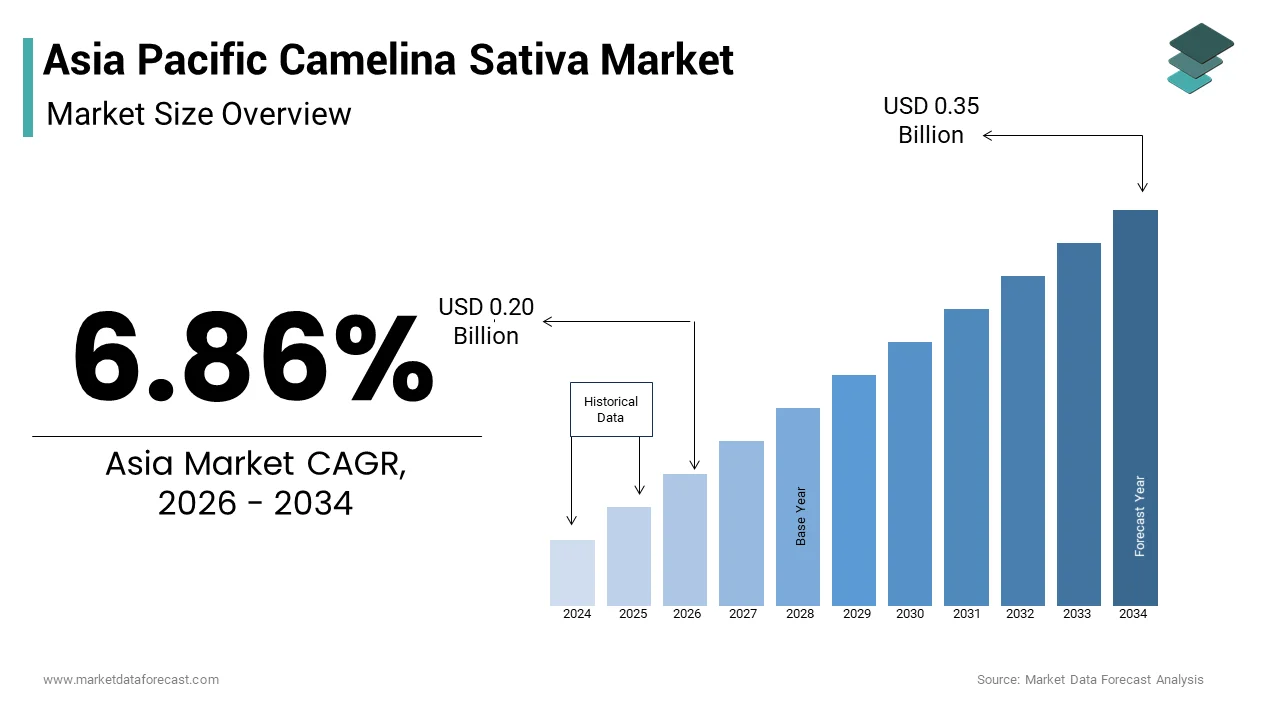
- Market Valuation: Valued at USD 0.19 billion in 2025, estimated at USD 0.20 billion in 2026, and projected to reach USD 0.35 billion by 2034, expanding at a compound annual growth rate (CAGR) of 6.86% from 2026 to 2034.
- Primary Growth Drivers: Soaring demand for omega-3 enriched functional foods and plant-based nutrition, expansion of biodiesel and sustainable aviation fuel (SAF) production in marginal/rural areas, and the crop's resilience to harsh climates and low water requirements.
Key Market Segment Metrics (2026–2034)
| Category | Leading Segment Focus | High-Impact Focus |
|---|---|---|
| By Product Type | Industrial Grade (dominant share for biofuels & chemicals) | Food Grade (fastest-growing CAGR at 17.4%) |
| By Application | Biodiesel (largest market share) | Jet Fuel (highest CAGR at 22.1%), Food Industry, Cosmetics, & Chemical Industry |
| By Country Focus | India (leading regional output & pilot zones) & China | Australia, Japan, & South Korea |
Regional Insights & Market Dynamics
India: Holds the largest share of the regional market (28.1%), driven by semi-arid cultivation trials in Rajasthan, Haryana, and Punjab under the National Biofuel Policy.
China & Australia: China focuses on arid land rehabilitation and livestock feed integration, while Australia leads in sustainable aviation fuel (SAF) and industrial biodiesel research via CSIRO and airline partnerships.
Japan & South Korea: Niche, high-growth markets emphasizing functional foods, gourmet cooking oils, premium cosmetics (K-beauty), and nutraceuticals.
Market Challenges & Restraints: Limited agronomic awareness among farmers, underdeveloped supply chains and processing infrastructure, intensive competition from established oilseeds (soybean, palm, rapeseed), and regulatory uncertainties.
Key Market Leaders Profiled: Nuseed, Linen Corp, Sollum AgriTech, Botanic Innovations, OQEMA, Yield10 Bioscience, Northstar Lipids, BioOrganic Concepts, GREENTECH, Lincoln Fine Ingredients, Biocosmethic, Perles de Gascogne, and Shxchangyu.
 Download Free Sample Report
Asia-Pacific Camelina Sativa Market Size
The Asia-Pacific camelina sativa market size was valued at USD 0.19 billion in 2025 and is anticipated to reach a valuation of USD 0.20 billion in 2026 and USD 0.35 billion by 2034, growing at a CAGR of 6.86% from 2026 to 2034.
Camelina sativa, commonly known as false flax or gold-of-pleasure, is an oilseed crop belonging to the Brassicaceae family. It has gained significant attention across the Asia-Pacific region due to its adaptability to marginal soils, low water requirements, and high omega-3 fatty acid content. Traditionally cultivated in parts of Europe, Camelina sativa is now being explored for its agronomic potential in countries such as China, India, Australia, and South Korea, where sustainable agriculture and alternative feedstock sources are increasingly prioritized.
The Asia-Pacific Camelina Sativa Market refers to the production, trade, and utilization of this oilseed across various industries, including biofuels, animal feed, aquaculture, and functional foods. The plant's cold tolerance and short growing cycle make it a viable rotational crop, especially in regions with seasonal agricultural constraints. As per recent agricultural assessments, several experimental trials have been initiated in Australia and northern China to evaluate their yield performance under varying climatic conditions.
MARKET DRIVERS
Rising Demand for Omega-3 Enriched Functional Foods
One of the primary drivers of the Asia-Pacific Camelina Sativa Market is the increasing consumer demand for omega-3 enriched functional foods. Camelina sativa oil contains approximately 30–40% alpha-linolenic acid (ALA), a plant-based omega-3 fatty acid that supports cardiovascular health and reduces inflammation. This nutritional profile positions Camelina oil as a promising ingredient in health-focused food products, particularly in urban centers across China, Japan, and South Korea, where chronic diseases linked to poor diet are on the rise.
According to the World Health Organization (WHO), non-communicable diseases such as heart disease and diabetes account for over 60% of total deaths in the Asia-Pacific region. In response, governments and private food manufacturers are promoting the inclusion of functional ingredients in daily diets.
Additionally, clinical studies conducted by the National Institute of Nutrition in India found that regular consumption of Camelina oil could lower LDL cholesterol levels, further reinforcing its appeal among health-conscious consumers.
With rising disposable incomes and greater awareness about preventive healthcare, the functional food sector in the Asia-Pacific is expanding rapidly.
Expansion of Biodiesel Production in Rural and Marginal Areas
Another major driver fueling the growth of the Asia-Pacific Camelina Sativa Market is the expansion of biodiesel production in rural and marginal agricultural areas. Camelina sativa is well-suited for cultivation on less fertile lands and requires minimal inputs, making it an attractive option for smallholder farmers looking to diversify their income sources while contributing to renewable energy initiatives.
Several national governments, including those of India, Indonesia, and the Philippines, have launched rural development programs aimed at promoting biofuel crops as part of their decarbonization strategies. In India, the National Biofuel Policy, revised in 202,3, emphasized the importance of non-food feedstocks, encouraging research and pilot-scale production using Camelina sativa. As per data from the Indian Ministry of New and Renewable Energy, Camelina-based biodiesel can yield up to 1,200 liters per hectare, which is competitive with other non-edible oil crops like Jatropha.
Moreover, in 2024, the Australian government funded a feasibility study through the Commonwealth Scientific and Industrial Research Organisation (CSIRO) to assess Camelina’s viability as a feedstock for aviation biofuels. The results indicated that Camelina-derived biofuels could reduce lifecycle greenhouse gas emissions by up to 85% compared to conventional jet fuels. Such findings have spurred interest among policymakers and private investors, accelerating the adoption of Camelina sativa in regional biodiesel supply chains.
MARKET RESTRAINTS
Limited Awareness and Agronomic Knowledge Among Farmers
A key restraint hindering the growth of the Asia-Pacific Camelina Sativa Market is the limited awareness and agronomic knowledge among farmers regarding optimal cultivation practices. Despite its resilience to harsh climates and low input requirements, Camelina sativa remains relatively unknown compared to established oilseed crops like mustard, soybean, and sunflower. This lack of familiarity often leads to hesitation among farmers to adopt it on a large scale.
In China’s Inner Mongolia region, extension services have struggled to disseminate information about seed availability, planting techniques, and pest management specific to Camelina, resulting in suboptimal yields during trial plantings.
Furthermore, the absence of standardized agronomic guidelines tailored to local conditions in countries like Vietnam and Thailand has contributed to inconsistent performance across different test plots. A to the Chinese Academy of Agricultural Sciences, without proper guidance, farmers tend to apply practices suited for rapeseed or wheat, leading to reduced germination rates and lower oil content.
Addressing this challenge requires targeted education campaigns, farmer training programs, and collaboration between research institutions and local governments.
Underdeveloped Supply Chain and Processing Infrastructure
An additional major restraint impacting the Asia-Pacific Camelina Sativa Market is the underdeveloped supply chain and processing infrastructure necessary for large-scale commercialization. Unlike more established oilseed crops, Camelina lacks dedicated harvesting equipment, storage facilities, and oil extraction units across much of the region. This gap hampers efficient post-harvest handling and value addition, discouraging both producers and processors from investing in the crop.
In Australia, despite early-stage trials showing promise, the absence of centralized collection points for Camelina harvests has led to logistical bottlenecks, increasing transportation costs, and reducing profitability for growers.
In India, where Camelina has been tested as a rotational crop in semi-arid zones, the lack of certified seed banks and contract farming models has further restricted its integration into mainstream agribusiness. According to the Indian Council of Agricultural Research (ICAR), only three states—Rajasthan, Haryana, and Punjab—have initiated formal procurement mechanisms for Camelina seeds, limiting its reach to broader markets.
MARKET OPPORTUNITY
Integration into Sustainable Aviation Fuel (SAF) Programs
One of the most promising opportunities for the Asia-Pacific Camelina Sativa Market lies in its integration into sustainable aviation fuel (SAF) programs. With the global aviation industry committed to achieving net-zero carbon emissions by 2050, there is a growing demand for renewable, drop-in fuels derived from non-food biomass. Camelina sativa, known for its high oil content and compatibility with existing refining processes, presents a viable feedstock for SAF production.
In 2024, Air BP and Neste, two leading players in the SAF space, expressed interest in sourcing Camelina-based feedstock from Asia-Pacific producers, particularly in Australia and New Zealand. According to the International Air Transport Association (IATA), Asia-Pacific airlines are expected to consume nearly 2 million metric tons of SAF annually by 2030, creating a substantial market opportunity for Camelina producers.
Besides, in Australia, the government-backed "Future Fuels" initiative allocated AUD 15 million in funding to explore scalable Camelina cultivation for SAF production, aiming to support the country’s aviation sustainability targets.
Given the current scarcity of approved SAF feedstocks, Camelina sativa offers a unique niche in the Asia-Pacific region, positioning itself as a strategic crop for future green aviation initiatives.
Adoption in Organic Livestock Feed Formulations
Another emerging opportunity for the Asia-Pacific Camelina Sativa Market is its adoption in organic livestock feed formulations. Camelina meal, the byproduct obtained after oil extraction, is rich in protein, fiber, and essential fatty acids, making it a valuable supplement for poultry, swine, and aquaculture feed. With the organic meat and dairy market expanding across countries like Japan, South Korea, and Australia, there is growing demand for natural, non-GMO feed ingredients.
According to the Research Institute of Organic Agriculture (FiBL), the Asia-Pacific region recorded a significant increase in certified organic farmland, with a corresponding rise in demand for organic feedstocks. Camelina meal, containing approximately 38% crude protein and a balanced amino acid profile, is being evaluated as a partial replacement for soybean meal in organic poultry diets.
In 2024, a pilot project led by the University of Melbourne demonstrated that incorporating Camelina meal into broiler chicken feed improved weight gain and enhanced omega-3 content in eggs and meat. These developments indicate a strong potential for Camelina sativa to become a staple ingredient in organic livestock nutrition, thereby broadening its market base beyond oil production and into the agrifood sector.
MARKET CHALLENGES
Competition from Established Oilseed Crops
One of the foremost challenges confronting the Asia-Pacific Camelina Sativa Market is intense competition from well-established oilseed crops such as soybean, rapeseed, and palm oil. These crops benefit from mature supply chains, extensive research backing, and entrenched policy frameworks, making it difficult for Camelina sativa to gain a foothold in mainstream agriculture and industry.
As per the United States Department of Agriculture (USDA), soybeans alone accounted for a significant portion of global vegetable oil production, with Asia-Pacific countries like China and India serving as major importers and processors. Rapeseed, widely cultivated in China and India, enjoys government subsidies and minimum support prices, giving it a distinct advantage over newer entrants like Camelina.
Palm oil, although controversial due to deforestation concerns, remains dominant in Southeast Asia due to its high yield and cost-effectiveness. According to the Malaysian Palm Oil Board (MPOB), palm oil production in Malaysia and Indonesia exceeded 40 million metric tons in 2024, dwarfing the nascent volumes associated with Camelina sativa.
In the absence of comparable policy incentives or large-scale investment, Camelina sativa struggles to compete on price and availability.
Regulatory Uncertainty and Lack of Standardized Certification
Regulatory uncertainty and the lack of standardized certification protocols present another critical challenge for the Asia-Pacific Camelina Sativa Market. While Camelina sativa has demonstrated potential across multiple sectors, inconsistent regulatory frameworks across the region hinder its widespread adoption.
In China, for example, Camelina-derived oil is not yet recognized under the national edible oil classification system, restricting its use in mainstream food markets. Similarly, in India, the Bureau of Indian Standards (BIS) has not yet issued specifications for Camelina oil or meal, delaying its approval for human consumption and animal feed applications.
Australia and New Zealand have taken preliminary steps toward recognizing Camelina as a specialty crop, but the absence of harmonized standards across the Asia-Pacific limits cross-border trade and investment. According to the Asia-Pacific Economic Cooperation (APEC) Food Safety Forum, differing regulatory approaches create compliance burdens for exporters and discourage multinational companies from entering the market.
Moreover, the lack of clear labeling and traceability systems for Camelina-based products affects consumer confidence and market transparency.
REPORT COVERAGE
| REPORT METRIC | DETAILS |
| Market Size Available | 2025 to 2034 |
| Base Year | 2025 |
| Forecast Period | 2026 to 2034 |
| CAGR | 6.86% |
| Segments Covered | By Product, Application, and Region. |
|
Various Analyses Covered | Global, Regional & Country Level Analysis, Segment-Level Analysis, DROC, PESTLE Analysis, Porter’s Five Forces Analysis, Competitive Landscape, Analyst Overview of Investment Opportunities |
| Regions Covered | North America, Europe, APAC, Latin America, Middle East & Africa |
| Market Leaders Profiled | Botanic Innovations, OQEMA, Yield10 Bioscience, Northstar Lipids, BioOrganic Concepts, GREENTECH, Lincoln Fine Ingredients, Biocosmethic, Perles de Gascogne, Shxchangyu. |
SEGMENTAL ANALYSIS
By Product Insights
The industrial grade segment of the Asia-Pacific Camelina Sativa Market accounted for 58.3% of total market revenue in 2025, driven primarily by its extensive use in biofuel production and chemical manufacturing. This dominance is largely attributed to growing investments in renewable energy initiatives across the region, particularly in countries like India, China, and Australia.
One of the key drivers behind the industrial grade segment's leadership position is the increasing adoption of Camelina-derived biodiesel as a sustainable alternative to fossil fuels. According to the International Energy Agency (IEA), the Asia-Pacific region contributed nearly 32% of global biofuel demand in 2024, with government mandates in countries such as Indonesia and Thailand pushing for higher blending rates. Camelina sativa’s high oil content makes it an attractive feedstock for industrial applications due to its efficient conversion into biodiesel without competing with food crops.
Apart from these, Camelina-based biolubricants and polymers are gaining traction in the chemical industry, especially in Japan and South Korea, where environmental regulations are tightening.
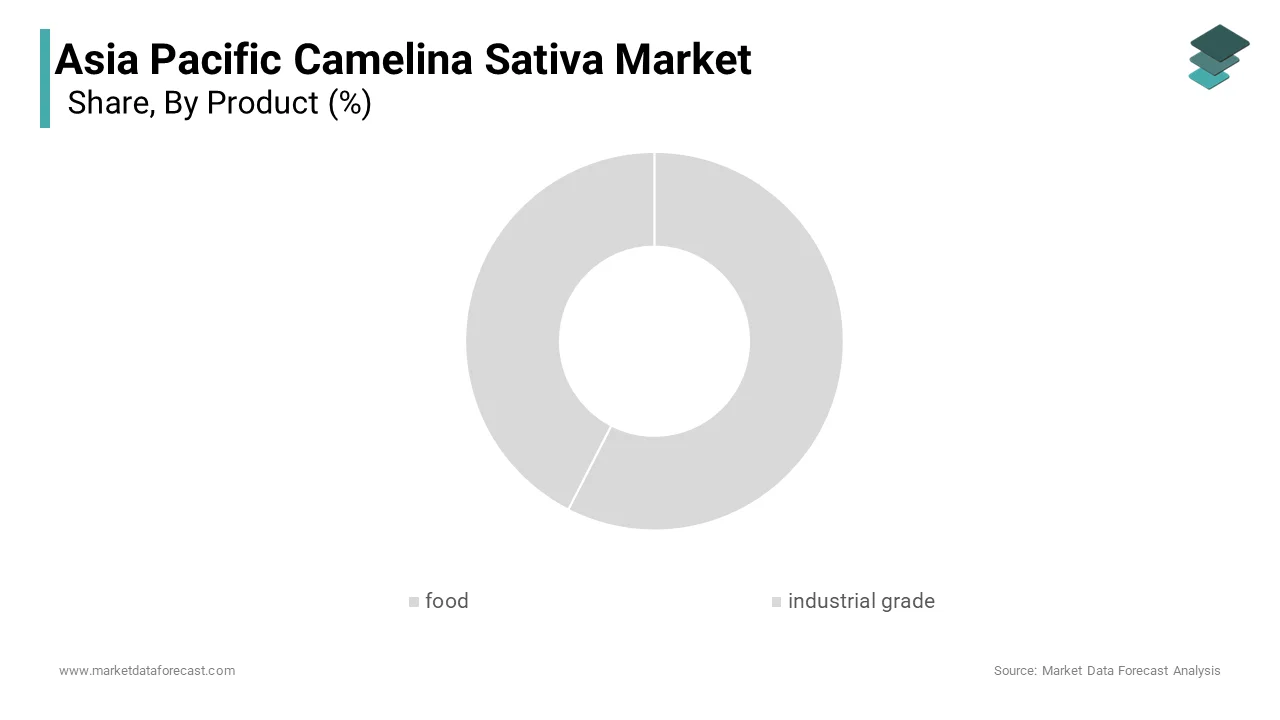
The food grade segment of the Asia-Pacific Camelina Sativa Market is projected to grow at the fastest CAGR of 17.4% between 2025 and 2033, reflecting rising consumer interest in functional foods and plant-based nutrition. This rapid expansion is being fueled by increased awareness of Camelina oil’s rich omega-3 fatty acid profile and its health benefits, particularly among urban populations in developed markets like Japan, South Korea, and Australia.
Camelina oil contains up to 38% alpha-linolenic acid (ALA), positioning it as one of the most nutrient-dense plant-based oils available. Clinical trials conducted by the National Institute of Health and Nutrition in Tokyo confirmed that regular consumption of Camelina oil can significantly reduce LDL cholesterol levels and improve heart function.
In addition, the rise of organic and clean-label food trends has spurred demand for non-GMO, cold-pressed Camelina oil among health-conscious consumers.
By Application Insights
The biodiesel application segment held the largest share of the Asia-Pacific Camelina Sativa Market in 2025, accounting for 36.1% of the total market value. This dominance is primarily due to aggressive government support for renewable fuels, coupled with Camelina sativa’s suitability as a non-food feedstock for biodiesel production.
One of the major factors driving this segment is the implementation of national biofuel policies across the region. For instance, in India, the revised National Biofuel Policy of 2023 emphasized the promotion of non-edible oilseeds such as Camelina sativa to meet the country’s target of achieving a 20% ethanol and biodiesel blend in transportation fuels by 2030.
China has also been actively exploring Camelina sativa as a biodiesel crop, particularly in arid regions like Inner Mongolia. The Chinese Academy of Agricultural Sciences reported that Camelina trials in these areas showed promising results, with average oil yields exceeding 35% by weight under minimal irrigation conditions. These developments have reinforced the role of biodiesel as the leading application for Camelina sativa in the Asia-Pacific region.
The jet fuel segment is anticipated to witness the highest CAGR of 22.1% during the forecast period, driven by growing investments in sustainable aviation fuel (SAF) and regulatory push for carbon-neutral air travel in the Asia-Pacific region.
According to the International Air Transport Association (IATA), airlines operating in the Asia-Pacific region are expected to consume over 1.8 million metric tons of SAF annually by 2030, creating significant opportunities for Camelina sativa-based jet fuel production. In 2024, Qantas and All Nippon Airways (ANA) conducted test flights using blends containing Camelina-derived biofuels, demonstrating their compatibility with existing aircraft engines and fuel infrastructure.
Australia’s Department of Infrastructure, Transport, Regional Development, and Communications announced a strategic investment of AUD 20 million in SAF research, including studies on Camelina sativa’s scalability as a feedstock. These advancements signal a strong trajectory for the jet fuel application segment, positioning Camelina sativa as a key player in the future of green aviation in the Asia-Pacific.
REGIONAL ANALYSIS
India
India had the largest share of the Asia-Pacific Camelina Sativa Market, contributing 28.1% of total regional output in 2024, driven by its proactive policy framework and emphasis on non-food biofuel crops. The country's semi-arid regions, particularly Rajasthan, Haryana, and Punjab, have emerged as pilot zones for Camelina cultivation under the National Biofuel Policy.
The Indian Council of Agricultural Research (ICAR) initiated multiple field trials in 2025, reporting that Camelina sativa could yield up to 1.2 tons per hectare under rain-fed conditions, making it suitable for low-input farming systems.
In addition, Indian refineries such as Indian Oil Corporation have begun testing Camelina-based biodiesel blends under the SATAT initiative, aiming to establish a decentralized biofuel economy. These efforts have solidified India’s position as a dominant force in the regional Camelina Sativa market.
China
China is emerging as a key player due to its focus on expanding agricultural productivity in ecologically sensitive and arid regions.
Trials conducted by the Xinjiang Agricultural University found that Camelina could be successfully grown with less than 300 mm of annual rainfall, offering a viable solution for land rehabilitation and sustainable oil production.
Moreover, the integration of Camelina meal into livestock feed formulations is gaining traction, supported by research from the Chinese Academy of Sciences showing improved omega-3 enrichment in poultry and dairy products. With continued state support and agronomic research, China is steadily strengthening its foothold in the Camelina Sativa market.
Japan
Japan represents a niche but rapidly growing segment of the Asia-Pacific Camelina Sativa Market, primarily driven by its premium demand in functional foods and nutraceuticals. With one of the world’s aging populations and rising concerns over cardiovascular diseases, Camelina oil has gained popularity as a health-enhancing ingredient in gourmet cooking and dietary supplements.
Furthermore, Japanese airlines have partnered with biofuel producers to explore Camelina-based jet fuel as part of their sustainability commitments. This dual-track growth in both food and aviation sectors positions Japan as a crucial market for Camelina sativa in the Asia-Pacific region.
Australia
Australia is distinguished by its strategic focus on developing Camelina sativa for sustainable aviation fuel (SAF) and industrial applications.
Like, the Commonwealth Scientific and Industrial Research Organisation (CSIRO) completed a feasibility study confirming that Camelina sativa could produce up to 1,500 liters of biodiesel per hectare, with even higher efficiency when used in advanced refining processes for jet fuel. Airlines such as Qantas have expressed interest in sourcing Camelina-based SAF from domestic growers to meet their 2030 carbon reduction targets.
These combined efforts highlight Australia’s evolving role as a leader in both industrial and premium food applications of Camelina sativa within the Asia-Pacific region.
South Korea – Rising Adoption in Cosmetics and Nutraceuticals
South Korea captures a notable share of the Asia-Pacific Camelina Sativa Market, with growing adoption in cosmetics and nutraceuticals driven by its high omega-3 content and skin-nourishing properties. Korean skincare brands have increasingly incorporated Camelina oil into premium formulations due to its moisturizing and anti-inflammatory effects, catering to the booming K-beauty export market.
Brands such as Innisfree and Sulhwasoo have introduced Camelina-infused product lines, citing clinical evidence from Seoul National University that supports its efficacy in reducing skin irritation and improving barrier function.
Simultaneously, Camelina-based dietary supplements have entered the Korean nutraceutical market, backed by research from the Korea Food Research Institute highlighting their ability to enhance brain and cardiovascular health.
KEY MARKET PLAYERS
Botanic Innovations, OQEMA, Yield10 Bioscience, Northstar Lipids, BioOrganic Concepts, GREENTECH, Lincoln Fine Ingredients, Biocosmethic, Perles de Gascogne, Shxchangyu. Are the market players that are dominating the Asia Pacific camelina sativa market?
Top Players in the Market
Nuseed (Australia)
Nuseed, a subsidiary of InterGrain, is a leading global player in the development and commercialization of Camelina sativa for both food and industrial applications. In the Asia-Pacific region, Nuseed has played a pivotal role in promoting Camelina as a sustainable oilseed crop through extensive agronomic research and seed breeding programs. The company collaborates closely with Australian and international partners to develop high-yielding Camelina varieties tailored for biodiesel, animal feed, and human nutrition markets.
Linen Corp (China)
Linen Corp specializes in the cultivation, processing, and distribution of alternative oilseed crops, including Camelina sativa. Based in China, the company has been instrumental in expanding Camelina’s presence in the domestic market by integrating it into livestock feed and edible oil production. Linen Corp works with regional agricultural departments to introduce Camelina-based rotations that improve soil health and offer farmers an additional revenue stream without competing with staple food crops.
Sollum AgriTech (India)
Sollum AgriTech focuses on sustainable agriculture and bio-based solutions, positioning itself as a key contributor to India’s Camelina sativa growth story. The company supports farmers through contract farming initiatives and provides end-to-end supply chain support for Camelina production. By partnering with government agencies and private refiners, Sollum AgriTech helps integrate Camelina into the national biofuel strategy and promotes its use in organic food products across urban markets.
Top Strategies Used By Key Market Participants
One major strategy employed by key players in the Asia-Pacific Camelina Sativa Market is strategic partnerships with research institutions and government bodies. Companies are collaborating with universities and agricultural agencies to enhance seed quality, optimize cultivation techniques, and explore new applications for Camelina-derived products. These collaborations help accelerate innovation and ensure regulatory alignment for broader market acceptance.
Another widely adopted strategy is contract farming and a farmer engagement program. Leading firms are engaging directly with smallholder farmers to provide training, technical support, and guaranteed procurement mechanisms. This approach not only encourages large-scale adoption but also ensures a steady and reliable supply of Camelina raw material for downstream processing.
Lastly, product diversification and branding efforts have become essential for strengthening market position. Companies are developing Camelina-based oils, supplements, animal feeds, and biofuels tailored to niche consumer segments. Through targeted marketing and certification for organic or non-GMO claims, they are enhancing product value and building brand recognition across the region.
COMPETITION OVERVIEW
The competition in the Asia-Pacific Camelina Sativa Market is gradually intensifying as more stakeholders recognize the crop’s potential across multiple sectors. While the market remains relatively fragmented, several agribusinesses, biotech firms, and government-backed entities are actively shaping the landscape through strategic investments and collaborative initiatives. Domestic producers in countries like India and China are focusing on localized cultivation models to meet growing demand for sustainable feedstock and functional ingredients. At the same time, multinational companies are entering the space through joint ventures and technology transfers aimed at improving yield efficiency and product formulation. The competitive environment is further influenced by policy developments and shifting consumer preferences toward plant-based nutrition and green energy solutions. As awareness increases and supply chains mature, the market is expected to witness stronger consolidation and greater participation from both public and private sector players.
RECENT HAPPENINGS IN THE MARKET
- In February 2024, Nuseed expanded its agronomic research program in Western Australia, launching field trials in collaboration with local farmers to assess Camelina sativa's adaptability under different climatic conditions and improve seed performance for industrial applications.
- In May 2024, Linen Corp partnered with the Chinese Academy of Agricultural Sciences to develop Camelina-based livestock feed formulations, aiming to enhance omega-3 content in poultry and dairy products while promoting sustainable farming practices in northern China.
- In July 2024, Sollum AgriTech initiated a contract farming model in Rajasthan, providing farmers with certified Camelina seeds, technical guidance, and assured buyback arrangements to encourage wider adoption and secure a stable raw material supply chain for biodiesel and food processing units.
- In September 2024, a consortium led by Air BP and Qantas collaborated with Australian Camelina growers to evaluate the feasibility of using Camelina-derived sustainable aviation fuel (SAF) for commercial flights, marking a significant step toward scaling up green jet fuel production in the region.
- In November 2024, Kewpie Corporation, a Japanese food manufacturer, introduced Camelina oil-based salad dressings in select retail markets, leveraging the crop’s high omega-3 profile to tap into the growing demand for functional foods among health-conscious consumers in Japan and South Korea.
MARKET SEGMENTATION
This research report on the Asia Pacific Camelina market is segmented and sub-segmented into the following categories.
By Product Type
- food
- industrial grade
By Application
- food industry
- chemical industry
- biodiesel
- textile
- cosmetics
- jet fuel
- others
By Country
- The USA
- Canada
- Mexico