- Product Description Description
- Table of Contents TOC
- List of Table & Figure LOT
- Get Free Sample PDF Sample PDF
Market Size, 2025
$24.98 BnMarket Estimate, 2026
$26.38 BnMarket Forecast, 2034
$40.85 BnCAGR, 2026–2034
5.62%Asia Pacific Cappuccino Market Size, Growth, Trends & Forecast (2026–2034)
The Asia Pacific cappuccino market size was valued at USD 24.98 billion in 2025, is estimated at USD 26.38 billion in 2026, and is projected to reach USD 40.85 billion by 2034, registering a compound annual growth rate (CAGR) of 5.62% during the forecast period from 2026 to 2034. Growth is heavily fueled by accelerating urbanization, rising disposable incomes, expanding middle-class populations, and the adoption of Western-style café culture across key economies like China, Japan, Australia, and India.
Key Executive Metrics (At-a-Glance)
- 2025 Base Valuation: USD 24.98 Billion
- 2026 Current Valuation: USD 26.38 Billion
- 2034 Forecast Valuation: USD 40.85 Billion
- Compound Annual Growth Rate (CAGR): 5.62% (2026–2034)
- Dominant Product Segment: Traditional Cappuccino (capturing 38.7% share in 2025)
- Fastest Growing Product Segment: Flavored Cappuccino (projected at a 9.4% CAGR)
- Dominant End-User Segment: Coffeehouses (capturing 42.3% share in 2025)
- Fastest Growing End-User Segment: Vending Machines (projected at a 10.1% CAGR)
- Regional Growth Leaders: China (28.4% share) followed by Japan (18.6% share), Australia, South Korea, and India.
Core Market Drivers
- Urbanization & Lifestyles: Rapid growth of modern metropolitan areas, expanding co-working spaces, and convenience-driven on-the-go consumer habits.
- Specialty Chain Expansion: Aggressive store network growth, menu innovations, and localized marketing by major brands like Starbucks, Luckin Coffee, and Gloria Jean’s.
- Product Innovation & RTD Growth: Rising popularity of ready-to-drink (RTD) formulations, plant-based dairy alternatives (oat, almond, soy), and seasonal flavored variations.
Primary Market Restraints & Challenges
- High Equipment & Ingredient Costs: Substantial capital expenses required for professional espresso systems and high-grade Arabica green coffee beans.
- Traditional Beverage Preference: Deep-rooted cultural preference for indigenous drinks like tea in countries like India and China.
- Supply Chain & Regulatory Hurdles: Climate-driven weather volatility impacting coffee yields in Vietnam and Indonesia, alongside complex, fragmented regional food labeling regulations.
Asia Pacific Cappuccino Market Segmentation Breakdown
| Segment Category | Largest Segment | Fastest Growing Segment / Focus |
|---|---|---|
| By Type | Traditional Cappuccino (38.7%) | Flavored Cappuccino (9.4% CAGR) |
| By End-User | Coffeehouses (42.3%) | Vending Machines (10.1% CAGR) |
| By Region | China (28.4%) & Japan (18.6%) | Australia & India |
Major Industry Players Profiled
Key companies operating in the Asia Pacific cappuccino market include Starbucks, Daily Chef, Brad Barry Company, Nestlé, Café Coffee Day, Farmer Brothers Company, The Folger Coffee Company, and Hills Bros Coffee, alongside regional market innovators like Lavazza and Luckin Coffee.
Asia Pacific Cappuccino Market Size
The Asia Pacific cappuccino market size was valued at USD 24.98 billion in 2025 and is expected to reach USD 40.85 billion by 2034 from USD 26.38 billion in 2026. The market's promising CAGR for the predicted period is 5.62%.
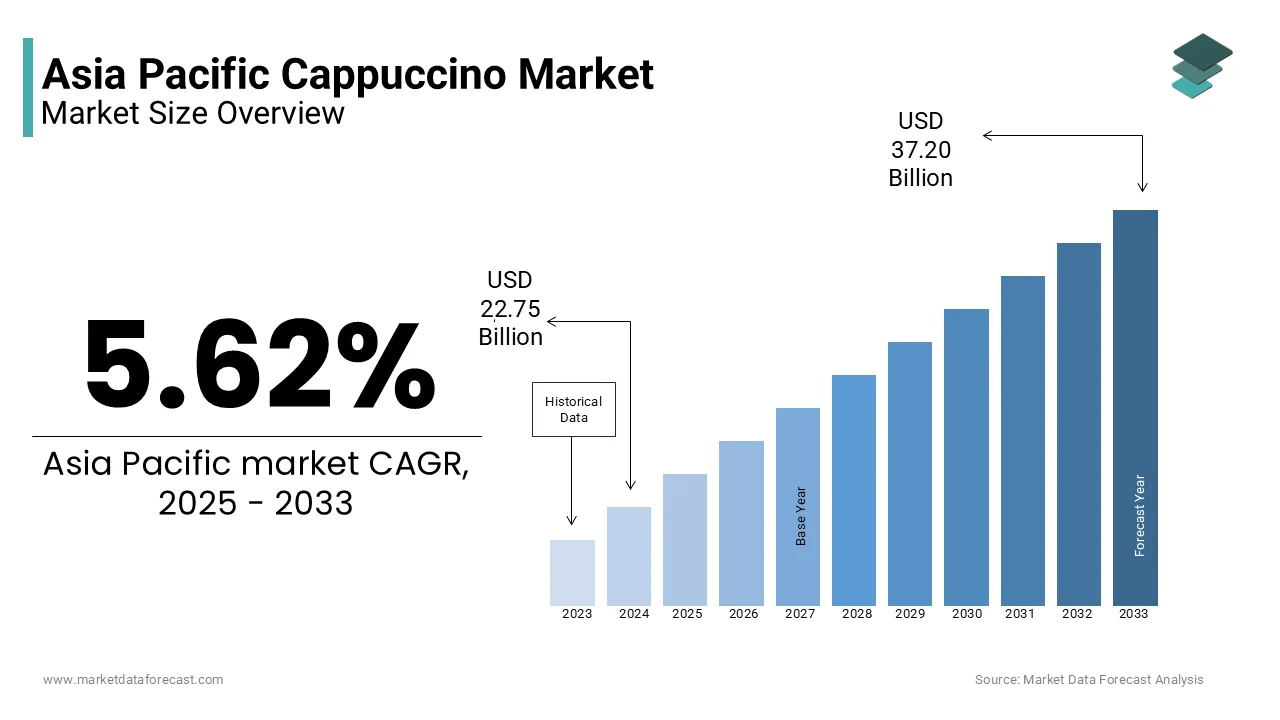
The is traditionally rooted in Italian coffee culture, cappuccino has evolved into a widely accepted beverage format across the world, by adapting to local tastes through variations such as iced cappuccinos, flavored versions, and ready-to-drink (RTD) formats. The market encompasses both commercial channels—such as cafes, quick-service restaurants, and specialty coffee chains—as well as retail segments including instant coffee powders, portioned capsules, and shelf-stable mixes. The growth of urbanization, rising disposable incomes, and an expanding middle-class population have significantly influenced the adoption of Western-style coffee habits in countries like China, India, Japan, and Australia. According to the International Coffee Organization, per capita coffee consumption in many Asia-Pacific countries remains lower than in Western markets, indicating strong potential for future growth.
MARKET DRIVERS
Urbanization and Changing Lifestyle Preferences
The rapid pace of urbanization and evolving lifestyle preferences among the working-age population is significantly driving the Asia Pacific Cappuccino Market growth. As cities expand and modernize, particularly in emerging economies such as India, Indonesia, and Vietnam, there is a growing shift toward convenience-driven consumption and on-the-go lifestyles. This trend has led to increased patronage of cafés and coffee shops, where cappuccino is often positioned as a premium yet accessible option. By 2023, the urban population in the East Asia & Pacific region had grown to approximately 2.2 billion. This demographic shift has been accompanied by a rise in co-working spaces, late-night work cultures, and social dining habits, all of which support frequent coffee consumption. In major metropolitan areas like Shanghai, Mumbai, and Sydney, cappuccino has become synonymous with productivity and relaxation alike.
Expansion of Specialty Coffee Chains and In-Store Innovation
The aggressive expansion of both international and domestic specialty coffee chains, which continue to invest heavily in store networks, menu innovation, and customer experience enhancements is escalating the Asia Pacific Cappuccino Market growth. Companies such as Starbucks, Pacific Coffee Company, and Gloria Jean’s Coffees have been instrumental in shaping consumer expectations around coffee quality and preparation methods, with cappuccino playing a central role in their offerings. For Instance, Project Café East Asia reported a 58% increase in outlets between 2022 and 2023 in certain markets, which is driven by franchise-led growth models and localized marketing strategies. These chains often feature signature cappuccino variants ranging from seasonal flavors to plant-based milk options that cater to evolving taste preferences and dietary shifts. The integration of digital platforms such as mobile ordering apps, loyalty programs, and self-service kiosks has streamlined access to cappuccino, is making it more convenient for consumers to integrate into daily routines.
MARKET RESTRAINTS
High Cost of Premium Coffee Ingredients and Equipment
The high cost associated with premium coffee ingredients and brewing equipment, which limits accessibility for price-sensitive consumers is significantly restraining the growth of Asia Pacific Cappuccino Market. Unlike basic instant coffee or traditional brewed coffee, cappuccino especially in its authentic form requires high-grade Arabica beans, fresh dairy or alternative milk, and specialized espresso machines capable of frothing milk to the correct consistency. The average price of specialty-grade green coffee beans in the Asia-Pacific region was higher than that of conventional robusta beans in 2023. This cost differential is passed on to consumers, especially in independent cafes and boutique coffee houses, where cappuccino prices can be prohibitively expensive compared to other beverage options. Furthermore, the capital investment required for commercial-grade espresso machines, grinders, and refrigeration systems deters small-scale entrepreneurs from entering the premium coffee space. For instance, in 2025, the ADB signed a $100 million loan agreement to enhance the coffee value chain for farmers in countries including India and Indonesia.
Cultural Preference for Traditional Beverages Over Imported Coffee
The endurance of cultural preference for indigenous beverages such as tea, herbal infusions, and locally brewed coffee varieties is impeding the Asia Pacific Cappuccino Market growth. Countries like China, India, and Japan have deep-rooted traditions of tea consumption, which continue to dominate daily beverage habits, especially among older generations and in rural communities. As reported by the Tea Board of India, over 70% of Indian households consume tea daily. This entrenched preference presents a challenge for cappuccino and other Western-style coffee drinks, which must compete not only on taste but also on habit and cultural symbolism. Moreover, in some markets, locally adapted coffee styles such as Vietnamese egg coffee, Japanese canned coffee, and Indian filter coffee hold stronger emotional and historical significance than imported European formats like cappuccino. While multinational chains attempt to bridge this gap through hybrid products, the dominance of native beverages continues to limit cappuccino’s penetration into broader consumer segments.
MARKET OPPORTUNITIES
Rising Popularity of Ready-to-Drink (RTD) Cappuccino Products
The growing popularity of ready-to-drink (RTD) cappuccino products, which offer convenience without compromising on taste or perceived quality is creating growth opportunities for Asia Pacific Cappuccino Market. RTD cappuccino beverages are typically pre-mixed, shelf-stable formulations available in cans or bottles, which are designed for immediate consumption and suitable for diverse settings such as offices, travel, and outdoor activities. According to One NIQ report from 2022 mentions a 12.1% growth in the pre-made/ready-to-drink coffee category, potentially hinting at a strong trend. This trend is particularly evident in markets like Japan, South Korea, and Australia, where vending machine culture and cold beverage consumption drive demand for innovative coffee formats. Moreover, advancements in packaging and preservation technologies have enabled manufacturers to maintain the rich texture and foam layer characteristic of freshly made cappuccino is enhancing consumer satisfaction. Leading companies such as Nestlé, Suntory, and Fraser & Neave have expanded their RTD portfolios to include low-sugar, plant-based, and functional cappuccino options by catering to health-conscious and on-the-go consumers.
Increasing Demand for Plant-Based and Health-Conscious Cappuccino Options
The rising demand for plant-based and health-conscious cappuccino alternatives, which is reflecting broader shifts in consumer behavior toward wellness and sustainability is emerging opportunities for Asia Pacific Cappuccino Market growth. The increasing awareness of lactose intolerance, environmental impact, and ethical sourcing, many consumers are opting for cappuccino made with almond, oat, soy, or coconut milk instead of traditional dairy. This shift is prompting coffee chains and packaged beverage manufacturers to reformulate their cappuccino offerings to accommodate these preferences. The clean-label and sugar-reduced cappuccino variants are gaining traction, especially among millennial and Gen Z consumers who prioritize transparency in ingredient sourcing. Brands such as Starbucks, Coca-Cola Amatil, and Blue Bottle Coffee have introduced non-dairy cappuccino options across select markets in the region, which is aligning with evolving dietary trends.
MARKET CHALLENGES
Regulatory and Labeling Requirements Across Diverse Markets
The complexity of navigating varying regulatory and labeling requirements across different countries in the region is posing significant challenges in the expansion of Asia Pacific Cappuccino Market. Each market has its own set of food safety standards, nutritional disclosure mandates, and permissible ingredient lists, which is making product standardization difficult for multinational coffee brands and beverage manufacturers. For example, in China, the National Health Commission enforces strict regulations regarding food additives and fortification claims, while in Australia and New Zealand, the Food Standards Code requires detailed allergen declarations and nutritional information on all packaged beverages. These differences necessitate customized formulations and packaging designs for each country is increasing operational costs and delaying product launches. Moreover, the introduction of sugar taxes and health warning labels in certain jurisdictions such as Malaysia and the Philippines has prompted reformulation efforts to reduce sugar content without compromising taste. However, achieving this balance in cappuccino products, especially those with added syrups or sweeteners poses a technical and marketing challenge.
Supply Chain Disruptions and Ingredient Volatility
The vulnerability of supply chains to disruptions and fluctuations in raw material availability and pricing pose prominent challenges for growth of Asia Pacific Cappuccino Market. Cappuccino relies on a combination of high-quality coffee beans, dairy or plant-based milk, and packaging materials, all of which are subject to volatility due to climate change, geopolitical tensions, and logistical constraints. According to the Food and Agriculture Organization, adverse weather conditions in Vietnam and Indonesia significantly impacted coffee production in 2023 to 2025. Vietnam saw a 20% drop in 2023 - 2025 coffee production and a 10% decline in exports and Indonesia experienced a 16.5% drop in 2023 - 2025 production and a subsequent 23% decline in exports. The global shipping constraints and port congestion have delayed imports of essential packaging components such as aluminum cans and plastic bottles, which is affecting the production timelines of RTD cappuccino manufacturers. These supply-side challenges make it difficult for cappuccino producers to maintain consistent product availability and pricing stability, ultimately influencing consumer purchasing behavior and brand loyalty.
REPORT COVERAGE
| REPORT METRIC | DETAILS |
| Market Size Available | 2025 to 2034 |
| Base Year | 2025 |
| Forecast Period | 2026 to 2034 |
| CAGR | 5.62% |
| Segments Covered | By Type, End-User, and Region |
| Various Analyses Covered | Regional & Country Level Analysis, Segment-Level Analysis, DROC, PESTLE Analysis, Porter’s Five Forces Analysis, Competitive Landscape, Analyst Overview on Investment Opportunities |
| Regions Covered | India, China, Japan, South Korea, Australia, New Zealand, Thailand, Malaysia, Vietnam, Philippines, Indonesia, Singapore, and the Rest of Asia-Pacific |
| Market Leaders Profiled | Starbucks, Daily Chef, Brad Barry Company, Nestle, Cafe coffee day, Farmer Brothers Company, The Folger Coffee Company and Hills Bros Coffee, and others |
SEGMENTAL ANALYSIS
By Type Insights
The traditional cappuccino segment led the Asia-Pacific Cappuccino Market by accounting for 38.7% of share in 2025. The growth is attributed to its deep-rooted presence in café culture and the enduring appeal of classic coffee preparation methods across both premium and mainstream coffee chains. The strong influence of Western-style coffee shops, particularly in urban centers where consumers associate this beverage with authenticity and quality. The consumer preference for hot beverages during colder months continues to sustain demand. In countries like Japan and South Korea, seasonal fluctuations impact coffee consumption patterns, with traditional cappuccino experiencing peak sales between October and March due to its warming properties and rich flavor profile. Another significant factor supporting the traditional cappuccino segment is the continued investment by global coffee chains in barista training and espresso machine upgrades. Moreover, the perception of traditional cappuccino as a premium product enhances its positioning in the market. Consumers in emerging economies like India and Indonesia are increasingly willing to pay a premium for artisanal coffee experiences, which has led to a surge in boutique cafes offering handcrafted cappuccinos made from high-quality Arabica beans sourced from local and international producers.
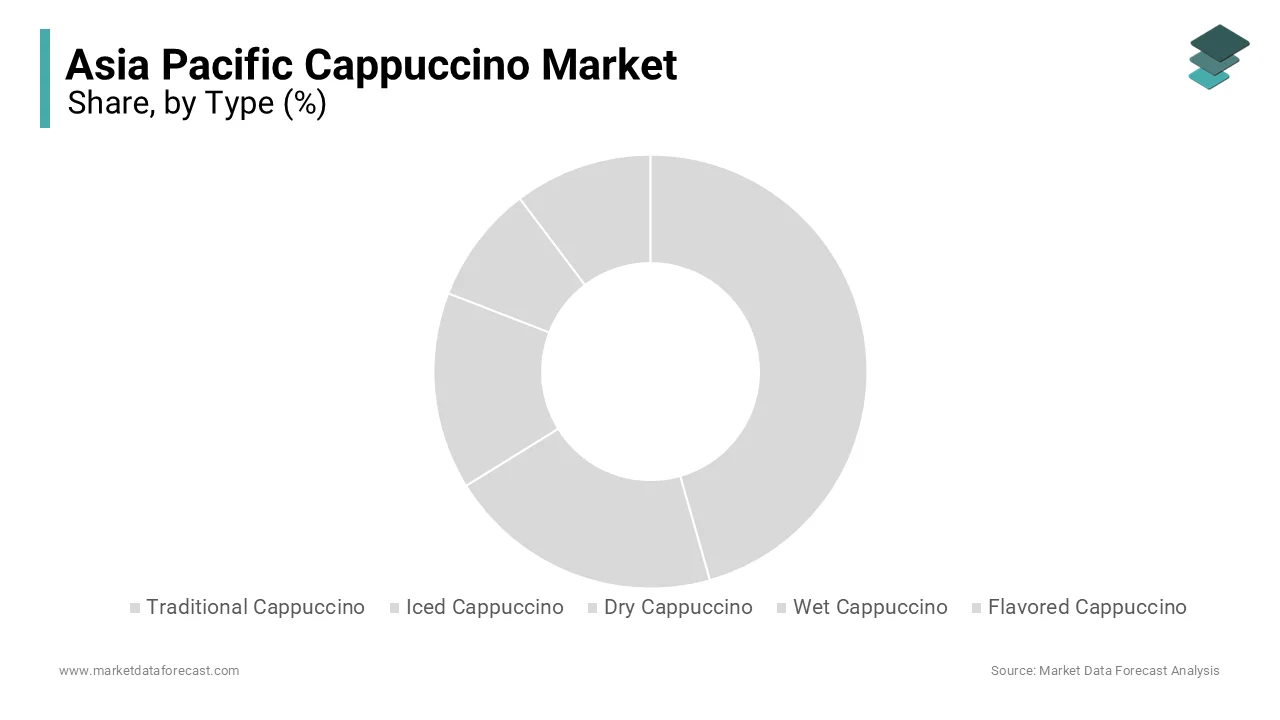
The flavored cappuccino segment is projected to expand at a CAGR of 9.4% from 2026 to 2034 in Asia Pacific Cappuccino Market. This rapid growth is primarily driven by evolving consumer preferences toward personalized and indulgent coffee experiences, particularly among younger demographics. A key factor fueling this segment’s expansion is the increasing introduction of innovative flavor variants such as vanilla, caramel, hazelnut, and chocolate-infused cappuccinos by both international and regional coffee brands. A 2025 Mintel report on coffee innovation confirms the trend towards flavored coffee, especially in the ready-to-drink (RTD) format. It specifically states that 45% of Chinese RTD coffee consumers consider added flavor an important purchase factor. The aggressive marketing campaigns by major coffee chains promoting limited-time flavors have contributed to heightened demand. For instance, Starbucks launched over 15 new seasonal cappuccino flavors across Asia-Pacific markets in 2023 alone, which is significantly boosting footfall and repeat purchases.
By End-User Insights
The coffeehouses segment dominated the Asia Pacific Cappuccino Market by capturing 42.3% in 2025. The growth is due to the growing proliferation of both international and domestic coffee chains, which serve cappuccino as a core menu item catering to urban professionals, students, and social groups. One key driver behind the coffeehouses’ leading position is the expansion of branded cafés across metropolitan and tier-2 cities in China, India, and Southeast Asia. The café experience itself is a blending work, relaxation, and social interaction, which has reinforced consumer loyalty to cappuccino consumption in these settings. A Skills Training College (STC) report from November 2025 states that cappuccinos are the top choice for Australians, but are preferred by 30% of coffee drinkers. Another major factor sustaining the coffeehouses segment is the integration of digital platforms and loyalty programs, which enhance customer engagement and drive repeat visits. Leading chains such as Starbucks and Costa Coffee have invested heavily in mobile ordering apps, which is allowing customers to customize their cappuccino orders and receive targeted promotions.
The vending machines segment is predicted to expand at a CAGR of 10.1% from 2026 to 2034 in Asia Pacific Cappuccino Market. This rapid growth is primarily attributed to the increasing deployment of high-tech vending machines capable of dispensing freshly brewed, high-quality cappuccino in convenient formats. A key driver behind this trend is the high urbanization rate and fast-paced lifestyles in countries like Japan, South Korea, and Australia, where vending machines offer quick access to premium beverages without requiring a detour to a café. According to the Japan Vending Machine Manufacturers Association, over 4.2 million vending machines were operational in Japan in 2023, with cappuccino and other specialty coffee options seeing a notable rise in sales. The technological advancements in vending equipment, including touchscreens, cashless payments, and self-cleaning mechanisms, have improved consumer confidence in automated coffee dispensing. Companies such as Sanyo, Fuji Electric, and Coca-Cola Amatil have introduced next-generation machines that can prepare hot or cold cappuccino with frothed milk by enhancing the user experience. Another major factor contributing to the vending machines segment’s growth is the strategic placement of units in offices, universities, train stations, and airports is ensuring maximum visibility and accessibility.
REGIONAL ANALYSIS
China Market Analysis
China was the top performer in the Asia-Pacific Cappuccino Market by accounting for 28.4% of share in 2025. The country’s rapid economic development is expanding middle class and increasing exposure to global lifestyle trends have fueled the growth of modern coffee culture by making cappuccino a widely accepted beverage in urban areas. A key driver behind China’s dominant market position is the proliferation of international and domestic coffee chains, with Starbucks and Luckin Coffee aggressively expanding their store networks. According to the China Chain Store & Franchise Association, the number of specialty coffee shops in China surpassed 120,000 in 2023, with cappuccino featuring prominently on most menus. The rising disposable incomes and shifting consumer preferences toward experiential dining have encouraged frequent coffee shop visits, particularly among millennials and Gen Z consumers.
Japan Market Analysis
Japan ranks second in the Asia-Pacific Cappuccino Market by holding around 18.6% of share in 2025. The country has a mature coffee culture, with cappuccino being a popular choice in both traditional cafés and vending machine formats, which is reflecting Japan’s technological advancement and convenience-driven lifestyle. One of the key drivers of Japan’s strong market position is the well-established vending machine infrastructure, which allows consumers to access high-quality cappuccino at any time of day. The widespread presence of chain cafés such as Doutor Coffee, Excelsior Caffè, and Starbucks contributes to consistent cappuccino consumption. These establishments cater to office workers and students seeking a midday refreshment is reinforcing daily coffee habits.
Australia Market Analysis
Australia cappuccino market is expanding at a faster pace. The country boasts a well-developed coffee culture, with cappuccino being a staple in both independent cafés and large-scale coffee chains. A key driver behind Australia’s strong market position is the deeply ingrained café lifestyle, where consumers frequently visit specialty coffee shops for high-quality beveragesA YouGov poll from August 2025 shows that 66% of Australians drink coffee daily or almost every day, which is close to but still lower than the 70% figure state. A highly competitive coffee industry and continuous product innovation have contributed to sustained demand. Domestic roasters and international chains alike emphasize premium beans, barista training, and sustainable sourcing practices to differentiate themselves in a saturated market. Moreover, the rise of hybrid work models and co-working spaces has increased the frequency of café visits, especially among professionals seeking productivity-friendly environments.
India Market Analysis
India cappuccino market is enlarging while tea remains the dominant beverage by changing urban lifestyles and increasing exposure to global food trends have spurred the adoption of cappuccino, particularly among younger consumers. One of the primary drivers of cappuccino growth in India is the rapid expansion of organized coffee chains, such as Café Coffee Day, Starbucks, and CCD (Costa Coffee Delivery), which have introduced cappuccino to millions of first-time coffee drinkers. The rising disposable incomes and the growth of the service sector have supported increased café patronage, especially in Tier-1 and Tier-2 cities. A NielsenIQ survey found that nearly half of the urban Indian millennials preferred cappuccino over other coffee types when visiting cafés, by citing its creamy texture and perceived sophistication. Moreover, digital transformation in the F&B sector, including mobile ordering and delivery partnerships, has made cappuccino more accessible to a broader audience. outh Korea, the country’s well-developed coffee culture, combined with a tech-savvy population and a thriving café scene has positioned cappuccino as a staple beverage in both commercial and retail settings. A major driver behind South Korea’s market strength is the high density of coffee shops per capita, particularly in major cities like Seoul, Busan, and Incheon. The popularity of cold and iced cappuccino variants aligns with South Korea’s climate and consumer preferences. Seasonal offerings from major chains such as Ediya Coffee, Twosome Place, and Starbucks frequently feature chilled cappuccino variations is contributing to year-round demand. Moreover, the integration of smart technology in coffee vending and delivery services has enhanced convenience and boosted consumption rates. With mobile apps enabling customized orders and same-day delivery, cappuccino remains a go-to beverage for busy professionals and students alike. As South Korea continues to embrace premium coffee experiences, its cappuccino market is expected to maintain steady growth momentum.
COMPETITIVE LANDSCAPE
KEY MARKET PLAYERS
Some of the key players dominating the Asia Pacific cappuccino market are
- Starbucks
- Daily Chef
- Brad Barry Company
- Nestlé
- Café Coffee Day
- Farmer Brothers Company
- The Folger Coffee Company
- Hills Bros Coffee
TOP STRATEGIES USED BY KEY MARKET PLAYERS
Key players in the Asia-Pacific cappuccino market employ several strategies to strengthen their competitive position and sustain growth. One widely adopted approach is product innovation, where companies continuously introduce new flavors, formats, and customization options to cater to evolving consumer tastes and preferences across diverse markets. Another critical strategy is expanding retail footprint and digital integration, with major brands investing in both physical store networks and mobile ordering platforms to enhance customer convenience and engagement by ensuring frequent interactions and brand loyalty. Strategic collaborations and local partnerships are frequently leveraged to adapt offerings to regional palates and regulatory environments, is enabling multinational companies to establish deeper market penetration while maintaining global brand standards and operational efficiency.
COMPETITION OVERVIEW
The competition in the Asia-Pacific Cappuccino Market is marked by a dynamic mix of global giants, regional powerhouses, and emerging local brands vying for consumer attention in a rapidly evolving landscape. While international chains like Starbucks and Costa Coffee set the tone for premium cappuccino experiences, domestic players such as Luckin Coffee in China and Kopi Kenangan in Indonesia are aggressively capturing market share through affordability and digital-first business models. The rise of specialty coffee culture has intensified rivalry, pushing brands to differentiate themselves through unique flavor profiles, sustainability claims, and enhanced customer service. The growing influence of ready-to-drink and vending-based cappuccino options has introduced new competitors from the beverage manufacturing sector, which is further fragmenting the market. As urbanization and disposable incomes continue to rise, companies are under pressure to innovate constantly and expand strategically across both established and emerging markets. x
TOP PLAYERS IN THE MARKET
- One of the leading players in the Asia-Pacific cappuccino market is Starbucks Corporation, which has played a transformative role in shaping coffee culture across the region. With a strong presence in China, Japan, South Korea, and Australia, Starbucks has positioned cappuccino as a core menu item that aligns with its premium brand identity. The company’s emphasis on store ambiance, barista expertise, and product innovation has helped elevate consumer expectations around cappuccino quality and consistency.
- Another key player is Nestlé S.A., a global leader in packaged coffee products and ready-to-drink (RTD) beverages. In the Asia-Pacific region, Nestlé has been instrumental in making cappuccino accessible beyond café settings through its Nescafé and Nespresso lines. Its innovations in instant cappuccino powders and portioned capsules have enabled consumers to enjoy high-quality cappuccino at home or on the go, which is significantly expanding the beverage’s reach.
- Lavazza Group is an Italian coffee giant with growing influence in Asia, also plays a significant role in the cappuccino market. Through strategic partnerships and localized product offerings, Lavazza has expanded into major markets such as China and Australia. The company’s commitment to premium bean sourcing and sustainable practices enhances its appeal among discerning cappuccino consumers, which is reinforcing its global reputation for excellence.
Asia Pacific Cappuccino Market News
- In March 2025, Starbucks introduced its Oleato line of olive oil-infused beverages in China, which included an Oleato Oatmilk Latte. This launch may have been confused with a general expansion of plant-based options.
- In December 2022, Lavazza partnered with Culinary Brands, a company backed by private equity firm Everstone Group. Culinary Brands planned to set up branded Lavazza cafes in India, alongside its pre-existing management of the "Fresh and Honest" coffee brand and coffee vending machine business.
MARKET SEGMENTATION
This research report on the Asia Pacific cappuccino market has been segmented and sub-segmented based on following categories.
By Type
- Traditional Cappuccino
- Iced Cappuccino
- Dry Cappuccino
- Wet Cappuccino
- Flavored Cappuccino
By End-user
- Drink to go
- Takeaway
- Coffeehouses
- Personal Use
- Office Use
- Restaurants
- Supermarkets
- Convenience Stores
- Vending Machines
- Others
By Country
- India
- China
- Japan
- South Korea
- Australia
- New Zealand
- Thailand
- Malaysia
- Vietnam
- Philippines
- Indonesia
- Singapore
- Rest of Asia Pacific