Asia Pacific Coenzyme Q10 Market Research Report – Segmented By Application (Dietary Supplements, Pharmaceuticals Cosmetics, Others) & Country (India, China, Japan, South Korea, Australia, New Zealand, Thailand, Malaysia, Vietnam, Philippines, Indonesia, Singapore and Rest of APAC) - Industry Analysis From 2026 to 2034
Market Size, 2025
$193.13 MnMarket Estimate, 2026
$214.03 MnMarket Forecast, 2034
$486.88 MnCAGR, 2026–2034
10.82%Asia Pacific Coenzyme Q10 Market Size
The Asia Pacific coenzyme Q10 market size was valued at USD 193.13 million in 2025 and is anticipated to reach USD 214.03 million in 2026 from USD 486.88 million by 2034, growing at a CAGR of 10.82% during the forecast period from 2026 to 2034.
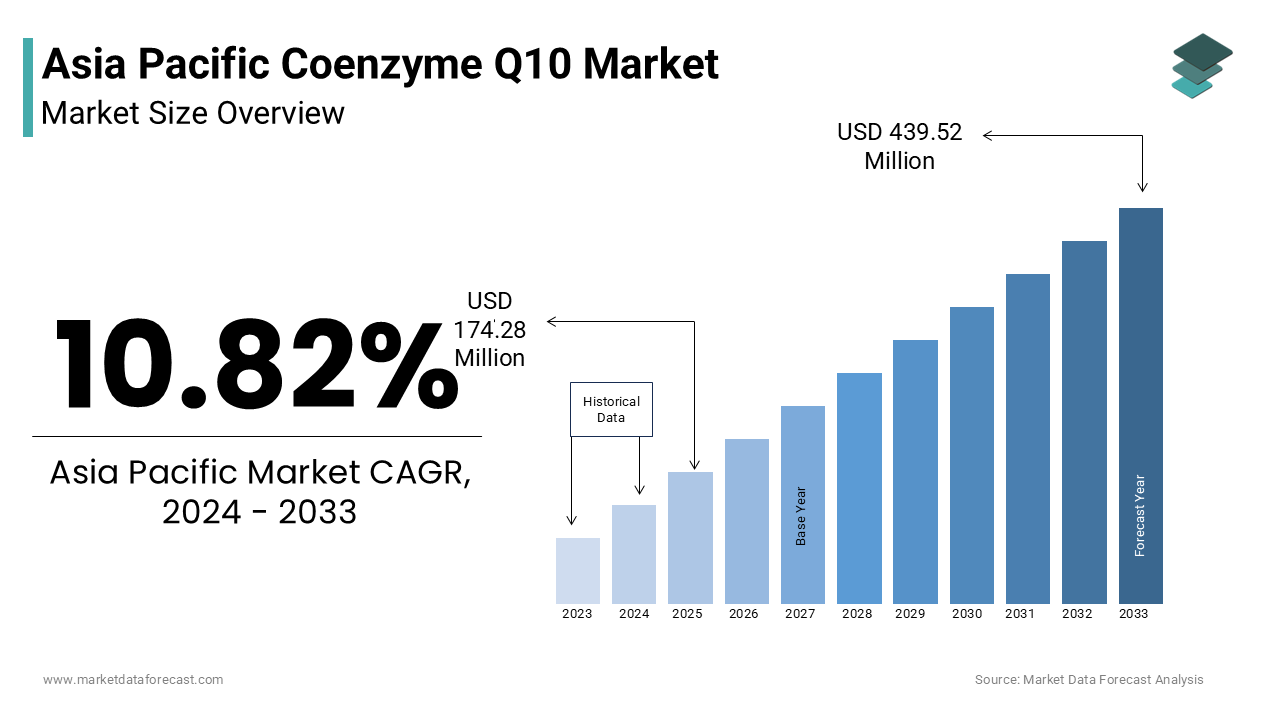
Coenzyme Q10 (CoQ10), also known as ubiquinone, is a fat-soluble compound naturally produced in the human body that plays a crucial role in cellular energy production and acts as a powerful antioxidant. It is widely used in dietary supplements, pharmaceuticals, and functional foods due to its potential benefits in supporting cardiovascular health, boosting immunity, and improving mitochondrial function. The Asia Pacific coenzyme Q10 market encompasses the production, distribution, and consumption of CoQ10 across various end-use industries including healthcare, nutrition, and cosmetics.
The region has seen growing demand for CoQ10 driven by increasing awareness of preventive healthcare, rising prevalence of lifestyle-related diseases, and a surge in consumer interest in natural and holistic wellness solutions. Countries such as Japan, China, and South Korea have been at the forefront of this trend due to their advanced nutraceutical markets and strong scientific research base.
In addition, the Asia Pacific region has experienced a significant rise in health supplement consumption over the past decade, with CoQ10 gaining prominence due to its proven efficacy in clinical studies.
MARKET DRIVERS
Rising Health Consciousness and Preventive Healthcare Practices
The increasing emphasis on preventive healthcare and overall wellness among consumers is one of the key drivers fueling the growth of the Asia Pacific coenzyme Q10 market. As urbanization accelerates and sedentary lifestyles become more prevalent, there has been a marked shift toward proactive health management, particularly in countries like Japan, South Korea, and Australia.
In Japan, where aging demographics are a major concern, CoQ10 has been widely recommended by healthcare professionals for heart health and age-related energy decline. This high adoption rate is attributed to decades of local research and public awareness campaigns promoting the benefits of CoQ10.
Similarly, in South Korea, the Ministry of Food and Drug Safety has recognized CoQ10 as a functional ingredient in health supplements, encouraging its inclusion in a wide range of products from capsules to fortified beverages. Korean consumers, particularly in metropolitan areas, have shown a strong preference for premium health products, driving up demand.
Expansion of the Nutraceutical and Functional Food Industry
The rapid expansion of the nutraceutical and functional food industry, which integrates health-enhancing ingredients into everyday food and beverage products, is another significant driver of the Asia Pacific coenzyme Q10 market. Consumers are increasingly seeking products that offer both nutritional value and health benefits, creating a favorable environment for CoQ10 incorporation.
China has emerged as a leading market for functional foods, with domestic companies investing heavily in product innovation. These products range from energy drinks and fortified dairy to ready-to-eat meals, all targeting health-conscious consumers.
In India, the nutraceutical sector is experiencing exponential growth, supported by government initiatives aimed at promoting indigenous health formulations. As per the Indian Nutraceutical Association, CoQ10-based supplements are gaining traction among middle- and upper-income groups who are adopting Western-style wellness trends.
Moreover, in Australia and New Zealand, regulatory bodies have streamlined approval processes for functional ingredients, allowing faster commercialization of CoQ10-enriched products.
MARKET RESTRAINTS
Regulatory Challenges and Varying Approval Standards
The lack of harmonized regulatory frameworks across different countries, which complicates product approvals, marketing claims, and market entry strategies, is a significant restraint affecting the Asia Pacific coenzyme Q10 market. Unlike the United States and European Union, where CoQ10 is largely categorized as a dietary supplement with well-defined labeling guidelines, many Asia Pacific nations impose varying restrictions on health claims and permissible dosages.
Similarly, in India, the Food Safety and Standards Authority of India (FSSAI) has imposed dosage limits on CoQ10 in food and beverages, limiting its use in functional products. This restricts product differentiation and reduces incentives for brand innovation.
These regulatory inconsistencies create uncertainty for international players looking to expand in the Asia Pacific region, ultimately slowing down market penetration and delaying consumer access to diverse CoQ10-based offerings.
Availability of Substitutes and Ingredient Overlap
The growing availability of alternative antioxidants and energy-supporting compounds that compete directly with CoQ10 in terms of health benefits and consumer appeal is another key constraint facing the Asia Pacific coenzyme Q10 market. Ingredients such as resveratrol, omega-3 fatty acids, L-carnitine, and vitamin E are often marketed alongside or in place of CoQ10, diluting its market share in certain applications.
According to the Global Organization for EPA and DHA, omega-3 supplements have seen a 20% year-on-year increase in sales across Southeast Asia, primarily due to their association with cardiovascular and cognitive health—areas where CoQ10 is also promoted.
Further, in Japan, where CoQ10 has traditionally enjoyed strong brand recognition, younger consumers are gravitating toward newer bioactive compounds such as astaxanthin and curcumin, which are perceived as more innovative and effective.
This shift toward blended formulations and alternative supplements presents a challenge for CoQ10 marketers, requiring differentiated positioning and targeted messaging to maintain consumer loyalty in a competitive marketplace.
MARKET OPPORTUNITIES
Growing Demand for Sports Nutrition and Performance Supplements
The rising demand for sports nutrition and performance-enhancing supplements, particularly among fitness enthusiasts and athletes, is a major opportunity emerging in the Asia Pacific coenzyme Q10 market. As physical activity gains popularity across the region, consumers are increasingly seeking supplements that support endurance, muscle recovery, and energy metabolism key areas where CoQ10 plays a vital role.
South Korea has witnessed a surge in sports supplement consumption, driven by a youthful population and a booming gym culture.
India is also experiencing a similar trend, with rising fitness center memberships and digital fitness platforms promoting CoQ10-infused supplements for improved stamina and post-exercise recovery.
Increasing Use in Cosmeceuticals and Anti-Aging Skincare
Its growing application within the cosmeceutical and anti-aging skincare segment is another significant opportunity for the Asia Pacific coenzyme Q10 market. Due to its potent antioxidant properties and ability to neutralize free radicals, CoQ10 has become a sought-after ingredient in premium skincare formulations aimed at reducing signs of aging and improving skin vitality.
Japan leads this trend, with major cosmetic brands incorporating CoQ10 into creams, serums, and facial oils designed for mature skin. According to the Japan Cosmetic Industry Association, over 60% of anti-aging skincare products launched in 2023 contained CoQ10 or its derivatives, highlighting its established presence in the beauty market.
South Korea, known for its innovative skincare industry, has also embraced CoQ10 in K-beauty regimens, particularly in combination with other antioxidants such as vitamin C and hyaluronic acid.
MARKET CHALLENGES
High Production Costs and Raw Material Dependency
The relatively high production costs associated with manufacturing high-purity CoQ10, particularly when sourced through fermentation-based methods, is one of the primary challenges confronting the Asia Pacific coenzyme Q10 market. While synthetic alternatives exist, they often fail to meet the quality standards required for pharmaceutical and premium nutraceutical applications.
China and India, despite being major producers of CoQ10, face supply chain constraints due to dependency on imported raw materials and complex synthesis processes.
Moreover, fluctuations in the prices of precursor chemicals such as tyrosine and solvents impact production economics, making it difficult for companies to maintain consistent pricing strategies. In India, as per the All India Organisation of Manufacturers of Nutritional Supplements, small-scale producers struggle to compete with larger firms that benefit from economies of scale.
Limited Consumer Awareness and Misconceptions
The limited consumer awareness and prevailing misconceptions regarding its benefits and usage is a critical challenge affecting the Asia Pacific coenzyme Q10 market. While CoQ10 is well-established in mature markets like Japan and South Korea, many consumers in emerging economies remain unfamiliar with its specific health advantages beyond general wellness claims. This knowledge gap results in lower purchasing intent and reduced brand loyalty compared to more commonly understood supplements like vitamin D or probiotics. Misinformation also persists regarding dosage requirements and interactions with medications.
REPORT COVERAGE
| REPORT METRIC | DETAILS |
| Market Size Available | 2025 to 2034 |
| Base Year | 2025 |
| Forecast Period | 2026 to 2034 |
| CAGR | 10.82% |
| Segments Covered | By Application and Region |
| Various Analyses Covered | Regional & Country Level Analysis, Segment-Level Analysis, DROC, PESTLE Analysis, Porter’s Five Forces Analysis, Competitive Landscape, Analyst Overview on Investment Opportunities |
| Countries Covered | India, China, Japan, South Korea, Australia, New Zealand, Thailand, Malaysia, Vietnam, the Philippines, Indonesia, Singapore, and the Rest of APAC. |
| Market Leaders Profiled | Kaneka Corporation, Nisshin Pharma, Kyowa Hakko Bio Co., Ltd., Mitsubishi Gas Chemical Company, and NHU Co., Ltd. Other significant companies active in the region are ZMC (Zhejiang Medicine Co., Ltd.), Shenzhou Biology & Technology Co., Ltd., Tishcon Corp., Gnosis by Lesaffre, and Xiamen Kingdomway Group Company |
SEGMENTAL ANALYSIS
By Application Insights
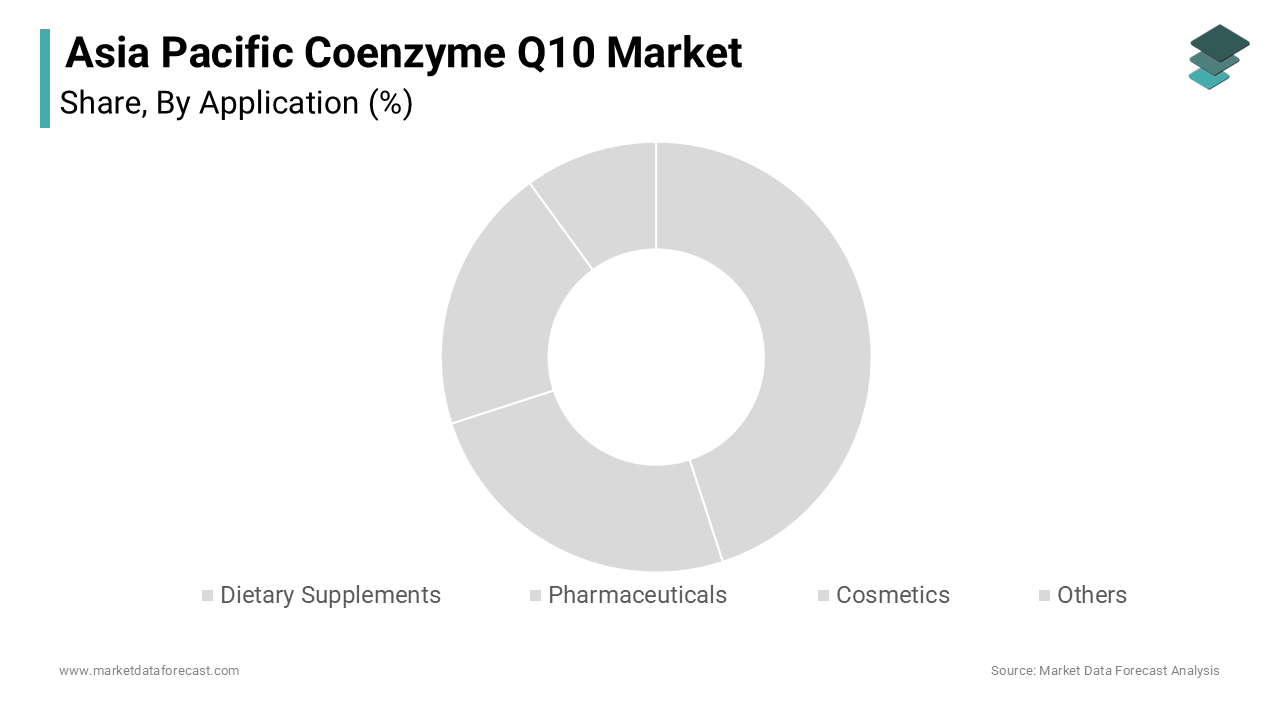
The dietary supplements segment dominated the Asia Pacific coenzyme Q10 market by accounting for 51.3% of total revenue in 2024. Widespread use of CoQ10 as a standalone or combined ingredient in health and wellness formulations aimed at improving energy metabolism, cardiovascular function, and immune support is primarily attributed to the lead position of dietary supplements segment. In addition, Japan has been the largest consumer of CoQ10-containing supplements for decades. The country’s strong scientific backing and early commercialization of CoQ10-based products have created a well-established consumer base.
Also, in South Korea, the Ministry of Food and Drug Safety recognizes CoQ10 as a functional ingredient in health supplements, leading to its inclusion in a wide variety of products ranging from capsules to chewable tablets. Korean consumers, particularly in urban centers, exhibit high brand loyalty toward premium health formulations.
India and Australia are also witnessing rising adoption driven by growing awareness of preventive healthcare and increasing disposable incomes.
The cosmetics segment is the fastest-growing application area in the Asia Pacific coenzyme Q10 market and is likely expanding at a CAGR of 14.7% between 2026 and 2034. This rapid ascent is driven by the Increasing incorporation of CoQ10 into skincare and anti-aging formulations due to its potent antioxidant properties and ability to neutralize free radicals that contribute to skin aging is fuelling the rapid ascent of cosmetics segment.
Japan leads this trend, with major cosmetic brands such as Shiseido and Kanebo integrating CoQ10 into creams, serums, and facial oils designed for mature skin. According to the Japan Cosmetic Industry Association, over 60% of anti-aging skincare products launched in 2023 contained CoQ10 or its derivatives, highlighting its established presence in the beauty sector.
South Korea’s K-beauty industry has also embraced CoQ10, particularly in combination with other antioxidants like vitamin C and hyaluronic acid.
REGIONAL ANALYSIS
Japan Coenzyme Q10 Market Analysis
Japan led the Asia Pacific coenzyme Q10 market by capturing 35.6% of regional sales in 2025. As one of the earliest adopters of CoQ10 globally, Japan has a well-developed nutraceutical and pharmaceutical ecosystem that supports widespread usage of the compound in dietary supplements, cosmetics, and even prescription medications.
Moreover, the country’s advanced cosmeceutical industry has integrated CoQ10 into numerous skincare formulations, further driving demand.
Government-backed research initiatives, including those led by the National Institute of Health and Nutrition, have reinforced the credibility of CoQ10 in medical and wellness applications.
China Coenzyme Q10 Market Analysis
China is another major player in the Asia Pacific coenzyme Q10 market. The country's growing middle class, coupled with an increasing focus on health and wellness, has fueled demand for CoQ10 across dietary supplements, pharmaceuticals, and personal care products.
Domestic manufacturers have expanded production capacity, supported by government incentives aimed at promoting indigenous health supplement brands.
Besides, Chinese researchers have contributed to global CoQ10 studies, particularly in the areas of mitochondrial function and age-related diseases. As per the Chinese Academy of Sciences, there has been a 20% rise in published research papers on CoQ10 in 2023 compared to the previous year.
South Korea Coenzyme Q10 Market Analysis
South Korea holds a significant share of the Asia Pacific coenzyme Q10 market. The country’s strong emphasis on innovation in both health supplements and skincare has positioned CoQ10 as a key ingredient in diverse consumer products.
As per the Korean Federation of Beauty Industries, CoQ10-based skincare items accounted for nearly 40% of new anti-aging product launches in 2023, reinforcing the nation’s leadership in the cosmeceutical space. Brands such as Innisfree and AmorePacific have incorporated CoQ10 into moisturizers, sunscreens, and night creams targeting younger demographics concerned with skin vitality.
Simultaneously, the nutraceutical industry has expanded rapidly, with the Ministry of Food and Drug Safety approving more CoQ10-containing supplements for sale in pharmacies and health stores. Korean consumers, particularly in Seoul and Busan, show a preference for premium imported and domestically produced CoQ10 formulations.
India Coenzyme Q10 Market Analysis
India occupies a crucial position in the Asia Pacific coenzyme Q10 market. The country’s market growth is driven by rising health consciousness, increasing disposable income, and a surge in nutraceutical and functional food innovations. CoQ10-based supplements have gained traction among middle- and upper-income groups who are adopting Western-style wellness trends. Fitness enthusiasts and professionals managing stress-related fatigue are increasingly turning to CoQ10 for its energy-boosting properties.
Apart from these, India’s Ayurvedic and herbal medicine traditions have welcomed CoQ10 as a complementary ingredient in integrative health formulations. Regulatory bodies such as the Food Safety and Standards Authority of India (FSSAI) have introduced clearer guidelines for functional foods, facilitating product approvals.
Despite regulatory constraints on dosage levels, the market is expanding through online retail channels and pharmacy chains offering premium imported and locally manufactured CoQ10 products.
Australia Coenzyme Q10 Market Analysis
Australia is also a key player in the Asia Pacific coenzyme Q10 market. The country’s well-regulated health supplement industry and strong consumer trust in quality-certified products have supported steady growth in CoQ10 consumption.
According to the Australian Self-Medication Industry Association, dietary supplement sales grew by 18% in 2023. Retailers report increased demand for CoQ10-infused multivitamins, sports nutrition formulas, and heart health packs.
The Australian Institute of Sport has endorsed CoQ10 for its role in reducing oxidative stress during physical activity, further enhancing its appeal among athletes and fitness-conscious consumers. In addition, the country’s booming cosmeceutical market has seen CoQ10 integrated into premium skincare lines targeting mature skin types.
COMPETITIVE LANDSCAPE
The competition in the Asia Pacific coenzyme Q10 market is shaped by a mix of global ingredient suppliers, regional manufacturers, and specialty brand developers striving to capture growth opportunities driven by rising health awareness and expanding application areas. While a few large-scale producers dominate the upstream supply of high-purity CoQ10, the downstream market features a fragmented landscape with numerous local and international players offering finished products in dietary supplements, pharmaceuticals, and cosmetics.
Market participants differentiate themselves through product innovation, formulation technology, and targeted marketing strategies tailored to specific consumer segments. Established global firms leverage their scientific credibility and regulatory expertise to maintain leadership positions, while emerging regional players focus on cost-effective production and niche applications to gain market share. In addition, increasing interest from the sports nutrition and cosmeceutical sectors has intensified competition, prompting companies to invest in branding, clinical validation, and distribution networks. As consumer demand evolves and regulatory scrutiny increases, the competitive dynamics will continue to shift, favoring those who can balance quality, affordability, and innovation effectively.
KEY MARKET PLAYERS
Some of the key market players that are playing a dominating role in the Asia Pacific Coenzyme Q10 Market include
- Kaneka Corporation
- Nisshin Pharma
- Kyowa Hakko Bio Co., Ltd.
- Mitsubishi Gas Chemical Company
- NHU Co., Ltd.
- ZMC (Zhejiang Medicine Co., Ltd.)
- Shenzhou Biology & Technology Co., Ltd.
- Tishcon Corp.
- Gnosis by Lesaffre
- Xiamen Kingdomway Group Company
Top Players in the Asia Pacific Coenzyme Q10 Market
Kaneka Corporation (Japan)
Kaneka Corporation is a global leader in coenzyme Q10 production and a dominant player in the Asia Pacific market. The company pioneered the fermentation-based method for producing high-purity CoQ10, setting industry standards for quality and efficacy. Kaneka supplies to major pharmaceutical, dietary supplement, and cosmetic brands across the region. Its commitment to research and development has positioned it as a trusted supplier of bioactive CoQ10 forms such as Kaneka QH, which is widely used in premium health products.
DSM Nutritional Products (Global with strong presence in Asia Pacific)
Royal DSM, through its nutritional division, plays a pivotal role in the Asia Pacific coenzyme Q10 market by supplying high-quality CoQ10 ingredients to manufacturers of dietary supplements and functional foods. The company collaborates with regional partners to develop innovative formulations that cater to growing consumer demand for heart health, energy support, and anti-aging benefits. DSM’s extensive scientific backing and regulatory expertise help streamline product development and market entry in key Asian markets.
Fermic S.A. de C.V. (Operations in India and China)
Fermic S.A. de C.V., though originally a Mexican company, has established a strong supply chain presence in the Asia Pacific region. It serves as a key supplier of CoQ10 raw materials to local manufacturers, particularly in India and China. Fermic supports contract manufacturers in developing cost-effective formulations tailored to price-sensitive markets. Its strategic partnerships with regional nutraceutical companies have enhanced accessibility and affordability of CoQ10-based products across emerging economies in the Asia Pacific.
Top Strategies Used by Key Market Participants
One of the primary strategies employed by leading players in the Asia Pacific coenzyme Q10 market is product differentiation through formulation innovation. Companies are investing in advanced delivery systems such as liposomal encapsulation, water-soluble variants, and synergistic blends with other antioxidants to enhance bioavailability and consumer appeal.
Another key approach is strategic collaborations with local manufacturers and distributors. Given the diverse regulatory landscapes and consumer preferences across the region, global firms often partner with domestic players to ensure efficient market penetration, compliance adherence, and localized branding strategies.
Lastly, brand education and scientific validation play a crucial role in strengthening market position. Leading players actively engage in clinical research, sponsor studies, and collaborate with academic institutions to reinforce CoQ10’s health benefits, thereby building trust among healthcare professionals and end consumers.
RECENT MARKET DEVELOPMENTS
- In March 2024, Kaneka Corporation announced the expansion of its fermentation facility in Okayama, Japan, aimed at increasing the production capacity of its patented ubiquinol form of CoQ10 to meet rising demand from the dietary supplement and skincare sectors.
- In February 2024, Royal DSM partnered with a leading South Korean biotech firm to co-develop next-generation CoQ10 formulations designed for enhanced absorption and integration into premium health and beauty products targeting the K-beauty market.
- In January 2024, Fermic S.A. de C.V. entered into a joint venture with an Indian nutraceutical manufacturer to establish a dedicated CoQ10 formulation hub in Gujarat, supporting the production of affordable branded and private-label CoQ10 supplements for domestic and export markets.
- In December 2023, Ajinomoto Wellness Inc. launched a new line of CoQ10-enriched functional beverages in collaboration with convenience store chains across Japan, aiming to expand consumer access through mainstream retail channels.
- In November 2023, Nature's Way Australia introduced a premium CoQ10 supplement range featuring sustainably sourced ingredients and transparent labeling, positioning itself as a trusted wellness brand in the Australian and New Zealand markets.
MARKET SEGMENTATION
This research report on the Asia Pacific Coenzyme Q10 market is segmented and sub-segmented into the following categories.
By Application
- Dietary Supplements
- Pharmaceuticals
- Cosmetics
- Others
By Country
- India
- China
- Japan
- South Korea
- Australia
- New Zealand
- Thailand
- Malaysia
- Vietnam
- Philippines
- Indonesia
- Singapore
- Rest of APAC
Frequently Asked Questions
What is driving the growth of the Asia Pacific Coenzyme Q10 Market?
Rising health awareness, increasing use of dietary supplements, and growing demand for anti-aging and cardiovascular health products are key factors driving market growth.
What are the major applications of Coenzyme Q10 in this market?
Coenzyme Q10 is widely used in dietary supplements, functional foods, cosmetics, and pharmaceuticals, primarily for heart health, anti-aging, and energy enhancement.
What challenges does the Asia Pacific CoQ10 market face?
High production costs, regulatory hurdles, and fluctuations in raw material availability are key challenges impacting market growth.
What are the trends in the Asia Pacific Coenzyme Q10 Market?
The market is witnessing trends like clean-label supplements, plant-based CoQ10 products, and increasing e-commerce sales of health supplements.
What is the future outlook of the Asia Pacific CoQ10 market?
The market is expected to grow steadily due to increasing awareness of health and wellness and advancements in product formulations and delivery systems.
Access the study in MULTIPLE FORMATS
Purchase options starting from
$ 2000
Didn’t find what you’re looking for?
TALK TO OUR ANALYST TEAM
Need something within your budget?
NO WORRIES! WE GOT YOU COVERED!
Call us on: +1 888 702 9696 (U.S Toll Free)
Write to us: sales@marketdataforecast.com