- Product Description Description
- Table of Contents TOC
- List of Table & Figure LOT
- Get Free Sample PDF Sample PDF
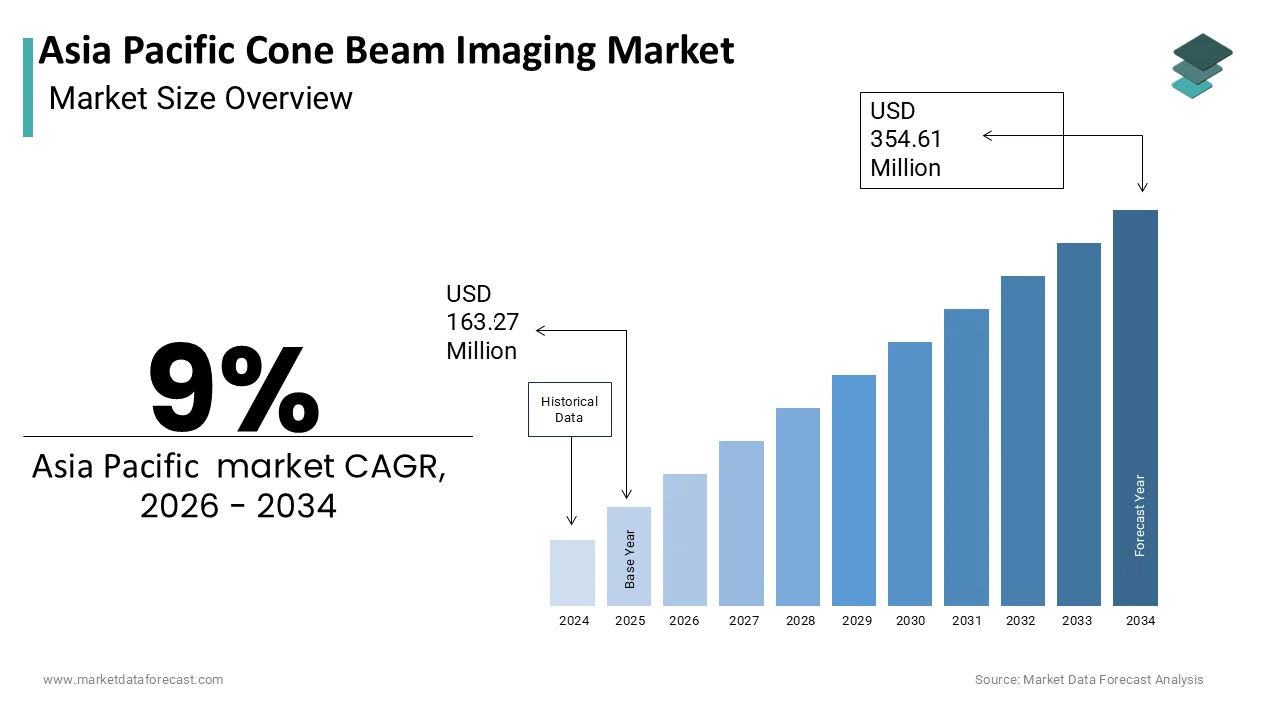
Market Size, 2025
$163.27 MnMarket Estimate, 2026
$177.97 MnMarket Forecast, 2034
$354.61 MnCAGR, 2026–2034
9%Asia Pacific Cone Beam Imaging Market Summary
Market Size & Growth
- Asia Pacific Cone Beam Imaging Market was valued at USD 163.27 million in 2025.
- Expected to reach USD 177.97 million in 2026 and USD 354.61 million by 2034, growing at a CAGR of 9% from 2026 to 2034.
- China led the region with a 35.1% share in 2025; Japan followed with a 20.4% share in 2025.
Key Market Segments
- By Patient Position: Standing/Sitting, Seated, Supine (Supine segment growing at 8.5% CAGR, 2026–2034)
- By Application: Implantology (largest share, 2025), Oral and Maxillofacial Surgery, Orthodontics (fastest-growing at 9.2% CAGR, 2026–2034), Endodontics, General Dentistry, TMJ Disorders, Periodontics, Forensic Dentistry
- By End User: Private Practice (largest share, 2025), Hospitals (fastest-growing at 7.8% CAGR, 2026–2034), Academic and Research Institutes
Key Drivers
- Surging prevalence of dental disorders and implant procedures, with untreated dental caries affecting an estimated 2 billion people globally.
- Rapid expansion of healthcare infrastructure and medical tourism in Thailand, Singapore, and Malaysia.
- Integration of artificial intelligence and cloud-based solutions into imaging software for automated diagnostics.
Key Players
Dentsply Sirona Inc., Cefla S.C., Asahi Roentgen Ind. Co., Ltd., PreXion Corporation, CurveBeam LLC, Danaher Corporation, Carestream Health, Inc., J. Morita Mfg. Corp., Planmeca Group, Vatech Co., Ltd.
Asia Pacific Cone Beam Imaging Market Size
The Asia Pacific Cone Beam Imaging Market is projected to grow from USD 163.27 million in 2025 to USD 177.97 million in 2026 and reach USD 354.61 million by 2034, registering a CAGR of 9% during the forecast period from 2026 to 2034.
Cone beam computed tomography is a specialized form of medical imaging that generates three-dimensional volumetric data using a cone-shaped X-ray beam and a flat panel detector. This technology has become indispensable in dentistry, maxillofacial surgery,ry and ENT procedures due to its ability to provide high-resolution images with significantly lower radiation doses compared to conventional multi-slice computed tomography scanners. The Asia Pacific region is witnessing a transformative shift in diagnostic radiology driven by the increasing prevalence of dental disorders and the rising demand for precise preoperative planning. According to the World Health Organization (WHO), oral diseases affect an estimated 3.5 billion people worldwide, with three-quarters of those affected residing in low- and middle-income countries, presenting a massive challenge to universal health coverage frameworks. Driven by a surging middle class and increasing penetration of private dental networks, mainland China's dental service ecosystem has experienced dramatic capacity growth, creating substantial baseline demand for 3D advanced imaging infrastructure. A study confirms that Japan and South Korea possess some of the world's most rapidly aging populations, driving clinical research toward advanced diagnostics to treat severe periodontal disease and evaluate bone density for complex geriatric restorative care. The integration of artificial intelligence into imaging software further enhances diagnostic accuracy, allowing clinicians to detect pathologies at earlier stages. Government initiatives in countries like India and Australia are focusing on improving healthcare accessibility in rural areas, thereby expanding the potential user base for portable and compact imaging units. The convergence of technological advancement and growing healthcare expenditure creates a fertile ground for market expansion across diverse economic landscapes in the region.
MARKET DRIVERS
Surging Prevalence of Dental Disorders and Implant Procedures
The escalating prevalence of dental disorders and the subsequent rise in implant procedures are key reasons behind the growth of the Asia Pacific cone beam imaging market. Poor oral hygiene habits combined with high sugar consumption have led to widespread dental caries and periodontal diseases among the population. The Global Burden of Disease Study confirms that untreated dental caries in permanent teeth remains the most prevalent health condition globally, affecting an estimated 2 billion people and driving foundational demand for primary oral diagnostics. This high disease burden drives the need for accurate diagnostic tools to plan effective treatments. Dental implants require precise evaluation of bone density and volume to ensure successful osseointegration, a process where cone beam computed tomography excels by providing detailed three-dimensional views without the distortion common in two-dimensional radiographs. The Dental Council of India (DCI) shows that India possesses a vast pool of over 270,000 registered dentists, creating an intensely competitive urban private market that accelerates the adoption of advanced 3D imaging to offer specialized surgical services. Clinical surveys in Australia indicate a steady rise in adult utilization of prosthodontic services, driving mature private practices to integrate advanced cone beam imaging into standard implant planning and bone grafting workflows. The growing middle class in Southeast Asian nations such as Thailand and Vietnam is increasingly investing in cosmetic and restorative dentistry, further fueling demand. These demographic and clinical trends ensure a steady requirement forhigh-precisionn imaging solutions. The shift from traditional extraction to preservation and replacement of teeth underscores the critical role of diagnostic accuracy in modern dental practice.
Rapid Expansion of Healthcare Infrastructure and Medical Tourism
The rapid expansion of healthcare infrastructure and the booming medical tourism sector significantly propel the expansion of the Asia Pacific cone beam imaging market. Countries such as Thailand, Singapore, and Malaysia have established themselves as global hubs for medical tourism,ris,m attracting patients from Europe and North America seeking high-quality yet affordable dental and maxillofacial care. According to data from the Ministry of Public Health (Thailand), Thailand represents one of the world's premier destinations for inbound dental tourism, with international patients seeking high-end restorative and cosmetic treatments backed by modern digital imaging workflows. To cater to this international clientele, healthcare facilities are upgrading their diagnostic equipment to meet global standards of care and precision. Under the Healthy China 2030 blueprint, China’s strategic focus on upgrading public healthcare delivery networks has indirectly catalyzed widespread private healthcare market development, boosting regional capital investment in premium 3D diagnostic technology. The Ministry of Health (MOH) Singapore enforces rigorous clinical infrastructure guidelines, supporting a highly advanced, quality-driven oral care market that rapidly absorbs state-of-the-art diagnostic imaging. This infrastructural development is not limited to urban centers but is gradually extending to tier two cities where disposable incomes are rising. The availability of state-of-the-art imaging technology serves as a competitive advantage for healthcare providers aiming to attract both domestic and international patients. Furthermore, the standardization of healthcare protocols across the region encourages the adoption of uniform diagnostic tools. This systemic improvement ensures that cone beam imaging becomes a standard component of dental and surgical workflows rather than a luxury service.
MARKET RESTRAINTS
High Initial Capital Investment and Maintenance Costs
The high initial capital investment and ongoing maintenance are significant restraints on the widespread adoption of cone beam imaging systems, particularly in developing economies within the region, which limits the growth of the Asia Pacific market. Sources indicate that standard dental CBCT equipment requires a significant capital expense, often ranging from $40,000 to over $120,000, presenting a steep entry barrier for independent practices and solo dental clinics. A study shows that high import duties and capital constraints make advanced 3D radiology units a heavy financial burden, forcing many solo practitioners to rely on third-party imaging centers. The total cost of ownership includes regular calibration software updates and repair services, which require specialized technical support that may not be readily available in remote areas. In India, while the urban market is saturated with advanced technology, rural practitioners still rely on traditional two-dimensional radiography due to budget constraints. The lack of favorable financing schemes from local banks further exacerbates the issue, limiting market penetration. Additionally,y the rapid pace of technological obsolescence means that clinics must continuously invest in upgrades to remain competitive. This financial pressure discourages smaller players from entering the advanced diagnostics segment. Consequently,tly the market remains skewed towards large hospital chains and well-funded private practices, leaving a significant portion of the population without access to high-quality three-dimensional imaging. Addressing these cost barriers is essential for equitable healthcare delivery.
Shortage of Skilled Radiologists and Technical Personnel
The shortage of skilled radiologists and trained technical personnel capable of operating and interpreting cone beam computed tomography scans constrains the growth in several Asia Pacific countries within the Asia Pacific cone beam imaging market. While the hardware is becoming more accessible, the human resource gap remains a critical bottleneck. Research shows that while general dental graduation rates have risen across Southeast Asia, specialized postgraduate paths remain limited, causing a geographical imbalance in advanced diagnostic interpretation capabilities. Demographic data from Vietnam underscores a highly centralized medical infrastructure, where advanced maxillofacial imaging interpretation is heavily concentrated in major tertiary stomatological hospitals in Hanoi and Ho Chi Minh City, creating access gaps in rural provinces. Proper interpretation ofthree-dimensionall data requires specific training that is not always included in standard dental or medical curricula. The skills gap leads to underutilization of installed systems, as general practitioners may hesitate to use advanced features due to lack of confidence. Furthermore, the absence of standardized certification programs across the region creates variability in diagnostic quality. In rural Australia and remote parts of China, the difficulty in retaining skilled staff further compounds the problem. Without adequate human resources, es the potential benefits of cone beam imaging cannot be fully realized. Investing in education and continuous professional development is crucial to overcoming this restraint. Tele radiology offers a partial solution but does not replace the need for local expertise in immediate clinical decision making.
MARKET OPPORTUNITIES
Integration of Artificial Intelligence and Cloud-Based Solutions
The integration of artificial intelligence and cloud-based solutions creates a pathway for the growth of the Asia Pacific cone beam imaging market. This enhances diagnostic efficiency and accessibility. AI algorithms can automate the segmentation of anatomical structures, detect pathologies,s and assist in treatment planning, in,g thereby reducing the workload on radiologists and minimizing human error. Research indicates that integrating FDA-cleared artificial intelligence software into 3D radiology workflows accelerates diagnostic mapping by automating anatomical segmentations and highlighting potential pathologies for clinician review. In Japan, where the workforce is aging and shrinking, such automation is particularly valuable for maintaining healthcare productivity. Cloud-based platforms enable secure storage and sharing of large imaging files, facilitating collaboration between specialists located in different geographic locations. Singapore's Ministry of Health (MOH) emphasizes interoperable care networks, driving dental clinics to adopt secure, cloud-based imaging platforms to facilitate immediate interdisciplinary case referrals. This connectivity is especially beneficial in archipelagic nations like Indonesia and the Philippines, where physical transport of patients is challenging. The adoption of 5G technology further supports real-time transmission of high-resolution images,ensuring timely diagnosis. Moreover, AI-driven predictive analytics can help identify patients at high risk of dental complications,ons enabling preventive interventions. These technological advancements lower the barrier to entry for smaller clinics by offering software as a service models that reduce upfront costs. The synergy between hardware innovation and software intelligence creates a compelling value proposition for healthcare providers seeking to improve outcomes and operational efficiency.
Growing Adoption in Non-Dental Medical Specialties
The expanding application of these imaging systems in non-dental medical specialties such as orthopedics, otolaryngology,y and radiation oncology offers significant growth opportunities in the Asia Pacific cone beam imaging market. Traditionally confined to dentistry, this technology is increasingly recognized for its utility in evaluating complex bone structures and soft tissue anomalies in other parts of the body. Guidelines from the American Academy of Otolaryngology–Head and Neck Surgery (AAO-HNS) recognize that point-of-care maxillofacial CBCT provides high-spatial-resolution imaging of the paranasal sinuses and temporal bone at a significantly reduced radiation dose, optimizing pre-operative mapping for endoscopic sinus surgeries. Driven by severe urban pollution, a high regional prevalence of chronic rhinosinusitis, and expanding private healthcare infrastructure, India's otolaryngology market is seeing increased diagnostic volume, expanding the footprint of point-of-care ENT imaging systems. Orthopedic surgeons are also utilizing cone beam systems for intraoperative imaging during spinal and extremity surgeries due to their compact size and lower radiation footprint compared to conventional CT scanners. The versatility of these systems allows hospitals to maximize their return on investment by serving multiple departments. Furthermore,e the development of specialized software modules for non-dental applications is making the technology more user-friendly for non-dental specialists. This cross-specialty adoption diversifies the customer base and reduces dependence on the dental sector alone. As healthcare providers seek cost-effective alternatives to large fixed CT scanners, the demand for versatile cone beam units is expected to rise. This trend aligns with the broader movement towards minimally invasive andimage-guidedd surgeries in the region.
MARKET CHALLENGES
Regulatory Heterogeneity and Approval Delays
Regulatory heterogeneity and prolonged approval processes for medical devices are significant challenges to the Asia Pacific cone beam imaging market. Each country in the region has its own regulatory framework with varying requirements for clinical data safety standards and quality management systems. Regulatory frameworks published by China's National Medical Products Administration (NMPA) dictate rigorous local type-testing and clinical evaluation mandates for Class II and Class III radiological devices, frequently extending foreign manufacturer market-entry timelines to 18–24 months. In contrast, countries like Singapore and Australia have more streamlined processes aligned with international standards but still require extensive documentation. This lack of harmonization increases the time to market and raises compliance costs for manufacturers who must navigate multiple bureaucratic systems. The high capital costs associated with securing international medical device registrations create high entry barriers, disproportionately impacting smaller medical technology developers attempting to scale into highly regulated international territories. Compliance mandates enforced by India's Central Drugs Standard Control Organisation (CDSCO) require all active dental and medical imaging systems to maintain valid manufacturing or import licenses under the formalized Medical Devices Rules, standardizing quality assurance across the domestic supply chain. Additionally,y the requirement for local clinical trials in some jurisdictions delays the introduction of next-generation technologies. Manufacturers must maintain separate teams to manage regulatory affairs in each country, which strains resources. The absence of a unified Asia Pacific regulatory body means that best practices are not consistently applied across borders. This fragmentation hinders the rapid dissemination of innovative imaging solutions. Companies must adopt agile regulatory strategies to mitigate these risks, ks but the inherent complexity remains a persistent hurdle. Streamlining these processes through regional cooperation could accelerate market growth and improve patient access to advanced diagnostics.
Radiation Safety Concerns and Public Awareness Gaps
Radiation safety concerns and gaps in public awareness regarding the benefits versus risks of cone beam imaging are ongoing hurdles for the Asia Pacific market. Although cone beam computed tomography delivers lower radiation doses than conventional CT scanners, it still exposes patients to ionizing radiation,n which raises apprehension among both patients and referring physicians. Standards published by the International Commission on Radiological Protection (ICRP) dictate that the clinical principle of justification must govern every 3D radiographic exposure, requiring clinicians to verify that the diagnostic benefit of a CBCT scan outweighs the radiation risk. In developing nations such as Bangladesh and Cambodia, there is limited public understanding of radiation risks,s leading to either unnecessary fear or indiscriminate use of imaging. The lack of standardized dose monitoring protocols in some clinics further exacerbates these concerns. Additionally, the absence of clear communication from healthcare providers about the low-dose nature of cone beam systems compared to other modalities contributes to misinformation. Regulatory bodies in the region are working to establish stricter dose limits and mandatory training for operators, but implementation remains uneven. High-profile incidents of overexposure in other medical imaging sectors have heightened public sensitivity, making it harder to promote new technologies. Addressing these concerns requires comprehensive education campaigns and transparent reporting of safety data. Until trust is built through consistent safe practices, the full potential of cone beam imaging may remain unrealized. This holds for certain segments of the population.
REPORT COVERAGE
| REPORT METRIC | DETAILS |
| Market Size Available | 2025 to 2034 |
| Base Year | 2025 |
| Forecast Period | 2026 to 2034 |
| Segments Covered | By Patient Position, Application, End User, and Region |
| Various Analyses Covered | Global, Regional and Country-Level Analysis, Segment-Level Analysis, Drivers, Restraints, Opportunities, Challenges; PESTLE Analysis; Porter’s Five Forces Analysis, Competitive Landscape, Analyst Overview of Investment Opportunities |
| Countries Covered | India, China, Japan, South Korea, Australia, New Zealand,Thailand, Malaysia, Vietnam, Philippines, Indonesia, Singapore, Rest of APAC |
| Market Leaders Profiled | Dentsply Sirona Inc., Cefla S.C., Asahi Roentgen Ind. Co., Ltd., PreXion Corporation, CurveBeam LLC, Danaher Corporation, Carestream Health, Inc., J. Morita Mfg. Corp., Planmeca Group, Vatech Co., Ltd. |
SEGMENTAL ANALYSIS
By Patient Position Insights
The standing or sitting patient position segment led the Asia Pacific cone beam imaging market and captured a significant share in 2025. Its ergonomic design and suitability for high-volume urban dental practices have contributed to the leading position of this segment. Most dedicated dental cone beam computed tomography units are designed with a vertical gantry that allows patients to stand or sit on a stool, which minimizes the floor space required for installation. In densely populated cities across Asia, such as Tokyo, Mumbai,mbai and Shanghai,nreal estate costs are prohibitively high, making compact equipment highly desirable. The standing position also facilitates easier patient positioning for dentists who are accustomed to working in an upright posture during examinations. This alignment reduces physical strain on healthcare providers and improves workflow efficiency. Studies show that upright vertical cone beam units feature an integrated, single-column profile that simplifies the initial workflow setup and hardware anchoring process compared to heavy, large-chassis horizontal scanning tables. The ease of use encourages higher patient throughput, which is critical for private practices operating on tight schedules. Furthermore, re the open design of standing units reduces claustrophobia among patients,nts leading to better compliance and fewer repeat scans. These operational advantages make the standing/sitting configuration the preferred choice for the majority of dental practitioners in the region.
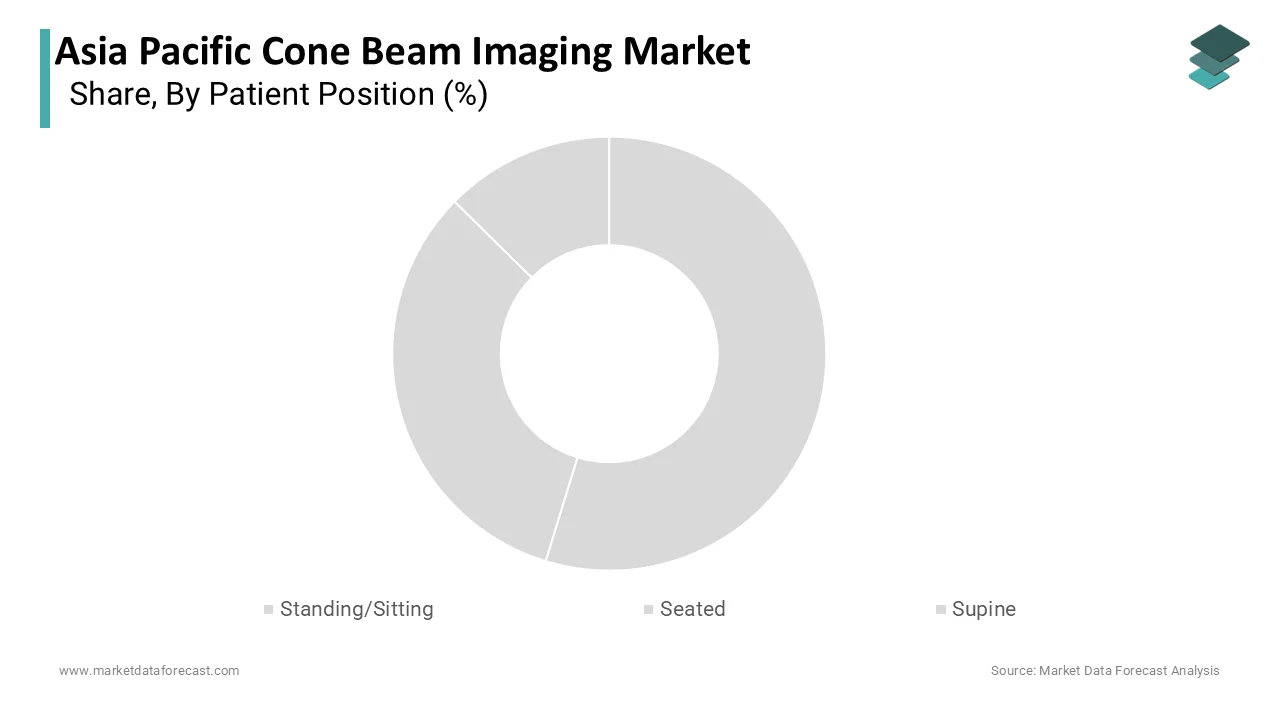
The cost-effectiveness of standing and sitting cone beam units drives their dominance among small and medium-sized dental practices in developing economies. These systems are generally less expensive to manufacture and purchase compared to large supine models, which often incorporate medical-grade components and larger detectors. In countries like India and Vietnam,, wherout-of-pocketet expenditure for dental care is high, clinics must keep overheads low to remain competitive. The lower capital investment allows these practices to offer advanced three-dimensional imaging services without significantly increasing patient fees. Additionally, the maintenance costs for these simpler mechanical structures are lower, reducing the long-term burden on clinic owners. The availability of financing options specifically tailored for small practices further boosts adoption. This economic accessibility ensures that advanced diagnostic capabilities are not limited to large hospital chains but are dispersed throughout the community. The widespread presence of these units creates a robust installed base that sustains market leadership.
The supine patient position segment is expected to exhibit a noteworthy CAGR of 8.5% over the forecast period. This swift growth of the segment is fuelled by the increasing integration of cone beam technology into complex surgical procedures and medical imaging workflows where patient stability is paramount. Supine units allow for precise positioning using headrests and immobilization devices, which is essential for image-guided surgeries in maxillofacial and ENT departments. Hospitals are increasingly adopting these systems to create hybrid operating rooms that combine diagnostic imaging with surgical intervention. This trend is supported by the rising prevalence of complex craniofacial anomalies and trauma cases that require detailed preoperative planning. The ability to scan patients in a comfortable lying position also benefits elderly and disabled individuals who cannot stand for extended periods. This inclusivity expands the patient demographic served by these machines. Furthermore, supine systems often feature larger fields of view,w enabling comprehensive scanning of the entire head and neck region. These clinical advantages drive rapid adoption in tertiary care centers.
Technological advancements in detector technology and reconstruction algorithms have significantly enhanced the image quality of supine cone beam systems while reducing radiation exposure, fueling their rapid growth. Modern supine units utilize flat panel detectors with higher dynamic range and sensitivity, resulting in superior contrast resolution for soft tissue visualization. Technical engineering benchmarks for next-generation dental and maxillofacial scanners demonstrate that units can achieve an isotropic voxel resolution as fine as 0.1 millimetres, providing the high micro-structural clarity necessary to evaluate delicate root canal anatomy or fine bone lamellae. This improvement addresses previous limitations of cone beam technology in soft tissue assessment. Additionally, ly advanced iterative reconstruction techniques have reduced radiation doses compared to earlier models, el,s making them safer for repeated use. Radiation safety regulations enforced by Japan’s Ministry of Health, Labour and Welfare (MHLW) mandate strict adherence to dose optimization protocols, driving healthcare facilities to update aging imaging fleets with modern, low-dose digital diagnostic technology. The comfort of the supine position also minimizes patient movement artifacts, which further enhances image clarity and diagnostic confidence. Radiologists and surgeons prefer these high-fidelity images for complex case evaluations. The convergence of high-performance and safety features makes supine units attractive for academic and research institutions that demand the highest standards of imaging. This technological superiority justifies the higher investment cost and drives the segment's accelerated growth trajectory.
By Application Insights
The implantology segment dominated the Asia Pacific cone beam imaging market and accounted for a substantial share in 2025. Factors such as the critical role of three-dimensional imaging in preoperative planning and bone assessment drive the dominance of this segment. Dental implants require precise evaluation of bone height, width,,th and density to ensure successful osseointegration and avoid damage to vital structures such as nerves and sinuses. The rising popularity of dental tourism in countries like Thailand and Malaysia has led to a surge in implant procedures,ure,s attracting international patients who demand high precision and predictable outcomes. Dentists rely on cone beam images to select the appropriate implant size and angle, thereby reducing the risk of surgical failure. This reliability builds patient trust and encourages wider adoption of implant therapy. Furthermore,e the ability to visualize the alveolar ridge in three dimensions allows for immediate loading protocols, which are highly valued by patients seeking quick results. The direct correlation between imaging accuracy and surgical success cements implantology as the primary driver of cone beam adoption.
The growing demand for esthetic and functional dental restoration fuels the dominance of the implantology segment. Patients are increasingly seeking solutions that mimic natural teeth in both appearance and function, driving the need for precise placement of implants in the anterior zone. Cone beam imaging enables virtual wax-ups and computer aided design/computer aided manufacturing workflows that ensure the final prosthesis aligns perfectly with the patient’s facial features. This digital workflow reduces chair time and improves patient satisfaction. The ability to predict esthetic outcomes using three-dimensional data minimizes the need for corrective surgeries and enhances the overall value proposition of implant treatment. Additionally, the aging population in the region suffers from significant tooth loss,s creating a large addressable market for restorative procedures. The combination of functional necessity and aesthetic desire ensures sustained demand for high-precision imaging. Implantology thus remains the cornerstone of cone beam applications, driving continuous equipment upgrades and software investments.
The orthodontics segment is predicted to witness the highest CAGR of 9.2% between 2026 and 2034 owing to the rise in clear aligner therapy and digital workflows. Traditional braces are being replaced by invisible aligners, rs which require precise three-dimensional data for custom fabrication and treatment monitoring. Cone beam computed tomography provides essential information about root positions and bone boundaries, which is crucial for safe tooth movement and avoiding root resorption. This level of detail is not available in conventional cephalometric radiographs. The convenience of digital records also facilitates remote monitoring, which has become popularpost-pandemicc. Orthodontists can track progress and adjust treatment plans without frequent office visits, enhancing patient compliance. The growing awareness of oral health and esthetics among the younger demographic further accelerates this trend. Parents are willing to invest in advanced diagnostic tools to ensure safe and effective treatment for their children. This shift towards digital and esthetic orthodontics drives the rapid adoption of cone beam imaging in specialized clinics.
The capability of cone beam imaging to facilitate early detection of impacted teeth and perform airway analysis contributes to its rapid growth in this segment. Impacted canines and wisdom teeth are common issues that require precise localization to prevent damage to adjacent roots during extraction or surgical exposure. Cone beam scans allow orthodontists to plan minimally invasive surgical approaches that reduce recovery time and complications. Additionally, ly there is growing recognition of the link between orthodontic treatment and airway health, particularly in patients withsleep-disorderedd breathing. The ability to address multiple clinical concerns with a single scan adds value to the diagnostic process. Orthodontists are increasingly incorporating airway analysis into their standard protocol, driving demand for cone beam units with specialized software modules. This expansion of clinical utility beyond simple tooth movement positions orthodontics as a high-growth area in the market.
By End User Insights
The private practice segment was the largest in the Asia Pacific cone beam imaging market and occupied a commanding share in 2025. This supremacy of the segment was supported by the high volume of dental procedures and the entrepreneurial spirit of independent practitioners. In many Asian countries, the majority of dental care is delivered in private settings rather than public hospitals. These practitioners invest in cone beam technology to differentiate their services and attract patients seeking advanced care. The competitive landscape encourages continuous upgrading of equipment to maintain a reputation for quality and precision. The flexibility of private practices allows for quicker decision-making regarding equipment purchases compared to bureaucratic hospital systems. Furthermore, the direct financial incentive of charging for imaging services provides a clear return on investment. Many private clinics operate asone-stopp shops offering diagnostics, treatment, and follow-up under one roof, which necessitates in-house imaging capabilities. This operational model drives consistent demand for compact and user-friendly cone beam units. The sheer number of private practices across the region ensures that this segment remains the largest contributor to market revenue.
The widespread adoption of digital dentistry and rising patient expectations for modern care drive the dominance of private practices. Patients in urban Asia are increasingly tech-savvy and expect seamless digital experiences from consultation to treatment. Private practices are quick to adopt these technologies to meet these expectations and enhance the patient experience. Cone beam imaging integrates seamlessly with intraoral scanners and CAD/CAM systems, enabling same-day restorations and efficient workflows. The ability to show patients their own scans and simulate treatment outcomes improves communication and consent rates. This interactive approach builds stronger patient-provider relationships. Additionally, private practices often market their advanced technology through social media and websites, attracting a younger demographic willing to pay premium prices for high-tech care. The alignment of business strategy with technological capability ensures that private practices remain the primary adopters of cone beam systems. Their agility and customer focus sustain their leadership in the end-user segment.
The hospitals segment is estimated to register the fastest CAGR of 7.8% from 2026 to 2034 due to the expansion of multidisciplinary care and specialized trauma centers. Large hospital networks are increasingly establishing dedicated maxillofacial and ENT departments that require advanced imaging for complex cases. These units utilize cone beam computed tomography for preoperative planning of reconstructive surgeries, tumor resections, and trauma management. The integration of imaging services within hospitals facilitates collaboration between radiologists, surgeons and onconcologists, thus ensuringmprehensive patient care. Also, the ability to perform immediate postoperative scans to verify surgical outcomes is a significant advantage in acute care settings. Furthermore, government initiatives to upgrade public hospital infrastructure in countries like India and Indonesia include provisions for advanced diagnostic equipment. This institutional support accelerates procurement cycles. The growing burden of non-communicable diseases and accidents also increases the caseload for hospital-based surgical departments. These factors collectively drive the rapid adoption of cone beam technology in hospital settings.
Government initiatives and public health programs aimed at improving access to specialized care contribute to the fast growth of the hospital segment. Many Asia Pacific governments are investing in modernizing public healthcare facilities to reduce the reliance on the private sector for complex treatments. These initiatives aim to decentralize specialized care and make it accessible to rural populations. Cone beam imaging is included in these procurement lists due to its versatility and lower radiation profile compared to conventional CT. The standardization of care protocols in public hospitals also drives the need for uniform diagnostic tools. Additionally, public health campaigns focusing on oral cancer screening and cleft lip repair require accurate imaging for assessment and monitoring. Hospitals serve as the primary centers for these programs,s creating steady demand for imaging equipment. The scale of government procurement projects often involves bulk buying, ing which significantly boosts market volume. This institutional backing ensures sustained growth for the hospital segment in the coming years.
COUNTRY LEVEL ANALYSIS
China Cone Beam Imaging Market Analysis
China outperformed other regions in the Asia Pacific cone beam imaging market and held a 35.1% share in 2025. This prominence of the Chinese market was driven by its massive population and rapidly modernizing healthcare infrastructure. The country has witnessed a surge in the number of private dental chains and public hospital upgrades, which have fueled demand for advanced diagnostic equipment. Driven by expanding national healthcare budgets and the rising penetration of private chains, mainland China's dental workforce is growing steadily, expanding the operational user base for advanced digital diagnostics and 3D imaging installations. Government policies under the Healthy China 2030 initiative emphasize preventive care and early diagnosis,s which supports the adoption of high-resolution imaging. The domestic manufacturing sector has also matured with local companies producing cost-effective cone beam units that cater to the price-sensitive segments of the market. As per sources, imports of high-end systems from Europe and Japan remain strong for tertiary care centers seeking premium features. The rising middle class is increasingly willing to spend on aesthetic dentistry and implants, further driving market growth. Urbanization has led to the concentration of advanced clinics in tier one cities like Beijing and Shanghai, but penetration is expanding to tier two and three cities. This geographic expansion ensures sustained demand. The competitive landscape is intense, with both global and local players vying for market share through innovation and pricing strategies. China’s dominant position is reinforced by its robust supply chain and large patient pool.
Japan Cone Beam Imaging Market Analysis
Japan was the next prominent country in the Asia Pacific cone beam imaging market and captured a 20.4% share in 2025 because of the high prevalence of periodontal disease and tooth loss among the elderly. The country’s market position shows a highly aged population and advanced technological adoption. According to Japan's Ministry of Health, Labour and Welfare (MHLW), severe periodontal issues and pocketing affect the vast majority of the adult population, driving a national clinical focus on advanced 3D structural imaging to coordinate intricate bone assessments and implant therapies. Japanese healthcare providers are known for their early adoption of cutting-edge technology, including AI-integrated cone beam systems. The market is dominated by domestic manufacturers who offer high-quality compact units suitable for small clinics. As per research, the replacement cycle for imaging equipment in Japan is shorter than in other regions due to the rapid pace of technological innovation. Insurance coverage for certain diagnostic procedures also supports utilization, although out-of-pocket payments remain common for advanced imaging. The culture of precision and quality in Japanese healthcare ensures that cone beam imaging is considered a standard of care rather than a luxury. Research and development activities in Japanese universities continue to push the boundaries of image resolution and dose reduction. This commitment to excellence maintains Japan’s status as a key market for premium imaging solutions.
India Cone Beam Imaging Market Analysis
India is a high-growth landscape in the Asia Pacific cone beam imaging market due to a large young population and increasing awareness of oral health. The country has significant potential for future expansion. Also, the Indian Dental Association (IDA) underscores that India produces thousands of new dental graduates annually, creating an intensely competitive private sector where clinicians increasingly invest in modern CBCT systems as a marketing and diagnostic differentiator. The rise of medical tourism in cities like Delhi and Mumbai has prompted clinics to invest in state-of-the-art imaging equipment to meet international standards. As per sources, the private sector dominates the dental landscape with numerous standalone clinics and small chains adopting cone beam technology to compete. The availability of affordable domestic and Chinese-made units has lowered the entry barrier for smaller practices. Government initiatives such as Ayushman Bharat aim to improve healthcare access, although dental coverage remains limited,d driving most demand from the private sector. The growing middle class is increasingly prioritizing aesthetic treatments such as a smile makeover,s which require detailed planning. Urban centers are seeing rapid adoption while rural areas lag due to cost and infrastructure constraints. However, teledentistry and mobile imaging units are beginning to bridge this gap. India’s demographic dividend ensures long-term sustainability for the market.
South Korea Cone Beam Imaging Market Analysis
South Korea occupies a significant position in the Asia Pacific cone beam imaging market. The country is a global leader in dental aesthetics and implantology, which drives high utilization of three-dimensional imaging. According to the Korean Dental Association, South Korea has one of the highest densities of dentists per capita in the world, fostering intense competition and rapid adoption of new technologies. Patients in South Korea place a high value on appearance,e leading to a booming cosmetic dentistry sector that relies on precise diagnostic data. Domestic manufacturers are prominent in the market, ket offering innovative features such as facial scanning integration and AI analysis. As per studies, South Korean companies are also major suppliers of cone beam units to other Asian markets, leveraging their technological expertise. The national health insurance system covers basic dental care, but advanced imaging is often paid out of pocket, yet patients are willing to invest for better outcomes. The integration of digital workflows in clinics is widespread,d with most practitioners using CAD/CAM systems alongside cone beam scanners. This high level of digital maturity ensures consistent demand for upgrades and replacements. South Korea’s focus on innovation and quality maintains its strong position in the regional market.
Australia Cone Beam Imaging Market Analysis
Australia holds a stable share of the Asia Pacific cone beam imaging market due to high healthcare spending and strict regulatory standards that ensure quality and safety. Studies in Australia reveal that while Cone Beam Computed Tomography has revolutionized implant planning and complex diagnostics, its operation remains strictly regulated by state radiation safety bodies, with general practices primarily relying on centralized external imaging networks. The private health insurance system encourages patients to seek advanced treatments such as implants and orthodontics, which require detailed imaging. Rural and remote areas face challenges in accessing specialized care, but tele radiology services are helping to mitigate this issue. As per sources, investments in regional health infrastructure are gradually improving equipment availability outside major cities. Australian practitioners are highly trained and emphasize evidence-based practice, which supports the justified use of cone beam imaging. The market is dominated by established global brands that comply with stringent radiation safety regulations. Consumer awareness of oral health is high,h leading to regular dental visits and early detection of issues. The aging population also contributes to the demand for restorative procedures. Australia’s robust healthcare system and high disposable income sustain a steady demand for premium imaging solutions.
COMPETITIVE LANDSCAPE
The competition in the Asia Pacific cone beam imaging market is characterized by intense rivalry among established global manufacturers and emerging regional players. Major companies compete primarily based on image resolution, radiation dose efficiency,y and integration capabilities with digital workflows. The market features a mix of premium high-end systems and affordable entry-level units, creating a diverse landscape where companies must tailor their strategies to different economic segments. Innovation drives competitive advantage as firms strive to introduce artificial intelligence-powered software and cloud-based solutions that enhance diagnostic accuracy and operational efficiency. Pricing strategies play a crucial role, particularly in developing economies where cost sensitivity is high among private practitioners. Companies invest significantly in distributor networks and after-sales support to differentiate their offerings and build loyalty. The entry of local manufacturers in countries like China and South Korea adds pressure on international brands to offer competitive pricing and localized features. Regulatory compliance and adherence to safety standards are also critical factors influencing competitive dynamics. Collaborations with dental associations and educational institutions are becoming increasingly common as companies seek to influence clinical preferences. This multifaceted competition ensures a steady flow of innovations but also requires substantial investment in marketing and service infrastructure. The market remains dynamic with frequent product launches and strategic alliances shaping the competitive landscape across diverse geographies.
KEY MARKET PLAYERS
Some of the companies that are playing a dominant role in the Asia Pacific Cone Beam Imaging Market include
- Dentsply Sirona Inc.
- Cefla S.C.
- Asahi Roentgen Ind. Co., Ltd.
- PreXion Corporation
- CurveBeam LLC
- Danaher Corporation
- Carestream Health, Inc.
- J. Morita Mfg. Corp.
- Planmeca Group
- Vatech Co., Ltd.
TOP LEADING PLAYERS IN THE MARKET
- Planmeca Co Ltd maintains a strong presence in the Asia Pacific cone beam imaging market through its comprehensive range of dental imaging solutions tailored for modern clinics. The company focuses on integrating advanced three-dimensional imaging with intraoral scanning and practice management software to create seamless digital workflows. Recent strategic initiatives include expanding its distribution network in emerging markets such as India and Vietnam to increase accessibility for small and medium-sized practices. Planmeca actively collaborates with local dental associations to provide training programs that enhance clinician proficiency in using cone beam technology. The company also invests in research and development to introduce compact units with lower radiation doses,s which appeal to safety-conscious patients. By emphasizing user-friendly interfaces and reliable performance, Planmeca builds long-term trust among dental professionals. Their commitment to innovation ensures they remain competitive against both global giants and local manufacturers. This customer-centric approach strengthens their brand loyalty and drives consistent adoption across diverse healthcare settings in the region.
- Vatech Co Ltd plays a pivotal role in the Asia Pacific cone beam imaging market by offering high-quality and cost-effective imaging systems that cater to a wide range of clinical needs. The company has established itself as a leading manufacturer in South Korea and exports extensively to neighboring countries, including China, Japan,n and Southeast Asian nations. Vatech recently launched new models featuring artificial intelligence-powered analysis tools that assist in automatic landmark detection and nerve tracing, thereby improving diagnostic efficiency. The company also focuses on strengthening its after-sales service infrastructure to ensure timely maintenance and support for clients in remote areas. Strategic partnerships with local distributors have enhanced market penetration in rural regions where access to advanced diagnostics was previously limited. Vatech’s emphasis on affordability without compromising image quality makes its products attractive to budget-conscious clinics. Continuous product upgrades and compliance with international safety standards reinforce its reputation for reliability. These efforts collectively solidify Vatech’s position as a key contributor to the growth of digital dentistry in the Asia Pacific region.
- Dentsply Sirona Inc contributes significantly to the Asia Pacific cone beam imaging market through its integrated digital dentistry ecosystem that combines hardware, software,e and consumables. The company leverages its global brand recognition to promote premium cone beam computed tomography units in developed markets such as Australia, Japan, and Singapore. Recent actions include the introduction of cloud-based platforms that enable secure storage and sharing of imaging data, facilitating collaboration among specialists. Dentsply Sirona also engages in extensive educational initiatives, partnering with dental universities to train future practitioners on the benefits ofthree-dimensionall imaging. The company focuses on developing solutions that streamline workflow from diagnosis to treatment execution, reducing chair time and enhancing patient satisfaction. By acquiring innovative startups and investing in proprietary technologies, Dentsply Sirona stays at the forefront of digital transformation. Their holistic approach addresses the entire patient journey, ey making them a preferred partner for large hospital chains and specialized clinics. This comprehensive strategy ensures sustained relevance and growth in the competitive Asia Pacific landscape.
TOP STRATEGIES USED BY KEY MARKET PARTICIPANTS
Key players in the Asia Pacific cone beam imaging market employ several strategic approaches to maintain and enhance their competitive positions. Product innovation remains a primary strategy with companies investing heavily in research and development to create novel formulations with improved efficacy and safety profiles. Expansion into digital health solutions is another critical tactic as firms integrate telemedicine and mobile applications to support patient engagement and adherence. Strategic partnerships with healthcare providers and insurance companies help facilitate better access to treatments and improve reimbursement coverage. Marketing campaigns focused on disease awareness and education are widely used to drive diagnosis rates and encourage early intervention. Companies also pursue geographic expansion within the region to tap into underserved markets and increase their customer base. Additionally, many firms focus on portfolio diversification by adding combination therapies that address multiple symptoms simultaneously. These strategies collectively enable market participants to navigate regulatory challenges me et evolving patient needs, and sustain growth in a dynamic healthcare environment.
MARKET SEGMENTATION
This research report on the Asia Pacific Cone Beam Imaging Market has been segmented and sub-segmented into the following categories.
By Patient Position
- Standing/Sitting
- Seated
- Supine
By Application
- Dental Applications
- Implantology
- Oral
- Maxillofacial Surgery
- Orthodontics
- Endodontics
- General Dentistry
- Temporomandibular Joint (TMJ) Disorders
- Periodontics
- Forensic Dentistry
By End User
- Hospitals
- Private Practice
- Academic
- Research Institutes
By Country
- India
- China
- Japan
- South Korea
- Australia
- New Zealand
- Thailand
- Malaysia
- Vietnam
- Philippines
- Indonesia
- Singapore
- Rest of APAC