- Product Description Description
- Table of Contents TOC
- List of Table & Figure LOT
- Get Free Sample PDF Sample PDF
Market Size, 2025
$4.64 BnMarket Estimate, 2026
$5.29 BnMarket Forecast, 2034
$15.15 BnCAGR, 2026–2034
14.06%Asia Pacific Contract Lifecycle Management Software Market Size
The Asia Pacific Contract Lifecycle Management Software market size was calculated to be USD 4.64 billion in 2025 and is anticipated to be worth USD 15.15 billion by 2034, from USD 5.29 billion in 2026, growing at a CAGR of 14.06% during the forecast period.
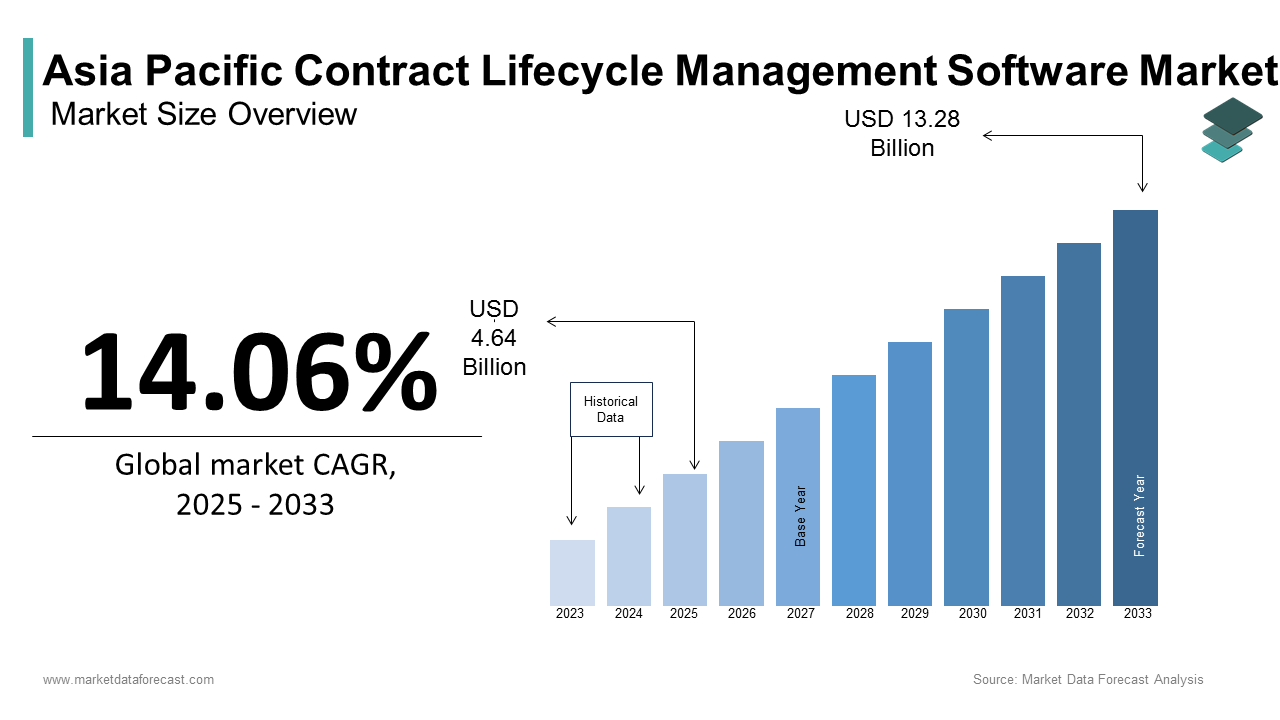
The Asia Pacific contract lifecycle management (CLM) software market is driven by the growing need for efficient, transparent, and compliant contract management processes. CLM software enables organizations to streamline the entire lifecycle of contracts from creation and negotiation to execution, renewal, and analysis through digital tools and automation. This has created a fertile ground for CLM solutions, particularly in industries such as finance, healthcare, and manufacturing where regulatory compliance is critical. For instance, the Monetary Authority of Singapore mandates stringent documentation and audit trails for financial contracts thereby driving demand for robust CLM platforms. Additionally, the rise of remote work and digital transformation initiatives has accelerated the adoption of cloud-based CLM software. Since 2020, many enterprises in the Asia Pacific have accelerated their digital transformation efforts which further increases the demand for automated contract management systems.
MARKET DRIVERS
Growing Complexity of Regulatory Compliance
The increasing complexity of regulatory frameworks across the Asia Pacific region is a significant driver of the CLM software market. Governments and industry bodies have introduced stringent regulations to ensure transparency and accountability in business operations. For example, the General Data Protection Regulation (GDPR)-equivalent laws in countries like Australia and Japan require organizations to maintain detailed records of contracts involving personal data. Non-compliance with such regulations can result in fines amounting to 4% of global turnover thereby incentivizing businesses to adopt CLM solutions. Additionally, industries such as healthcare and finance face unique compliance challenges. Over 30.12% of legal disputes in the financial sector arise from poorly managed contracts emphasizing the need for automated compliance tracking. By leveraging CLM software organizations can ensure adherence to regulatory requirements while reducing legal risks and enhancing operational efficiency.
Rising Volume of Contracts in Digital Transformation Initiatives
The surge in digital transformation initiatives across the Asia Pacific region has led to an exponential increase in the volume of contracts managed by organizations. Over 80.72% of enterprises in the region have adopted cloud computing, artificial intelligence, and IoT technologies thereby necessitating scalable contract management solutions. For instance, multinational corporations expanding their operations in Southeast Asia often handle thousands of supplier and vendor contracts simultaneously creating bottlenecks in manual systems. Inefficient contract management processes can lead to revenue leakage of up to 9% annually due to missed deadlines and overlooked clauses. CLM software addresses these challenges by automating workflows that enable real-time collaboration and providing actionable insights through analytics.
MARKET RESTRAINTS
High Implementation Costs
High implementation costs are one of the primary restraints facing the Asia Pacific CLM software market, especially for small and medium-sized enterprises (SMEs). Deploying enterprise-grade CLM platforms requires significant upfront investments in software licenses, infrastructure, and training. The average implementation cost for CLM software in the region exceeds $100,000 for large enterprises making it prohibitive for SMEs with limited budgets. Additionally, the shortage of skilled professionals who can configure and manage CLM systems exacerbates the issue. The annual salary of a certified CLM expert in Australia and Japan averages $120,000 adding to operational expenses. These financial constraints hinder widespread adoption, especially in developing economies where regulatory enforcement is weak.
Resistance to Change in Traditional Organizations
Another major restraint is the resistance to change among traditional organizations that are accustomed to legacy systems and manual processes. Many businesses in the Asia Pacific region particularly in rural areas lack awareness of the benefits of digital contract management. SMEs in South Asia still rely on paper-based contracts which often perceive CLM software as unnecessary or too complex to implement. Cultural perceptions and entrenched practices further complicate adoption efforts. Less than 20.07% of family-owned businesses in India are willing to invest in digital tools thereby fearing disruptions to established workflows. This resistance not only slows market penetration but also limits the potential for innovation and scalability in the CLM software space.
MARKET OPPORTUNITIES
Integration with Emerging Technologies
The integration of emerging technologies such as artificial intelligence (AI) and blockchain presents a transformative opportunity for the Asia Pacific CLM software market. AI-driven CLM platforms can analyze vast amounts of contract data to identify patterns as well as predict risks and recommend optimal actions. AI-powered CLM solutions can reduce contract review times by up to 50.97% significantly improving operational efficiency. For example, companies in Japan are leveraging AI to automate the extraction of key terms and conditions thereby ensuring compliance with local regulations. Additionally, blockchain technology offers unparalleled transparency and security by creating immutable records of contract transactions.
Expansion into Untapped Industries
Expansion into untapped industries such as agriculture, education, and public sector services presents a promising opportunity for increased CLM software adoption. While sectors like finance and healthcare have embraced CLM solutions many others remain underserved. Over 40% of agricultural contracts in Southeast Asia are still managed manually leading to inefficiencies and disputes. Similarly, educational institutions managing partnerships, research agreements, and procurement contracts can benefit from automated CLM platforms. For instance, universities in Australia have begun adopting CLM software to streamline grant agreements and intellectual property contracts thereby achieving greater transparency and accountability.
MARKET CHALLENGES
Fragmented Regulatory Frameworks
The fragmented nature of regulatory frameworks governing contract management across the region is one of the foremost challenges faced by the Asia Pacific CLM software market. While countries like Singapore and Australia have established robust compliance standards others lag in enacting comprehensive legislation. Only 40.94% of member economies have implemented national e-contract laws which lead to inconsistencies in enforcement. For example, India’s Information Technology Act does not adequately address modern e-contracting practices while Indonesia’s data privacy framework remains underdeveloped. This lack of harmonization complicates cross-border operations for multinational corporations thereby forcing them to navigate multiple regulatory landscapes. Multinational companies operating in the Asia Pacific spend an average of 15.26% more on compliance-related activities compared to other regions due to these disparities. Such challenges discourage investment in standardized CLM solutions while hindering the development of a cohesive regional ecosystem.
Limited Awareness Among SMEs
Another pressing challenge is the limited awareness of CLM software among small and medium-sized enterprises (SMEs) in the Asia Pacific region. Many SMEs underestimate the importance of efficient contract management while viewing it as a secondary concern rather than a business-critical priority. Many SMEs in the region lack a formal contract management strategy often due to a limited understanding of potential risks and the perceived complexity of adopting CLM solutions. The absence of dedicated IT departments in smaller organizations exacerbates the problem as employees often lack the technical knowledge to identify and mitigate risks. This lack of awareness not only increases operational costs but also undermines broader efforts to create a secure and efficient digital ecosystem.
REPORT COVERAGE
| REPORT METRIC | DETAILS |
| Market Size Available | 2025 to 2034 |
| Base Year | 2025 |
| Forecast Period | 2026 to 2034 |
| CAGR | 14.06% |
| Segments Covered | By Component, End User, and Region |
| Various Analyses Covered | Global, Regional & Country Level Analysis; Segment-Level Analysis; DROC, PESTLE Analysis; Porter’s Five Forces Analysis; Competitive Landscape; Analyst Overview of Investment Opportunities |
| Regions Covered | India, China, Japan, South Korea, Australia, New Zealand, Thailand, Malaysia, Vietnam, Philippines, Indonesia, Singapore, Rest of Asia-Pacific |
| Market Leaders Profiled | Icertis, SAP Ariba, Coupa Software, DocuSign, Conga, Agiloft, ContractWorks, SirionLabs, Zycus, CLM Matrix, CobbleStone Software, JAGGAER, Symfact, Concord, Malbek |
SEGMENTAL ANALYSIS
By Component Insights
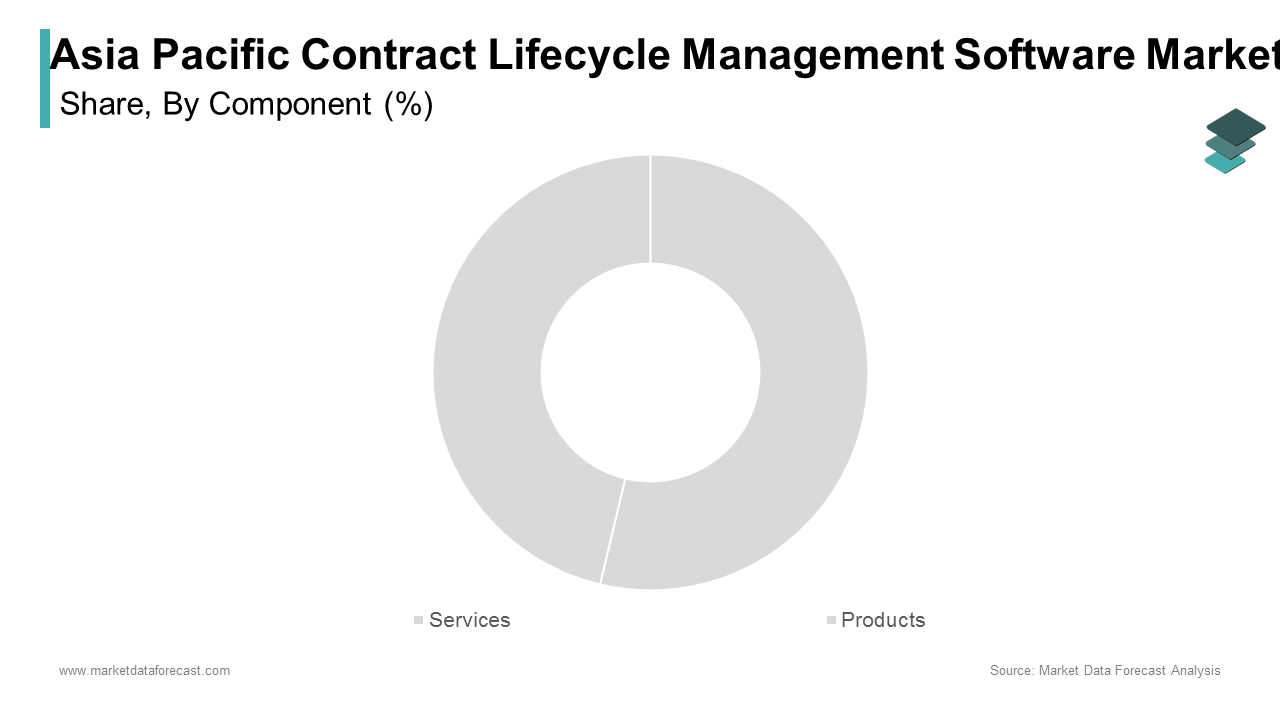
The services segment dominated the Asia Pacific weight management market by capturing 50.98% of the global market share and is driven by the growing demand for personalized and holistic weight management solutions including fitness coaching along with nutritional counseling and telehealth consultations. A key factor contributing to this dominance is the increasing emphasis on mental health and behavioral therapy as part of weight loss programs. Over 30.53% of individuals struggling with obesity also experience anxiety or depression representing the need for integrated services. Companies like CureFit and Practo have capitalized on this trend by offering comprehensive wellness packages that combine physical fitness with mental health support. Another driving factor is the rise of digital health platforms which enable remote access to weight management services. Additionally, the post-pandemic surge in remote healthcare has accelerated the adoption of virtual weight management services.
The products segment is projected to witness a CAGR of 16.8% during the forecast period. This rapid expansion is fueled by the increasing availability of innovative and affordable weight management products such as dietary supplements as well as fitness equipment and wearable devices. The proliferation of e-commerce platforms has made these products more accessible to consumers across the region sales of dietary supplements in the Asia Pacific grew by 35.9% in 2022 emphasizing the convenience and reach of digital channels. Another contributing factor is the growing consumer preference for non-invasive weight loss solutions. Over 60.4% of urban consumers in the region prioritize dietary changes and fitness equipment over surgical interventions. Companies like Herbalife and Fitbit have introduced localized product lines such as protein shakes infused with traditional Asian flavors and budget-friendly fitness trackers.
By End-User Insights
The manufacturing sector was the largest in the Asia Pacific contract lifecycle management (CLM) software market by capturing 35.82% of the total market share It is driven by the complex contractual requirements of manufacturing companies which often involve managing supplier agreements, procurement contracts, and compliance documentation. Over 40% of disputes in the manufacturing sector arise from poorly managed contracts emphasizing the need for robust CLM solutions. For example, multinational corporations expanding their operations in Southeast Asia handle thousands of contracts simultaneously thereby creating bottlenecks in manual systems. Another driving factor is the growing emphasis on supply chain transparency and risk mitigation. Inefficient contract management processes can lead to revenue leakage of up to 9% annually due to missed deadlines and overlooked clauses. CLM software addresses these challenges by automating workflows that enable real-time collaboration and providing actionable insights through analytics.
The pharmaceutical sector is projected to witness a CAGR of 18.5% during the forecast period. This rapid expansion is driven by the stringent regulatory requirements governing clinical trials drug approvals and intellectual property contracts in the pharma industry. For instance, the Australian Therapeutic Goods Administration mandates detailed documentation for all pharmaceutical contracts thereby necessitating advanced CLM platforms. Additionally, the rise of biotech startups in countries like India and South Korea has increased the volume of contracts requiring efficient management. Another contributing factor is the integration of artificial intelligence (AI) into CLM software which enables predictive analytics and automated compliance tracking.
REGIONAL ANALYSIS
China was the top performer in the Asia Pacific CLM software market and accounted for 28.9% of the share in 2025 the massive manufacturing base and rapidly evolving regulatory landscape have created a fertile ground for CLM solutions. Enterprises in sectors like automotive and electronics rely heavily on digital tools to manage complex supplier and vendor contracts. Over 50.6% of large enterprises have adopted CLM software to enhance transparency and compliance. Additionally, government initiatives promoting digital transformation such as the "Made in China 2026" program have accelerated the adoption of cloud-based CLM platforms.
India was positioned second with 13.2% of the Asia Pacific CLM software market share in 2025. The country’s booming IT and pharmaceutical industries are major drivers of CLM software adoption. Indian enterprises are increasingly leveraging CLM platforms to manage intellectual property agreements as well as procurement contracts and regulatory documentation. The rise of startups in sectors like biotech and fintech has amplified the demand for scalable and cost-effective CLM tools. Government-led initiatives promoting e-governance and digital contracts have further bolstered the market thereby ensuring steady growth.
Japan is a key player in the Asia Pacific CLM software market. The country’s advanced technological infrastructure and emphasis on precision have positioned it as a leader in adopting AI-driven CLM solutions. Japanese corporations prioritize efficiency and compliance, particularly in industries like finance and manufacturing. Over 70% of large enterprises use CLM software to manage cross-border contracts and mitigate risks. Additionally, the integration of blockchain technology into CLM platforms has gained traction which enables secure and transparent contract management.
The Australian market is driven by a strong emphasis on regulatory compliance and corporate governance which has fueled the demand for CLM software. Australian enterprises spend significant resources on managing contracts related to procurement, legal agreements, and intellectual property. Additionally, the rise of remote work has accelerated the adoption of cloud-based CLM platforms which ensure accessibility and scalability.
South Korea’s market is driven by a strong focus on innovation and digital transformation with growing adoption of advanced CLM solutions especially in the electronics and automotive sectors. South Korean enterprises particularly in the electronics and automotive sectors rely on CLM software to manage supplier agreements and intellectual property contracts. Over 40.2% of large corporations have implemented CLM platforms to enhance operational efficiency and compliance. Additionally, government initiatives promoting smart factories and Industry 4.0 technologies have accelerated the adoption of integrated digital tools.
LEADING PLAYERS IN THE ASIA PACIFIC CONTRACT LIFECYCLE MANAGEMENT SOFTWARE MARKET
Icertis
Icertis is a global leader in the contract lifecycle management (CLM) software market renowned for its AI-driven platform that transforms contracts into strategic assets. The company’s solutions cater to diverse industries including manufacturing, healthcare, and retail while enabling organizations to streamline contract creation as well as negotiation and compliance. Icertis has strengthened its presence in the Asia Pacific by partnering with regional enterprises to address complex regulatory requirements and cross-border operational challenges. Its emphasis on innovation and scalability has positioned it as a trusted partner for multinational corporations.
DocuSign
DocuSign is a prominent player in the CLM software market leveraging its expertise in electronic signatures and digital transaction management to offer end-to-end contract lifecycle solutions. The company’s platform integrates seamlessly with existing enterprise systems thereby providing real-time visibility and collaboration capabilities. DocuSign’s focus on user-friendly interfaces and robust security features has resonated with businesses across the Asia Pacific region.
SAP Ariba
SAP Ariba specializes in procurement and supply chain solutions with its CLM software playing a critical role in managing supplier contracts and ensuring compliance. The platform’s ability to integrate with SAP’s broader ecosystem makes it a preferred choice for enterprises seeking unified business operations. SAP Ariba has made significant strides in the Asia Pacific by tailoring its solutions to address regional nuances such as language preferences and regulatory frameworks. Its commitment to sustainability and transparency aligns with the growing demand for ethical supply chain practices.
TOP STRATEGIES USED BY KEY PLAYERS IN THE ASIA PACIFIC CONTRACT LIFECYCLE MANAGEMENT SOFTWARE MARKET
Integration of Emerging Technologies
Leading players are increasingly integrating emerging technologies such as artificial intelligence (AI) and blockchain into their CLM platforms to enhance functionality and address evolving customer needs. For instance, AI-powered analytics enable predictive insights and automated risk assessments while blockchain ensures secure and tamper-proof contract records. This strategy not only improves operational efficiency but also differentiates vendors in a competitive market.
Expansion Through Strategic Partnerships
Strategic partnerships with local enterprises governments and industry bodies have become a cornerstone of success in the Asia Pacific CLM software market. Collaborations with public sector organizations help promote awareness campaigns and regulatory compliance initiatives thereby fostering trust among stakeholders. Additionally, partnerships with technology firms facilitate the integration of advanced tools such as e-signature platforms and cloud-based systems which ensure scalability and reliability.
Focus on Localization and Customization
Key players are prioritizing localization and customization to address the cultural and regulatory nuances of the Asia Pacific region. Vendors can cater to the unique needs of businesses in countries like Japan, India, and Australia by offering multilingual interfaces and region-specific features. This approach not only enhances user experience but also fosters brand loyalty. Additionally, customization allows companies to adapt their solutions to specific industries such as manufacturing and healthcare.
KEY MARKET PLAYERS AND COMPETITION OVERVIEW
Major Players in the Asia Pacific CLM software market include Icertis, SAP Ariba, Coupa Software, DocuSign, Conga, Agiloft, ContractWorks, SirionLabs, Zycus, CLM Matrix, CobbleStone Software, JAGGAER, Symfact, Concord, Malbek.
The Asia Pacific CLM software market is characterized by intense competition and is driven by a mix of global giants and regional innovators striving to capture market share. Established players like Icertis, DocuSign, and SAP Ariba bring extensive resources and technological expertise thereby enabling them to dominate key segments such as AI-driven analytics and cloud-based platforms. Regional companies leverage their deep understanding of local cultures and regulatory frameworks to carve out niche positions. The market’s dynamic nature is further amplified by rapid technological advancements which compel vendors to continuously innovate and adapt. Strategic collaborations with governments and industry bodies play a crucial role in shaping competitive strategies, particularly in emerging markets. Additionally, the rise of cloud computing and digital transformation initiatives has created new opportunities for differentiation as companies strive to offer seamless and scalable solutions. This interplay of innovation, localization, and strategic positioning ensures that the market remains vibrant and highly contested.
RECENT HAPPENINGS IN THE MARKET
- In April 2025, Icertis launched a new AI-powered module tailored to address regulatory compliance challenges in Southeast Asia.
- In June 2023, DocuSign partnered with a leading financial institution in Australia to integrate its CLM platform with the bank’s existing procurement systems.
- In September 2023, SAP Ariba introduced a blockchain-enabled feature to ensure tamper-proof records for supplier contracts in India.
- In February 2025, Icertis acquired a regional startup specializing in multilingual CLM solutions.
- In November 2023, DocuSign collaborated with a government agency in Singapore to promote the adoption of e-contracting tools among small and medium-sized enterprises (SMEs).
MARKET SEGMENTATION
This research report on the Asia Pacific Contract Lifecycle Management Software Market has been segmented and sub-segmented based on component, end user, and region.
By Component
- Services
- Products
By End User
- Pharma
- Retail
By Region
- India
- China
- Japan
- South Korea
- Australia
- New Zealand
- Thailand
- Malaysia
- Vietnam
- Philippines
- Indonesia
- Singapore
- Rest of Asia-Pacific