- Product Description Description
- Table of Contents TOC
- List of Table & Figure LOT
- Get Free Sample PDF Sample PDF
Market Size, 2025
$200.74 MnMarket Estimate, 2026
$223.74 MnMarket Forecast, 2034
$526.99 MnCAGR, 2026–2034
11.32%Asia Pacific Dendritic Cell Cancer Vaccines Market Size, Growth, Trends & Forecast (2026–2034)
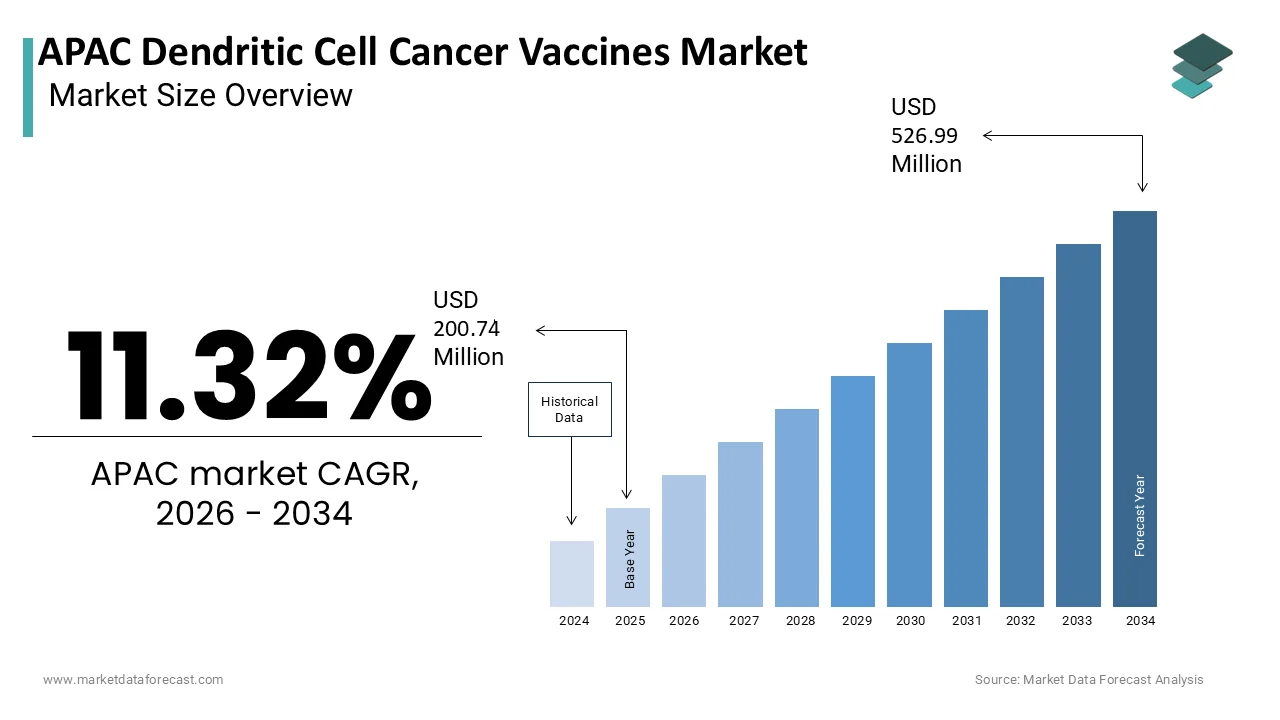
The Asia Pacific dendritic cell cancer vaccines market size was valued at USD 200.74 million in 2025, is anticipated to reach USD 223.74 million in 2026, and is projected to scale to USD 526.99 million by 2034, expanding at a robust compound annual growth rate (CAGR) of 11.32% during the forecast period from 2026 to 2034. Market expansion across the APAC region is primarily driven by surging cancer patient demographics, rising geriatric populations, substantial government investments in healthcare infrastructure, and advancements in personalized cancer immunotherapy.
Key Executive Metrics (At-a-Glance)
- 2025 Base Valuation: USD 200.74 Million
- 2026 Current Valuation: USD 223.74 Million
- 2034 Forecast Valuation: USD 526.99 Million
- Compound Annual Growth Rate (CAGR): 11.32% (2026–2034)
- Leading Regional Growth Drivers: Booming economies like India and China spearheading clinical trials, adoption of novel immunotherapies (such as DENVAX), and rising healthcare expenditures.
- Key Geographic Countries Covered: India, China, Japan, South Korea, Australia, New Zealand, Thailand, Malaysia, Vietnam, Philippines, Indonesia, Singapore, and Rest of APAC
Core Market Drivers & Opportunities
- Rising Cancer Burden: Escalating incidence rates of solid tumors and blood malignancies across major developing nations like India and China.
- R&D and Clinical Trials: Substantial capital investments by market participants and successful Phase II/III clinical trial advancements for personalized cell-based vaccines.
- Government & Regulatory Support: Heightened public awareness campaigns and structured framework adjustments to improve access to advanced oncology care.
Primary Market Restraints & Challenges
- Adverse Side Effects: Risks and biological side-effects linked to cellular applications and immune-mediated responses.
- High Treatment Costs: Expensive personalized manufacturing pipelines restricting broad-based affordability and adoption rates.
Market Segmentation
| Segment Category | Largest Segment | Fastest-Growing Segment |
|---|---|---|
| By Product Type | Sipuleucel-T (Provenge) (Pioneering market leader treating prostate cancer, melanoma, and other solid tumors) | CreaVax and Novel Autologous Formulations |
| By End User | Adults (Accounts for the highest share due to rising cancer prevalence in older demographics) | Specialized Oncology Centers & Hospitals |
Major Industry Players Profiled
Key market pioneers and prominent players driving the APAC dendritic cell cancer vaccines market include 3M Company, Activarti, Argos Therapeutics, Batavia Bioservices, Bellicum Pharmaceuticals, Creagene, DanDrit Biotech, DCPrime, Sanpower Corporation (Dendreon Corporation), Elios Therapeutics, ImmunoCellular Therapeutics, Immunicum, Kiromic, Medigene, Merck & Co., Northwest Biotherapeutics, GlaxoSmithKline, Tella Incorporation, and Vaxil BioTherapeutics.
 Download Free Sample Report
APAC Dendritic Cell Cancer Vaccines Market Size
The Asia Pacific Dendritic Cell Cancer Vaccines Market is projected to grow from USD 200.74 million in 2025 to USD 223.74 million in 2026 and reach USD 526.99 million by 2034, registering a CAGR of 11.32% from 2026 to 2034.
Dendritic cell (DC) cancer vaccines are personalized treatments that use a patient’s own immune cells to find and destroy cancer. Doctors take immune cells from the blood, train them in a lab to recognize specific cancer proteins, and put them back into the body. These trained cells then teach other immune cells to attack the tumor. This therapeutic modality is distinct within the regional oncology landscape due to its personalized nature and reliance on advanced cell processing infrastructure rather than mass-manufactured biologics. According to the World Health Organization, global cancer cases are projected to rise significantly by 2050 due to aging populations and widespread exposure to environmental risk factors, accelerating the demand for localized oncology treatment strategies. As per the International Agency for Research on Cancer, the Asian continent bears a disproportionate regional oncology burden, accounting for approximately 56.1% of all cancer deaths worldwide. Furthermore, according to the Asian Pacific Journal of Clinical Oncology, advanced-stage metastatic malignancies face poor prognosis and highly compromised survival outcomes, driving research into targeted therapeutic pathways and molecular markers. This market definition is intrinsically linked to regulatory frameworks governing advanced therapy medicinal products and the availability of Good Manufacturing Practice-compliant cell processing facilities across diverse national healthcare systems ranging from highly developed to emerging economies.
MARKET DRIVERS
Escalating Burden of Gastrointestinal Malignancies Creating Specific Therapeutic Demand
The disproportionately high incidence of gastrointestinal cancers across East and Southeast Asia contributes to the growth of the Asia Pacific dendritic cell cancer vaccines market. This serves as a primary demand factor for dendritic cell vaccine development and adoption. According to GLOBOCAN 2022 statistics published by the International Agency for Research on Cancer, China recorded approximately 358,672 new stomach cancer cases and 367,657 new liver cancer cases, highlighting a dense regional oncology caseload that drives clinical research. Standard first-line treatments often yield a median overall survival of less than 12 months for metastatic disease, prompting clinicians and patients to seek adjunctive immunotherapies that may extend progression-free intervals. As per the National Cancer Center Japan, academic institutions are actively investigating novel multidisciplinary interventions, including combinations of molecular-targeted agents and cellular immunotherapies, to optimize survival outcomes for advanced gastric malignancies. According to the Korean Central Cancer Registry, stomach cancer age-standardized incidence rates dropped to approximately 25.5 cases per 100,000 population, though it remains a heavily diagnosed malignancy across domestic clinical centers. Unlike Western markets where lung and breast cancers dominate, the unique tumor spectrum in Asia Pacific creates natural alignment between dendritic cell vaccine mechanisms and prevalent disease biology. This epidemiological congruence reduces commercialization risk compared to indications with lower regional prevalence, encouraging sustained investment from both domestic biotechnology firms and multinational sponsors seeking indication-specific efficacy signals in populations where genetic and environmental risk factors differ substantially from Caucasian cohorts studied in pivotal Western trials.
Supportive Regulatory Pathways Accelerating Clinical Translation and Access
Progressive regulatory modernization across key jurisdictions in the region is fundamentally altering the development timeline for these vaccines, which further boosts the expansion of the Asia Pacific dendritic cell cancer vaccines market. This introduces conditional approval and accelerated assessment pathways. According to Japan's Pharmaceuticals and Medical Devices Agency, the conditional and time-limited approval scheme for regenerative medical products accelerates access by allowing market authorization based on early-stage safety and presumptive efficacy data. As per the Center for Drug Evaluation under China's National Medical Products Administration, the accelerated review track for breakthrough therapy designations compresses the official regulatory evaluation window to 130 days or fewer for eligible high-priority clinical applications. According to drug evaluation logs maintained by Australia's Therapeutic Goods Administration, the provisional registration framework expedites patient access to critical prescription medicines by utilizing preliminary clinical data when an urgent therapeutic need exists. These adaptive frameworks acknowledge the inherent challenges of conducting large randomized trials in rare or heterogeneous cancer populations where dendritic cell vaccines show promise. Regulatory harmonization efforts through the Asian Harmonization Working Party further facilitate multi-country trial designs that pool patient recruitment across borders, addressing sample size limitations that historically stalled development. Such policy innovations transform the regional environment from a restrictive barrier to a strategic enabler, attracting global capital and talent to Asia Pacific as a preferred location for first-in-human and registrational studies in cellular immunotherapy.
MARKET RESTRAINTS
Absence of Standardized Reimbursement Mechanisms Limiting Patient Affordability
The absence of comprehensive public health insurance coverage for these vaccines severely constrains the accessibility of the Asia Pacific dendritic cell cancer vaccines market. This occurs despite regulatory approvals in select jurisdictions. According to World Bank evaluations of low- and middle-income country healthcare delivery frameworks, out-of-pocket spending remains a predominant barrier to patient access for advanced specialty treatments and chronic medical care. As per the National Healthcare Security Administration, the annual adjustments to China's National Reimbursement Drug List systematically prioritize therapeutic value, clinical necessity, and cost-effectiveness when adding innovative pharmaceutical agents. The payment gap forces rationing decisions where only affluent patients access therapy regardless of clinical appropriateness, artificially suppressing demand to wealth-dependent niches rather than epidemiologically justified volumes. Manufacturers face impossible pricing dilemmas between recovering development costs and achieving meaningful penetration, resulting in commercial strategies focused narrowly on self-pay elites or medical tourism segments rather than broad population health impact. Health technology assessment bodies must set clear evidence standards and funding pathways tied to real-world effectiveness data. Without this, reimbursement exclusion will remain the main barrier that overrides all other market forces.
Technical Complexity of Autologous Manufacturing Impeding Scalable Delivery
The inherently personalized nature of dendritic cell vaccine manufacturing imposes severe geographic and operational constraints that impede the expansion of the Asia Pacific dendritic cell cancer vaccines market. This limits equitable access across the region’s vast territories. According to the International Society for Cell & Gene Therapy, the optimization of autologous biomanufacturing depends heavily on mitigating starting material variability and resolving highly sensitive vein-to-vein supply chain bottlenecks. As per the World Health Organization, cross-border patient mobility for advanced biological treatments frequently imposes significant secondary medical travel expenditures on families within the Southeast Asian region. Unlike off-the-shelf pharmaceuticals distributable through standard pharmacy networks, dendritic cell vaccines require integrated clinical and manufacturing ecosystems that cannot be rapidly replicated in resource-limited settings. This infrastructural dependency concentrates treatment availability in wealthy urban enclaves, systematically excluding rural and lower-income populations who constitute the majority of the regional cancer burden, thereby restraining market expansion to privileged microsegments.
MARKET OPPORTUNITIES
Integration with Checkpoint Inhibitors Unlocking Synergistic Efficacy Potential
Strategic combination of DC vaccines with programmed death ligand 1 inhibitors signifies a transformative opportunity for the Asia Pacific dendritic cell cancer vaccines market. This helps to overcome resistance mechanisms limiting monotherapy efficacy across cancer populations in the region. According to Nature Communications, combining targeted conventional dendritic cell immunotherapies with immune checkpoint inhibitors represents an active research front to stimulate lasting anti-tumor T-cell responses in solid malignancies. As per Japan’s Ministry of Health, Labour and Welfare, medical institutions administering advanced regenerative medicines must operate within strict safety standards and reporting protocols to track patient safety and cellular quality. Biological rationale supports this approach as dendritic cells prime naive T cells while checkpoint blockade prevents exhaustion of effector populations, addressing complementary immune evasion pathways prevalent in Asian tumor microenvironments characterized by higher immunosuppressive cell infiltration. Pharmaceutical companies are actively restructuring development pipelines around combination endpoints rather than monotherapy superiority, recognizing that synergistic value propositions justify premium positioning and differentiate offerings in a crowded immuno-oncology landscape. This paradigm shift transforms dendritic cell vaccines from standalone alternatives into essential components of multimodal treatment architectures, expanding addressable patient populations beyond niche salvage settings to earlier lines of therapy where combination benefits may be most pronounced.
Expansion of Medical Tourism Infrastructure Creating Cross-Border Revenue Streams
The region’s established medical tourism ecosystem provides unique commercialization opportunities for the Asia Pacific dendritic cell cancer vaccines market. This captures demand from patients in countries lacking domestic access or facing prohibitive costs. According to global economic tracking by the Global Wellness Institute, regional wellness and wellness-related tourism spending across Asian destinations is expanding significantly as consumer preferences shift toward proactive healthcare and preventive medicine. As per regional healthcare market indicators published by the Tourism Authority of Thailand, prominent medical centers in Bangkok are continually scaling up infrastructure to accommodate international patients seeking specialized complex medical care. Medical tourism converts geographic access disparities into revenue opportunities by concentrating expertise in internationally accredited facilities serving global catchment areas. This model decouples commercial success from domestic reimbursement constraints, enabling sustainable business models based on international willingness to pay while building clinical experience datasets that support future regulatory submissions and insurance negotiations in source countries.
MARKET CHALLENGES
Heterogeneous Regulatory Landscapes Complicating Multi-Country Development
Navigating disparate regulatory requirements across jurisdictions in the region imposes substantial operational complexity and cost burdens on DC vaccine developers seeking regional commercialization, which challenges the growth of the Asia Pacific dendritic cell cancer vaccines market. According to Japan's Pharmaceuticals and Medical Devices Agency, regenerative medicine regulations enforce strict oversight on manufacturing process variations and stability data across foreign-sourced biological source materials. As per China's National Medical Products Administration, advanced cellular immunotherapies must accumulate specific ethnic sensitivity information and clinical trial populations to successfully secure structural regulatory approvals. Mutual recognition agreements remain largely aspirational rather than operational, meaning each national submission duplicates documentation, translation, and validation efforts. This fragmentation prevents efficient pan-regional trial designs that could accelerate evidence accumulation and reduce per-patient development costs. Consequently, companies prioritize sequential single-country launches over integrated regional strategies, delaying patient access and fragmenting real-world evidence bases needed to demonstrate long-term value to payers and regulators across diverse healthcare contexts.
Workforce Specialization Gaps Constraining Clinical Implementation Capacity
Severe shortages of specialized cellular therapy professionals across the region are a critical implementation barrier to the Asia Pacific dendritic cell cancer vaccines market. This shortage is independent of regulatory approval or manufacturing capacity. According to regional clinical workforce logs reviewed by the World Health Organization, specialized training deficits among clinical providers limit the equitable deployment and administration of complex cellular medicine pipelines across developing regions. According to healthcare staffing criteria from the International Society for Cell & Gene Therapy, the operation of processing facilities for cellular products requires stringent competency standards and dedicated workforce allocations to ensure patient safety. Training programs remain fragmented and institution-specific rather than standardized nationally, producing variable skill levels that compromise treatment quality and safety surveillance. Academic curricula in medical and nursing schools rarely include cellular immunotherapy modules, creating pipeline deficits that will persist for decades absent systematic educational reform. Industry-sponsored training initiatives reach limited audiences and lack accreditation portability across borders. This human capital deficit means that even if manufacturing scales and reimbursement expands, delivery capacity cannot absorb latent demand, creating artificial ceilings on market growth dictated by workforce development timelines rather than scientific or commercial factors.
REPORT COVERAGE
| REPORT METRIC | DETAILS |
| Market Size Available | 2025 to 2034 |
| Base Year | 2025 |
| Forecast Period | 2026 to 2034 |
| Segments Covered | By Product Type, End User, and Region. |
| Various Analyses Covered | Global, Regional, and Country-Level Analysis, Segment-Level Analysis, Drivers, Restraints, Opportunities, Challenges; PESTLE Analysis; Porter’s Five Forces Analysis, Competitive Landscape, Analyst Overview of Investment Opportunities |
| Countries Covered | India, China, Japan, South Korea, Australia, New Zealand, Thailand, Malaysia, Vietnam, Philippines, Indonesia, Singapore, Rest of APAC |
| Market Leaders Profiled | 3M Company, Activarti, Argos Therapeutics, Batavia Bioservices, Bellicum Pharmaceuticals, Inc., Creagene, Inc., DanDrit Biotech, DC Prime Sanpower Corporation (Dendreon Corporation), Elios Therapeutics, ImmunoCellular Therapeutics, Ltd., Immunicum AB, Kiromic Biopharma, Inc., Medigene AGMerck & Co., Inc., Northwest Biotherapeutics, Inc., GlaxoSmithKline plcTella, Inc., Vaxil BioTherapeutics Ltd. |
SEGMENTAL ANALYSIS
By Product Type Insights
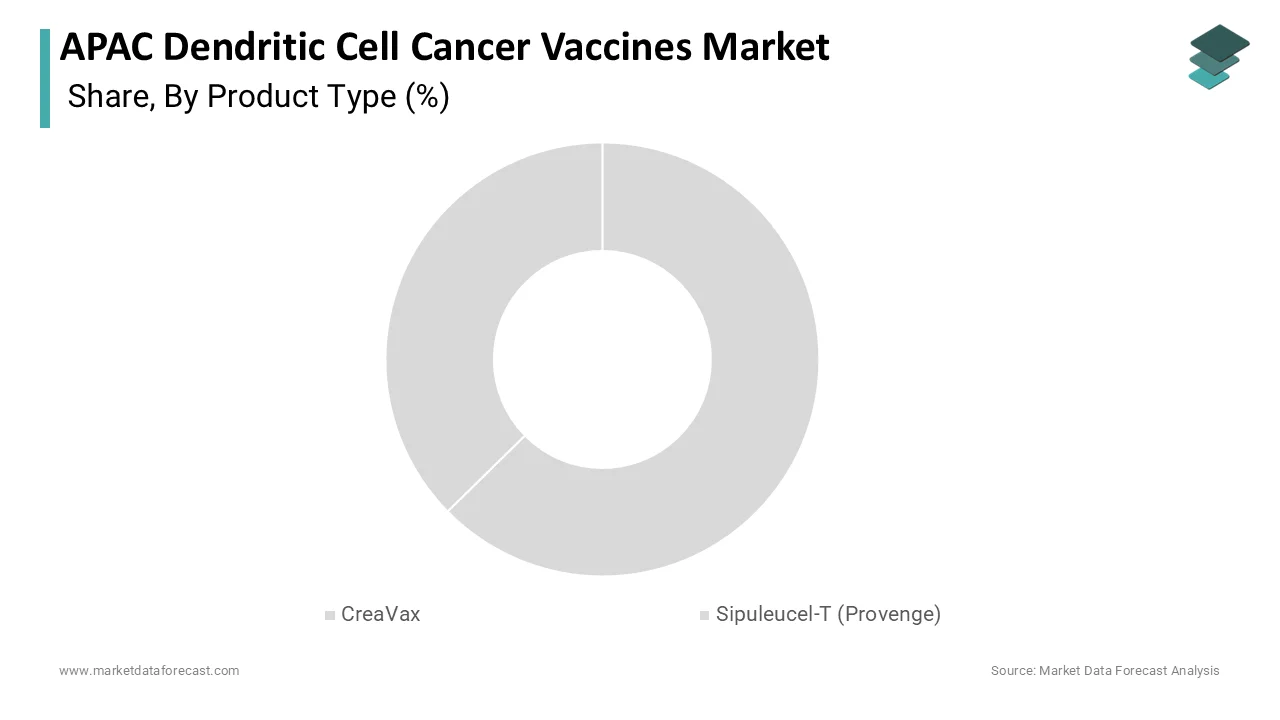
The Sipuleucel-T segment remained the largest in 2025 and occupied a commanding share of the Asia Pacific dendritic cell cancer vaccines market. This supremacy of the segment was primarily credited to its status as the first and only autologous cellular immunotherapy with full regulatory approval in multiple key jurisdictions, including Japan and Australia. According to Japan's Pharmaceuticals and Medical Devices Agency, autologous cellular and tissue-based immunotherapy platforms face stringent compliance audits spanning cell manufacturing stability, vector safety protocols, and rigorous quality tracking registries. This regulatory head start has enabled integration into national treatment guidelines and hospital formularies across developed Asia Pacific markets where prostate cancer represents a significant disease burden. As per the Japanese Urological Association, standard medical care pathways for advanced prostate cancers focus extensively on sequential scheduling of novel androgen receptor pathway inhibitors, taxane chemotherapy, and radiopharmaceuticals. Clinical familiarity among oncologists reduces adoption barriers compared to newer unproven platforms requiring extensive education and protocol development. Distribution infrastructure established by Dendreon and licensed partners ensures reliable supply chain management critical for temperature-sensitive autologous products. Even as next-generation candidates emerge, sipuleucel T benefits from entrenched positioning in treatment algorithms, physician comfort levels, and payer coverage policies that create substantial switching costs for alternatives lacking comparable longitudinal safety and efficacy datasets in Asian populations.
The epidemiological profile of prostate cancer across developed Asia Pacific nations directly supports sustained demand for sipuleucel T as the sole approved dendritic cell vaccine for this indication. According to the International Agency for Research on Cancer, prostate cancer represents one of the most frequently diagnosed malignant conditions among male demographics across the Western Pacific and Oceania regions. As per the Korean Central Cancer Registry, changing demographic structures and rising localized health awareness have driven structural shifts in the long-term historical incidence patterns of male genitourinary malignancies. Unlike gastrointestinal cancers prevalent in developing Asia where dendritic cell vaccines remain investigational, prostate cancer patients in wealthy nations possess both clinical eligibility and financial access through universal or private insurance coverage. The alignment between approved label, disease prevalence, and guideline endorsement creates a self-reinforcing demand cycle independent of promotional efforts. As populations continue aging across the region, incident case volumes will expand naturally, providing structural growth tailwinds for the dominant product segment without requiring indication expansion or new market entry strategies.
The CreaVax segment is on the rise and is expected to be the fastest-growing segment in the market, witnessing a CAGR of 14.7% during the forecast period owing to its multi-antigen loading capability addressing diverse tumor types beyond prostate cancer. According to specialized database logs maintained by the University Hospital Medical Information Network in Japan, domestic medical investigators use open registries to register structural transparency for a diverse cross-section of early-phase academic cell therapy trials. This versatility addresses the fundamental limitation of single-indication products in markets where non-prostate malignancies constitute the majority of the cancer burden. As per China's National Health Commission, respiratory and gastrointestinal tract malignancies rank prominently among the leading causes of oncological mortality, driving targeted healthcare infrastructure investments. Manufacturers leverage modular manufacturing processes enabling rapid antigen substitution without complete process revalidation, reducing development timelines, according to studies. This platform flexibility transforms CreaVax from a niche product into a broad-spectrum immunotherapy candidate capable of capturing value across multiple high-volume indications simultaneously, driving growth rates unattainable by indication-constrained competitors.
Growth acceleration of CreaVax stems from aggressive partnership strategies leveraging local expertise to navigate complex Asia Pacific regulatory and commercial landscapes more efficiently than standalone development models permit. According to the Singapore Exchange, regional biomedical firms utilize cross-border market collaborations to expand commercial distribution footprints for pharmaceutical and medical technologies within ASEAN territories. As per India's Central Drugs Standard Control Organization, major healthcare networks rely on strategic licensing agreements to accelerate local cell-processing capabilities and optimize advanced specialty care frameworks. These alliances de-risk market entry by sharing development costs and aligning incentives around regional success metrics rather than global milestones. Partnership-driven localization also facilitates engagement with national health technology assessment bodies familiar with local partner track records, improving reimbursement negotiation outcomes. This ecosystem integration strategy converts CreaVax from a foreign investigational product into a regionally embedded therapeutic asset, accelerating adoption curves and enabling premium positioning justified by local value generation rather than imported clinical evidence alone.
By End User Insights
In 2025, the adult population segment held the majority share in the Asia Pacific dendritic cell cancer vaccines market because of a strong correlation between advancing age and malignancy risk that concentrates eligible patient populations in older cohorts. According to the World Health Organization, escalating population aging across Asian territories shifts epidemiological parameters, heavily concentrating the long-term clinical diagnosis of complex solid malignancies within senior and mature adult cohorts. Dendritic cell vaccine clinical trials predominantly enroll adult participants. As per The Lancet Oncology, clinical investigators construct cellular immunotherapy trials primarily around adult demographics to accurately isolate physiological response signals within mature, fully developed immune systems. Pediatric exclusion reflects both biological considerations regarding developing immunity and ethical constraints limiting experimental therapy exposure in children absent compelling rationale. Universal health coverage systems in developed Asia Pacific nations structure benefits around working-age and elderly populations who contribute premiums, creating implicit coverage biases favoring adult indications. Private insurance products similarly price premiums based on adult morbidity tables, making pediatric advanced therapy coverage economically unviable for insurers. This demographic and systemic alignment ensures the adult segment captures virtually all current and foreseeable demand regardless of technological advances that might theoretically enable pediatric applications.
Clinical practice guidelines across Asia Pacific explicitly position dendritic cell vaccines within adult oncology treatment algorithms while omitting pediatric recommendations entirely, institutionalizing adult segment dominance through professional standards. According to official treatment criteria established by the Japanese Society of Medical Oncology, clinical oncology recommendations require strict accumulation of phase 3 data before certifying new biological modalities into standard medical practices. As per the Chinese Society of Clinical Oncology, standard treatment algorithms systematically categorize advanced cellular therapies under investigational protocols due to lack of large-scale multicenter evidence. Hospital ethics committees and institutional review boards routinely reject pediatric dendritic cell vaccine protocols absent extraordinary justification, restricting investigator-initiated research that might generate supporting evidence. Medical school curricula and continuing education programs focus exclusively on adult applications, ensuring new clinicians enter practice with adult-centric mental models regarding appropriate patient selection. Pharmaceutical company medical affairs teams train sales representatives solely on adult indication messaging to avoid off-label promotion risks that could trigger regulatory sanctions. This codification of adult focus across educational, regulatory, and professional dimensions creates a self-perpetuating system where the absence of pediatric guidance reinforces a lack of clinical experience, which in turn prevents guideline development. Breaking this cycle would require coordinated multi-stakeholder initiatives unlikely to materialize given overwhelming adult disease burden demanding resource allocation.
The pediatric segment is projected to grow at a CAGR of 11.3% from 2026 to 2034, due to intensifying research focus on rare childhood cancers, where conventional therapies reach efficacy plateaus and dendritic cell vaccines offer novel mechanistic approaches. According to the International Agency for Research on Cancer, rare pediatric malignancies present highly aggressive clinical profiles, driving academic interest in innovative targeted therapeutic pathways. As per infrastructure updates by Japan's Ministry of Health, Labour and Welfare, designated budget allocations for rare diseases aim to optimize clinical trial networks and accelerate structural drug discovery for underserved patient populations. Parent advocacy groups in Australia and South Korea successfully lobbied for inclusion of pediatric dendritic cell vaccine options in compassionate use frameworks, creating regulated access pathways outside formal trials. While absolute patient numbers remain small, each enrollment generates disproportionate scientific value and media attention that attracts additional research funding and investigator interest. Growth rate reflects low baseline rather than imminent commercial scale, but trajectory signals emerging recognition that pediatric oncology cannot indefinitely rely on extrapolated adult data when developmental immunology differs fundamentally.
The swift expansion of this segment gains further momentum from regulatory innovations specifically designed to overcome historical disincentives for childhood cancer drug development across Asia Pacific jurisdictions. According to pharmaceutical management provisions outlined by the Taiwan Food and Drug Administration, conditional market exclusivity rules provide commercial incentives to developers who proactively expand clinical investigation programs into pediatric settings. As per medicine authorization rules established by Singapore's Health Sciences Authority, clinical review frameworks require therapeutic applicants to address specific pediatric safety profiling and data generation parameters to secure domestic marketing permits. The policy interventions address market failure dynamics where small patient populations previously rendered pediatric development economically irrational. Academic institutions respond by establishing pediatric cellular therapy consortia pooling patients across borders to achieve statistically meaningful sample sizes. Industry sponsors incorporate pediatric exploratory endpoints into adult pivotal trials where scientifically feasible, generating preliminary safety signals without separate study costs. This regulatory ecosystem transformation converts the pediatric segment from a neglected afterthought to a strategically valuable development pathway, sustaining double-digit growth rates even as absolute volumes remain modest relative to adult segment dominance.
COUNTRY LEVEL ANALYSIS
Japan Dendritic Cell Cancer Vaccines Market Analysis
Japan led the Asia Pacific dendritic cell cancer vaccines market and captured a 38.2% share in 2025. This leading position of the Japanese market was attributed to the earliest regulatory approval, comprehensive reimbursement coverage, and sophisticated clinical infrastructure concentrated in major academic centers. According to Japan's Ministry of Health, Labour and Welfare, advanced cellular immunotherapy developers face uniform manufacturing evaluation parameters to confirm lot-to-lot consistency and rigorous cell stability metrics. The country hosts several certified cell processing facilities meeting Regenerative Medicine Act standards, enabling decentralized manufacturing that reduces logistics constraints limiting access in other markets. As per Japan's Ministry of Health, Labour and Welfare, national healthcare reimbursement schemas cover approved advanced regenerative therapies subject to pre-defined patient co-payment bands and monthly financial caps. Japanese pharmaceutical companies maintain global leadership in dendritic cell vaccine patent portfolios. According to the World Intellectual Property Organization, global corporate entities are steadily filing specialized oncology technology applications to build robust intellectual property protective networks. Aging society dynamics ensure sustained demand growth. However, stringent post-marketing surveillance requirements add compliance costs that deter smaller innovators, concentrating market participation among well-capitalized domestic players with established pharmacovigilance infrastructure capable of meeting regulatory expectations.
China Dendritic Cell Cancer Vaccines Market Analysis
China is expected to showcase a promising CAGR of 18.2% during the forecast period as regulatory modernization accelerates and domestic innovation capacity matures. As per administrative registration tracking from China's National Medical Products Administration, the drug evaluation center enforces standardized assessment tracks for cell-based investigational new drug applications to protect patient safety. Provincial healthcare security bureaus in Shanghai, Beijing, and Guangdong have begun incorporating select cellular immunotherapies into supplementary insurance schemes covering costs beyond the national formulary, creating tiered reimbursement models that improve affordability for middle-income patients. According to clinical registration records indexed by the Chinese Clinical Trial Registry, domestic clinical centers are driving parallel development of advanced biological constructs across multiple domestic trial centers. Intellectual property protection concerns persist despite legal reforms, causing some multinational sponsors to limit technology transfer scope and retain core manufacturing capabilities outside mainland jurisdiction.
South Korea Dendritic Cell Cancer Vaccines Market Analysis
South Korea maintains a significant position in the Asia Pacific dendritic cell cancer vaccines market due to advanced healthcare infrastructure, strong domestic biotechnology sector, and progressive regulatory environment balancing innovation facilitation with patient safety oversight. According to South Korea's Ministry of Food and Drug Safety, companies developing personalized autologous pipelines face rigorous conditional approval criteria to verify cellular safety parameters and structural batch reproducibility. As per localized therapeutic reimbursement schemas governed by South Korea's National Health Insurance Service, access parameters for approved advanced regenerative therapies require comprehensive cost-effectiveness assessments to determine official coverage limits. According to Samsung Biologics, major domestic contract organizations are rapidly expanding global manufacturing scale for monoclonal antibodies, recombinant proteins, and advanced therapeutic cell banking pipelines. Seoul National University Hospital and Asan Medical Center serve as regional reference centers attracting international patients and conducting multicenter trials that generate globally recognized evidence. Market maturity manifests in shifting competitive dynamics from first-mover advantages toward differentiation based on combination strategies, biomarker-guided patient selection, and manufacturing efficiency rather than basic regulatory approval alone.
Australia Dendritic Cell Cancer Vaccines Market Analysis
Australia is another key player in the Asia-Pacific dendritic cell cancer vaccines market, owing to a sophisticated research ecosystem and internationally harmonized standards facilitating global trial participation. It serves as the Southern Hemisphere's regulatory and clinical excellence hub. According to Australia's Therapeutic Goods Administration, provisional registration tracks facilitate early patient access to select high-priority prescription products while confirmatory clinical evaluation proceeds. As per the Australian Government Department of Health and Aged Care, private health insurance frameworks complement public hospital funding via defined clinical schedules covering approved procedures in certified medical institutions. According to research program summaries published by the Peter MacCallum Cancer Centre, specialized clinical teams engage in international multi-center studies to continuously explore targeted immune mechanisms and combination therapeutic interventions. Geographic isolation necessitates robust domestic manufacturing capacity. However, a small domestic population limits commercial attractiveness for late-stage registrational trials focused solely on the Australian market, positioning the country primarily as an early-phase innovation site and regulatory gateway rather than a volume driver. Currency volatility against the US dollar creates procurement uncertainty for imported reagents and equipment, affecting cost predictability for manufacturers and providers.
India Dendritic Cell Cancer Vaccines Market Analysis
India contributes notably to the Asia-Pacific dendritic cell cancer vaccines market due to a large patient pool, low treatment costs, and growing biotech capabilities that serve local and export markets. It occupies a strategic position as a high-volume, low-cost innovation platform. According to India's Central Drugs Standard Control Organization, specialized review wings mandate comprehensive localized safety documentation and rigorous validation data for advanced cell-based therapies. As per India's Ministry of Health and Family Welfare, complex clinical oncology pathways are heavily influenced by direct out-of-pocket spending on specialized diagnostic monitoring and non-standardized therapy options. According to the Department of Biotechnology in India, national development initiatives allocate targeted funding to strengthen localized biomedical manufacturing infrastructure and technology translation pipelines. The medical tourism segment attracts patients from Africa, the Middle East, and neighboring South Asian countries seeking affordable cellular immunotherapy unavailable domestically. However, regulatory approval timelines remain lengthy due to resource constraints and documentation requirements, delaying commercial launches relative to faster-moving jurisdictions. Quality variability across unregulated clinics offering unapproved treatments creates reputational risks affecting legitimate industry participants. Public sector reimbursement remains absent, limiting addressable market to affluent domestic patients and international self-payers despite enormous epidemiological need.
COMPETITIVE LANDSCAPE
Competition in the Asia Pacific dendritic cell cancer vaccines market exhibits pronounced stratification between multinational corporations dominating approved product segments and domestic biotechnology firms pursuing innovative platforms tailored to regional epidemiological profiles. Established players leverage regulatory precedence and reimbursement coverage to maintain commercial leadership, while newer entrants differentiate through broader indication coverage and combination therapy strategies. Geographic concentration of manufacturing capabilities creates natural monopolies in certain jurisdictions, limiting competitive intensity despite theoretical market openness. Clinical evidence generation serves as the primary competitive battleground, with companies investing heavily in locally relevant trials to influence treatment guidelines and payer decisions . Partnership-driven market entry models predominate over standalone commercialization due to regulatory complexity and infrastructure requirements across diverse national contexts. Innovation competition focuses on platform versatility and manufacturing efficiency rather than incremental improvements to existing approved products. Price competition remains muted due to limited reimbursement coverage concentrating demand in self-pay and medical tourism segments where clinical differentiation outweighs cost considerations. Emerging Chinese and Korean developers increasingly challenge Japanese and Western incumbents through aggressive clinical development and government-supported industrial policies fostering domestic champions capable of competing regionally and globally.
KEY MARKET PLAYERS
Some of the companies that are playing a dominating role in the Asia Pacific Dendritic Cell Cancer Vaccines Market include:
- 3M Company
- Activarti
- Argos Therapeutics
- Batavia Bioservices
- Bellicum Pharmaceuticals, Inc.
- Creagene, Inc.
- DanDrit Biotech
- DCPrime
- Sanpower Corporation (Dendreon Corporation)
- Elios Therapeutics
- ImmunoCellular Therapeutics, Ltd.
- Immunicum AB
- Kiromic Biopharma, Inc.
- Medigene AG
- Merck & Co., Inc.
- Northwest Biotherapeutics, Inc.
- GlaxoSmithKline plc
- Tella, Inc.
- Vaxil BioTherapeutics Ltd.
TOP LEADING PLAYERS IN THE MARKET
- Dendreon Corporation maintains significant involvement in the Asia Pacific dendritic cell cancer vaccines market through manufacturing Sipuleucel T for approved indications across Japan and Australia. The company recently established a dedicated cold chain logistics partnership with regional distributors to ensure product integrity during transport between processing facilities and treatment centers. Dendreon collaborated with Japanese academic institutions to generate real-world evidence supporting continued reimbursement eligibility under national health insurance schemes. Its initiatives strengthen clinical adoption while building physician confidence in autologous cellular immunotherapy safety profiles. Regulatory engagement efforts focus on post-marketing surveillance compliance,e demonstrating long term commitment to regional patient safety standards and sustainable market development beyond initial approval milestones.
- Sumitomo Pharma contributes substantially to the Asia Pacific dendritic cell cancer vaccines landscape through domestic research and development of next-generation platforms targeting gastrointestinal malignancies prevalent in regional populations. Sumitomo Pharma partnered with Singapore biotechnology firms to access Southeast Asian patient diversity, enhancing the generalizability of clinical findings across ethnic groups. Their manufacturing division upgraded Good Manufacturing Practice-compliant cell processing facilities to meet evolving regulatory standards for advanced therapy medicinal products. Strategic investments in biomarker discovery aim to identify predictive signatures enabling precision patient selection, improving response rates and cost-effectiveness. These multifaceted efforts position the company as an innovation leader addressing unmet needs specific to Asian cancer epidemiology rather than replicating Western therapeutic paradigms.
- JW CreaGene strengthens its position in the Asia Pacific dendritic cell cancer vaccines market through development of multi-antigen-loaded CreaVax platform addressing diverse tumor types beyond single indication constraints. JW CreaGene signed exclusive licensing agreements with ASEAN distributors, securing pre-negotiated commercialization pathways upon approval, reducing market entry uncertainty. Their technical team developed modular manufacturing processes enabling rapid antigen substitution without complete process revalidation,n accelerating development timelines significantly. Clinical collaborations with Australian research institutions facilitate access to Southern Hemisphere patient populations and regulatory expertise through the Therapeutic Goods Administration provisional registration pathway. These strategic actions demonstrate commitment to platform versatility and regional integration, distinguishing offerings from indication-limited competitors and positioning the company for broad-spectrum immunotherapy leadership across heterogeneous Asia Pacific markets.
TOP STRATEGIES USED BY KEY MARKET PARTICIPANTS
Key players employ localized manufacturing partnerships to mitigate regulatory barriers and reduce import dependencies across diverse jurisdictions. Companies invest heavily in investigator-initiated trials generating region-specific evidence that supports reimbursement negotiations and guideline inclusion. Strategic licensing agreements with domestic distributors provide immediate market access and existing hospital relationships, accelerating commercialization timelines. Platform technology development enables multi-indication coverage, maximizing addressable patient populations beyond single tumor type constraints. Regulatory engagement focuses on adaptive pathway utilization,n including conditional approvals and breakthrough designations, ns reducing time to patient availability. Medical education programs build clinical competency and brand loyalty among frontline oncologists, thus influencing treatment decisions. Combination therapy strategies integrate dendritic cell vaccines with checkpoint inhibitors, thus creating synergistic value propositions justifying premium positioning. Real-world evidence generation supplements pivotal trial data, addressing payer demands for local effectiveness demonstrations. Manufacturing process standardization improves quality consistency and reduces failure rates,s enhancing supply reliability. Cross-border clinical trial designs pool patient recruitment, addressing sample size limitations inherent in rare disease studies across fragmented national markets.
KEY MARKET PLAYERS
This research report on the Asia Pacific Dendritic Cell Cancer Vaccines Market has been segmented and sub-segmented into the following categories.
By Product Type
- CreaVax
- Sipuleucel-T (Provenge)
By End User
- Pediatrics
- Adults
By Country
- India
- China
- Japan
- South Korea
- Australia
- New Zealand
- Thailand
- Malaysia
- Vietnam
- Philippines
- Indonesia
- Singapore
- Rest of APAC