- Product Description Description
- Table of Contents TOC
- List of Table & Figure LOT
- Get Free Sample PDF Sample PDF
Market Size, 2025
$12.21 BnMarket Estimate, 2026
$15.38 BnMarket Forecast, 2034
$97.71 BnCAGR, 2026–2034
26%Executive Summary: Asia Pacific Flavored Dairy Market
- Market Scope: Comprehensive regional analysis of the Asia-Pacific flavored dairy industry, covering product types, flavor varieties, end-use industrial applications, and country/sub-regional performance across East Asia, Southeast Asia, and South Asia.
- Market Valuation: Valued at USD 12.21 billion in 2025, estimated at USD 15.38 billion in 2026, and projected to reach USD 97.71 billion by 2034, registering a compound annual growth rate (CAGR) of 26.00% from 2026 to 2034.
- Primary Growth Drivers: Rising disposable incomes and rapid urbanization driving demand for premium/convenient dairy, growing health consciousness boosting functional probiotic/fortified products, and expansion of modern retail/cold-chain infrastructure.
Key Market Segment Metrics (2026–2034)
| Category | Leading Segment Position | Fastest-Growing / Key Growth Segment |
|---|---|---|
| By Type | Milk Segment (dominated the market in 2025 due to deep cultural integration, affordability, and extensive distribution networks) | Yogurt Segment (fastest-growing at an estimated 10.2% CAGR, driven by digestive wellness trends and functional probiotic benefits) |
| By Flavor Type | Chocolate Flavor (held the largest share in 2025, anchored by universal appeal, comfort appeal, and strong youth demographic preference) | Rose & Saffron Flavor (projected at a 12.2% CAGR, propelled by consumer preference for indigenous, nostalgic, and premium traditional flavors) |
| By End Use Industry | Food & Beverage Industry (largest share in 2025, supported by widespread everyday consumption of ready-to-drink beverages and dairy treats) | Confectionery (fastest-growing segment at a 9.9% CAGR, fueled by the integration of dairy solids into chocolates and caramels) |
| By Region | East Asia (held 34.3% of the regional market share in 2025, led by China, Japan, and South Korea with advanced retail infrastructures) | South Asia & Southeast Asia (high-potential growth engines driven by massive milk production in India and young consumer demographics) |
Major Market Players & Market Structure
Market Structure: Intense and highly competitive landscape populated by multinational food giants, powerful regional cooperatives, and local dairy processors competing across price, flavor differentiation, and health credentials.
Key Companies: Nestlé, Danone, General Mills Inc., Unilever PLC, Mars Inc., Kraft Heinz, Mother Dairy, Dean Foods, Mondelz International, and The WhiteWave Foods Company.
Asia Pacific Flavored Dairy Market Size
The Asia Pacific Flavored Dairy Market size was calculated to be USD 12.21 billion in 2025 and is anticipated to be worth USD 97.71 billion by 2034 from USD 15.38 billion in 2026, growing at a CAGR of 26% during the forecast period.
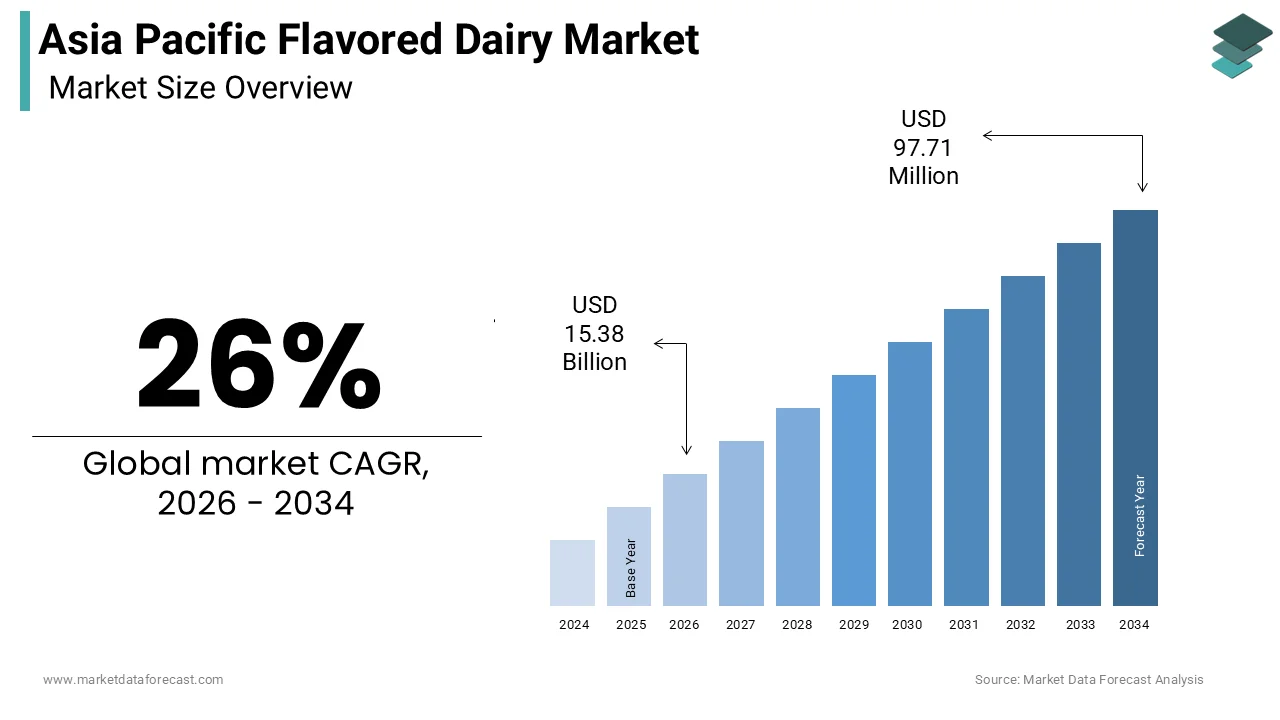
The Asia-Pacific flavored dairy market is characterized by a deep cultural affinity for dairy in countries like India, while East Asian markets are increasingly adopting Western-style flavored milk products. According to the Food and Agriculture Organization, Asia accounts for approximately 43% of global milk production, providing a robust raw material base for value-added dairy innovations. The World Health Organization states that calcium deficiency affects nearly 50% of children in Southeast Asia, prompting governments and manufacturers to promote fortified flavored dairy as a nutritional intervention. In China, per capita dairy consumption reached 42 kilograms in 2024 as per the Chinese Dairy Association, reflecting a significant shift from traditional soy-based alternatives to animal milk products. Regulatory frameworks such as those enforced by the Food Safety and Standards Authority of India ensure stringent quality control over flavoring agents and preservatives. The rise of cold chain infrastructure has enabled the distribution of perishable flavored dairy items to remote areas. Consumer trends indicate a strong preference for convenient on-the-go formats, driving innovation in packaging and portability. These dynamics collectively shape a vibrant market where tradition meets modern convenience, which is offering substantial growth potential for domestic and international players alike.
MARKET DRIVERS
Rising Disposable Incomes and Urbanization Drive Premium Product Demand
The escalating disposable incomes and rapid urbanization across the Asia Pacific are primarily driving the expansion of the Asia-Pacific flavored dairy market as consumers seek convenient and indulgent food options. As middle-class households expand in emerging economies such as India, Indonesia, and Vietnam, increased purchasing power allows for greater expenditure on value-added food items. According to the Asian Development Bank, the middle-class population in Asia is projected to reach 1.7 billion by 2030, creating a massive consumer base for branded and packaged dairy goods. Urban lifestyles characterized by busy schedules and dual-income families drive the preference forready-to-consumee beverages that offer both nutrition and taste. Data from the World Bank indicates that sales of packaged dairy in urban centers of Southeast Asia grew by 12% in 20,24 compared to rural areas where loose milk remains dominant. Consumers in metropolitan cities are increasingly influenced by global food trends and social media, leading to higher acceptance of exotic flavors such as blueberry, hazelnut, and green tea. The proliferation of modern retail formats, including supermarkets and convenience stores, ensures the wide availability of chilled flavored dairy products. Additionally, the younger demographic in urban areas exhibits a strong willingness to experiment with new tastes and brands, fostering a competitive environment for innovation. Manufacturers respond by launching premium lines with high-quality ingredients and attractive packaging to capture this affluent segment. The convergence of economic growth and lifestyle changes thus creates a fertile ground for the expansion of the flavored dairy sector in the region.
Growing Health Consciousness and Demand for Functional Ingredients
The growing health consciousness among consumers inthe Asia Pacific drives the demand for functional flavored dairy products that offer additional nutritional benefits beyond basic sustenance, which is further boosting the Asia-Pacific flavored dairy market growth. Individuals are increasingly aware of the importance of protein, calcium, and probiotics for overall well-being, leading to a shift away from high-sugar conventional flavored milks toward healthier alternatives. According to the International Food Information Council, 68% of consumers in the Asia Pacific actively seek products with added health benefits, such as immunity-boosting vitamins or digestive aids. This trend prompts manufacturers to reformulate their offerings by reducing sugar content and incorporating natural sweeteners like stevia or honey. The popularity of probiotic-flavored yogurts has surged, particularly in Japan and South Korea, where gut health is a primary concern. Data from the Japanese Ministry of Health, Labour and Welfare shows that functional food sales, including probiotic dairy, increased by 9% in 2024, driven by an aging population seeking preventive healthcare solutions. Fortified flavored milk enriched with vitamin D and iron is gaining traction in countries like India and the Philippines to address widespread micronutrient deficiencies. Clean label movements also influence product development, with consumers preferring recognizable and minimal ingredient lists. Brands that successfully balance taste with nutritional value gain a competitive edge by appealing to health-oriented shoppers. The integration of plant-based blends with dairy further caters to flexitarian diets, expanding the market scope. These health-driven preferences fundamentally reshape the product landscape, encouraging continuous innovation in functional formulations.
MARKET RESTRAINTS
High Prevalence Of Lactose Intolerance Limits Consumer Base
The high prevalence of lactose intolerance across many Asia Pacific countries is majorly impeding the regional market expansion, limiting the potential consumer base for traditional milk-based products. Genetic studies indicate that up to 90% of adults in East and Southeast Asia have some degree of lactose malabsorption, which causes digestive discomfort upon consuming regular dairy. According to the National Institutes of Health, this biological constraint forces a large portion of the population to avoid standard flavored milk and yogurt products, thereby restricting market penetration. While lactose-free options exist, they often carry a price premium and may lack the same texture or taste profile as conventional counterparts, leading to lower consumer acceptance. Data from the Lancet Gastroenterology and Hepatology journal reveals that roughly 80% to 90% of the adult population in East Asia faces challenges with regular dairy consumption, highlighting the scale of the challenge. Manufacturers face difficulties in formulating flavorful lactose-free products that maintain palatability without using excessive additives or stabilizers. The limited awareness and availability of lactose-free flavored dairy in rural and semi-urban areas further exacerbate the issue. Additionally, cultural habits in regions like China and Vietnam traditionally favor soy or rice-based beverages, which are naturally lactose-free and deeply ingrained in local diets. Competing against these established alternatives requires significant marketing efforts and consumer education. Until affordable and tasty lactose-free flavored dairy options become widely accessible, the market will continue to face structural limitations in key demographics.
Stringent Regulatory Standards and Labeling Requirements
Stringent regulatory standards and complex labeling requirements impose operational constraints on manufacturers in the Asia Pacific flavored dairy market, increasing compliance costs and time to market. Each country in the region has distinct food safety laws governing the use of artificial flavors, colors, and preservatives, which complicates the formulation of standardized products for regional distribution. According to the Food and Agriculture Organization, harmonizing food regulations remains a challenge with varying limits on sugar content and additive usage across member states. In India, the Food Safety and Standards Authority mandates detailed nutritional labeling and strict approval processes for new flavoring agents, which can delay product launches by several months. Data from the World Trade Organization indicates that non-tariff barriers related to food safety compliance can cost exporters up to 20% more in administrative expenses when entering Asian markets. Recent bans on certain synthetic dyes in countries like Australia and New Zealand force manufacturers to reformulate products using natural alternatives, which are often less stable and more expensive. The lack of uniformity in regulatory frameworks necessitates separate production lines and packaging for different markets, reducing economies of scale. Small and medium-sized enterprises struggle to navigate these complex legal landscapes, leading to market consolidation favoring larger players with dedicated regulatory affairs teams. Furthermore, frequent updates to food safety laws require continuous monitoring and adaptation, adding to operational burdens. These regulatory hurdles hinder innovation and limit the diversity of flavored dairy products available to consumers across the region.
MARKET OPPORTUNITIES
Expansion into Plant-Based Dairy Blends and Hybrid Products
The expansion into plant-based dairy blends and hybrid products presents a significant opportunity for growth in the Asia Pacific flavored dairy market as consumers seek sustainable and diverse dietary options. Combining traditional cow milk with plant-based ingredients such as almond, oat, or coconut allows manufacturers to create unique flavor profiles while addressing lactose intolerance and environmental concerns. According to the Good Food Institute, investment in alternative proteins reached 1.2 billion dollars in 2024, reflecting strong investor interest in hybrid dairy innovations. These blended products appeal to flexitarians who wish to reduce animal product consumption without completely abandoning dairy taste and texture. In Thailand and Indonesia, coconut milk blends with chocolate or pandan flavors are gaining popularity due to local ingredient availability and cultural familiarity. Data from the Plant Based Foods Association shows that 45% of consumers in the Asia Pacific are willing to try hybrid dairy products if they offer improved sustainability credentials. Manufacturers can leverage existing dairy distribution channels to introduce these novel items, reducing entry barriers. The use of plant-based ingredients also aligns with clean label trends as consumers perceive them as more natural and wholesome. Additionally, government initiatives promoting sustainable agriculture support the sourcing of local plant materials, lowering production costs. By innovating in this niche segment, companies can differentiate themselves from competitors and capture early adopters who value both taste and ethical consumption. This strategic pivot opens new revenue streams and enhances brand relevance in a changing dietary landscape.
Digital Marketing and E-Commerce Penetration in Rural Areas
The rapid penetration of digital marketing and e-commerce platforms in rural and semi-urban areas offers substantial opportunities for the Asia-Pacific flavored dairy market to expand its reach beyond metropolitan centers. Increasing internet connectivity and smartphone adoption enable manufacturers to engage directly with consumers through social media campaigns and online retail channels. According to the International Telecommunication Union, internet penetration inthe Asia Pacific reached 65% in 2024, with significant growth in rural regions of India and Indonesia. E-commerce giants like Alibaba and Amazon facilitate the distribution of perishable flavored dairy products through advanced cold chain logistics, ensuring freshness upon delivery. Data from the China Internet Network Information Center indicates that online grocery sales in rural China grew by 25% in 2024, driven by improved logistics infrastructure. Brands can utilize targeted digital advertising to educate consumers about new flavors and health benefits, building trust and brand loyalty in previously untapped markets. Direct-to-consumer models allow for personalized recommendations and subscription services, enhancing customer retention. Social media influencers play a crucial role in shaping taste preferences and driving trial among younger demographics in tier two and tier three cities. The ability to gather real-time consumer feedback through digital platforms enables agile product development and marketing strategies. By leveraging digital tools, companies can overcome geographical barriers and establish a strong presence in emerging consumption hubs, driving volume growth and market diversification.
MARKET CHALLENGES
Supply Chain Volatility and Raw Material Price Fluctuations
Supply chain volatility and fluctuating raw material prices pose significant challenges for the Asia Pacific flavored dairy market. The region relies heavily on imported milk powder and flavoring ingredients, which are subject to global commodity price swings and geopolitical tensions. According to the Global Dairy Trade index, milk powder prices increased by 18% in 2024 due to supply disruptions in major exporting countries, impacting production costs for local manufacturers. Climate change-induced weather events such as droughts and floods further disrupt local milk production in key markets like India and Australia, leading to seasonal shortages. Data from the World Bank highlights that food inflation in several Asian countries exceeded 6% in 2024, forcing companies to either absorb costs or pass them on to price-sensitive consumers. The complexity of managing cold chain logistics for perishable flavored dairy products adds another layer of vulnerability, with fuel price hikes increasing transportation expenses. Small-scale farmers who supply fresh milk often lack bargaining power, making them susceptible to price manipulation by intermediaries. Additionally, the reliance on single-source suppliers for specific natural flavors creates risks of discontinuity if crops fail. Manufacturers must invest in hedging strategies and diversified sourcing to mitigate these risks, but this requires significant capital and expertise. The unpredictability of input costs complicates long-term planning and margin management, threatening the sustainability of smaller players in the market.
Counterfeit Products and Brand Imitation Issues
Counterfeit products and brand imitation present persistent challenges for established flavored dairy brands in the Asia Pacific, which is further challenging the regional market expansion. The fragmented nature of the retail landscape in many developing countries makes it difficult to monitor and control the distribution of genuine products. According to the International Chamber of Commerce, counterfeit food and beverage products account for billions of dollars in losses annually in the Asia Pacific region, with dairy being a frequent target due to its high turnover. Fake flavored milk packets with substandard ingredients and incorrect nutritional labeling pose serious health risks to consumers and damage the reputation of legitimate brands. Data from the Food Safety and Standards Authority of India reports that over 10% of sampled dairy products in informal markets were found to be adulterated or misbranded in 2024. Small local producers often mimic popular brand packaging and names, confusing consumers who prioritize low prices over authenticity. The lack of stringent enforcement in rural areas allows these illicit operations to thrive unchecked. Established companies incur high costs in legal actions and anti-counterfeiting technologies such as holograms and QR codes to protect their intellectual property. However, these measures are not always effective against sophisticated counterfeiters. Consumer education campaigns are necessary but resource-intensive. The prevalence of fake products distorts market data and discourages investment in quality innovation as brands struggle to differentiate themselves in a cluttered and unregulated informal sector.
REPORT COVERAGE
| REPORT METRIC | DETAILS |
| Market Size Available | 2025 to 2034 |
| Base Year | 2025 |
| Forecast Period | 2026 to 2034 |
| CAGR | 26% |
| Segments Covered | By Type, Flavor Type, End Use, and Region |
| Various Analyses Covered | Global, Regional & Country Level Analysis; Segment-Level Analysis; DROC, PESTLE Analysis; Porter’s Five Forces Analysis; Competitive Landscape; Analyst Overview of Investment Opportunities |
| Regions Covered | China, India, Japan, Singapore, Korea, Australia, New Zealand, And Other countries |
| Market Leaders Profiled | Nestlé, Danone, General Mills Inc, Unilever PLC, Mars, Inc, Kraft Heinz, Mother Dairy, Dean Foods, Mondelz International, And The Whitewave Foods Company |
SEGMENTAL ANALYSIS
By Type Insights
The milk segment dominated the market by capturing the highest share of the Asia Pacific flavored dairy market in 2025 due to its deep cultural integration and widespread consumption as a daily staple across the region. Flavored milk serves as an accessible entry point for consumers transitioning from plain milk to value-added dairy products, particularly among children and adolescents. According to the Food and Agriculture Organization, milk production in Asia reached approximately 210 million tons in 2024, with a significant portion processed into flavored variants to enhance palatability and reduce waste. In countries like India and China, flavored milk is viewed as a nutritious snack or breakfast option, driving high volume sales. Data from the Chinese Dairy Association indicates that flavored milk accounts for 35% of total packaged milk sales in urban areas, reflecting strong consumer preference for sweetened and aromatic options. The affordability of flavored milk compared to yogurt or cheese makes it accessible to lower-income demographics, ensuring broad market penetration. Manufacturers leverage established distribution networks for plain milk to introduce flavored variants, minimizing logistical barriers. Additionally, school feeding programs in several Southeast Asian nations include flavored milk to combat malnutrition, further boosting demand. The versatility of milk allows for diverse flavor innovations ranging from traditional cardamom to modern fruit blends, catering to varied taste preferences. This segment benefits from a high frequency of purchase and low price sensitivity, making it the backbone of the regional flavored dairy industry.
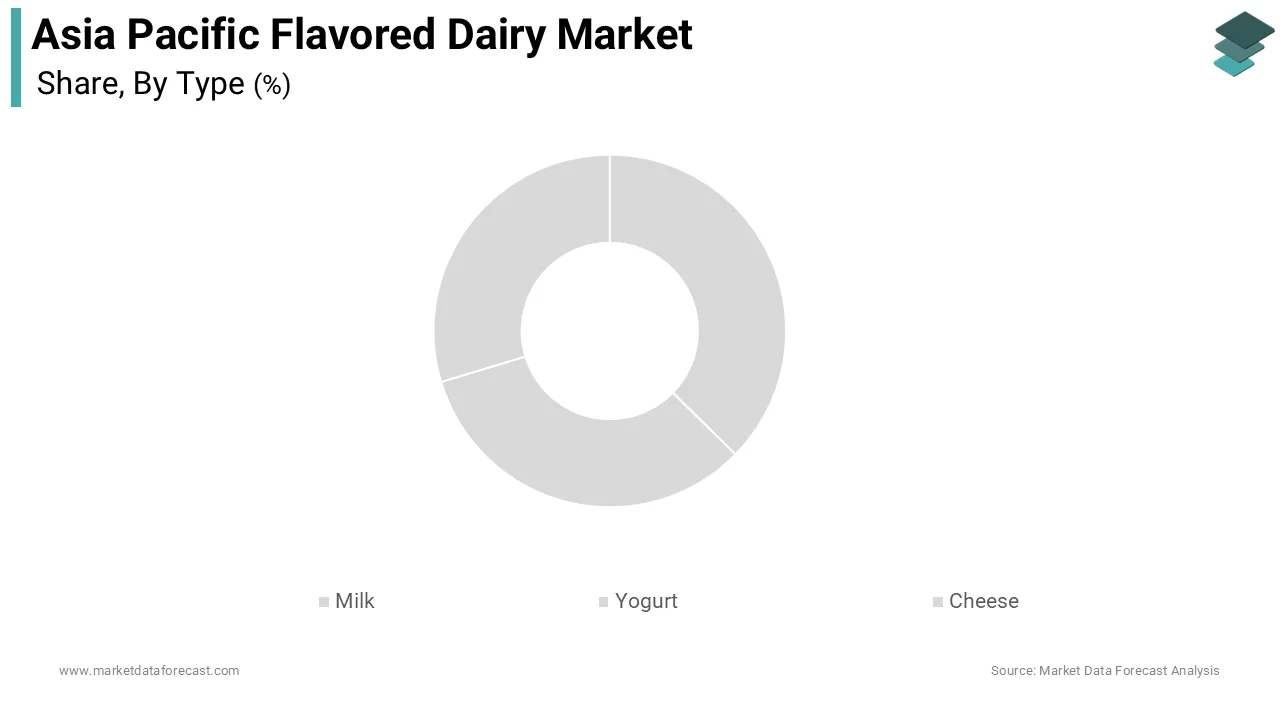
However, the yogurt segment represents the fastest-growing category in the Asia-Pacific flavored dairy market and is estimated to showcase a CAGR of 10.2% during the forecast period, owing to the increasing health consciousness and the rising popularity of probiotic-enriched products that support digestive wellness. Consumers in Japan, South Korea, and Australia are increasingly adopting yogurt as a functional food item, seeking benefits such as improved immunity and gut health. According to the Japanese Ministry of Health, Labour and Welfare, sales of functional yogurt products increased by 12% in 2024, driven by an aging population prioritizing preventive healthcare. The versatility of yogurt allows for innovative flavor combinations, including exotic fruits, grains, and honey, appealing to health-focused millennials and Gen Z consumers. Data from the International Dairy Federation shows that Greek-style and drinkable yogurt formats gained significant traction in urban centers, offering convenience and premium positioning. Manufacturers are investing in clean label formulations with reduced sugar and natural flavors to align with wellness trends. The rise of on-the-go consumption patterns favors portable yogurt cups and bottles, enhancing accessibility. Additionally, the introduction of plant-based yogurt blends caters to lactose-intolerant individuals, expanding the consumer base. These factors collectively propel the yogurt segment ahead of other dairy types in terms of growth velocity.
By Flavor Type Insights
The chocolate flavor segment led the market by holding the largest share of the Asia-Pacific flavored dairy market in 2025. The dominance of the chocolate flavor segment in the Asia-Pacific market can be credited to its universal appeal and strong association with indulgence and comfort food. It is the most preferred flavor among children and young adults who constitute a large portion of the dairy-consuming population in the region. According to Nielsen, chocolate-flavored milk and yogurt accounted for 40% of total flavored dairy sales in Southeast Asia in 2024, highlighting their entrenched popularity. The rich and creamy profile of chocolate complements the natural taste of dairy, making it a safe and familiar choice for first-time buyers of flavored products. In countries like Indonesia and the Philippines, chocolate is deeply embedded in local snacking culture, driving consistent demand for chocolate milkshakes and desserts. Data from the Indonesian Food and Beverage Association indicates that chocolate remains the top-selling flavor in ready-to-drink dairy beverages, with annual growth of 6%. Major brands invest heavily in marketing campaigns featuring popular characters and influencers to reinforce chocolate as a fun and rewarding treat. The availability of cocoa beans in some regional countries also supports local production and cost efficiency. Furthermore, chocolate-flavored dairy products are often fortified with calcium and vitamins, positioning them as nutritious treats rather than empty calories. This dual benefit of taste and nutrition sustains its leadership position across diverse demographic segments.
On the other side, the rose and saffron flavor segment is experiencing the highest growth and is projected to register a CAGR of 12.2% during the forecast period due to the resurgence of interest in traditional and indigenous flavors, particularly in South Asia and the Middle Eastern-influenced markets within the region. Rose and saffron are prized ingredients in Indian, Pakistani, and Iranian cuisines, often used in festive desserts and beverages like lassi and kheer. According to the Indian Spice Board, exports of saffron and rose water increased by 15% in 2024 and are reflecting growing global and domestic demand for these premium aromatics. Modern consumers are seeking authentic and nostalgic taste experiences, prompting manufacturers to launch gourmet flavored yogurts and milks infused with real rose petals and saffron strands. Data from market analysis indicates that 55% of Indian consumers prefer traditional flavors over Western ones when purchasing premium dairy products. The premium positioning of saffron allows brands to command higher price points, appealing to affluent urban shoppers. Additionally, the perceived health benefits of rose and saffron, such as stress relief and skin health, align with holistic wellness trends. Social media influence has also played a role in popularizing these visually appealing and aromatic flavors among younger demographics seeking unique culinary experiences.
By End Use Industry Insights
The food and beverage industry segment led the market with the major share of the Asia-Pacific flavored dairy market in 2025. The dominance of the F&B segment in the regional market is driven by the extensive use of flavored dairy ingredients in ready-to-drink beverages, desserts, and bakery products. This sector encompasses a wide range of applications, including ice cream, smoothies, milkshakes, and flavored milk packs, which are consumed daily by millions. According to the Asia Pacific Food Industry Association, the ready-to-drink beverage sector grew by 8% in 2024, with flavored dairy drinks contributing significantly to this expansion. The convenience of pre-packaged flavored dairy products aligns with busy urban lifestyles where consumers seek quick and nutritious meal replacements. In countries like China and Japan, vending machines and convenience stores serve as major distribution channels for chilled flavored milk and yogurt drinks. According to the data from the Japan Vending Machine Sales Association, over 20% of cold beverage sales are dairy-based, reflecting high accessibility and impulse buying behavior. The food service sector, including cafes and restaurants, also drives demand by incorporating flavored dairy into menu items such as frappes and parfaits. Manufacturers benefit from economies of scale in producing large volumes for institutional clients. Additionally, the rise of home delivery platforms has expanded the reach of flavored dairy products, enabling consumers to access a wider variety of brands and flavors. This broad application base ensures steady and dominant demand from the food and beverage industry.
On the other hand, the confectionery segment is witnessing the fastest growth in the Asia Pacific flavored dairy market and is anticipated to record a CAGR of 9.9% during the forecast period due to the increasing integration of dairy ingredients into chocolates, candies, and gummies to enhance texture and flavor richness. Consumers are showing a strong preference for creamy and milky confectionery products, which offer a superior mouthfeel compared to non-dairy alternatives. According to the China Candy Association, sales of milk-based chocolates and caramels increased by 14% in 2024, driven by premiumization trends and gift-giving cultures. Flavored dairy powders and concentrates are being used to create innovative fillings and coatings that appeal to adventurous palates. In Southeast Asia, local confectioners are experimenting with tropical fruit-flavored dairy chocolates, creating unique fusion products that resonate with regional tastes. Data from various industry reports highlights that premium chocolate brands containing high milk solids are outperforming standard varieties in terms of value growth. The perception of dairy as a wholesome ingredient allows confectionery brands to market their products as slightly healthier indulgences. Additionally, the rise of artisanal chocolatiers in Australia and New Zealand, who use high-quality local milk, drives innovation and niche market expansion. This synergy between dairy and confectionery creates new revenue streams and accelerates segment growth.
REGIONAL ANALYSIS
East Asia Pacific Flavored Dairy Market Analysis
East Asia held a prominent position in the Asia Pacific flavored dairy market by capturing 34.3% of the regional market share in 2025. The dominance of East Asia in the Asia-Pacific market is driven by high disposable incomes and advanced retail infrastructure. China, Japan, and South Korea are the primary contributors, with China serving as the largest volume market due to its massive population and growing middle class. According to the Chinese Dairy Association, per capita dairy consumption in China reached 42 kilograms in 2024, with flavored milk and yogurt seeing double-digit growth rates. Japanese consumers prioritize high quality and functional benefits, driving demand for premium probiotic yogurts and low-sugar flavored milk. As per the data from the Japanese Ministry of Agriculture, Forestry, and Fisheries, functional dairy product sales exceeded 10 billion dollars in 2024. South Korea exhibits strong influence from K culture trends, with flavored dairy beverages often featured in media and endorsed by celebrities, boosting youth engagement. The region benefits from well-established cold chain logistics, ensuring product freshness and safety. Regulatory standards in East Asia are stringent, promoting trust in branded products. Innovation in packaging, such as single-serve bottles and eco-friendly materials, appeals to environmentally conscious consumers. The presence of major global and local dairy companies fosters intense competition and continuous product development. These factors collectively sustain East Asia's leadership in the regional flavored dairy landscape.
Southeast Asia Pacific Flavored Dairy Market Analysis
Southeast Asia represents a rapidly expanding market for flavored dairy characterized by a young population and increasing urbanization. The region accounts for a prominent share of the Asia Pacific market, with Indonesia, Thailand, and Vietnam serving as key growth engines. According to the ASEAN Secretariat, the median age in Southeast Asia is 30 years, creating a large base of children and young adults who are primary consumers of flavored milk and yogurt. In Indonesia, flavored milk is a popular school snack, driving high volume sales through government-supported nutrition programs. Data from Indonesia. For instance, flavored milk production increased by 10% in 2024. Thailand sees strong demand for fruity yogurt drinks aligned with local tropical fruit preferences such as mango and lychee. The rise of modern retail chains and e-commerce platforms improves access to branded dairy products in rural areas. Cultural acceptance of dairy is growing, although lactose intolerance remains a challenge, prompting innovation in lactose-free options. Government initiatives to boost local milk production reduce reliance on imports and lower costs. The vibrant food culture in Southeast Asia encourages experimentation with new flavors and formats. These dynamics create a favorable environment for sustained growth in the flavored dairy sector.
South Asia Pacific Flavored Dairy Market Analysis
South Asia is emerging as a high-potential market for flavored dairy, driven by India's massive dairy industry and changing consumption patterns. India is the world's largest milk producer, providing an abundant and cost-effective raw material base for flavored dairy products. According to the National Dairy Development Board, India produces over 220 million tons of milk annually, with a significant portion utilized for value-added products like flavored milk, lassi, and shrikhand. Urbanization in cities like Mumbai, Delhi, and Bangalore drives demand for packaged and branded flavored dairy items as consumers shift away from loose milk. Data from the Food Safety and Standards Authority of India shows that sales of packaged flavored milk grew by 15% in 2024. Traditional flavors such as cardamom, rose, and saffron remain popular while western flavors like chocolate and strawberry gain traction among younger generations. The proliferation of dairy cooperatives ensures wide distribution even in semi-urban areas. Rising health awareness prompts fortification of flavored milk with vitamins and minerals. Government support for dairy farmers enhances supply chain stability. The large population base and increasing affordability make South Asia a critical growth driver for the regional market.
COMPETITION OVERVIEW
The competition in the Asia Pacific flavored dairy market is intense and characterized by the presence of multinational corporations alongside strong regional players and local cooperatives. Large global companies leverage their extensive resources and brand recognition to dominate premium segments while local firms compete on price and cultural relevance. Innovation remains a key differentiator as companies strive to introduce unique flavors and functional benefits such as probiotics and added vitamins. Price competition is significant in mass market segments, prompting manufacturers to optimize production costs and supply chain efficiency. Regulatory compliance regarding food safety and labeling acts as a barrier to entry, ensuring that only reputable players can operate effectively. Customer loyalty is driven by consistent quality, taste, and trust in brand heritage. The rise of private label brands from major retail chains adds further pressure on established brands to maintain value propositions. Emerging startups disrupt traditional models with niche offerings such as organic or plant-based blends. Strategic alliances and mergers are common as companies seek to expand geographic reach and technological capabilities. The market sees continuous evolution as participants adapt to changing dietary trends and digital consumption habits.
KEY MARKET PLAYERS
A few major players in the Asia Pacific flavored dairy market include
- Nestlé
- Danone
- General Mills Inc
- Unilever PLC
- Mars, Inc
- Kraft Heinz
- Mother Dairy
- Dean Foods
- Mondelz International
- The Whitewave Foods Company
Top Strategies Used By Key Market Participants
Key players in the Asia Pacific flavored dairy market primarily focus on product localization and health-oriented innovation to maintain a competitive advantage. Companies invest heavily in researching regional taste preferences to develop unique flavors that resonate with local cultures. Strategic partnerships with local dairy farmers ensure sustainable and high-quality raw material sourcing while reducing supply chain risks. Manufacturers also prioritize clean label formulations by reducing sugar content and eliminating artificial additives to appeal to health-conscious consumers. Expansion into e-commerce platforms enables broader reach and direct consumer engagement, particularly in rural areas. Digital marketing campaigns leveraging social media influencers help build brand awareness among younger demographics. Additionally, firms emphasize sustainable packaging solutions to address environmental concerns and regulatory requirements. These multifaceted approaches ensure sustained growth and resilience in a dynamic market characterized by evolving consumer preferences and increasing competition.
Leading Players in the Global Market
- Nestlé S.A. stands as a pivotal entity in the Asia Pacific flavored dairy landscape, leveraging its extensive distribution network and strong brand portfolio,o including Milo and Nesquik. The company focuses on localizing flavors to suit regional palates, such as matcha in Japan and cardamom in India. Recent initiatives include the launch of low-sugar variants to address health concerns among consumers. Nestlé invests heavily in sustainable sourcing practices, ensuring high-quality milk supplies from local farmers. Their strategic partnerships with retailers enhance visibility in both urban and rural markets. By integrating digital marketing campaigns targeting younger demographics, Nestlé strengthens brand loyalty. The company also expands its cold chain capabilities to ensure product freshness across diverse climatic conditions. These efforts collectively reinforce its leadership position and drive long-term growth in the competitive Asia Pacific flavored dairy sector.
- Danone S.A. plays a crucial role in the Asia Pacific flavored dairy market through its renowned yogurt and fermented milk brands such as Activia and Ambiante. The company emphasizes functional benefits like probiotics and digestive health, which resonate strongly with health-conscious consumers in the region. Recent actions include the expansion of production facilities in China and Indonesia to meet rising demand. Danone prioritizes clean label formulations, reducing artificial additives to align with consumer preferences for natural ingredients. The company actively engages in educational programs promoting gut health awareness. By collaborating with local dairy cooperatives, Danone ensures a steady supply of fresh milk. Their focus on sustainability includes reducing plastic packaging waste through innovative recycling initiatives. These strategies solidify its reputation as a trusted provider of nutritious and delicious flavored dairy products in the Asia Pacific.
- Fonterra Co-operative Group Limited contributes significantly to the Asia Pacific flavored dairy market by supplying high-quality milk ingredients and branded consumer products. As one of the world's largest dairy exporters, Fonterra leverages its New Zealand origin to promote premium and safe dairy attributes. The company recently launched new flavored milk powders and ready-to-drink beverages tailored for Asian tastes. Fonterra invests in research and development to create novel flavor profiles using local fruits and spices. Their strong relationships with food manufacturers enable widespread integration of their ingredients into various dairy applications. The group also focuses on digital transformation to optimize supply chain efficiency and traceability. By supporting local farmers through training and technology, Fonterra enhances raw material quality. These actions strengthen its market presence and ensure consistent delivery of superior flavored dairy solutions across the region.
MARKET SEGMENTATION
This research report on the Asia Pacific flavored dairy market has been segmented and sub-segmented based on type, flavor type, form, end user, and region.
By Type
- Milk
- Yogurt
- Cheese
By Flavor Type
- Chocolate
- Vanilla
- Rose
- Saffron
By Form
- Solid
- Liquid
- Semisolid
By End-User
- Food & Beverage Industry
- Confectionery Industry
By Region
- China
- India
- Japan
- Singapore
- Korea
- Australia
- New Zealand
- other countries