Asia-Pacific Gas Sensors Market Research Report By Type ( carbon monoxide gas sensors, carbon dioxide gas sensors ) Technology, Application, By Country (India, China, Japan, South Korea, Australia, New Zealand, Thailand, Malaysia, Vietnam, Philippines, Indonesia, Singapore and Rest of APAC) - Industry Analysis( 2026 to 2034).
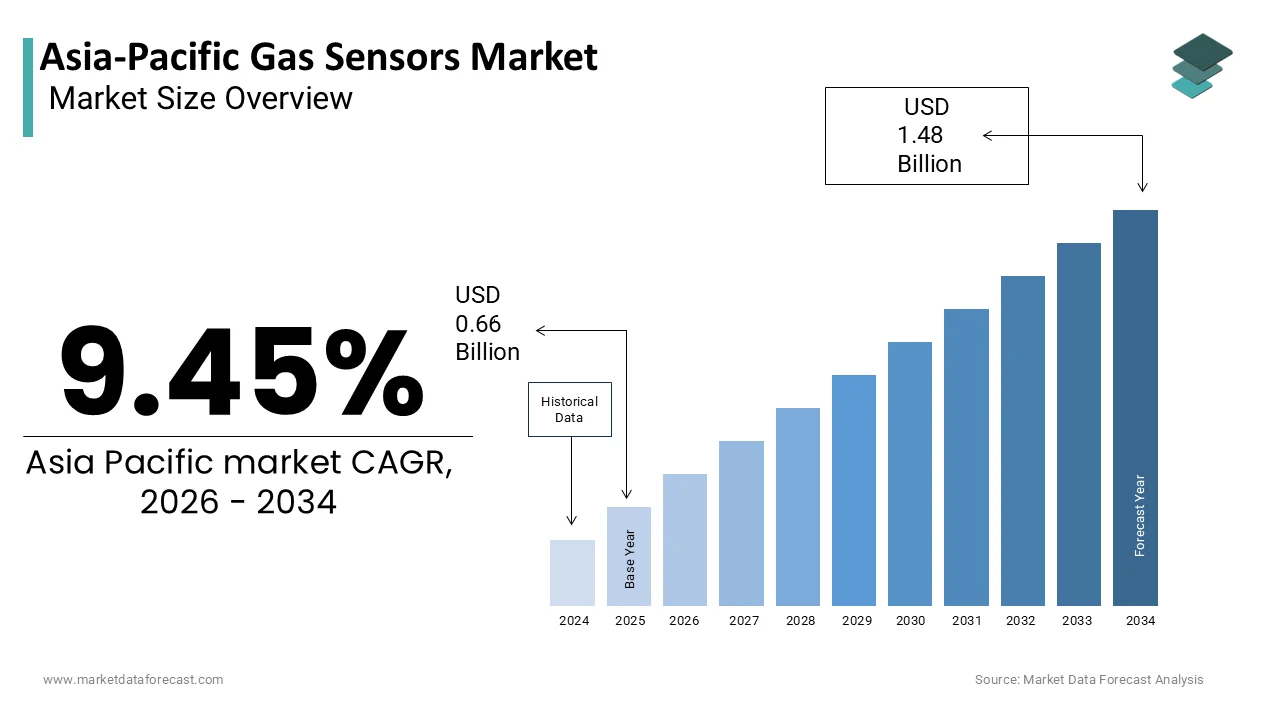
Market Size, 2025
$0.66 BnMarket Estimate, 2026
$0.72 BnMarket Forecast, 2034
$1.48 BnCAGR, 2026–2034
9.45%Asia-Pacific Gas Sensors Market Size
The Asia-Pacific Gas Sensors Market was valued at USD 0.66 billion in 2025, is estimated to reach USD 0.72 billion in 2026, and is projected to reach USD 1.48 billion by 2034, growing at a CAGR of 9.45% from 2026 to 2034.
Gas sensors, also known as gas detectors, are the electronic devices that can detect and identify various types of gasses. These gas sensors are majorly used for detecting the toxic or explosive gasses and for measuring the concentration gas. Most of the types of gas sensors are integrated into chemi-resistor which can get contact and reacts with respective target gasses.
The gas sensors market in the Asia-Pacific region is held for about 33% of the global gas sensors market at present, which is the largest shareholder in terms of the geographical view of the worldwide market. The growth of the target market in this region is due to the advancements in sensor technologies. In this region, this sensing technology has been widely utilized and explored for the detection of gas. Also, various applications and the inherent limitations regarding gas sensing technologies have resulted in making gas sensors getting equipped with enhanced gas sensor calibration.
MARKET DRIVERS
Increasing Industrialization and Expansion of Manufacturing Sectors
The rapid pace of industrialization and expansion of manufacturing activities across emerging economies is a major driver fueling the growth of the gas sensors market. Countries such as India, Indonesia, and Vietnam are witnessing substantial investments in infrastructure development, chemical processing, and heavy industries, all of which require robust gas detection systems to ensure worker safety and regulatory compliance.
According to the United Nations Industrial Development Organization (UNIDO), Southeast Asia’s manufacturing output grew by over 4% in 2025, with Vietnam and Thailand leading the way. As industrial operations scale up, so does the risk of exposure to toxic and combustible gases, necessitating the deployment of fixed and portable gas sensors in production facilities, warehouses, and logistics hubs.
In India, manufacturing output increased in recent years, spurred by the Make in India initiative. As part of these efforts, many factories have adopted continuous gas monitoring systems to meet Occupational Safety and Health Administration (OSHA)-equivalent standards enforced by local authorities. So, governments are promoting industrial corridors and special economic zones (SEZs), so the demand for reliable gas sensing technologies is expected to grow steadily across the Asia Pacific.
Rising Environmental Concerns and Stringent Air Quality Regulations
The growing emphasis on environmental protection and stricter air quality regulations imposed by regional governments also drives the Asia Pacific gas sensors market. Rapid urbanization and industrial growth is contributing to deteriorating air quality compelling authorities across the region to deploy gas sensors to monitor emissions and enforce pollution control measures.
As per the World Health Organization (WHO), several cities in China, India, and Bangladesh consistently rank among the most polluted globally. To address this crisis, national and municipal governments have launched comprehensive air quality index (AQI) programs that rely on real-time gas sensing networks to track particulate matter and harmful gases such as nitrogen dioxide, sulfur dioxide, and ozone. Similarly, in South Korea, the Ministry of Environment introduced stricter vehicle emission norms requiring onboard diagnostics equipped with exhaust gas sensors. These regulatory developments are strengthen the role of gas sensors not only in industrial settings but also in urban planning and transportation management across the Asia Pacific.
MARKET RESTRAINTS
High Cost of Advanced Gas Sensing Technologies
The high cost associated with advanced sensing technologies such as infrared, photoionization, and MEMS-based gas detectors is one of the primary constraints affecting the growth of the Asia Pacific gas sensors market. While these sensors offer superior accuracy, selectivity, and long-term reliability, their elevated price points make them less accessible to small and medium-sized enterprises (SMEs) and budget-constrained industries. This financial burden is particularly challenging for manufacturers operating in price-sensitive markets such as India, Indonesia, and the Philippines. As per the Federation of Indian Chambers of Commerce & Industry (FICCI), limited SMEs in the country have adopted high-end gas sensors due to concerns over return on investment and maintenance expenses.
Lack of Standardized Regulatory Framework Across Countries
The absence of a unified regulatory framework governing gas detection requirements across different countries is another significant restraint impacting the Asia Pacific gas sensors market. Unlike the European Union and the United States, where standardized guidelines dictate gas sensor usage in industrial and commercial settings, the Asia Pacific region exhibits varying levels of enforcement and compliance.
For example, Japanese industries adhere to stringent gas exposure limits set by the Ministry of Health, Labour and Welfare, whereas in countries like Myanmar and Cambodia, regulatory oversight remains minimal or inconsistent. This lack of harmonization creates uncertainty for manufacturers seeking to expand across borders. Moreover, the absence of universally accepted calibration and certification procedures complicates product validation and slows down market entry.
MARKET OPPORTUNITIES
Integration of Gas Sensors in Smart Cities and IoT-Based Infrastructure
The expanding deployment of smart city initiatives and Internet of Things (IoT)-enabled infrastructure presents a promising opportunity for the Asia Pacific gas sensors market. Governments across the region are investing heavily in intelligent urban planning, which includes real-time environmental monitoring, automated alert systems, and connected building management solutions—many of which incorporate gas sensing capabilities. Like, a notable number of cities in China alone will be fully integrated into smart city frameworks, utilizing sensor-based networks to manage traffic, utilities, and environmental hazards.
Growing Demand for Gas Sensors in Consumer Electronics and Automotive Applications
The rising incorporation of gas sensing technology into consumer electronics and automotive systems gives an emerging opportunity within the Asia Pacific gas sensors market. As awareness about indoor air quality and personal health monitoring increases, manufacturers of smartphones, wearable devices, and home automation systems are integrating compact gas sensors to detect pollutants such as VOCs, carbon dioxide, and nitrogen oxides. Also, automakers such as Toyota, Hyundai, and BYD have begun equipping their latest models with cabin air quality monitoring systems featuring embedded gas sensors.
MARKET CHALLENGES
Technical Limitations and Cross-Sensitivity Issues in Sensor Performance
The issue of cross-sensitivity and performance limitations inherent in certain types of gas sensing technologies remains a pressing challenge for the Asia Pacific gas sensors market. Many commonly used sensors, particularly electrochemical and metal oxide semiconductor (MOS) types, can react to multiple gases, leading to false positives or inaccurate readings if not properly calibrated.
According to the National Physical Laboratory (NPL) of the United Kingdom, MOS-based gas sensors often exhibit reduced selectivity in environments with fluctuating humidity and temperature, which are common in tropical climates across Southeast Asia. Furthermore, as per the Japan Society of Occupational Hygiene, gas sensors deployed in petrochemical plants and confined spaces frequently suffer from drift and aging effects, compromising long-term reliability without regular recalibration. These technical limitations pose a challenge for industries that require precise and consistent gas monitoring, particularly in hazardous environments where sensor accuracy is critical for worker safety and operational efficiency.
Supply Chain Disruptions and Raw Material Shortages
The ongoing volatility in global supply chains, particularly concerning raw materials and semiconductor components used in sensor fabrication is another pressing challenge confronting the Asia Pacific gas sensors market. Many sensor manufacturers rely on imported materials such as platinum catalysts, silicon wafers, and rare earth elements, making them vulnerable to geopolitical tensions, trade restrictions, and logistical bottlenecks. The financial strain disproportionately affects smaller manufacturers in countries like India and Indonesia, who lack the purchasing power of multinational firms. Inflationary pressures and sourcing complexities persisting, so suppliers must navigate an increasingly unpredictable environment while ensuring consistent product availability and affordability across the Asia Pacific region.
REPORT COVERAGE
| REPORT METRIC | DETAILS |
| Market Size Available | 2025 to 2034 |
| Base Year | 2025 |
| Forecast Period | 2026 to 2034 |
| Segments Covered | By Type,Technology, Application and Country. |
| Various Analyses Covered | Global, Regional & Country Level Analysis, Segment-Level Analysis; DROC, PESTLE Analysis, Porter's Five Forces Analysis, Competitive Landscape, Analyst Overview of Investment Opportunities |
| Country Covered | China, India, Japan, South Korea, Australia, New Zealand, Thailand, Indonesia, Philippines, Vietnam, Singapore, Rest of APAC. |
| Market Leader Profiled | Abb Ltd., Aeroqual Ltd., Alphanese, City Technology Ltd., Fibaro, Duomo Ltd. |
SEGMENTAL ANALYSIS
By Type Insights
The carbon monoxide gas sensors segment led the Asia Pacific gas sensors market by accounting for 32.2% of total revenue in 2025. A key driver behind the dominance of carbon monoxide gas sensors segment is the increasing awareness regarding indoor air quality and the dangers posed by CO poisoning. Like, carbon monoxide exposure causes substantial number of deaths annually in the Asia Pacific region, prompting governments to enforce mandatory installation of CO detectors in homes, offices, and industrial facilities. Also, rising adoption of smart home technologies incorporating gas detection features has further boosted demand.
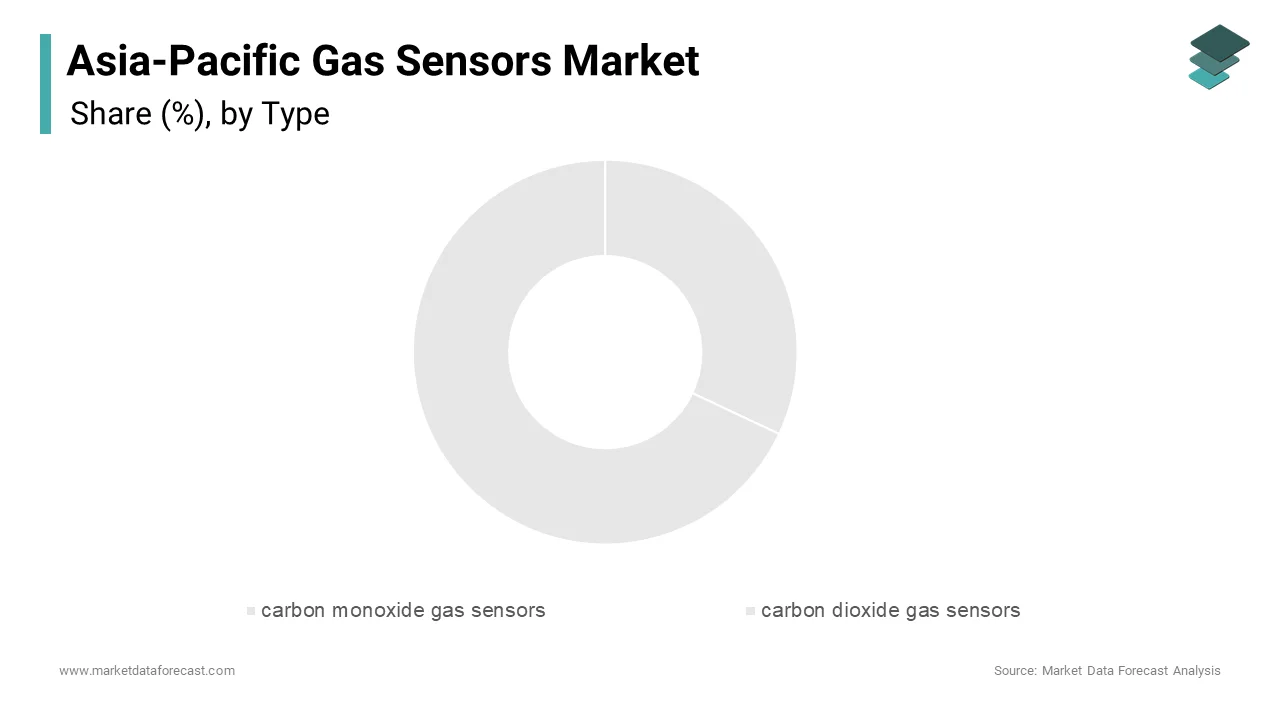
The carbon dioxide gas sensors segment is emerging as the fastest-growing segment within the Asia Pacific gas sensors market and is projected to expand at a compound annual growth rate (CAGR) of 10.2%. The growth of carbon dioxide gas sensors segment is supported by increasing concerns about indoor air quality and energy-efficient building management systems. The integration of CO₂ sensors into HVAC systems and smart building automation platforms is another major growth driver. Moreover, the healthcare sector has seen increased deployment of CO₂ sensors in ventilators, anesthesia machines, and patient monitoring devices, particularly in response to lessons learned during the pandemic.
By Technology Insights
The electrochemical gas sensors segment commanded the Asia Pacific gas sensors market by capturing 31.4% of total revenues in 2025. The high sensitivity and accuracy offered by electrochemical sensors in detecting toxic gases such as carbon monoxide, hydrogen sulfide, and nitrogen dioxide is primarily driving the growth of electrochemical gas sensors segment. These characteristics make them ideal for use in hazardous environments like oil & gas refineries, chemical plants, and mining operations. Also, these sensors are extensively used in automotive cabin air quality monitoring systems, particularly in South Korea and Japan, where vehicle manufacturers integrate them to enhance passenger comfort and safety. Hence, electrochemical gas sensors continue to dominate the regional market.
The photoionization detectors (PIDs) segment is the fastest-growing technology in the Asia Pacific gas sensors market and is projected to expand at a CAGR of 11.5% through 2033. The tightening of air pollution regulations in urban centers is majorly propelling the photoionization detectors (PIDs) segment. Governments in countries like South Korea and Thailand have launched initiatives to monitor VOC emissions from factories, landfills, and vehicle exhausts, necessitating the use of PIDs for real-time data collection. Also, the semiconductor and electronics manufacturing industries in Japan and Taiwan are increasingly adopting PIDs to detect trace contaminants in cleanroom environments.
By Application Insights
The building automation segment prevailed in the Asia Pacific gas sensors market by contributing 35.1% of total revenues in 2025. The integration of gas sensors into heating, ventilation, and air conditioning (HVAC) systems to monitor indoor air quality and optimize energy consumption is a key factor behind the rise of building automation segment. Urban centers are increasingly prioritizing digital resilience and sustainability, so the building automation segment remains a cornerstone of the gas sensors industry in the Asia Pacific region.
The medical applications segment is emerging as the fastest-growing segment within the Asia Pacific gas sensors market, projected to expand at a CAGR of 10.8%. The development of medical applications segment is supported by increasing demand for patient monitoring devices, anesthesia machines, and respiratory equipment. The rising prevalence of chronic respiratory diseases and the expansion of critical care infrastructure is also contributing to the growth of this segment. Like, respiratory illnesses account for a notable share of hospitalizations in Southeast Asia, driving the need for advanced diagnostic and therapeutic tools equipped with gas sensing capabilities.
COUNTRY LEVEL ANALYSIS
China led the Asia Pacific gas sensors market by contributing 33.2% of total revenues in 2025. A key factor underpinning this dominance is the country’s aggressive push toward reducing industrial emissions and improving air quality. Also, the rapid expansion of the semiconductor and electronics industries has fueled demand for precision gas sensors used in cleanrooms and wafer fabrication processes. So, with continued investments in smart cities, industrial safety, and environmental regulation enforcement, China remains the largest and most influential market for gas sensors in the Asia Pacific region.
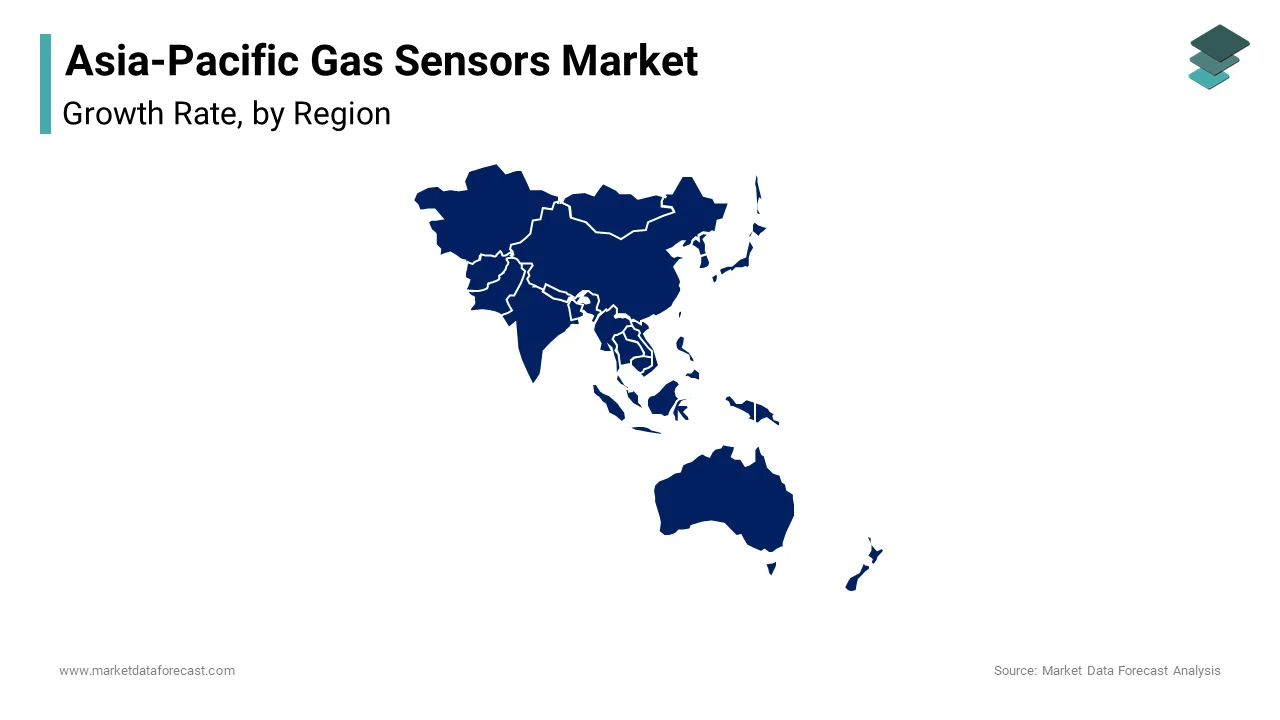
India is the fastest growing landscape in the Asia Pacific gas sensors market. A primary growth driver is the expansion of the manufacturing and mining sectors, which require robust gas detection systems to ensure worker safety and regulatory compliance. Additionally, the government’s Smart Cities Mission has led to the deployment of wireless gas sensor nodes across public transport hubs and industrial parks to detect natural gas leaks and indoor pollutants.
Japan occupies a significant position in the Asia Pacific gas sensors market. A key factor supporting growth is the country’s leadership in developing advanced semiconductor and MEMS-based gas sensors for integration into consumer electronics, automotive safety systems, and medical diagnostics. With continuous R&D efforts and strategic partnerships between OEMs and sensor suppliers, Japan remains a key player in the regional gas sensors market.
South Korea is a notable player in the Asia Pacific gas sensors market. A major growth driver is the country’s rise in high-tech manufacturing, particularly in memory chip and display panel production. These industries require highly sensitive gas detection systems to ensure cleanroom integrity and process efficiency. Additionally, the government’s Green New Deal initiative has encouraged the adoption of energy-efficient building management systems, integrating gas sensors into HVAC and ventilation networks. With continuous innovation and strategic partnerships between tech firms and sensor manufacturers, South Korea remains a vital contributor to the regional gas sensors landscape.
Australia secures descent share in the Asia Pacific gas sensors market. A primary growth factors is the country’s booming liquefied natural gas (LNG) and mineral extraction industries, which require robust gas detection systems for drilling, excavation, and processing operations. Also, the Australian government’s commitment to sustainable industrial practices has influenced the selection of gas sensors based on energy efficiency and emissions reduction. With a well-established regulatory framework and growing investments in resource infrastructure, Australia continues to be a steady performer in the gas sensors market across the Asia Pacific.
KEY MARKET PLAYERS AND COMPETITIVE LANDSCAPE
The key players of the Asia-Pacific Gas Sensors Market include Abb Ltd., Aeroqual Ltd., Alphanese, City Technology Ltd., Fibaro, Duomo Ltd., Geotechnical Instruments Ltd., DD Scientific, Crowcon, AIDE GmbH, Sensirion, SGX SensorTech, MSA, Nenvitech, Siemens AG, Robert Bosch GmbH, NGK Insulators Ltd., GfG Asia Pacific Ltd., Honeywell International Inc., Dragerwerk AG & Co. KGaA, Dynament Ltd., Tokuyama Corporation, and Nemoto & Co., Ltd.
The competition in the Asia Pacific gas sensors market is marked by a mix of global leaders and regionally established manufacturers striving to capture market share through technological differentiation and strategic expansion. As industries and governments increasingly prioritize environmental monitoring, worker safety, and indoor air quality, the demand for reliable and intelligent gas sensing solutions has intensified. Multinational corporations leverage their R&D capabilities, brand reputation, and extensive supply chains to maintain leadership positions, while domestic players capitalize on cost advantages and deep-rooted customer relationships. The market also faces increasing pressure from cross-industry convergence, where advancements in IoT, AI, and wireless communication are redefining sensor integration and data analytics. While electrochemical and MOS-based sensors continue to dominate, emerging technologies such as photoionization detectors and laser-based sensors are gaining traction in niche applications. Additionally, regulatory shifts toward stricter emissions control and workplace safety standards are influencing product development strategies, making adaptability and compliance key determinants of success in this dynamic and evolving landscape.
Top Players in the Market
Honeywell International Inc.
Honeywell is a global leader in sensing technologies and holds a strong presence in the Asia Pacific gas sensors market. The company offers a comprehensive portfolio of gas detection solutions tailored for industrial, commercial, and residential applications. With advanced R&D centers across China, India, and Japan, Honeywell plays a pivotal role in developing innovative sensor technologies that enhance safety and environmental monitoring.
Sensirion AG
Sensirion specializes in high-precision digital gas and environmental sensors, particularly for air quality monitoring and healthcare applications. The company has been instrumental in advancing miniaturized gas sensing technology, enabling integration into consumer electronics, smart home systems, and medical devices. Sensirion’s focus on energy-efficient and IoT-compatible solutions positions it as a key player in the region's rapidly evolving smart infrastructure landscape.
Figaro Engineering Inc.
Figaro is a leading Japanese manufacturer known for its pioneering work in metal oxide semiconductor (MOS) gas sensors. The company supplies gas detection modules to automotive, industrial safety, and indoor air quality sectors across Asia. With decades of expertise and a strong emphasis on reliability and performance, Figaro continues to be a trusted name in both OEM and aftermarket segments throughout the region.
Top Strategies Used by Key Market Participants
One of the most prominent strategies adopted by key players in the Asia Pacific gas sensors market is product innovation through advanced materials and sensor miniaturization . Companies are investing heavily in MEMS-based and nanotechnology-driven gas sensors to improve sensitivity, selectivity, and power efficiency, especially for integration into portable and wearable devices.
Another critical approach is expanding regional presence through localized manufacturing and distribution networks . By establishing production facilities closer to demand centers, companies reduce logistics costs, improve delivery times, and better serve customers with technical support and after-sales service.
Lastly, firms are focusing on strategic partnerships and collaborations with system integrators and government agencies . These alliances help accelerate deployment in large-scale applications such as smart cities, industrial parks, and environmental monitoring programs, thereby strengthening market penetration and brand visibility.
RECENT HAPPENINGS IN THE MARKET
In February 2025, Honeywell launched a new line of compact, low-power gas sensors designed specifically for integration into smart home and HVAC systems across Southeast Asia , aiming to expand its reach in the consumer electronics segment.
In August 2025, Sensirion expanded its technical support center in Bangalore, India , opening a dedicated laboratory for calibration and testing to enhance after-sales service and local customization for Indian industrial clients.
In March 2025, Figaro Engineering introduced an upgraded series of VOC gas sensors targeted at the automotive cabin air quality monitoring market in South Korea , aligning with stricter vehicle emission norms and occupant comfort trends.
In October 2025, a Japanese semiconductor manufacturer entered into a joint venture with a Chinese gas sensor module producer to localize production and reduce manufacturing costs for next-generation indoor air quality sensors .
In February 2025, an Australian environmental monitoring firm partnered with a European gas sensor technology provider to deploy real-time industrial gas detection systems in mining and oil & gas operations across Western Australia .
MARKET SEGMENTATION
This research report on the Asia-Pacific Gas Sensors Market has been segmented and sub-segmented into the following.
By Type
- carbon monoxide gas sensors
- carbon dioxide gas sensors
By Technology
- electrochemical gas sensors
- photoionization detectors (PIDs)
By Application
- building automation
- medical applications
By Country
- China
- India
- Japan
- South Korea
- Australia
- New Zealand
- Thailand
- Indonesia
- Philippines
- Vietnam
- Singapore
- Rest of APAC
Frequently Asked Questions
What are the key drivers of the Asia-Pacific gas sensors market?
Rising industrial safety concerns Strict environmental regulations Growth in automotive and HVAC sectors Urbanization and smart city initiatives Increasing air quality monitoring efforts
Which countries are major contributors to the market in the Asia-Pacific region?
China Japan India South Korea Australia These countries are leading due to industrialization, pollution control initiatives, and technological adoption.
What are the main applications of gas sensors in the Asia-Pacific region?
Industrial safety Environmental monitoring Automotive emission control Smart homes/buildings Medical and healthcare devices
Access the study in MULTIPLE FORMATS
Purchase options starting from
$ 2000
Didn’t find what you’re looking for?
TALK TO OUR ANALYST TEAM
Need something within your budget?
NO WORRIES! WE GOT YOU COVERED!
Call us on: +1 888 702 9696 (U.S Toll Free)
Write to us: sales@marketdataforecast.com