- Product Description Description
- Table of Contents TOC
- List of Table & Figure LOT
- Get Free Sample PDF Sample PDF
Asia Pacific Hand Sanitizer Market Summary
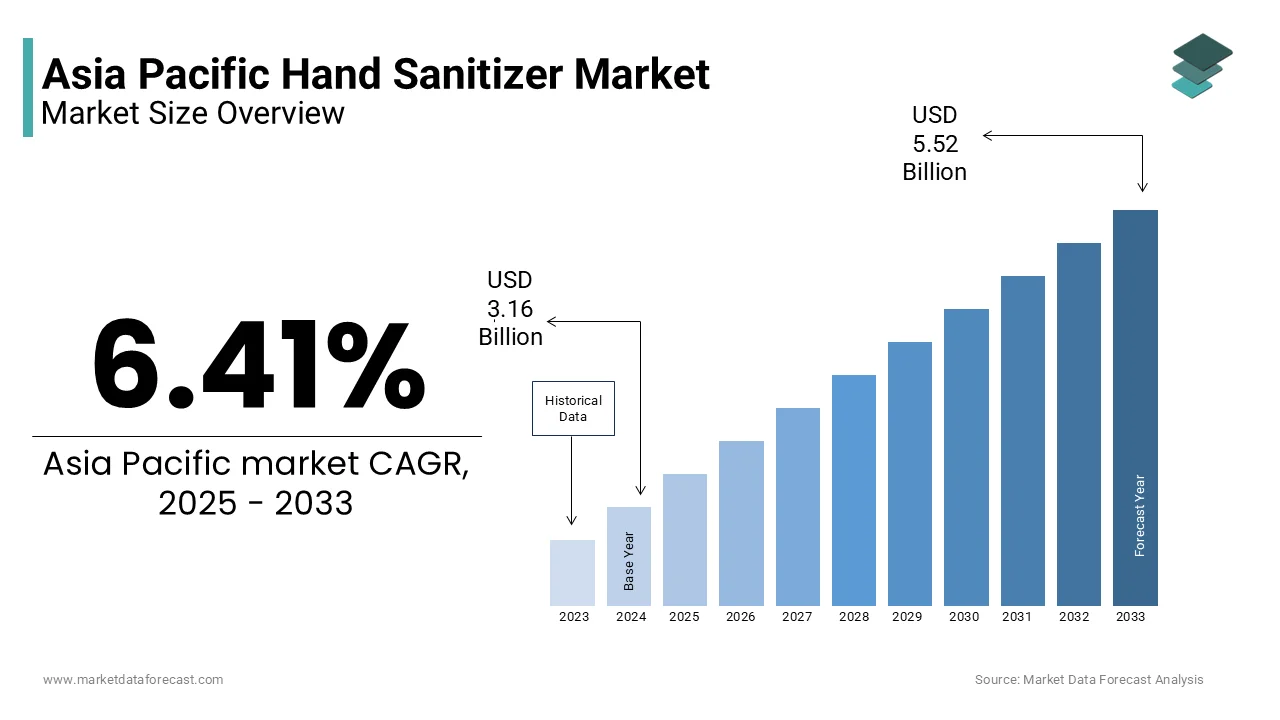
The Asia Pacific hand sanitizer market size is expected to reach USD 5.90 billion by 2034 from USD 3.37 billion in 2025, growing at a CAGR of 6.41% from 2026 to 2034. The Asia Pacific hand sanitizer market is growing due to rising hygiene awareness, urbanization, and health campaigns. Once crisis-driven, demand is now sustained by long-term shifts toward personal care and infection prevention.
Rising hygiene awareness, boosted by health campaigns and digital access, is fueling Asia Pacific hand sanitizer demand as governments promote it to curb disease transmission.
- China led with 25.1% share, driven by mandates in public and healthcare spaces.
- India’s growth is fueled by Swachh Bharat and rising household hygiene demand.
- Japan sees steady demand due to strong hygiene culture and elderly care focus.
- Based on product form, gel sanitizers held 55.5% share for convenience and speed.
- Based on type, alcohol-based sanitizers lead due to proven pathogen efficacy.
- Based on distribution channel, supermarkets dominated with 38.3% share for easy accessibility.
Asia Pacific Hand Sanitizer Market Size
Asia Pacific hand sanitizer market size was valued at USD 3.37 billion in 2025, and the market size is expected to reach USD 5.90 billion by 2034, at a CAGR of 6.41%.
Asia Pacific Hand Sanitizer Market Overview
Hand sanitizer refers to an alcohol-based or non-alcohol-based antimicrobial formulation designed to reduce the presence of infectious agents on hands when soap and water are not available. It serves as a critical component of hygiene protocols across healthcare, commercial, and personal settings. In the Asia Pacific region, hand sanitizers have evolved from being niche products to essential consumer goods, particularly in the wake of public health crises such as the H1N1 outbreak and the more recent global pandemic.
The market has seen substantial growth due to heightened awareness around hygiene and infection control. Governments and regulatory bodies across the region have emphasized preventive healthcare measures, encouraging widespread adoption of sanitization practices.
Moreover, the rise in urbanization, coupled with increased disposable incomes, has led to greater demand for personal care and hygiene products. Educational campaigns by health ministries in Australia, Japan, and South Korea have further strengthen the importance of regular hand sanitization. These developments indicate that while initial demand was driven by crisis response, long-term behavioral shifts toward hygiene consciousness are now shaping the sustainability of the hand sanitizer market in the Asia Pacific.
KEY MARKET DRIVERS
Increasing Awareness About Personal Hygiene
- The growing awareness regarding personal hygiene, which has been significantly amplified by educational initiatives and media outreach, is one of the primary drivers of the Asia Pacific hand sanitizer market.
- Governments and health organizations across the region have launched extensive campaigns to promote hand hygiene as a preventive measure against communicable diseases.
- According to the World Health Organization, approximately 80% of infectious diseases are transmitted via hands, making hand sanitization a critical defense mechanism.
- This understanding has been widely disseminated through school curricula, public service announcements, and workplace safety regulations in several Asia Pacific countries.
- In Australia, Safe Work Australia issued updated guidelines in 2023 recommending the placement of hand sanitizing stations at all public workplaces to prevent cross-contamination.
- Apart from these, rising literacy rates and digital penetration have allowed consumers to access information on disease prevention more easily.
Expansion of Institutional and Commercial Use
- The expansion of institutional and commercial use of hand sanitizers is another significant driver contributing to the growth of the Asia Pacific market.
- Hospitals, schools, offices, shopping malls, and transportation hubs have increasingly adopted hand sanitization as a standard protocol to ensure public safety and maintain hygiene standards.
- In the healthcare sector, hospital-acquired infections (HAIs) remain a pressing concern, prompting medical facilities to enforce strict hand hygiene policies.
- To mitigate this risk, many hospitals have installed automated hand sanitizer dispensers at entry points, patient rooms, and common areas.
- In China, the National Health Commission mandated the installation of hand sanitizing stations in all public hospitals in 2023, strengthening hygiene compliance.
- Similarly, the education sector has also witnessed a surge in demand for hand sanitizers. Besides, corporate offices and retail establishments have integrated hand sanitizers into their daily operations, recognizing their role in employee and customer well-being. This broad-based institutional adoption continues to drive consistent demand across the Asia Pacific region.
MAJOR RESTRAINTS
Availability of Substandard and Counterfeit Products
- The proliferation of substandard and counterfeit products, which undermines consumer confidence and poses potential health risks, is a major restraint affecting the Asia Pacific hand sanitizer market.
- Due to the high demand during the pandemic, numerous manufacturers entered the market hastily, often producing formulations that did not meet regulatory standards.
- This issue was particularly prevalent in countries with weaker enforcement mechanisms, leading to the circulation of ineffective or even harmful sanitizers.
- As per the ASEAN Cosmetic Directive, member countries established stringent quality benchmarks for hand sanitizers, including minimum alcohol content and labeling requirements.
- However, in India, the Central Drugs Standard Control Organization conducted random inspections and found multiple brands selling products with misleading claims or insufficient active ingredients.
- These incidents have led to consumer skepticism and reduced repeat purchases. Until stricter monitoring and quality assurance systems are universally enforced, the prevalence of counterfeit products will continue to hinder market growth.
 Regulatory Challenges and Compliance Issues
- The significant constraint facing the Asia Pacific hand sanitizer market is the complexity of regulatory frameworks and compliance challenges across different countries.
- Each nation has its own set of guidelines governing product formulation, packaging, labeling, and import procedures, making it difficult for manufacturers to maintain uniformity in product offerings and distribution strategies.
- For example, in Japan, the Ministry of Health, Labour and Welfare enforces strict regulations under the Pharmaceutical Affairs Act, requiring detailed documentation and clinical testing for antiseptic products.
- In contrast, Australia’s Therapeutic Goods Administration (TGA) classifies some hand sanitizers as therapeutic goods, necessitating additional certifications beyond those required in other markets. These variations increase operational costs and slow down product launches.
- Furthermore, export-oriented manufacturers face additional hurdles when navigating international trade agreements and customs protocols.
- The ASEAN Free Trade Area (AFTA) has attempted to harmonize standards among member states, but inconsistencies persist.
- Such regulatory complexities deter smaller players from entering the market and create logistical burdens for multinational companies seeking to expand their footprint.
MARKET OPPORTUNITIES
Rise of Natural and Organic Hand Sanitizers
- A promising opportunity emerging in the Asia Pacific hand sanitizer market is the increasing demand for natural and organic formulations.
- Consumers are becoming more conscious about the chemical composition of personal care products, preferring options that are free from synthetic additives, parabens, and harsh alcohols.
- This shift is particularly evident among millennials and Gen Z consumers who prioritize wellness and sustainability in their purchasing decisions.
- Brands are responding by introducing plant-based formulations enriched with ingredients such as aloe vera, tea tree oil, and chamomile, which offer antibacterial properties without causing skin irritation.
- In South Korea, K-beauty brands have integrated hand sanitizers into their skincare lines, emphasizing dermatological benefits alongside germ protection.
- Australia has been at the forefront of this trend, with local startups gaining traction by offering eco-friendly, cruelty-free sanitizers packaged in biodegradable containers. So, with rising environmental awareness and evolving consumer preferences, the organic hand sanitizer segment presents a lucrative avenue for market expansion across the Asia Pacific.
Integration of Hand Sanitizers into Smart Hygiene Systems
- The integration of sanitizers into smart hygiene systems, leveraging automation, IoT, and touchless technology to enhance convenience and compliance is an emerging opportunity in the asia pacific hand sanitizer market.
- Public and private institutions are increasingly adopting intelligent dispensing solutions that monitor usage patterns, track inventory, and ensure optimal sanitation levels in real time.
- These devices are connected to cloud-based platforms that provide analytics on hygiene trends and help facility managers optimize maintenance schedules.
- Companies like SoftBank Robotics have developed humanoid assistants equipped with built-in sanitizing units to assist visitors and staff in maintaining hygiene.
MARKET CHALLENGES
Fluctuating Raw Material Prices
- The volatility in raw material prices, particularly for ethanol, isopropyl alcohol, glycerin, and hydrogen peroxide is one of the most pressing challenges confronting the Asia Pacific hand sanitizer market.
- These components constitute a significant portion of production costs, and fluctuations in their availability and pricing directly impact manufacturing expenses and profit margins.
- The global supply chain disruptions caused by geopolitical tensions and trade restrictions have exacerbated price instability. In India, as per the National Federation of Cooperative Sugar Mills, there is a sharp decline in sugar output, leading to higher procurement costs for ethanol-based sanitizers.
- Moreover, glycerin, a key ingredient in moisturizing formulations, experienced supply constraints due to reduced biodiesel production in Malaysia and Indonesia.
- These fluctuations make it difficult for manufacturers to maintain consistent pricing strategies, especially in price-sensitive markets. Small and medium enterprises struggle to absorb sudden cost increases, leading to reduced production volumes and limited market participation.
Declining Demand in Post-Pandemic Normalcy
- The gradual decline in demand following the easing of pandemic-related restrictions is another critical challenge affecting the Asia Pacific hand sanitizer market. During the peak of the health crisis, governments mandated the use of hand sanitizers in public spaces, driving unprecedented sales growth.
- However, as societies return to pre-pandemic norms, consumer reliance on hand sanitizers has diminished, impacting overall market momentum.
- A trend has been observed in Australia and Japan, where public health advisories no longer emphasize routine hand sanitization unless in high-risk environments. In India, while awareness remains high, repeat purchases have slowed as households rely on existing stocks rather than replenishing regularly.
- This normalization phase presents a strategic dilemma for manufacturers—how to sustain demand without relying solely on crisis-driven consumption. Brand loyalty, product differentiation, and value-added features will be crucial in retaining relevance in a market transitioning from emergency necessity to discretionary hygiene practice.
SEGMENTAL ANALYSIS
By Product Form Insights
The gel-based hand sanitizer segment dominated the Asia Pacific market by capturing 55.5% of total sales in 2025.
- Its widespread acceptance in institutional settings such as hospitals, schools, and offices is one key driver of gel-based hand sanitizer. This form has been widely adopted due to its ease of use, portability, and effectiveness in killing germs without requiring water.
- Also, consumer preference for formulations that dry quickly and leave no residue is another factor contributing to the popularity of gel sanitizers segment. Further, major brands like Reckitt Benckiser and Unilever have heavily marketed compact gel packs for on-the-go usage, further embedding this format into daily hygiene routines across the region.

The foam-based hand sanitizers segment is emerging as the fastest-growing product form in the Asia Pacific market, projected to expand at a CAGR of 9.1% from 2025 to 2034.
- The increasing demand from healthcare institutions seeking skin-friendly alternatives is a primary growth driver of foam-based hand sanitizers segment. Unlike traditional alcohol-based gels, foam formulations often contain moisturizing agents that reduce skin irritation caused by repeated use. This segment is gaining traction due to its dermatological benefits and suitability for frequent use.
- Apart from these, the education sector has become a significant adopter of foam sanitizers, particularly in elementary schools where child safety is a priority.
By Type Insights
The alcohol-based hand sanitizers segment was the most popular type with substantial share of the Asia Pacific market in 2025.
- The alcohol-based hand sanitizers segment is maintaining their position. A core reason for their dominance is the endorsement by global and regional health authorities is the core reason for the dominance of alcohol-based hand sanitizers segment. Their proven efficacy against pathogens and broad acceptance in both public and private sectors supports this rise.
- The World Health Organization recommends ethanol- or isopropyl alcohol-based formulations containing at least 60% alcohol concentration for effective virus and bacteria elimination.
- Moreover, industrial and commercial sectors continue to rely heavily on alcohol-based products for hygiene compliance. The Singapore Food Agency mandates the use of alcohol-based sanitizers in food handling establishments to prevent cross-contamination.
- In addition, manufacturers have improved formulations to include emollients that mitigate skin dryness, addressing an early criticism of alcohol-based products. These enhancements have contributed to sustained consumer confidence and strengthened their lead position in the regional market.
The alcohol-free hand sanitizers segment is experiencing the highest growth rate in the Asia Pacific market, with a projected CAGR of 10.4% through 2034.
- The rising demand from educational institutions and childcare centers that seek safer alternatives for children is one of the main growth drivers of alcohol-free hand sanitizers segment. This segment is gaining momentum due to evolving consumer preferences, regulatory developments, and increasing concerns regarding flammability and skin sensitivity associated with alcohol-based variants. Similarly, in Australia, the Department of Health recommended alcohol-free options for use in preschool environments, citing lower risk of ingestion-related incidents.
- The surge in demand from individuals with sensitive skin conditions is another contributing factor. To address this concern, leading personal care brands have launched alcohol-free variants infused with natural disinfectants such as benzalkonium chloride and botanical extracts.
By Distribution Channel Insights
The supermarkets and hypermarkets segment led the distribution channels in the Asia Pacific hand sanitizer market by accounting for a 38.3% of total sales in 2025.
- High footfall, easy accessibility, and the ability to offer a wide range of products under one roof is mainly propelling the growth of supermarkets and hypermarkets segment. This channel benefits from impulse buying behavior, especially during peak demand periods. Retail chains such as Walmart-owned Flipkart in India and Central Group’s Tops Supermarket in Thailand have dedicated hygiene sections featuring prominent displays of hand sanitizers, enhancing visibility and purchase likelihood.
- Moreover, promotional activities by retailers play a crucial role in driving sales. In China, major supermarket chains like RT-Mart and Carrefour offered combo deals on sanitizers and face masks during flu season, boosting transaction volumes. The integration of loyalty programs and digital payment incentives further encourages repeat purchases in this channel.
- The online retail channels segment is the fastest-growing distribution avenue for hand sanitizers in the Asia Pacific market and is anticipated to grow at a CAGR of 12.6% through 2034.
- A key growth catalyst of this segment is the convenience of doorstep delivery and availability of a wide variety of products, including premium and niche formulations. The rapid expansion of e-commerce platforms, coupled with increased digital literacy and mobile penetration, has significantly transformed purchasing habits. An additional contributing factor is the rise of direct-to-consumer (DTC) brands leveraging social media and influencer marketing to promote organic and eco-friendly sanitizers.
- In South Korea, beauty-focused startups have successfully utilized TikTok and Instagram campaigns to drive online traffic and conversions. Further, subscription models offering monthly refills have gained traction, especially among environmentally conscious consumers.
By End-User Insights
The hospitals and healthcare facilities segment represented the largest end-user in the Asia Pacific hand sanitizer market by accounting for 35.2% of total consumption in 2025.
- Stringent infection control protocols and the critical need to prevent healthcare-associated infections (HAIs) is one of the reasons behind this dominance of hospitals and healthcare facilities segment.
- The World Health Organization emphasizes hand hygiene as a cornerstone of patient safety, recommending the placement of alcohol-based sanitizers at every point of care.
- Apart from these, regulatory bodies across the region have enforced compliance with hygiene standards.
- Major hospital chains in Japan, such as St. Luke's International Hospital, have implemented touchless dispenser systems integrated with IoT-based monitoring tools to ensure continuous supply and usage tracking.
The household use of hand sanitizers segment is the fastest-growing end-user segment in the Asia Pacific market and is expanding at a projected CAGR of 11.2% from 2026 to 2034.
- This growth of this segment is fueled by shifting consumer behavior, increased health consciousness, and the normalization of sanitization as part of daily life. A further key factor behind this trend is the lasting impact of recent public health crises, which have ingrained hygiene habits into everyday routines.
- Moreover, rising disposable incomes and urbanization have enabled broader access to hygiene products. Parents are also prioritizing sanitizers for children, particularly in densely populated cities where exposure risks are higher.
REGIONAL ANALYSIS
China led the Asia Pacific hand sanitizer market by accounting for a 25,1% in 2025.
- As the world’s most populous country with a rapidly modernizing healthcare system, China has witnessed strong demand for hygiene products across institutional, commercial, and household segments.
- A key driver is the country’s proactive approach to public health policy.
- The National Health Commission mandated the use of hand sanitizers in all public hospitals, transportation hubs, and educational institutions, strengthening widespread adoption. Besides, the rise of domestic personal care brands has expanded product availability. Companies like By-health and Perfect Diary have launched affordable, locally produced sanitizers tailored to consumer preferences.
- Moreover, e-commerce platforms such as JD.com and Alibaba have played a crucial role in scaling distribution, especially in rural areas where traditional retail access remains limited.
India is seeing high growth in the Asia Pacific hand sanitizer market.
- The country’s large population, growing middle class, and government-led hygiene initiatives have collectively fueled substantial demand for hand sanitizers across multiple sectors.
- One of the primary growth catalysts is the Swachh Bharat Abhiyan, a nationwide cleanliness campaign launched by the Indian government. Under this initiative, millions of hand sanitizers were distributed in schools, railway stations, and municipal buildings.
- Urbanization and rising disposable incomes have also contributed to increased household adoption. E-commerce platforms like Amazon India and Nykaa saw a year-on-year increase in sanitizer sales, reflecting changing consumer habits. Moreover, the pharmaceutical and manufacturing industries have become major institutional buyers, incorporating sanitizers into workplace safety protocols.
Japan maintains a mature yet stable presence in the Asia Pacific hand sanitizer market.
- Despite slower population growth, the country’s well-established healthcare system and cultural emphasis on hygiene sustain steady demand.
- A key growth factor is the widespread adoption of hand sanitizers in public spaces. This practice, deeply embedded in Japanese society, ensures consistent product usage even beyond pandemic-driven spikes.
- The elderly care sector is another significant contributor. With over 30% of Japan’s population aged above 65, long-term care facilities prioritize infection control measures. Moreover, premium and dermatologically tested products are gaining traction, particularly among corporate employees and school-going children.
South Korea is distinguished by its advanced healthcare infrastructure, tech-savvy consumers, and strong regulatory environment.
- The country’s experience with past outbreaks, including MERS in 2015 and the recent global pandemic, has solidified public trust in hygiene products.
- A major growth driver is the integration of smart technology into hygiene solutions. In Seoul, many public facilities use IoT-enabled hand sanitizer dispensers that monitor usage patterns and send refill alerts.
- Moreover, the cosmetics and personal care industry has played a pivotal role in expanding the market. Korean beauty (K-beauty) brands such as Innisfree and Etude House have launched branded sanitizers with skin-nourishing ingredients, appealing to younger demographics.
- Moreover, the cosmetics and personal care industry has played a pivotal role in expanding the market. Korean beauty (K-beauty) brands such as Innisfree and Etude House have launched branded sanitizers with skin-nourishing ingredients, appealing to younger demographics.
Australia and New Zealand together are characterized by high consumer awareness, strict regulatory standards, and a preference for premium and eco-friendly formulations.
- One of the primary growth factors is the emphasis on product quality and ingredient transparency.
- The Therapeutic Goods Administration (TGA) regulates antiseptic products, ensuring only approved formulations reach the market. Environmental consciousness is another key driver.
- In Australia, local startups have gained traction by offering biodegradable, refillable, and cruelty-free sanitizers. New Zealand has followed a similar trend, with government-backed initiatives promoting sustainable hygiene practices. The Ministry of Health encouraged businesses to adopt refillable dispensers in public spaces, reducing plastic waste.
KEY MARKET PLAYERS AND COMPETITIVE LANDSCAPE
Vi-Jon, Chatter Inc, Unilever, Henkel AG and Company, Best Sanitizers Inc, Kutol, GOJO Industries Inc, Reckitt Benckiser Group Plc, Procter and Gamble, and The Himalaya Drug Company are key players in the Asia Pacific hand sanitizer market.
Top Asia Pacific Hand Sanitizer Market Players
Reckitt Benckiser
- One of the leading players in the Asia Pacific hand sanitizer market is Reckitt Benckiser, a globally recognized consumer health and hygiene company.
- Known for its Dettol brand, Reckitt has been instrumental in shaping consumer behavior toward preventive hygiene practices.
- The company’s strong presence across Asia is supported by localized marketing strategies, extensive distribution networks, and product diversification tailored to regional preferences. Its emphasis on innovation, brand trust, and sustainability initiatives continues to strengthen its dominance in both household and institutional markets.
Unilever
- Unilever is another major contributor to the regional hand sanitizer market through its Lifebuoy and Pureit brands.
- Leveraging its global expertise in personal care and hygiene, Unilever has successfully integrated sanitization into everyday wellness routines.
- The company's partnerships with governments and NGOs to promote hygiene education have enhanced its reach, especially in rural and semi-urban areas. With a focus on affordability, accessibility, and environmental responsibility, Unilever plays a key role in expanding the market footprint across diverse consumer segments.
Godrej Consumer Products Limited (GCPL)
- Godrej Consumer Products Limited (GCPL) holds a prominent position in the Asia Pacific region, particularly in India and Southeast Asia, through its Santoor and Aer range of hygiene products.
- As a regional player with a deep understanding of local consumer needs, GCPL has expanded its sanitizer portfolio to include natural ingredients, refillable packaging, and dermatologically tested formulations.
- Its agile supply chain, cost-effective manufacturing, and strategic brand positioning have enabled it to capture significant market share while contributing to broader awareness around hygiene and sanitation.
Strategies Used by Key Players
Product differentiation through formulation innovation: A key strategy employed by leading players in the Asia Pacific hand sanitizer market is product differentiation through formulation innovation. Companies are increasingly focusing on developing variants that cater to specific consumer concerns such as skin sensitivity, eco-friendliness, and aromatherapy benefits. This includes alcohol-free options, organic compositions, and moisturizing additives that enhance user experience and encourage repeated usage.
Strategic collaborations and partnerships: Another major approach is strategic collaborations and partnerships with public institutions and private businesses. By aligning with government agencies, schools, healthcare providers, and corporate offices, manufacturers ensure widespread distribution and regular procurement of their products. These collaborations not only boost visibility but also strengthen brand credibility and long-term consumer trust.
Expanding digital engagement and e-commerce presence: Lastly, expanding digital engagement and e-commerce presence has become essential for market leaders. Brands are leveraging online platforms, influencer marketing, and direct-to-consumer models to increase product availability and reach younger, tech-savvy audiences. This omnichannel strategy enhances customer retention and allows for real-time feedback, enabling continuous product refinement and targeted promotions.
Asia Pacific Hand Sanitizer Market Recent News
- In February 2025, Reckitt Benckiser launched a new line of plant-based hand sanitizers under the Dettol brand, specifically designed for sensitive skin and packaged in recyclable containers, aiming to capture the growing eco-conscious consumer base in Southeast Asia.
- In May 2025, Unilever partnered with the Ministry of Health in Indonesia to distribute free hand sanitizer units in rural schools, strengthen its commitment to hygiene education and strengthening brand loyalty among future consumers.
- In July 2025, Godrej Consumer Products introduced a compact, pocket-sized sanitizer variant tailored for young professionals and students in India, enhancing portability and encouraging daily use beyond crisis periods.
- In October 2025, BASF SE, a chemical supplier rather than a direct manufacturer, collaborated with local Asian formulators to provide bio-based ethanol for hand sanitizers, supporting the industry’s shift toward sustainable raw materials and cleaner production methods.
- In December 2025, Kao Corporation, a Japanese personal care giant, expanded its Biore hand sanitizer range to include touch-free dispensers for commercial use, targeting office complexes and retail chains seeking automated hygiene solutions.
Asia Pacific Hand Sanitizer Report Scope
| Metric | Value |
| Base Year | 2025 |
| Market Size Available | 2025 to 2034 |
| Forecast Period | 2026 to 2034 |
| Quantitative Units | Market Size in USD Billion and CAGR from 2026 to 2034 |
| Various Analyses Included | Global, Regional & Country-Level Analysis; Segment-Level Analysis; DROC; PESTLE; Porter's Five Forces; Competitive Landscape; Investment Opportunities |
| Segments Covered | Product Form, Type, Distribution Channel, End-User |
| Regions Analyzed | North America, Europe, APAC, Latin America, Middle East & Africa |
| Countries Covered | U.S, Canada, Mexico, UK, France, Spain, Germany, Italy, Russia, Sweden, Denmark, Switzerland, Netherlands, Turkey, Czech Republic, India, China, Japan, South Korea, Australia, New Zealand, Thailand, Malaysia, Vietnam, Philippines, Indonesia, Singapore, Brazil, Argentina, Chile, KSA, UAE, Israel, rest of GCC countries, South Africa, Ethiopia, Kenya, Egypt, Sudan and Other Countries |
| Report Format | PDF, Excel, PPT, BI |
| Customization | Report customization as per your requirements with respect to countries, region and segmentation. |
MARKET SEGMENTATION
This research report on the Asia Pacific hand sanitizer market has been segmented and sub-segmented based on the following categories.
By Product
- Gel
- Foam
- Spray
- Others
By Type
- Alcohol-Based Hand Sanitizers
- Alcohol-Free Hand Sanitizers
By Distribution Channel
- Online stores
- Departmental stores
- Pharmacy stores
- Others.
By End-User
- Restaurants
- Schools
- Hospitals
- Household purposes
- Others
By Country
- India
- China
- Japan
- South Korea
- Australia
- New Zealand
- Thailand
- Malaysia
- Vietnam
- Philippines
- Indonesia
- Singapore
- Rest of Asia-Pacific