- Product Description Description
- Table of Contents TOC
- List of Table & Figure LOT
- Get Free Sample PDF Sample PDF
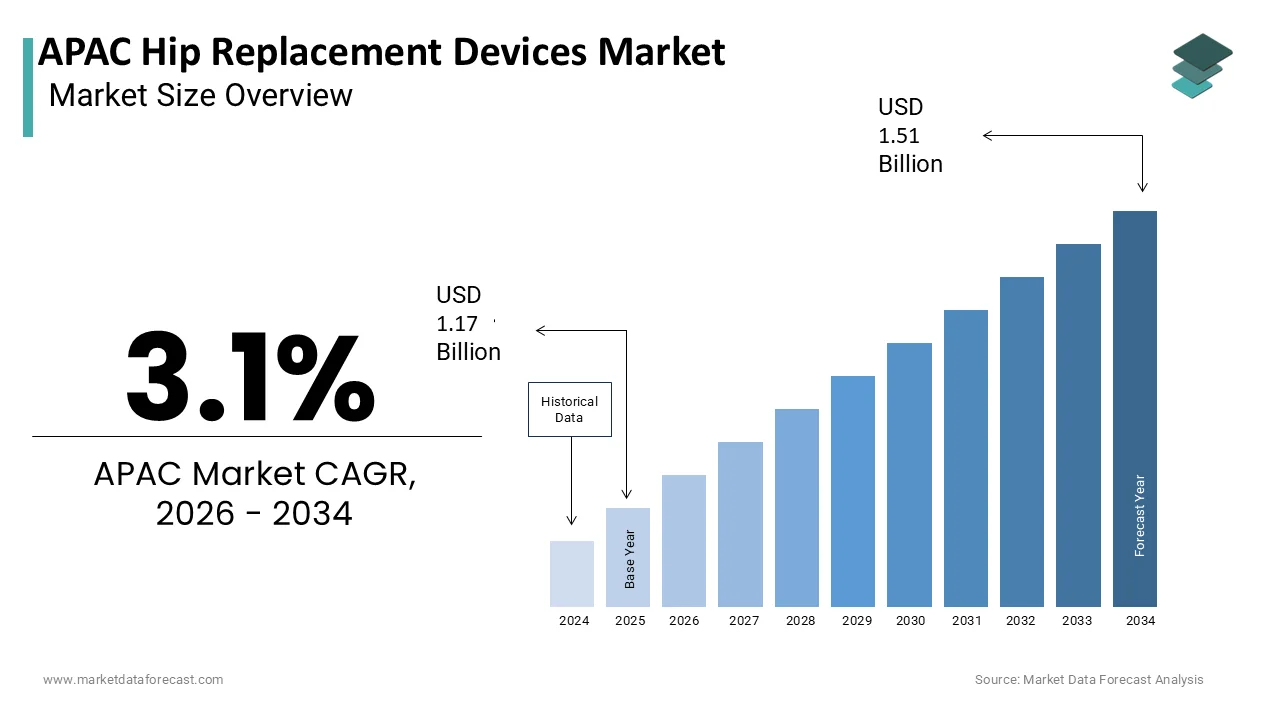
Market Size, 2025
$1.17 BnMarket Estimate, 2026
$1.18 BnMarket Forecast, 2034
$1.51 BnCAGR, 2026–2034
3.1%Executive Summary: APAC Hip Replacement Devices Market Analysis & Growth Forecast (2026-2034)
- Market Scope: Comprehensive Asia-Pacific industry analysis covering product variations, implant materials, end-user settings, country-level adoption frameworks, and core regional growth drivers.
- Market Valuation: Valued at USD 1.17 billion in 2025, estimated at USD 1.18 billion in 2026, and projected to reach USD 1.51 billion by 2034, registering a steady CAGR of 3.10% from 2026 to 2034.
- Primary Growth Drivers: Surging volume of hip replacement surgeries, rising incidence of hip bone degeneration among the elderly, increasing trauma and road accidents, advancements in 3D-printed and patient-specific implants, and the rapid expansion of medical tourism.
Key APAC Hip Replacement Devices Market Segment Metrics (2026-2034)
| Category | Leading Segment (2025 Position) | Fastest-Growing Segment |
|---|---|---|
| By Product | Total Procedure / Fixed Bearing (held dominant market share for standard reconstructions) | Revision Hip Replacement & Custom 3D-Printed Implants (driven by long-term durability needs) |
| By Material | Metal on Polyethylene (favored for proven clinical longevity and cost-effectiveness) | Ceramic on Ceramic (expanding due to superior wear resistance and biocompatibility) |
| By End-user | Hospitals (captured the majority share backed by advanced surgical infrastructure) | Ambulatory Surgical Centres & Orthopedic Clinics (scaling rapidly due to minimally invasive adoption) |
| By Country | China & Japan (lead regionally due to aging populations, high trauma rates, and manufacturing scale) | India & Southeast Asia (accelerating rapidly via medical tourism and rising healthcare investments) |
Major APAC Hip Replacement Devices Market Players & Industry Structure
Market Structure: Highly competitive regional market driven by technological breakthroughs in robot-assisted surgery, patient-specific 3D printing, advanced material design, and expanding healthcare infrastructure across emerging economies.
Key Companies: B. Braun Melsungen AG, Exactech, Inc., DJO Global, Inc., Johnson & Johnson, MicroPort Scientific Corporation, OMNIlife science, Inc., Smith & Nephew, Zimmer Biomet Holdings, Inc., and Stryker Corporation.
 Download Free Sample Report
APAC Hip Replacement Devices Market Size
The APAC Hip Replacement Devices Market is projected to grow from USD 1.17 billion in 2025 to USD 1.18 billion in 2026 and reach USD 1.51 billion by 2034, registering a CAGR of 3.1% during the forecast period from 2026 to 2034.
Hip replacement devices are the commercialization of total and partial hip arthroplasty implants, including femoral stems, acetabular cups, liners, rs and heads designed to restore mobility in patients suffering from osteoarthritis,tis avascular necrosis,osis or fractures. The infrastructure relies heavily on orthopedic surgical centers and public hospital networks, adapting to increased procedure volumes. The prevalence necessitates scalable surgical solutions beyond conservative management. As per the data, hip fracture incidence in Asia is projected to double by 2050, driven by longevity and lifestyle changes.
MARKET DRIVERS
Rapidly Aging Demographics Increasing Osteoarthritis Prevalence
The structural shift toward older age brackets is fuelling the growth of the Asia Pacific hip replacement devices market. As life expectancy rises, the cumulative wear on articular cartilage accelerates, leading to higher incidences of symptomatic osteoarthritis requiring surgical intervention. According to the United Nations Department of Economic and Social Affairs, the number of persons aged 65 years or older in Asia is expected to reach 1.3 billion by 2050, representing nearly two-thirds of the global elderly population. This massive demographic surge creates an unprecedented demand for durable implant solutions capable of supporting active seniors. Governments are prioritizing healthy aging initiatives, which include funding for joint replacements to maintain workforce participation among older adults. The cultural emphasis on familial independence further motivates patients to seek surgical corrections rather than accept immobility.
Expansion of Healthcare Infrastructure and Medical Tourism Hubs
The significant investments in modernizing hospital facilities and establishing specialized orthopedic centers are also elevating the growth of the Asia Pacific hip replacement devices market. Countries like Thailand, India, and Malaysia have emerged as global hubs for medical tourism, offering cost-effective yet advanced surgical care, attracting international patients. The financial injection enables hospitals to acquire state-of-the-art robotic surgical systems and premium implant inventory. Patients from Western nations often travel eastward to bypass long waiting lists and reduce out-of-pocket costs, while receiving care from surgeons trained in prestigious institutions. The availability of package deals combining surgery,y rehabilitation, and accommodation enhances attractiveness for cross-border seekers.
MARKET RESTRAINTS
High Cost of Premium Implants and Limited Insurance Coverage
The prohibitive pricing structures of advanced ceramic-on-ceramic or highly cross-linked polyethylene bearings restrict the adoption, particularly in rural and lower-income urban areas. The high cost of premium implants and limited insurance coverage are hindering the growth of the Asia Pacific hip replacement devices market. Many national health insurance schemes cap reimbursement amounts favoring cheaper metallic alternatives, despitethe superior longevity of premium options. Moreover, the budget constraints lead to frequent tender rejections for innovative implant designs lacking immediate cost-benefit proof. Smaller clinics struggle to maintain inventory of expensive components due to cash flow limitations, resulting in longer wait times for specific sizes. The disparity between premium and basic implant availability creates a fragmented market where quality varies significantly based on patient wealth.
Shortage of Trained Orthopedic Surgeons in Remote Areas
The deficit of skilled professionals proficient in complex arthroplasty techniques, particularly outside major metropolitan centers,s is degrading the growth of the Asia Pacific hip replacement devices market. Proper implant positioning requires extensive training to avoid complications such as dislocation or periprosthetic fracture, which remain elevated in regions with limited specialist access. According to the World Federation of Orthopaedic Associations, there is only one orthopedic surgeon per 100,000 people in parts of South Asia compared to 1 per 10,000 in developed Western countries. This scarcity forces patients to travel long distances, increasing logistical burdens and post-operative care risks. Moreover, data from the Indian Orthopaedic Association indicates that continuing education opportunities are unevenly distributed, leaving many rural practitioners reliant on outdated manual techniques rather than minimally invasive approaches. Training programs take years to produce competent surgeons,s exacerbating the backlog of untreated cases.
MARKET OPPORTUNITIES
Adoption of Robotic-Assisted Surgery and AI Planning
The integration of robotic platforms and artificial intelligence into pre-operative planning to enhance precision and reduce revision rates is appealing to quality-focused providers. The adoption of robotic-assisted surgery and AI planning is significant in boosting the growth of the Asia Pacific hip replacement devices market. These technologies allow surgeons to simulate implant positioning based on individual anatomy,y minimizing soft tissue damage and improving alignment accuracy. The clinical superiority drives hospital investments in automation, despite high initial costs. Moreover, the adoption rate of surgical robotics in Asia-Pacific is growing annually faster than any other region due to government incentives for digital health transformation. Manufacturers can bundle software subscriptions with hardware sales, es creating recurring revenue models.
Development of Patient-Specific Implants for Complex Anatomies
The custom-made prosthetics address conditions such as dysplasia or severe deformities, which standard off-the-shelf components cannot adequately resolve. The development of patient-specific implants for complex anatomies is also to leverage the growth of the Asia Pacific hip replacement devices market. Utilizing 3D printing and CT scan data, engineers can fabricate implants that match exact bone geometry, ensuring optimal load distribution and stability. This efficiency appeals to overcrowded hospital systems seeking to maximize throughput. Local manufacturers are increasingly collaborating with international tech firms to establish regional production hubs,s lowering costs and lead times. Insurance providers are beginning to recognize the long-term savings from reduced revisions, ns justifying coverage for custom options. Thus, tapping into the niche of complex reconstructions allows vendors to command premium prices, while solving unmet clinical needs, eds fostering brand loyalty,alty and expanding market reach beyond routine primary replacements.
MARKET CHALLENGES
Regulatory Fragmentation and Approval Delays
The inconsistent legal frameworks across diverse nations for multinational device manufacturers are a major challenge for the growth of the Asia Pacific hip replacement devices market. Each country maintains distinct registration processes,s clinical trial requirements, ts and labeling standards, complicating compliance strategies. According to the study, implementation timelines vary widely, with some jurisdictions requiring up to 24 months for approval, while others fast-track certain categories. This uncertainty delays product launches and increases administrative burdens for companies managing multiple submissions simultaneously. Moreover, stringent post-market surveillance obligations add ongoing costs, deterring smaller innovators from entering mature markets. Divergent reimbursement policies further fragment the landscape, forcing firms to customize pricing models for each territory. The lack of harmonized technical documentation standards means redundant testing and paperwork,k draining resources.
Risk of Periprosthetic Joint Infections and Antibiotic Resistance
The rising prevalence of multidrug-resistant organisms threatens the success of hip replacement procedures, thereby increasing revision rates and healthcare costs significantly. The risk of periprosthetic joint infections and antibiotic resistance is another factor contributing to the decline in the growth of the Asia Pacific hip replacement devices market. Surgical site infections remain a devastating complication, often necessitating explantation and prolonged antibiotic therapy. The biological threat undermines confidence in elective surgeriesand ise prompting stricter infection control mandates. Manufacturers must invest in antimicrobial-coated implants, adding to production expenses. Patients face extended recovery timelines and psychological distress from potential failures. Regulatory bodies are tightening sterilization validation requirements, raising barriers for new entrants.
REPORT COVERAGE
| REPORT METRIC | DETAILS |
| Market Size Available | 2025 to 2034 |
| Base Year | 2025 |
| Forecast Period | 2026 to 2034 |
| Segments Covered | By Product, Material, End-user, and Country. |
| Various Analyses Covered | Global, Regional,l and Country-Level Analysis, Segment-Level Analysis, Drivers, Restraints, Opportunities, Challenges; PESTLE Analysis; Porter’s Five Forces Analysis, Competitive Landscape, Analyst Overview of Investment Opportunities |
| Countries Covered | India, China, Japan, South Korea, Australia, New Zealand, Thailand, Malaysia, Vietnam, Philippines, Indonesia, Singapore, Rest of APAC |
| Market Leaders Profiled | B. Braun Melsungen AG |
SEGMENTAL ANALYSIS
By Product Type Insights
The total hip replacement segment was the largest,y holding 38.2% of the Asia Pacific Hip Replacement Devices Market share in 2025 due to its established efficacy in treating end-stage osteoarthritis and severe trauma. This comprehensive surgical approach replaces both the acetabulum and femoral head, providing a durable solution that restores full range of motion and eliminates pain for the majority of patients. Furthermore, the public health insurance schemes prioritize total replacements as the standard of care for elderly patients with degenerative joint disease by ensuring consistent reimbursement coverage. The sheer volume of aging populations in China and Japan drives massive procedural numbers by creating economies of scale for manufacturers. Surgeons favor this technique because it addresses the entire compromised joint structure rather than partial surfaces,s reducing the risk of progressive arthritis in remaining native tissue.
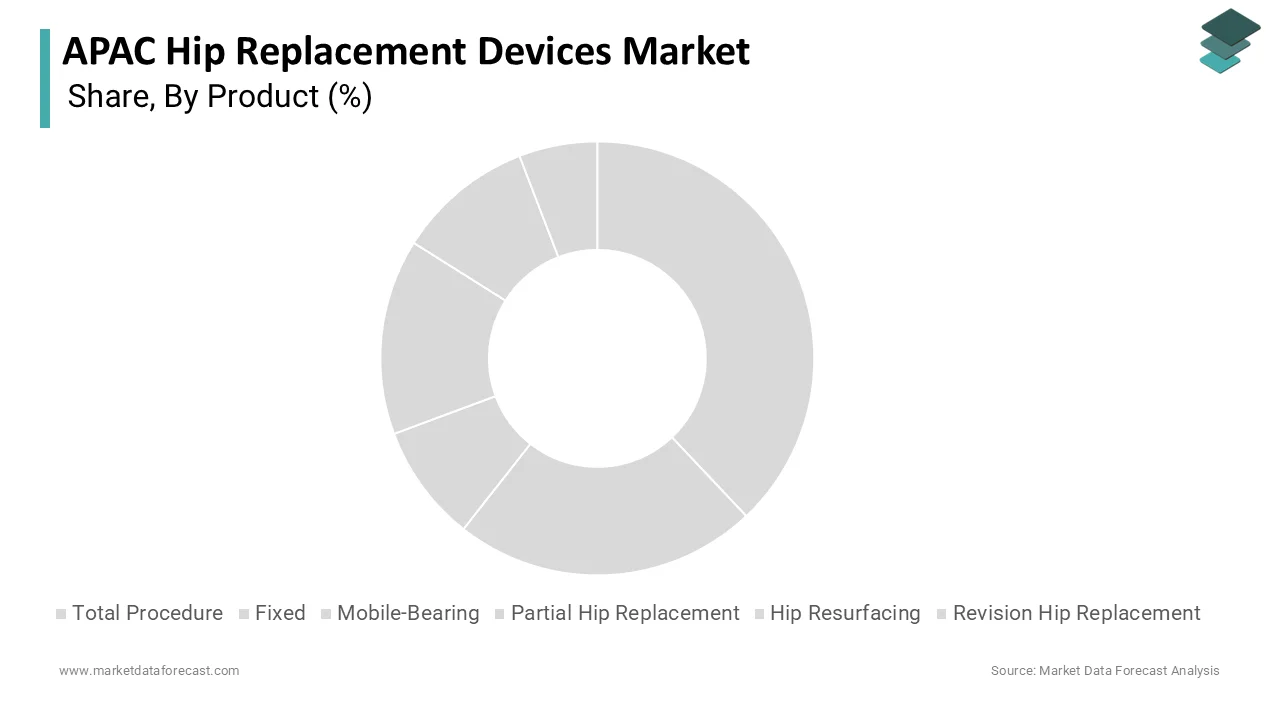
The fixed bearing implants segment is expected to grow at the fastest CAGR of 6.8% during the forecast period, with the proven longevity and lower revision rates associated with stable articulation surfaces compared to mobile bearing alternatives. The reliability appeals to surgeons seeking to minimize secondary surgeries,s which burden healthcare budgets. Moreover, government cost-containment policies favor standardized fixed components due to their widespread availability and competitive pricing through bulk tenders. The simplicity of design also reduces intraoperative complexity, ty shortening anesthesia time and hospital stays, ays aligning with value-based care initiatives. As obesity rates rise in Southeast Asia, the robustness of fixed bearings becomes critical to withstand increased body mass indices without excessive wear.
By Material Insights
The metal-on-polyethylene bearings segment was the largest, occupying 29.0% of the share in 2025, with its balanced performance profile, cost-effectiveness, and extensive historical safety data. This material pairing utilizes cobalt-chromium alloy heads against ultra-high-molecular-weight polyethylene liners by offering low friction and adequate wear resistance for typical patient activity levels. The familiarity reassures surgeons and patients alike, minimizing learning curves and litigation risks. Furthermore, domestic manufacturing capabilities for high-grade polyethylene have improved significantly,y reducing import dependencies and lowering unit costs for hospitals. The material’s shock-absorbing properties are particularly beneficial for elderly patients with osteoporotic bone stock common in aging Asian demographics. Insurance providers readily cover these devices as they represent the baseline standard of care, ensuring broad accessibility across public and private sectors.
The ceramic-on-ceramic bearings segment is likely to exhibit the fastest CAGR of 9.2% during the forecast period, with the exceptional hardness and biocompatibility of zirconia-toughened alumina ceramics, which drastically reduce particulate debris generation compared to metallic counterparts. This durability addresses the critical concern of early revisions in active demographics prevalent in developing APAC economies. Moreover, the rising disposable incomes allow patients to opt for premium ceramic implants, despite higher upfront costs,s recognizing the long-term savings from avoided revision surgeries. The inert nature of ceramics also minimizes allergic reactions and ion release concerns associated with metal alloys ,makinthemms appealing to health-conscious consumers. Manufacturers are innovating with thinner liner designs that maintain strength while allowing larger head diameters, thereby improving stability and range of motion.
By End User Insights
The hospitals segment held a dominant share of the Asia Pacific Hip Replacement Devices Market in 2025, with the venues for complex orthopedic surgeries, requiring intensive post-operative care and multidisciplinary teams. These institutions possess the necessary infrastructure, including operating theaters, sterile processing units, and rehabilitation facilities essential for managing high-acuity cases such as revision surgeries or patients with comorbidities. The centralization ensures strict adherence to infection control protocols and immediate access to emergency intervention if complications arise. Furthermore, the government-funded tertiary care centers perform the majority of subsidized procedures, reaching underserved rural populations who travel to urban hubs for treatment. The integration of electronic health records and specialized nursing staff within hospitals enhances patient monitoring and discharge planning, improving overall outcomes.
The ambulatory surgical centres segment is swiftly emerging at the fastest CAGR of 8.5% during the forecast period, driven by the global trend toward outpatient orthopedic surgery, driven by advancements in minimally invasive techniques and enhanced recovery after surgery protocols. The guidelines now support same-day discharge for healthy patients undergoing primary total hip replacement, thereby reducing hospital stay durations to less than 24 hours. These facilities offer shorter wait times and personalized service models, attracting self-pay patients and insured individuals prioritizing speed. Regulatory bodies in several APAC nations are updating licensing frameworks to permit complex procedures in freestanding centers provided stringent safety metrics are met.
COUNTRY LEVEL ANALYSIS
India Hip Replacement Devices Market Analysis
India was the largest contributor in the Asia Pacific Hip Replacement Devices market,y accounting for 54.3% of the share in 2025, with its vast population base and rapidly expanding private healthcare infrastructure. The country serves as a major hub for medical tourism, offering high-quality orthopedic surgeries at a fraction of Western costs, attracting patients from the Middle East, Africa, ca and neighboring Asian nations. However, challenges persist, including uneven distribution of skilled surgeons outside metro cities and varying insurance penetration levels.
China Hip Replacement Devices Market Analysis
China was positioned second with 21.2% of the Asia Pacific hip replacement devices market share in 2025, with its immense population and aggressive government reforms aimed at modernizing healthcare delivery. The nation faces a skyrocketing prevalence of osteoarthritis linked to rapid urbanization,n sedentary lifestyles, es and an aging society. The demand is met through massive state-led investments in tier-3 hospitals equipped with cutting-edge technology and trained specialists. Furthermore, centralized volume-based procurement policies are forcing price reductions on imported brands, while promoting domestic competitors who offer comparable quality at lower costs. This regulatory pressure encourages innovation in local R&D focusing on patient-specific designs suitable for distinct anatomical variations.
Japan Hip Replacement Devices Market Analysis
Japan hip replacement devices market growth is expected to have significant opportunities throughout the forecast period due to the super-aged society and high standards of medical care. The country experiences one of the highest proportions of citizens over 65 globally, creating relentless demand for joint preservation and replacement solutions. The hip replacement volumes have stabilized but continue to grow modestly as societal attitudes shift toward accepting surgical intervention for maintaining independence in old age. Furthermore, universal health insurance covers most procedural costs, ensuring equitable access across urban and rural prefectures. Domestic manufacturers excel in producing high-precision ceramic and titanium components, leveraging centuries of metallurgical expertise.
South Korea Hip Replacement Devices Market Analysis
South Korea's hip replacement devices market growth is being leveraged by its advanced digital healthcare infrastructure and strong cultural emphasis on aesthetic and functional wellness. The country boasts one of the fastest-aging populations in OECD nations, driving urgent demand for mobility-restoring surgeries. The growth is supported by a highly competitive private hospital sector that adopts robotic-assisted surgery and 3D-printed patient-specific implants ahead of global trends. Furthermore, government subsidies for biomedical R&D have fostered a thriving ecosystem of local startups specializing in smart orthopedic devices. High disposable incomes allow patients to choose premium materials like ceramic-on-ceramic despite higher out-of-pocket costs. The integration of AI for pre-operative planning and post-operative rehabilitation tracking further enhances patient outcomes.
Australia Hip Replacement Devices Market Analysis
Australia hip replacement devices market is likely to grow with its high per capita healthcare spending and robust public-private hybrid system. The nation maintains some of the world’s most comprehensive joint replacement registries, providing invaluable long-term outcome data that influences clinical guidelines and procurement decisions. This trend supports consistent demand for durable implants capable of withstanding higher body masses. Public hospitals handle the bulk of emergency and complex cases, while private facilities cater to elective surgeries by offering shorter wait times. The presence of major international manufacturer headquarters and research centers fosters strong collaboration between academia and industry,y accelerating the introduction of new technologies.
COMPETITIVE LANDSCAPE
The competitive environment of the Asia Pacific Hip Replacement Devices Market features intense rivalry among multinational giants and agile regional manufacturers vying for dominance in diverse healthcare systems. Major incumbents leverage extensive distribution networks and deep relationships with key opinion leaders to maintain influence over purchasing decisions in large hospital chains. New entrants face significant hurdles due to stringent regulatory approval processes and the need for extensive clinical validation proving safety and efficacy for specific ethnic populations. Differentiation occurs through unique material sciences such as highly cross-linked polyethylene and ceramic composites, each offering distinct wear resistance profiles. Companies engage in aggressive patent litigation to protect intellectual property rights,s preventing imitation of proprietary implant geometries and surface treatments. Price competition remains moderate at the premium level but intensifies sharply in mid-range segments where generic alternatives emerge, particularly in price-sensitive public tenders. Innovation cycles are accelerating, with focus shifting toward robotic assistance and patient-specific instrumentation to enhance surgical precision. Strategic mergers and acquisitions reshape the landscape as larger entities absorb specialized startups to broaden portfolios and access new geographic markets. Technology adoption distinguishes leaders who utilize big data analytics for predictive maintenance and outcome tracking.
KEY MARKET PLAYERS
Some of the companies that are playing a dominating role in the Asia Pacific Hip Replacement Devices Market include:
- B. Braun Melsungen AG
- Exactech, Inc.
- DJO Global, Inc.
- Johnson & Johnson
- MicroPort Scientific Corporation
- OMNIlife Science, Inc.
- Smith & Nephew
- Zimmer Biomet Holdings, Inc.
- Stryker Corporation
TOP LEADING PLAYERS IN THE MARKET
- Stryker Corporation maintains a formidable presence in the Asia Pacific Hip Replacement Devices Market through its innovative Mako robotic arm technology and advanced implant designs. The company focuses on enhancing surgical precision and patient outcomes by integrating AI-driven planning software with hardware systems. Recent actions include expanding distribution networks in China and India to reach underserved rural hospitals. Stryker invests heavily in clinical education programs for surgeons by ensuring proper adoption of minimally invasive techniques. By emphasizing long-term implant durability and reduced revision rates, they secure strong relationships with key opinion leaders. These initiatives reinforce their brand reputation as a leader in digital orthopedics,s driving sustained demand for their premium product portfolio across diverse regional healthcare settings globally today.
- Zimmer Biomet plays a pivotal role by offering a comprehensive suite of hip solutions, including the ROSA robotic system and Trabecular Metal implants. The company prioritizes biological fixation and bone ingrowth technologies, appealing to younger active patients in emerging countries. Recent initiatives involve strategic partnerships with local manufacturers in Southeast Asia to reduce costs and improve supply chain resilience. Zimmer Biomet actively engages in research collaborations with universities in Japan and Australia to validate long-term survivorship data. Their focus on personalized medicine through 3D-printed guides enhances surgical efficiency and patient satisfaction.
- Johnson & Johnson MedTech is strengthening its position in the Asia-Pacific hip replacement devices market through DePuy Synthes, which offers extensive hip replacement portfolios like the CORAIL stem and ARTICULA acetabular system. The company emphasizes evidence-based medicine and robust clinical trial data supporting implant longevity and safety. DePuy Synthes leverages its global scale to negotiate favorable terms with large hospital groups while maintaining high service levels. They invest in R&D for antimicrobial coatings addressing infection concerns prevalent in tropical regions.
TOP STRATEGIES USED BY KEY MARKET PARTICIPANTS
Key players in the Asia Pacific Hip Replacement Devices Market primarily employ localization strategies to adapt global products to regional anatomical variations and cost constraints. Another dominant tactic involves bundling robotic surgical systems with implants and consumables, creating sticky ecosystems that lock in hospitals through high switching costs. Firms also pursue aggressive educational initiatives, including proctoring services and simulation labs,s to build surgeon proficiency and trust in new technologies. Marketing efforts emphasize health economics arguments demonstrating how premium implants reduce long-term revision costs, appealing to public payers. Additionally, participants engage in strategic acquisitions of niche biotech startups specializing in biomaterials or AI diagnostics to broaden portfolios. Geographic expansion targets high-growth markets like India and Vietnam where rising middle classes drive elective surgery demand.
MARKET SEGMENTATION
This research report on the Asia Pacific hip replacement devices market has been segmented and sub-segmented into the following categories.
By Product
- Total Procedure
- Fixed
- Mobile-Bearing
- Partial Hip Replacement
- Hip Resurfacing
- Revision Hip Replacement
By Material
- Metal
- Metal on Polyethylene
- Ceramic on Metal
- Ceramic on Polyethylene
- Ceramic on Ceramic
By End-user
- Ambulatory Surgical Centres
- Hospitals
- Orthopedic Clinics
By Country
- India
- China
- Japan
- South Korea
- Australia
- New Zealand
- Thailand
- Malaysia
- Vietnam
- Philippines
- Indonesia
- Singapore
- Rest of APAC