Asia Pacific Humic Acid Market Size, Share, Growth, Trends, and Forecast Report – Segmented By Form (Dry, and Liquid), Application, and Region (India, China, Japan, South Korea, Australia & New Zealand, Thailand) - Industry Analysis from 2026 to 2034
Asia Pacific Humic Acid Market Size
Asia Pacific humic acid market size was valued at USD 443.58 million in 2025, and is expected to reach USD 1,204.63 million by 2034 from USD 495.66 million in 2026. The market's promising CAGR for the predicted period is 11.74%.
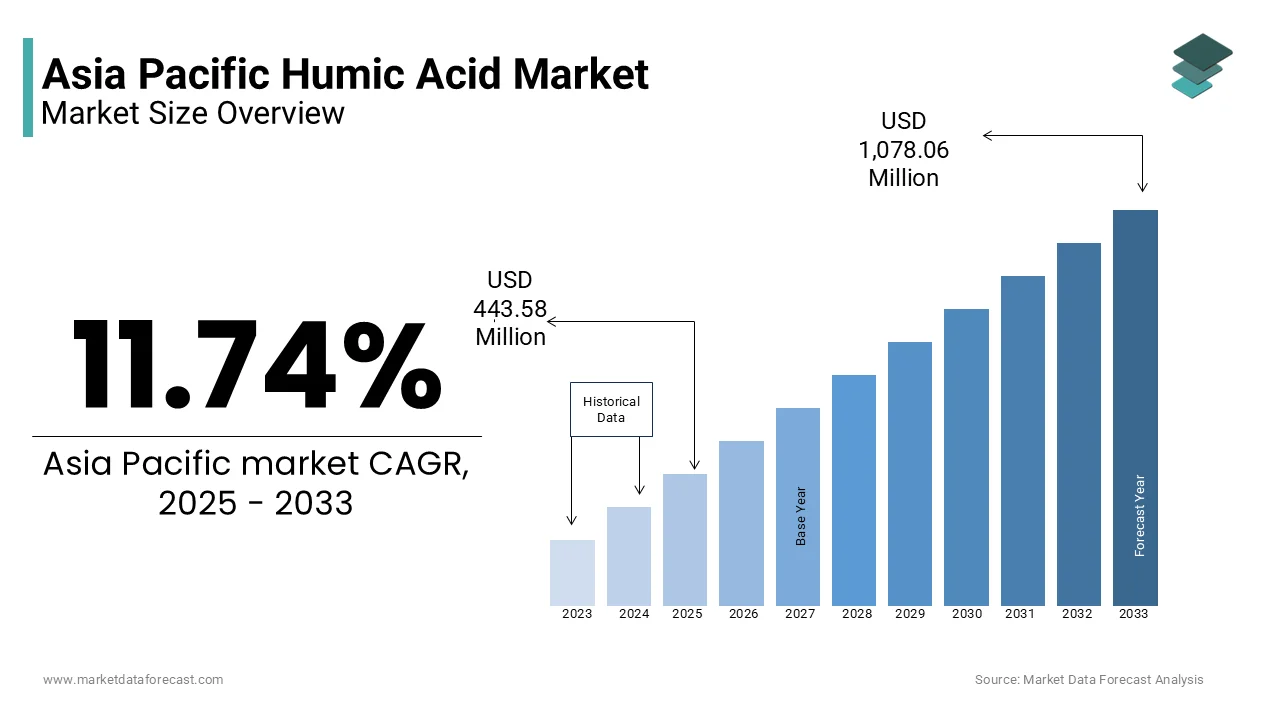
Humic acid is a naturally occurring organic compound derived from decomposed plant and animal matter, commonly found in peat, soil, and sediment. It plays a crucial role in improving soil fertility, enhancing nutrient uptake in plants, and promoting sustainable agricultural practices. The Asia Pacific humic acid market encompasses its use across agriculture, horticulture, aquaculture, and environmental remediation sectors.
In recent years, the region has witnessed growing interest in organic farming and sustainable soil management, particularly in countries like India, China, and Australia. According to the Indian Council of Agricultural Research, over 40 universities and research institutions have initiated studies on the benefits of humic substances in crop productivity and soil restoration. This reflects a strong academic and practical push toward adopting humic acid-based solutions in mainstream agriculture.
China, being one of the largest consumers of agrochemicals, has seen a rise in the adoption of bio-stimulants including humic acid to reduce dependency on synthetic fertilizers. Similarly, as per the Australian Department of Agriculture, Fisheries and Forestry, government-backed initiatives promoting regenerative farming practices have led to increased integration of humic acid in large-scale farming operations. With rising awareness of soil degradation and the need for eco-friendly alternatives, the Asia Pacific region is increasingly positioning humic acid as a vital component of modern agronomy and environmental conservation strategies.
MARKET DRIVERS
Increasing Demand for Organic Farming and Sustainable Agriculture
One of the primary drivers of the Asia Pacific humic acid market is the growing shift toward organic farming and sustainable agricultural practices. Farmers are increasingly recognizing the benefits of humic acid in improving soil structure, enhancing microbial activity, and increasing the availability of essential nutrients such as nitrogen, phosphorus, and potassium. These properties make it an attractive alternative to chemical fertilizers, especially in countries with expanding organic certification programs.
According to the Research Institute of Organic Agriculture (FiBL), India reported a 15% increase in certified organic farmland between 2021 and 2023, making it one of the fastest-growing markets for organic inputs. As part of this trend, state governments such as those in Maharashtra and Karnataka have introduced subsidies for bio-stimulant usage, including humic acid-based products. In China, the Ministry of Agriculture and Rural Affairs has been actively promoting integrated nutrient management systems that include organic amendments, leading to higher adoption rates among commercial farms.
Additionally, in Australia, the Department of Agriculture, Fisheries and Forestry noted a surge in farmer participation in regenerative agriculture training programs, many of which emphasize the use of humic acid for soil rejuvenation. These developments indicate a broader regional movement toward sustainable farming, directly fueling demand for humic acid across the Asia Pacific.
Rising Application in Soil Remediation and Environmental Restoration
Another key driver of the Asia Pacific humic acid market is its increasing use in soil remediation and environmental restoration projects. Humic acid is known for its ability to bind heavy metals, detoxify contaminated soils, and enhance microbial degradation of pollutants, making it a valuable tool in rehabilitating degraded land and managing industrial waste.
As per the National Institute for Environmental Studies in Japan, several urban rehabilitation projects in Tokyo and Osaka have incorporated humic acid-based treatments to reduce soil contamination from past industrial activities. In South Korea, the Ministry of Environment launched a national initiative in 2023 focusing on bioremediation techniques, where humic acid was highlighted as a critical component in restoring former industrial sites for agricultural and recreational use.
In India, the Central Pollution Control Board reported that pilot projects using humic acid were implemented in five states affected by heavy metal contamination from textile and leather industries. These efforts demonstrated significant improvements in soil quality within 12 months of treatment. With increasing governmental focus on environmental sustainability and land restoration, the demand for humic acid in ecological applications is expected to continue growing across the Asia Pacific region.
MARKET RESTRAINTS
Limited Awareness Among Smallholder Farmers
A major restraint affecting the Asia Pacific humic acid market is the limited awareness and understanding of its benefits among smallholder farmers, who constitute a significant portion of the agricultural workforce in countries like India, Indonesia, and the Philippines. Despite its proven efficacy in enhancing soil health and crop yield, many farmers remain reliant on traditional chemical fertilizers due to familiarity, ease of access, and short-term cost considerations.
According to the International Fund for Agricultural Development (IFAD), over 70% of small-scale farmers in Southeast Asia lack formal training on organic soil enhancers, including humic acid. In India, the Indian Institute of Management Ahmedabad conducted a survey revealing that only 18% of surveyed farmers had prior knowledge of humic acid’s application in agriculture, primarily due to inadequate extension services and localized marketing.
Additionally, in Bangladesh, the Department of Agricultural Extension acknowledged that despite government-led campaigns promoting organic farming, the adoption rate of bio-stimulants remained low in rural areas. Without targeted educational initiatives and demonstration programs, the widespread utilization of humic acid remains constrained, limiting market expansion in key agricultural economies across the region.
High Production and Processing Costs
Another significant constraint in the Asia Pacific humic acid market is the relatively high production and processing costs associated with extracting and refining humic acid to meet agricultural and industrial standards. Unlike synthetic fertilizers, which benefit from established mass production techniques and economies of scale, humic acid extraction involves complex processes such as alkaline extraction, purification, and drying, all of which contribute to elevated end-product prices.
As per the University of Melbourne’s School of Agriculture and Food, the cost of producing high-purity humic acid can be up to three times higher than that of conventional organic manures or chemical fertilizers. In China, the Chinese Academy of Agricultural Sciences reported that domestic manufacturers face challenges in maintaining consistent product quality while keeping production expenses under control.
Furthermore, in Thailand, the Department of Agricultural Extension indicated that smaller producers struggle to compete with larger firms due to limited access to advanced processing technologies. These financial barriers discourage both suppliers and end-users from fully embracing humic acid-based solutions, thereby hindering broader market penetration across the Asia Pacific region.
MARKET OPPORTUNITIES
Expansion of Aquaculture and Hydroponics Industries
An emerging opportunity for the Asia Pacific humic acid market lies in its increasing application within the aquaculture and hydroponics industries. As these sectors expand to meet growing food demands sustainably, humic acid is gaining recognition for its ability to improve water quality, enhance nutrient absorption in aquatic organisms, and support root development in soilless cultivation systems.
According to the Food and Agriculture Organization (FAO), aquaculture production in Asia accounted for nearly 90% of global output in 2023, with countries like China, Vietnam, and Indonesia leading the way. In China, the Ministry of Agriculture and Rural Affairs reported that experimental trials using humic acid in shrimp and fish farming showed improved survival rates and reduced water toxicity, prompting industry-wide interest.
Similarly, in Australia, the Department of Primary Industries and Regional Development documented increased adoption of humic acid in greenhouse hydroponic systems to boost plant resilience and nutrient efficiency. Universities in Malaysia and Thailand have also launched research initiatives exploring humic acid’s role in controlled-environment agriculture. As these industries evolve, the demand for natural, performance-enhancing additives like humic acid is poised for substantial growth across the Asia Pacific.
Integration into Smart Agriculture Technologies
The integration of humic acid into smart agriculture technologies presents a significant growth avenue for the Asia Pacific market. As precision farming gains traction, there is increasing interest in combining humic acid with sensor-based irrigation systems, drone-assisted nutrient delivery, and AI-driven soil analysis tools to optimize resource use and improve farm productivity.
According to the Indian Institute of Technology Kharagpur, several startups have begun developing formulations of humic acid compatible with nano-fertilizer delivery systems, enabling more efficient nutrient uptake in crops. In Japan, the National Agriculture and Food Research Organization (NARO) has partnered with tech firms to incorporate humic acid into automated soil conditioning units used in vertical farming setups.
South Korea’s Rural Development Administration has also supported pilot programs integrating humic acid with IoT-enabled soil sensors to monitor and adjust nutrient levels in real time. With governments and private enterprises investing heavily in digital agriculture, the potential for humic acid to become a core component in next-generation farming solutions is rapidly expanding across the Asia Pacific region.
MARKET CHALLENGES
Regulatory Hurdles and Standardization Gaps
A major challenge facing the Asia Pacific humic acid market is the lack of standardized regulations and inconsistent policy frameworks governing its production, labeling, and application. Unlike well-established fertilizers and soil amendments, humic acid products often vary significantly in composition, purity, and claimed benefits, making it difficult for regulators to establish uniform quality benchmarks.
According to the ASEAN Committee on Science and Technology, only four out of ten member countries had defined technical specifications for humic acid-based agricultural inputs as of 2023. In Indonesia, the Ministry of Agriculture emphasized the need for clearer guidelines on humic acid concentration levels and application methods to ensure product efficacy and safety.
In India, the Fertilizers Association of India reported delays in regulatory approvals for new humic acid formulations due to the absence of standardized testing protocols. Similarly, in China, provincial authorities have issued conflicting directives regarding permissible sources of humic acid, complicating compliance for manufacturers. Without harmonized regulatory structures across the region, stakeholders face operational uncertainties that hinder market expansion and consumer trust in humic acid-based products.
 Competition from Synthetic and Alternative Bio-Stimulants
Another significant challenge confronting the Asia Pacific humic acid market is the growing competition from synthetic fertilizers and alternative bio-stimulants such as fulvic acid, seaweed extracts, and amino acid-based formulations. While humic acid offers long-term soil enhancement benefits, many farmers prefer quick-acting synthetic options that deliver immediate results, especially in intensive cropping systems.
According to the Australian Society of Agronomy, synthetic fertilizer sales in the Asia Pacific region grew by 6% in 2023, driven by their affordability and well-established distribution networks. In Vietnam, the Ministry of Agriculture and Rural Development noted that local cooperatives continued to favor ammonium nitrate and phosphate-based fertilizers due to their familiarity and perceived effectiveness.
Additionally, in China, the Chinese Academy of Agricultural Sciences reported a surge in the use of fulvic acid and kelp-based bio-stimulants, which some farmers perceive as more soluble and faster-acting than humic acid. With increasing innovation in plant nutrition products, humic acid must continuously demonstrate its unique value proposition to maintain relevance in a competitive agricultural input landscape across the Asia Pacific.
REPORT COVERAGE
| REPORT METRIC | DETAILS |
| Market Size Available | 2025 to 2034 |
| Base Year | 2025 |
| Forecast Period | 2026 to 2034 |
| CAGR | 11.74% |
| Segments Covered | By Form, Application, and Region |
|
Various Analyses Covered | Regional & Country Level Analysis, Segment-Level Analysis, DROC, PESTLE Analysis, Porter’s Five Forces Analysis, Competitive Landscape, Analyst Overview on Investment Opportunities |
| Regions Covered | India, China, Japan, South Korea, Australia, New Zealand, Thailand, Malaysia, Vietnam, Philippines, Indonesia, Singapore, and the Rest of Asia-Pacific |
| Market Leaders Profiled | Agbest Technology Co Ltd, Agricultural and Mining Development SA, Grow More Inc, Humic Growth Solutions Inc, Humintech GmbH, and MYCSA Ag Inc, and others |
SEGMENTAL ANALYSIS
By Form Insights
The dry form of humic acid dominates the Asia Pacific market, capturing 63% of total consumption in 2023. This dominance is primarily attributed to its widespread use in large-scale agricultural applications where ease of storage, transportation, and application in bulk makes it more favorable than liquid alternatives.
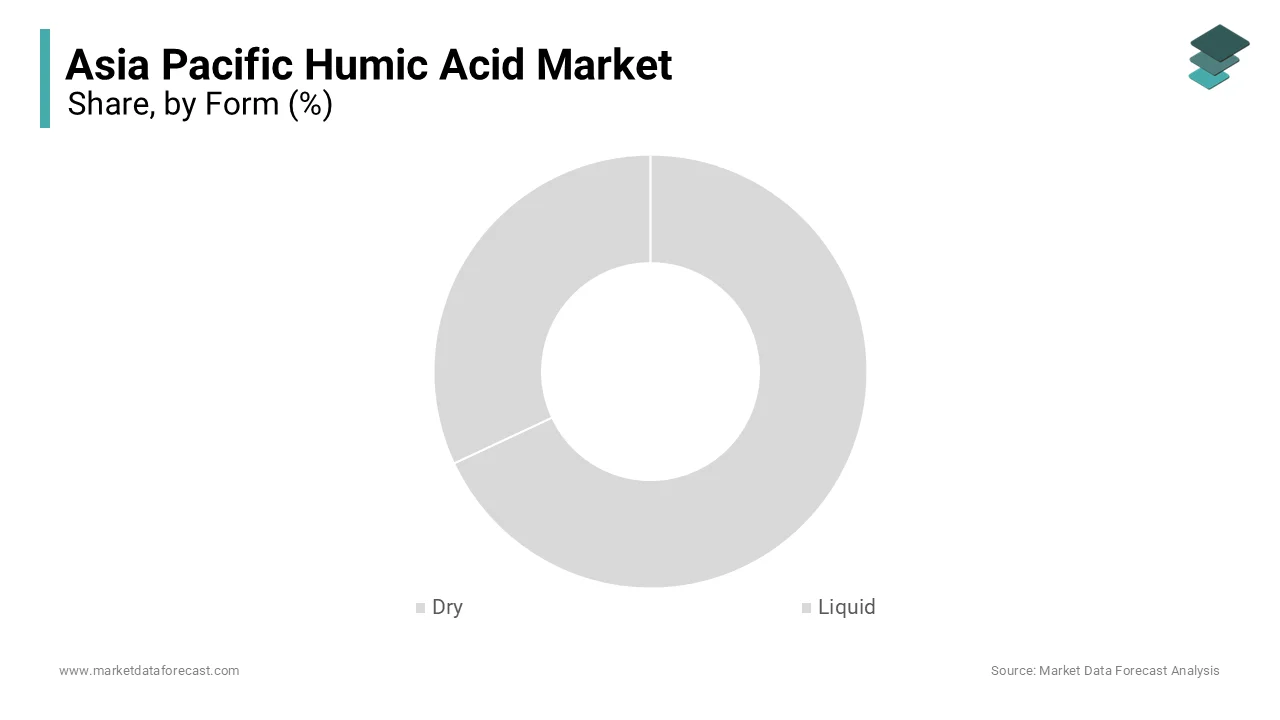
According to the Indian Council of Agricultural Research, over 75% of certified organic farms in India prefer dry humic acid due to its compatibility with conventional fertilizer distribution systems and cost-effectiveness over long-term usage. In China, the Ministry of Agriculture and Rural Affairs reported that dry humic acid is increasingly being blended with bio-fertilizers for soil conditioning, particularly in wheat and rice cultivation zones.
Additionally, in Australia, the Department of Agriculture, Fisheries and Forestry noted that dry humic acid is extensively used in regenerative land management programs aimed at reversing soil degradation in arid regions. With strong backing from government initiatives promoting sustainable farming practices and a well-established supply chain infrastructure, the dry segment remains the most widely adopted form across the Asia Pacific region.
Liquid humic acid is the fastest-growing segment in the Asia Pacific market, expanding at a CAGR of 14.2% from 2023 to 2030. This growth is driven by increasing adoption in precision agriculture, hydroponics, and foliar feeding techniques, where rapid nutrient availability and ease of integration into irrigation systems are crucial.
According to the National Agriculture and Food Research Organization (NARO) in Japan, liquid humic acid is gaining traction among greenhouse and vertical farming operators due to its ability to enhance root development and improve nutrient uptake in controlled environments. In South Korea, the Rural Development Administration observed a surge in demand from urban farming startups integrating liquid humic acid into automated nutrient delivery systems.
In Thailand, the Department of Agricultural Extension reported that liquid formulations are being promoted under national smart agriculture schemes due to their compatibility with drone-based spraying technologies. As farmers and agri-tech firms shift toward modern, efficient input delivery methods, the liquid humic acid segment is poised for accelerated expansion across the Asia Pacific.
By Application Insights
Agriculture is the largest application segment in the Asia Pacific humic acid market, accounting for an estimated 58% share in 2023. The sector’s dominance stems from the compound’s role in enhancing soil fertility, improving water retention, and boosting crop yield without harmful environmental effects—attributes highly valued in both conventional and organic farming.
According to the Chinese Academy of Agricultural Sciences, nearly 40% of surveyed farms in major grain-producing provinces have integrated humic acid into their nutrient management strategies, citing improved resilience against drought and pests. In India, the Fertilizers Association of India reported that government-backed subsidies on organic inputs led to a 22% increase in humic acid adoption among smallholder farmers in 2023.
In Indonesia, the Ministry of Agriculture emphasized the importance of humic acid in restoring degraded peatlands used for palm oil and rice cultivation. Similarly, in Vietnam, cooperative extension services have been actively promoting humic acid as part of climate-smart agriculture initiatives. These developments underscore agriculture’s central role in driving the regional humic acid market forward.
Ecological bioremediation is the fastest-growing application segment in the Asia Pacific humic acid market, expanding at a CAGR of 16.5% from 2023 to 2030. This growth is fueled by rising environmental concerns related to industrial pollution, heavy metal contamination, and soil degradation, prompting governments and private entities to adopt natural remediation solutions.
As per the ASEAN Committee on Science and Technology, several pilot projects in Malaysia and Thailand are leveraging humic acid to detoxify soils affected by textile dye effluents and mining waste. In Japan, the National Institute for Environmental Studies highlighted the use of humic acid in rehabilitating former industrial sites in Tokyo Bay, noting significant reductions in lead and cadmium concentrations within treated areas.
In South Korea, the Ministry of Environment launched a national program in 2023 focusing on green remediation techniques, where humic acid was identified as a key component in microbial-assisted pollutant breakdown. With growing investment in environmental restoration and stricter regulatory enforcement, the ecological bioremediation segment is expected to witness continued strong growth across the Asia Pacific.
REGIONAL ANALYSIS
China holds the largest share of the Asia Pacific humic acid market at 31% in 2023, driven by its vast agricultural sector and increasing emphasis on sustainable soil management. The country is one of the world's top producers and consumers of humic acid, particularly in provinces such as Hebei, Shandong, and Henan, where large-scale commercial farming operations dominate.
According to the Ministry of Agriculture and Rural Affairs, China has been actively promoting integrated nutrient management policies that encourage the use of organic amendments, including humic acid, to reduce dependency on synthetic fertilizers. Additionally, the Chinese Academy of Agricultural Sciences reported that over 50 research institutions were engaged in humic acid-related studies in 2023, focusing on improving soil health and mitigating desertification.
With government support, expanding organic certification programs, and rising awareness among farmers, China continues to be the leading force in shaping the regional humic acid market.
India accounts for approximately 24% of the Asia Pacific humic acid market in 2023, supported by a rapidly growing organic farming sector and government-led initiatives promoting sustainable agriculture. According to the Ministry of Agriculture and Farmers Welfare, India witnessed a 19% increase in organic farmland between 2021 and 2023, with states like Madhya Pradesh, Maharashtra, and Rajasthan leading the transition.
The Indian Council of Agricultural Research has been instrumental in conducting field trials to demonstrate the benefits of humic acid in enhancing crop yields and soil moisture retention. Additionally, the Fertilizers Association of India noted that several state governments introduced subsidy programs encouraging the use of bio-stimulants, including humic acid-based products.
Furthermore, academic institutions such as IIT Kharagpur and the Indian Institute of Soil Science have launched collaborative projects exploring advanced formulations of humic acid tailored for Indian soil conditions. With strong policy backing and increasing farmer participation, India plays a pivotal role in driving humic acid adoption across the region.
Australia contributes around 11% to the Asia Pacific humic acid market in 2023, driven by its focus on regenerative agriculture and land restoration efforts. The country has been at the forefront of adopting sustainable farming practices, particularly in response to prolonged droughts and soil degradation issues affecting major agricultural zones.
According to the Australian Department of Agriculture, Fisheries and Forestry, humic acid usage increased by 17% in 2023 among broadacre farmers seeking to improve soil structure and water-holding capacity. The University of Melbourne’s School of Agriculture and Food also conducted multiple trials demonstrating the effectiveness of humic acid in boosting pasture productivity and reducing chemical fertilizer dependence.
Additionally, the Department of Primary Industries and Regional Development highlighted the use of humic acid in mine site rehabilitation projects across Western Australia and Queensland. With a strong emphasis on environmental sustainability and scientific validation, Australia continues to strengthen its position in the regional humic acid market.
Japan holds an 8% share of the Asia Pacific humic acid market in 2023, primarily due to its advanced agricultural technology landscape and increasing focus on eco-friendly farming practices. The country has been integrating humic acid into precision agriculture and controlled-environment farming systems to enhance productivity while minimizing environmental impact.
According to the National Agriculture and Food Research Organization (NARO), Japanese researchers have developed specialized humic acid formulations compatible with hydroponic and aeroponic systems used in urban farming setups. The Ministry of Agriculture, Forestry and Fisheries also reported that domestic humic acid imports rose by 12% in 2023, driven by demand from greenhouse and seedling production sectors.
Furthermore, the Ministry of the Environment has been supporting initiatives that utilize humic acid in soil detoxification projects, particularly in former industrial zones. With a strong foundation in research and innovation, Japan continues to play a vital role in shaping the application of humic acid in high-tech agricultural and environmental contexts.
South Korea accounts for 6% of the Asia Pacific humic acid market in 2023, with growth driven by advancements in smart farming, aquaculture, and ecological restoration projects. The country’s Ministry of Agriculture, Food and Rural Affairs has been actively promoting the use of organic soil enhancers, including humic acid, as part of its Green Growth Strategy.
According to the Rural Development Administration, South Korean farmers have increasingly adopted humic acid-based formulations in combination with bio-fertilizers to enhance soil microbiology and nutrient efficiency. Additionally, the Korea Institute of Industrial Technology reported a rise in the use of humic acid in wastewater treatment and aquaculture feed applications, particularly in coastal fish farming operations.
In 2023, the Ministry of Environment also launched a national initiative focused on using humic acid in contaminated soil recovery projects near former manufacturing sites. With government support and growing industry collaboration, South Korea continues to expand its footprint in the regional humic acid market.
COMPETITIVE LANDSCAPE
The competition in the Asia Pacific humic acid market is characterized by a mix of international agritech firms, regional specialty chemical producers, and emerging domestic manufacturers striving to capture market share through differentiation and innovation. While established players leverage brand recognition and scientific validation to maintain dominance, smaller enterprises focus on affordability, accessibility, and localized formulations tailored to specific soil types and cropping patterns. The market remains fragmented, with no single entity holding a monopolistic position, allowing room for new entrants and niche suppliers.
Competition is intensifying as more companies invest in R&D to develop enhanced humic acid blends that offer faster results and better integration with modern farming techniques such as precision agriculture and hydroponics. Additionally, sustainability concerns and regulatory scrutiny are pushing firms to ensure transparency in sourcing, processing, and labeling. As governments promote organic and regenerative farming practices, industry participants are increasingly aligning their strategies with policy goals to secure long-term growth and consumer trust across the region.
KEY MARKET PLAYERS
Agbest Technology Co Ltd, Agricultural and Mining Development SA, Grow More Inc, Humic Growth Solutions Inc, Humintech GmbH, and MYCSA Ag Inc are the key players in the Asia Pacific humic acid market.
TOP PLAYERS IN THE MARKET
- Stoller Enterprises has a strong presence in the Asia Pacific region, particularly through its operations in China, where it supplies high-quality humic acid-based plant nutrition solutions. The company focuses on enhancing crop productivity and soil health through advanced formulations tailored for local agricultural conditions. By collaborating with research institutions and government bodies, Stoller supports sustainable farming practices and contributes to the global knowledge base on humic substances.
- Valagro’s Asia division plays a key role in distributing bio-stimulant products derived from humic acid across major agricultural markets in the region. The company leverages its expertise in biostimulation to develop customized solutions that improve nutrient uptake and stress resistance in crops. Through strategic partnerships with local distributors and agri-tech firms, Valagro strengthens its regional footprint and reinforces its position as a global leader in sustainable agriculture inputs.
- Based in India, this company is a leading manufacturer of organic soil enhancers, including humic acid-based formulations designed for smallholder and commercial farms. It actively participates in government-backed initiatives promoting organic farming and regenerative agriculture. By investing in R&D and farmer education programs, the company enhances product efficacy and builds awareness about the long-term benefits of humic acid, contributing significantly to the growth of the regional market.
TOP STRATEGIES USED BY KEY PLAYERS
One of the primary strategies adopted by key players in the Asia Pacific humic acid market is product innovation and formulation development , aimed at creating application-specific solutions that cater to diverse agricultural and environmental needs. Companies are focusing on improving solubility, compatibility with other inputs, and effectiveness under varying climatic and soil conditions to enhance product appeal.
Another critical approach is strategic collaborations with research institutions and agricultural extension services , which help validate product performance and build credibility among end-users. These partnerships also facilitate field trials and demonstration projects that educate farmers on the benefits of humic acid usage.
Lastly, market expansion through localized distribution networks and digital outreach enables companies to reach remote farming communities and raise awareness about sustainable soil management. By leveraging e-commerce platforms and mobile advisory services, key players strengthen their market presence and drive adoption across both large-scale and smallholder farming sectors.
RECENT HAPPENINGS IN THE MARKET
- In February 2025, Stoller Enterprises launched a dedicated humic acid research center in Shanghai, focusing on developing region-specific formulations for rice and wheat cultivation. This initiative was aimed at strengthening its foothold in the Chinese agricultural input market and enhancing product customization.
- In May 2025, Valagro partnered with the Indian Council of Agricultural Research to conduct large-scale field trials assessing the impact of its humic acid-based bio-stimulants on cotton yield and water efficiency. This collaboration was intended to support data-driven marketing and expand its rural outreach in India.
- In July 2025, Translational Research & Development Pvt. Ltd. introduced a mobile-based advisory service to educate smallholder farmers on the benefits of humic acid, aiming to bridge the knowledge gap and accelerate adoption in underserved regions.
- In September 2025, Haifa Group expanded its distribution network in Southeast Asia by establishing regional warehouses in Thailand and Vietnam, enabling faster delivery of humic acid-based fertilizers to local agricultural cooperatives.
- In November 2025, AgriLife Technologies entered into a joint venture with an Australian environmental firm to explore the use of humic acid in mine site rehabilitation projects, positioning itself as a leader in ecological applications beyond traditional agriculture.
MARKET SEGMENTATION
This research report on the Asia Pacific humic acid market has been segmented and sub-segmented based on the following categories.
By Form
- Dry
- Liquid
By Application
- Agriculture
- Horticulture
- Ecological Bioremediation
- Dietary Supplements
By Country
- India
- China
- Japan
- South Korea
- Australia
- New Zealand
- Thailand
- Malaysia
- Vietnam
- Philippines
- Indonesia
- Singapore
- Rest of Asia-Pacific
Frequently Asked Questions
1. What is the Asia Pacific humic acid market?
The Asia Pacific humic acid market comprises the production, distribution, and use of humic acid products that improve soil fertility, nutrient uptake, and crop productivity in agriculture and horticulture.
2. What factors are driving the growth of the Asia Pacific humic acid market?
The market is driven by increasing adoption of sustainable farming practices, rising demand for organic fertilizers, declining soil quality, and growing awareness of soil health management.
3. Which countries lead the Asia Pacific humic acid market?
China, India, Australia, Japan, and South Korea are the leading markets due to their large agricultural sectors and increasing focus on improving crop yields.
4. What are the major applications of humic acid?
Humic acid is widely used in agriculture, horticulture, turf management, organic farming, soil conditioning, and livestock feed supplements.
5. Why is humic acid important in agriculture?
Humic acid enhances soil structure, improves water retention, increases nutrient availability, stimulates root development, and promotes healthier plant growth.
6. Which end-use sectors generate the highest demand for humic acid?
Agriculture, horticulture, greenhouse cultivation, landscaping, and organic farming are the primary end-use sectors.
7. What challenges does the Asia Pacific humic acid market face?
The market faces challenges such as inconsistent raw material quality, limited farmer awareness in some regions, fluctuating production costs, and varying regulatory standards.
8. How is organic farming influencing the Asia Pacific humic acid market?
The increasing adoption of organic farming practices is driving demand for humic acid as a natural soil enhancer and plant growth stimulant that reduces dependence on synthetic fertilizers.
9. How are technological advancements shaping the humic acid market?
Advances in extraction technologies, product formulations, and precision agriculture are improving humic acid effectiveness, application efficiency, and crop performance.
10. What is the future outlook for the Asia Pacific humic acid market?
The market is expected to experience steady growth during the forecast period, driven by increasing demand for sustainable agricultural inputs, improving soil health awareness, technological advancements, and the expansion of organic and high-value crop cultivation.
Access the study in MULTIPLE FORMATS
Purchase options starting from
$ 2000
Didn’t find what you’re looking for?
TALK TO OUR ANALYST TEAM
Need something within your budget?
NO WORRIES! WE GOT YOU COVERED!
Call us on: +1 888 702 9696 (U.S Toll Free)
Write to us: sales@marketdataforecast.com