- Product Description Description
- Table of Contents TOC
- List of Table & Figure LOT
- Get Free Sample PDF Sample PDF
Market Size, 2025
$2.16 BnMarket Estimate, 2026
$2.28 BnMarket Forecast, 2034
$3.53 BnCAGR, 2026–2034
5.61%Asia Pacific Metallic Stearates Market Size, Growth, Trends & Forecast (2026–2034)
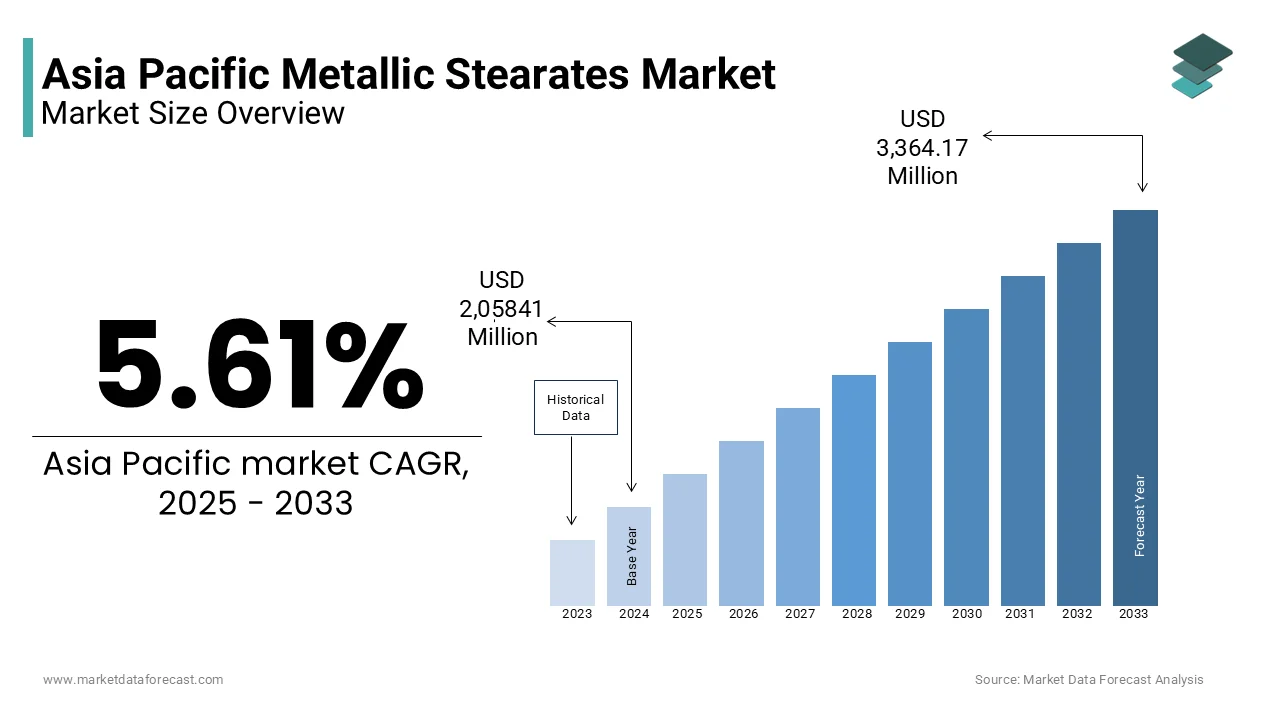
The Asia Pacific metallic stearates market size was valued at USD 2.16 billion in 2025, is anticipated to reach USD 2.28 billion in 2026, and is projected to scale up to USD 3.53 billion by 2034, registering a compound annual growth rate (CAGR) of 5.61% during the forecast period from 2026 to 2034. Driven by rapid industrialization, urbanization, growing chemical industries, and rising adoption in polymer processing, pharmaceuticals, and personal care, the regional market continues to expand steadily.
Key Executive Metrics (At-a-Glance)
- 2025 Base Valuation: USD 2.16 Billion
- 2026 Current Valuation: USD 2.28 Billion
- 2034 Forecast Valuation: USD 3.53 Billion
- Compound Annual Growth Rate (CAGR): 5.61% (2026–2034)
- Dominant Type Segment: Calcium Stearate (accounting for 34% of total market share, leading as a heat stabilizer and internal lubricant in PVC)
- Fastest-Growing Type Segment: Magnesium Stearate (registering a CAGR of 7.1% from 2026 to 2034 driven by pharmaceutical expansion)
- Dominant Application Segment: Plastics (capturing 39.4% of total demand in 2025 as processing aids and lubricants)
- Fastest-Growing Application Segment: Pharmaceuticals (recording a CAGR of 7.4% during the forecast period due to rising tablet and capsule production)
- Dominant Country / Region: China (holding 36.5% of the total share in 2025 due to massive polymer and pharmaceutical manufacturing bases)
Core Market Drivers
- Polymer Processing Expansion: Surging demand from packaging, construction, and automotive sectors, particularly for lightweight polymer components.
- Pharmaceutical & Nutraceutical Growth: Extensive use of magnesium stearate as an approved excipient in solid dosage forms, tablet formulations, and clean-label personal care products.
- Green Chemistry Adoption: Growing industry shift toward biodegradable, low-toxicity additives like calcium and magnesium stearates to comply with environmental sustainability standards.
Primary Market Restraints & Challenges
- Regulatory & Raw Material Pressures: Stringent environmental regulations restricting heavy metal-based additives alongside price volatility in raw materials like zinc and stearic acid.
Asia Pacific Metallic Stearates Market Segmentation Breakdown
| Segment Category | Leading Sub-Segment (2025 Base) | Fastest-Growing Sub-Segment (2026–2034) |
|---|---|---|
| By Type | Calcium Stearate (dominant share of 34% as PVC stabilizer and lubricant) | Magnesium Stearate (fastest-growing at a 7.1% CAGR) |
| By Application | Plastics (dominant demand share of 39.4% in polymer processing) | Pharmaceuticals (fastest-growing category at a 7.4% CAGR) |
| By Country / Region | China (leading position commanding 36.5% of total share in 2025) | Asia-Pacific (fastest-growing regional market landscape) |
Major Industry Players Profiled
Key enterprises shaping the competitive Asia Pacific metallic stearates market include Elementis Plc, Kolb Group, Peter Greven GmbH & Co. KG, Baerlocher GmbH, Dover Chemical Corporation, FACI S.p.A, Sinwon Chemical, PROMAX Industries, Biogenix, and Sun Ace Kakoh.
Asia Pacific Metallic Stearates Market Size
The Asia Pacific metallic stearates market size was valued at USD 2.16 billion in 2025 and is expected to reach USD 3.53 billion by 2034 from USD 2.28 billion in 2026. The market's promising CAGR for the predicted period is 5.61%.
Metallic stearates are metal salts derived from stearic acid and are widely used as lubricants, stabilizers, emulsifiers, and release agents across various industrial applications. In the Asia Pacific region, these compounds play a crucial role in polymer processing, pharmaceutical manufacturing, construction materials, and cosmetics. The primary types include calcium, zinc, magnesium, and aluminum stearates, each offering distinct properties suited for specific applications.
The Asia Pacific market benefits from rapid industrialization, urbanization, and a growing chemical industry, particularly in China and India. This shows the integral role of metallic stearates in supporting key sectors such as packaging, automotive, and construction.
In addition to industrial uses, the pharmaceutical sector is a major consumer, particularly for magnesium stearate, which is extensively used in tablet formulations. As per the U.S. Food and Drug Administration (FDA) , magnesium stearate remains one of the most commonly approved excipients in both prescription and over-the-counter medications due to its excellent flowability and compressibility.
Furthermore, the rise of clean-label cosmetics has led to greater adoption of metallic stearates in personal care products due to their safe and non-reactive profile. With sustainability becoming increasingly important in policy frameworks, there is growing emphasis on biodegradable and low-toxicity additives, reinforcing the relevance of calcium and magnesium stearates over heavy-metal-based alternatives.
These factors contribute to the dynamic growth and evolving application landscape of the Asia Pacific Metallic Stearates Market.
MARKET DRIVERS
Expansion of the Polymer Processing Industry
The expansion of the polymer processing industry, particularly in PVC and polyolefin manufacturing, is one of the most influential drivers of the Asia Pacific Metallic Stearates Market. Metallic stearates especially calcium and zinc variants are extensively used as internal and external lubricants, heat stabilizers, and anti-blocking agents in polymer formulations.
This growth is supported by rising demand from packaging, construction, and automotive sectors. Apart from these, the automotive industry’s shift toward lightweight polymer components has further boosted demand for these additives to improve mold release efficiency and surface finish.
Moreover, India remains a rapidly developing market, driven by government initiatives like Make in India and Swachh Bharat Abhiyan promoting infrastructure and sanitation projects. These trends show the critical role of polymer manufacturing in driving the Asia Pacific Metallic Stearates Market.
Growth of the Pharmaceutical and Nutraceutical Sectors
The expanding pharmaceutical and nutraceutical industries, particularly the use of magnesium stearate as a preferred excipient in solid dosage forms, is another key driver of the Asia Pacific Metallic Stearates Market. Magnesium stearate is widely used in tablet and capsule manufacturing due to its excellent lubricating properties, flowability, and compatibility with active pharmaceutical ingredients (APIs). According to the U.S. Food and Drug Administration (FDA) , magnesium stearate remains one of the most commonly approved excipients in pharmaceutical formulations due to its non-reactive and safe profile.
Asian countries have emerged as leading generic drug manufacturers, increasing their reliance on cost-effective excipients like magnesium stearate.
Besides, the nutraceutical market has seen robust growth. Regulatory bodies such as the National Medical Products Administration (NMPA) in China and the Central Drugs Standard Control Organization (CDSCO) in India have reaffirmed the safety of magnesium stearate in pharmaceutical formulations, reinforcing its widespread adoption.
MARKET RESTRAINTS
Stringent Environmental Regulations
The increasing implementation of environmental regulations aimed at reducing the use of heavy metal-based additives is a major restraint affecting the Asia Pacific Metallic Stearates Market. While metallic stearates are generally considered non-toxic and biodegradable, certain variants such as lead and cadmium stearates—are under scrutiny due to potential ecological risks. According to the United Nations Environment Programme (UNEP) , several countries in the region have adopted stricter guidelines aligned with European REACH standards to regulate the use of hazardous substances in industrial applications.
In China, the Ministry of Ecology and Environment issued updated restrictions under the Solid Waste Law 2023 , limiting the import and usage of heavy metal-containing chemicals in polymer and construction materials. Similarly, in India, the Ministry of Environment, Forest and Climate Change introduced new directives under the Hazardous and Other Wastes (Management) Rules 2023 , restricting the use of lead-based additives in PVC profiles intended for children's products and food packaging.
Moreover, there were 16 new chemical-related regulatory updates across Asia-Pacific in 2023, reflecting a growing emphasis on sustainability and circular economy principles. These evolving compliance requirements increase operational costs for manufacturers and slow down the adoption of conventional metallic stearate grades, thereby acting as a notable barrier to market expansion.
Volatility in Raw Material Prices
Price volatility in raw materials poses a significant challenge to the Asia Pacific Metallic Stearates Market. Metallic stearates are primarily composed of stearic acid and metal oxides or hydroxides, both of which are subject to fluctuating global prices influenced by agricultural yields, energy costs, and geopolitical tensions. This cost escalation has directly impacted the production economics of metallic stearates.
Simultaneously, metals such as zinc and magnesium have experienced price instability due to supply chain disruptions and mining constraints. For example, according to Mining.com , zinc concentrate production in Australia fell by 6% in 2023 following labor strikes and operational delays in key mines like Century and McArthur River. These disruptions have contributed to a 10% increase in zinc oxide prices across Asian markets during the same period.
Such volatility hampers profit margins for metallic stearate manufacturers and discourages long-term investment in new capacities. Smaller players, in particular, struggle to absorb these cost fluctuations, leading to consolidation and reduced competition. This pattern poses a persistent challenge to market stability and growth within the Asia Pacific region.
MARKET OPPORTUNITIES
Rise in Green Chemistry and Biodegradable Polymers
The growing adoption of green chemistry and biodegradable polymers is a significant opportunity for the Asia Pacific Metallic Stearates Market. With increasing awareness around environmental sustainability, industries are shifting towards eco-friendly materials that minimize carbon footprints and comply with stringent regulations. Metallic stearates, particularly those based on calcium and magnesium, are gaining traction as sustainable additives due to their biodegradability, low toxicity, and compatibility with bio-based polymers.
Also , Asia-Pacific’s bioplastics production capacity is expected to grow between 2023 and 2027, driven by investments in China, India, and Thailand. As per the Fraunhofer Institute , China alone produced over 250,000 metric tons of biodegradable polymers in 2023, with starch-based blends and PLA (polylactic acid) being the dominant segments. These polymers often incorporate metallic stearates as internal lubricants and process aids, enhancing melt flow and mechanical strength without compromising sustainability goals.
Moreover, initiatives such as China’s National Circular Economy Development Strategy and India’s Swachh Bharat Mission are promoting the use of renewable resource-based materials in industrial applications. Under these frameworks, manufacturers are incentivized to adopt environmentally friendly inputs, including natural fatty acid derivatives like stearates.
This transition toward sustainable materials presents a strategic growth avenue for metallic stearate suppliers, especially those offering plant-based or recyclable formulations tailored for green polymer applications.
Expansion of the Cosmetics and Personal Care Industry
The expanding cosmetics and personal care industry presents a significant opportunity for the Asia Pacific Metallic Stearates Market, particularly in the formulation of creams, lotions, powders, and color cosmetics. Metallic stearates, especially magnesium and aluminum stearates, are widely used as emulsifiers, thickening agents, and texture enhancers due to their ability to improve product consistency and stability.
Metallic stearates play a crucial role in enhancing the smoothness and application properties of products such as foundations, eyeshadows, and pressed powders.
Moreover, the rise in demand for natural and clean-label cosmetics has prompted manufacturers to seek safe, biocompatible additives. The U.S. Food and Drug Administration (FDA) and the European Commission’s Scientific Committee on Consumer Safety (SCCS) have both reaffirmed the safety of magnesium stearate in cosmetic applications, reinforcing its widespread use. Moreover, the growing popularity of mineral-based makeup and organic skincare products has further increased the adoption of metallic stearates in eco-conscious formulations.
MARKET CHALLENGES
Supply Chain Disruptions Due to Geopolitical Tensions
Geopolitical instability continues to pose a major challenge to the Asia Pacific Metallic Stearates Market, disrupting supply chains and increasing input costs. Several regions within the Asia-Pacific zone, particularly in Southeast Asia and the Indian subcontinent, experience trade restrictions, political unrest, and logistical bottlenecks that affect the import and distribution of raw materials.
For instance, China’s Zero-COVID policies in early 2023 affected port operations and delayed shipments of stearic acid and metal oxides, impacting downstream industries in Vietnam, Malaysia, and the Philippines. As per UNCTAD (United Nations Conference on Trade and Development) , container shipping delays in the first quarter of 2023 resulted in an average 15–20% increase in freight costs across major trade routes.
Further, customs clearance times at major ports such as Singapore, Shanghai, and Mumbai increased due to administrative backlogs and labor shortages. In addition, average container dwell time at these hubs rose in 2023 compared to the previous year. These disruptions not only hinder timely availability of raw materials but also limit market agility, posing a persistent challenge to sustained growth in the Asia Pacific Metallic Stearates Market.
Limited Local Production Capacity and Reliance on Imports
The limited local production capacity and heavy reliance on imports for both raw materials and finished products is a critical challenge facing the Asia Pacific Metallic Stearates Market. Despite the region’s massive demand, only a handful of manufacturers produce metallic stearates at scale, with production concentrated in China, India, and Japan.
This dependency creates vulnerabilities in terms of pricing volatility, logistical delays, and quality control. Apart from these, import duties and customs inefficiencies further inflate procurement costs, making it difficult for small and medium-sized enterprises (SMEs) to compete effectively.
Moreover, the lack of large-scale, vertically integrated production facilities limits economies of scale. Domestic production of metallic stearates in India falls short of meeting the total consumption, necessitating regular imports to meet industrial demand. This imbalance constrains innovation and customization capabilities, leaving regional users dependent on foreign suppliers for specialized grades and formulations.
REPORT COVERAGE
| REPORT METRIC | DETAILS |
| Market Size Available | 2025 to 2034 |
| Base Year | 2025 |
| Forecast Period | 2026 to 2034 |
| CAGR | 5.61% |
| Segments Covered | By Type, Application, and Region |
|
Various Analyses Covered | Regional & Country Level Analysis, Segment-Level Analysis, DROC, PESTLE Analysis, Porter’s Five Forces Analysis, Competitive Landscape, Analyst Overview on Investment Opportunities |
| Regions Covered | India, China, Japan, South Korea, Australia, New Zealand, Thailand, Malaysia, Vietnam, Philippines, Indonesia, Singapore, and the Rest of Asia-Pacific |
| Market Leaders Profiled | Baerlocher GmbH, Dover Chemical Corporation, FACI S.p.A, Sinwon Chemical, PROMAX Industries, Biogenix, Peter Greven GmbH, Univar Inc., Akrochem Corporation, Sun Ace Kakoh, Norac Additives, and others |
SEGMENTAL ANALYSIS
By Type Insights
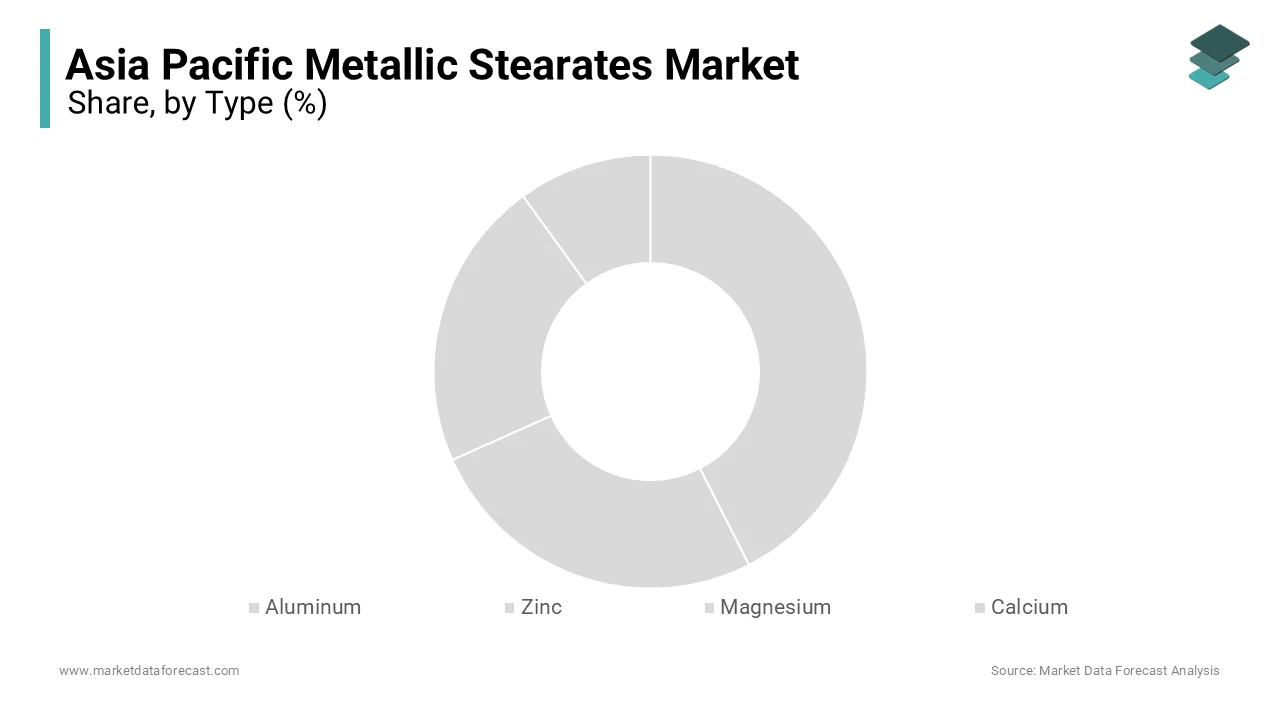
The calcium stearate segment led the Asia Pacific Metallic Stearates Market by accounting for 34% of total market share in 2023. This dominance is primarily attributed to Its extensive use as a heat stabilizer and internal lubricant in polymer processing, especially in polyvinyl chloride (PVC) manufacturing is primarily attributed to the dominance of calcium stearate segment.
Calcium stearate is widely preferred in PVC formulations due to its cost-effectiveness, thermal stability, and compatibility with chlorine-based polymers.
Besides, it is used in concrete waterproofing agents, dry-mix mortars, and cement-based composites. Its non-toxic profile also makes it suitable for food-grade packaging applications, further expanding its utility across industrial sectors.
These diverse demand drivers ensure sustained leadership of the calcium stearate segment in the Asia Pacific market landscape.
The magnesium stearate segment is the fastest growing within the Asia Pacific Metallic Stearates Market by registering a CAGR of 7.1% between 2026 and 2034. Increasing pharmaceutical production and rising consumer preference for natural excipients in drug formulation is largely driving the rapid expansion of magnesium stearate segment.
In addition, magnesium stearate remains one of the most commonly approved excipients in pharmaceutical formulations due to its excellent flowability, compressibility, and regulatory compliance. Furthermore, the rise of the nutraceutical sector has significantly boosted demand.
Regulatory bodies such as the National Medical Products Administration (NMPA) in China and the Central Drugs Standard Control Organization (CDSCO) in India have reaffirmed the safety of magnesium stearate in pharmaceutical formulations, further reinforcing its widespread adoption. With initiatives like India’s Ayushman Bharat and China’s Healthy China 2030 promoting preventive healthcare, the magnesium stearate segment is expected to maintain its high growth trajectory.
By Application Insights
The plastics application segment commanded the Asia Pacific Metallic Stearates Market by capturing 39.4% of total demand in 2025. Metallic stearates—particularly calcium, zinc, and magnesium variants—are integral to polymer processing as internal and external lubricants, heat stabilizers, and anti-blocking agents.
As per Plastics Insight , the Asia Pacific plastics industry produced over 200 million metric tons of polymer resins in 2023, with PVC and polyolefins being the dominant types requiring metallic stearates.
This growth is supported by robust demand from packaging, automotive, and construction sectors. In the automotive sector, increasing use of polymer composites in lightweight components has further boosted demand for metallic stearates as mold release agents and processing aids.
With China leading in polymer production followed by India and Japan, the plastics segment remains the cornerstone of the Asia Pacific metallic stearates market.
The pharmaceuticals application segment is projected to be the fastest-growing in the Asia Pacific Metallic Stearates Market and is recording a CAGR of 7.4% during the forecast period. Expanding pharmaceutical production, particularly in India, China, and South Korea, where metallic stearates, most notably magnesium stearate, are widely used as excipients in tablet and capsule manufacturing is propelling the accelerated growth of pharmaceuticals application segment.
According to the U.S. Food and Drug Administration (FDA) , magnesium stearate remains one of the most commonly approved excipients in pharmaceutical formulations due to its excellent flowability and compressibility.
Moreover, the nutraceutical market has seen robust growth, with magnesium stearate playing a key role in ensuring uniform tablet formation and preventing ingredient clumping.
Regulatory agencies such as the National Medical Products Administration (NMPA) in China and the Central Drugs Standard Control Organization (CDSCO) in India have reaffirmed the safety of magnesium stearate in pharmaceutical formulations, further reinforcing its widespread adoption.
REGIONAL ANALYSIS
China
China held the leading position in the Asia Pacific Metallic Stearates Market by commanding 36.5% of total share in 2025. This dominance is largely attributed to the country’s massive industrial base, particularly in polymer processing, chemical manufacturing, and pharmaceutical production.
According to China Plastics Processing Industry Association (CPPIA) , China produced over 60 million metric tons of plastics in 2023, with PVC and polypropylene being the dominant resins requiring metallic stearates as stabilizers and lubricants. The country's automotive and packaging industries are major consumers, leveraging metallic stearates for improved processability and product performance.
In addition to plastics, China’s pharmaceutical industry is one of the largest in the world. This expansion has led to increased demand for magnesium stearate in solid dosage formulations, particularly in generic medicines and nutraceuticals.
Moreover, the Chinese government actively supports innovation through programs like the Made in China 2026 Initiative , which fosters collaboration between research institutions and chemical manufacturers. These factors collectively reinforce China’s leadership in the Asia Pacific Metallic Stearates Market.
 India
India
India held a prominent position in the Asia Pacific Metallic Stearates Market. The country’s demand is primarily driven by its rapidly expanding polymer processing, pharmaceutical manufacturing, and construction industries. The country’s strong presence in flexible packaging and agricultural films has further reinforced the need for these additives to enhance production efficiency and product durability.
The pharmaceutical sector also plays a vital role. Metallic stearates, particularly magnesium stearate, are extensively used in tablet formulations for both domestic consumption and export.
Moreover, India is emerging as a growing hub for cosmetic and personal care manufacturing. These developments highlight India’s strategic role in the regional metallic stearates market.
Japan
Japan occupies a notable position in the Asia Pacific Metallic Stearates Market. The country’s demand is primarily driven by its technologically advanced polymer processing, electronics, and pharmaceutical industries.
Metallic stearates are extensively used in these applications as lubricants and mold release agents, enhancing process efficiency and product quality.
In addition to plastics, Japan’s pharmaceutical sector is well-established, with Ministry of Health, Labour and Welfare (MHLW) pointing out that domestic drug production grew at an average annual rate of 3.5% between 2020 and 2023. The country’s emphasis on high-quality medical formulations ensures continued reliance on magnesium stearate in tablet manufacturing.
Moreover, Japan is a global leader in precision electronics and automotive components, where metallic stearates are used in thermoplastic parts requiring controlled friction and wear resistance. As per Japan Automobile Manufacturers Association (JAMA), automotive exports remained strong in 2023, supporting demand for specialty additives in polymer components. With increasing foreign investment and technological advancements, Japan continues to play a pivotal role in shaping the Asia Pacific metallic stearates market.
South Korea
South Korea maintains a steady position in the Asia Pacific Metallic Stearates Market. The country’s demand is primarily driven by its advanced polymer processing, electronics, and semiconductor manufacturing sectors. According to Korea Plastics Industry Association (KOPLAS) , South Korea produced over 8 million metric tons of plastics in 2023, with a growing emphasis on high-performance materials used in semiconductors, display panels, and automotive components. Metallic stearates play a crucial role in enhancing melt flow properties and reducing friction in injection molding processes.
In addition to plastics, South Korea’s pharmaceutical and biotech industries are expanding rapidly. Moreover, the electronics sector, which contributes significantly to South Korea’s GDP, relies heavily on thermoplastic compounds treated with metallic stearates for insulation and component protection. With increasing foreign investment and government support for high-tech manufacturing, South Korea is poised for steady growth in metallic stearates consumption.
Australia
Australia holds a moderate but growing position in the Asia Pacific Metallic Stearates Market. The country’s demand is primarily driven by its stable chemical processing, pharmaceutical manufacturing, and construction industries. Metallic stearates are extensively used in PVC and polyolefin compounding, supporting applications in water piping, electrical insulation, and medical devices.
The pharmaceutical industry remains a key driver, particularly post-pandemic investments in vaccine production and generic medicine manufacturing. Further, Australia’s cosmetics sector is gaining traction. These developments highlight Australia’s evolving relevance in the Asia Pacific metallic stearates market.
KEY MARKET PLAYERS AND COMPETITIVE LANDSCAPE
Key players in the Asia Pacific Metallic Stearates market are Baerlocher GmbH, Dover Chemical Corporation, FACI S.p.A, Sinwon Chemical, PROMAX Industries, Biogenix, Peter Greven GmbH, Univar Inc., Akrochem Corporation, Sun Ace Kakoh, Norac Additives, Marathwada Chemical Industries, and IRRH Specialty Chemicals.
The Asia Pacific Metallic Stearates Market features a competitive landscape composed of both well-established multinational corporations and dynamic regional players. Global firms dominate due to their extensive product portfolios, advanced R&D capabilities, and strong brand recognition. However, local producers are increasingly gaining traction by offering cost-effective solutions and quicker response times to localized demand fluctuations.
Competition is primarily centered around product differentiation, application-specific formulation development, and after-sales technical support. Companies strive to maintain a competitive edge by continuously innovating and adapting to changing regulatory landscapes, especially regarding environmental and health safety standards. Strategic initiatives such as geographic expansion, vertical integration, and partnerships with downstream industries play a crucial role in sustaining market leadership.
As demand from sectors like pharmaceuticals, polymers, and personal care continues to grow, competition is expected to intensify further. Companies are also focusing on sustainability and digital transformation in supply chain management to improve efficiency and responsiveness. This evolving landscape presents both opportunities and challenges, prompting market participants to adopt dynamic strategies to secure and expand their positions in the Asia Pacific region.
TOP PLAYERS IN THE MARKET
Elementis Plc
Elementis Plc is a leading global supplier of specialty chemicals, including a comprehensive range of metallic stearates. With a strong presence across Asia Pacific, the company supports diverse industries such as plastics, pharmaceuticals, and personal care with high-performance additives. Elementis is known for its innovation-driven product development, reliable supply chain, and commitment to sustainability, making it a key player in the regional market.
Kolb Group
Kolb Group, headquartered in Germany, has established a significant footprint in the Asia Pacific region through strategic partnerships and localized supply chains. The company specializes in metal soaps and fatty acid derivatives, offering customized metallic stearate formulations for polymer processing, construction materials, and pharmaceutical applications. Kolb’s focus on quality assurance and environmental responsibility has positioned it as a preferred partner for industrial clients in the region.
Peter Greven GmbH & Co. KG
Peter Greven GmbH & Co. KG has built a long-standing reputation in the production of metallic stearates, offering a wide array of products used across multiple industries. Based in Germany, the company supplies high-purity stearates for applications in pharmaceuticals, cosmetics, and chemical formulations in Asia Pacific. Peter Greven's commitment to regulatory compliance and sustainable practices has reinforced its position in the rapidly growing regional market.
TOP STRATEGIES USED BY KEY PLAYERS
Expansion of Regional Production Facilities
One of the primary strategies adopted by key players in the Asia Pacific Metallic Stearates Market is expanding regional production and distribution capabilities. By establishing local manufacturing units or partnering with regional distributors, companies enhance their ability to serve growing markets more efficiently and reduce logistical dependencies.
Product Innovation and Customization
To cater to evolving industry needs, leading firms are investing heavily in research and development to create specialized metallic stearate formulations. This includes developing high-purity grades, biodegradable alternatives, and application-specific solutions that align with customer requirements across pharmaceuticals, polymers, and cosmetics.
Strategic Collaborations and Sustainability Initiatives
Major players are forming strategic alliances with raw material suppliers and end-use manufacturers to strengthen their value chain integration. Apart from these, there is a strong emphasis on sustainability, with companies adopting green chemistry practices, reducing carbon footprints, and promoting eco-friendly metallic stearate variants to meet global regulatory standards.
RECENT HAPPENINGS IN THE MARKET
- In January 2025, Launch of Biodegradable Calcium Stearate Line: A leading European chemical manufacturer introduced a new line of biodegradable calcium stearate products designed for eco-friendly polymer applications, aiming to align with sustainability goals and meet increasing demand from green packaging sectors in China and India.
- In May 2023, Expansion of Production Capacity in South Korea: An international metallic stearates supplier expanded its manufacturing facility near Seoul to better serve growing industrial demand in North and South Korea, particularly from the electronics and automotive polymer sectors.
- In October 2023, Partnership with Pharmaceutical Ingredient Distributor: A major player entered into a strategic agreement with an Indian excipient distributor to enhance its market access and technical support services for magnesium stearate in drug formulation applications across Southeast Asia.
- In February 2025, Acquisition of Regional Supplier in Thailand: A German-based chemical firm acquired a mid-sized metallic stearates producer in Bangkok to strengthen its regional foothold and improve logistics efficiency for customers in Indochina and Malaysia.
- In August 2023, Introduction of High-Purity Magnesium Stearate Series: A European chemical company launched a premium-grade magnesium stearate series specifically developed for high-performance tablet manufacturing in the nutraceutical and pharmaceutical industries operating in Japan and Australia.
MARKET SEGMENTATION
This research report on the Asia Pacific metallic stearates market has been segmented and sub-segmented based on the following categories.
By Type
- Aluminum
- Zinc
- Magnesium
- Calcium
By Application
- Pharmaceuticals
- Plastics
- Rubber
- Cosmetics
- Construction
- Coatings
By Country
- India
- China
- Japan
- South Korea
- Australia
- New Zealand
- Thailand
- Malaysia
- Vietnam
- Philippines
- Indonesia
- Singapore
- Rest of Asia-Pacific