- Product Description Description
- Table of Contents TOC
- List of Table & Figure LOT
- Get Free Sample PDF Sample PDF
Market Size, 2025
$73.12 MnMarket Estimate, 2026
$77.98 MnMarket Forecast, 2034
$130.52 MnCAGR, 2026–2034
6.65%Executive Summary: Asia Pacific Methyl Glucose Market
- Market Scope: Comprehensive market assessment of the Asia Pacific methyl glucose industry, covering forms, applications, and country-level profiles (forecast period: 2026–2034).
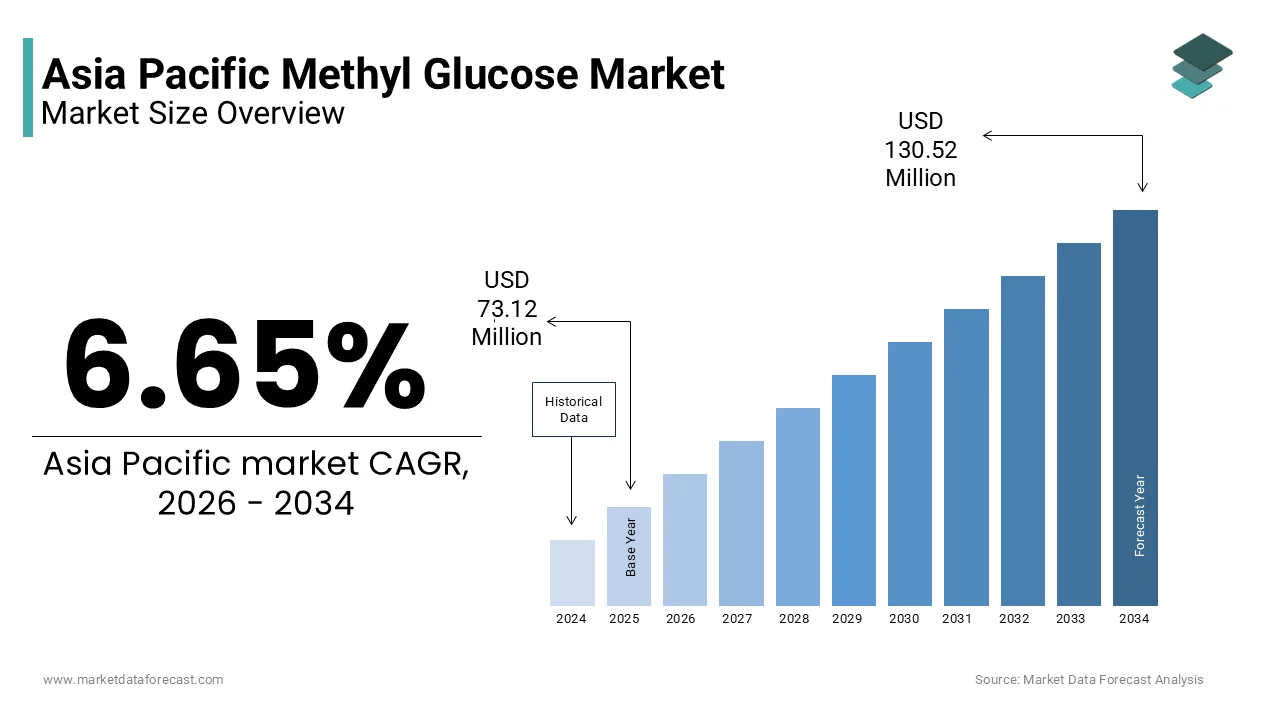
- Market Valuation: Valued at USD 73.12 million in 2025, estimated at USD 77.98 million in 2026, and projected to reach USD 130.52 million by 2034, growing at a promising CAGR of 6.65% from 2026 to 2034.
- Primary Growth Drivers: Proliferation of natural and organic personal care trends, favorable government incentives, and regional bio-based chemical production mandates across key Asian economies.
Key Market Segment Metrics
| Category | Leading Segment / Core Scope | Fastest-Growing / High-Growth Focus |
|---|---|---|
| By Form | Liquid Form (dominant share in 2025 due to superior aqueous solubility, easy automated dosing, and personal care compatibility) | Powder Form (projected at a CAGR of 9.8% from 2026–2034, driven by pharmaceutical and nutraceutical stability demands) |
| By Application | Cosmetics and Personal Care (accounting for 58.2% market share in 2025 via mild, sulfate-free surfactant integration) | Pharmaceutical (projected at a robust CAGR of 11.3%, fueled by functional excipients and drug delivery systems) |
| By Country | China (holding 34.2% market share in 2025 as the regional chemical manufacturing and surfactant production powerhouse) | India & Thailand (rapidly expanding via bio-refinery infrastructure investments and domestic clean-beauty demand) |
Major Market Landscape & Competitive Structure
Market Structure: Dynamic mix of global specialty chemical leaders and agile regional processors competing through technological innovation, custom R&D hubs, and sustainable bio-based portfolios.
Key Market Leaders: BASF SE, Kao Corporation, Croda International, BOC Sciences, Evonik Industries AG, and Guangzhou Tinci Materials Technology.
 Download Free Sample Report
Asia Pacific Methyl Glucose Market Size
Asia Pacific methyl glucose market size was valued at USD 73.12 million in 2025, and is expected to reach USD 130.52 million by 2034 from USD 77.98 million in 2026. The market's promising CAGR for the predicted period is 6.65%.
The methyl glucose is a non-ionic surfactant derived from glucose and methanol, which is primarily used as a green chemical intermediate in personal care, pharmaceuticals, and bio-based solvents. Methyl glucose, often processed into methyl glucoside ethers or esters, serves as a sustainable alternative to petroleum-derived surfactants due to its biodegradability, low toxicity, and renewable sourcing. Its hydrophilic nature and excellent emulsifying properties make it ideal for formulations in skincare, haircare, and household detergents. As per the Food and Agriculture Organization of the United Nations, Asia Pacific accounted for over 60% of global starch production in 2022, with maize, cassava, and potato serving as primary feedstocks for glucose, the precursor to methyl glucose. This regional abundance of raw materials provides a strategic advantage for local manufacturers. Additionally, the Japanese Ministry of Environment has classified methyl glucoside derivatives as non-hazardous and eco-friendly, encouraging their adoption across industrial applications.
 MARKET DRIVERS
Expansion of Natural and Organic Personal Care Industry
The surge in consumer preference for natural, non-toxic, and sustainably sourced ingredients has significantly elevated the growth of the Asia Pacific methyl glucose market. Methyl glucoside in the form of decyl glucoside and coco-glucoside, is widely adopted as a mild, plant-based surfactant in shampoos, facial cleansers, and baby products. China and India are leading this expansion, with urban consumers increasingly avoiding parabens, sulfates, and synthetic fragrances. The China National Medical Products Administration reported that over 4,200 new cosmetic products labeled “plant-derived” or “natural surfactant-based” were registered in 2023, a 37% increase from the previous year. These shifts are supported by stringent labeling regulations in Australia and Japan, which mandate transparency in ingredient sourcing, further incentivizing manufacturers to adopt bio-based surfactants.
Government Incentives for Bio-Based Chemical Production
Governments are actively promoting the transition from fossil-based to renewable chemical manufacturing, which is creating a favorable environment for methyl glucose production is also to fuel the growth of the Asia Pacific methyl glucose market. Similarly, Thailand’s Ministry of Energy reported in 2023 that over 1.2 million tons of cassava and molasses were allocated for bio-chemical production, a 22% increase from 2021, supporting ethanol and sugar-based derivative industries. The Biochemical Industry Roadmap by Thailand’s National Science and Technology Development Agency explicitly identifies methyl glucoside as a high-value product for export-oriented biorefineries. In China, the 14th Five-Year Plan for Green Development mandates that 30% of industrial surfactants used in consumer goods must be bio-based by 2026, a target that has prompted major chemical firms like Zhejiang Hisun Biomaterials to expand glucose ether production lines.
MARKET RESTRAINTS
Volatility in Feedstock Supply and Pricing
The production of methyl glucose is heavily dependent on glucose, which is derived from starch-rich crops such as corn, cassava, and wheat is limiting the growth of the Asia Pacific methyl glucose market. Fluctuations in agricultural output due to climate variability, export restrictions, and competing industrial demand create significant instability in raw material availability and pricing. According to the International Food Policy Research Institute, Southeast Asia experienced a 15% decline in cassava yield in 2023 due to prolonged droughts in Thailand and Vietnam, which together contribute over 70% of global cassava exports. This shortage led to a 32% increase in cassava-based starch prices within six months, directly impacting glucose feedstock costs for methyl glucoside producers. Additionally, China’s National Bureau of Statistics indicated that glucose syrup prices rose from CNY 3,200 to CNY 4,600 per ton between early 2022 and mid-2023, eroding profit margins for downstream surfactant producers.
High Production Costs and Energy-Intensive Processes
The high cost and energy intensity of its synthesis is limiting the growth of the Asia Pacific methyl glucose market. The glycosidation reaction between glucose and methanol requires precise temperature control, acid catalysts, and extensive purification steps, leading to elevated operational expenses. As per the Journal of Cleaner Production, the energy consumption in methyl glucoside production is approximately 3.8 megajoules per kilogram, nearly 1.7 times higher than conventional petrochemical surfactants like sodium lauryl sulfate. Furthermore, purification of methyl glucoside requires multiple distillation and crystallization stages, increasing capital expenditure. A study by the CSIRO in Australia found that capital investment for a new methyl glucose facility exceeds USD 80 million for a 20,000-ton-per-year plant, a barrier for new entrants.
MARKET OPPORTUNITIES
Growth in Green Packaging and Sustainable Coatings
Methyl glucose derivatives are emerging as key components in bio-based coatings and barrier materials for sustainable packaging, which is posing new opportunities for the growth of the Asia Pacific methyl glucose market. Methyl glucoside can be chemically modified into polyesters and polyurethanes that offer moisture resistance and biodegradability, ideal for food packaging films and coated paper products. According to the Ellen MacArthur Foundation, Asia Pacific generated 110 million metric tons of plastic packaging waste in 2022, prompting governments and corporations to seek alternatives. The Australian Institute of Packaging confirmed that bio-coated packaging trials increased by 58% in 2023, with methyl glucoside derivatives being tested in over 12 commercial projects. Additionally, as per the Thailand Packaging Association, over 35% of beverage brands in Southeast Asia plan to adopt compostable or recyclable packaging by 2026, creating demand for renewable functional additives.
Rising Demand in Pharmaceutical Excipients and Drug Delivery Systems
Methyl glucose and its derivatives, particularly methyl glucoside and methyl glucuronate are gaining recognition as safe and effective excipients in pharmaceutical formulations across Asia Pacific. Their non-toxic, water-soluble, and stabilizing properties make them suitable for use in oral suspensions, injectables, and transdermal delivery systems. Methyl glucoside is increasingly used as a solubilizer in pediatric and geriatric formulations due to its mild nature. In Japan, the Pharmaceuticals and Medical Devices Agency approved over 27 new drug products in 2023 that utilized sugar-based excipients, including methyl glucoside derivatives, reflecting a regulatory shift toward biocompatible additives. Additionally, the China Pharmaceutical Excipients Association reported that imports of specialty carbohydrate excipients rose by 21% in 2023, indicating growing domestic demand. South Korea’s Korea Institute of Science and Technology has also developed nanoparticle delivery systems using methyl glucoside-modified polymers for targeted cancer therapy, with clinical trials underway in 2025.
MARKET CHALLENGES
Limited Technical Expertise and Process Standardization
The synthesis and application of methyl glucose require specialized knowledge in carbohydrate chemistry and process engineering, areas where technical expertise is also to hinder the growth of the Asia Pacific methyl glucose market. As per the Association of Southeast Asian Nations (ASEAN) Centre for Energy, only 12% of chemical engineering curricula in member states include dedicated modules on biorefining or green chemistry, creating a skills gap in the workforce. Furthermore, the absence of standardized production protocols leads to variability in product purity and performance, discouraging adoption by high-specification industries such as pharmaceuticals and electronics.
Regulatory Fragmentation Across Regional Markets
The unified regulatory framework for bio-based chemicals by creating compliance complexities for methyl glucose producers and importers is also to limit the growth of the Asia Pacific methyl glucose market. For instance, while Japan’s Chemical Substances Control Law classifies methyl glucoside as non-toxic and exempt from extensive testing, Indonesia’s Ministry of Environment and Forestry requires full toxicological dossiers for new bio-based substances, delaying market entry by up to 18 months. As per the Pacific Chemical Council, manufacturers seeking regional distribution must navigate over 14 different regulatory regimes, increasing compliance costs by an average of 28%, according to a 2023 industry survey. In India, the absence of a clear certification system for bio-based content forces companies to rely on international standards like USDA BioPreferred, which are not legally recognized. Meanwhile, Australia’s National Industrial Chemicals Notification and Assessment Scheme (NICNAS) mandates detailed environmental fate studies for new sugar derivatives, a requirement not mirrored in neighboring countries. This fragmentation discourages investment in large-scale production and hampers cross-border trade. Harmonizing regulations through ASEAN’s Chemicals Working Group or bilateral agreements could streamline approvals, but progress remains slow, leaving companies to manage a complex and unpredictable compliance landscape.
REPORT COVERAGE
| REPORT METRIC | DETAILS |
| Market Size Available | 2025 to 2034 |
| Base Year | 2025 |
| Forecast Period | 2026 to 2034 |
| CAGR | 6.65% |
| Segments Covered | By Form, Application, and Region |
| Various Analyses Covered | Regional & Country Level Analysis, Segment-Level Analysis, DROC, PESTLE Analysis, Porter’s Five Forces Analysis, Competitive Landscape, Analyst Overview on Investment Opportunities |
| Regions Covered | India, China, Japan, South Korea, Australia, New Zealand, Thailand, Malaysia, Vietnam, Philippines, Indonesia, Singapore, and the Rest of Asia-Pacific |
| Market Leaders Profiled | BOC Sciences, Evonik Industries AG, Foshan Hytop New Material, Guangzhou Tinci Materials Technology (Tinci), Hangzhou Fanda Chemical Co., Ltd., and others |
SEGMENTAL ANALYSIS
By Form Insights
The liquid form segment dominated the Asia Pacific methyl glucose market share in 2025 with its superior solubility and ease of integration into aqueous formulations, particularly in personal care and household products. Liquid methyl glucoside, often supplied as a 50–70% aqueous solution, is favored in industrial applications due to its compatibility with automated dosing systems and reduced handling risks. In China, over 85% of cosmetic manufacturers now use liquid methyl glucose derivatives in cleansing formulations, according to the China Cosmetic Industry Association, citing faster dispersion and lower energy requirements during mixing. Furthermore, the Japanese Society of Cosmetic Science confirmed in 2023 that liquid glucosides exhibit 30% higher emulsification efficiency compared to powdered forms in cold-process formulations, reducing production time and energy use.
The powder form is projected to expand at a CAGR of 9.8% from 2026 to 2034 owing to rising demand in pharmaceutical and nutraceutical applications where precise dosing, long-term stability, and low moisture content are crucial. Powdered methyl glucose derivatives offer enhanced shelf life and are easier to blend into solid dosage forms such as tablets and powdered cleansers. In India, the demand for free-flowing, spray-dried methyl glucoside powders rose by 27% in 2023, as documented by the Indian Pharmaceutical Excipients Manufacturers’ Consortium, driven by increased production of effervescent supplements and dry syrup formulations. Additionally, the powder form is gaining traction in food processing, where moisture sensitivity limits liquid use. Thailand’s Food and Drug Administration approved 15 new food additive products containing powdered methyl glucoside derivatives in 2023, a 40% increase from the prior year.
By Application Insights
The cosmetics and personal care segment was accounted in holding 58.2% of the Asia Pacific methyl glucose market in 2025 with the demand for mild, bio-based surfactants in facial cleansers, baby shampoos, and sulfate-free formulations. Methyl glucoside-derived surfactants such as decyl glucoside are prized for their low skin irritation and excellent foaming properties. In South Korea, over 70% of new skincare launches in 2023 contained plant-based surfactants, according to the Korea Cosmetic Industry Association, with methyl glucose esters being the most frequently used non-ionic option. The rise of "clean beauty" standards in Japan and Australia has further amplified demand Australia’s Therapeutic Goods Administration recorded a 33% increase in cosmetic products declaring glucoside surfactants between 2022 and 2023.
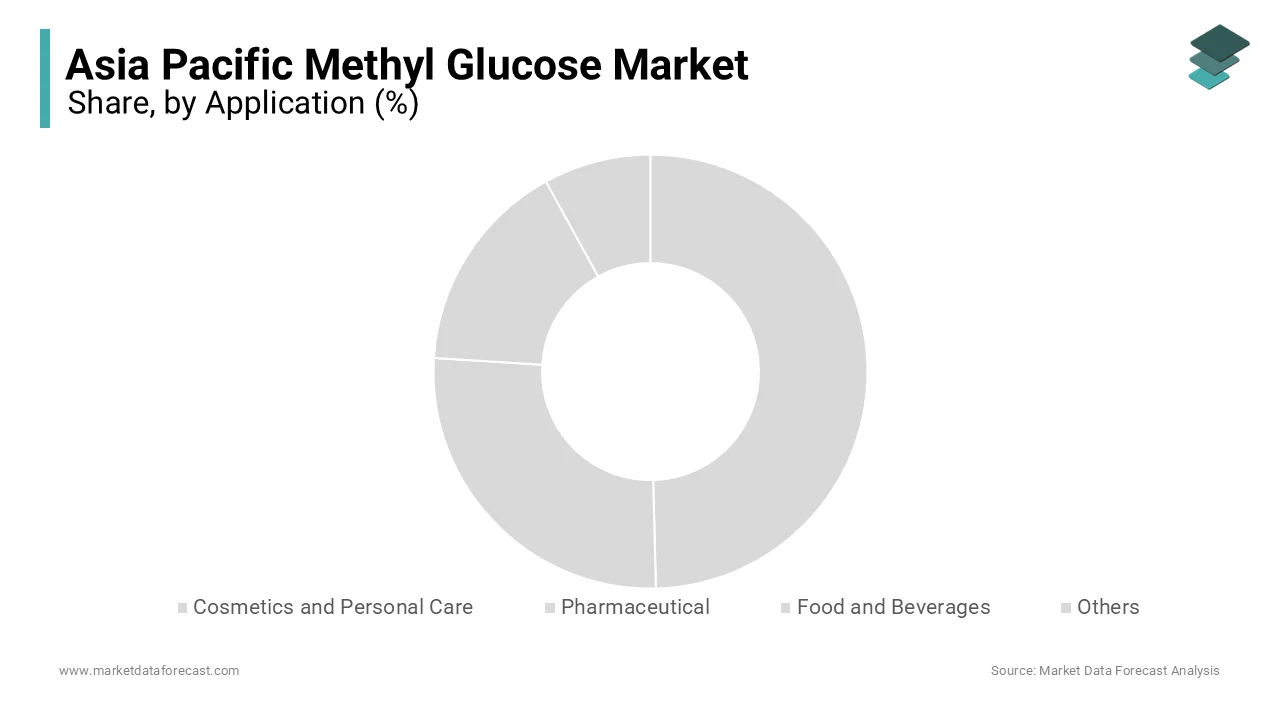
The pharmaceutical application segment is anticipated to grow with a CAGR of 11.3% from 2026 to 2034 owing to the methyl glucose’s role as a functional excipient in drug delivery systems, particularly in solubilization and stabilization of poorly water-soluble drugs. India’s pharmaceutical sector, which produces over 20% of global generic drugs by volume, as per the Indian Drug Manufacturers’ Association, has increasingly adopted methyl glucose derivatives in pediatric suspensions and geriatric formulations due to their non-toxic profile. A 2023 study by the National Institute of Pharmaceutical Education and Research found that methyl glucoside improved the bioavailability of antifungal drugs by up to 38% in clinical trials.
REGIONAL ANALYSIS
China
China was the top performer of the Asia Pacific methyl glucose market with 34.2% of the share in 2025. As the region’s chemical manufacturing powerhouse, China integrates methyl glucose into large-scale production of cosmetics, detergents, and pharmaceuticals. Additionally, the State Administration for Market Regulation has tightened restrictions on alkylphenol ethoxylates in personal care products, accelerating the shift toward bio-based alternatives like methyl glucoside. Major domestic firms such as Zhejiang Dongxiao and Shandong Xinghua have expanded their glycoside production capacity by 40% since 2021 to meet rising domestic and export demand. The China National Light Industry Council noted that over 60% of the country’s liquid soap and shampoo manufacturers have reformulated their products with methyl glucose derivatives since 2022.
Japan
Japan was positioned second by holding 18.2% of the Asia Pacific methyl glucose market share in 2025 due to its advanced formulation science and stringent safety standards, particularly in personal care and pharmaceuticals. Japanese consumers exhibit a strong preference for hypoallergenic, eco-labeled products, driving demand for high-purity methyl glucose derivatives. The Japan Cosmetic Industry Association reported that 82% of facial cleansers launched in 2023 contained plant-based surfactants, with methyl glucoside being the most prevalent. Moreover, Japan’s Pharmaceuticals and Medical Devices Agency classifies methyl glucoside as a GRAS (Generally Recognized as Safe) excipient, facilitating its use in over-the-counter and prescription drugs.
India
India methyl glucose market growth is emerging as a key growth engine due to expanding domestic manufacturing and rising consumer awareness. Indian consumers are increasingly favoring "toxin-free" and Ayurvedic-inspired products, prompting brands like Patanjali and Biotique to adopt methyl glucose-based surfactants in their cleansers. The Central Drugs Standard Control Organization has also updated its excipient guidelines to encourage bio-based additives, accelerating pharmaceutical adoption. Furthermore, India’s National Biofuels Policy has redirected surplus sugar and corn toward chemical production, ensuring feedstock availability. The Indian Sugar Mills Association confirmed that 2.1 million tons of sugar were diverted to chemical-grade glucose production in 2023, a 28% increase from 2021.
South Korea
South Korea methyl glucose market growth with its innovation-driven formulation sector and export-oriented cosmetics industry. The Korea Cosmetic Industry Association reported that 67% of new facial wash products in 2023 used alkyl polyglucosides, with methyl glucoside being the preferred base. Major brands like Amorepacific and LG Household & Health Care have invested in R&D to develop next-generation glucoside blends with enhanced sensory profiles. Additionally, South Korea’s Ministry of Environment has included methyl glucose in its Eco-Label certification program, which covers over 1,200 consumer products as of 2023.
Thailand
Thailand methyl glucose market growth is emerging as a bio-based chemical production hub in Southeast Asia. The Thai government’s Bio-Circular-Green (BCG) Economy Model has allocated USD 1.2 billion in incentives for biorefineries, leading to the establishment of integrated facilities in Rayong and Chonburi. The National Science and Technology Development Agency confirmed that three new methyl glucoside pilot plants began operations in 2023, targeting both domestic and ASEAN markets. Additionally, Thailand’s cosmetic industry, which grew by 11.3% in 2023 as per the Thai Cosmetic Association, is increasingly using bio-surfactants in spa and wellness products for export. With the ASEAN Cosmetics Directive facilitating regional market access, Thai manufacturers are well-positioned to expand.
COMPETITIVE LANDSCAPE
The competition in the Asia Pacific methyl glucose market is characterized by a blend of global specialty chemical leaders and agile regional players vying for dominance in a rapidly evolving green ingredients landscape. Multinational corporations such as BASF, Croda, and Kao leverage technological expertise, established supply chains, and strong brand reputations to serve high-end personal care and pharmaceutical markets. Their focus on innovation, regulatory compliance, and sustainability gives them a strategic edge in countries like Japan, South Korea, and Australia, where formulation standards are stringent. At the same time, regional chemical manufacturers in China and India are expanding production capabilities to capture cost-sensitive segments, offering competitively priced methyl glucose derivatives for domestic and export markets. The competitive dynamics are further shaped by increasing demand for bio-based alternatives, pushing companies to differentiate through purity, functionality, and environmental certifications. Smaller biotech firms are entering niche areas such as pharmaceutical excipients and green coatings, fostering innovation but facing challenges in scalability. Customer proximity is becoming a key differentiator, with leading players establishing technical service centers and co-development labs across major markets.
KEY MARKET PLAYERS
Some of the key players in the Asia Pacific methyl glucose market are
- BOC Sciences
- Evonik Industries AG
- Foshan Hytop New Material
- Guangzhou Tinci Materials Technology (Tinci)
- Hangzhou Fanda Chemical Co., Ltd.
TOP PLAYERS IN THE MARKET
BASF SE (Asia Pacific)
BASF operates as a leading supplier of methyl glucose-based surfactants in the Asia Pacific region, leveraging its global expertise in green chemistry and specialty ingredients. The company produces methyl glucoside derivatives under its Plantapon® and Lamepon® product lines, widely used in personal care and household applications across China, India, and Southeast Asia. BASF has strengthened its regional presence through localized R&D centers in Shanghai and Mumbai, focusing on formulating mild, sustainable surfactants tailored to Asian consumer preferences. In 2023, the company launched a new high-purity methyl glucoside grade for pharmaceutical applications at its Nanjing site, enhancing its footprint in high-value sectors. It also expanded technical service teams in Thailand and Indonesia to support local manufacturers in product reformulation.
Kao Corporation
Kao Corporation is a dominant force in the Asia Pacific methyl glucose market, deeply embedded in the personal care and home care sectors through its extensive use of alkyl polyglucosides in product formulations. The company utilizes methyl glucose derivatives in flagship brands such as Biore, Jergens, and Attack, emphasizing mildness and sustainability. Based in Japan, Kao has pioneered cold-process manufacturing techniques that reduce energy consumption while maximizing the performance of glucose-based surfactants. In 2023, Kao introduced a new sulfate-free facial cleanser line in South Korea and China, formulated entirely with in-house developed methyl glucoside compounds, reinforcing its leadership in green personal care. The company also collaborated with Japanese research institutes to enhance the biodegradability profile of its surfactants, aligning with stringent environmental regulations.
Croda International (Asia Operations)
Croda International serves the Asia Pacific methyl glucose market through its specialty surfactants portfolio, particularly in personal care and pharmaceuticals, under brands like Montanov™ and Glucamate™. The company supplies methyl glucoside-based emulsifiers and solubilizers to formulators in China, India, and South Korea, where demand for natural, high-performance ingredients is rising. Croda has deepened its regional engagement by establishing application labs in Singapore and Shanghai, enabling real-time collaboration with customers on product development. In 2023, the company launched a new cold-emulsifying system based on methyl glucose derivatives for use in eczema-friendly skincare products, targeting the growing sensitive skin segment. It also partnered with Indian pharmaceutical firms to develop excipient solutions using modified glucosides for oral and topical drug delivery. Croda’s commitment to sustainability is reflected in its inclusion in Japan’s Green Procurement List and its investment in renewable energy at its manufacturing site in Nanhai, China.
TOP STRATEGIES USED BY THE KEY MARKET PLAYERS
Key players in the Asia Pacific methyl glucose market are deploying targeted strategies to consolidate their presence and respond to evolving industry demands. A central approach involves technological innovation, where companies are developing high-purity, low-color methyl glucoside grades for sensitive applications in pharmaceuticals and baby care. Firms are also investing in regional R&D hubs to customize formulations for local consumer preferences, particularly in texture, foaming, and skin compatibility. Vertical integration is another strategy with leading suppliers securing long-term contracts with starch processors to ensure stable feedstock supply. Strategic collaborations with local manufacturers and regulatory consultants help navigate diverse compliance landscapes across countries. Capacity expansion is evident, especially in China and Thailand, where new production lines are being commissioned to meet rising demand. Additionally, companies are emphasizing sustainability credentials by obtaining eco-certifications and reducing carbon intensity in production. Digital customer engagement platforms are being introduced to provide technical support and formulation guidance, enhancing client retention. These multifaceted strategies enable key participants to maintain product differentiation to ensure supply reliability, and strengthen relationships with high-growth industry segments.
RECENT HAPPENINGS IN THE MARKET
- In January 2023, BASF launched a new high-purity methyl glucoside grade at its Nanjing site, specifically designed for pharmaceutical excipients by enhancing its presence in high-value healthcare applications across Asia Pacific.
- In May 2023, Kao Corporation introduced a sulfate-free facial cleanser line in China and South Korea, fully formulated with proprietary methyl glucose derivatives with in sustainable personal care innovation.
- In August 2023, Croda International partnered with two Indian pharmaceutical companies to develop oral drug delivery systems using modified methyl glucoside excipients by expanding its footprint in the region’s growing generics market.
- In November 2023, BASF expanded its technical service team in Indonesia, deploying application specialists to support local cosmetic manufacturers in reformulating products with bio-based surfactants.
- In February 2025, Kao Corporation initiated a collaboration with Japan’s National Institute of Advanced Industrial Science to improve the biodegradation efficiency of methyl glucose-based surfactants, which is strengthening its environmental credentials and regulatory alignment.
MARKET SEGMENTATION
This research report on the Asia Pacific methyl glucose market has been segmented and sub-segmented based on the following categories.
By Form
- Liquid
- Powder
By Application
- Cosmetics and Personal Care
- Pharmaceutical
- Food and Beverages
- Others
By Country
- India
- China
- Japan
- South Korea
- Australia
- New Zealand
- Thailand
- Malaysia
- Vietnam
- Philippines
- Indonesia
- Singapore
- Rest of Asia-Pacific