Asia Pacific Neoprene Market Size, Share, Growth, Trends, and Forecast Report – Segmented By Manufacturing Route (Butadiene Route, Acetylene Route), Grade, Application, End-User, and Region (India, China, Japan, South Korea, Australia & New Zealand, Thailand) - Industry Analysis from 2026 to 2034
Market Size, 2025
$1.29 BnMarket Estimate, 2026
$1.32 BnMarket Forecast, 2034
$1.58 BnCAGR, 2026–2034
2.28%Asia Pacific Neoprene Market Size
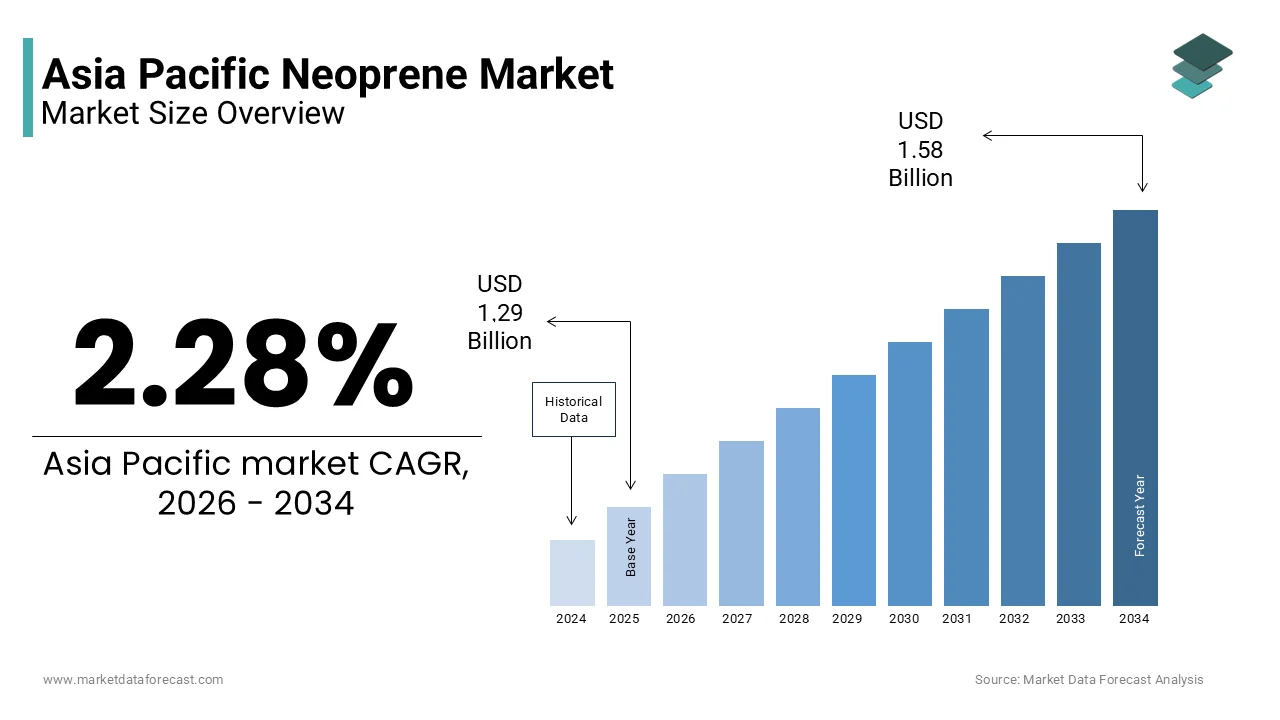
Asia Pacific Neoprene market size was valued at USD 1.29 billion in 2025, and the market size is expected to reach USD 1.58 billion by 2034 from USD 1.32 billion in 2026. The market's promising CAGR for the predicted period is 2.28%.
Neoprene, also known as polychloroprene, is a synthetic rubber renowned for its versatility, resistance to oil, heat, and weathering, and excellent flexibility across a wide temperature range. It finds extensive application in industries such as automotive, construction, electronics, marine, and consumer goods. The Asia Pacific neoprene market has been shaped by the region’s industrial expansion, growing manufacturing base, and increasing demand for durable materials in both traditional and emerging sectors.
MARKET DRIVERS
Expansion of the Automotive Industry
One of the primary drivers fueling the growth of the Asia Pacific neoprene market is the robust expansion of the automotive industry, particularly in countries like China, India, and Thailand. Neoprene is extensively used in automotive applications due to its resistance to heat, oil, and abrasion, making it ideal for components such as seals, gaskets, hoses, and vibration dampers.
This massive production volume translates into substantial demand for neoprene-based parts, especially in electric vehicles where sealing and insulation properties are critical. In India, the government’s push for domestic manufacturing under the Production-Linked Incentive (PLI) scheme has attracted major investments in auto component production. Thailand, often referred to as the "Detroit of Southeast Asia," continues to be a key hub for automotive exports.
Growth in Construction and Infrastructure Development
Another significant driver of the Asia Pacific neoprene market is the rapid pace of construction and infrastructure development, particularly in emerging economies such as India, Indonesia, and the Philippines. Neoprene is widely used in civil engineering applications due to its durability, water resistance, and load-bearing capacity, making it essential for bridge bearings, expansion joints, waterproofing membranes, and seismic isolation systems. In India, the National Infrastructure Pipeline (NIP), valued at USD 1.4 trillion, has led to a surge in highway, railway, and airport construction activities. Similarly, in Indonesia, the government launched a large number of infrastructure projects in 2023 alone, including toll roads, dams, and mass transit systems. With ongoing investments in smart cities, affordable housing, and transportation networks, the construction-driven demand for neoprene is poised to remain strong across the region.
MARKET RESTRAINTS
Volatility in Raw Material Prices
A key restraint affecting the Asia Pacific neoprene market is the volatility in raw material prices, particularly for chlorine and butadiene, which are essential inputs in chloroprene rubber production. These petrochemical derivatives are subject to fluctuations influenced by crude oil prices, geopolitical tensions, and supply chain disruptions, directly impacting production costs for neoprene manufacturers. This price surge was transmitted to Asia through import-linked contracts, raising production expenses for local neoprene producers. Also, import dependencies in countries like India and Vietnam expose domestic manufacturers to exchange rate risks and freight cost variations. These financial uncertainties make long-term planning difficult for neoprene suppliers and often result in inconsistent pricing for end-users.
Environmental Regulations and Shift Toward Sustainable Alternatives
Another notable constraint on the Asia Pacific neoprene market is the tightening of environmental regulations and the increasing preference for sustainable alternatives. While neoprene offers superior performance in demanding applications, its production involves complex chemical processes that generate hazardous waste and greenhouse gas emissions. Regulatory bodies across the region are implementing stricter norms to curb industrial pollution, prompting industries to explore greener substitutes. For example, China's Ministry of Ecology and Environment has mandated reductions in industrial emissions under its 14th Five-Year Plan, imposing tighter controls on volatile organic compounds (VOCs) and carbon footprints. Similarly, Moreover, industries such as fashion, sports, and outdoor gear are shifting toward bio-based or recyclable materials. Companies like Patagonia and Rip Curl have started replacing neoprene with limestone-based or plant-derived wetsuit materials.
MARKET OPPORTUNITIES
Rising Demand in Renewable Energy Equipment
A promising opportunity for the Asia Pacific neoprene market lies in the expanding renewable energy sector, particularly in wind and solar power equipment manufacturing. Neoprene's inherent resistance to extreme temperatures, UV radiation, and mechanical stress makes it an ideal material for insulation, sealing, and protective coatings in energy infrastructure. In wind energy, neoprene is used in blade root seals, tower door gaskets, and vibration damping mounts to ensure operational efficiency and durability. According to the Global Wind Energy Council, Asia Pacific accounted for nearly half of global wind power installations in 2023, with China alone adding over 70 GW of new capacity. In the solar industry, neoprene is employed in junction box gaskets, cable insulation, and panel mounting systems to protect against moisture and thermal degradation.
 Surge in Demand for Sports and Outdoor Gear
The growing popularity of sports, fitness, and outdoor recreational activities in the Asia Pacific region presents a lucrative opportunity for the neoprene market. Neoprene is a preferred material for manufacturing wetsuits, yoga mats, sports braces, and protective gear due to its insulating properties, flexibility, and durability. Countries like Australia, Japan, and South Korea have well-established markets for diving, surfing, and aquatic training, driving consistent demand for high-quality wetsuits. India and Southeast Asia are also witnessing a boom in fitness culture and adventure sports, supported by rising disposable incomes and urbanization. The Indian Outdoor Recreation Federation estimated that the number of registered adventure sport participants doubled between 2019 and 2023, creating new avenues for neoprene-based apparel and accessories.
MARKET CHALLENGES
Intensifying Competition from Substitute Materials
One of the most pressing challenges facing the Asia Pacific neoprene market is the intensifying competition from substitute materials such as EPDM (ethylene propylene diene monomer), silicone rubber, thermoplastic elastomers (TPE), and bio-based polymers. These alternatives offer comparable performance characteristics at lower costs or with improved sustainability credentials, posing a direct threat to neoprene’s market share.
EPDM, for instance, is increasingly being adopted in automotive sealing applications due to its superior ozone and UV resistance, along with lower raw material costs. Similarly, TPEs are gaining traction in consumer goods and footwear due to their recyclability and ease of processing. In addition, advancements in bio-based rubbers derived from natural sources such as guayule and dandelion latex are attracting attention from environmentally conscious industries. Companies like Bridgestone and Yokohama Rubber have initiated pilot programs for bio-rubber production in Thailand and Malaysia.
Complex Manufacturing Processes and High Capital Investment
Another significant challenge for the Asia Pacific neoprene market is the complexity of its manufacturing process and the high capital expenditure required for setting up production facilities. Unlike some synthetic rubbers that can be synthesized using relatively simple polymerization techniques, neoprene production involves multiple stages, including chlorination, emulsion polymerization, and post-treatment, all of which require specialized equipment and expertise. This high barrier to entry limits the ability of small and mid-sized players to expand or enter the market organically. In China, where most neoprene production is concentrated among a few state-backed enterprises, independent manufacturers face difficulties in scaling operations due to stringent licensing requirements and technology constraints. Furthermore, the maintenance of production units demands continuous monitoring of chemical reactions and waste management practices. These complexities not only increase operational costs but also slow down innovation cycles, making it challenging for manufacturers to respond swiftly to changing market dynamics.
REPORT COVERAGE
| REPORT METRIC | DETAILS |
| Market Size Available | 2025 to 2034 |
| Base Year | 2025 |
| Forecast Period | 2026 to 2034 |
| CAGR | 2.28% |
| Segments Covered | By Manufacturing Route, Grade, Application, End-User, and Region |
|
Various Analyses Covered | Regional & Country Level Analysis, Segment-Level Analysis, DROC, PESTLE Analysis, Porter’s Five Forces Analysis, Competitive Landscape, Analyst Overview on Investment Opportunities |
| Regions Covered | India, China, Japan, South Korea, Australia, New Zealand, Thailand, Malaysia, Vietnam, Philippines, Indonesia, Singapore, and the Rest of Asia-Pacific |
| Market Leaders Profiled | Sundow Polymers Co. Ltd (China), TOSOH Corporation (Japan), Zenith Rubber (India), Pidilite Industries (India), Denka Company Limited (Japan), TuHuang Chemical Co. (China), Shanxi Synthetic Rubber Group Co Ltd. (China), Asahi Kasei Corporation (Japan), and Onsmooth Thai Co. (Thailand), and others |
SEGMENTAL ANALYSIS
By Manufacturing Route Insights
The butadiene route segment held the largest share of the Asia Pacific neoprene market by accounting for a substantial share in 2025. This method involves the chlorination of butadiene to produce chloroprene monomer, which is then polymerized to form polychloroprene or neoprene. One of the key reasons behind its dominance is the widespread availability and cost-effectiveness of butadiene as a feedstock, especially in petrochemical-rich countries like China and South Korea. The country's state-backed producers such as Sinopec and Shanghai Chlor-Alkali Chemical dominate the production landscape, leveraging integrated refining-petrochemical complexes to reduce raw material costs. Moreover, the butadiene route offers higher process efficiency compared to the acetylene method, resulting in lower energy consumption and reduced processing complexity.
The acetylene route is emerging as the fastest-growing segment in the Asia Pacific neoprene market, projected to grow at a CAGR of 6.1%. This method utilizes calcium carbide to produce acetylene, which is subsequently converted into chloroprene monomer. A primary driver of this growth is the increasing reliance on coal-based chemical production in certain parts of China where butadiene availability is limited. According to the China Coal Chemical Industry Association, nearly 40% of chloroprene production in western China uses the acetylene route, supported by abundant coal reserves and government incentives for regional industrial development. In regions like Yunnan and Guizhou, local manufacturers have expanded their capacities using this alternative feedstock, reducing dependency on petroleum-based inputs. In addition, advancements in acetylene purification technologies have improved yield efficiency and environmental compliance, making the process more viable.
By Grade Insights
The general-purpose grade neoprene segment had the largest share of the Asia Pacific market by capturing a 50.8% in 2025. This grade is widely used in applications that require moderate resistance to oil, heat, and weathering, making it suitable for automotive seals, industrial hoses, gaskets, and conveyor belts. The dominance of this segment stems from its cost-effectiveness and versatility across multiple industries. Similarly, in Southeast Asia, countries like Thailand and Vietnam rely heavily on this grade for footwear components, including shoe soles and padding materials. In China, the world’s largest consumer of neoprene, the Society of Plastics Engineers noted that general-purpose variants were preferred in mid-tier electrical insulation products due to their balance between performance and affordability. Moreover, the construction industry in Indonesia and the Philippines continues to utilize this grade for waterproofing membranes and expansion joints, further reinforcing its market position.
Slow crystallizing grade neoprene is the fastest-growing segment in the Asia Pacific market, projected to expand at a CAGR of 7.3% between 2025 and 2030. This grade is specifically designed to maintain flexibility under cold conditions without premature crystallization, making it ideal for use in refrigeration seals, outdoor protective gear, and marine equipment. One of the primary drivers of this growth is the rising demand for durable, temperature-resistant materials in the logistics and cold storage industries. Neoprene seals with slow crystallization properties are critical for maintaining insulation integrity in refrigerated containers and warehouse doors. Furthermore, the outdoor recreation sector in Australia and Japan has seen a surge in demand for high-performance wetsuits and diving suits, where slow-crystallizing neoprene enhances flexibility and longevity.
By Application Insights
The technical rubber segment represented the largest application segment of the Asia Pacific neoprene market by accounting for a 60.8% of total consumption in 2025. This category includes applications such as automotive parts, industrial seals, vibration dampers, and construction materials where durability, elasticity, and chemical resistance are crucial. The dominance of technical rubber is largely attributed to the automotive industry’s extensive use of neoprene for engine mounts, door seals, and belt covers. In addition, the construction sector across Southeast Asia is increasingly utilizing neoprene-based bearings and expansion joints to enhance structural resilience against seismic activity and thermal stress.
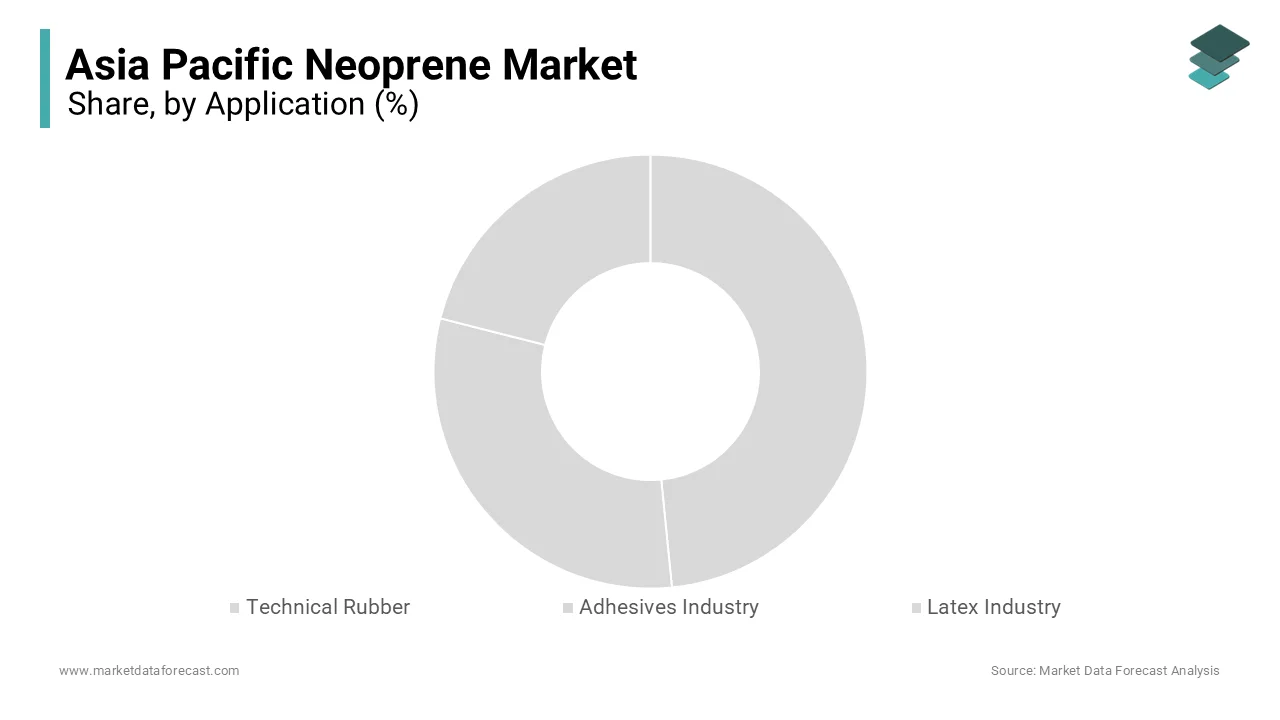
The adhesives industry is emerging as the fastest-growing application segment for neoprene in the Asia Pacific region, expected to grow at a CAGR of 6.9%. Neoprene-based adhesives are widely used in footwear, packaging, electronics, and aerospace due to their strong bonding capabilities, flexibility, and resistance to moisture and temperature variations. One of the key drivers of this growth is the booming footwear manufacturing sector in countries like Vietnam, Indonesia, and India. Similarly, Vietnam, a major supplier to global brands like Nike and Adidas, saw a increase in footwear exports during the same period, further boosting adhesive demand. In addition, the electronics industry in South Korea and Japan is adopting neoprene-based bonding agents for circuit board assembly and display panel lamination.
By End-User Insights
The automotive sector accounted for the largest end-user segment of the Asia Pacific neoprene market by holding a 40.5% of the total market share in 2025. Neoprene is extensively used in automotive applications such as engine mounts, door seals, window channels, and radiator hoses due to its excellent resistance to heat, oil, and abrasion. China remains the largest consumer within this segment, producing over 27 million vehicles in 2023. The country’s rapid expansion in electric vehicle (EV) manufacturing has further amplified demand for neoprene-based components, particularly in battery enclosures and insulation materials. In India, the government’s Production-Linked Incentive (PLI) scheme has attracted major investments in auto-component manufacturing, leading to increased usage of neoprene-based sealing systems. South Korea and Japan also contribute significantly to this segment, with companies like Hyundai, Toyota, and Honda integrating neoprene into high-performance vehicle components.
The consumer goods segment is the fastest-growing end-user of neoprene in the Asia Pacific market, projected to expand at a CAGR of 7.2% between 2025 and 2030. This growth is primarily driven by rising disposable incomes, urbanization, and increasing participation in fitness and outdoor activities across the region. Neoprene is widely used in consumer products such as yoga mats, laptop sleeves, sports braces, and wetsuits. E-commerce platforms like Amazon and Flipkart reported a doubling of sales in branded fitness gear, including neoprene-based exercise mats and support bands. In Southeast Asia, countries like Thailand and the Philippines have witnessed a surge in demand for wetsuits and diving gear due to increased tourism and water sport activities. Also, fashion and lifestyle brands in Japan and South Korea are incorporating neoprene into apparel and accessories, further broadening its consumer appeal.
REGIONAL ANALYSIS
China held the largest share of the Asia Pacific neoprene market by accounting for a 45.6% in 2025. As the world’s top manufacturer and exporter of synthetic rubber, the country’s industrial ecosystem drives substantial demand for neoprene across automotive, electronics, and construction sectors. One of the key contributors to this dominance is China’s massive automotive industry. Neoprene is integral to various automotive components such as seals, gaskets, and vibration dampers. Also, the country’s electronics manufacturing base, which supplies a significant portion of global smartphones and consumer devices, requires neoprene-based adhesives and insulation materials. The construction sector also plays a pivotal role. This scale of development necessitates large volumes of neoprene for expansion joints and waterproofing membranes.
The country’s rapid industrialization, coupled with strong growth in the automotive, construction, and consumer goods sectors, has been instrumental in driving demand. The automotive industry is a major consumer. Neoprene-based components such as engine mounts, door seals, and fuel tank linings are essential in both internal combustion and electric vehicles. The government’s Production-Linked Incentive (PLI) scheme has further boosted domestic auto-component manufacturing, increasing neoprene consumption. In the consumer goods sector, rising disposable incomes and growing interest in fitness and outdoor activities have led to increased adoption of neoprene-based products such as yoga mats, sports braces, and wetsuits.
Japan’s emphasis on precision engineering, electronics manufacturing, and high-end automotive production sustains consistent demand for high-quality neoprene materials. Japanese automakers such as Toyota, Honda, and Nissan continue to integrate neoprene into advanced vehicle components for vibration control, sealing, and insulation. Also, the electronics industry, particularly in semiconductors and printed circuit boards, relies on neoprene-based adhesives and protective coatings. The country’s focus on innovation is evident in its investment in hydrogen technology and green mobility solutions.
South Korea is positioning itself as a key player due to its strong presence in automotive, electronics, and shipbuilding industries. The country’s strategic focus on high-value industrial output ensures sustained demand for premium-grade neoprene materials. The automotive sector remains a major contributor. Neoprene is extensively used in engine mounts, seals, and insulation materials, particularly in electric and hybrid models. In addition, South Korea’s semiconductor industry, which contributes significantly to the nation’s GDP, utilizes neoprene-based adhesives and protective films in microchip fabrication. Shipbuilding is another key sector, with companies like Samsung Heavy Industries and Daewoo Shipbuilding & Marine Engineering securing major global contracts.
Australia and New Zealand together account for smaller share of the Asia Pacific neoprene market in 2025. The region’s demand is primarily driven by mining, construction, and outdoor recreation industries, particularly in Australia. Australia’s mining and resources sector remains a critical consumer of neoprene-based products such as conveyor belts, seals, and industrial hoses. Offshore oil and gas projects also contribute to the demand for corrosion-resistant materials. New Zealand benefits from infrastructure modernization programs. Additionally, the outdoor recreation sector is thriving. These combined factors sustain moderate but steady growth in the Australia & New Zealand neoprene market.
COMPETITIVE LANDSCAPE
The competition in the Asia Pacific neoprene market is shaped by the presence of a few dominant global and regional players alongside numerous smaller manufacturers. International firms leverage their technological capabilities, brand reputation, and established distribution networks to maintain a strong market position, particularly in high-end applications. At the same time, regional producers capitalize on lower production costs, government support, and proximity to key end-user industries to gain traction. This dynamic creates a competitive landscape where price sensitivity, product performance, and sustainability considerations play crucial roles in influencing purchasing decisions.
The market is further influenced by the availability of alternative synthetic rubbers, prompting companies to emphasize differentiation through innovation and application-specific formulations. As industries increasingly prioritize material efficiency and environmental impact, manufacturers must continuously refine their offerings to stay relevant. Additionally, the growing emphasis on automation, digitalization, and green manufacturing is compelling companies to invest in cleaner production methods and sustainable sourcing strategies. In this evolving environment, only those players that can adapt swiftly to changing market dynamics will be able to sustain growth and secure long-term success.
KEY MARKET PLAYERS
Sundow Polymers Co. Ltd (China), TOSOH Corporation (Japan), Zenith Rubber (India), Pidilite Industries (India), Denka Company Limited (Japan), TuHuang Chemical Co. (China), Shanxi Synthetic Rubber Group Co Ltd. (China), Asahi Kasei Corporation (Japan), and Onsmooth Thai Co. (Thailand) are the key players in the Asia Pacific neoprene market.
TOP PLAYERS IN THE MARKET
- One of the leading players in the Asia Pacific neoprene market is Denka Company Limited, a major Japanese chemical manufacturer. Denka has a strong presence across the region, particularly in high-performance neoprene applications such as automotive components, electronics, and industrial seals. The company's expertise lies in producing specialty grades of neoprene that cater to demanding environments. Its focus on innovation, quality assurance, and long-term customer relationships positions it as a key supplier in both domestic and export markets.
- Another major participant is Sinopec Corporation, one of China’s largest state-owned petrochemical enterprises. Sinopec plays a dominant role in the production and distribution of neoprene through its integrated supply chain network. The company supplies raw materials for chloroprene rubber manufacturing and supports downstream industries with cost-effective solutions. Sinopec's strategic partnerships with automotive and construction firms ensure steady demand for neoprene-based products across multiple sectors.
- Shanghai Chlor-Alkali Chemical Company, a subsidiary of Huayi Group, is another critical player in the regional neoprene market. Based in China, the company specializes in chlor-alkali chemistry, which is essential for neoprene production. It serves a wide range of industries including automotive, consumer goods, and technical rubber applications. With a focus on process optimization and environmental compliance, Shanghai Chlor-Alkali maintains a competitive edge in the domestic and export markets.
TOP STRATEGIES USED BY KEY PLAYERS
diversification and grade-specific development . Manufacturers are investing in research and development to produce specialized neoprene variants tailored for niche applications such as cold-resistant wetsuits, high-strength adhesives, and vibration-damping automotive components. This approach allows them to cater to evolving industry demands while maintaining differentiation from competitors.
Another crucial tactic is strategic collaborations and vertical integration . Key players are forming alliances with upstream suppliers, distributors, and end-user industries to enhance supply chain efficiency and reduce dependency on external sources. These partnerships also facilitate technology transfer and localized customization, ensuring better alignment with regional market needs.
Lastly, capacity expansion and localization of production facilities is a widely pursued strategy. Companies are setting up or expanding manufacturing units in high-growth markets within Asia Pacific to improve operational flexibility, reduce logistics costs, and respond more swiftly to customer requirements. This localized presence strengthens their foothold and enables faster adaptation to regulatory and market shifts.
RECENT HAPPENINGS IN THE MARKET
- In March 2025, Denka Company Limited expanded its neoprene production capacity at its facility in Japan to meet rising demand from the automotive and electronics sectors. This move was aimed at enhancing supply reliability and reinforcing the company’s leadership in high-performance rubber materials.
- In June 2025, Sinopec formed a joint venture with a leading Chinese auto-component manufacturer to develop customized neoprene formulations for electric vehicle sealing applications. The collaboration was intended to align product development with emerging mobility trends and strengthen downstream integration.
- In August 2025, Shanghai Chlor-Alkali Chemical launched a new R&D center focused on improving the environmental footprint of neoprene production. The initiative emphasized reducing energy consumption and emissions, aligning with stricter regulatory standards in the region.
- In October 2025, Kumho Petrochemical entered into a strategic supply agreement with a South Korean footwear manufacturer to provide neoprene-based adhesives. This partnership aimed to consolidate the company’s presence in the fast-growing consumer goods segment.
- In December 2025, JSR Corporation announced plans to establish a technical service hub in Singapore to support customers in Southeast Asia with formulation assistance and application development. This step was designed to improve customer engagement and accelerate market penetration in the region.
MARKET SEGMENTATION
This research report on the Asia Pacific neoprene market has been segmented and sub-segmented based on the following categories.
By Manufacturing Route
- Butadiene Route
- Acetylene Route
By Grade
- General-Purpose Grade Neoprene
- Pre-Crosslinked Grade Neoprene
- Sulfer-Modified Grade Neoprene
- Slow Crystallizing Grade Neoprene
By Application
- Technical Rubber
- Adhesives Industry
- Latex Industry
By End-User
- Automotive
- Manufacturing
- Consumer goods
- Medical
By Country
- India
- China
- Japan
- South Korea
- Australia
- New Zealand
- Thailand
- Malaysia
- Vietnam
- Philippines
- Indonesia
- Singapore
- Rest of Asia-Pacific
Frequently Asked Questions
1. What is the Asia Pacific neoprene market?
The Asia Pacific neoprene market comprises the production, distribution, and consumption of neoprene, a synthetic rubber widely used in automotive, construction, electrical, healthcare, and industrial applications due to its durability and chemical resistance.
2. What factors are driving the growth of the Asia Pacific neoprene market?
The market is driven by rapid industrialization, expanding automotive production, increasing construction activities, growing demand for protective equipment, and rising investments in infrastructure.
3. Which countries lead the Asia Pacific neoprene market?
China, Japan, India, South Korea, and Taiwan are the leading markets owing to their strong manufacturing sectors and expanding industrial base.
4. What are the major applications of neoprene?
Neoprene is widely used in automotive components, industrial hoses, gaskets, seals, adhesives, wire and cable insulation, wetsuits, protective gloves, and medical products.
5. Why is neoprene widely used across industries?
Neoprene offers excellent resistance to heat, chemicals, weathering, ozone, oils, and abrasion, along with good flexibility and mechanical strength, making it suitable for demanding applications.
6. Which end-use industries generate the highest demand for neoprene?
Automotive, construction, electrical and electronics, healthcare, marine, textile, and industrial manufacturing sectors are the primary end users.
7. What challenges does the Asia Pacific neoprene market face?
The market faces challenges such as fluctuating raw material prices, environmental regulations, competition from alternative elastomers, and volatility in supply chains.
8. How is the automotive industry influencing the Asia Pacific neoprene market?
Growing vehicle production and increasing demand for durable rubber components, vibration control systems, and sealing materials are driving neoprene consumption in the automotive sector.
9. How are technological advancements shaping the neoprene market?
Advances in polymer manufacturing, material formulation, and sustainable production technologies are improving neoprene performance, durability, and environmental compatibility.
10. What is the future outlook for the Asia Pacific neoprene market?
The market is expected to witness steady growth during the forecast period, supported by industrial expansion, technological advancements, increasing infrastructure investments, and rising demand for high-performance synthetic rubber across diverse end-use industries.
Access the study in MULTIPLE FORMATS
Purchase options starting from
$ 2000
Didn’t find what you’re looking for?
TALK TO OUR ANALYST TEAM
Need something within your budget?
NO WORRIES! WE GOT YOU COVERED!
Call us on: +1 888 702 9696 (U.S Toll Free)
Write to us: sales@marketdataforecast.com