- Product Description Description
- Table of Contents TOC
- List of Table & Figure LOT
- Get Free Sample PDF Sample PDF
Market Size, 2025
$122.5 MnMarket Estimate, 2026
$133.7 MnMarket Forecast, 2034
$269.1 MnCAGR, 2026–2034
9.13%Asia Pacific Protein Hydrolysate Ingredient Market Size, Growth, Trends & Forecast (2026–2034)
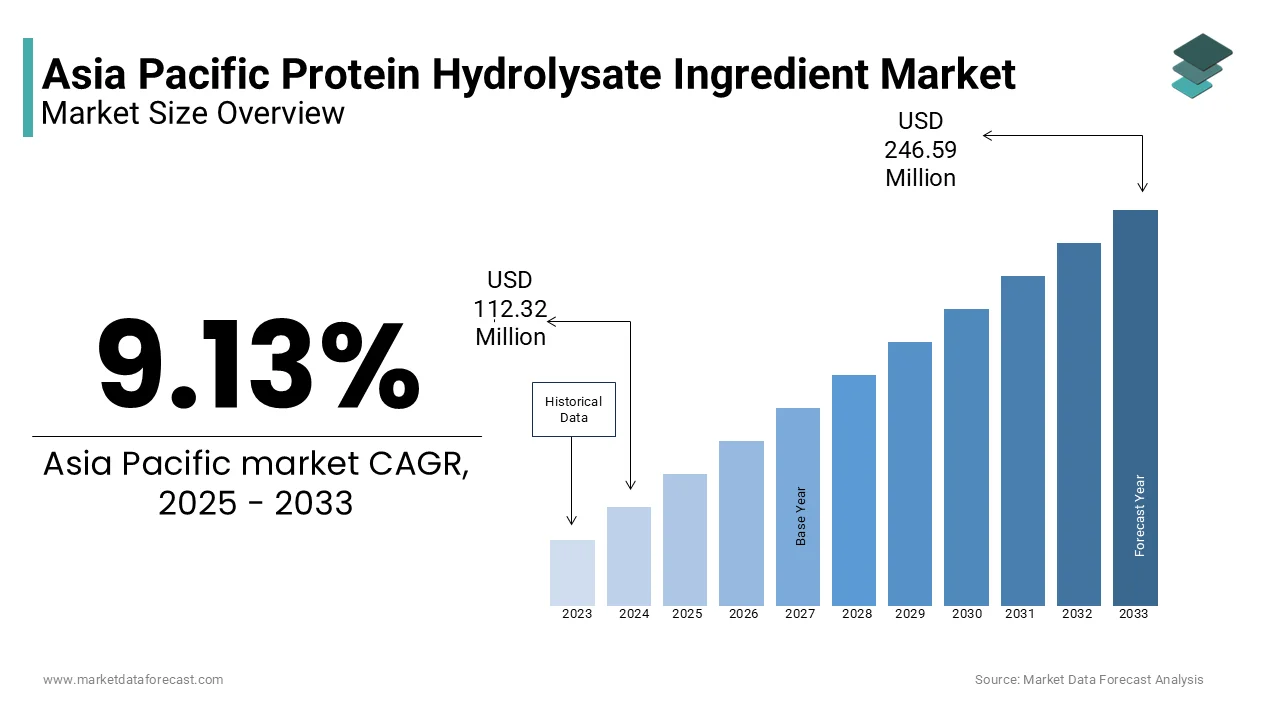
The Asia Pacific protein hydrolysate ingredient market size was valued at USD 122.59 million in 2025, is estimated to reach USD 133.78 million in 2026, and is projected to scale up to USD 269.12 million by the end of 2034, registering a compound annual growth rate (CAGR) of 9.13% during the forecast period from 2026 to 2034. Driven by surging health consciousness, an aging population demanding functional nutrition, and expanding applications in infant, clinical, and sports sectors, the regional market is poised for robust long-term expansion.
Key Executive Metrics (At-a-Glance)
- 2025 Base Valuation: USD 122.59 Million
- 2026 Current Valuation: USD 133.78 Million
- 2034 Forecast Valuation: USD 269.12 Million
- Compound Annual Growth Rate (CAGR): 9.13% (2026–2034)
- Largest Source Segment: Milk (Whey and Casein holding ~35.3% share in 2025)
- Fastest-Growing Source Segment: Plant-based alternatives (projected at ~12.7% CAGR)
- Largest Application Segment: Infant Formula (~43.3% share in 2025)
- Fastest-Growing Application Segment: Sports Nutrition (projected at ~14.2% CAGR)
- Largest Regional Market: China (contributing ~28.3% share in 2025)
- Fastest-Growing Regional Market: India and South Korea
Core Market Drivers
- Functional & Clinical Nutrition Demand: Rapidly aging demographics across Asia demanding easily digestible, hypoallergenic formulations for therapeutic and post-operative recovery.
- Plant-Based Clean-Label Shift: Younger urban demographics adopting flexitarian diets, driving innovation in pea-, soy-, and rice-derived protein hydrolysates.
Primary Market Restraints & Challenges
- High Production Costs & Regulation: Advanced enzymatic hydrolysis and expensive food-grade enzymes combined with complex cross-border regulatory hurdles.
Asia Pacific Protein Hydrolysate Ingredient Market Segmentation Breakdown
| Segment Category | Largest / Dominant Segment | Fastest-Growing Segment |
|---|---|---|
| By Source | Milk (Whey & Casein) | Plant |
| By Application | Infant Formula | Sports Nutrition |
| By Country | China | India / South Korea |
Major Industry Players Profiled
Key enterprises shaping the Asia Pacific protein hydrolysate ingredient market include Ajinomoto Co., Inc., DSM Nutritional Products, Kyowa Hakko Bio Co., Ltd., Fonterra Co-Operative Group, Milk Specialties Group, Abbott Laboratories, Arla Foods Ingredients Group P/S, Agropur Inc., Danone S.A., Davisco Foods International, Inc., Kerry Group plc, Carbery Group, Glanbia PLC, Nestlé S.A., Tate & Lyle PLC, and Archer Daniels Midland Company.
Asia Pacific Protein Hydrolysate Ingredient Market Size
The Asia Pacific protein hydrolysate ingredient market size was valued at USD 122.59 million in 2025 and is expected to reach USD 269.12 million by 2034 from USD 133.78 million in 2026. The market's promising CAGR for the predicted period is 9.13%.
Protein hydrolysates are derived from the partial hydrolysis of proteins, yielding peptides of varying chain lengths that enhance bioavailability and digestibility. These ingredients are widely used across food & beverage, pharmaceuticals, animal feed, and nutraceutical industries due to their functional properties such as emulsification, solubility, and improved flavor profiles. In the Asia Pacific region, the demand for protein hydrolysates has grown significantly, driven by rising health consciousness and the increasing application of hydrolyzed proteins in infant nutrition, sports nutrition, and clinical nutrition formulations.
The Asia Pacific market benefits from a strong agricultural base, with countries like China, India, and Thailand being major producers of plant-based proteins such as soy and pea, which serve as key raw materials for hydrolysate production. Additionally, advancements in enzymatic hydrolysis technologies have enabled manufacturers to produce high-quality hydrolysates tailored to specific functional and nutritional requirements. The growing prevalence of lactose intolerance and dietary restrictions has further spurred interest in alternative protein sources, reinforcing the role of hydrolysates in product innovation across the region.
 MARKET DRIVERS
Rising Demand for Functional and Clinical Nutrition Products
The increasing demand for functional and clinical nutrition products, particularly among aging populations and individuals with chronic health conditions, is one of the primary growth drivers for the Asia Pacific protein hydrolysate ingredient market. As per the United Nations Department of Economic and Social Affairs, the proportion of people aged 65 years or older in Asia is projected to rise from 9% in 2020 to nearly 17% by 2050. This demographic shift has intensified the need for easily digestible, nutrient-dense formulations, where protein hydrolysates play a crucial role.
Protein hydrolysates are extensively used in medical nutrition products such as enteral formulas and post-operative recovery supplements due to their rapid absorption and hypoallergenic properties. For instance, Japan, a country with one of the oldest populations globally, accounted for approximately 30% of Asia’s clinical nutrition market in 2023, as reported by the Japan Health and Nutrition Food Association. Similarly, in South Korea, government-backed initiatives promoting preventive healthcare and wellness have led to increased adoption of protein-enriched beverages and supplements.
Moreover, the rising incidence of lifestyle-related diseases such as diabetes and obesity has prompted consumers to seek out specialized nutrition solutions. Like, more than 212 million adults in the Asia-Pacific region were living with diabetes in 2021. This has created a robust market for low-allergen, high-bioavailability protein hydrolysates in therapeutic formulations, further driving market expansion.
Expansion of Plant-Based and Clean-Label Food Trends
The expanding consumer preference for plant-based and clean-label food products is another significant driver fueling the Asia Pacific protein hydrolysate ingredient market. Consumers across the region are increasingly prioritizing transparency, sustainability, and health benefits when making food choices. This shift is particularly evident in urban centers of China, India, Australia, and Southeast Asia, where younger demographics are adopting flexitarian and vegetarian diets at a faster pace. Protein hydrolysates derived from legumes such as peas, lentils, and soybeans are integral to the formulation of these products, offering desirable texture, mouthfeel, and amino acid profiles without artificial additives.
Furthermore, the clean-label movement has encouraged manufacturers to replace synthetic additives with natural, functional ingredients like hydrolysates. This trend has prompted food and beverage companies to reformulate their offerings using hydrolyzed plant proteins, thereby supporting the growth of the protein hydrolysate market in the region.
MARKET RESTRAINTS
High Production Costs and Complex Manufacturing Processes
The relatively high cost associated with production and the complexity of manufacturing processes is a critical restraint impeding the growth of the Asia Pacific protein hydrolysate ingredient market. Producing protein hydrolysates involves advanced enzymatic hydrolysis techniques, precise temperature control, and rigorous quality assurance protocols to ensure consistent molecular weight distribution and functional properties. These factors contribute to elevated capital and operational expenditures for manufacturers.
Additionally, the cost of food-grade enzymes, such as proteases and peptidases, used in the hydrolysis process remains a substantial portion of the total production budget. Moreover, the need for continuous technological upgrades to maintain product purity and functionality further escalates costs. In countries like Indonesia and the Philippines, where small and medium-sized enterprises (SMEs) dominate the food processing sector, financial constraints often limit the adoption of advanced hydrolysis technologies. Consequently, high production costs act as a barrier to market entry and hinder the scalability of protein hydrolysate manufacturing across several Asia Pacific economies.
Regulatory Hurdles and Labeling Challenges
Regulatory complexities and inconsistent labeling standards across Asia Pacific countries pose another significant challenge to the protein hydrolysate ingredient market. Unlike Europe or North America, where regulatory frameworks for novel food ingredients are well-established, the Asia Pacific region exhibits considerable variation in food safety regulations, import policies, and labeling norms. This inconsistency complicates compliance efforts for manufacturers seeking to operate across multiple markets.
In China, for example, the National Health Commission mandates stringent pre-market approval for new food ingredients, including protein hydrolysates, requiring extensive documentation on safety, allergenicity, and intended use. Moreover, in India, the Food Safety and Standards Authority of India (FSSAI) enforces strict labeling guidelines, which many small-scale producers struggle to meet.
Additionally, discrepancies in allergen labeling laws create confusion among consumers and regulatory authorities alike. Such incidents not only damage brand credibility but also deter retailers from stocking products with unclear labeling. These regulatory hurdles collectively constrain market growth and limit the commercial viability of protein hydrolysates in certain parts of the Asia Pacific region.
MARKET OPPORTUNITIES
Growing Adoption in Sports and Performance Nutrition
Its increasing adoption within the sports and performance nutrition sector is one of the most promising opportunities in the Asia Pacific protein hydrolysate ingredient market. Athletes and fitness enthusiasts are increasingly turning to hydrolyzed proteins for their rapid absorption rates, reduced digestive discomfort, and enhanced muscle recovery properties. With rising disposable incomes and growing participation in fitness activities, especially in urban areas, the demand for high-performance nutrition products fortified with protein hydrolysates is surging.
Countries such as Australia, South Korea, and Singapore have seen a notable rise in the consumption of protein shakes, energy bars, and recovery drinks containing hydrolyzed whey, soy, and collagen peptides.
Moreover, scientific validation of hydrolysates’ efficacy in enhancing athletic performance is bolstering consumer confidence. As per a 2023 clinical study, athletes consuming hydrolyzed whey protein experienced a faster muscle recovery compared to those taking intact protein forms. These findings are encouraging sports nutrition brands to incorporate hydrolysates into their formulations, thereby opening new growth avenues for ingredient suppliers in the Asia Pacific market.
Innovation in Infant and Pediatric Nutrition Formulations
A different significant opportunity for the Asia Pacific protein hydrolysate ingredient market is the ongoing innovation in infant and pediatric nutrition products. Given the rising awareness of early-life nutrition and the growing prevalence of food allergies and sensitivities among children, there is a heightened demand for hypoallergenic, easily digestible protein sources. Protein hydrolysates, particularly those derived from cow’s milk and soy, are increasingly being used in infant formula and follow-on nutrition products to mitigate allergic reactions and support healthy development.
In addition, major infant nutrition companies such as Mead Johnson and Nestlé have ramped up their production of hydrolysate-based formulas in the region.
Additionally, governments across the region are investing in child nutrition programs that emphasize fortified foods and supplements. In India, the Ministry of Women and Child Development launched the "Poshan Abhiyan" initiative in 2018, which includes provisions for protein-enriched supplementary nutrition for undernourished children. This policy environment, coupled with rising parental awareness, is expected to drive sustained demand for protein hydrolysates in infant and pediatric formulations throughout the Asia Pacific region.
MARKET CHALLENGES
Fluctuating Raw Material Prices and Supply Chain Disruptions
The volatility in raw material prices and frequent supply chain disruptions is a major challenge confronting the Asia Pacific protein hydrolysate ingredient market. The primary sources of protein hydrolysates, such as dairy, soybeans, peas, and fish, are subject to seasonal variations, geopolitical tensions, and climate-related disruptions, all of which impact availability and pricing stability.
Moreover, geopolitical instability in Eastern Europe disrupted soybean exports from Ukraine, causing a price hike in soy-based hydrolysates across Southeast Asia. These fluctuations make it difficult for manufacturers to maintain consistent pricing and profit margins.
Additionally, the region’s reliance on imported raw materials, especially in countries like Japan and South Korea, exposes the market to exchange rate volatility and trade barriers. Moreover, logistical bottlenecks following the pandemic continue to affect transportation timelines. These challenges underscore the vulnerability of the supply chain and highlight the need for diversification of sourcing strategies, local production capabilities, and strategic stockpiling to mitigate future risks.
Consumer Misunderstanding and Limited Awareness
Despite the functional and nutritional benefits of protein hydrolysates, limited consumer awareness and widespread misunderstanding remain significant challenges in the Asia Pacific market. Many consumers lack clarity regarding the differences between intact proteins, isolates, and hydrolysates, often associating hydrolysates solely with infant formulas or medical nutrition rather than everyday food and beverage applications.
This knowledge gap hinders broader market penetration, especially in rural and semi-urban regions where access to nutrition education is limited.
Moreover, misconceptions around the taste, texture, and necessity of hydrolysate-fortified products persist. For example, in India, cultural preferences for whole food protein sources like lentils and dairy discourage the adoption of processed protein ingredients.
To overcome these barriers, industry players must invest in targeted consumer education campaigns, collaborate with nutritionists and dietitians, and engage in transparent labeling practices.
REPORT COVERAGE
| REPORT METRIC | DETAILS |
| Market Size Available | 2025 to 2034 |
| Base Year | 2025 |
| Forecast Period | 2026 to 2034 |
| CAGR | 9.13% |
| Segments Covered | By Source, Application, and Region |
|
Various Analyses Covered | Regional & Country Level Analysis, Segment-Level Analysis, DROC, PESTLE Analysis, Porter’s Five Forces Analysis, Competitive Landscape, Analyst Overview on Investment Opportunities |
| Regions Covered | India, China, Japan, South Korea, Australia, New Zealand, Thailand, Malaysia, Vietnam, Philippines, Indonesia, Singapore, and the Rest of Asia-Pacific |
| Market Leaders Profiled | Fonterra Co-Operative Group, Milk Specialties Group, Abbott Laboratories, Arla Foods Ingredients Group P/S, Agropur Inc, Danone S.A., Davisco Foods International, Inc., Kerry Group plc, Carbery Group, Glanbia PLC, Nestlé S.A., Tate & Lyle PLC, and Archer Daniels Midland Company, and others |
SEGMENTAL ANALYSIS
By Source Insights
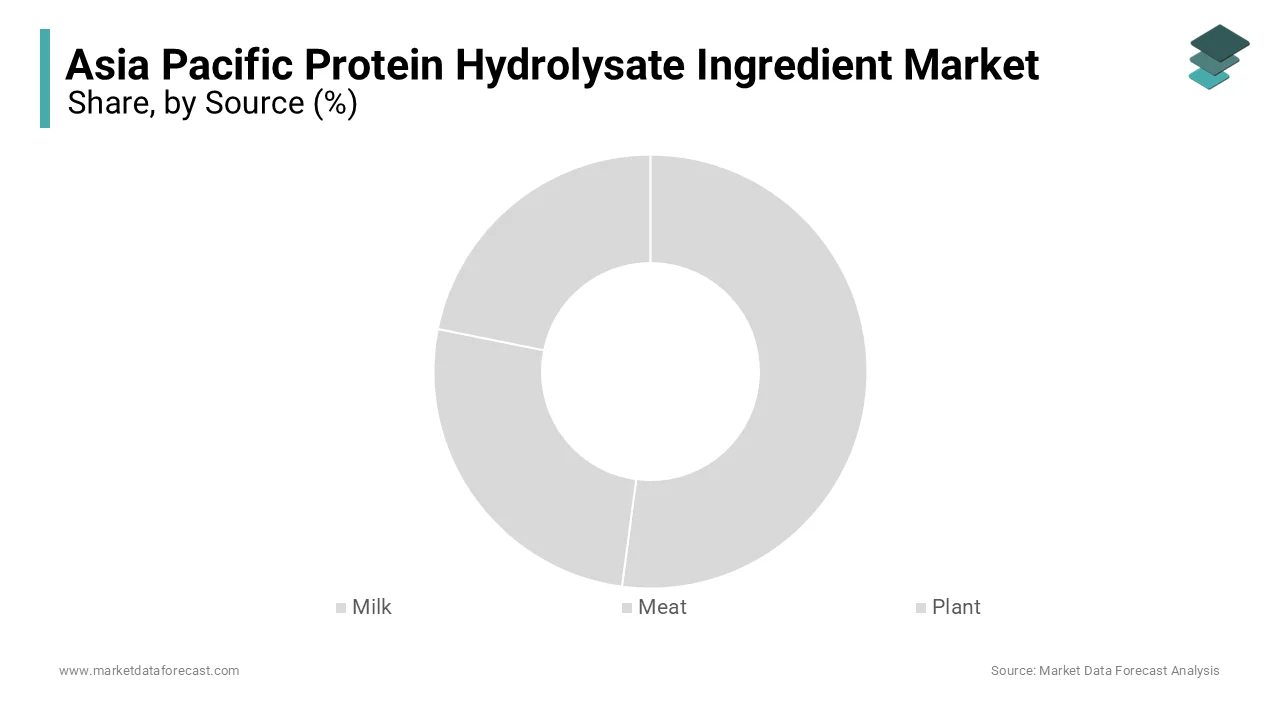
The Milk-based protein hydrolysates segment, particularly derived from whey and casein, dominate the Asia Pacific market with an estimated 35.3% share as of 2025. This dominance is primarily attributed to Their widespread use in infant nutrition, clinical nutrition, and sports supplements, where high digestibility and hypoallergenic properties are crucial, is primarily driving the segment.
China and Japan are key contributors to the demand for milk-derived hydrolysates due to rising awareness of early-life nutrition and growing incidence of cow's milk protein allergy among infants. In addition, the expansion of premium infant formula brands such as Wyeth Nutrition and Mead Johnson in Southeast Asia has further bolstered demand for high-quality hydrolyzed whey and casein ingredients.
Moreover, in sports nutrition, hydrolyzed whey protein isolates have gained traction owing to their rapid absorption and muscle recovery benefits.
Plant-based protein hydrolysates are emerging as the fastest-growing segment in the Asia Pacific protein hydrolysate ingredient market, projected to expand at a CAGR of approximately 12.7% between 2025 and 2030. This growth is driven by increasing consumer preference for plant-based diets, sustainability concerns, and the rise in lactose intolerance across the region.
India stands out as a major growth engine for this segment. Similarly, in China, government-backed initiatives promoting alternative proteins have spurred investments in soy and rice protein hydrolysate processing facilities, particularly in Jiangsu and Guangdong provinces.
Australia and New Zealand are also witnessing robust growth in plant-based hydrolysates, fueled by the booming vegan food industry. With increasing R&D into flavor masking and functional performance of plant hydrolysates, this segment is well-positioned for sustained high-growth momentum across the Asia Pacific region.
By Application Insights
The infant formula segment remained the largest application for protein hydrolysates in the Asia Pacific region by accounting for a 43.3% of total demand in 2025. The critical role of hydrolyzed proteins in addressing milk protein allergy and digestive sensitivities among infants, especially in countries with high birth rates and rising disposable incomes is largely propelling the growth of this segment. Like, the Chinese government’s focus on improving child health outcomes through national nutrition programs has accelerated the adoption of extensively hydrolyzed whey and casein in premium infant formulations. Japan also plays a pivotal role in driving this segment, given its aging population and heightened emphasis on early-life nutrition. These factors underline the indispensability of protein hydrolysates in infant nutrition, reinforcing the dominant position of this application segment across the Asia Pacific market.
The sports nutrition segment is emerging as the fastest-growing application for protein hydrolysates in the Asia Pacific market and is likely expanding at a CAGR of 14.2% from 2026 to 2034. Rising fitness consciousness, increasing participation in competitive sports, and the proliferation of protein-fortified beverages and supplements tailored for active consumers is swift progress of this seggment.
South Korea’s youth-driven wellness culture has led to a surge in demand for fast-absorbing protein sources like hydrolyzed whey and collagen peptides, which are commonly used in ready-to-drink shakes and protein bars. Similarly, in Australia, where gym memberships grew in 2023, as per the Australian Health and Fitness Association, sports nutrition brands are increasingly incorporating hydrolysates to improve muscle recovery and performance.
Additionally, scientific validation of hydrolysates’ efficacy in reducing exercise-induced fatigue is strengthening consumer confidence. These findings are encouraging both elite athletes and recreational fitness enthusiasts to opt for hydrolysate-enriched products, propelling the sports nutrition segment to new heights across the region.
REGIONAL ANALYSIS
China
China spearheaded the Asia Pacific protein hydrolysate ingredient market by contributing 28.3% in 2025. As a global leader in dairy and soy processing, the country leverages its vast agricultural resources and advanced biotechnological infrastructure to support a thriving hydrolysate manufacturing sector. The country's dominance is largely driven by the expanding infant nutrition market, where hypoallergenic formulas account for a growing proportion of sales. Additionally, the Chinese government’s push for domestic innovation in medical nutrition under the “Healthy China 2030” initiative has encouraged investment in clinical-grade hydrolysates. Moreover, the rise of domestic supplement brands and the integration of hydrolysates into sports nutrition products further strengthen China’s market growth. With ongoing advancements in enzymatic hydrolysis technologies and increasing collaborations between research institutions and manufacturers, China continues to set the pace for the regional protein hydrolysate ingredient market.
Japan
Japan is another key region in the Asia Pacific protein hydrolysate ingredient market. The country's mature healthcare system, coupled with an aging population and high prevalence of chronic diseases, makes it a key consumer of clinical and therapeutic nutrition products containing protein hydrolysates. Additionally, Japan’s well-established sports nutrition industry is another driver of hydrolysate consumption. Coupled with stringent food safety regulations and a strong presence of global ingredient suppliers like Ajinomoto and Kyowa Hakko Bio, Japan maintains a robust and quality-focused protein hydrolysate market.
India
India is quickly expanding in the Asia Pacific protein hydrolysate ingredient market in 2025, driven by growing demand in infant nutrition, clinical applications, and plant-based food sectors. As one of the world’s largest producers of pulses and legumes, India offers abundant raw materials for plant-derived hydrolysates, particularly from peas, mung beans, and chickpeas. This behavioral shift, combined with rising disposable incomes and increasing urbanization, positions India as a rapidly expanding hub for protein hydrolysate applications across multiple industries.
South Korea
South Korea is distinguished by its technologically sophisticated food and pharmaceutical industries. The country’s emphasis on innovation and product differentiation has positioned hydrolysates as key functional ingredients in premium infant formulas, sports supplements, and anti-aging cosmetics. Also, the local market for hydrolyzed collagen peptides, widely used in beauty-from-within products, grew with major players like CJ CheilJedang and Daesang investing heavily in clean-label hydrolysate formulations. Furthermore, South Korea’s proactive regulatory environment encourages the development of novel hydrolysate-based products, ensuring compliance with international standards while supporting export opportunities.The country also excels in clinical nutrition, where protein hydrolysates are integrated into hospital nutrition protocols to aid post-operative recovery. Supported by strong R&D funding and a consumer base receptive to health innovations, South Korea continues to be a vital player in the regional protein hydrolysate landscape.
Australia
Australia is characterized by high consumer awareness, stringent food safety standards, and a strong preference for premium nutritional products. The country’s well-developed healthcare and fitness sectors drive consistent demand for hydrolysates in clinical nutrition, sports supplements, and infant formulas. In addition, companies like Bubs Australia and Bellamy’s Organic have expanded their hypoallergenic product lines, incorporating extensively hydrolyzed whey and casein. Government support for sustainable protein sourcing and the growing popularity of plant-based alternatives further enhance Australia’s appeal as a progressive market for protein hydrolysates.
KEY MARKET PLAYERS AND COMPETITIVE LANDSCAPE
Fonterra Co-Operative Group, Milk Specialties Group, Abbott Laboratories, Arla Foods Ingredients Group P/S, Agropur Inc, Danone S.A., Davisco Foods International, Inc., Kerry Group plc, Carbery Group, Glanbia PLC, Nestlé S.A., Tate & Lyle PLC, and Archer Daniels Midland Company are key players in the
The competition in the Asia Pacific protein hydrolysate ingredient market is characterized by a mix of established global players and emerging regional manufacturers vying for dominance through technological differentiation and strategic positioning. As demand for functional and easily digestible proteins rises across infant nutrition, clinical applications, and sports supplements, companies are increasingly focused on delivering high-purity hydrolysates tailored to specific nutritional and functional requirements. While multinational corporations leverage their global R&D infrastructure and brand reputation to maintain leadership positions, domestic players in countries like India, China, and South Korea are capitalizing on cost advantages and localized sourcing to capture market share. Innovation remains at the core of competitive dynamics, with firms continuously refining enzymatic hydrolysis techniques to enhance product performance and sensory attributes. Additionally, partnerships with academic institutions and government-backed initiatives are shaping up as key differentiators in securing long-term growth and industry influence.
TOP PLAYERS IN THE MARKET
Ajinomoto Co., Inc. (Japan)
Ajinomoto is a leading global player in amino acid and protein-based ingredients, with a strong presence in the Asia Pacific hydrolysate market. The company leverages its advanced fermentation and enzymatic hydrolysis technologies to produce high-quality hydrolysates for food, pharmaceuticals, and clinical nutrition applications. Ajinomoto’s commitment to innovation and sustainability has enabled it to supply customized solutions that meet evolving consumer demands across the region.
DSM Nutritional Products (Netherlands, with significant operations in Asia)
DSM plays a pivotal role in the Asia Pacific market through its wide range of functional hydrolysates used in infant nutrition, sports supplements, and medical foods. With dedicated R&D centers in Singapore and Japan, DSM focuses on developing clean-label, bioavailable protein hydrolysates tailored to regional dietary needs. Its strategic partnerships with local manufacturers have strengthened its supply chain and product portfolio in key Asian markets.
Kyowa Hakko Bio Co., Ltd. (Japan)
Kyowa Hakko Bio is renowned for its expertise in amino acid fermentation and peptide technology, making it a key supplier of specialized hydrolysates in the Asia Pacific region. The company supplies extensively hydrolyzed proteins for hypoallergenic infant formulas and therapeutic nutrition products. Kyowa Hakko Bio’s emphasis on scientific validation and regulatory compliance has positioned it as a trusted partner for pharmaceutical and food companies across Asia.
TOP STRATEGIES USED BY KEY PLAYERS
One major strategy employed by key players is product innovation and formulation diversification , where companies are investing in research to develop novel hydrolysates with enhanced functionality, improved taste profiles, and broader application scope across various end-use industries.
Another critical approach is strategic collaborations and partnerships , particularly with local ingredient suppliers and food manufacturers in emerging Asian markets, enabling companies to better understand regional consumer preferences and streamline their distribution networks.
Lastly, firms are focusing on expanding production capabilities and establishing regional manufacturing hubs , which allows them to reduce costs, ensure supply chain resilience, and comply with local regulatory standards while catering to growing demand from diverse sectors such as infant nutrition, clinical nutrition, and sports supplements.
RECENT HAPPENINGS IN THE MARKET
- In February 2025, Ajinomoto expanded its enzymatic hydrolysis facility in Osaka to increase production capacity for specialized protein hydrolysates used in clinical and infant nutrition, aligning with rising regional demand for hypoallergenic formulations.
- In May 2025, DSM Nutritional Products launched a new line of plant-based hydrolysates developed specifically for the Asian market, emphasizing clean-label appeal and functional benefits such as improved solubility and digestive ease.
- In July 2025, Kyowa Hakko Bio entered into a joint development agreement with a leading infant formula manufacturer in Southeast Asia to co-create customized hydrolysate blends that meet local regulatory and nutritional requirements.
- In September 2025, a prominent Indian protein hydrolysate producer initiated a collaboration with a Japanese biotech firm to integrate advanced debittering technologies into its manufacturing process, enhancing the sensory profile of plant-derived hydrolysates.
- In November 2025, a South Korean biotech startup partnered with a global food ingredient distributor to commercialize its proprietary rice protein hydrolysate, targeting the growing sports nutrition and elderly care segments in the APAC region.
MARKET SEGMENTATION
This research report on the Asia Pacific protein hydrolysate ingredient market has been segmented and sub-segmented based on the following categories.
By Source
- Milk
- Meat
- Plant
By Application
- Infant Formula
- Sports Nutrition
- Clinical Nutrition
By Country
- India
- China
- Japan
- South Korea
- Australia
- New Zealand
- Thailand
- Malaysia
- Vietnam
- Philippines
- Indonesia
- Singapore
- Rest of Asia-Pacific