- Product Description Description
- Table of Contents TOC
- List of Table & Figure LOT
- Get Free Sample PDF Sample PDF
Market Size, 2025
$11.59 BnMarket Estimate, 2026
$12.48 BnMarket Forecast, 2034
$22.62 BnCAGR, 2026–2034
7.72%Asia Pacific Sodium Caseinate Market Size, Growth, Trends & Forecast (2026–2034)
The Asia Pacific sodium caseinate market size was valued at USD 11.59 billion in 2026 (with baseline estimates noting USD 12.48 billion in 2026), and is projected to scale up to USD 22.62 billion by 2034, registering a compound annual growth rate (CAGR) of 7.72% during the forecast period from 2026 to 2034. Driven by rapid urbanization, expanding processed food and dairy industries, rising consumer demand for protein-rich nutritional supplements, and robust raw material availability across key regional economies, the market continues to expand steadily.
Key Executive Metrics (At-a-Glance)
- 2026 Current Valuation: USD 11.59 Billion – USD 12.48 Billion
- 2034 Forecast Valuation: USD 22.62 Billion
- Compound Annual Growth Rate (CAGR): 7.72% (2026–2034)
- Dominant Application Segment: Food Additive (commanding 48.7% of total demand, driven by texture and stability enhancements)
- Fastest-Growing Application Segment: Free Fat Stabilizers (projected to grow at a CAGR of 7.2%)
- Dominant Grade Segment: Food Grade (holding a major market share of 67.4%)
- Fastest-Growing Grade Segment: Industrial Grade (registering an expected CAGR of around 8.1%)
- Dominant End-User Segment: Food and Beverages (holding the substantial majority share of overall consumption)
- Fastest-Growing End-User Segment: Pharmaceuticals (anticipated to register the highest growth rate at a CAGR of 9.3%)
- Dominant Region: China & India (leading key consumer and production hubs backed by extensive dairy infrastructure)
Core Market Drivers
- Expanding Dairy & Processed Food Sectors: Rapid surge in ready-to-eat meals, fortified beverages, and protein-enriched snacks across emerging economies like India, Indonesia, and Vietnam.
- Rising Demand for Nutritional Supplements: Growing health consciousness, wellness trends, and preventive healthcare driving sports nutrition, infant formulas, and medical supplements.
- Robust Raw Material Supply: Extensive milk production bases across the Asia-Pacific region providing stable inputs for casein derivatives.
Primary Market Restraints & Challenges
- Raw Milk Volatility & Cost Pressures: Unpredictable seasonal variations, fodder shortages, and competition from traditional dairy processors creating supply-side bottlenecks.
- Regulatory & Labeling Constraints: Stringent compliance requirements, allergen declarations (such as FSANZ standards), and strict approval processes affecting time-to-market.
- Alternative Substitution & Sustainability Concerns: Competition from cost-effective soy proteins, modified starches, and hydrocolloids alongside environmental scrutiny regarding dairy carbon footprints.
Asia Pacific Sodium Caseinate Market Segmentation Breakdown
| Segment Category | Leading Sub-Segment (Base Year) | Fastest-Growing Sub-Segment (2026–2034) |
|---|---|---|
| By Application | Food Additive (capturing 48.7% share for texture, moisture, and protein fortification) | Free Fat Stabilizers (projected at a 7.2% CAGR for stable emulsions in meat and bakery) |
| By Grade | Food Grade (accounting for 67.4% consumption in packaged and functional foods) | Industrial Grade (registering an 8.1% CAGR across textiles, adhesives, and pharma excipients) |
| By End-User | Food and Beverages (dominant sector spanning dairy, bakery, and convenience items) | Pharmaceuticals (predicted at a 9.3% CAGR driven by targeted drug delivery and excipients) |
| By Country | China & India (leading regional markets anchored by robust milk output and food processing) | Southeast Asia & India (expanding rapidly via modern retail, biotechnology, and health trends) |
Major Industry Players Profiled
Key market leaders and notable enterprises shaping the competitive Asia Pacific sodium caseinate market include Fonterra Co-operative Group Limited, Glanbia PLC, Arla Foods Ingredients Group P/L, Erie Foods, Clover Fonterra Ingredients Proprietary Limited, Charotar Casein Company, Nutra Food Ingredients LLC, Farbest Brands, FrieslandCampina DMV, and AMCO Proteins.
Asia Pacific Sodium Caseinate Market Size
The Asia Pacific sodium caseinate market size was valued at USD 11.59 billion in 2026 and is expected to reach USD 22.62 billion by 2034 from USD 12.48 billion in 2026, growing at a 7.72% CAGR.
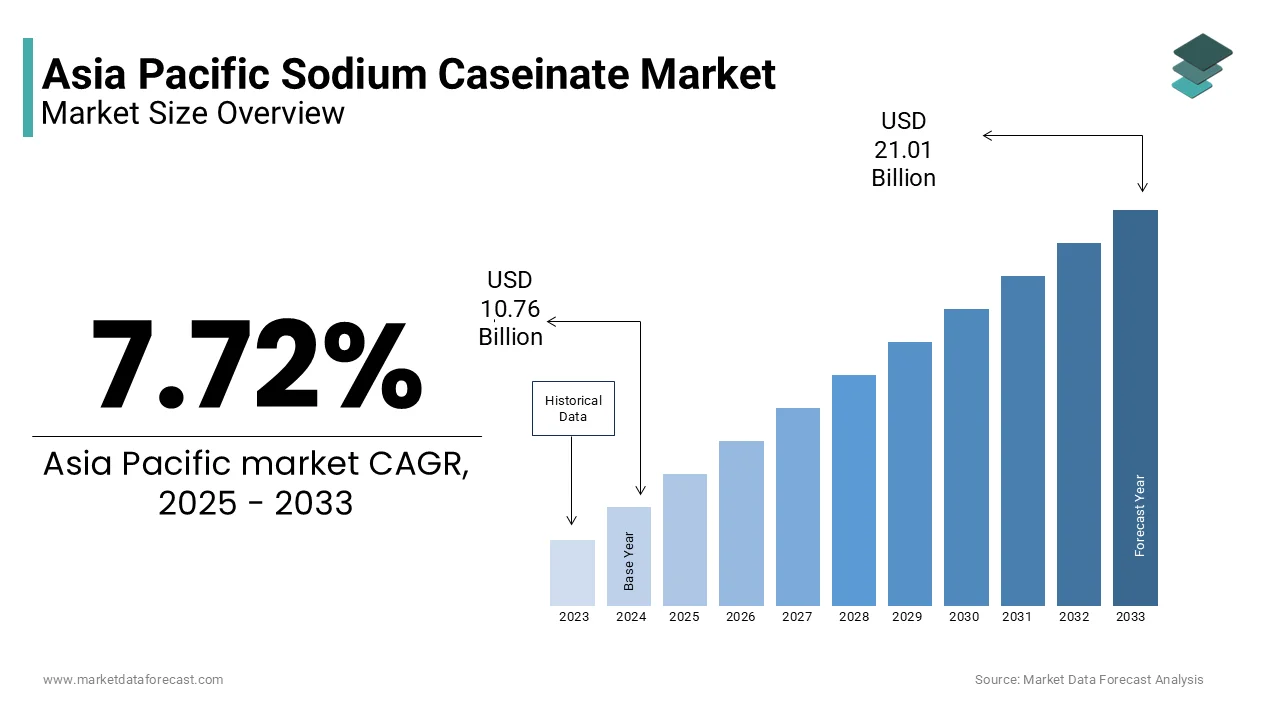
Sodium caseinate is a water-soluble protein derivative obtained from casein, which is extracted from milk. It functions as an emulsifier, thickener, and stabilizer in various food and industrial applications. Due to its high nutritional value, solubility across a wide pH range, and ability to form stable complexes with other ingredients, sodium caseinate is widely used in dairy products, meat processing, beverages, and even pharmaceuticals.
In the Asia Pacific region, the demand for sodium caseinate has been steadily rising due to rapid urbanization, growing processed food industries, and increasing consumer awareness regarding protein-rich diets. Countries such as China, India, Japan, and Australia are emerging as key consumers of this ingredient. According to Food and Agriculture Organization (FAO) data, milk production in the Asia-Pacific region reached over 360 million metric tons in 2022, providing a robust raw material base for casein derivatives like sodium caseinate.
Apart from these, regulatory support and food safety standards are evolving in the region, particularly in Southeast Asian countries where food manufacturing sectors are expanding. Also, there has been a significant push toward adopting standardized food additives, including proteins like sodium caseinate, in packaged and functional foods. This trend aligns with the global shift toward clean-label ingredients, further boosting regional market interest.
 MARKET DRIVERS
Expanding Dairy and Processed Food Industries in the Asia Pacific
A primary driver of the Asia Pacific sodium caseinate market is the rapid expansion of the dairy and processed food industries, particularly in emerging economies such as India, Indonesia, and Vietnam. These countries have witnessed a surge in consumption of ready-to-eat meals, fortified beverages, and protein-enriched snacks, all of which rely on sodium caseinate for texture enhancement and nutritional fortification.
Furthermore, the rise of organized retail chains and e-commerce platforms has significantly improved product accessibility, encouraging manufacturers to incorporate functional ingredients like sodium caseinate into their formulations. In China, the processed food market was valued at over USD 400 billion in 2023, as per the China National Light Industry Council, indicating a strong foundation for growth in sodium caseinate consumption.
Besides, food service providers and quick-service restaurants in the region are increasingly using sodium caseinate in cheese analogs, plant-based alternatives, and meat extenders to improve mouthfeel and moisture retention. With increasing investments in food processing infrastructure and growing health consciousness among consumers, the demand for sodium caseinate is projected to continue rising in tandem with the sector’s development.
Rising Demand for Nutritional Supplements and Functional Foods
An additional significant driver of the Asia Pacific sodium caseinate market is the growing demand for nutritional supplements and functional foods, especially among health-conscious consumers. Sodium caseinate is known for its high biological value and slow digestion rate, making it ideal for use in sports nutrition products, infant formulas, and medical nutrition supplements. As per the Asia Pacific Nutraceutical Association, the region’s nutraceutical market was valued at over USD 32 billion in 2023, with an annual growth rate exceeding 9%, driven by increased awareness of preventive healthcare and wellness trends.
In addition, Japan, South Korea, and Australia have emerged as key markets for protein-enriched products, including protein shakes, energy bars, and meal replacements, many of which utilize sodium caseinate as a key ingredient. In India, according to the Ministry of Food Processing Industries, sales of fortified dairy products grew by more than 12% year-over-year in 2023, largely attributed to government initiatives promoting nutrition security.
Moreover, with rising disposable incomes and changing lifestyles, middle-class populations across Southeast Asia are increasingly incorporating functional foods into their daily diets. This shift is further supported by product innovations from major food companies aiming to meet evolving dietary preferences, thereby reinforcing the role of sodium caseinate in the regional market landscape.
MARKET RESTRAINTS
Availability and Cost Volatility of Raw Milk Supply
A major restraint affecting the Asia Pacific Sodium Caseinate Market is the fluctuating availability and pricing of raw milk, which serves as the primary input for casein production. The supply of raw milk is highly dependent on seasonal variations, livestock productivity, and feed costs—factors that are often unpredictable and region-specific.
For instance, in India, which accounts for nearly 25% of global milk production, monsoon variability and fodder shortages have historically led to fluctuations in milk output.
These cost escalations directly impact the price of sodium caseinate, making it less attractive to cost-sensitive food manufacturers, particularly in developing economies like Indonesia and the Philippines.
Besides, competition for raw milk from traditional dairy processors—who often offer better prices than casein producers—can limit the availability of milk for casein extraction. In Thailand, for example, according to the Department of Livestock Development, domestic milk consumption rose by 7.2% in 2023, reducing surplus volumes available for industrial processing. Such constraints create supply-side bottlenecks and hinder the consistent growth of the sodium caseinate industry in the Asia Pacific region.
Regulatory Constraints and Labeling Requirements
Stringent regulatory frameworks and labeling requirements across several Asia Pacific countries also pose a challenge to the sodium caseinate market. While the ingredient is generally recognized as safe (GRAS) by international food authorities, varying national regulations can complicate its adoption in certain food categories. For example, in Australia and New Zealand, Food Standards Australia New Zealand (FSANZ) mandates clear allergen declarations for casein-based products, increasing compliance burdens for manufacturers. Similarly, in Japan, the Ministry of Health, Labour and Welfare enforces strict approval processes for food additives, which can delay product launches and increase time-to-market.
Moreover, consumer preference for "clean label" ingredients has prompted some manufacturers to seek alternatives perceived as more natural or minimally processed. This evolving regulatory and consumer landscape adds complexity to market expansion efforts, limiting the widespread use of sodium caseinate despite its functional benefits.
MARKET OPPORTUNITIES
Growth in Plant-Based and Alternative Protein Products
A compelling opportunity for the Asia Pacific sodium caseinate market lies in the burgeoning plant-based and alternative protein sector. As veganism and flexitarian diets gain traction across the region, food manufacturers are seeking functional ingredients that can mimic the texture and binding properties of animal proteins. Sodium caseinate, although derived from milk, is being explored as a co-formulant in hybrid plant-based products, especially in meat analogs and dairy-free cheeses, where it helps improve elasticity and moisture retention.
Similarly, in Singapore—a hub for alternative protein innovation—startups such as Next Gen Foods have incorporated sodium caseinate in select formulations to enhance sensory attributes. Apart from these, collaborations between ingredient suppliers and plant-based food manufacturers are accelerating, with companies like Glanbia Nutritionals and Fonterra actively engaging in R&D to optimize sodium caseinate’s compatibility with plant proteins. As the demand for sustainable and protein-rich alternatives continues to grow, the inclusion of sodium caseinate in innovative food formats presents a promising avenue for market expansion in the Asia Pacific region.
Expansion of the Sports Nutrition Industry
The growing popularity of fitness and wellness culture across the Asia Pacific region is creating new opportunities for the sodium caseinate market, particularly within the sports nutrition segment. Sodium caseinate is favored for its slow-digesting properties, making it ideal for sustained amino acid release—key for muscle recovery and endurance.
As per the Sports & Fitness Industry Association of Asia (SFIA Asia), the sports nutrition market in the region was valued at over USD 4.2 billion in 2023, with double-digit growth rates recorded in countries such as Australia, Japan, and South Korea.
Australia, in particular, has emerged as a leader in protein supplement consumption, with over 40% of active adults regularly consume protein powders or bars, according to the Australian Institute of Sport. Sodium caseinate is frequently blended with whey protein to provide a balanced absorption profile. Meanwhile, in China, the rise of home workouts and digital fitness platforms has spurred demand for convenient, high-protein nutrition products.
With governments across the region promoting physical activity and healthy living, the sports nutrition category is expected to expand further, offering substantial growth potential for sodium caseinate as a functional ingredient.
MARKET CHALLENGES
Competition from Alternative Emulsifiers and Stabilizers
Among the major challenges facing the Asia Pacific sodium caseinate market is the growing competition from alternative emulsifiers and stabilizers, such as soy protein isolates, whey protein concentrates, and synthetic additives. These substitutes are often more cost-effective and easier to source, especially in regions where dairy infrastructure is underdeveloped.
For example, in Indonesia and the Philippines, where soybean cultivation is well-established, manufacturers frequently opt for soy-based proteins to reduce formulation costs while achieving similar textural benefits.
Besides, advancements in food technology have led to the development of modified starches and hydrocolloids that can perform comparable functional roles to sodium caseinate in food systems. For example, in Japan, food additive manufacturers have introduced tailor-made blends of xanthan gum and carrageenan that replicate the emulsifying and thickening properties of casein derivatives at lower costs. As food companies continue to prioritize cost efficiency and ingredient flexibility, sodium caseinate faces mounting pressure to justify its premium positioning in competitive formulations.
Environmental and Sustainability Concerns in Dairy Production
Environmental sustainability concerns surrounding dairy farming are increasingly impacting the perception and scalability of sodium caseinate in the Asia Pacific market. Dairy production is associated with significant greenhouse gas emissions, water usage, and land degradation—issues that are coming under greater scrutiny as governments and consumers push for greener food systems.
New Zealand, one of the largest exporters of dairy ingredients, has implemented stringent methane reduction targets under its Agricultural Emissions Advisory Group, which could raise the cost of milk production and, consequently, sodium caseinate. Similarly, in India, the Ministry of Environment, Forest and Climate Change has proposed emission caps for large dairy farms, potentially slowing down the expansion of casein processing units reliant on local milk supplies.
Moreover, younger consumers in urban centers across South Korea and Singapore are showing a growing preference for carbon-neutral or low-impact food products, influencing brand decisions to explore non-dairy alternatives. As sustainability becomes a central purchasing criterion, the sodium caseinate industry must address these ecological concerns to maintain relevance in the evolving food ecosystem.
REPORT COVERAGE
| REPORT METRIC | DETAILS |
| Market Size Available | 2025 to 2034 |
| Base Year | 2025 |
| Forecast Period | 2026 to 2034 |
| CAGR | 7.72% |
| Segments Covered | By Application, Grade, End-User, and Region |
|
Various Analyses Covered | Regional & Country Level Analysis, Segment-Level Analysis, DROC, PESTLE Analysis, Porter’s Five Forces Analysis, Competitive Landscape, Analyst Overview on Investment Opportunities |
| Regions Covered | India, China, Japan, South Korea, Australia, New Zealand, Thailand, Malaysia, Vietnam, Philippines, Indonesia, Singapore, and the Rest of Asia-Pacific |
| Market Leaders Profiled | rie Foods, Clover Fonterra Ingredients Proprietary Limited, Charotar Casein Company, Nutra Food Ingredients LLC, Farbest Brands, FrieslandCampina DMV, AMCO Proteins, and others |
SEGMENTAL ANALYSIS
By Application Insights
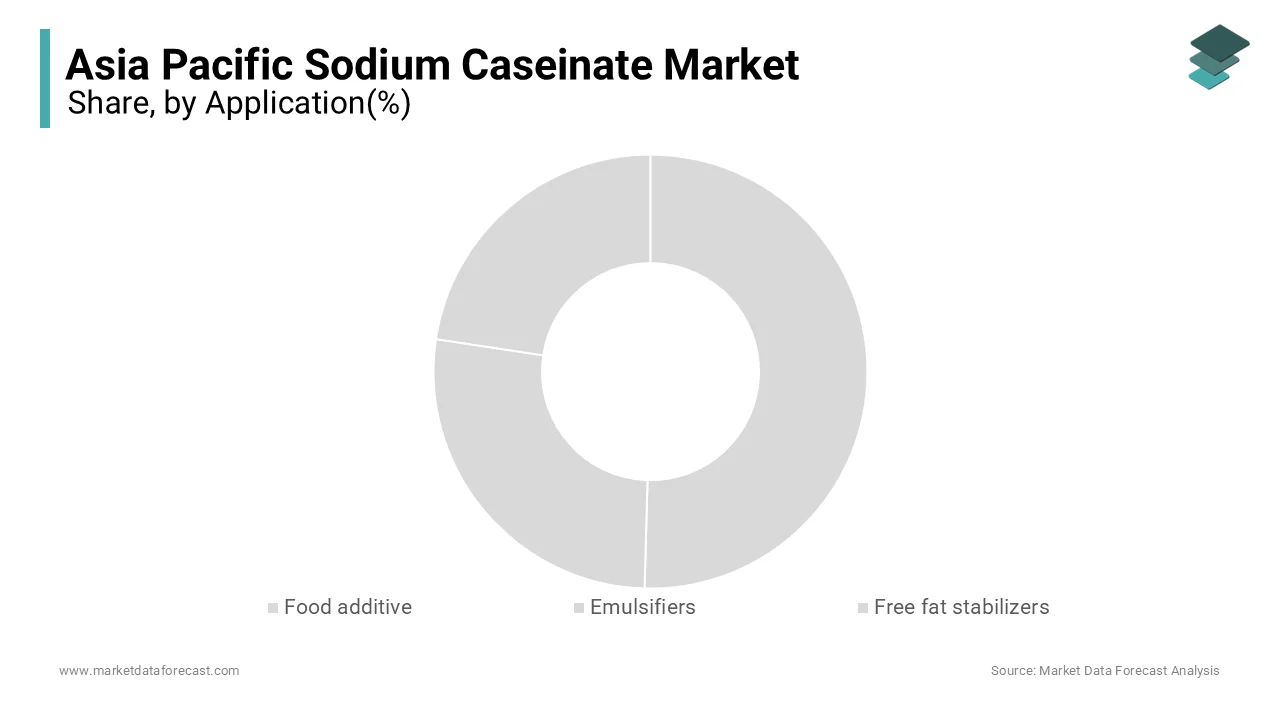
The food additive segment commanded the Asia Pacific sodium caseinate market, accounting for 48.7% of total demand. This dominance is primarily driven by the widespread use of sodium caseinate as a functional ingredient in processed foods to enhance texture, moisture retention, and nutritional value. Sodium caseinate’s ability to act as a protein fortifier and stabilizer makes it indispensable in dairy-based products such as flavored milk, yogurt, and cheese analogs.
Also, according to the Indian Ministry of Food Processing Industries, the country’s dairy product market reached USD 125 billion in 2023, largely supported by rising urbanization and increasing health consciousness among consumers. Moreover, in Japan, as per the National Institute of Livestock and Grassland Science, over 60% of functional dairy beverages launched between 2021 and 2023 contained sodium caseinate as a key ingredient.
Moreover, regulatory bodies like Food Standards Australia New Zealand (FSANZ) have reinforced the safety and usage guidelines of sodium caseinate, encouraging its adoption in commercial food production. With rising disposable incomes and evolving dietary habits, the food additive application is expected to maintain its leading position in the regional market landscape.
Among all applications, the free fat stabilizers segment is projected to grow at the fastest rate, recording a CAGR of 7.2% from 2026 to 2034. This quick progress is attributed to the increasing need for stable fat emulsions in meat processing, bakery products, and frozen desserts—sectors that are undergoing significant modernization across the Asia Pacific.
Sodium caseinate plays a crucial role in these formulations by preventing oil separation and maintaining structural integrity during freezing and thawing cycles. Similarly, in India, the rise of organized meat processing units has led to increased adoption of sodium caseinate as a fat stabilizer in sausages, nuggets, and patties. According to the Indian Meat Export Development Board, domestic meat exports grew by 12% in 2023, reflecting improved product consistency due to better formulation techniques.
Apart from these, innovations in plant-based meat alternatives, particularly in Singapore and Malaysia, are leveraging sodium caseinate’s stabilizing properties to improve texture and juiciness in hybrid products. So, with growing investments in food R&D and shifting consumer preferences toward premium processed foods, the free fat stabilizers segment is poised for sustained high growth in the coming years.
By Grade Insights
Food grade sodium caseinate held the maximum share of the Asia Pacific market in 2025, contributing 67.4% of total consumption. Its dominance stems from its extensive use in food manufacturing, where it serves as an emulsifier, thickener, and protein supplement. As per the ASEAN Food Safety System, food-grade additives like sodium caseinate must meet stringent quality benchmarks before being approved for use in packaged and functional foods, reinforcing its credibility and acceptance.
In Japan, the Ministry of Agriculture, Forestry and Fisheries reported that sales of protein-enriched dairy products rose by 11% in 2023, driven by aging demographics and growing awareness of muscle preservation among older adults. Sodium caseinate is frequently used in these formulations due to its high biological value and slow digestion profile.
Australia also plays a pivotal role in driving this segment, with the Australian Institute of Sport noting a surge in protein supplement consumption among athletes and fitness enthusiasts. With increasing demand for clean-label, nutrient-dense food products, the food-grade sodium caseinate segment is expected to remain dominant throughout the forecast period.
Industrial grade sodium caseinate is rising as the booming segment in the Asia Pacific market, registering a CAGR of around 8.1% in the future. This development is fueled by expanding applications beyond the food industry, particularly in adhesives, textiles, and pharmaceutical excipients—sectors experiencing rapid industrial development across the region.
In India, the textile industry has increasingly adopted sodium caseinate as a natural sizing agent, especially in eco-friendly fabric treatments.
Moreover, the pharmaceutical sector in Southeast Asia is embracing sodium caseinate as a biocompatible excipient in tablet coatings and controlled-release formulations. As industrial diversification accelerates across the Asia Pacific, the industrial-grade sodium caseinate segment is set to outpace other categories in terms of growth momentum.
By End-User Insights
The food and beverages sector led the Asia Pacific sodium caseinate market in 2025, representing substantial share of overall consumption. This is credited to the ingredient’s critical role in enhancing the texture, stability, and nutritional content of various food products, including dairy, bakery items, ready-to-eat meals, and frozen desserts.
Like, according to the Food and Agriculture Organization (FAO), the Asia Pacific region produced over 360 million metric tons of milk in 2023, providing a substantial raw material base for sodium caseinate extraction. Countries like India and China are leveraging this abundant supply to meet growing domestic demand for fortified dairy products. In India, as per the Ministry of Food Processing Industries, dairy-based beverage sales surged by 14% in 2023, with sodium caseinate playing a key role in improving mouthfeel and protein content.
Apart from these, in Australia, the rise of convenience foods has spurred demand for sodium caseinate in ready-to-eat meals and frozen entrees. These trends underscore the continued reliance on sodium caseinate within the food and beverage industry across the Asia Pacific.
The pharmaceuticals segment is anticipated to register the highest growth rate in the Asia Pacific sodium caseinate market, with a predicted CAGR of 9.3% through 2034. This accelerated growth is driven by increasing use of sodium caseinate as a functional excipient in drug formulations, particularly in oral tablets, encapsulated powders, and controlled-release medications.
Furthermore, in Singapore—a burgeoning hub for biomedical innovation—research institutions such as the Agency for Science, Technology and Research (A*STAR) have explored sodium caseinate’s potential in nutraceutical and peptide-based therapies. According to a 2023 report from the Singapore Economic Development Board, pharmaceutical exports grew by 11.2% year-on-year, highlighting the region’s expanding capabilities in advanced drug formulation. With rising investment in healthcare infrastructure and increasing demand for targeted drug delivery systems, the pharmaceuticals segment is poised for robust growth in the sodium caseinate market.
REGIONAL ANALYSIS
India
India had a significant position in the Asia Pacific sodium caseinate market. As the world's largest milk producer, India provides a vast raw material base for casein extraction, supporting both domestic consumption and export-oriented production. According to the National Dairy Development Board (NDDB), India produced 228 million metric tons of milk in 2023, offering ample supply for derivative products like sodium caseinate.
The country's growing dairy processing sector, backed by government initiatives such as the National Dairy Plan, has significantly boosted the utilization of sodium caseinate in fortified milk products, yogurt, and protein shakes.
Apart from these, India’s expanding food manufacturing industry, particularly in the ready-to-eat and snack food segments, is driving demand for sodium caseinate as a texture modifier and protein supplement. With rising health awareness and increasing disposable incomes, India is expected to remain a key player in the regional sodium caseinate market.
China
China led the Asia Pacific sodium caseinate market, driven by its expansive food and beverage industry and strong government-backed agricultural policies. The Chinese dairy sector has undergone rapid modernization, supporting large-scale casein extraction and downstream processing. The country’s processed food industry which heavily relies on sodium caseinate for use in cheese analogs, protein bars, and frozen desserts.
Moreover, China’s growing middle class is increasingly adopting Western-style diets, boosting demand for dairy-based and protein-fortified products.
In addition to food applications, China’s pharmaceutical and industrial sectors are also emerging as key consumers of sodium caseinate. With ongoing investments in biotechnology and green manufacturing, China continues to expand its application base, further solidifying its position as the largest market for sodium caseinate in the Asia Pacific region.
Japan
Japan is a significant player in the Asia Pacific sodium caseinate market. The country's mature food and beverage industry, coupled with a strong emphasis on functional and health-focused products, supports consistent demand for sodium caseinate.
Among the key drivers in Japan is the aging population, which has spurred demand for protein-rich foods aimed at preventing sarcopenia and promoting longevity. As per the National Institute of Health and Nutrition, over 60% of Japanese seniors consumed protein supplements regularly in 2023. Sodium caseinate, known for its slow digestion and high amino acid content, is widely used in these formulations.
In addition, Japan’s food technology sector is actively exploring innovative uses of sodium caseinate, particularly in plant-based meats and alternative proteins. With a well-established regulatory framework and continuous product innovation, Japan remains a vital contributor to the regional sodium caseinate market.
Australia
Australia occupies a prominent position in the Asia Pacific sodium caseinate market. The country’s strong dairy sector and growing health-conscious consumer base drive steady consumption across food and sports nutrition applications. According to the Australian Bureau of Agricultural and Resource Economics and Sciences (ABARES), Australia produced over 8.8 billion liters of milk in 2023, ensuring a reliable supply of raw materials for casein-based ingredients.
Sodium caseinate is often blended with whey protein to provide sustained energy release, making it a preferred choice among fitness enthusiasts and athletes.
Moreover, the country’s frozen food and convenience meal sectors are expanding rapidly, further fueling sodium caseinate demand. Supported by favorable regulatory conditions and increasing health awareness, Australia continues to be a key market for sodium caseinate in the region.
South Korea
South Korea contributes a descent share to the Asia Pacific sodium caseinate market, driven by its highly developed food processing industry and growing interest in functional foods. The country's preference for convenience and ready-to-consume products has created a conducive environment for sodium caseinate incorporation in dairy beverages, baked goods, and protein bars.
As per the Korean Food Industry Association, sales of fortified dairy drinks increased by 10.5% in 2023, reflecting the rising consumer focus on immunity and wellness.
Apart from these, South Korea’s sports nutrition market is expanding rapidly, with brands like MusclePharm and local players launching caseinate-based protein blends tailored for domestic consumers. With continuous product innovation and supportive distribution networks, South Korea is positioned to maintain steady growth in the sodium caseinate market.
KEY MARKET PLAYERS AND COMPETITIVE LANDSCAPE
Erie Foods, Clover Fonterra Ingredients Proprietary Limited, Charotar Casein Company, Nutra Food Ingredients LLC, Farbest Brands, FrieslandCampina DMV, AMCO Proteins are some of the notable companies in the Asia Pacific Sodium Caseinate market.
The competition in the Asia Pacific sodium caseinate market is characterized by a mix of global leaders and emerging regional players striving to strengthen their foothold. While multinational corporations dominate due to their established supply chains and advanced R&D capabilities, domestic producers are gaining traction through cost-effective production methods and localized distribution networks. The market landscape is witnessing increased activity in product development, with companies introducing specialized sodium caseinate variants tailored for functional foods, sports nutrition, and pharmaceutical applications. Strategic acquisitions and joint ventures are becoming common as firms seek to enhance technical expertise and broaden their customer base. Additionally, growing consumer awareness regarding protein-rich diets and clean-label ingredients is influencing competitive strategies, pushing manufacturers to emphasize transparency and quality certifications. As demand for processed and fortified foods rises across urban centers, companies are also expanding their presence in untapped markets, particularly in Southeast Asia, further intensifying the competitive environment.
TOP PLAYERS IN THE MARKET
- One of the leading players in the Asia Pacific sodium caseinate market is Fonterra Co-operative Group Limited. Based in New Zealand, Fonterra has a strong presence across dairy ingredient manufacturing and distribution. The company plays a pivotal role in supplying high-quality sodium caseinate to food processors, pharmaceutical companies, and industrial users across the region. With an extensive supply chain network and continuous investments in sustainable dairy farming, Fonterra contributes significantly to both regional and global markets.
- Another major player is Glanbia PLC, an Irish multinational nutrition company with a robust footprint in the Asia Pacific region. Glanbia specializes in performance and lifestyle nutrition, incorporating sodium caseinate into its sports and medical nutrition products. The company’s focus on innovation, strategic partnerships, and product diversification enables it to maintain a competitive edge. Its emphasis on clean-label ingredients aligns well with evolving consumer preferences in the region.
- Arla Foods Ingredients Group P/L, a Denmark-based subsidiary of Arla Foods, is also a key participant in the market. Leveraging its expertise in milk-based ingredients, Arla provides premium sodium caseinate for use in food, infant nutrition, and healthcare applications. The company's commitment to research and development supports its strong positioning in the Asia Pacific market, where demand for functional proteins continues to rise.
TOP STRATEGIES USED BY KEY MARKET PLAYERS
Key players in the Asia Pacific sodium caseinate market are increasingly focusing on product innovation to meet evolving consumer demands. Companies are developing customized formulations tailored for specific applications such as sports nutrition, plant-based foods, and pharmaceuticals. This approach allows them to cater to niche segments while enhancing brand differentiation.
Another major strategy is strategic partnerships and collaborations with local manufacturers and distributors. By forming alliances with regional players, global companies can expand their market reach, optimize supply chains, and better understand local regulatory landscapes. These collaborations also facilitate joint R&D initiatives aimed at improving product functionality and sustainability.
Lastly, expansion of production capacities and regional footprints remains a core growth tactic. Major firms are investing in new processing facilities or upgrading existing ones in high-demand markets within Asia Pacific. This not only ensures a stable supply chain but also strengthens their ability to serve large-scale customers efficiently.
RECENT HAPPENINGS IN THE MARKET
- In January 2025, Fonterra announced the expansion of its dairy processing facility in Victoria, Australia, aiming to increase sodium caseinate production capacity and improve supply chain efficiency for the Asia Pacific region.
- In March 2025, Glanbia PLC launched a new line of functional sodium caseinate blends specifically designed for the Asian market, targeting the growing demand for sports nutrition and clinical nutrition products.
- In June 2025, Arla Foods Ingredients entered into a strategic partnership with a leading Japanese food manufacturer to co-develop innovative dairy-based beverages that incorporate sodium caseinate for enhanced texture and nutritional value.
- In September 2025, a prominent Indian dairy ingredients company initiated a collaboration with a South Korean biotech firm to explore novel applications of sodium caseinate in plant-based meat alternatives and specialty food formulations.
- In November 2025, FrieslandCampina Ingredients expanded its distribution network in Southeast Asia by establishing new logistics hubs in Thailand and Vietnam, ensuring faster delivery of sodium caseinate to key food and pharmaceutical clients.
MARKET SEGMENTATION
This research report on the Asia Pacific Sodium Caseinate market has been segmented and sub-segmented into the following categories.
By Application
- Food additive
- Emulsifiers
- Free fat stabilizers
By Grade
- food
- industrial
By End-User
- Food and beverages (Dairy products, Bakery and confectionery products,
- Ready-to-eat food products, Frozen food products, others),
- Pharmaceuticals
- Cosmetics
- chemicals
By Country
- India
- China
- Japan
- South Korea
- Australia
- New Zealand
- Thailand
- Malaysia
- Vietnam
- Philippines
- Indonesia
- Singapore
- Rest of Asia-Pacific