- Product Description Description
- Table of Contents TOC
- List of Table & Figure LOT
- Get Free Sample PDF Sample PDF
Market Size, 2025
$521.56 MnMarket Estimate, 2026
$572.67 MnMarket Forecast, 2034
$1,209.84 MnCAGR, 2026–2034
9.8%Asia Pacific Surgical Sealants and Adhesives Market Report Summary
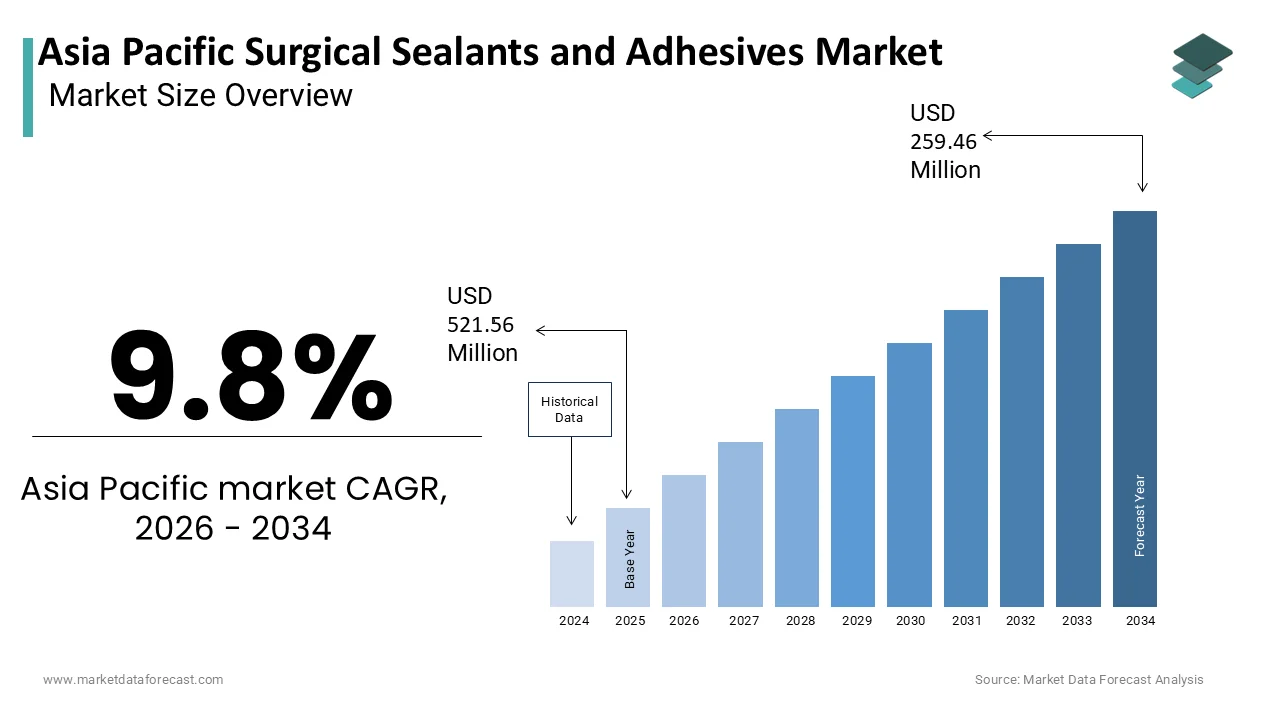
The Asia Pacific Surgical Sealants and Adhesives Market was valued at USD 521.56 million in 2025 and is projected to reach USD 1,209.84 million by 2034, growing from USD 572.67 million in 2026 at a CAGR of 9.8% during the forecast period. Growth is driven by the increasing adoption of minimally invasive and robotic-assisted surgeries, rising prevalence of chronic diseases requiring surgical intervention, and growing demand for advanced wound closure technologies. However, high costs of advanced surgical sealants, stringent regulatory approval processes, and limited awareness among surgeons continue to restrain market growth.
Key Market Trends
- Increasing adoption of minimally invasive and robotic-assisted surgical procedures requiring advanced sealing technologies.
- Growing demand for bioabsorbable and synthetic surgical sealants as alternatives to biological products.
- Rising integration of surgical sealants into cosmetic and reconstructive surgeries for improved aesthetic outcomes.
- Expansion of medical tourism across Asia Pacific, driving demand for premium surgical consumables.
- Increasing investment in regenerative medicine and tissue engineering applications using advanced surgical adhesives.
Segmental Insights
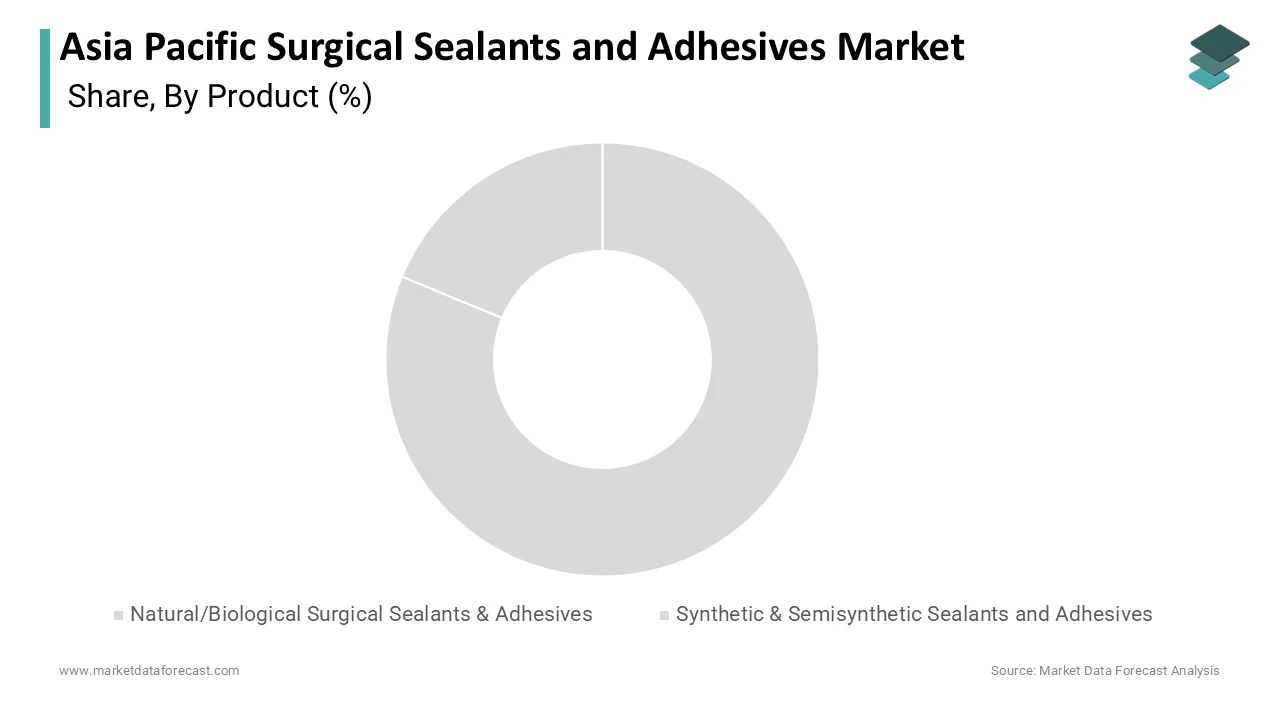
- Based on product, natural/biological surgical sealants and adhesives held the largest market share of 46.3% in 2025, driven by superior biocompatibility, excellent hemostatic efficacy, and widespread clinical acceptance across cardiovascular and general surgeries.
- Based on indication, tissue sealing and haemostasis dominated the market in 2025, supported by the growing number of surgical procedures, increasing trauma cases, and the critical need for effective bleeding control.
- Polyethylene glycol-based hydrogel is the fastest-growing product segment, projected to register a CAGR of 11.5%, driven by increasing adoption in neurosurgery, ophthalmology, and minimally invasive procedures due to its safety profile and synthetic composition.
Regional Insights
- China led the market in 2025, accounting for 29.6% of the regional market, supported by expanding healthcare infrastructure, rising surgical volumes, growing domestic manufacturing, and increasing adoption of minimally invasive procedures.
- Japan holds a significant share, driven by its aging population, advanced healthcare system, high adoption of premium surgical products, and robotic-assisted surgery.
- India is a prominent market, supported by expanding healthcare access, increasing medical tourism, rising surgical procedures, and improving healthcare infrastructure.
- South Korea contributes notably through its leadership in cosmetic surgery, widespread robotic-assisted procedures, and strong investment in innovative bioabsorbable materials.
- Cosmetic surgeries represent the fastest-growing application segment, projected to register a CAGR of 14.8%, driven by booming aesthetic medicine, medical tourism, and increasing demand for scar-minimizing surgical techniques.
Competitive Landscape
The market is highly competitive, with global medical device manufacturers and regional companies competing through product innovation, bioabsorbable materials, synthetic sealant technologies, strategic partnerships, and surgeon education programs. Companies are investing in regional manufacturing facilities, advanced sprayable sealants, regenerative medicine applications, and regulatory compliance to strengthen their presence across the Asia Pacific region.Prominent players in the market include CryoLife, Inc., Johnson & Johnson, Ethicon, Inc., Baxter International Inc., C. R. Bard, Inc., Cohera Medical, Inc., Ocular Therapeutix, Inc., Vivostat A/S, Sealants Ltd., Medtronic plc, Sanofi Group, and B. Braun Melsungen AG.
 Download Free Sample Report
Asia Pacific Surgical Sealants and Adhesives Market Size
The Asia Pacific Surgical Sealants and Adhesives Market is projected to grow from USD 521.56 million in 2025 to USD 572.67 million in 2026 and reach USD 1,209.84 million by 2034, registering a CAGR of 9.8% from 2026 to 2034.
The surgical sealants and adhesives are medical consumables designed to achieve hemostasis, tissue approximation, and sealing of air or fluid leaks during surgical procedures. These products include fibrin sealants, synthetic adhesives such as cyanoacrylates, and polyethylene glycol-based hydrogels, which serve as alternatives or adjuncts to traditional sutures and staples. The number of surgical procedures performed annually in the Western Pacific and Southeast Asia regions has increased significantly, driven by improved access to healthcare and rising disease burden. The region is witnessing a surge in minimally invasive surgeries, which require advanced sealing technologies to ensure precision and reduce recovery times. According to the United Nations Department of Economic and Social Affairs, the aging population in countries like Japan, China, and South Korea is expanding rapidly, with individuals aged 65 and older projected to constitute 25% of the total population by 2050. This demographic shift correlates with a higher incidence of chronic conditions requiring complex surgical interventions. Regulatory frameworks are evolving with agencies such as the Therapeutic Goods Administration in Australia and the National Medical Products Administration in China implementing stricter guidelines for biocompatibility and safety. The integration of these sealants into robotic-assisted surgeries further enhances their clinical utility. Additionally, the growing preference for cosmetic outcomes in plastic and reconstructive surgery drives the adoption of tissue adhesives that minimize scarring. This emergence of technological advancement, demographic changes, and regulatory evolution defines the current landscape for surgical sealants and adhesives in the Asia Pacific region.
MARKET DRIVERS
Surge In Minimally Invasive And Robotic Assisted Surgeries
The rapid adoption of minimally invasive and robotic-assisted surgical techniques is fuelling the growth of the Asia Pacific surgical sealants and adhesives market. These procedures involve smaller incisions and limited visibility, which necessitate precise and efficient methods for achieving hemostasis and tissue sealing without traditional suturing. Robotic surgery systems, which are increasingly installed in major hospitals across China, India, and South Korea, require compatible sealing agents that can be applied through narrow ports with high accuracy. Surgeons prefer sealants that offer rapid polymerization and strong adhesion to prevent postoperative complications such as bleeding or air leaks. The reduced trauma associated with minimally invasive techniques aligns with patient preferences for faster recovery and shorter hospital stays. Healthcare providers are investing in training programs to enhance surgeon proficiency in using these advanced tools. Government initiatives in countries like Singapore and Thailand promote the adoption of cutting-edge medical technologies to position themselves as regional healthcare hubs. This technological shift ensures sustained demand for high-performance surgical sealants that complement modern surgical workflows.
Rising Prevalence Of Chronic Diseases Requiring Surgical Intervention
The escalating prevalence of chronic diseases such as cardiovascular disorders, cancer, and diabetes is significantly boosting the growth of the Asia Pacific surgical sealants and adhesives market. These conditions often require complex surgical interventions where effective hemostasis and tissue sealing are critical for patient survival and recovery. According to the Global Burden of Disease Study, cardiovascular diseases remain the leading cause of death in the region, accounting for over 9 million deaths annually. Cardiac surgeries, particularly coronary artery bypass grafting and valve replacements, rely heavily on fibrin sealants to manage bleeding and secure grafts. Tumor resections often involve delicate tissues, where traditional sutures may cause damage,e making adhesives a preferred option. The rising burden of diabetes also contributes to the need for vascular and wound care surgeries, where sealants help prevent infections and promote healing. Hospitals are expanding their surgical capacities to handle this growing patient load. Insurance coverage for major surgeries is improving in countries like Indonesia and Vietnam, making these procedures more accessible. The chronic nature of these diseases ensures a steady stream of surgical cases requiring advanced sealing technologies.
MARKET RESTRAINTS
High Cost Of Advanced Surgical Sealants
The high cost of advanced surgical sealants and adhesives, particularly ilow-ow and middle-income countries, is limiting the growth of the Asia Pacific surgical sealants and adhesives market. Premium products such as fibrin sealants and synthetic hydrogels are considerably more expensive than traditional sutures and staples,s limiting their adoption in resource-constrained settings. According to the study, out-of-pocket health expenditure in countries like Bangladesh, Pakistan, and Myanmar exceeds 50% of total health spending, making costly consumables prohibitive for many patients. Data from hospital procurement records in India indicates that the price of a single fibrin sealant kit can range from 200 to 500 dollars, which is significantly higher than standard suturing materials. Public hospitals in developing nations often face budget constraints that prioritize essential life-saving equipment over premium disposable consumables. This financial limitation restricts the availability of advanced sealants to tertiary care centers in urban areas,s exacerbating healthcare disparities. Patients in rural regions must travel long distances to access facilities that offer these technologies, es leading to delayed treatment. Manufacturers face pressure to lower prices, which can impact profit margins and reduce funds available for research and development.
Stringent Regulatory Approval Processes
The stringent and heterogeneous regulatory approval processes are additionally restricting the growth of the Asia Pacific surgical sealants and adhesives market. Each country maintains distinct classification criteria, testing requirements,s and timelines for medical device registration, which complicates market entry and increases compliance costs. According to the study, obtaining regulatory clearance in China, through the National Medical Products Administration,n can take up to 24 months, whereas in Singapore the Health Sciences Authority process may take 6 to 12 months. This disparity increases the time to market and raises operational expenses for companies aiming for regional expansion. Small and medium-sized enterprises often struggle to navigate the complex legal landscapes of multiple jurisdictions, leading to limited product availability. In countries like Indonesia and Vietnam,m evolving regulations create uncertainty regarding the classification of new bioabsorbable materials. The requirement for local clinical trials in certain markets further delays product launches and increases financial burden. Manufacturers must maintain separate documentation and quality management systems for each country, which strains operational resources. This regulatory fragmentation discourages innovation and limits the speed at which new technologies reach patients. The absence of a unified mutual recognition agreement similar to those in Europe means that companies must treat each market as a unique entity.
MARKET OPPORTUNITIES
Expansion Into Bioabsorbable And Synthetic Alternatives
The development and expansion of bioabsorbable and synthetic surgical sealants by addressing limitations of traditional biological products is solely to create new opportunities for the growth of the Asia Pacific surgical sealants and adhesives market. Synthetic sealants such as polyethylene glycol-based hydrogels offer consistent quality, longer shelf life, and lower risk of immune reactions compared to human- or bovine-derived fibrin sealants. According to the Journal of Biomedical Materials Research, the demand for synthetic biomaterials in Asia is expected to grow by 10% annually due to their predictable performance and ease of storage. These products do not require cold chain logistics, which reduces distribution costs and expands accessibility in tropical climates. Data from the Japanese Society for Biomaterials shows that synthetic adhesives are increasingly used in neurosurgery and ophthalmology where precision and biocompatibility are paramount. Manufacturers are investing in research to enhance the mechanical strength and degradation profiles of synthetic sealants. The ability to customize these materials for specific applications such as lung sealing or dural repair opens new market segments. Regulatory bodies are streamlining approvals for synthetic products with established safety profiles. The shift towards animal-free products aligns with ethical considerations and religious preferences in certain Asian communities.
Growth Of Medical Tourism In Key Hubs
The robust growth of medical tourism in countries like Thailand, India, Malaysia, and Singapore offers a lucrative opportunity for the growth of the Asia Pacific surgical sealants and adhesives market. These nations attract millions of international patients annually seeking high-quality, affordable surgical care, including cosmetic, orthopedic,c and cardiac procedures. International patients often expect premium care standards, including the use of advanced surgical consumables that minimize scarring and accelerate recovery. Hospitals catering to this segment invest in state-of-the-art equipment and premium supplies to maintain their competitive edge. The demand for cosmetic surgery, particularly in South Korea and Malaysia, drives the adoption of tissue adhesives that provide superior aesthetic outcomes. Medical tourism facilitates knowledge transfer and adoption of global best practices in surgical care. Local suppliers benefit from partnerships with international hospitals that require consistent high-quality products. This sector acts as a catalyst for the introduction of new and innovative sealant technologies.
MARKET CHALLENGES
Risk Of Disease Transmission From Biological Sources
The potential risk of disease transmission associated with biological surgical sealants is a major challenge for the growth of the Asia Pacific surgical sealants and adhesives market. Fibrin sealants derived from human or bovine plasma carry a theoretical risk of transmitting viral pathogens such as hepatitis or HIV despite rigorous screening and viral inactivation processes. According to the study, concerns about blood-borne pathogens remain a significant barrier to the acceptance of biological products in some regions. Data from the European Medicines Agency, adapted for Asian contexts, indicates that strict vigilance and traceability requirements increase the cost and complexity of producing biological sealants. High-profile incidents of contamination in other medical products have heightened sensitivity among healthcare providers and patients. This fear drives preference for synthetic alternatives, which are perceived as safer and more consistent. Regulatory agencies in countries like Japan and Australia impose stringent testing protocols that delay product launches. Manufacturers must invest heavily in quality control and validation studies to ensure safety. The logistical challenges of maintaining cold chain integrity for biological products further increase the risk of spoilage and inefficacy. In remote areas with limited infrastructure, the risk of temperature excursions is higher. This safety concern limits the widespread adoption of biological sealants,s particularly in rural and resource-limited settings.
Limited Awareness And Training Among Surgeons
The limited awareness and inadequate training among surgeons regarding the proper application and benefits of advanced surgical sealants also hinders the growth of the Asia Pacific region. Many practitioners in developing countries are accustomed to traditional suturing techniques and may lack familiarity with the handling characteristics and indications for modern sealants. There is a significant gap in continuing medical education programs focused on advanced hemostatic technologies. Improper application can lead to ineffective sealing, adverse reactions,s or wasted resources, es discouraging future use. The complexity of newer products requires specific skills that are not always covered in standard medical curricula. High turnover rates in the healthcare sector further exacerbate the problem as experienced staff migrate to better-paying positions. Manufacturers struggle to provide comprehensive training support due to the vast geographic spread and linguistic diversity of the region. This knowledge gap limits the effective deployment of advanced technologies.
REPORT COVERAGE
| REPORT METRIC | DETAILS |
| Market Size Available | 2025 to 2034 |
| Base Year | 2025 |
| Forecast Period | 2026 to 2034 |
| Segments Covered | By Product, Indication, Application and Region. |
| Various Analyses Covered | Global, Regional and Country-Level Analysis, Segment-Level Analysis, Drivers, Restraints, Opportunities, Challenges; PESTLE Analysis; Porter’s Five Forces Analysis, Competitive Landscape, Analyst Overview of Investment Opportunities |
| Countries Covered | India, China, Japan, South Korea |
| Market Leaders Profiled | CryoLife, Inc., Johnson & Johnson, Ethicon, Inc., Baxter International Inc., C. R. Bard, Inc., Cohera Medical, Inc., Ocular Therapeutix, Inc., Vivostat A/S, Sealants Ltd., Medtronic plc, Sanofi Group, B. Braun Melsungen AG. |
SEGMENTAL ANALYSIS
By Product Insights
The natural or biological segment was the largest by holding 46.3% of the Asia Pacific surgical sealants and adhesives market share in 2025 due to the widespread clinical preference for fibrin sealants, which offer superior biocompatibility and hemostatic efficacy. These products derived from human or animal plasma mimic the final stage of the coagulation cascade, making them ideal for controlling bleeding in delicate tissues where synthetic alternatives may cause inflammation or toxicity. The high volume of general and cardiovascular surgeries in the region drives the consistent demand for these trusted biological agents. The established reimbursement frameworks in developed markets like Australia and South Korea further support the adoption of premium biological sealants. Hospitals prioritize these products for their ability to promote wound healing and reduce postoperative complications such as seroma formation. The long history of clinical use has built significant trust among surgeons who are hesitant to switch to newer unproven technologies. Manufacturing capabilities for plasma-derived products have improved, ensuring a stable supply chain, despite regulatory hurdles. The versatility of biological sealants in adhering to wet tissue surfaces makes them indispensable in emergency trauma settings.
The polyethylene glycol-based hydrogel segment is likely to grow at an anticipated CAGR of 11.5% from 2026 to 2034 owing to the increasing adoption of these synthetic sealants in neurosurgery and ophthalmology where watertight sealing is crucial to prevent cerebrospinal fluid leaks and other complications. Unlike biological sealants, PEG hydrogels offer consistent performance independent of patient physiology and do not carry the risk of disease transmission. Data from the Korean Society of Neurological Surgeons indicates thatPEG-basedd hydrogels are becoming the preferred choice for minimally invasive spinal procedures. The ability of these hydrogels to expand and fill irregular spaces makes them ideal for complex anatomical sites. Manufacturers are investing in research to improve the mechanical strength and degradation rates of PEG hydrogels, enhancing their versatility. Regulatory approvals for new synthetic formulations are accelerating in countries like Singapore and Japan. The shift towards synthetic alternatives to avoid ethical concerns related toanimal-derivedd products also fuels growth. The convenience of room temperature storage and longer shelf life compared to biological products makes them attractive for remote healthcare facilities.
By Indication Insights
The tissue sealing and haemostasis segment accounted for a significant share of the Asia Pacific surgical sealants and adhesives market in 2025 due to the fundamental need to control bleeding and prevent fluid leaks in almost all surgical procedures. Hemostasis is a crucial step in surgery to maintain patient stability and reduce the need for blood transfusions. Surgical bleeding remains a leading cause of intraoperative complications, driving the routine use of sealants. The rising number of trauma cases due to road accidents and industrial incidents in developing countries further boosts demand. Sealants provide a quick and effective solution for controlling capillary and venous bleeding where sutures are impractical. The integration of sealants into standard surgical protocols ensures consistent usage across hospitals. Regulatory guidelines emphasize the importance of effective hemostasis in reducing postoperative morbidity. The versatility of sealants in handling different tissue types makes them indispensable in general surgery. The cost savings associated with reduced operating time and lower transfusion requirements justify their use.
The tissue Engineering segment is the fastest-growing indication in the Asia Pacific surgical sealants and adhesives market, with a projected compound annual growth rate of 13.2% from 2024 to 2030. This growth is fueled by advancements in regenerative medicine and the increasing use of sealants as scaffolds for cell growth and tissue regeneration. Sealants are no longer just passive barriers but active components in healing processes. According to the Journal of Tissue Engineering and Regenerative Medicine r, research in Asia Pacific universities is increasingly focusing on bioactive sealants that release growth factors. The aging population drives demand for solutions that restore function rather than just repair damage. Governments in countries like China and Singapore are investing heavily in biotechnology and regenerative medicine hubs. The integration of stem cells with surgical sealants creates novel therapies for chronic wounds and organ repair. Regulatory pathways for combination products are evolving to support innovation in this field.
By Application Insights
The general surgeries segment was the largest by occupying a prominent share of the Asia Pacific surgical sealants and adhesives market in 2025 due to the high volume of procedures performed annually, including appendectomies,s cholecystectomies, and hernia repairs. These common procedures often require effective hemostasis and tissue sealing to prevent complications and ensure quick recovery. Data from the Indian Association of Gastrointestinal Endo Surgeons indicates that the use of sealants in laparoscopic general surgeries has become standard practice to minimize bleeding and bile leaks. The widespread availability of general surgeons and facilities in both urban and rural areas drives consistent demand. Sealants are particularly useful in minimally invasive general surgeries where space is limited, and precision is required. The cost-effectiveness of preventing postoperative complications justifies the use of sealants in routine procedures. Hospital protocols increasingly include sealants as part of enhanced recovery after surgery programs. The large patient base ensures a steady and predictable demand for these products. Manufacturers focus on developing versatile sealants suitable for a wide range of general surgical applications.
The cosmetic Surgeries segment is likely to grow at an anticipated CAGR of 14.8% from 2026 to 2034 owing to the booming aesthetic medicine industry in countries like South Korea, China, and Thailand, where cultural emphasis on appearance fuels demand for procedures such as rhinoplasty, facelifts,s and liposuction. Sealants are essential in these surgeries to minimize scarring and ensure smooth tissue healing. According to the International Society of Aesthetic Plastic Surgery, Asia Pacific performs the highest number of cosmetic procedures globally. Tissue adhesives are preferred over sutures in visible areas to achieve better cosmetic outcomes. The rise of medical tourism for cosmetic surgery brings international patients seeking advanced techniques. Clinics invest in premium sealants to differentiate their services and attract clients. The development of specialized adhesives for delicate facial tissues supports this growth. Social media influence and changing beauty standards continue to drive demand.
COUNTRY LEVEL ANALYSIS
China Surgical Sealants And Adhesives Market Analysis
China was the top performer in the Asia Pacific surgical sealants and adhesives market by holding 29.6% of the share in 20,25 with its massive population, ion expanding healthcare infrastructure,ture and rising prevalence of chronic diseases. The country performs the highest number of surgical procedures in the region, creating substantial demand for hemostatic agents. The domestic production of surgical sealants is increasing,g but imports remain significant for high-end products. Government initiatives to upgrade county-level hospitals include provisions for modern surgical equipment and supplies. The rising middle class is willing to pay for premium healthcare services, including minimally invasive surgeries that require sealants. Regulatory reforms by the National Medical Products Administration have streamlined approvals for innovative products. Local manufacturers are investing in research to compete with international brands. The vast domestic market offers economies of scale for producers. China's role as a manufacturing hub also supports exports to neighboring countries.
Japan Surgical Sealants And Adhesives Market Analysis
Japan surgical sealants and adhesives market was ranked second, holding 19.2% of the share in 2025, with high adoption rates of premium products. The super-aged society drives demand for complex surgeries such as cardiac and orthopedic procedures, where sealants are crucial. According to the Ministry of Health, Labour and Welfare, Japan has one of the highest per capita healthcare spending levels in the world. The strong preference for high-quality biological and synthetic sealants with proven safety records. The regulatory environment is stringent, ensuring only the safest products enter the market. Japanese surgeons are early adopters of new technologies, including robotic-assisted surgery, which requires specialized sealants. Domestic companies like Baxter Japan and local innovators lead in product development. The focus on minimizing postoperative complications aligns with the use of advanced sealants. Insurance coverage supports the use of premium products in standard care.
India Surgical Sealants And Adhesives Market Analysis
IIndia'ssurgical sealants and adhesives market is likely to grow with increasing healthcare access and medical tourism. The rising incidence of lifestyle diseases and trauma cases boosts the volume of surgical procedures. The government is investing in strengthening primary and secondary care infrastructure. The growing domestic manufacturing base for basic surgical consumables, but reliance on imports for advanced sealants. Medical tourism brings international patients seeking affordable, yethigh-qualityy surgical care. Private hospitals in metropolitan areas adopt global standards, including the use of premium sealants. The price-sensitive nature of the mass market drives demand for cost-effective alternatives. Local distributors are expanding reach to tier 2 and tier 3 cities. Regulatory frameworks are evolving to ensure quality and safety.
South Korea Surgical Sealants And Adhesives Market Analysis
South Korea surgical sealants and adhesives market growth is likely to grow with the dominance in cosmetic surgery and robotic-assisted procedures. The country is a global hub for aesthetic medicine, attracting patients from across the world. The high adoption of tissue adhesives for scar minimization is also boosting the growth of the market. The widespread use of robotic surgery systems in general and urological surgeries drives demand for specialized sealants. Domestic companies are investing in R&D to develop innovative bioabsorbable materials. The regulatory framework supports rapid approval of new medical devices. High internet penetration and social media influence drive consumer demand for aesthetic procedures. Hospitals compete on technology outcomes,s fostering adoption of advanced products.
Australia Surgical Sealants And Adhesives Market Analysis
Australia's surgical sealants and adhesive market is likely to grow with the strict safety standards and comprehensive reimbursement policies. The healthcare system prioritizes evidence-based practices and patient safety. All surgical sealants must meet rigorous biocompatibility and efficacy criteria. Private health insurance covers a wide range of surgical interventions, including those requiring advanced sealants. Surgeons prefer established brands with proven clinical track records. Telehealth and rural health initiatives ensure access to quality surgical care across the continent. Research institutions collaborate with industry to evaluate new products. The focus on cost-effectiveness and outcomes drives procurement decisions.
COMPETITIVE LANDSCAPE
The competitive landscape of the Asia Pacific surgical sealants and adhesives market is characterized by intense rivalry among global medical technology giants and emerging local manufacturers. Leading players compete primarily on product efficacy, safety profiles, and ease of application rather than price alone,e especially in the premium biological segment. Sustainability and ethical sourcing are becoming key battlegrounds, with companies investing in plant-based or synthetic materials to appeal to environmentally conscious consumers. Price competition remains moderate in developed markets but is intense in emerging economies where cost sensitivity is high. Strategic alliances with hospitals and surgical centers help build brand loyalty and facilitate product adoption. Regulatory compliance varies across countries, creating barriers to entry for smaller firms but offering advantages to those with robust quality management systems.
KEY MARKET PLAYERS
Some of the companies that are playing a dominating role in the Asia Pacific Surgical Sealants and Adhesives Market include:
- CryoLife, Inc.
- Johnson & Johnson
- Ethicon, Inc.
- Baxter International Inc.
- C. R. Bard, Inc.
- Cohera Medical, Inc.
- Ocular Therapeutix, Inc.
- Vivostat A/S
- Sealants Ltd.
- Medtronic plc
- Sanofi Group
- B. Braun Melsungen AG
TOP LEADING PLAYERS IN THE MARKET
- Baxter International Inc. is a dominant force in the Asia Pacific surgical sealants and adhesives market, leveraging its extensive portfolio of fibrin sealants and hemostatic agents. The company provides critical solutions for controlling bleeding and sealing tissues in complex surgeries across the region. Baxter recently expanded its manufacturing capabilities in China to ensure a stable supply chain and reduce lead times for local customers. The company has strengthened its position by launching advanced training programs for surgeons in India and Southeast Asia to promote best practices in sealant application. Strategic partnerships with leading hospitals facilitate the adoption of innovative hemostatic technologies. Baxter's continuous investment in research and development focuses on improving the efficacy and safety of biological sealants. These initiatives reinforce its reputation for quality and reliability, while addressing the growing demand for advanced surgical consumables in the Asia Pacific healthcare sector.
- Johnson & Johnson Services Inc. contributes significantly to the Asia Pacific surgical sealants and adhesives market through its Ethicon subsidiary, which offers a wide range of synthetic and biological sealing products. The company is renowned for its fibrin sealants and synthetic adhesives used in various surgical specialties including general and cosmetic surgery. Johnson & Johnson recently introduced new sprayable sealant technologies designed for minimally invasive procedures,s enhancing ease of use and precision. The company has expanded its distribution network in emerging markets like Indonesia and Vietnam to improve product accessibility. Collaborations with regional medical associations support educational initiatives on advanced wound closure techniques. Johnson & Johnson's commitment to innovation is evident in its development of bioabsorbable materials that promote faster healing.
- CSL Limited plays a pivotal role in the Asia Pacific surgical sealants and adhesives market, particularly in the biological segment with its flagship fibrin sealant products. Headquartered in Australia, the company leverages its strong presence in the region to supply high-purity plasma-derived sealants to hospitals and surgical centers. CSL recently invested in expanding its plasma collection and processing facilities in Asia to secure raw material supplies and meet rising demand. The company has strengthened its market position by obtaining regulatory approvals for new indications in countries like Japan and South Korea. Strategic alliances with local distributors ensure efficient delivery and technical support for customers. CSL focus on quality and safety aligns with stringent regulatory standards in developed Asian countries.
TOP STRATEGIES USED BY KEY MARKET PARTICIPANTS
Key players in the Asia Pacific surgical sealants and adhesives market employ several strategic approaches to maintain competitiveness and drive growth. Product innovation remains central with companies developing bioabsorbable synthetic and sprayable sealants to enhance usability and clinical outcomes. Strategic partnerships with local distributors and healthcare providers help expand market reach and adapt to regional regulatory requirements. Companies focus on localization by establishing manufacturing facilities in key markets like China and India to reduce costs and improve supply chain resilience. Educational initiatives and surgeon training programs are prioritized to increase awareness and proper usage of advanced sealing technologies. Digital marketing and e-commerce platforms are utilized to reach a broader audience including private clinics and medical tourism hubs.s Compliance with evolving regulatory standards ensures market access and builds trust among healthcare professionals.
MARKET SEGMENTATION
This research report on the Asia Pacific Surgical Sealants and Adhesives Market has been segmented and sub-segmented into the following categories.
By Product
- Natural/Biological Surgical Sealants & Adhesives
- Polypeptide/Protein-based Sealants & Adhesives
- Polysaccharide-based Sealants & Adhesives
- Synthetic & Semisynthetic Sealants and Adhesives
- Cyanoacrylates
- Polyethylene Glycol-based Hydrogel
- Urethane-based Adhesives
By Indication
- Tissue Sealing & Haemostasis
- Tissue Engineering
By Application
- Central Nervous System Surgeries
- General Surgeries
- Cardiovascular Surgeries
- Orthopedic Surgeries
- Cosmetic Surgeries
- Ophthalmic Surgeries
- Urological Surgeries
- Pulmonary Surgeries
By Country
- India
- China
- Japan
- South Korea
- Australia
- New Zealand
- Thailand
- Malaysia
- Vietnam
- Philippines
- Indonesia
- Singapore
- Rest of APAC