- Product Description Description
- Table of Contents TOC
- List of Table & Figure LOT
- Get Free Sample PDF Sample PDF
Market Size, 2025
$179.47 MnMarket Estimate, 2026
$185.47 MnMarket Forecast, 2034
$242.48 MnCAGR, 2026–2034
3.4%Asia Pacific Trifluralin Market Size, Share, Trends & Forecast (2026–2034)
- Market Scope: Comprehensive market analysis of the Asia Pacific trifluralin market covering product formulations (miscible oils and granular variants), crop applications, weed targets, country-level regulatory frameworks, and agricultural mechanization drivers.
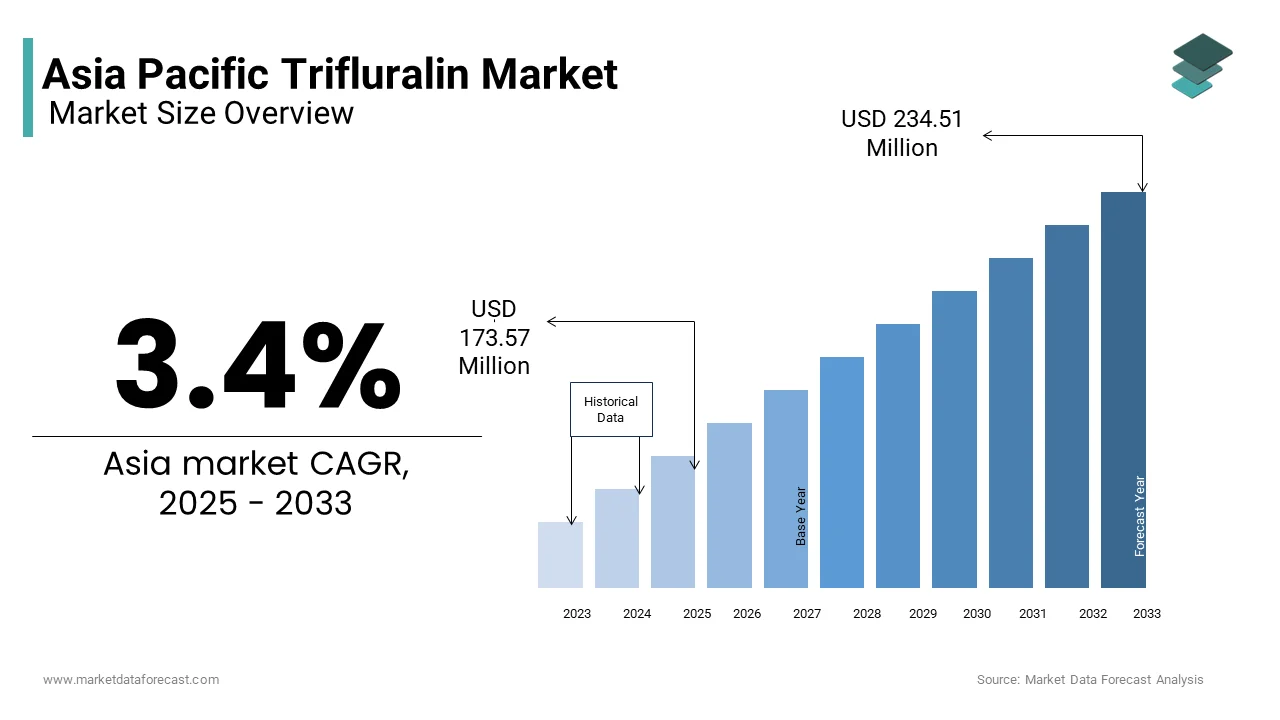
- Market Valuation: Valued at USD 179.47 million (2025), estimated at USD 185.47 million (2026), and projected to reach USD 242.48 million by 2034, growing at a compound annual growth rate (CAGR) of 3.4% (2026–2034).
- Primary Growth Drivers: Rising demand for effective herbicides amid agricultural labor shortages and farm mechanization, expanding adoption of conservation tillage and no-till practices, and government-backed agricultural modernization initiatives.
Asia Pacific Trifluralin Market Segment Metrics (2026–2034)
| Category | Leading Segment (2025 Position) | Fastest-Growing Segment |
|---|---|---|
| By Crop Type | Field Crops (accounting for 66.6% market share in 2025, driven by cotton, maize, soybean, and sugarcane) | Fruit & Vegetable Crops (projected at a 6.4% CAGR due to rising high-value horticulture output) |
| By Product Type | Miscible Oil / Emulsifying Concentrate (holding 57.2% total volume via easy application and compatibility) | Granular (GR) Formulations (expanding at a 7.1% CAGR via conservation and precision farming) |
| By Application | Annual Grasses (representing 45.6% usage targeting barnyard grass, foxtail, and crabgrass) | Spurrey Weed Control (growing at a 7.8% CAGR across pulse and cereal cropping systems) |
| By Country / Region | India (capturing 32.4% regional consumption driven by extensive cotton, soybean, and pulse cultivation) | China & Southeast Asia (accelerating through large-scale mechanization and export-oriented farming) |
Major Industry Players & Market Structure
Market Structure: Highly competitive landscape featuring international agrochemical corporations and regional manufacturers balancing environmental regulatory scrutiny with formulation innovations (such as micro-encapsulation).
Key Companies: UPL Limited, Corteva Agriscience, Nufarm Limited, BASF, Sumitomo Chemical, Dow Chemical Company, Shandong Qiaochang Chemical Co., Ltd., Chongqing Shurong, Shenzhen Sunrising Industry Co., Ltd., and Jiangsu Fengshan Group Co., Ltd.
Asia Pacific Trifluralin Market Size
The Asia Pacific trifluralin market size was valued at USD 179.47 milllion in 2025 and is anticipated to reach USD 185.47 million in 2026 to reach USD 242.48 million by 2034, growing at a CAGR of 3.4% during the forecast period 2026 to 2034.
Trifluralin is a selective pre-emergence herbicide widely used in agriculture to control annual grasses and broadleaf weeds in crops such as cotton, soybeans, maize, and sugarcane. As a dinitroaniline herbicide, it works by inhibiting root cell division in germinating weed seeds, effectively preventing their establishment without harming the target crop when applied correctly. In the Asia Pacific region, trifluralin has been adopted for its cost-effectiveness and residual action, making it a preferred choice among farmers aiming to enhance yield through efficient weed management.
The agricultural landscape in the Asia Pacific has undergone significant transformation over the past decade, driven by population growth, increasing food demand, and government initiatives promoting modern farming practices. According to the Food and Agriculture Organization (FAO), the region accounts for more than 50% of global agricultural production, with countries like India, China, and Indonesia playing pivotal roles. This growing agricultural intensity has led to increased usage of agrochemicals, including herbicides like trifluralin.
As per data from the Indian Council of Agricultural Research (ICAR), herbicides now constitute over 30% of total pesticide consumption in India, with trifluralin being one of the commonly used active ingredients in cotton and oilseed cultivation. Likewise, according to the Chinese Ministry of Agriculture and Rural Development, herbicide use in northern China’s maize belt has expanded significantly due to rising labor shortages and the shift toward mechanized farming systems.
MARKET DRIVERS
Rising Demand for Herbicides in Mechanized Farming Systems
The increasing adoption of mechanized farming techniques, which favor the use of effective pre-emergence herbicides, is one of the key drivers of the Asia Pacific trifluralin market. As labor costs rise and rural workforce availability declines across major agricultural economies such as China, India, and Thailand, farmers are shifting toward chemical-based weed control solutions to maintain productivity and reduce manual dependency. The same trend is evident.t
In addition, as per the Australian Pesticides and Veterinary Medicines Authority (APVMA), trifluralin remains a popular herbicide in Australian grain production, especially in canola and wheat fields, due to its compatibility with no-till farming systems. This synergy with modern agricultural practices enhances its appeal among progressive farmers seeking efficiency and long-term soil health benefits. Therefore, the ongoing transition is a strong catalyst for the continued expansion of the trifluralin market in the Asia Pacific.
Government Support for Modern Agricultural Practices
Government-backed policies and subsidies promoting the use of modern agricultural inputs, including herbicides like trifluralin, are significantly boosting market growth across the Asia Pacific. Several national agricultural departments have introduced programs aimed at improving productivity while reducing reliance on traditional, labor-intensive weeding methods.
In India, the Department of Agriculture & Farmers Welfare has actively promoted Integrated Pest Management (IPM) strategies, under which herbicides play a role in sustainable weed control. Similarly, in Indonesia, the Ministry of Agriculture launched the “Smart Agriculture Program” in 2022, encouraging farmers to adopt precision farming techniques. Apart from these, in Vietnam, the government's push for high-yield crop varieties and export-oriented farming has led to greater herbicide adoption. These policy-driven efforts reinforce the trifluralin market’s expansion across the Asia Pacific.
MARKET RESTRAINTS
Environmental and Health Concerns Related to Dinitroaniline Herbicides
The growing concern regarding the environmental and health impacts associated with dinitroaniline herbicides is a major restraint affecting the Asia Pacific trifluralin market. Besides its effectiveness in weed control, trifluralin has raised red flags among regulatory bodies and environmental organizations due to its persistence in soil and potential toxicity to aquatic organisms.
According to the United Nations Environment Programme (UNEP), several dinitroaniline compounds, including trifluralin, have shown moderate to high toxicity to fish and aquatic invertebrates, raising concerns about contamination of water bodies through runoff. In Australia, the Department of Agriculture, Water and the Environment classified trifluralin as a priority pesticide for monitoring due to its potential to bioaccumulate in ecosystems.
Moreover, consumer awareness about organic and chemical-free food is increasing, particularly in urban centers across India and China. This shift is constraining market growth in certain segments.
Availability of Alternative Herbicides and Resistance Issues
The emergence of alternative herbicidal compounds and the development of resistance in certain weed species are other critical factors restraining the growth of the trifluralin market in the Asia Pacific. Over time, continuous use of trifluralin has led to diminished efficacy against specific weeds, particularly in intensively farmed regions such as Punjab (India) and Jiangsu (China).
According to the Global Herbicide Resistance Action Committee (GHRCAC), resistance to dinitroaniline herbicides has been documented in more than 20 weed species worldwide, including barnyard grass and goosegrass, common pests in rice and cotton fields across the Asia Pacific. In response, many farmers are switching to newer chemistries such as sulfonylureas and glyphosate-based formulations, which offer broader spectrum control and faster action.
Furthermore, agrochemical companies are investing heavily in developing next-generation herbicides with improved safety profiles and lower environmental impact. For example, BASF and Corteva Agriscience have introduced alternative modes of action that are gaining traction among progressive farmers in Australia and Southeast Asia.
Besides, regulatory authorities in several Asia Pacific countries are promoting integrated weed management approaches that combine mechanical, biological, and chemical controls to reduce dependency on any single herbicide class. These developments are limiting the long-term growth prospects of the trifluralin market in the region.
MARKET OPPORTUNITY
Expansion of No-Till and Conservation Agriculture Practices
The growing adoption of no-till and conservation agriculture practices, which align well with the herbicide’s mode of action, is one of the most promising opportunities for the Asia Pacific trifluralin market. As governments and agricultural institutions emphasize sustainable land management, there is an increasing shift away from conventional plowing methods toward minimal soil disturbance techniques that preserve moisture, reduce erosion, and enhance carbon sequestration.
According to the Food and Agriculture Organization (FAO), conservation agriculture has been implemented on over 10 million hectares of farmland across South Asia, primarily in India and Bangladesh. In these systems, pre-emergence herbicides like trifluralin play a crucial role in managing weeds without the need for extensive tillage, making them indispensable tools for farmers adopting this approach.
In Australia, the Grains Research and Development Corporation (GRDC) has actively supported the use of residual herbicides in no-till cropping systems, noting that they contribute to higher yield stability and lower input costs. According to field trials conducted in Western Australia in 2023, trifluralin-based treatments significantly improved weed suppression in chickpea and lentil rotations, reinforcing its relevance in modern agronomic practices.
Growing Export-Oriented Crop Cultivation
The expanding area under export-oriented crops such as cotton, soybean, pulses, and oilseeds in the Asia Pacific region is creating new opportunities for the trifluralin market. As global demand for these commodities increases, particularly from Europe, North America, and the Middle East, farmers are focusing on maximizing yields through optimized weed management practices. Also, to meet export quality standards, farmers are increasingly relying on effective herbicides like trifluralin to ensure uniform crop growth and minimize losses caused by weed infestation.
In Indonesia, according to the Ministry of Agriculture, there is a 7% increase in palm oil plantation acreage in 2023, with herbicides being widely used in intercropping zones to manage vegetation without damaging young palms. Similarly, Vietnam has expanded its coffee and pepper plantations, where trifluralin is applied for residual weed control in early growth stages. Moreover, export-focused agri-businesses are adopting best management practices to comply with stringent Maximum Residue Limits (MRLs) set by importing countries.
MARKET CHALLENGES
Regulatory Scrutiny and Changing Policy Frameworks
The evolving regulatory environment surrounding agrochemicals is one of the foremost challenges facing the Asia Pacific trifluralin. Governments across the region are increasingly scrutinizing the environmental and health impacts of herbicides, leading to tighter restrictions on usage, labeling, and residue limits in food products.
In India, the Central Insecticides Board & Registration Committee (CIBRC) has intensified its review of herbicides under the revised provisions of the Insecticides Act, mandating periodic re-evaluation of registered products. Similarly, China’s Ministry of Agriculture and Rural Development has implemented stricter guidelines on herbicide application rates and withdrawal periods, affecting how trifluralin is marketed and used in major crop-producing regions.
In addition, Fisheries and Forestry has also flagged trifluralin for closer monitoring due to its potential environmental persistence and toxicity to aquatic life. As a result, importers and formulators must now comply with enhanced risk assessments before product registration is approved. These regulatory shifts not only increase compliance costs for manufacturers but also create uncertainty for distributors and end-users. Navigating diverse and frequently updated regulatory frameworks across multiple jurisdictions poses a significant challenge for companies operating in the trifluralin market in the Asia Pacific.
Fluctuating Raw Material Prices and Supply Chain Disruptions
Raw material price volatility and supply chain disruptions, which affect production timelines, cost structures, and overall stability, are also affecting the Asia Pacific trifluralin market. The synthesis of trifluralin involves key intermediates such as 2,6-dinitrotoluene and trifluoromethyl compounds, the prices of which are influenced by global chemical markets and geopolitical factors.
According to the Indian Chemical Manufacturers Association (ICMA), the cost of basic agrochemical raw materials surged by over 12% in 2023, primarily due to energy price fluctuations and supply bottlenecks in China, a major supplier of chemical intermediates. This has directly impacted domestic manufacturers in India and Southeast Asia, where local production capacity for trifluralin is still developing.
Also, logistics constraints, including freight delays and container shortages, have affected the timely distribution of both raw materials and finished products. These challenges have forced formulators and distributors to seek alternative sourcing strategies, sometimes at higher costs.
REPORT COVERAGE
| REPORT METRIC | DETAILS |
| Market Size Available | 2025 to 2034 |
| Base Year | 2025 |
| Forecast Period | 2026 to 2034 |
| CAGR | 3.4% |
| Segments Covered | By Crop, Type, Application, And Region. |
| Various Analyses Covered | Global, Regional and Country Level Analysis, Segment-Level Analysis, DROC, PESTLE Analysis, Porter’s Five Forces Analysis, Competitive Landscape, Analyst Overview of Investment Opportunities |
| Regions Covered | India, China, Japan, South Korea, Australia, New Zealand, Thailand, Malaysia, Vietnam, Philippines, Indonesia, Singapore, and the Rest of APAC |
| Market Leaders Profiled | Shandong Qiaochang Chemical Co., Ltd., Chongqing Shurong, Shenzhen Sunrising Industry Co., Ltd., Chemical Co., Ltd., BASF, Jiangsu Fengshan Group Co., Ltd., and Dow Chemical Company |
SEGMENTAL ANALYSIS
By Crop Insights
Field Crops
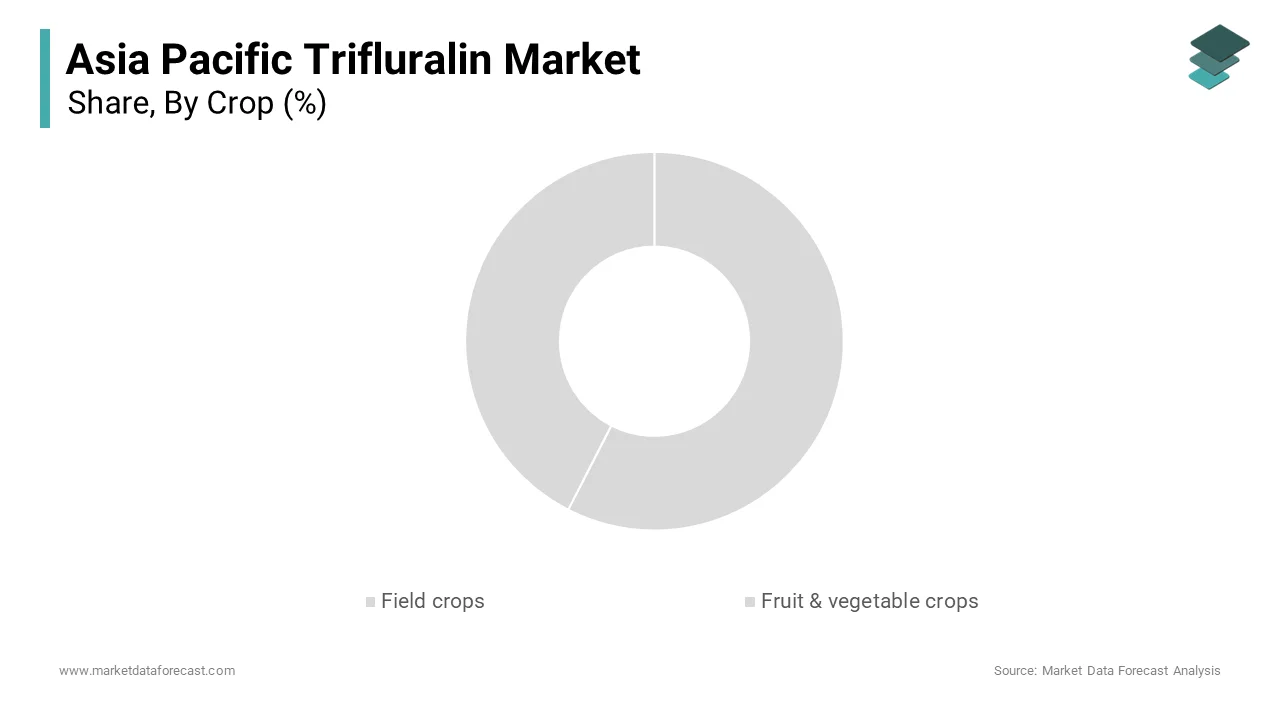
The field crops segment dominated the Asia Pacific trifluralin market by accounting for 66.6% of total consumption in 2025. This dominance of the segment is driven by the widespread use of trifluralin in major field crops such as cotton, maize, soybean, and sugarcane, where effective pre-emergence weed control is essential for maximizing yield and minimizing labor costs. In India, according to the Central Institute for Cotton Research (CICR), more than 75% of cotton-growing areas utilize pre-emergence herbicides, with trifluralin being a preferred choice due to its residual action and compatibility with drip irrigation systems. Likewise, in China, as per the Ministry of Agriculture and Rural Development, herbicide usage in maize fields increased by over 5% annually between 2020 and 2023, particularly in mechanized farming zones of Heilongjiang and Jilin provinces.
Fruit & Vegetable Crops
The fruit & vegetable crops segment is projected to grow at the highest CAGR of 6.4% during the forecast period. This growth is driven by increasing demand for high-value horticultural produce and rising adoption of chemical-based weed management in specialty crops. As per data from the International Society for Horticultural Science (ISHS), vegetable production in Southeast Asia expanded by nearly 4.5% annually in recent years, with countries like Vietnam, Indonesia, and the Philippines witnessing rapid growth in commercial farming. Similarly, according to the Vietnamese Ministry of Agriculture and Rural Development, herbicide use in vegetable cultivation increased by 9% in 2023, largely due to rising labour costs and improved access to agrochemical extension services. Also, as per the observation by the Indian Council of Agricultural Research (ICAR), trifluralin application in onion, chili, and tomato fields has risen significantly, especially in states like Maharashtra and Karnataka, where contract farming models are expanding.
By Type Insights
Miscible Oil (Emulsifying Concentrate)
The miscible oil or emulsifying concentrate (EC) formulation segment held command of the Asia Pacific trifluralin market, by capturing 57.2% of total product volume in 2024. This growth of the segment is attributed to its widespread adoption among farmers due to ease of application, cost-effectiveness, and compatibility with existing spraying equipment. There is strong farmer preference and well-established distribution networks, due to which the EC segment maintains its leading position in the trifluralin market across the Asia Pacific region.
Granular (GR)
The granular (GR) formulation segment is expected to expand at the highest CAGR of 7.1%. This growth of the segment is driven by increasing adoption in conservation agriculture, orchard management, and precision farming techniques that prioritize controlled release and reduced drift. According to the Food and Agriculture Organization (FAO), granular herbicides are gaining traction in no-till and low-till farming systems, particularly in Australia and parts of Southeast Asia. In Vietnam, as per the Plant Protection Department, there is a rising shift toward granular formulations in coffee and rubber plantations, where manual weeding is labor-intensive and conventional sprays pose environmental risks.
By Application Insights
Annual Grasses
The controlling annual grasses segment was the top-performing application segment in the Asia Pacific trifluralin market by contributing 45.6% of total herbicide usage in 2024. This dominance of the segment is because of the widespread infestation of weeds such as barnyard grass, foxtail, and crabgrass in staple crops like rice, maize, and cotton, where early-season weed competition significantly affects yield potential.
According to the Global Herbicide Resistance Action Committee (GHRCAC), annual grasses account for nearly 60% of all herbicide-resistant weed cases globally, making pre-emergence control strategies like trifluralin increasingly critical in managing resistance development. In China, as per the Ministry of Agriculture and Rural Development, maize growers in the northeast region rely heavily on trifluralin-based products to manage annual grasses in large-scale mechanized farms. This application segment retains its position in the trifluralin market across the Asia Pacific.
Spurrey
The spurrey weed control application segment is anticipated to grow at the fastest CAGR of 7.8% during the forecast period. The progress of the segment is driven by increasing infestation in pulse and cereal crops, particularly in South and Southeast Asia. Spurrey (Spergula arvensis), a common broadleaf weed, competes aggressively with crops like lentils, chickpeas, and wheat, necessitating effective pre-emergence herbicidal intervention.
According to the International Center for Agricultural Research in the Dry Areas (ICARDA), spurrey infestation has expanded across 2.5 million hectares of farmland in India and Bangladesh, prompting greater reliance on residual herbicides like trifluralin. In addition, the Philippine Rice Research Institute (PhilRice) recorded a notable increase in spurrey incidence in upland rice fields, further boosting demand for selective pre-emergence herbicides.
COUNTRY-LEVEL ANALYSIS
India Trifluralin Market Analysis
India commanded the Asia Pacific trifluralin market by accounting for 32.4% of regional consumption in 2024. As one of the world’s top producers of cotton, sosoybeansand pulses, India relies heavily on effective pre-emergence weed control solutions to maintain productivity amidst rising labor shortages and shifting agrarian demographics. According to the Directorate of Weed Science Research (DWSR), herbicide usage in India has grown by over 6% annually since 2020, with trifluralin remaining a preferred choice in cotton and oilseed cultivation. Also, government initiatives promoting Integrated Pest Management (IPM) and conservation agriculture have further supported its adoption.
China Trifluralin Market Analysis
China is another major contributor to the Asia Pacific trifluralin market. It is driven by large-scale mechanized farming and herbicide adoption in maize and soybean production. As rural labor migration accelerates, chemical-based weed control has become essential to sustain farm efficiency and productivity. According to the Ministry of Agriculture and Rural Development, herbicide use in China’s maize belt increased by nearly 5% annually between 2019 and 2023, particularly in Heilongjiang, Jilin, and Liaoning provinces. Additionally, the State Administration for Market Regulation has implemented stricter pesticide residue monitoring, influencing manufacturers to ensure safe and responsible application practices.
Australia is distinguished by its advanced agricultural practices and extensive use of pre-emergence herbicides in broadacre cropping systems. The country’s focus on conservation tillage and precision farming has reinforced the relevance of trifluralin in weed management strategies. Moreover, as per the observations by the Department of Primary Industries and Regional Development (DPIRD), farmers are increasingly adopting granular formulations of trifluralin to reduce spray drift and enhance soil retention. In response to environmental concerns, research institutions such as CSIRO are evaluating best practice guidelines to minimize runoff and groundwater contamination.
Indonesia Trifluralin Market Analysis
Indonesia is reflecting steady growth in herbicide adoption, particularly in palm oil plantations, rice fields, and export-oriented crops. As labor availability declines and land-use pressures increase, farmers are turning to chemical-based solutions for efficient weed management. Also, the Agency for Agricultural Research and Development (AARD) emphasized the need for integrated weed management strategies, encouraging the use of selective herbicides like trifluralin to complement mechanical and cultural controls. In collaboration with international agrochemical companies, local distributors have introduced training programs aimed at improving application techniques and reducing environmental impact.
Vietnam Trifluralin Market Analysis
Vietnam holds a smaller share of the Asia Pacific trifluralin market. It is driven by expanding use in specialty crops such as coffee, pepper, and vegetables. As the country continues to transition toward export-oriented agriculture, effective weed control has become a priority to maintain high-quality yields and meet international phytosanitary standards. Furthermore, the Ministry of Agriculture and Rural Development launched a national campaign to promote judicious herbicide use, emphasizing safety, efficiency, and environmental protection. The International Rice Research Institute (IRRI) also collaborated with local authorities to introduce herbicide-based weed management modules tailored for smallholder farmers.
COMPETITIVE LANDSCAPE
The competitive landscape of the Asia Pacific trifluralin market is shaped by a mix of multinational agrochemical corporations and regional manufacturers striving to maintain relevance amid evolving regulatory standards and shifting farming practices. As demand for effective pre-emergence weed control persists, companies are focusing on differentiation through product quality, formulation innovation, and value-added services. The market is characterized by intense competition at both ends—global giants leveraging brand recognition and R&D capabilities, while domestic players capitalize on cost advantages and localized supply chains.
Strategic positioning is increasingly influenced by the ability to provide tailored solutions that address specific crop and climatic conditions across diverse geographies within the region. Farmers are becoming more discerning, seeking not only cost-effective herbicides but also technical support and application guidance, which has led to a rise in agronomy-driven marketing approaches. Additionally, the growing emphasis on sustainable agriculture and reduced chemical dependency is pushing manufacturers to enhance their stewardship programs and promote responsible usage.
Despite challenges such as herbicide resistance and regulatory scrutiny, the trifluralin market remains resilient due to its proven effectiveness in certain cropping systems. Companies that can adapt to changing dynamics by integrating digital tools, strengthening farmer education, and ensuring compliance with evolving environmental norms are better positioned to sustain growth and competitiveness in this evolving market environment.
KEY MARKET PLAYERS
These are the leaders in the Asia Pacific Trifluralin market.
- Shandong Qiaochang Chemical Co., Ltd.
- Chongqing Shurong
- UPL Limited
- Nufarm Limited
- Corteva Agriscience
- Shenzhen Sunrising Industry Co., Ltd.
- Chemical Co., Ltd.
- BASF
- Jiangsu Fengshan Group Co., Ltd.
- Dow Chemical Company
Top Players in the Market
- UPL Limited is a leading global agrochemical company with a strong presence in the Asia Pacific trifluralin market. The company plays a crucial role in supplying cost-effective and efficient herbicidal solutions to farmers across India, Southeast Asia, and Australia. Known for its wide product portfolio and sustainable agricultural initiatives, UPL has positioned itself as a trusted provider of pre-emergence herbicides, including formulations containing trifluralin. Its commitment to farmer education, regulatory compliance, and formulation innovation strengthens its influence in the region’s agrochemical landscape.
- Corteva Agriscience is a major player in the Asia Pacific trifluralin market, offering advanced herbicide formulations tailored for diverse cropping systems. With a focus on integrated weed management, the company provides technical support and application guidance to ensure optimal performance of trifluralin-based products. Corteva's extensive research capabilities and strategic collaborations with local distributors have enhanced its reach across key agricultural markets such as China, India, and Australia. The company’s emphasis on sustainability and responsible use further supports its leadership position.
- Nufarm Limited has a significant footprint in the Asia Pacific region, particularly in Australia and Southeast Asia, where it supplies high-quality trifluralin formulations for broadacre and specialty crops. The company is known for its expertise in herbicide formulation and application technology, supporting farmers in managing resistant weeds effectively. Nufarm’s localized approach, combined with strong agronomic advisory services, helps in building long-term relationships with end users. Its continued investment in product development and market expansion ensures a robust presence in the trifluralin market.
Top Strategies Used By Key Market Participants
One of the primary strategies adopted by key players in the Asia Pacific trifluralin market is product innovation and formulation development . Companies are continuously working on enhancing the efficacy and environmental compatibility of trifluralin-based herbicides through advanced formulations that reduce drift, improve solubility, and offer controlled release properties.
Another critical strategy involves strengthening distribution networks and farmer engagement. Leading agrochemical firms are investing in direct-to-farmer outreach programs, extension services, and training initiatives to educate growers on best practices for herbicide application and resistance management.
Lastly, companies are actively pursuing strategic partnerships and collaborations with regional stakeholders, including government bodies, agricultural institutions, and local distributors. These alliances help in aligning product offerings with regional agricultural policies, ensuring regulatory compliance, and expanding market access in both established and emerging trifluralin-consuming countries across the Asia Pacific.
RECENT MARKET NEWS
- In February 2023, UPL Limited expanded its herbicide portfolio in Southeast Asia by launching a new micro-encapsulated trifluralin formulation designed for improved residual activity and reduced environmental impact. This move was aimed at catering to smallholder farmers seeking effective yet sustainable weed management solutions.
- In July 2023, Corteva Agriscience partnered with the Indian Council of Agricultural Research (ICAR) to conduct field trials assessing the efficacy of trifluralin in cotton and soybean rotations under conservation agriculture practices. The initiative supported knowledge transfer and reinforced Corteva’s commitment to responsible herbicide use.
- In November 2023, Nufarm Limited introduced a mobile-based advisory service in Australia to assist grain farmers in optimizing trifluralin application based on soil type, weather conditions, and crop stage. This digital tool enhanced customer engagement and strengthened Nufarm’s agronomic support framework.
- In March 2024, BASF launched an educational campaign in Vietnam targeting coffee and pepper growers, highlighting the benefits of using trifluralin-based herbicides in plantation crops. The campaign included on-ground demonstrations and training sessions conducted in collaboration with local agricultural cooperatives.
- In September 2024, Sumitomo Chemical expanded its manufacturing facility in Gujarat, India, to increase production capacity for selective herbicides, including trifluralin formulations. This expansion was aligned with rising demand from cotton-growing regions and aimed at reducing import dependency for domestic agrochemical companies.
MARKET SEGMENTATION
This research report on the Asia Pacific trifluralin market is segmented and sub-segmented into the following categories.
By Crop Type
- Field crops
- Fruit & vegetable crops
By Type
- Miscible oil (emulsifying concentrate)
- Granular (GR)
By Application
- Annual grasses
- Wire weed
- Spurrey
- Fathen
- Others
By Country
- India
- China
- Japan
- South Korea
- Australia
- New Zealand
- Thailand
- Malaysia
- Vietnam
- Philippines
- Indonesia
- Singapore
- Rest of APAC