- Product Description Description
- Table of Contents TOC
- List of Table & Figure LOT
- Get Free Sample PDF Sample PDF
Market Size, 2025
$4.05 BnMarket Estimate, 2026
$4.48 BnMarket Forecast, 2034
$10.01 BnCAGR, 2026–2034
10.57%Asia Pacific Water Filters Market Report Summary
The Asia Pacific water filters market was valued at USD 4.05 billion in 2025, is estimated to reach USD 4.48 billion in 2026, and is projected to reach USD 10.01 billion by 2034, growing at a CAGR of 10.57% during the forecast period. Market growth is driven by increasing concerns over water quality, rising urbanization, and growing awareness of health and hygiene. Water filtration systems are widely adopted to remove contaminants and ensure safe drinking water. The expansion of residential infrastructure and rising demand for clean water solutions are further supporting strong market growth across Asia Pacific.
Key Market Trends
- Rising concerns over water contamination and quality are driving market growth.
- Increasing urbanization and population growth are boosting demand for water filtration systems.
- Growing awareness of health and hygiene is supporting market expansion.
- Expansion of residential and commercial infrastructure is enhancing demand.
- Technological advancements in filtration systems are improving efficiency and performance.
Segmental Insights
- Based on technology, the reverse osmosis segment was the largest and held a dominant share of the Asia Pacific water filters market in 2025. This dominance is attributed to its high efficiency in removing dissolved contaminants and impurities.
- Based on distribution channel, the retail segment led the Asia Pacific water filters market in 2025, driven by widespread availability and consumer accessibility.
- Based on end user, the residential segment dominated the Asia Pacific water filters market in 2025, supported by increasing household adoption of filtration systems.
Regional Insights
- The Asia Pacific water filters market is experiencing strong growth across key countries, supported by rising demand for clean water and infrastructure development.
- China was the largest contributor, accounting for 35.6% of the Asia Pacific water filters market share in 2025, driven by large population, increasing pollution concerns, and strong adoption of water purification systems.
Competitive Landscape
The Asia Pacific water filters market is highly competitive, with key players focusing on product innovation, technological advancements, and expansion of distribution networks to strengthen their market position. Companies are investing in advanced filtration technologies, smart water solutions, and strategic partnerships. Prominent players in the Asia Pacific water filters market include Eaton Corporation US, Suez Water Technologies and Solutions France, Veolia France, Dow Water and Process Solutions US, EvoQua Water Technologies US, Mann Hummel Germany, Pall Corporation US, and Pentair PLC UK.
Asia Pacific Water Filters Market Size
The Asia Pacific water filters market was valued at USD 4.05 billion in 2025 and is anticipated to reach a valuation of USD 10.01 billion by 2034 from USD 4.48 billion in 2026. The market is predicted to register a CAGR of 10.57% during the forecast period 2026 to 2034.

A water filter is a device or system designed to remove impurities from water to make it cleaner, safer, or better-tasting. It acts as a barrier that prevents unwanted substances, such as dirt, chemicals, and bacteria, from passing through while allowing clean water molecules to flow to your tap. This market includes technologies ranging from activated carbon and reverse osmosis to ultrafiltration and ultraviolet disinfection catering to the varying quality of water infrastructure across the region. The market is fundamentally driven by the urgent need to address water scarcity and pollution in rapidly urbanizing nations. According to the United Nations, approximately 2.2 billion people globally lack access to safely managed drinking water services, while in the Asia-Pacific region, despite lifting 2.7 billion people out of extreme water insecurity, significant gaps remain for hundreds of millions. Furthermore, the World Health Organization indicates that unsafe water, sanitation, and hygiene (WASH) account for nearly 4.6 percent of the total disease burden in South-East Asia, emphasizing the necessity of effective filtration and sanitation solutions. As per the Asian Development Bank climate change impacts are projected to reduce water availability in major river basins by up to 20 percent by 2050 exacerbating supply constraints. Governments across the region are implementing stricter water quality standards and investing in infrastructure upgrades to mitigate these risks. The proliferation of smart home technologies has also introduced connected filtration systems that monitor water quality in real time. Consequently the market represents a convergence of health safety environmental sustainability and technological innovation addressing the fundamental human right to clean water amidst growing demographic and ecological pressures.
MARKET DRIVERS
Escalating Industrialization And Urban Population Growth Drive Infrastructure Demand
The rapid pace of industrialization and unprecedented urban population growth in the region are the key forces leading the expansion of the Asia Pacific water filters market. As millions migrate to urban centers the strain on existing municipal water infrastructure intensifies leading to inconsistent supply and compromised water quality. According to the United Nations Department of Economic and Social Affairs, urbanization and population growth are expected to add 2.5 billion people to the world's urban population by 2050, with approximately 90% of this increase concentrated in Asia and Africa. This demographic shift necessitates robust decentralized water treatment solutions to supplement inadequate public utilities. Data from the World Bank indicates that industrial activities in countries like China and India contribute significantly to water pollution with over 70 percent of industrial waste discharged untreated into water bodies in some areas. Consequently households and businesses increasingly rely on point of use and point of entry filtration systems to ensure safe water consumption. The construction boom in emerging economies further drives demand for integrated water purification systems in new residential and commercial developments. As per the Asian Development Bank investment in urban infrastructure needs to exceed 1.7 trillion USD annually to keep pace with growth creating opportunities for advanced filtration technologies. Manufacturers are responding by developing scalable and efficient systems suitable for high density living environments. This structural transformation ensures sustained demand for water filtration solutions as urbanization continues to reshape the regional landscape.
Heightened Health Awareness And Prevalence Of Waterborne Diseases Propel Adoption
Increasing health consciousness and the persistent threat of waterborne diseases significantly propel the growth of the Asia Pacific water filters market. Consumers are becoming more informed about the health risks associated with contaminated water including cholera typhoid and hepatitis which remain prevalent in many developing nations. According to the World Health Organization, diarrheal diseases attributable to unsafe water, sanitation, and hygiene (WASH) result in approximately 593,000 deaths annually in the South-East Asia region alone. This stark reality drives households to invest in protective measures such as reverse osmosis and ultraviolet filtration systems. Data from the Centers for Disease Control and Prevention highlights that waterborne illness outbreaks can be linked to both public and private systems. However, the agency primarily advises individuals to follow official drinking water advisories and review annual water quality reports rather than suggesting personal filtration is a replacement for municipal treatment. In countries like Indonesia and the Philippines where infrastructure gaps are prominent the sale of household water purifiers has surged as a preventive health strategy. As per the National Institute of Environmental Health Sciences exposure to heavy metals like lead and arsenic in drinking water is linked to long term chronic conditions further motivating consumers to seek advanced filtration options. Educational campaigns by non governmental organizations and government bodies have also raised awareness about the benefits of filtered water. This shift in consumer behavior from reactive to proactive health management sustains robust market growth driven by the fundamental desire for safety and well being.
MARKET RESTRAINTS
High Initial Costs And Maintenance Expenses Restrict Market Penetration
High initial costs of advanced filtration systems and the recurring expenses associated with maintenance and replacement parts are hampering the expansion of the Asia Pacific water filters market. For a large segment of the population in developing countries such as Vietnam Bangladesh and rural India the upfront investment for technologies like reverse osmosis or nanofiltration remains prohibitive. According to the World Bank, extreme poverty in the Asia and Pacific region is estimated at 3.2% as of 2025-2026, though vulnerability remains high with nearly half the region's population living below the upper-middle-income poverty line. Data from the Asian Development Bank indicates that the cost of maintaining a standard reverse osmosis system can amount to 10 to 15 percent of its initial purchase price annually due frequent filter replacements and membrane cleaning. This ongoing financial burden discourages potential buyers who may opt for cheaper but less effective alternatives such as boiling or basic sediment filters. As per the United Nations Childrens Fund economic barriers are the primary reason why millions of households in South Asia do not adopt improved water treatment technologies. Additionally the lack of affordable financing options or subsidy programs in many regions further exacerbates affordability issues. Manufacturers struggle to balance quality and cost often compromising on durability to meet price sensitive demands. Thus, the economic disparity within the region creates a fragmented market where advanced filtration remains accessible primarily to urban affluent populations leaving rural and low income communities underserved.
Inconsistent Regulatory Frameworks And Lack Of Standardization Hinder Quality Assurance
The absence of consistent regulatory frameworks and standardized quality assurance protocols across the region hinders the growth of the Asia Pacific water filters market. Unlike developed markets with stringent certification requirements many countries in the region lack comprehensive standards for evaluating the performance and safety of water purification devices. According to the World Health Organization, while regional capacity for health regulations in the Western Pacific averaged 66% in 2023, several nations have achieved 100% water supply coverage, though many still work toward fully aligning national standards with international guidelines. This regulatory gap allows substandard and counterfeit products to flood the market posing health risks to consumers who believe they are consuming safe water. Data from the Consumer Protection Agency in various Southeast Asian nations reveals that a significant portion of locally manufactured filters fail to remove specified contaminants effectively due to poor quality control. As per the International Organization for Standardization the lack of harmonized testing methods makes it difficult for manufacturers to certify their products for cross border trade increasing compliance costs and complexity. Consumers often lack the technical knowledge to verify product claims making them vulnerable to misleading marketing. The resulting erosion of trust impedes the adoption of legitimate high quality filtration systems. The market remains fragmented and inefficient due to a lack of robust enforcement and unified standards. So, the region struggles to deploy reliable water treatment solutions at scale.
MARKET OPPORTUNITIES
Integration Of Smart Technologies And Internet Of Things Offers Growth Avenues
The integration of smart technologies and the Internet of Things into water filtration systems opens up big possibilities for the expansion of the Asia Pacific water filters market. Connected devices that monitor water quality in real time alert users to filter replacement needs and track consumption patterns are gaining traction among tech savvy urban consumers. According to research, the smart home device landscape in Asia/Pacific (excluding Japan) was projected to grow significantly between 2021 and 2025 driven by increasing smartphone penetration and broadband connectivity. A study indicates that China and South Korea are leading adopters of smart home ecosystems creating a fertile ground for intelligent water purifiers. These systems offer convenience and peace of mind by ensuring optimal performance and preventing exposure to contaminants due to neglected maintenance. As per the Ministry of Industry and Information Technology in China government initiatives promoting smart manufacturing and digital consumption are accelerating the development of innovative household appliances. Manufacturers are leveraging data analytics to offer personalized services and predictive maintenance enhancing customer retention. The ability to integrate with broader home automation platforms adds value appealing to modern lifestyles. Furthermore smart meters help users monitor water usage contributing to conservation efforts. This technological evolution transforms water filters from passive appliances into active health management tools opening new revenue streams and differentiation opportunities for industry participants.
Expansion Into Rural And Semi Urban Markets Through Decentralized Solutions
Expanding into rural and semi urban markets through decentralized and community based filtration solutions offers significant growth potential for the Asia Pacific water filters market. Millions of individuals in remote areas lack access to centralized piped water networks relying instead on wells rivers or rainwater harvesting which are often contaminated. According to the Joint Monitoring Programme (WHO/UNICEF), approximately 500 million people in Asia (specifically across East, Southeast, Central, and South Asia) lacked access to at least basic drinking water services as of the most recent major reporting cycle. Data from the World Health Organization suggests that community level filtration systems such as solar disinfection units and gravity based filters can effectively reduce waterborne diseases in off grid locations. Governments and non governmental organizations are increasingly partnering with private sector players to deploy scalable solutions tailored to local conditions. As per the Asian Development Bank investments in rural water supply and sanitation are prioritized in national development plans offering subsidies and incentives for sustainable technologies. Companies are innovating with low cost durable materials and modular designs that require minimal maintenance and no electricity. These decentralized models empower communities to manage their own water safety fostering long term sustainability. By addressing the unique challenges of rural infrastructure manufacturers can tap into a massive demographic while contributing to public health goals. This strategic focus on inclusivity and accessibility drives market penetration beyond urban centers ensuring broader impact and commercial viability.
MARKET CHALLENGES
Supply Chain Disruptions And Raw Material Volatility Pose Operational Risks
Supply chain disruptions and volatility in the prices of key raw materials, such as activated carbon membranes and plastic components, are negatively impacting the expansion of the Asia Pacific water pacific filters market. The region relies heavily on global supply chains for specialized filtration media and electronic parts which are susceptible to geopolitical tensions trade restrictions and logistical bottlenecks. According to the United Nations Conference on Trade and Development, shipping delays and port congestion during recent global crises increased container freight costs by more than 380 percent, significantly affecting the profitability of manufacturers. The International Monetary Fund indicates that inflationary pressures on raw materials, particularly metals like aluminum, have significantly contributed to global inflation peaks, though specific production cost increases vary widely by sector rather than a fixed 15 to 20 percent across all manufacturing. These cost increases are often passed on to consumers reducing affordability in price sensitive markets. As per the Asian Chemical Fiber Industries Federation (ACFIF), fluctuations in the petrochemical industry directly impact the availability and pricing of polymer-based filtration and fiber components. Manufacturers struggle to maintain stable inventory levels and pricing strategies amidst such uncertainty. Smaller companies with limited bargaining power are particularly vulnerable to supply shocks potentially leading to market consolidation. Additionally the dependence on imported technology for advanced membranes exposes local producers to currency exchange risks. These operational complexities require robust risk management strategies and diversification of supplier bases which demand significant capital and expertise. Therefore, supply chain instability remains a persistent hurdle impacting market growth and competitiveness.
Consumer Skepticism And Lack Of Technical Knowledge Impede Trust
Consumer skepticism and a lack of technical knowledge regarding water quality and filtration efficacy are serious limitations to the Asia Pacific water filters market. Many consumers are unable to visually detect contaminants such as dissolved solids bacteria or heavy metals leading to a perception that tap water is safe when it may not be. According to research, nearly 50 percent of consumers in Southeast Asia express significant lack of trust or uncertainty regarding the safety of their local water supply, leading to increased demand for point-of-use filtration. Data from the World Health Organization highlights that misinformation and lack of awareness campaigns contribute to low adoption rates of proven water treatment technologies in rural and peri urban areas. As per the Consumer Association of Singapore complaints regarding ineffective filtration performance and misleading advertising claims are common eroding consumer trust in the industry. The prevalence of counterfeit products further exacerbates this issue as users may experience poor results and blame the technology rather than the specific product. Manufacturers face the dual challenge of educating the market while combating negative perceptions. Without transparent communication and third party validation consumers remain skeptical about the return on investment for water filters. This knowledge gap slows decision making and limits market expansion requiring industry stakeholders to invest heavily in consumer education and credibility building initiatives to overcome entrenched doubts.
REPORT COVERAGE
| REPORT METRIC | DETAILS |
| Market Size Available | 2025 to 2034 |
| Base Year | 2025 |
| Forecast Period | 2026 to 2034 |
| CAGR | 10.57% |
| Segments Covered | By Technology, Distribution Channel, Portability, End User, and Region |
| Various Analyses Covered | Global, Regional, & Country Level Analysis; Segment-Level Analysis; DROC; PESTLE Analysis; Porter’s Five Forces Analysis; Competitive Landscape; Analyst Overview of Investment Opportunities |
| Regions Covered | India, China, Japan, South Korea, Australia, New Zealand, Thailand, Malaysia, Vietnam, Philippines, Indonesia, Singapore, and the Rest of Asia Pacific |
| Market Leaders Profiled | Eaton Corporation (US), Suez Water Technologies & Solutions (France), Veolia (France), Dow Water & Process Solutions (US), EvoQua Water Technologies (US), Mann-Hummel (Germany), Pall Corporation (US), Pentair PLC (UK), and Others |
SEGMENTAL ANALYSIS
By Technology Insights
The reverse osmosis segment maintained the majority share of the Asia Pacific Water Filters Market in 2025. This leading position of the segment is attributed to its unparalleled ability to remove dissolved solids heavy metals and chemical contaminants which are prevalent in many regional water sources. Unlike gravity or basic carbon filters reverse osmosis systems utilize semi permeable membranes to filter out impurities at a molecular level ensuring high purity water suitable for consumption. Consumers in urban areas with compromised municipal supplies increasingly view reverse osmosis as the gold standard for safety. The technology’s effectiveness against pathogens and chemical residues provides peace of mind to health conscious families. Furthermore the declining cost of reverse osmosis membranes has made these systems more accessible to middle income households. This combination of superior performance and increasing affordability solidifies reverse osmosis as the dominant technology in the market catering to the critical need for pure drinking water. The dominance of the reverse osmosis segment is further reinforced by government initiatives aimed at improving water quality and the persistent gaps in urban water infrastructure. Many cities in the Asia Pacific region suffer from aging pipe networks that introduce contaminants into treated water before it reaches households. This infrastructure deficit compels residents to install point of use reverse osmosis systems as a reliable secondary barrier. Governments in countries like Indonesia and the Philippines are promoting decentralized water treatment solutions including subsidies for household purifiers to complement central systems. Reverse osmosis systems are often marketed as essential appliances in new real estate developments enhancing their visibility and acceptance. The alignment of public policy with private consumer behavior creates a supportive environment for reverse osmosis technology. Consequently the reliance on this technology continues to grow as urban populations seek autonomy over their water quality amidst infrastructural challenges.
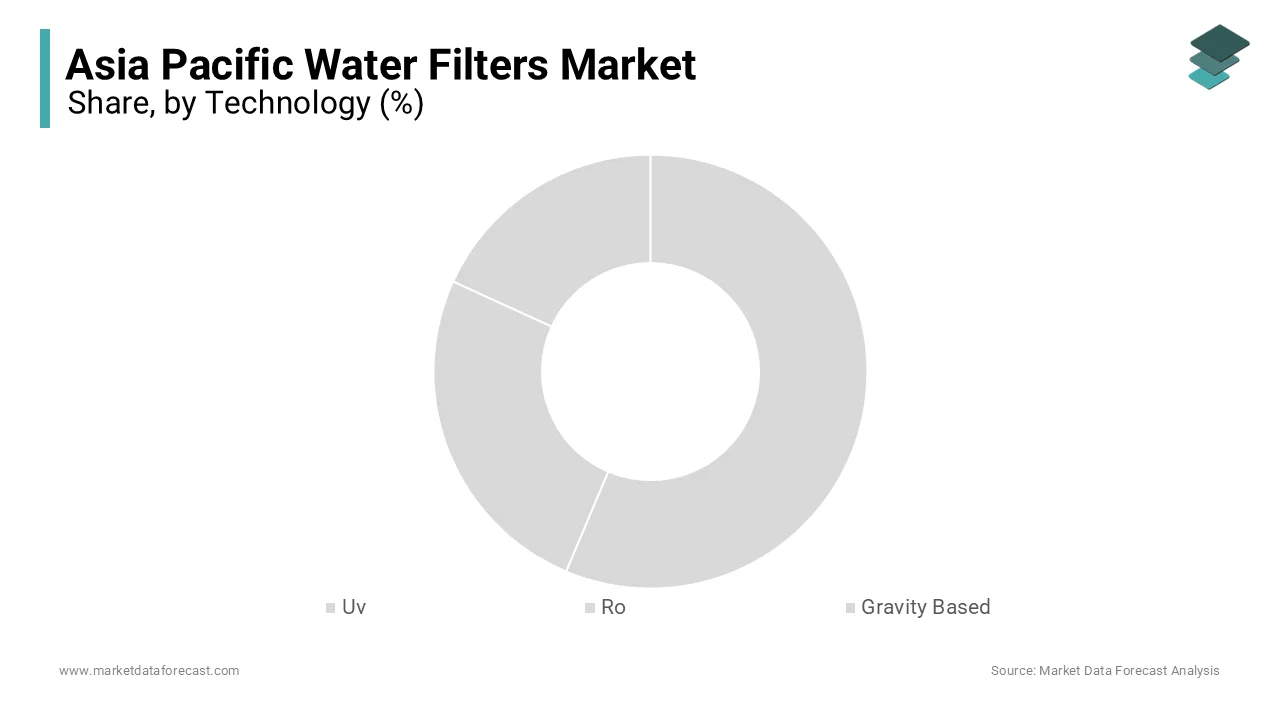
The ultraviolet technology segment is on the rise and is expected to be the fastest growing segment in the market by witnessing a CAGR of 9.8% from 2026 to 2034. This quick surge of the segment rising awareness of microbial contamination and the need for chemical free disinfection methods. Ultraviolet systems effectively neutralize bacteria viruses and protozoa without adding harmful byproducts making them an attractive option for health conscious consumers. In regions where municipal water is treated but prone to secondary contamination during distribution ultraviolet systems serve as a crucial final barrier. The ease of installation and low maintenance requirements compared to reverse osmosis systems also contribute to their popularity. Consumers appreciate the retention of natural minerals in water while ensuring microbiological safety. Additionally the integration of ultraviolet lamps with other filtration technologies in hybrid systems enhances their appeal. This combination of efficacy convenience and health benefits drives the accelerated adoption of ultraviolet technology across the region. The rapid expansion of the ultraviolet segment is further fueled by its energy efficiency and environmental sustainability which align with growing eco conscious consumer preferences. Unlike reverse osmosis systems which waste significant amounts of water during the filtration process ultraviolet systems operate with minimal water loss and lower energy consumption. Ultraviolet systems typically consume less than 50 watts of power making them cost effective to operate over time. The absence of chemical additives such as chlorine also appeals to consumers seeking natural and safe drinking water. Manufacturers are innovating with LED based ultraviolet systems that offer longer lifespans and even lower energy usage. These advancements reduce the environmental footprint of water purification. Government incentives for green technologies further support market growth. Thus, the sustainability profile of ultraviolet technology positions it as a preferred choice for environmentally aware consumers driving its status as the fastest growing segment.
By Distribution Channel Insights
The retail sales segment remained the largest segment in the Asia Pacific Water Filters Market in 2025. This supremacy of the segment is supported the established physical presence of stores and the high level of consumer trust associated with in person purchases. Customers prefer to examine product features build quality and design before making significant investments in home appliances. The ability to interact with knowledgeable sales staff who can explain technical specifications and recommend suitable models enhances the buying experience. Retailers often offer bundle deals and financing options that attract budget conscious buyers. The tactile experience of seeing the product reduces perceived risk especially for first time buyers. Additionally the widespread network of local dealers in rural and semi urban areas ensures broad market reach. This combination of trust convenience and service support sustains the dominance of retail sales as the primary channel for water filter distribution in the region. The top position of the retail sales channel is also strengthened by the immediate availability of products and the provision of professional installation services which enhance convenience for consumers. Water filters often require technical expertise for proper setup and connection to plumbing systems which retailers frequently offer as part of the purchase package. Retail partnerships with authorized service providers ensure that installations meet safety standards and manufacturer guidelines. This seamless experience reduces the time between purchase and usage appealing to busy urban households. Retailers also facilitate easy access to replacement filters and maintenance kits creating a recurring revenue stream. The physical presence of service centers associated with retail outlets provides reassurance regarding long term support. Consequently the integrated value proposition of product availability and professional service solidifies the position of retail sales as the dominant distribution channel.
The online sales segment is expected to exhibit a noteworthy CAGR of 14.2% during the forecast period owing to increasing digital penetration and robust e commerce infrastructure that enables convenient shopping experiences. The convenience of browsing diverse brands comparing prices and reading customer reviews from home appeals to tech savvy consumers. Online platforms often offer competitive pricing and exclusive discounts attracting budget conscious shoppers. The availability of detailed product information and video demonstrations helps overcome the lack of physical inspection. Secure payment gateways and reliable delivery networks build consumer confidence. Additionally the rise of mobile commerce allows users to shop anytime and anywhere. These factors collectively drive the accelerated growth of online sales as a preferred channel for water filter purchases. The rapid expansion of the online channel is further propelled by the adoption of subscription models and direct to consumer engagement strategies that enhance customer loyalty. E commerce platforms enable manufacturers to offer automated subscription services for replacement filters ensuring timely deliveries and consistent water quality. Manufacturers leverage online channels to communicate directly with consumers providing maintenance tips and troubleshooting support. The ability to track filter life and receive automated reminders adds value to the user experience. Online platforms also facilitate feedback loops allowing companies to improve products based on real time consumer insights. Exclusive online launches and limited edition models create buzz and drive traffic. This interactive and convenient approach fosters strong brand relationships. Consequently the strategic use of digital tools and subscription services positions online sales as the fastest growing distribution channel in the market.
By End User Insights
In 2025, the residential end users segment led the Asia Pacific Water Filters Market. This dominance of the segment is driven by heightened health consciousness and the prioritization of household safety. Families are increasingly aware of the health risks associated with contaminated drinking water leading to widespread adoption of home purification systems. The rise in lifestyle diseases linked to water quality such as kidney stones and gastrointestinal issues further motivates residential purchases. Real estate developers are increasingly installing pre fitted water filters in new apartments adding value to properties. Marketing campaigns emphasizing family health and purity resonate strongly with consumers. The emotional desire to protect loved ones drives consistent demand regardless of economic fluctuations. Additionally the availability of compact and aesthetically pleasing designs suits modern home interiors. This deep rooted concern for family well being ensures that the residential segment remains the largest contributor to market revenue. The spearheading of the residential segment is further reinforced by rapid urbanization and rising disposable incomes which expand the addressable market for water filters. As more people move to cities their exposure to polluted water sources increases driving demand for personal purification solutions. The proliferation of nuclear families in urban centers also drives demand for compact and efficient appliances. Retailers and manufacturers target this demographic through targeted advertising and financing options. The aspiration for a modern and healthy lifestyle influences purchasing decisions. Additionally the growth of gated communities and apartment complexes facilitates bulk installations and community wide adoption. These socioeconomic trends create a favorable environment for sustained growth in the residential sector. Consequently the combination of demographic shifts and economic empowerment solidifies the leadership of residential end users.
The commercial end users segment is predicted to witness the highest CAGR of 11.5% between 2026 and 2034. This rapid growth of the segment is fuelled by stringent regulatory compliance requirements and increasing corporate responsibility initiatives regarding employee health and safety. Businesses in sectors such as hospitality healthcare and education are mandated to provide safe drinking water to customers and staff. Companies are also adopting environmental social and governance frameworks that prioritize sustainable and safe operational practices. Installing commercial grade water filters reduces reliance on single use plastic bottles aligning with sustainability goals. The cost savings from reduced bottled water purchases further justify the investment. Additionally the reputation benefit of providing clean water enhances brand image. These regulatory and ethical drivers accelerate the adoption of commercial water filtration solutions. The swift growth of the commercial segment is further fueled by the booming hospitality and healthcare infrastructure in the Asia Pacific region. The construction of new hotels resorts hospitals and office buildings creates substantial demand for centralized water filtration systems. Office complexes are also upgrading their amenities to attract tenants with healthy work environments. Commercial water filters offer high capacity and continuous flow suitable for large scale operations. The integration of smart monitoring systems allows facility managers to maintain optimal performance efficiently. Partnerships between filtration companies and construction firms facilitate early specification of systems in building designs. This proactive approach ensures widespread adoption in new developments. Consequently the infrastructure boom in key commercial sectors drives the fast paced growth of this end user segment.
REGIONAL ANALYSIS
China Water Filters Market Analysis
China was the dominant country in the Asia Pacific water filters market and accounted for a 35.6% share in 2025. This dominance of the Chinese market is propelled by severe water pollution concerns and a massive consumer base. The country faces significant challenges with industrial and agricultural contamination affecting both surface and groundwater resources. According to the Ministry of Ecology and Environment of China although water quality has improved in recent years nearly 20 percent of monitored groundwater sites still exhibit poor quality. The National Bureau of Statistics of China reflects increasing urbanization, but the national adoption rate of residential water filtering systems was only approximately 17.8% in 2022. The government’s Healthy China 2030 initiative promotes better living standards including access to clean water. As per the China Household Electrical Appliances Association sales of smart water purifiers with internet connectivity are growing rapidly reflecting technological adoption. Consumer awareness of heavy metals and organic pollutants drives demand for reverse osmosis systems. The presence of domestic giants like Haier and Midea alongside international brands creates a competitive landscape. E commerce platforms dominate sales channels offering convenience and variety. Regulatory standards for water quality are becoming stricter encouraging upgrades in older systems. Consequently China remains the primary engine of growth in the regional market with strong demand for advanced and smart filtration solutions.
India Water Filters Market Analysis
India was the next prominent country in the Asia Pacific Water Filters Market and occupied a 25.8% share in 2025. This growth of the Indian market is fuelled by high prevalence of waterborne diseases and uneven infrastructure. The country faces acute water scarcity and contamination issues particularly in rural and peri urban areas. According to the Central Ground Water Board of India, approximately 20 percent of groundwater samples exceed permissible pollutant limits, with specific contamination from iron (13.2%), fluoride (9.04%), and arsenic (3.35-3.55%). The National Family Health Survey (NFHS-5) indicates that 95 percent of rural households have access to improved drinking water sources, though the demand for household solutions remains driven by reliability and quality concerns. The government’s Jal Jeevan Mission originally aimed to provide tap water to every rural household by 2024; however, the mission has since been extended to 2028 to reach the remaining 20% of households. As per the Indian Brand Equity Foundation the water purifier market is growing at 15 percent annually driven by rising middle class income. Reverse osmosis technology dominates due to high total dissolved solids levels in many regions. Local manufacturers offer affordable models catering to price sensitive consumers. Awareness campaigns by non governmental organizations educate communities about water safety. The expansion of retail networks in tier two and three cities enhances accessibility. Consequently India represents a high growth market with vast potential driven by health needs and government support.
Japan Water Filters Market Analysis
Japan is another key player in the Asia Pacific Water Filters Market due to advanced technology adoption and high quality standards. The country has a mature market with widespread access to safe tap water yet consumers prefer additional filtration for taste and safety assurance. According to the Japan Water Works Association tap water is safe to drink but concerns about aging pipes and residual chlorine persist. The Japan Water Purifier Association (JWPA) suggests that household penetration of water purifiers is approximately 40 percent, reflecting a cultural emphasis on "tasty" and pure water. Japanese consumers favor sophisticated systems with multiple filtration stages including ultraviolet and activated carbon. As per the Japan Electrical Manufacturers Association innovation in compact and energy efficient designs drives replacement sales. The aging population increases demand for easy to use and maintain systems. Smart features such as filter life indicators are standard in new models. Environmental consciousness leads to preference for eco friendly materials and recyclable components. High disposable income supports premium product segments. Consequently Japan remains a stable and technologically advanced market focusing on quality and convenience rather than basic necessity.
South Korea Water Filters Market Analysis
South Korea expanded steadily in the Asia Pacific Water Filters Market owing to high adoption of rental models and smart technology. The unique subscription based rental model for water purifiers is widely accepted ensuring regular maintenance and filter replacements. According sources, approximately 60 percent of households use rented water purifiers, with the rental market continuing to expand. Data from the Korea Consumer Agency indicates that consumer satisfaction with rental services is high due to reliable after sales support. The market is driven by concerns about microplastics and emerging contaminants in water sources. As per the Ministry of Environment strict regulations on water quality encourage continuous innovation in filtration technologies. Smart purifiers with mobile app integration allow users to monitor water quality and usage remotely. The compact living spaces in urban areas favor sleek and space saving designs. High internet penetration supports the connectivity features of modern devices. Competitive rivalry among leading players drives service excellence and product innovation. Consequently South Korea represents a sophisticated market where service quality and technological integration are key success factors.
COMPETITIVE LANDSCAPE
The competition in the Asia Pacific water filters market is characterized by intense rivalry among multinational corporations and strong regional players vying for dominance through innovation and service excellence. Established brands leverage their technological expertise and broad distribution networks to maintain leadership while local companies compete on price and contextual understanding of water quality issues. Product differentiation is achieved through advanced features such as smart connectivity mineral enrichment and compact designs. The rental model pioneered by some players has disrupted traditional sales channels creating high barriers to entry for competitors lacking service infrastructure. Price sensitivity in developing nations drives manufacturers to offer tiered product portfolios catering to various income segments. Regulatory compliance and certification serve as critical trust factors influencing consumer choices. Marketing efforts focus heavily on health education and brand reliability to overcome skepticism. Overall, the market dynamics favor agile companies that can balance cost efficiency with high performance and exceptional customer service to capture share in this fragmented and rapidly evolving landscape.
KEY MARKET PLAYERS
Companies playing a prominent role in the Asian Pacific water filters market include
- Eaton Corporation (US)
- Suez Water Technologies & Solutions (France)
- Veolia (France)
- Dow Water & Process Solutions (US)
- EvoQua Water Technologies (US)
- Mann Hummel (Germany)
- Pall Corporation (US)
- Pentair PLC (UK)
Top Players in the Market
- Panasonic Corporation is a dominant force in the Asia Pacific water filters market leveraging its extensive electronics expertise to produce advanced purification systems. The company offers a diverse range of products including under sink reverse osmosis units and countertop purifiers equipped with smart sensors. Recent actions to strengthen its market position include the launch of AI enabled devices that monitor water quality in real time and alert users via mobile applications. Panasonic has expanded its manufacturing facilities in Southeast Asia to reduce costs and improve supply chain efficiency. The company actively collaborates with local governments to implement community water safety projects enhancing brand reputation. By integrating IoT technology into its product lineup Panasonic appeals to tech savvy consumers seeking convenience and reliability. These strategic initiatives reinforce its leadership by combining technological innovation with robust distribution networks to meet the evolving needs of health conscious households across the region.
- Coway Co. Ltd. is a leading provider of water purification solutions renowned for its innovative rental business model which ensures regular maintenance and filter replacements. The company has established a strong presence in South Korea and is rapidly expanding into other Asia Pacific markets such as China and Indonesia. Recent actions to strengthen its market position include the introduction of tankless reverse osmosis systems that save space and reduce energy consumption. Coway has invested heavily in digital platforms to streamline customer service and subscription management improving user experience. The company partners with local distributors to adapt its offerings to regional water conditions and consumer preferences. By focusing on after sales service and customer retention Coway builds long term loyalty and recurring revenue streams. These efforts solidify its reputation as a trusted partner in household health driving growth and market penetration in competitive Asian economies through superior service quality.
- Eureka Forbes Limited is a prominent player in the Asia Pacific water filters market particularly in India and neighboring countries with its flagship Aquaguard brand. The company specializes in comprehensive water and air purification solutions tailored to local contamination challenges such as high total dissolved solids and bacterial presence. Recent actions to strengthen its market position include the launch of smart purifiers with copper and zinc enrichment features to boost immunity. Eureka Forbes has expanded its direct sales force and e commerce presence to reach rural and semi urban customers effectively. The company engages in extensive awareness campaigns about water borne diseases educating consumers on the importance of filtration. By offering affordable financing options and flexible payment plans Eureka Forbes makes its products accessible to a broader demographic. These strategic moves enhance its market reach and brand loyalty positioning it as a key contributor to public health and safety in the region.
Top Strategies Used by Key Market Participants
Key players in the Asia Pacific water filters market primarily focus on product innovation and technological integration to differentiate their offerings. Companies are developing smart purifiers with Internet of Things capabilities to monitor water quality and filter life remotely. Expansion into emerging markets through localized product designs and affordable pricing strategies is common. Strategic partnerships with local distributors and e commerce platforms enhance market reach and accessibility. Emphasis on after sales service and maintenance contracts builds customer loyalty and ensures recurring revenue. Sustainability initiatives including eco friendly materials and energy efficient designs align with regulatory standards. Educational campaigns raise awareness about water safety driving demand. These combined strategies enable companies to address diverse consumer needs and maintain competitive advantage in a dynamic and growing regional market.
MARKET SEGMENTATION
This research report on the Asia Pacific water filters market has been segmented and sub-segmented based on the following categories.
By Technology
- Uv
- Ro
- Gravity Based
By Distribution Channel
- Retail
- Sales
- Direct sales
- Online
By Portability
- Portable
- Non-portable
By End User
- Commercial
- Residential
By Country
- India
- China
- Japan
- South Korea