- Product Description Description
- Table of Contents TOC
- List of Table & Figure LOT
- Get Free Sample PDF Sample PDF
Market Size, 2025
$112.6 BnMarket Estimate, 2026
$127.4 BnMarket Forecast, 2034
$341.1 BnCAGR, 2026–2034
13.1%Asia Pacific White Biotech Market Size, Growth, Trends & Forecast (2026–2034)
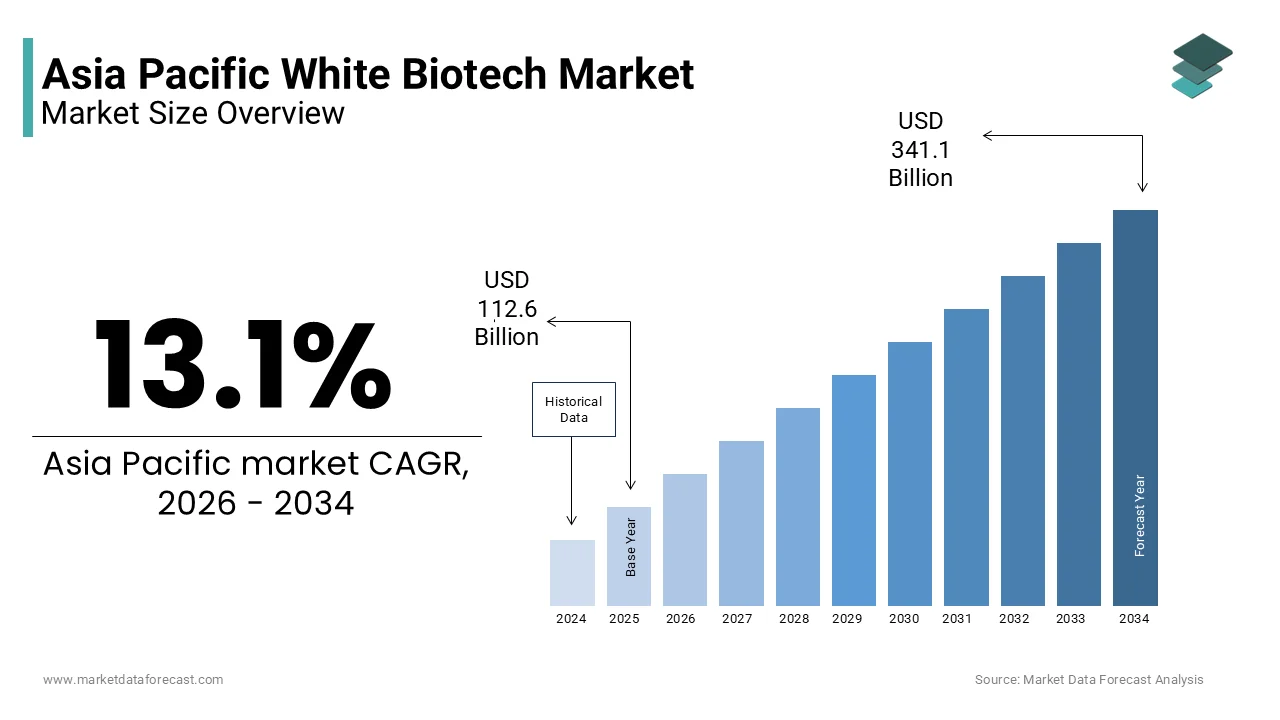
The Asia-Pacific white biotech market size was valued at USD 112.67 billion in 2025, reached USD 127.43 billion in 2026, and is projected to scale up to USD 341.17 billion by 2034, registering a compound annual growth rate (CAGR) of 13.10% during the forecast period from 2026 to 2034. Driven by stringent carbon neutrality mandates, abundant agricultural biomass feedstocks, and a swift regional shift toward green manufacturing and circular economies, the market continues to expand dynamically across the continent.
Key Executive Metrics (At-a-Glance)
- 2025 Base Valuation: USD 112.67 Billion
- 2026 Current Valuation: USD 127.43 Billion
- 2034 Forecast Valuation: USD 341.17 Billion
- Compound Annual Growth Rate (CAGR): 13.10% (2026–2034)
- Leading Regional Market: China (Dominant manufacturing and bio-fermentation base)
- Fastest-Growing Product Segment: Biomaterials (CAGR of 12.5%)
- Fastest-Growing Application Segment: Pharmaceutical Ingredients (CAGR of 11.8%)
Core Market Drivers
- Stringent Environmental Regulations: Aggressive government mandates (such as China's 2060 carbon neutrality target and Japan's Green Growth Strategy) forcing industrial transitions away from fossil fuels.
- Abundant Biomass Feedstocks: Extensive availability of agricultural, forestry, and food processing residues across Southeast Asia and the wider region providing cost-effective raw materials.
Primary Market Restraints & Challenges
- High Capital Investment: Substantial financial requirements for constructing biorefineries and optimizing complex fermentation processes.
- Scale-Up & Petrochemical Competition: Technical bottlenecks in transitioning from lab-scale to continuous industrial production, compounded by stiff price competition from entrenched, subsidized petrochemical incumbents.
Asia-Pacific White Biotech Market Segmentation Highlights
| Segment Category | Leading / Dominant Segment | Fastest-Growing / Prominent Segment |
|---|---|---|
| By Product | Biochemicals (Commanding market share in 2025) | Biomaterials (Projected CAGR of 12.5%) |
| By Application | Food & Feed Additives (Majority share in 2025) | Pharmaceutical Ingredients (Projected CAGR of 11.8%) |
| By Region | China (Largest regional market share) | India, South Korea, & Japan (High-growth tech hubs) |
Major Industry Players Profiled
Key global and regional bio-industrial leaders shaping the market include Novozymes A/S, CJ CheilJedang Corporation, Amyris, Solazyme, Metabolic Explorer, Global Bioenergies, Gevo, Fermentalg, Evolva, Deinove, Green Plains Inc., Codexis, Borregaard, and BioAmber.
Asia Pacific White Biotech Market Size
The Asia Pacific white biotech market size was valued at USD 112.67 billion in 2025 and is predicted to reach USD 341.17 billion by 2034 from USD 127.43 billion in 2026, growing at a CAGR of 13.1% from 2026 to 2034.
White biotechnology, also known as industrial biotechnology, uses living cells, enzymes, and microorganisms to make industrial manufacturing cleaner and more sustainable. This field serves as a sustainable alternative to traditional petrochemical processes by leveraging renewable biomass feedstocks such as agricultural residues and industrial waste. According to the Food and Agriculture Organization, the global volume of total food loss and waste reaches approximately 1.3 billion tonnes annually, creating an expanding raw feedstock base for international bio-based industrial applications. As per the Asian Development Bank, developing economies across Asia and the Pacific generate over 80% of global economic growth, accelerating regional demand for sustainable technology infrastructure and renewable inputs. Governments in countries like China, India, and Japan are implementing strict environmental regulations and carbon reduction targets that favor bio based solutions over fossil fuel derivatives. The market is characterised by rapid technological advancements in metabolic engineering and fermentation processes that improve yield and cost efficiency. Consequently, the Asia-Pacific White Biotech Market acts as a critical enabler of the circular economy, supporting the transition toward green manufacturing and reducing the ecological footprint of industrial activities across the continent.
MARKET DRIVERS
Stringent Environmental Regulations and Carbon Neutrality Goals
Aggressive government mandates aimed at reducing greenhouse gas emissions and promoting sustainable industrial practices are a primary factor driving the Asia-Pacific white biotech market. According to the Ministry of Ecology and Environment, China has committed to achieving carbon neutrality by 2060, accelerating the domestic market transition away from conventional fossil-based chemical production toward sustainable biological processing alternatives. As per the Ministry of Economy, Trade and Industry, Japan has implemented the Green Growth Strategy, which targets net-zero greenhouse gas emissions by 2050, accelerating commercial development timelines and public-private investments across fourteen priority industrial sectors. These regulatory pressures directly influence market dynamics because companies must adopt cleaner production methods to comply with legal standards and avoid penalties. The European Union’s carbon border adjustment mechanism also impacts Asian exporters, forcing them to adopt sustainable practices to maintain market access. Consequently, the push for decarbonization ensures sustained demand for white biotech products such as bio plastics, enzymes, and bio fuels as industries seek compliant and scalable solutions to mitigate their environmental impact while maintaining competitiveness in global markets.
Abundance of Renewable Biomass Feedstocks
The vast availability of agricultural and forestry residues in the region provides a cost-effective and sustainable raw material base that significantly fuels the growth of the Asia Pacific white biotech market. According to the Association of Southeast Asian Nations Secretariat, Southeast Asia produces over 500 million tons of biomass potential annually from its agriculture and forestry sectors, expanding the regional supply of industrial residues available for conversion into clean bioenergy. The abundance directly benefits the market by lowering input costs and ensuring supply security for bio manufacturers compared to volatile fossil fuel prices. The utilisation of waste materials also aligns with circular economy principles, reducing environmental pollution from open burning or landfilling. Governments support this trend through subsidies for biomass collection and processing infrastructure. Therefore, the ready availability of diverse feedstocks enables the scaling up of white biotech operations, making the region a global hub for sustainable industrial biotechnology and fostering innovation in conversion technologies.
MARKET RESTRAINTS
High Capital Investment and Operational Costs
Substantial financial investment required for establishing biorefineries and optimising fermentation processes limits the expansion of the Asia-Pacific white biotech market. According to the World Bank, international development finance institutions prioritize heavy capital injections into conventional petrochemical, plastic, and agrochemical industrial expansion projects over nascent renewable alternatives. As per data from the Asian Development Bank, small and medium-sized enterprises across Asia face significant structural constraints including limited access to capital, low R&D expenditures, and underdeveloped sales channels. This financial barrier directly impacts market dynamics because high production costs make bio based products less competitive against subsidized or established fossil fuel alternatives. The volatility of enzyme costs and the need for specialised equipment further strain operational budgets. Additionally, the long payback periods discourage private investors who prefer quicker returns from traditional industries. Thus, these economic constraints limit the entry of new players and slow down the expansion of existing facilities, thereby restraining overall market growth and preventing the full realization of white biotechnology potential in the region.
Technological Limitations and Scale Up Challenges
The inherent technical barriers associated with scaling up laboratory success to industrial production levels are a major restraint on the commercial viability of many innovations in the Asia Pacific white biotech market. According to the Journal of Industrial Microbiology & Biotechnology, academic research continues to expand peer-reviewed reporting on microbial fermentation, metabolic engineering, and bioreactor design to optimize industrial yield efficiencies. As per statistics from the Chinese Academy of Sciences, modern biomanufacturing facilities rely extensively on batch or fed-batch upstream operations, driving ongoing R&D into continuous microbial processing to minimize contamination risks and enhance genetic stability. The technological gap directly affects market dynamics because manufacturers hesitate to invest in unproven technologies that carry high operational risks. The lack of standardized protocols and robust strain engineering tools further complicates the optimization of production processes. Additionally, the sensitivity of biological systems to environmental fluctuations requires precise monitoring and control systems, which are expensive to implement. As a result, the difficulty in achieving reliable and efficient large scale production restricts the diversity of available bio based products and limits the ability of the industry to compete effectively with the consistency and reliability of traditional petrochemical manufacturing methods.
MARKET OPPORTUNITIES
Growing Demand for Bio Plastics and Sustainable Packaging
Growing consumer awareness and regulatory pressure are forcing a reduction in single-use plastics, which offers a strong opening for the Asia-Pacific white biotech market. Consequently, the region is seeing an expansion of bioplastics manufactured using white biotechnology. According to the United Nations Environment Programme, global humanity produces over 430 million tonnes of plastic each year, with two-thirds transitioning into short-lived waste streams that accelerate international demands for systemic circular economy solutions. As per data from the Thailand Plastic Market Roadmap, domestic industrial entities aim to produce 1 million tonnes of green polymers annually by 2030 to establish the nation as a regional hub for sustainable bio-based alternatives. The shift directly benefits the market by creating a lucrative niche for polylactic acid and polyhydroxyalkanoates derived from renewable resources. Major retail and food service companies are committing to sustainable packaging goals, driving procurement of bio-based materials. Manufacturers can leverage this trend by developing cost competitive and high performance bio plastics that meet industry standards. Therefore, this segment offers substantial growth potential as the region transitions toward a circular economy and seeks innovative solutions to address the plastic pollution crisis.
Expansion of Biofuels and Renewable Energy Solutions
The urgent need to reduce dependence on imported fossil fuels and meet renewable energy targets opens a major opportunity for the Asia Pacific white biotech market. This creates a pathway for its applications in bio fuel production across the region. According to the International Renewable Energy Agency, Southeast Asian nations target a 23% renewable energy share in the total regional primary energy mix to bolster national energy security. As per statistics from the Indonesian Ministry of Energy and Mineral Resources, the nation has allocated over 15.6 billion liters of biodiesel for domestic distribution under its mandated fuel-blending programs to substitute fossil diesel imports. The demand directly drives market expansion as white biotech processes enable the conversion of non food biomass into advanced bio fuels such as bio ethanol and biobutanol. Technological advancements in enzymatic hydrolysis and fermentation improve yield and reduce costs, making bio fuels more competitive. Government incentives and subsidies further support the development of bio refinery infrastructure. Hence, the biofuel sector provides a stable and growing revenue stream for white biotech companies, contributing to energy security and environmental sustainability in the region.
MARKET CHALLENGES
Competition from Established Petrochemical Industries
The dominance of well-established petrochemical industries with mature supply chains and subsidised pricing poses a significant challenge to the competitiveness of products in the Asia-Pacific white biotech market. According to the International Energy Agency, global liquid biofuel demand relies heavily on strict national blending mandates across emerging markets to compete directly against fossil fuel streams in the transportation sector. As per data from the American Chemistry Council, chemical manufacturing supply chains track materials using standardized mass balance methodologies because individual, chemically identical molecules are completely fungible across bio-based and conventional petrochemical output streams. The price disparity directly impacts market dynamics because cost-sensitive industries such as packaging and textiles prioritise affordability over sustainability unless mandated otherwise. The entrenched infrastructure of petrochemical plants makes it difficult for bio refineries to gain market share without significant policy intervention. Additionally, fluctuations in crude oil prices can temporarily make petrochemicals even more attractive, undermining the economic case for bio alternatives. Thus, white biotech companies face an uphill battle in displacing traditional materials, requiring continuous innovation and policy support to achieve price parity and long-term viability.
Supply Chain Logistics and Feedstock Consistency
The fragmented and inefficient supply chain for collecting, transporting, and storing biomass feedstocks is a persistent hindrance to the reliable operation of white biotechnology facilities in the region, which slows down the expansion of the Asia Pacific market. According to the Food and Agriculture Organization, commercial biorefineries increasingly optimize multi-feedstock processing strategies, utilizing a flexible mix of food processing residues and forestry waste to mitigate seasonal supply shortages and local price volatility. As per statistics from the Ministry of New and Renewable Energy, national clean energy frameworks mandate the installation of standardized SCADA and remote monitoring systems across domestic biomass plants to verify technical compliance and secure public financial incentives. The inconsistency directly affects market dynamics because interruptions in supply lead to production downtime and increased operational costs. The degradation of biomass during storage further reduces quality and yield, requiring careful handling and preservation techniques. Additionally, competition for biomass from other sectors such as animal feed and power generation exacerbates supply shortages. Consequently, the lack of a robust and integrated supply chain infrastructure hinders the scalability and economic efficiency of white biotechnology operations, limiting their ability to compete with the reliable supply networks of the petrochemical industry.
REPORT COVERAGE
| REPORT METRIC | DETAILS |
| Market Size Available | 2025 to 2034 |
| Base Year | 2025 |
| Forecast Period | 2026 to 2034 |
| CAGR | 13.1% |
| Segments Covered | By Product, Application, and Region |
| Various Analyses Covered | Regional & Country Level Analysis, Segment-Level Analysis, DROC, PESTLE Analysis, Porter’s Five Forces Analysis, Competitive Landscape, Analyst Overview on Investment Opportunities |
| Regions Covered | India, China, Japan, South Korea, Australia, New Zealand, Thailand, Malaysia, Vietnam, Philippines, Indonesia, Singapore, and the Rest of Asia-Pacific |
| Market Leaders Profiled | Solazyme, Amyris, Novozymes A/S, Metabolic Explorer, Global Bioenergies, Gevo, CJ CheilJedang Corporation, Fermentalg, Evolva, Deinove, Green Plains Inc., Codexis, Borregaard, and BioAmber |
SEGMENTAL ANALYSIS
By Product Insights
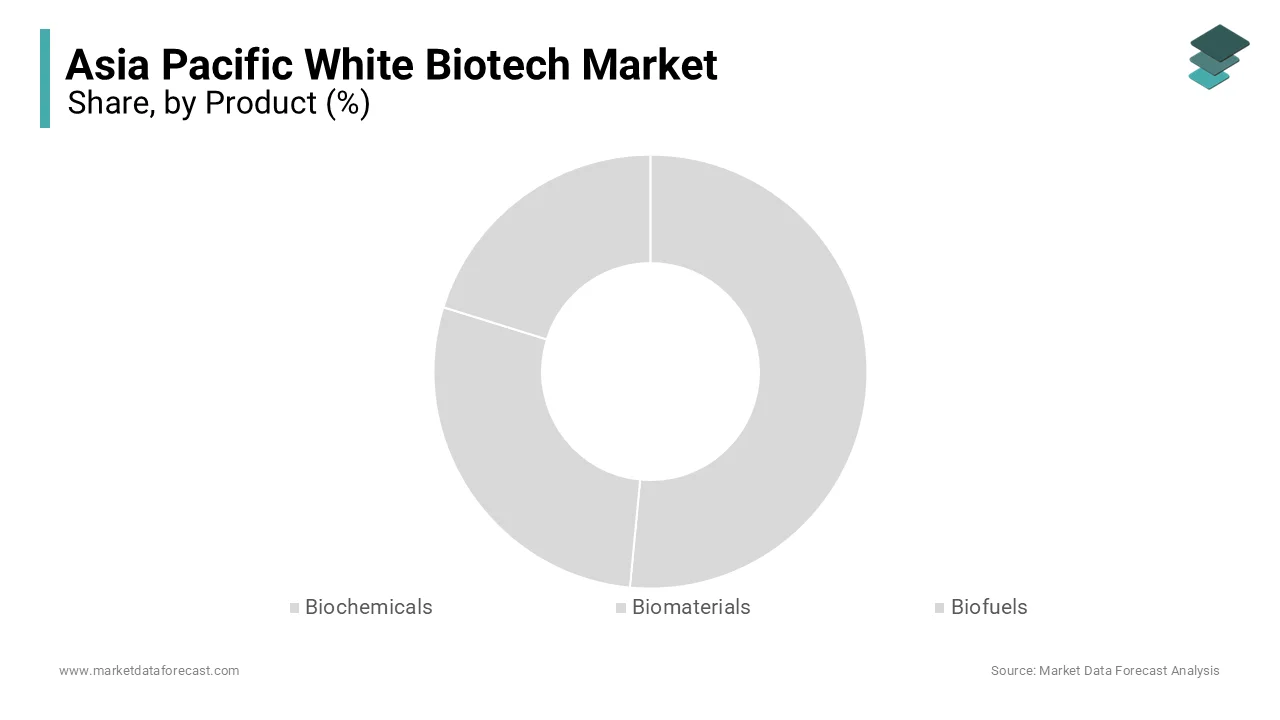
The biochemicals segment was the largest in 2025 and occupied a commanding share of the Asia-Pacific White Biotech Market. This prominence was credited to its extensive application across diverse industries, including textiles, agriculture, and plastics, as sustainable substitutes for petrochemical derivatives. According to the Organisation for Economic Co-operation and Development, global plastics and industrial chemical production accounts for 1.8 billion metric tons of greenhouse gas emissions annually, driving international pressure on supply chains to implement sustainable circular carbon models. As per data from the China National Light Industry Council, national technological progress awards incentivize domestic chemical producers to transition downstream pipelines from traditional commodities toward bio-based organic acids and biopolymer alternatives. The high volume directly drives market leadership because biochemicals serve as essential building blocks for downstream products, ensuring consistent demand regardless of economic fluctuations. The ability of enzymes and microbial fermentation to produce complex molecules with high specificity enhances process efficiency and reduces waste. Manufacturers benefit from established supply chains and mature technologies that lower production costs over time. Consequently, this segment remains the largest revenue generator supported by the critical need to decarbonize industrial processes and meet global sustainability standards through renewable chemical inputs.
Strong government policies promoting green chemistry and the replacement of hazardous substances significantly strengthen the dominance of the biochemicals segment in the region. According to the Japanese Ministry of Economy, Trade and Industry, the Green Growth Strategy prioritizes the development of bio-based chemicals to achieve carbon neutrality, creating a favorable regulatory environment for manufacturers. As per statistics from the Indian Department of Biotechnology, national biomanufacturing frameworks under the BioE3 policy explicitly target bio-based chemicals, functional enzymes, and metabolic intermediates to reduce long-term structural dependence on imported inputs. The policy frameworks directly influence market dynamics by lowering barriers to entry and encouraging investment in biorefinery infrastructure. Regulatory bans on certain synthetic chemicals in personal care and household products further drive demand for safe bio based alternatives. International trade agreements increasingly favour products with lower carbon footprints, enhancing the competitiveness of Asian biochemical exporters. Consequently, the supportive regulatory landscape ensures sustained growth and market leadership for biochemicals as industries align their operations with environmental mandates and consumer preferences for safer, sustainable ingredients.
The biomaterials segment is on the rise and is expected to be the fastest-growing segment in the market, with a CAGR of 12.5% from 2026 to 2034. This quick surge of the segment is fuelled by the urgent need to replace single use plastics with biodegradable alternatives in packaging and consumer goods. As per data from the European Bioplastics Association, global bioplastic production capacity is projected to reach approximately 7.43 million tons by 2028, representing a compounding annual growth rate that directly expands the availability of alternative resins for consumer manufacturing. The regulatory and consumer shift directly drives market expansion as brands seek compostable materials such as polylactic acid and polyhydroxyalkanoates to comply with new laws. The rising cost of virgin plastic due to oil price volatility further enhances the economic viability of biomaterials. Manufacturers are investing heavily in scaling up production facilities to meet the surging demand from retail and food service sectors. Consequently, this segment grows rapidly as it addresses one of the most pressing environmental challenges of the decade, offering scalable solutions for waste reduction.
The rapid advancement of biomaterials for medical applications, including tissue engineering scaffolds and bioresorbable implants, is accelerating growth in the healthcare sector. According to the Journal of Tissue Engineering and Regenerative Medicine, additive manufacturing applications rely extensively on biocompatible natural biopolymers such as collagen, alginate, and chitosan to construct complex three-dimensional structural scaffolds for cellular regeneration. As per the Australian Regenerative Medicine Institute, active clinical partnerships focus on evaluating hybrid photo-crosslinked hydrogels and stimuli-responsive smart biomaterials to optimize targeted structural repair strategies for tissue degradation. The technological evolution directly benefits the market by creating high-value niche products with substantial profit margins. The ageing population in countries like Japan and South Korea drives demand for advanced medical devices that improve quality of life. Regulatory approvals for novel biomaterials are becoming more streamlined, facilitating faster market entry. Consequently, the biomaterials segment expands rapidly as it converges with biotechnology and medicine, offering innovative solutions for chronic diseases and injury repair.
By Application Insights
In 2025, the food and feed additives segment held the majority share in the Asia-Pacific White Biotech Market because of the critical role of enzymes and probiotics in enhancing food processing efficiency and animal nutrition. According to the Food and Agriculture Organization, the Asia-Pacific region is home to nearly 60 percent of the global population, placing substantial structural strain on regional agri-food supply chains to expand food output. As per data from the International Feed Industry Federation, global compound feed output is projected to hit 1.4 billion tonnes by 2025, accelerating commercial demand for downstream bioprocessing solutions and enzymatic digestion enhancers. The efficiency gain directly drives market dominance as farmers and producers adopt bio-based solutions to maximise yield and minimise waste. The growing preference for natural preservatives and flavour enhancers in processed foods further boosts demand for white biotech products. Regulatory approvals for Generally Recognised As Safe status facilitate widespread adoption in human food applications. Hence, this segment remains the largest application area supported by the fundamental need to secure food supplies and improve agricultural productivity in a resource constrained world.
The increasing consumer interest in health and wellness is fueling the demand for functional foods enriched with bio based ingredients such as prebiotics and probiotics. According to research, over 80% of health-conscious consumers express a clear willingness to pay premium prices for food products that contain verified clean-label attributes and beneficial ingredients. As per the Chinese Center for Disease Control and Prevention, public health interventions focus heavily on designing evidence-based preventive nutrition protocols to counteract shifting dietary habits and escalating childhood obesity trends. The trend directly influences market dynamics as food manufacturers incorporate white biotech-derived ingredients to enhance product value and appeal. The versatility of fermentation technology allows for the production of diverse functional compounds tailored to specific health needs. Strong distribution networks in urban centres ensure wide availability of these products. Consequently, the food and feed additives segment maintains its leadership by aligning with global health trends and leveraging biotechnology to create nutritious and beneficial food options.
The pharmaceutical ingredients segment is likely to experience the fastest CAGR of 11.8% during the forecast period, owing to the expanding production of biosimilars and generic drugs in the region. According to the World Health Organization, commercial manufacturing hubs in India fulfill roughly 20% of the entire global volume of generic pharmaceutical exports to meet international medical demands. As per data from the Indian Pharmaceutical Alliance, the domestic pharmaceutical sector targets an absolute commercial valuation of 120 to 130 billion dollars by 2030, accelerating public-private capital deployments into clinical innovation pipelines. The manufacturing prowess directly drives market growth as companies seek cost-effective and scalable methods to produce complex molecules. The expiration of patents for major biologic drugs creates opportunities for biosimilar manufacturers who utilize advanced enzymatic and cellular techniques. Government support for local drug production enhances self-sufficiency and export potential. Consequently, this segment expands rapidly as the region becomes a global hub for affordable and high quality pharmaceutical manufacturing.
The development of advanced drug delivery systems using bio based carriers such as liposomes and nanoparticles is accelerating growth in the pharmaceutical application sector. According to Nature Reviews Drug Discovery, advanced nanoparticle engineering focuses on building multi-functional liposomal, polymeric, and inorganic platforms to deliver precision therapeutics across heterogeneous biological barriers. As per statistics from the Japanese Pharmaceuticals and Medical Devices Agency, regulatory authorities approved a needle-free epinephrine nasal spray platform to improve ease of outpatient administration for acute medical conditions. The innovation directly benefits the market by creating demand for specialised biotech ingredients that enable precise drug release. The ageing population requires more effective treatments with fewer adverse effects, driving adoption of these advanced therapies. Research collaborations between academia and industry foster continuous improvement in delivery technologies. Consequently, the pharmaceutical ingredients segment grows rapidly as it leverages white biotechnology to enhance therapeutic outcomes and patient safety.
REGIONAL ANALYSIS
China Market Analysis
China outperformed other regions in the Asia-Pacific White Biotech Market and accounted for a substantial share in 2025. This regional dominance was driven by its massive manufacturing base and strong government support for the bioeconomy. According to the National Development and Reform Commission, China targets a total domestic bioeconomy output value of 22 trillion CNY by 2025 to establish biotechnology integration as a primary engine for high-quality nationwide economic development. As per China Briefing, the nation generates over 70 percent of the world's gross commercial volume of bio-fermentation products, establishing deep industrial dominance across international food additive and downstream biochemical supply chains. The presence of large-scale biorefineries ensures cost-competitive production. Strict environmental regulations drive the substitution of petrochemicals with bio-based alternatives. Consequently, China remains the dominant force in the regional market, setting trends for volume and innovation.
India Market Analysis
India occupies a significant position in the market because of its strength in pharmaceutical ingredients and enzyme production. According to the Department of Biotechnology, national bioindustrial frameworks under the BioE3 policy target a 300 billion dollar domestic bioeconomy by 2030, accelerating localized R&D to mitigate high structural dependency on imported specialty industrial enzymes. As per data from the Confederation of Indian Industry, annual high-level agricultural summits mobilize public-private stakeholders to accelerate the commercial deployment of biological solutions, soil health technologies, and carbon residue management tools. Government initiatives such as the National Biofuel Policy support the growth of white biotech applications in energy and chemicals. A skilled workforce and low production costs enhance competitiveness. This robust industrial ecosystem ensures India remains a key player with strong export capabilities.
Japan Market Analysis
Japan maintains a noteworthy share of the Asia Pacific white biotech market. It is a technologically advanced country supported by innovation in high-value biomaterials and pharmaceutical ingredients. According to the Ministry of Economy, Trade and Industry, Japan targets the domestic market introduction of approximately 2 million tons of bio-based plastics by 2030 to advance long-term industrial decarbonization frameworks. As per the Japan Bioindustry Association, national bioeconomy roadmaps aim to scale total biotechnology and biomanufacturing industry market valuations to 100 trillion yen by 2030. Strong intellectual property protection fosters innovation. An ageing population drives demand for advanced medical biomaterials. This focus on quality and technology ensures Japan remains a leader in premium white biotech segments.
South Korea Market Analysis
South Korea continues to be a key contributor to the regional market owing to government initiatives to develop a bio economy and reduce carbon emissions. According to the Ministry of Science and ICT, South Korea allocates public capital into foundational synthetic biology research centres to establish automated, AI-driven bio-foundry infrastructure across domestic industrial networks. As per data from the Korea Bio Industry Association, domestic personal care manufacturers expand production capacity for functional, plant-derived, and fermented cosmetic formulations to address growing consumer demands for clean-label skincare products. Partnerships between conglomerates and startups accelerate commercialisation. Regulatory support for green chemistry encourages adoption. This strategic focus ensures South Korea continues to grow as a hub for innovative white biotech solutions.
Australia Market Analysis
Australia grew steadily in the Asia Pacific white biotech market because of strong research capabilities and abundant biomass resources. According to CSIRO, national industrial biotechnology programs focus on engineering novel enzymes to degrade environmental organic contaminants and optimise chemical bioremediation processes. As per data from the Australian Government Department of Industry, Science and Resources, commercial mining supply chains increase the utilization of specialized dust control chemical compounds and chemical processing aids to minimize structural transport particulate pollution across regional operations. High environmental standards promote the use of eco-friendly technologies. Collaboration with Asian markets facilitates export growth. This combination of research excellence and natural resources ensures Australia remains a key contributor to regional innovation.
COMPETITIVE LANDSCAPE
The competition in the Asia-Pacific White Biotech Market is characterized by intense rivalry among global multinational corporations and emerging local players who strive to differentiate through technological innovation and cost efficiency. Major competitors focus on developing specialized enzymes and bio based chemicals that offer superior performance and environmental benefits compared to traditional petrochemical alternatives. Product differentiation is achieved through advancements in synthetic biology and precision fermentation which enable the production of complex molecules with higher purity and lower energy requirements. Price competition remains significant in commodity segments such as bio ethanol and basic organic acids where economies of scale determine profitability. Strategic alliances with downstream manufacturers help secure long term contracts and stabilize demand. Regulatory compliance with stringent environmental standards serves as a barrier to entry favoring established players with robust quality management systems. The market sees frequent launches of novel bio materials driven by consumer demand for sustainable packaging and products. Intellectual property protection plays a crucial role in maintaining competitive edges in high tech segments. This dynamic environment requires continuous investment in research and development to stay ahead of technological curves and meet the evolving needs of industries transitioning toward a circular economy.
KEY MARKET PLAYERS
Key players in the Asia Pacific white biotech market are
- Solazyme
- Amyris
- Novozymes A/S
- Metabolic Explorer
- Global Bioenergies
- Gevo
- CJ CheilJedang Corporation
- Fermentalg
- Evolva
- Deinove
- Green Plains Inc.
- Codexis
- Borregaard
- BioAmber
Top Players in the Market
- Novozymes A/S is a global leader in bio solutions with a strong presence in the Asia Pacific white biotechnology market providing enzymes and microorganisms for industrial applications. The company focuses on sustainable innovation helping industries reduce energy consumption and waste through efficient biological processes. Recent actions include expanding its production facilities in China and India to meet growing regional demand for bio based chemicals and textile enzymes. Novozymes actively collaborates with local partners to develop tailored solutions for agriculture and food processing sectors. Their strategic emphasis on circular economy principles strengthens their position as a key enabler of green manufacturing. By prioritizing research and development Novozymes continues to drive adoption of white biotech technologies across diverse industrial segments in the region.
- CJ CheilJedang Corporation contributes significantly to the market through its extensive portfolio of bio based ingredients including amino acids nucleotides and bioplastics. The company leverages advanced fermentation technology to produce high quality biochemicals for food feed and pharmaceutical applications. Recent initiatives involve scaling up production of polylactic acid and other biodegradable materials to support global sustainability goals. CJ CheilJedang invests heavily in metabolic engineering to improve yield and cost efficiency of its bio products. They actively engage in partnerships with agricultural suppliers to secure sustainable biomass feedstocks. By focusing on integrated bio value chains CJ CheilJedang reinforces its reputation as a leading innovator in white biotechnology driving growth in eco friendly industrial solutions across Asia Pacific.
- Green Plains Inc. plays a pivotal role in the market by producing renewable chemicals and bio fuels from diverse feedstocks using proprietary technology. The company specializes in converting agricultural residues and waste oils into high value products such as glycerin and organic acids. Recent actions include establishing strategic joint ventures in Southeast Asia to expand its bio refining capacity and access abundant local biomass resources. Green Plains actively promotes the use of circular economy models to minimize environmental impact and maximize resource efficiency. They collaborate with industry stakeholders to develop new applications for bio based chemicals in personal care and industrial cleaning. By leveraging its technological expertise and sustainable approach Green Plains strengthens its market position as a key provider of renewable industrial inputs in the Asia Pacific region.
Top Strategies Used by Key Market Participants
Key players in the Asia-Pacific white biotech market primarily employ strategic partnerships with local agricultural producers to secure sustainable and cost effective biomass feedstocks for bio refining operations. Companies focus on investing in advanced fermentation and metabolic engineering technologies to improve product yield and reduce production costs. Expansion of manufacturing facilities in high growth countries like China India and Vietnam helps capture rising demand and mitigate supply chain risks. Diversification into high value applications such as bioplastics and pharmaceutical ingredients allows firms to differentiate their offerings and increase profit margins. Collaboration with government bodies and research institutions facilitates regulatory compliance and accelerates innovation in green chemistry. These multifaceted strategies enable companies to maintain competitive advantages and drive sustainable growth in the evolving bioeconomy landscape.
MARKET SEGMENTATION
This research report on the Asia Pacific white biotech market has been segmented and sub-segmented based on categories.
By Product
- Biochemicals
- Biomaterials
- Biofuels
By Application
- Personal Care & Household Products
- Pharmaceutical Ingredients
- Food & Feed Additives
- Bioenergy
By Country
- UK
- France
- Spain
- Germany
- Italy
- Russia
- Sweden
- Denmark
- Switzerland
- Netherlands
- Turkey
- Czech Republic
- Rest of Europe