- Product Description Description
- Table of Contents TOC
- List of Table & Figure LOT
- Get Free Sample PDF Sample PDF
Market Size, 2025
$5.26 BnMarket Estimate, 2026
$5.64 BnMarket Forecast, 2034
$9.92 BnCAGR, 2026–2034
4.55%Executive Summary: Global Automatic Power Factor Controller Market
- Market Scope: Comprehensive market evaluation of the global automatic power factor controller (APFC) sector, analyzing device types (active and passive systems), components (relays, capacitors, displays, microcontrollers, switches, resistors), and regional performance across North America, Europe, Asia-Pacific, Latin America, and the Middle East & Africa.
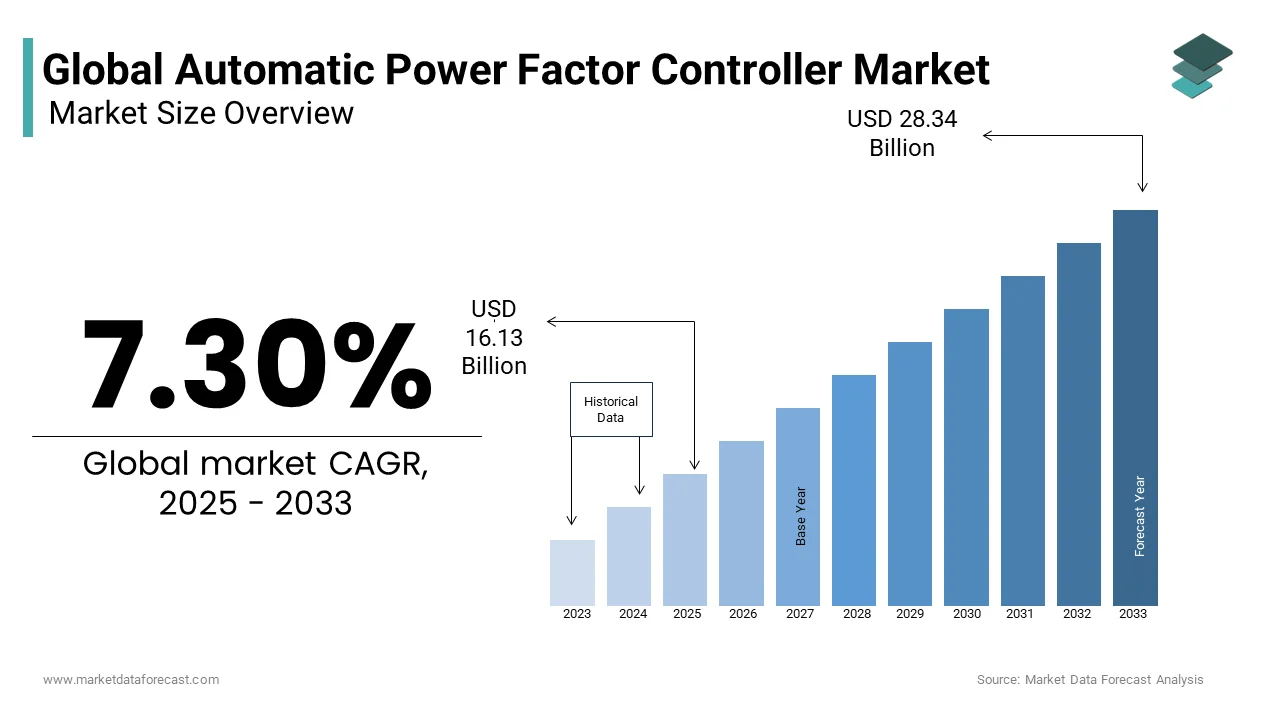
- Market Valuation: Valued at USD 5.26 billion in 2025, reaching USD 5.64 billion in 2026, and projected to scale up to USD 9.92 billion by 2034, growing at a steady CAGR of 4.55% throughout the forecast period from 2026 to 2034.
- Primary Growth Drivers: Escalating global demand for efficient power management across industrial manufacturing, utilities, and commercial enterprises, the necessity to minimize excessive pressure and reactive power losses on grids, and strict utility penalty frameworks for low power factors.
Key Market Segment Metrics
| Category | Leading Segment (Base Year Position) | Fastest-Growing / High-Impact Segment |
|---|---|---|
| By Type & Component | Active Power Factor Controllers (dominant baseline share anchored by high power factor capability up to 0.99 and advanced harmonic reduction) | APFC Microcontrollers & Smart Switching Modules (high-impact growth areas propelled by industrial automation and precise real-time capacitor bank control) |
| By Region | North America (leading global market share driven by established power infrastructure and extensive deployment of automated industrial controls) | Asia-Pacific (fast-expanding regional market fueled by rapid industrialization, large-scale urbanization, and massive manufacturing investments in China, India, and South Korea) |
Major Market Players & Market Structure
Market Structure: Highly competitive global landscape characterized by major electrical equipment manufacturers, power automation specialists, and semiconductor providers innovating around digital user interfaces, multi-mode regulation, and micro-controller integration.
Key Companies: ABB Ltd, Schneider Electric SE, Eaton Corporation, Siemens AG, General Electric Company, Legrand SA, Texas Instruments Inc., STMicroelectronics N.V., and Crompton Greaves Ltd.
 Download Free Sample Report
Global Automatic Power Factor Controller Market Size
The global automatic power factor controller market size was valued at USD 5.26 billion in 2025 and is predicted to reach USD 5.64 billion in 2026 and USD 9.92 billion by 2034, growing at a CAGR of 4.55% during the forecast period 2026 to 2034.
An automatic power factor controller is a device that is programmed to automatically increase output power when the power factor drops below a certain level. The demand for electrical energy is constantly increasing. In addition, the need to build a system for automatic power factor improvement increases, as a low power factor puts excessive pressure on power grids and transmission lines. This need can be met through the use of automatic power factor controllers. The demand for automatic power factor controllers is expected to increase at a considerably high rate in the near future, and existing players are expected to gain a larger market share in the coming years.
The relationship between the real load power and the apparent load power is the power factor. It ensures the conversion of current into effective output and the efficiency that can be achieved with a certain amount of power. An electrical system includes several automatic load power and power factor controllers, which are used to centralize power compensation at the point of distribution of electrical power. They are widely used in various industries such as defense, utilities, manufacturing, business, and commerce. An automatic power factor controller is required in computer peripherals, computers, and graphics power units (GPUs), where disabling the switches minimizes the power supply and therefore provides efficient power to these devices. Installing this device reduces energy consumption and, therefore, reduces electricity costs. Utilities industries, such as power plants, where transformers need a reactive power factor, and reducing power loss is one of the important functions.
MARKET DRIVERS
The increasing demand for power management
One of the main driving forces behind the automatic power factor controller market is the increasing demand for power management in certain industries such as manufacturing, defense, commerce, utilities, and business, among others.
Power management is used in computers, graphics power units (GPUs), and computer peripherals, where turning off switches reduces power supplies, leading to efficient powering of these devices. APFC, once installed in these industries, reduces energy requirements, and the low level of energy consumption also reduces electricity costs. Most utility industries, such as power plants and transformers, require a reactive power factor, and reducing energy loss is one of the main requirements. This would prevent damage to electrical equipment, and FPAC is expected to meet the growing demand during the forecast period.
MARKET RESTRAINTS
This type of PFCA has a short useful li,fe and its best performance is between 8 and 10 years. However, as the PFCA requires low voltage or fluctuating power levels, some PFCAs are not suitable to compensate for the balancing power load under extreme volatility. Due to its high maintenance cost, it is not profitable to repair the old one. This type of high maintenance cost and technological restriction, adapted to extreme energy volatility, is obstructing the growth prospects of the global market for automatic power factor controllers.
REPORT COVERAGE
| REPORT METRIC | DETAILS |
| Market Size Available | 2025 to 2034 |
| Base Year | 2025 |
| Forecast Period | 2026 to 2034 |
| CAGR | 4.55% |
| Segments Covered | By Type, Component, and Region |
| Various Analyses Covered | Global, Regional, & Country Level Analysis, Segment-Level Analysis, DROC, PESTLE Analysis, Porter’s Five Forces Analysis, Competitive Landscape, Analyst Overview on Investment Opportunities |
| Regions Covered | North America, Europe, APAC, Latin America, Middle East & Africa |
| Market Leaders Profiled | Baker Hughes (US), Corrosion Control Engineering (Australia), Rouge Pipeline & Process Services (UAE), Penspen (UK), Halfwave AS (Norway), Romstar (Malaysia), Cokebusters (UK), Quest Integrity Group (US), A.Hak Industrial Services (Netherlands), SGS SA (Switzerland), T.D.Williamson (US), Rosen Group (Switzerland), NDT Global (UAE), and Others. |
SEGMENTAL ANALYSIS
By Type Insights
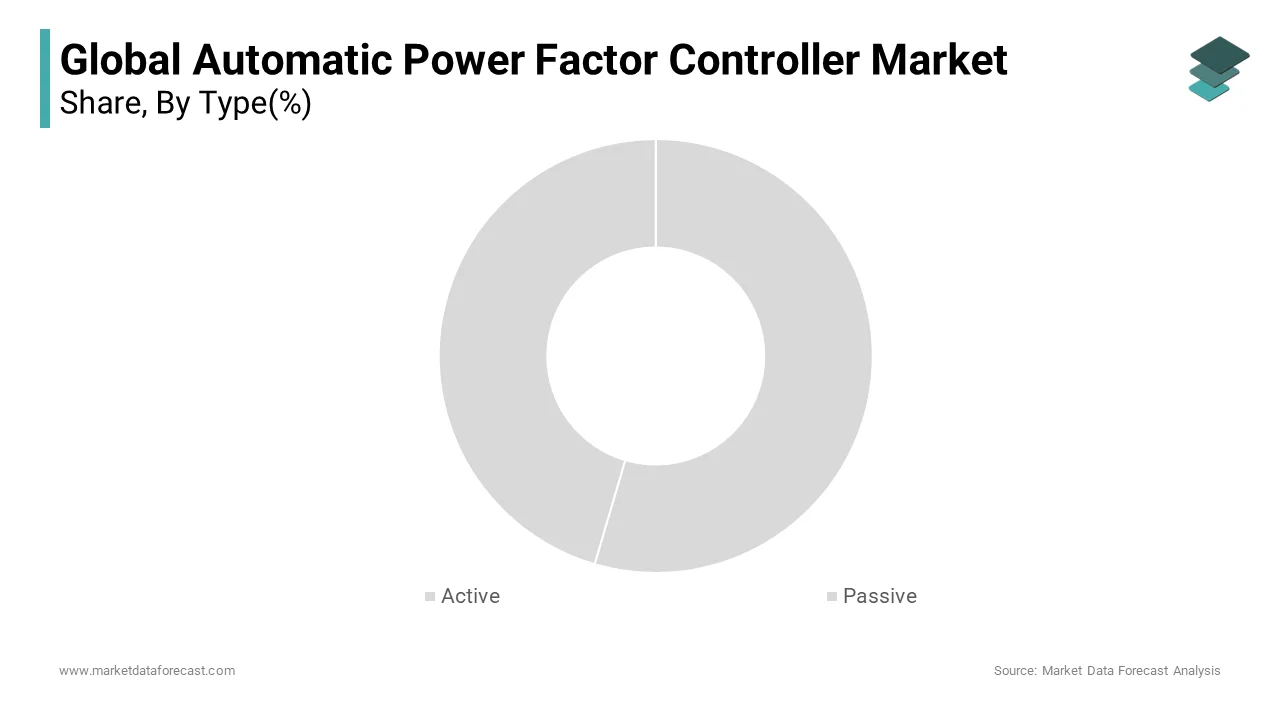
Active PFCAs, which allow designers to achieve a PF as high as 0.99, had the highest market share in 2015. Active PFCAs can be of two types: single-story or multi-story. The single-stage power factor controller uses a single switch and controller to rectify the input current and maintain the output voltage, while the multi-stage power factor controller has two or more power stages to reduce harmonics of the input current.
By Component Insights
In the age of industrialization, there is a growing need for inductive charging, and losses in the electrical system are common. Therefore, the demand for APFC microcontrollers would increase, and the demand for APFC microcontrollers is likely to increase during the forecast period. The APFC switch is another important segment that may experience increased demand during the forecast period.
REGIONAL ANALYSIS
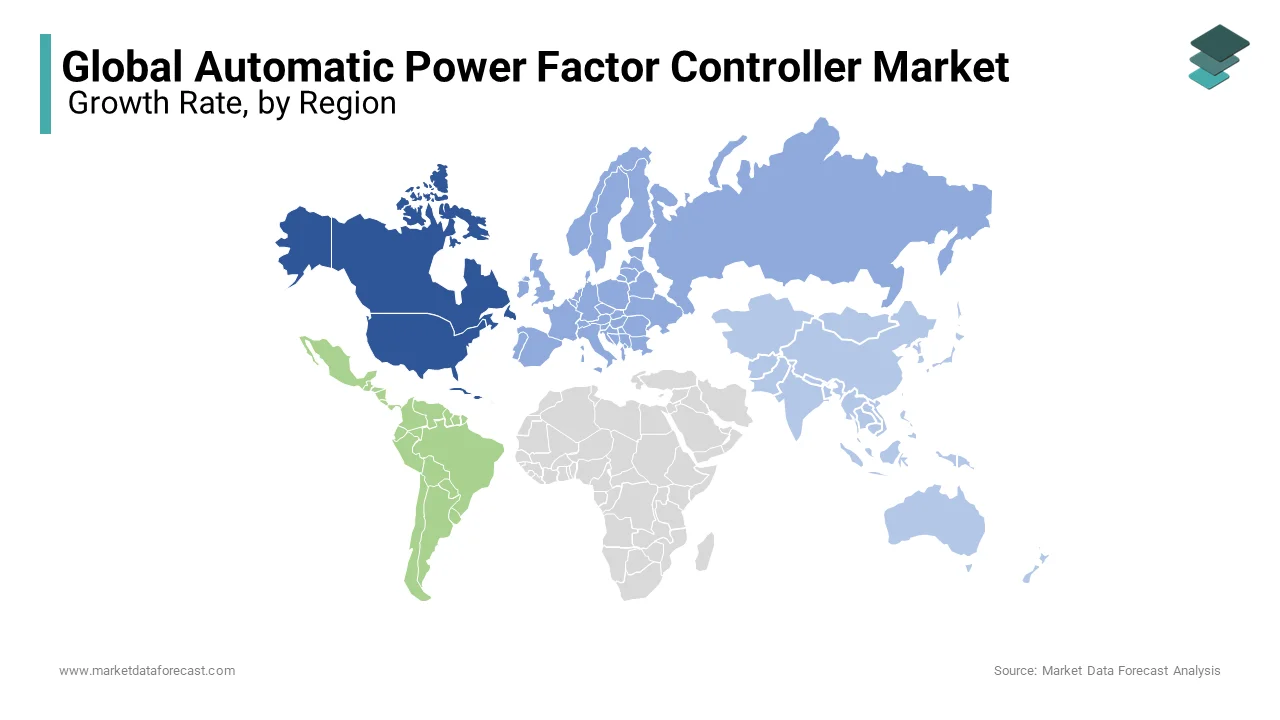
- The North American region is expected to dominate most of the world market. Most of North America may be due to the existence of significant automatic power factor controllers in the region.
- Europe is following North America in leading the dominant shares of the market due to the quick adoption of the latest technologies. Increasing expenditure is also likely to fuel the demand for the automatic power factor controller market in Europe.
- The Asia-Pacific area is expected to be the fastest-growing business sector. Variables owing to the fast development of the Asia-Pacific region are expanded industrialization, urbanization, and improved infrastructure. The Asia-Pacific area incorporates nations like India, South Korea, China, and Japan.
KEY MARKET PLAYERS
A few of the market players that are dominating the global automatic power factor controller market include
- ABB Ltd
- Crompton Greaves Ltd
- EPCOS AG
- Eaton Corporation
- Fairchild Semiconductor International, Inc
- General Electric Company
- Larsen & Toubro Limited
- On Semiconductor Corporation
- Schneider Electric Sa
- STMicroelectronics N.V
- Texas Instruments Inc
RECENT MARKET NEWS
-
The STMicroelectronics STNRG012 full regulator joins a multi-mode PFC regulator and an LLC time balance resonant half-connect regulator. This regulator is fit for dealing with both AC and DC inputs. The STNRG012 power framework and control algorithms are driven by an 8-bit center with High Speed Dedicated Peripherals (SMED). This full driver includes an inherent 800V starter circuit and line sense. The STNRG012 resounding driver offers earthy colored out assurance and a full arrangement of half-bridge securities.
-
ABB dispatches the cutting-edge RVC power factor regulator. The new straightforward and instinctive plan of the RVC power factor regulator gives an improved client experience for control and monitoring.
MARKET SEGMENTATION
This research report on the global automatic power factor controller market has been segmented and sub-segmented based on type, component, and region.
By Type
- Active
- Passive
By Component
- Relays
- Capacitors
- Displays
- Microcontrollers
- Switches
- Resistors
By Region
- North America
- Europe
- Asia-Pacific
- Latin America
- The Middle East and Africa