- Product Description Description
- Table of Contents TOC
- List of Table & Figure LOT
- Get Free Sample PDF Sample PDF
Market Size, 2025
$76.93 BnMarket Estimate, 2026
$86.82 BnMarket Forecast, 2034
$228.35 BnCAGR, 2026–2034
12.85%Global Automotive E-Tailing Market Size, Growth, Trends & Forecast (2026–2034)
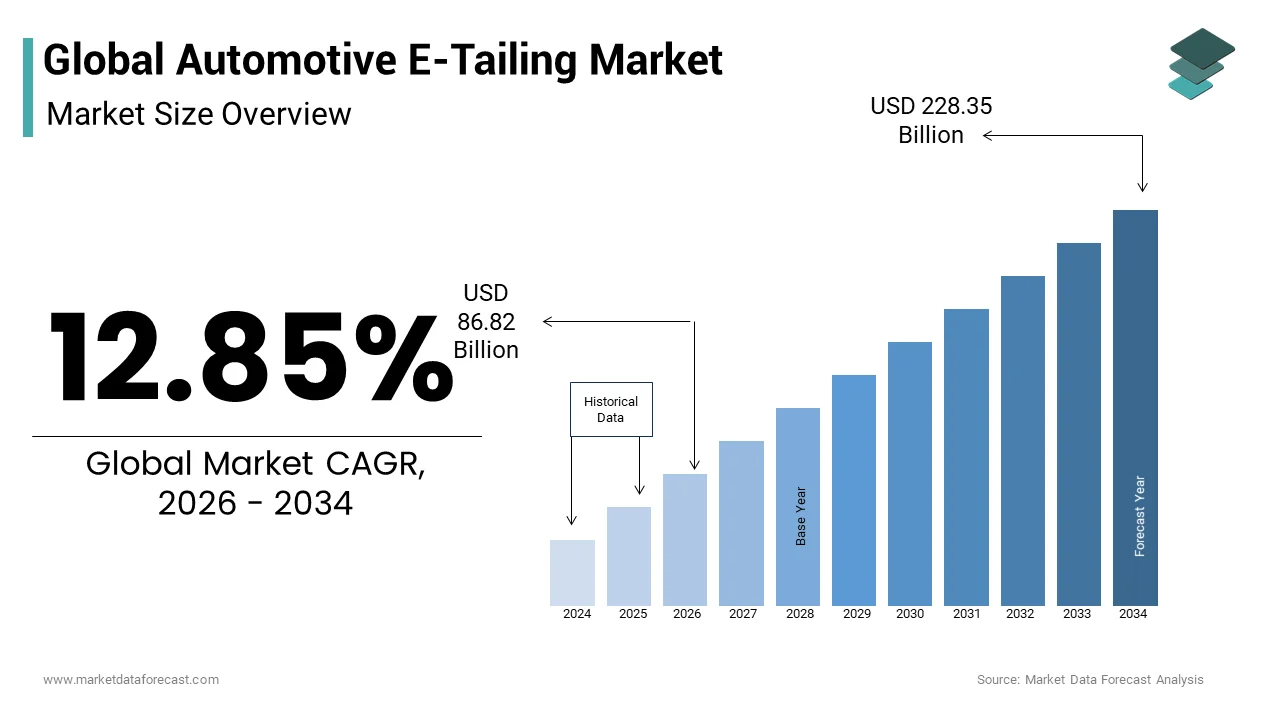
The global automotive e-tailing market size was valued at USD 76.93 billion in 2025, is anticipated to reach USD 86.82 billion in 2026, and is projected to scale up to USD 228.35 billion by 2034, registering a compound annual growth rate (CAGR) of 12.85% during the forecast period from 2026 to 2034. Driven by rising vehicle ages, increasing aftermarket maintenance demand, and superior digital convenience, the market continues to expand dynamically.
Key Executive Metrics (At-a-Glance)
- 2025 Base Valuation: USD 76.93 Billion
- 2026 Current Valuation: USD 86.82 Billion
- 2034 Forecast Valuation: USD 228.35 Billion
- Compound Annual Growth Rate (CAGR): 12.85% (2026–2034)
- Dominant Component Segment: Tires (holding major share due to high frequency replacement and standardization)
- Fastest-Growing Component Segment: Infotainment Systems (projected at a 17.4% CAGR)
- Dominant Vehicle Segment: Passenger Cars (leading due to massive global parc and routine maintenance volumes)
- Fastest-Growing Vehicle Segment: Two-Wheelers (projected at a 17.5% CAGR driven by urban mobility)
- Dominant Vendor Segment: Third-Party Vendors (accounting for over 60% of online sales due to wide inventories)
- Fastest-Growing Vendor Segment: OEM Direct Sales (projected at a 15.5% CAGR)
- Dominant Regional Market: North America (anchored by robust logistics, DIY culture, and high vehicle customization spending)
Core Market Drivers
- Increasing Vehicle Age: Rising average vehicle lifespans fueling consistent independent aftermarket demand for repairs, consumables, and parts replacement.
- Digital Convenience & User Experience: 24/7 availability, precise vehicle matching algorithms, and mobile platform integration driving consumer adoption.
Primary Market Restraints & Challenges
- Part Compatibility & Returns: Intricate vehicle part variations leading to high return rates (>20%), reverse logistics expenses, and operational inefficiencies.
- Regulatory & Competitive Pressures: Right-to-repair restrictions, intense price competition causing margin erosion, and cybersecurity/data privacy concerns.
Global Automotive E-Tailing Market Segmentation Breakdown
| Segment Category | Leading Sub-Segment (2025 Base) | Fastest-Growing Sub-Segment (2026–2034) |
|---|---|---|
| By Component Type | Tires (major revenue contributor) | Infotainment Systems (17.4% CAGR) |
| By Vehicle Type | Passenger Cars (dominant market share) | Two-Wheelers (17.5% CAGR) |
| By Vendor Type | Third-Party Vendors (major share) | OEM Direct Sales (15.5% CAGR) |
| By Region | North America & Europe (established hubs) | Asia-Pacific (fastest-expanding market) |
Major Industry Players Profiled
Key enterprises shaping the competitive global automotive e-tailing market include Continental AG, Robert Bosch GmbH, AutoZone, Inc., Amazon.com, Inc., Delticom AG, Wal-Mart Stores, Inc., eBay Inc., Flipkart, Advance Auto Parts, Inc., Alibaba Group Holding Ltd., and O'Reilly Automotive Inc.
Global Automotive E-Tailing Market Size
The global automotive e-tailing market size was valued at USD 76.93 billion in 2025 and is anticipated to reach a valuation of USD 86.82 billion in 2026, to reach USD 228.35 billion by 2034, growing at a CAGR of 12.85% during the forecast period from 2026 to 2034.
MARKET OVERVIEW AND DEFINITION
Automotive E-Tailing refers to the digital commerce ecosystem dedicated to the online sale of vehicle parts, accessories, maintenance services, and related automotive products directly to consumers and business clients. This sector transcends traditional brick and mortar retail by leveraging advanced logistics, data analytics, and user friendly platforms to deliver a seamless purchasing experience. The shift towards digital procurement is reshaping how vehicle owners manage maintenance and customization, driven by the increasing complexity of modern vehicles and the demand for convenience. In Europe, the transition is accelerated by high internet penetration and a growing preference for contactless transactions. As per Eurostat, approximately 93.1% of households in the European Union had access to the internet in 2023, facilitating widespread engagement with online retail platforms. Furthermore, according to the European Commission, the average age of passenger cars in the EU has risen to 12.5 years, indicating a robust aftermarket demand for replacement parts and repair services. This aging fleet necessitates regular maintenance, which consumers increasingly seek through digital channels for better price transparency and product variety. The integration of augmented reality tools for part identification and virtual fitting further enhances the online shopping experience, reducing return rates and boosting consumer confidence. According to the International Transport Forum, the number of registered vehicles in OECD countries continues to grow steadily, creating a vast installed base that requires ongoing support. This structural dynamic ensures that automotive e-tailing remains a critical component of the broader automotive value chain, offering scalability and efficiency unmatched by traditional distribution models.
MARKET DRIVERS
Increasing Vehicle Age and Aftermarket Maintenance Demand
The rising average age of vehicles on the road is majorly fuelling the growth of the automotive e-tailing market, as older cars require more frequent repairs and part replacements. As vehicles age beyond their warranty periods, owners tend to seek cost effective solutions from the independent aftermarket, rather than authorized dealerships. As per the European Automobile Manufacturers Association, the average age of cars in the European Union reached 12.5 years in 2023, reflecting a trend towards extended vehicle lifespans. This longevity drives consistent demand for consumables, such as brake pads, filters, and tires, which are commonly purchased online due to competitive pricing and ease of comparison. According to the Society of Motor Manufacturers and Traders in the United Kingdom, the aftermarket sector is valued at billions of pounds annually, with a significant portion shifting to digital channels. Consumers benefit from the extensive inventory available on e-tailing platforms, which often surpasses the stock held by local physical stores. Additionally, the availability of detailed product information and customer reviews helps buyers make informed decisions about compatible parts for their specific vehicle models. The economic pressure on household budgets further incentivizes drivers to perform DIY maintenance, or source parts independently before visiting a mechanic. This behavioural shift is supported by online tutorials and forums that empower vehicle owners to undertake minor repairs. Consequently, the combination of an aging fleet and the desire for cost efficiency creates a sustained and growing demand for automotive e-tailing services across mature markets.
Digital Convenience and Enhanced User Experience Technologies
The superior convenience offered by digital platforms, combined with technological advancements in user experience significantly drives the adoption of automotive e-tailing, which is further boosting the global market expansion. Modern consumers prioritize speed, transparency, and accessibility when purchasing automotive products, leading them to favor online channels that offer 24/7 availability and home delivery. As per the European E-Commerce Association, cross border e-commerce in Europe grew by 15% in 2023, demonstrating the increasing comfort of consumers with online transactions for specialized goods. Automotive e-tailers leverage sophisticated algorithms and vehicle identification systems to ensure precise part matching, reducing the risk of incorrect purchases. The integration of augmented reality allows users to visualize how accessories, such as roof racks or seat covers, will look on their specific vehicle model, enhancing confidence in the buying decision. Furthermore, the ability to compare prices across multiple vendors instantly empowers consumers to find the best deals without visiting multiple physical stores. As per Eurostat data, 75% of individuals in the European Union used the internet for shopping in 2023, highlighting the widespread acceptance of digital retail. Logistics improvements, including faster shipping times and flexible return policies, have also mitigated traditional barriers to online auto parts shopping. Mobile applications provided by major e-tailers enable users to track orders and manage service history seamlessly. This convergence of technological innovation and consumer preference for convenience establishes digital convenience as a powerful driver for the automotive e-tailing market.
MARKET RESTRAINTS
Complexities in Part Compatibility and High Return Rates
The intricate nature of automotive parts compatibility is a significant restraint to the automotive e-tailing market, as even minor specification differences can render a part unusable. Vehicles often have multiple variations based on production date, engine type, and trim level, making accurate identification challenging for average consumers. As per the German Federal Statistical Office, return rates for online automotive parts can exceed 20% due to mismatched specifications, leading to increased logistical costs and operational inefficiencies for retailers. These high return rates erode profit margins and create environmental concerns related to reverse logistics and packaging waste. Consumers frequently struggle to interpret technical diagrams and part numbers, resulting in frustration and diminished trust in online platforms. The lack of standardized vehicle data across different manufacturers further complicates the development of universal fitment guides. According to the European Aftermarket Stakeholder Group, inaccurate part identification is a leading cause of customer dissatisfaction in the digital aftermarket sector. Retailers must invest heavily in advanced database management and customer support systems to mitigate these issues, which increases operational expenses. Additionally, the inability to physically inspect a part before purchase leads to hesitation among buyers, particularly for high value items, such as engines or transmissions. This uncertainty limits the range of products that consumers are willing to buy online, restricting market growth to primarily low risk consumables and accessories. Until fitment accuracy is perfected through artificial intelligence and standardized data protocols, compatibility issues will remain a persistent barrier.
Regulatory Constraints on Right to Repair and Data Access
Strict regulatory frameworks governing the right to repair and access to vehicle technical data create substantial hurdles for independent automotive e-tailers and service providers, which is further hindering the global market expansion. Original equipment manufacturers often restrict access to proprietary diagnostic information and repair manuals, limiting the ability of third party retailers to recommend and sell compatible parts effectively. According to the European Commission, the proposed Right to Repair legislation aims to ensure fair access to vehicle data, but implementation challenges persist due to resistance from automakers protecting their intellectual property. This imbalance favors authorized dealer networks, which have exclusive access to real time technical updates and specialized tools. According to the European Independent Aftermarket Committee, limited data access hinders the ability of independent garages and e-tailers to provide accurate service recommendations, thereby affecting sales potential. Furthermore, varying regulations across different countries within Europe complicate compliance for cross border e-tailing operations. Retailers must navigate a complex web of legal requirements regarding product safety, warranties, and consumer rights, which increases administrative burdens. The lack of harmonized standards for digital vehicle passports and repair information means that e-tailers must maintain separate systems for different markets. This fragmentation reduces economies of scale and increases costs for smaller players. Until a unified and open framework for vehicle data sharing is fully established and enforced, regulatory constraints will continue to impede the full potential of the automotive e-tailing market by limiting competition and consumer choice.
MARKET OPPORTUNITIES
Integration of Electric Vehicle Specific Products and Services
The rapid transition towards electric mobility presents a lucrative opportunity for automotive e-tailers to expand their product portfolios with specialized EV components and accessories. As electric vehicle adoption accelerates, there is a growing need for unique products, such as charging cables, home charging stations, battery maintenance kits, and specialized tires. As per the International Energy Agency, global electric car sales exceeded 14 million units in 2023, representing a significant shift in the automotive landscape. E-tailers can capitalize on this trend by curating dedicated sections for EV needs, offering expert guidance and bundled solutions for new EV owners. According to European alternative fuels infrastructure database statistics, the number of public charging points in the EU increased by 35% in 2023, indicating a robust infrastructure development that supports EV usage. Online platforms are well positioned to educate consumers about EV care and maintenance, which differs significantly from internal combustion engine vehicles. Partnerships with charging infrastructure providers allow e-tailers to offer integrated hardware and software solutions, enhancing customer stickiness. Furthermore, the simplicity of EV mechanics opens opportunities for DIY maintenance kits and over the air update accessories. The growing community of EV enthusiasts actively seeks online forums and specialized retailers for advice and products, creating a niche market with high engagement levels. By positioning themselves as knowledge hubs for electric mobility, e-tailers can build brand loyalty and capture a significant share of the emerging EV aftermarket. This strategic pivot aligns with sustainability goals and future proofs business models against the decline of traditional combustion engine parts.
Expansion into B2B E-Commerce for Independent Garages
The digitization of supply chains for independent repair shops and service centers is another substantial growth avenue for automotive e-tailing platforms through B2B e-commerce expansion. Independent garages increasingly rely on online suppliers for quick access to a wide range of parts at competitive prices, to improve their operational efficiency and profitability. As per the European Association of Crafts, Small and Medium Sized Enterprises in the Automotive Sector, there are over 300000 independent repair workshops in Europe that require reliable and fast parts delivery. E-tailers can develop specialized B2B portals featuring bulk pricing, priority shipping, and account management tools tailored to professional users. The ability to provide same day or next day delivery is a critical differentiator that attracts business customers, who face pressure to reduce vehicle downtime. According to the European Aftermarket Stakeholder Group, digital procurement tools help garages manage inventory more effectively, reducing waste and improving cash flow. By integrating with garage management software, e-tailers can automate ordering processes, ensuring seamless replenishment of stock. This B2B segment offers higher order values and recurring revenue streams compared to individual consumer sales. Furthermore, providing technical support and training resources strengthens relationships with professional clients. As the aftermarket becomes more consolidated and professionalized, the demand for efficient digital supply chain solutions will grow. E-tailers that invest in robust B2B infrastructure and logistics capabilities will secure a dominant position in the professional repair sector, driving long term market expansion.
MARKET CHALLENGES
Intense Price Competition and Margin Erosion
The intense price competition is primarily challenging the expansion of the global market, as low barriers to entry allow numerous players to compete on cost, leading to significant margin erosion. Consumers can easily compare prices across multiple platforms using aggregation tools, forcing retailers to engage in price wars to attract sales. As per the European Competition Network, the high level of transparency in online pricing puts downward pressure on profits, particularly for standardized items like oil filters and brake pads. Small and medium sized e-tailers struggle to compete with large multinational corporations, that benefit from economies of scale and superior negotiating power with suppliers. This dynamic limits the ability of smaller players to invest in technology, marketing, and customer service, which are essential for differentiation. The constant need to offer discounts and promotions to maintain market share further squeezes profitability. According to the European E-Commerce Association, customer loyalty in the automotive sector is low, as buyers frequently switch providers based on price alone. This lack of retention increases customer acquisition costs and reduces lifetime value. Additionally, the rise of private label brands by major platforms intensifies competition for original equipment manufacturer parts. Retailers must continuously optimize their supply chains and operational efficiencies to survive in this low margin environment. Failure to differentiate through value added services or exclusive products can lead to business failure. The pressure to maintain competitive pricing while covering rising logistics and technology costs remains a persistent challenge for sustainable growth in the automotive e-tailing sector.
Cybersecurity Risks and Data Privacy Concerns
The increasing reliance on digital platforms and customer data exposes automotive e-tailers to significant cybersecurity risks and data privacy challenges that can undermine consumer trust. Online retailers collect sensitive information, including vehicle identification numbers, payment details, and personal addresses, making them attractive targets for cyberattacks. As per the European Union Agency for Cybersecurity, ransomware attacks on retail sectors increased by 20% in 2023, posing a serious threat to business continuity and data integrity. A successful breach can result in substantial financial losses, legal liabilities, and reputational damage that is difficult to recover from. The General Data Protection Regulation in Europe imposes strict requirements on data handling and consent management, requiring e-tailers to implement robust security measures. Compliance with these regulations involves significant investment in encryption, access controls, and regular audits, which can be burdensome for smaller companies. Consumers are becoming increasingly aware of privacy issues and may hesitate to share detailed vehicle data if they perceive inadequate protection. According to the European Data Protection Board, transparency and accountability are crucial for maintaining user confidence in digital services. Any incident involving data misuse or leakage can lead to regulatory fines and loss of customer base. Furthermore, the integration of third party plugins and payment gateways introduces additional vulnerabilities that must be managed continuously. As e-tailing platforms become more interconnected with vehicle telematics and smart home systems, the attack surface expands. Ensuring comprehensive cybersecurity remains a critical and costly challenge for market participants aiming to protect their assets and customer relationships.
REPORT COVERAGE
| REPORT METRIC | DETAILS |
| Market Size Available | 2025 to 2034 |
| Base Year | 2025 |
| Forecast Period | 2026 to 2034 |
| CAGR | 12.85% |
| Segments Covered | By Component Type, Vendor Type, Vehicle Type, and Region. |
| Various Analyses Covered | Global, Regional and Country Level Analysis, Segment-Level Analysis, DROC, PESTLE Analysis, Porter’s Five Forces Analysis, Competitive Landscape, Analyst Overview of Investment Opportunities |
| Regions Covered | North America, Europe, APAC, Latin America, Middle East & Africa |
| Market Leaders Profiled | Continental AG (Germany), Robert Bosch GmbH (Germany), and online vendors like AutoZone, Inc. (U.S.), Amazon.com, Inc. (U.S.), Delticom AG (Germany), Wal-Mart Stores, Inc. (U.S.), eBay Inc. (U.S.), Flipkart (India), Advance Auto Parts, Inc. (U.S.), Alibaba Group Holding Ltd. (China), and O'Reilly Automotive Inc. (U.S.) and Others. |
SEGMENT ANALYSIS
By Component Insights
The tires segment dominated the market by holding the major share of the global market in 2025 due to their status as a high frequency replacement item with standardized specifications that simplify online purchasing. Unlike complex mechanical parts, tires have universal sizing codes and performance ratings that consumers can easily verify without physical inspection. As per the European Tyre and Rubber Manufacturers Association, the replacement tire market in Europe accounts for approximately 300 million units annually, with a significant portion sold through digital channels. The convenience of home delivery and the ability to compare prices across multiple brands drive consumers to purchase tires online. Furthermore, many e-tailers offer partnerships with local installation networks, allowing customers to buy online and schedule fitting at nearby garages. This hybrid model addresses the primary barrier of installation, making tire buying seamless. According to the International Organization of Motor Vehicle Manufacturers, the global vehicle parc continues to grow, ensuring a steady demand for replacement tires. Seasonal changes in regions with distinct winters also spur bulk purchases of winter and summer tires online. The transparency of pricing and availability of customer reviews regarding durability and noise levels further empower buyers. Additionally, the rise of direct to consumer tire brands has disrupted traditional distribution, forcing established players to enhance their online presence. The standardized nature of tires, combined with logistical ease and clear value propositions, ensures this segment remains the largest contributor to automotive e-tailing revenue globally.
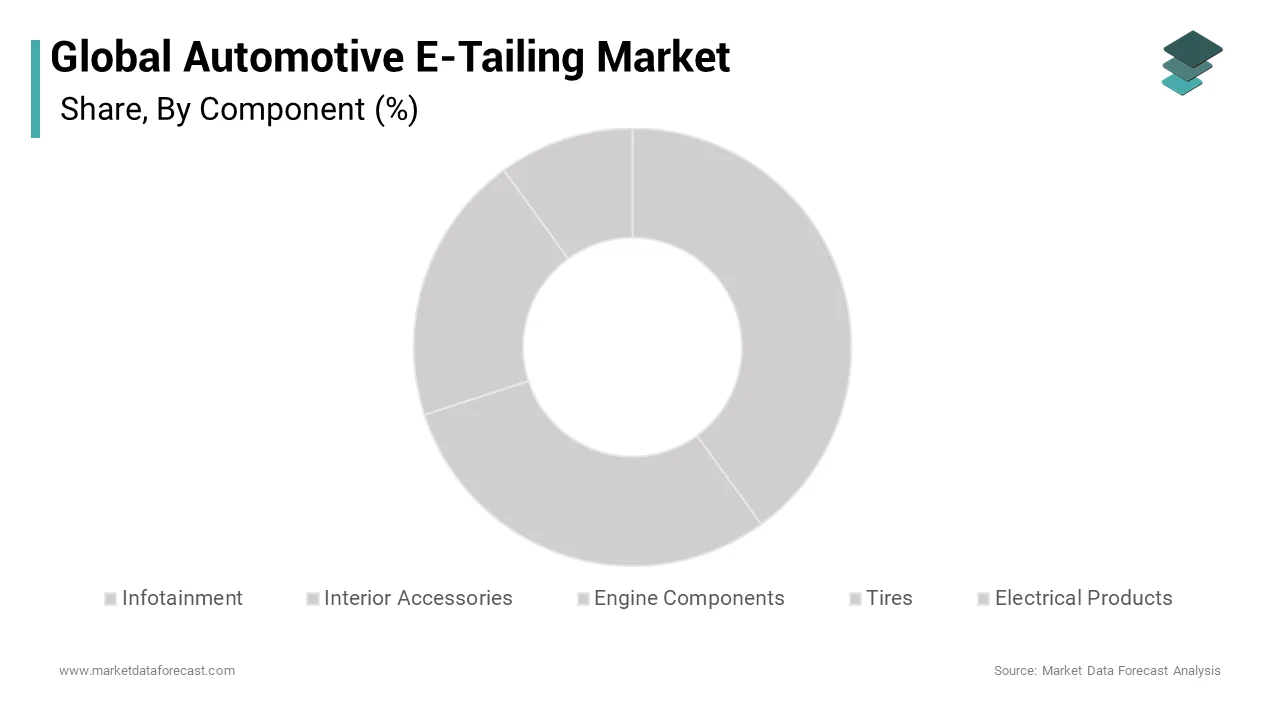
However, the infotainment systems segment is estimated to expand at a CAGR of 17.4% during the forecast period in the global market owing to the increasing consumer desire to upgrade older vehicles with modern connectivity features, such as Apple CarPlay, Android Auto, and advanced navigation systems. According to global consumer electronics marketplace tracking, the demand for aftermarket electronics has surged as vehicle owners seek to extend the technological lifespan of their cars, rather than purchasing new ones. The integration of smart devices into daily life has raised expectations for seamless connectivity in vehicles, prompting upgrades to outdated factory systems. E-tailing platforms offer a wide variety of plug and play infotainment units, that are easy to install either by the user or a local technician. According to the Society of Motor Manufacturers and Traders, the average age of vehicles on the road is increasing, creating a large installed base of cars lacking modern digital interfaces. Furthermore, the affordability of aftermarket screens compared to OEM replacements makes them an attractive option for budget conscious consumers. The availability of detailed installation videos and support forums online reduces the perceived complexity of upgrading these systems. Additionally, the rise of electric vehicles has spurred interest in specialized displays that monitor battery usage and charging status. The continuous innovation in screen resolution, processing power, and software compatibility keeps the segment dynamic and appealing to tech savvy drivers, driving its exceptional growth rate.
By Vehicle Insights
The passenger cars segment held the dominant share in the global automotive e-tailing market in 2025. The growth of the passenger cars segment in the global market can be credited to the vast number of private vehicles on the road and the high frequency of maintenance and customization activities. Private car owners are the primary consumers of online automotive products, ranging from routine maintenance items like oil filters to aesthetic accessories such as seat covers and floor mats. As per the International Organization of Motor Vehicle Manufacturers, there are over 1.4 billion passenger cars in operation globally, providing a massive addressable market for e-tailers. The personalization trend among car owners fuels demand for unique accessories that allow individuals to express their style, which is readily available through online catalogs. According to the European Automobile Manufacturers Association, passenger car registrations remain stable, ensuring a consistent base for aftermarket sales. Furthermore, the convenience of home delivery for bulky items like tires and batteries appeals strongly to individual consumers, who lack the time to visit physical stores. The rise of DIY culture, supported by online tutorials, encourages car owners to perform minor repairs and installations themselves using parts purchased online. Insurance companies and leasing firms also contribute to this segment by requiring regular maintenance records, which owners manage through digital service logs linked to e-tailing platforms. The sheer volume of passenger vehicles, combined with the diverse range of products required for their upkeep, cements this segment as the leader in automotive e-tailing.
On the other side, the two-wheeler segment is anticipated to register a CAGR of 17.5% during the forecast period in the global market owing to the rising popularity of motorcycles and scooters for urban mobility and leisure riding, particularly in densely populated regions. According to international development bank socioeconomic reports, urbanization rates in developing countries are increasing, leading to higher adoption of two-wheelers for cost effective transportation. Younger demographics who are digital natives prefer purchasing helmets, jackets, gloves, and performance parts online due to the wider selection and competitive pricing. According to the European Motorcycle Industry Association, the motorcycle aftermarket in Europe is growing as riders invest more in safety gear and customization. E-tailing platforms cater to this niche by offering specialized fitment guides and community driven reviews, that help buyers choose the right protective equipment. The emergence of electric scooters and bikes has also created a new category of spare parts and accessories, such as batteries and charging adapters, that are predominantly sold online. Social media influencers in the motorcycling community frequently promote specific brands and products, driving traffic to e-tailing sites. The lower complexity of two-wheeler mechanics encourages DIY maintenance, further boosting online parts sales. Additionally, the seasonal nature of riding in many regions leads to periodic spikes in online purchases for winter storage supplies and spring preparation kits. These factors combine to make the two-wheeler segment a dynamic and rapidly expanding component of the automotive e-tailing landscape.
By Vendor Insights
The third-party vendors segment held the major share of the global market in 2025. The growth of the third-party vendors segment in the global market can be driven by their extensive product variety, competitive pricing, and ability to serve both independent consumers and repair shops. These platforms aggregate products from numerous manufacturers and suppliers, offering a one stop shop for all automotive needs. As per the European E-Commerce Association, third-party marketplaces account for over 60% of online automotive sales in Europe, due to their convenience and breadth of inventory. Consumers prefer these vendors because they can compare multiple brands and price points in a single interface, reducing search time and effort. The flexibility of third-party sellers to offer both original equipment manufacturer and aftermarket alternatives caters to diverse budget requirements. According to the Federal Trade Commission in the United States, competition among third-party sellers drives down prices, benefiting consumers significantly. Furthermore, these vendors often provide faster shipping options and flexible return policies, that enhance customer satisfaction. The ability to source rare or discontinued parts from a global network of sellers is another key advantage that authorized dealers cannot match. Independent garages rely heavily on third-party e-tailers for quick access to a wide range of parts, enabling them to service various vehicle models efficiently. The scalability of third-party platforms allows them to continuously expand their catalog based on market trends and consumer demand. This adaptability and customer centric approach ensure that third-party vendors remain the preferred choice for the majority of automotive e-tailing transactions.
On the other side, the OEM segment is estimated to showcase a promising CAGR of 15.5% during the forecast period owing to the automakers strategic shift towards controlling the customer experience and capturing higher margins, by bypassing traditional dealership networks. According to global automotive industrial data platforms, major automotive brands are investing heavily in digital platforms to sell genuine parts and accessories directly to vehicle owners. The assurance of authenticity and perfect fitment attracts customers who are wary of counterfeit or incompatible aftermarket parts. According to the European Automobile Manufacturers Association, OEMs are leveraging vehicle data to proactively recommend maintenance services and parts through connected car apps. This integration creates a seamless ecosystem where users can order genuine parts with a single click. The rise of electric vehicles has further accelerated this trend, as OEMs maintain tighter control over specialized components, such as battery modules and software updates. Direct channels allow manufacturers to gather valuable customer data and feedback, which informs product development and marketing strategies. Subscription based services for regular maintenance kits are also gaining traction through OEM platforms. The trust associated with brand names and the promise of warranty compliance encourages loyal customers to switch to direct purchasing. As digital infrastructure improves and logistics become more efficient, OEM direct sales are poised to capture a larger share of the aftermarket revenue.
REGIONAL ANALYSIS
North America Market Analysis
Over the next few years, the United States is anticipated to heavily strengthen its digital auto aftermarket, with robust investments in automated logistics driving unprecedented part-delivery speeds across the continent. North America holds a substantial position in the global automotive e-tailing market due to the high consumer spending on vehicle customization and a robust logistics infrastructure. The United States dominates the regional market due to its large vehicle parc and strong culture of DIY automotive maintenance. According to trade organization financial monitoring, the automotive aftermarket in the United States was valued at over 300 billion dollars in 2023, with a significant portion attributed to online sales. The prevalence of pickup trucks and SUVs drives demand for specialized accessories, such as tonneau covers, lift kits, and off-road tires, which are frequently purchased online. The region benefits from advanced last mile delivery networks, that enable fast and reliable shipping of heavy automotive parts. Canada also contributes to the market with increasing adoption of e-commerce platforms for winter tires and safety equipment. The high level of internet penetration and digital literacy among consumers facilitates seamless online transactions. Major retail chains and pure play e-tailers compete aggressively on price and service quality, driving innovation in customer experience. The regulatory environment supports open access to repair information, enabling third-party vendors to thrive alongside OEMs. The growing interest in electric vehicles is prompting retailers to expand their offerings of EV specific charging solutions and maintenance tools. The mature market dynamics and high disposable income ensure that North America remains a key revenue generator for automotive e-tailing businesses globally.
Europe Market Analysis
Over the next few years, European nations are projected to experience an accelerated shift toward digital component procurement, heavily guided by circular economy regulations and online distribution hubs for eco-friendly or remanufactured parts. Europe maintains a strong foothold in the Automotive E-Tailing Market, influenced by stringent environmental regulations and a high preference for sustainable mobility solutions. The European Union’s focus on circular economy principles encourages the sale of refurbished and remanufactured parts through online channels. As per the European Automobile Manufacturers Association, the average age of cars in Europe is over 12 years, creating a steady demand for replacement parts and maintenance services. Germany, France, and the United Kingdom are the largest markets within the region due to their dense population and well developed e-commerce infrastructure. The General Data Protection Regulation ensures high standards for consumer data protection, fostering trust in online transactions. Cross border e-commerce is facilitated by harmonized trade rules within the EU, allowing consumers to access a wider range of products from neighboring countries. The popularity of compact cars and hatchbacks drives demand for space saving accessories and efficiency enhancing modifications. Local artisans and small businesses leverage online platforms to sell bespoke interior and exterior customization items. The integration of online parts ordering with local garage networks is a common practice, enhancing convenience for consumers. Government incentives for electric vehicle adoption are shifting the product mix towards charging infrastructure and EV specific maintenance kits. The emphasis on quality and sustainability distinguishes the European market from other regions, driving premium product sales.
Asia Pacific Market Analysis
Over the next few years, countries across the Asia Pacific are expected to outpace global expansion rates in direct-to-consumer auto parts procurement, with regional smartphone ecosystems facilitating seamless cross-border supply chains. The Asia Pacific region is poised for substantial growth in the Automotive E-Tailing Market, driven by rapid urbanization and increasing vehicle ownership in emerging economies. China, India, and Japan are the primary contributors to the regional market, with China being the largest automotive producer and consumer globally. As per the China Association of Automobile Manufacturers, vehicle sales in China continue to rise, fueling demand for aftermarket accessories and maintenance products. The widespread use of mobile payment systems and super apps facilitates seamless online shopping experiences for automotive parts. In India, the two-wheeler segment dominates the market, with high volumes of helmets, guards, and performance parts sold online. The Japanese market is characterized by a strong preference for high quality genuine parts and sophisticated car care products. The region benefits from low manufacturing costs, which enable competitive pricing for online retailers. Logistics improvements in Southeast Asian countries are expanding the reach of e-tailing platforms to rural areas. The growing middle class is increasingly willing to spend on vehicle customization and comfort enhancements. Government initiatives to improve digital infrastructure are supporting the expansion of e-commerce in less developed areas. The diversity of vehicle types, from compact cars to commercial trucks, creates a varied demand for specialized parts. The rapid adoption of smartphones and internet connectivity among younger demographics drives the shift towards online procurement. These factors position Asia Pacific as the most dynamic hub.
COMPETITIVE LANDSCAPE
The competition in the Automotive E-Tailing Market is intense and characterized by a mix of generalist e-commerce giants specialized auto parts retailers and original equipment manufacturer direct channels. Large platforms leverage their scale and logistics prowess to offer fast delivery and wide selection while niche players compete on expertise and specialized inventory. Price transparency is high leading to frequent price wars particularly for commoditized items like tires and oil filters. Differentiation increasingly relies on value added services such as accurate fitment guarantees easy returns and integrated installation options. Trust and authenticity are critical factors as consumers seek assurance against counterfeit parts prompting reputable sellers to highlight certification and warranty provisions. The rise of electric vehicles is reshaping competitive dynamics as companies race to stock specialized components and educate consumers. Data ownership and customer loyalty programs are strategic assets that incumbents use to retain users amidst aggressive marketing by new entrants. Interoperability with vehicle telematics systems is becoming a new frontier for competition enabling proactive maintenance alerts and automated reordering. The market sees continuous innovation in user interface design and mobile accessibility to enhance engagement. Collaborative ecosystems involving insurers repair shops and parts suppliers are forming to create holistic service offerings. This dynamic environment requires constant adaptation and investment in technology to sustain competitive positioning.
KEY MARKET PLAYERS
Thes are the market players dominating the global automotive e-tailing market.
- Continental AG (Germany)
- Robert Bosch GmbH (Germany)
- AutoZone, Inc. (U.S.)
- RockAuto LLC
- Amazon.com, Inc. (U.S.)
- Delticom AG (Germany)
- Wal-Mart Stores, Inc. (U.S.)
- eBay Inc. (U.S.)
- Flipkart (India)
- Advance Auto Parts, Inc. (U.S.)
- Alibaba Group Holding Ltd. (China)
- O'Reilly Automotive Inc. (U.S.).
Top Players In The Marke
- Amazon.com Inc dominates the global automotive e-tailing landscape by leveraging its vast logistics network and extensive product catalog to serve millions of vehicle owners. The company offers a comprehensive range of parts accessories and maintenance items with rapid delivery options that set industry standards for convenience. Amazon recently expanded its Amazon Garage feature which allows users to store vehicle information and receive personalized part recommendations. This integration simplifies the shopping experience and reduces compatibility errors significantly. The platform also partners with local service providers to offer installation services creating a seamless end to end solution for customers. By utilizing advanced algorithms for inventory management and demand forecasting Amazon ensures high availability of critical automotive components. Their commitment to customer satisfaction through easy returns and reliable support strengthens their position as a preferred destination for automotive needs globally.
- eBay Inc plays a pivotal role in the automotive e-tailing market by connecting buyers with a diverse array of sellers offering new used and refurbished parts. The platform is particularly strong in the niche segment of rare and discontinued components which are difficult to find elsewhere. eBay recently enhanced its Fitment Data integration ensuring that listed parts are accurately matched to specific vehicle models. This improvement reduces return rates and increases buyer confidence significantly. The company also introduced certified refurbishment programs for high value items such as engines and transmissions providing warranty protection for second hand purchases. eBay’s auction format allows consumers to find competitive prices for scarce items while its fixed price listings cater to immediate needs. The global reach of the platform enables cross border trade facilitating access to specialized parts from international suppliers. These initiatives reinforce eBay’s status as a crucial marketplace for automotive enthusiasts and professional repair shops worldwide.
- RockAuto LLC is a specialized online retailer focused exclusively on automotive parts and accessories known for its user friendly interface and extensive inventory. The company provides detailed catalogs that help users identify the correct parts for their specific vehicle make model and year. RockAuto recently upgraded its mobile application to include barcode scanning features which streamline the part selection process for mechanics and DIY enthusiasts. The retailer maintains competitive pricing by operating multiple warehouses strategically located to minimize shipping costs and delivery times. Their partnership with major manufacturers ensures the availability of genuine and high quality aftermarket components. RockAuto also offers robust customer support including technical assistance for complex installations. The company’s focus on simplicity and reliability has cultivated a loyal customer base among professional technicians and car owners. By continuously optimizing its supply chain and digital platform RockAuto remains a key player in the specialized automotive e-tailing sector.
Top Strategies Used By Key Market Participants
Key players in the Automotive E-Tailing Market primarily focus on enhancing digital user experience and expanding logistics capabilities to maintain competitive advantage. Companies invest heavily in artificial intelligence to improve part fitment accuracy and personalize product recommendations for users. Strategic partnerships with local installation networks are common to provide seamless service bundles that combine product sales with professional fitting. Expanding into electric vehicle components allows retailers to capture emerging demand for charging infrastructure and specialized maintenance items. Omnichannel integration enables customers to order online and pick up in store bridging the gap between digital and physical retail. Data analytics are utilized to optimize inventory levels and predict seasonal demand fluctuations ensuring product availability. Subscription models for regular maintenance supplies create recurring revenue streams and enhance customer retention. Marketing efforts emphasize trust and authenticity to counter concerns about counterfeit parts. These strategies collectively drive growth and strengthen market presence in the evolving automotive retail landscape.
MARKET SEGMENTATION
This research report on the global automotive e-tailing market is segmented and sub-segmented into the following categories.
By Component Type
- Infotainment
- Interior Accessories
- Engine Components
- Tires
- Electrical Products
By Vendor Type
- OEM
- Third-Party
By Vehicle Type
- Passenger Car
- Commercial Vehicle
- Two-Wheeler
By Region
- North America
- Europe
- Asia Pacific
- Latin America
- Middle East & Africa