- Product Description Description
- Table of Contents TOC
- List of Table & Figure LOT
- Get Free Sample PDF Sample PDF
Market Size, 2025
$2.36 BnMarket Estimate, 2026
$2.52 BnMarket Forecast, 2034
$4.26 BnCAGR, 2026–2034
6.78%Global Aviation Gasoline (Avgas) Market Size, Growth, Trends & Forecast (2026–2034)
The global aviation gasoline (Avgas) market size was valued at USD 2.36 billion in 2025, is anticipated to reach USD 2.52 billion in 2026, and is projected to scale up to USD 4.26 billion by 2034, expanding at a compound annual growth rate (CAGR) of 6.78% during the forecast period from 2026 to 2034. Growth is driven by the steady operations of the global piston-engine aircraft fleet, regulatory transitions toward lead-free fuel replacements, and continuous demand from civil flight training institutions.
Key Executive Metrics (At-a-Glance)
- 2025 Base Valuation: USD 2.36 Billion
- 2026 Current Valuation: USD 2.52 Billion
- 2034 Forecast Valuation: USD 4.26 Billion
- Compound Annual Growth Rate (CAGR): 6.78% (2026–2034)
- Dominant Application Segment: Civil Aviation (accounting for 71.5% market share in 2025)
- Fastest-Growing Application Segment: Military (projected at a 3.6% CAGR during the forecast period)
- Dominant Fuel Type Segment: Avgas (capturing 82.1% market share in 2025)
- Fastest-Growing Fuel Type Segment: Jet Fuel (projected at a 6.2% CAGR)
- Dominant Additive Segment: Deposit Control Additives (holding the leading share in 2025)
- Fastest-Growing Additive Segment: Biocides (projected at a 7.4% CAGR)
- Dominant Regional Market: North America (holding the highest share in 2025, supported by the largest general aviation fleet)
Core Market Drivers
- Sustained General Aviation Operations: An extensive global installed base of active piston-powered aircraft providing inelastic baseline fuel demand across flight training, private flying, and utility tasks.
- Lead-Free Regulatory Transitions: Environmental directives and health pressures accelerating the adoption and deployment of certified unleaded fuel alternatives (like G100UL).
Primary Market Restraints & Challenges
- Stringent Environmental Regulations: Strict refinery emissions mandates and chemical use restrictions (such as REACH in Europe) limiting production flexibility and raising operational costs.
- Refining and Supply Chain Vulnerabilities: Limited dedicated avgas refining capacity globally, creating vulnerability to logistical disruptions and localized price spikes.
Global Aviation Gasoline Market Segmentation Breakdown
| Segment Category | Leading Sub-Segment | High-Growth Sub-Segment |
|---|---|---|
| By Application | Civil Aviation (71.5% share) | Military (3.6% CAGR) |
| By Fuel Type | Avgas (82.1% share) | Jet Fuel (6.2% CAGR) |
| By Additive Type | Deposit Control Additives | Biocides (7.4% CAGR) |
| By Region | North America (Market Leader) | Asia-Pacific (Fastest Volume Accumulation) |
Major Industry Players Profiled
Key energy corporations and market participants leading the global aviation gasoline landscape include Bp p.l.c., Chevron Corporation, Exxon Mobil Corporation, Gazprom, Indian Oil Corporation Limited, Petrobras, Royal Dutch Shell plc, Sinopec Group, TotalEnergies SE, and Oman Oil Company SAOC.
Global Aviation Gasoline (Avgas) Market Size
The size of the global aviation gasoline (Avgas) market was worth USD 2.36 billion in 2025. The global market is anticipated to grow at a CAGR of 6.78% from 2026 to 2034 and be worth USD 4.26 billion by 2034 from USD 2.52 billion in 2026.
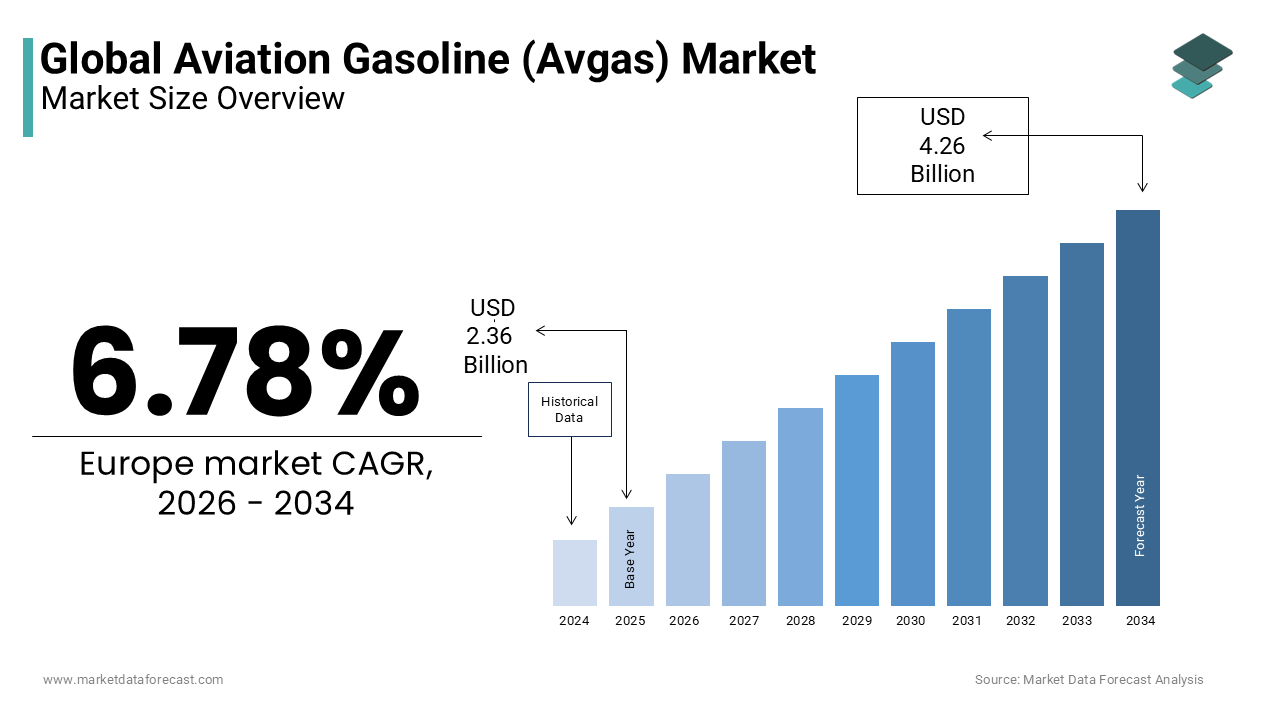
Aviation gasoline serves as a specialized high octane fuel designed explicitly for piston engine aircraft rather than turbine powered commercial jets. This distinct fuel category remains critical for general aviation operations, including flight training recreational flying and agricultural aviation across global territories. The market operates within a highly regulated framework, where safety standards and performance specifications dictate production quality and distribution channels. Unlike jet fuel, which dominates commercial air transport, aviation gasoline caters to a niche yet essential segment of the aerospace industry that relies on reciprocating engines for reliable low altitude operations. The European region maintains a significant presence in this sector due to its robust general aviation infrastructure and stringent environmental compliance requirements. As per the European Union Aviation Safety Agency, more than 135000 aircraft are registered for non-commercial general aviation operations within Europe, demonstrating the sustained relevance of piston engine technology. The International Civil Aviation Organization states that general aviation accounts for approximately 60% of all commercial and non-commercial aircraft movements globally, underscoring the foundational role of aviation gasoline in maintaining operational continuity. Despite the gradual shift toward alternative propulsion systems, the existing fleet of over 200000 piston engine aircraft worldwide ensures continued demand for this specialized fuel. The market dynamics reflect a complex interplay between regulatory pressures, technological advancements and the persistent need for reliable fuel solutions in non-commercial aviation sectors.
MARKET DRIVERS
Sustained General Aviation Fleet Operations Driving Demand
General aviation represents the largest segment of civil aviation, with piston powered planes forming the backbone of flight training institutions private ownership and utility operations, which is primarily driving the growth of the global aviation gasoline market. According to the General Aviation Manufacturers Association, there are approximately 220000 active general aviation aircraft in operation worldwide, with a substantial majority utilizing avgas compatible engines. This extensive installed base creates an inelastic demand pattern, as these aircraft cannot transition to jet fuel or alternative energy sources without complete propulsion system redesigns. In Europe alone, the European Business Aviation Association indicates that the business aviation fleet includes thousands of active fixed wing aircraft, contributing significantly to regional fuel consumption patterns. Flight training organizations constitute a major consumer block, as student pilots require hundreds of flight hours to obtain licenses, thereby ensuring consistent fuel turnover. The Federal Aviation Administration records show that general aviation aircraft log millions of flight hours annually in the United States, with similar proportional activity observed in European training academies. Additionally agricultural aviation sectors in regions like Eastern Europe rely heavily on piston aircraft for crop dusting and surveying tasks. The longevity of these aircraft often exceeds 30 years, meaning that even with slowed new aircraft production, the existing fleet guarantees baseline demand. Maintenance cycles and regulatory airworthiness directives further ensure that these aircraft remain operational rather than being prematurely retired, thus sustaining steady aviation gasoline requirements across diverse operational contexts.
Regulatory Mandates for Lead Free Transition Creating Replacement Demand
The global transition toward lead free fuel alternatives is further contributing to the expansion of the aviation gasoline market expansion. Traditional avgas contains lead additives to achieve the high octane ratings necessary for high performance piston engines, but growing health and environmental concerns have prompted aggressive regulatory action. The European Chemicals Agency has classified tetraethyl lead as a substance of very high concern, prompting member states to accelerate the adoption of unleaded alternatives. As per the Environmental Protection Agency in the United States, aviation gasoline remains the single largest remaining source of lead emissions into the atmosphere, accounting for approximately 70% of all lead pollution from mobile sources. This statistic has intensified pressure on fuel manufacturers and regulators to develop and certify unleaded replacements that meet performance standards without compromising engine safety. The introduction of approved unleaded fuels, such as G100UL and other certified alternatives, requires aircraft operators to transition their fuel supplies, creating a parallel demand stream during the phased implementation period. Regulatory timelines established by aviation authorities mandate gradual phase outs, with specific deadlines for complete elimination of leaded avgas in certain jurisdictions. This regulatory push not only drives demand for new fuel formulations but also necessitates infrastructure upgrades at airports and distribution centers to handle separate storage and dispensing systems. Fuel suppliers must invest in certification processes and quality assurance mechanisms to comply with evolving standards, thereby stimulating market activity through compliance driven procurement cycles rather than organic growth alone.
MARKET RESTRAINTS
Stringent Environmental Regulations Limiting Production Flexibility
The intense supply bottlenecks are primarily hindering the expansion of the global aviation gasoline market as governments introduce stricter refining directives and emissions verification protocols. Governments worldwide are implementing increasingly strict emission standards that directly impact the manufacturing processes and chemical composition of avgas. The European Union Industrial Emissions Directive mandates comprehensive monitoring and reduction of volatile organic compounds and hazardous air pollutants from fuel production facilities. Compliance with these regulations requires significant capital investment in emission control technologies scrubbers and advanced monitoring systems that smaller refineries may find economically prohibitive. As per the European Environment Agency, industrial facilities responsible for fuel production must adhere to stringent air pollution control directives, which often entail costly retrofitting or complete process redesigns. These regulatory burdens limit the number of viable producers in the market, creating supply chain vulnerabilities and reducing competitive pressure. Additionally zoning restrictions near urban areas prevent the establishment of new production facilities, forcing existing plants to operate at maximum capacity while facing aging infrastructure challenges. The REACH regulation in Europe further restricts the use of certain chemical additives traditionally employed in avgas formulation, requiring manufacturers to seek alternative compounds that may offer inferior performance characteristics or higher production costs. These regulatory frameworks collectively constrain market expansion by raising entry barriers for new participants and limiting the ability of existing producers to scale operations efficiently. The cumulative effect is a fragmented supply landscape, where geographic disparities in regulatory strictness create uneven market conditions and complicate international trade flows for aviation gasoline products.
Declining Number of Active Piston Engine Aircraft Registrations
While the current fleet remains substantial, demographic shifts, economic pressures and changing preferences among potential aircraft owners contribute to a slow but steady decline in new registrations, which is hindering the expansion of the global market. According to Eurocontrol, the general aviation sector in Europe has faced changing flight traffic patterns, reflecting broader challenges in the sector. High acquisition costs for new aircraft, combined with expensive maintenance requirements, discourage prospective buyers from entering the market. The average cost of a new single engine piston aircraft exceeds 500000 euros, making ownership accessible only to affluent individuals or well-funded organizations. Additionally rising insurance premiums and hangar fees further elevate the total cost of ownership, deterring casual enthusiasts who historically contributed to market vitality. Flight training institutions report decreasing enrollment numbers in some regions, as aspiring pilots opt for career paths outside aviation or choose simulator based training to reduce expenses. The Aircraft Owners and Pilots Association notes that the average age of general aviation pilots continues to increase, with fewer young individuals pursuing private pilot licenses. This demographic trend suggests a shrinking customer base over time, as older aircraft owners retire without proportional replacement from younger generations. The combination of economic barriers and shifting lifestyle preferences creates a headwind for market growth, limiting the potential for expanded aviation gasoline consumption despite stable operational rates among existing aircraft.
MARKET OPPORTUNITIES
Emergence of Sustainable Aviation Fuel Alternatives for Piston Engines
The global integration of green fuel blends within piston fleets is likely to emerge as a prominent opportunity for the aviation gasoline market. Research initiatives and technological advancements are producing bio based and synthetic fuel options that offer comparable performance to traditional avgas while reducing carbon footprints. The International Air Transport Association highlights that sustainable aviation fuels could potentially reduce lifecycle carbon emissions by up to 80% compared to conventional fossil fuels, depending on feedstock and production methods. Several companies have successfully developed unleaded sustainable alternatives that meet ASTM international standards for aviation gasoline substitutes, creating new product categories within the market. European Union funding programs, such as the Horizon Europe initiative, have allocated substantial resources to support research into next generation aviation fuels, including those suitable for general aviation applications. As per the European Commission, substantial funding frameworks have been dedicated to clean aviation technologies under various research programs, encouraging innovation in fuel chemistry and production processes. These sustainable options appeal to environmentally conscious aircraft owners and operators, who seek to align their operations with corporate sustainability goals or regulatory expectations. Airports and fuel distributors are increasingly interested in offering green fuel options to differentiate their services and attract customers prioritizing environmental responsibility. The certification of multiple sustainable avgas alternatives provides market participants with diversified product portfolios, enabling them to cater to varying customer preferences and regulatory requirements. This transition toward sustainable fuels opens new revenue streams and partnership opportunities with renewable energy producers, positioning early adopters advantageously in an evolving market landscape.
Expansion of Urban Air Mobility and Electric Hybrid Integration
The global development of regional hybrid flight systems is likely to generate fresh specialized product niches, which is another notable opportunity for the aviation gasoline market. While fully electric aircraft represent the ultimate goal, current technological limitations in battery energy density necessitate hybrid solutions that combine electric motors with conventional piston engines for extended range and payload capabilities. According to the Vertical Flight Society, over 1000 different urban air mobility concepts have been cataloged globally, with many incorporating hybrid powertrains that require aviation gasoline for their combustion components. These hybrid aircraft serve emerging markets, including air taxi services emergency medical transport and last mile delivery operations, particularly in densely populated European cities seeking innovative transportation solutions. The European Union Aviation Safety Agency has established preliminary certification frameworks for these novel aircraft types, facilitating their eventual entry into commercial service. Hybrid systems offer improved fuel efficiency compared to pure piston engines, potentially extending operational ranges while reducing overall emissions. Fuel suppliers can capitalize on this trend by developing specialized high performance avgas formulations optimized for hybrid applications, where engines operate under variable load conditions rather than steady state cruise. Partnerships with urban air mobility manufacturers enable fuel companies to participate in early stage testing and validation processes, establishing brand recognition and technical expertise in this nascent segment. As urban air mobility transitions from concept to commercial reality, the demand for reliable efficient aviation gasoline tailored to hybrid systems will grow, providing a differentiated market opportunity distinct from traditional general aviation consumption patterns.
MARKET CHALLENGES
Supply Chain Vulnerabilities Due to Limited Refining Capacity
The logistics network for specialized aviation fuels is likely to undergo increased consolidation, which is majorly challenging the expansion of the aviation gasoline market as small scale refiners pivot away from low margin petroleum variants. Unlike jet fuel, which benefits from large scale continuous production at major refineries, avgas is produced in relatively small batches by a limited number of specialized facilities. According to the American Petroleum Institute, only a handful of refineries maintain dedicated avgas production lines due to the complex blending requirements and lower profit margins compared to other petroleum products. This limited production base creates susceptibility to disruptions from unplanned maintenance events, labor strikes or natural disasters affecting individual facilities. When a single refinery experiences operational issues, the resulting supply shortage can ripple through the entire distribution network, causing regional price spikes and availability concerns. The logistical complexity of transporting small volumes of specialized fuel to dispersed general aviation airports further exacerbates these vulnerabilities. Many smaller airports lack adequate storage infrastructure, forcing them to rely on just in time deliveries that leave little buffer against supply interruptions. Geopolitical tensions and trade policy changes can also impact crude oil availability and refining economics, indirectly affecting avgas production decisions. The European fuel distribution network faces additional challenges due to varying national regulations and infrastructure standards across member states, complicating cross border fuel transfers. These structural weaknesses in the supply chain necessitate careful inventory management and contingency planning by distributors and airport operators, but ultimately limit market resilience and responsiveness to sudden demand fluctuations or unexpected disruptions.
High Costs Associated with Fuel Certification and Testing Procedures
The financial entry barriers for alternative fuel developers are likely to remain steep over the next few years due to extensive safety parameters required for non leaded mixtures. Introducing new fuel formulations or alternative blends requires rigorous validation through standardized testing protocols to ensure compatibility with diverse aircraft engines and operational conditions. The ASTM International certification process for aviation fuels involves comprehensive laboratory analysis bench testing and extensive flight trials that can span several years and cost millions of dollars. According to the National Business Aviation Association, the total expense for certifying a new aviation fuel can exceed 5 million dollars, including engineering studies safety assessments and regulatory submission fees. These substantial financial barriers discourage smaller companies and startups from entering the market, limiting competition and innovation pace. Existing manufacturers must continually invest in quality control measures and recertification efforts whenever production processes or feedstock sources change, adding ongoing operational expenses. The complexity increases when seeking approvals from multiple regulatory bodies across different jurisdictions, as each authority may impose unique requirements or interpretation standards. European manufacturers face additional hurdles navigating the European Aviation Safety Agency certification framework alongside national aviation authorities, creating layered compliance obligations. The lengthy timeline for certification delays market entry for improved or sustainable fuel options, preventing timely response to emerging customer needs or regulatory mandates. These cost and time constraints effectively consolidate market power among established players, who can absorb certification expenses while restricting access for potential disruptors who might otherwise introduce competitive alternatives or innovative solutions to address environmental and performance challenges in the aviation gasoline sector.
REPORT COVERAGE
| REPORT METRIC | DETAILS |
| Market Size Available | 2025 to 2034 |
| Base Year | 2025 |
| Forecast Period | 2026 to 2034 |
| CAGR | 6.78% |
| Segments Covered | By Application, Fuel Type, Additive Type, and Region. |
| Various Analyses Covered | Global, Regional & Country Level Analysis, Segment-Level Analysis, DROC, PESTLE Analysis, Porter’s Five Forces Analysis, Competitive Landscape, Analyst Overview of Investment Opportunities |
| Regions Covered | North America, Europe, APAC, Latin America, Middle East & Africa |
| Market Leaders Profiled | Bp p.l.c., Chevron Corporation, Exxon Mobil Corporation, Gazprom, Indian Oil Corporation Limited, Petrobras, Royal Dutch Shell plc, Sinopec Group, Total SA, Oman Oil Company SAOC, and Others. |
SEGMENTAL ANALYSIS
By Application Insights
The civil aviation segment dominated the market by accounting for the highest share of 71.5% of the global market in 2025. The dominance of civil aviation segment in the global market can be credited to the relentless expansion of flight training programs worldwide. According to the International Civil Aviation Organization, the global demand for commercial pilots necessitates the training of over 600000 new aviators by the year 2040 to replace retiring professionals and support fleet growth. This massive requirement translates directly into millions of flight hours logged in piston engine trainer aircraft, which exclusively consume aviation gasoline. Flight academies operate these training fleets intensively, with individual aircraft often accumulating more than 1000 flight hours annually. As per the Federal Aviation Administration, the United States records millions of instructional flight hours each year, creating a continuous and predictable consumption pattern for fuel suppliers. Furthermore the proliferation of private flying clubs and university aviation degrees introduces a steady influx of student pilots, who require extensive practical experience before advancing to turbine powered airliners. The economic model of flight training relies heavily on the cost efficiency of piston aircraft, making aviation gasoline an indispensable operational input. This structural dependency ensures that civil aviation maintains its commanding position as the primary consumer of specialized aviation fuels globally.
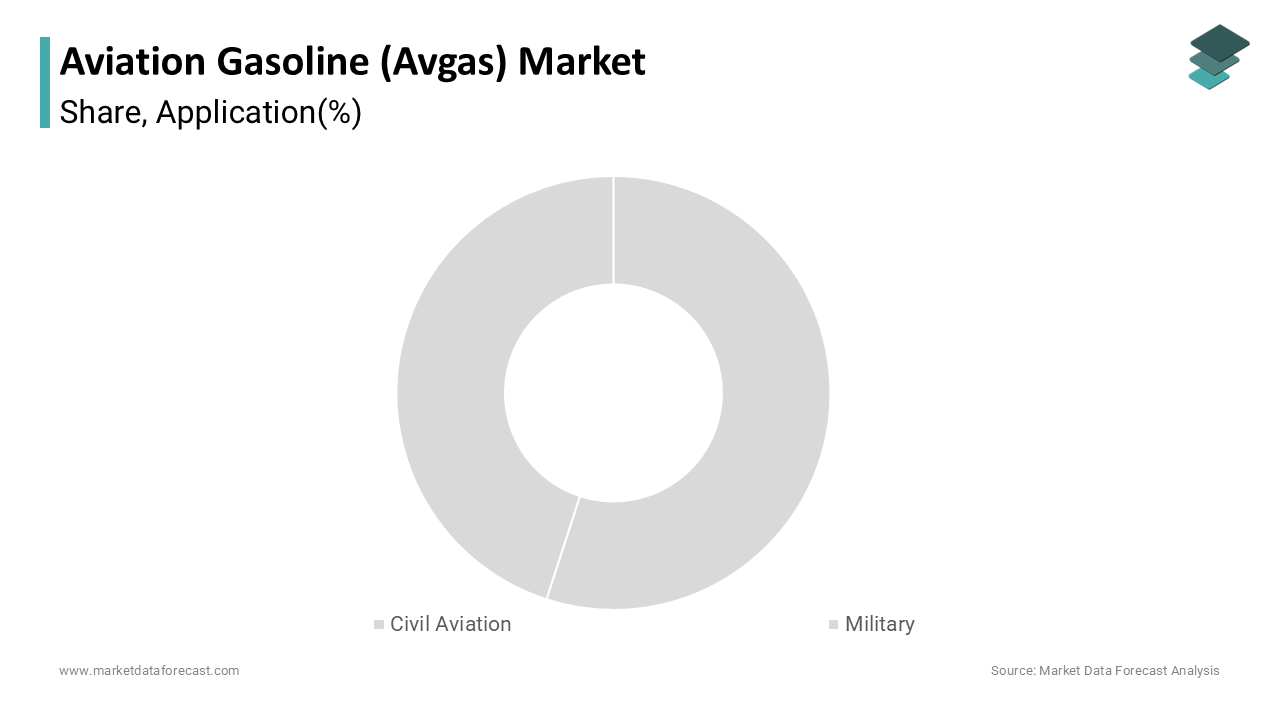
On the other side, the military segment is estimated to register a CAGR of 3.6% during the forecast period in the global market owing to the increasing deployment of piston engine aircraft for border patrol and aerial surveillance missions. According to the European Border and Coast Guard Agency, operational planning includes expanding aerial monitoring capabilities to secure external frontiers, requiring reliable low altitude platforms that operate efficiently on aviation gasoline. These specialized surveillance aircraft offer superior endurance and operational flexibility compared to heavier turbine powered alternatives, making them ideal for prolonged observation patrols over vast territorial boundaries. As per the Ministry of Defence in the United Kingdom, procurement schedules for aerial monitoring tools align with strategic shifts toward cost effective tactical intelligence gathering. The ability of these piston engine platforms to loiter for extended periods at low speeds allows military operators to conduct detailed visual inspections and monitor illicit activities with high precision. Furthermore the logistical simplicity of supplying aviation gasoline to remote forward operating bases enhances the operational readiness of these surveillance fleets. This tactical preference for fuel efficient and easily maintainable piston aircraft in security roles directly accelerates the consumption rate within the military segment, pushing its growth trajectory above other application categories.
By Fuel Type Insights
The avgas segment maintained its overwhelming dominance within the fuel type classification in 2025 by capturing 82.1% of the global market share. Aviation gasoline maintains its overwhelming dominance within the fuel type segment due to the absolute mechanical reliance of piston engines on its specific chemical properties. The General Aviation Manufacturers Association confirms that nearly 90% of the global general aviation fleet consists of piston engine aircraft that cannot physically operate on alternative fuels without catastrophic engine failure. These engines require the high octane rating and specific combustion characteristics provided by aviation gasoline to prevent engine knocking and ensure safe operation under varying atmospheric conditions. As per the American Society for Testing and Materials, the stringent performance specifications for aviation gasoline mandate precise volatility and energy density parameters that alternative fuels currently struggle to replicate consistently across all temperature ranges. The legacy design of millions of existing aircraft engines creates an inelastic demand curve, where operators have no viable substitute for traditional aviation gasoline during their daily operations. Furthermore the certification process for modifying existing piston engines to accept alternative fuels requires extensive engineering validation and regulatory approval, which delays widespread adoption. This profound mechanical dependency ensures that aviation gasoline remains the undisputed leader in the fuel type category, as the existing global fleet continues to demand its unique formulation for safe and reliable flight operations.
However, the jet fuel segment is recognized as the fastest growing category and is estimated to register a CAGR of 6.2% during the forecast period in the global market. Jet fuel is emerging as the fastest growing segment within this broader classification driven by the aggressive expansion of global commercial airline fleets. The International Air Transport Association projects that the global commercial jet fleet will expand significantly by the end of the decade, requiring massive volumes of jet fuel to support expanded route networks and increased flight frequencies. Unlike piston aircraft, the modern commercial aviation sector is experiencing robust recovery, with airlines placing record orders for new narrow body and wide body jets to replace aging fleets and capture growing passenger demand. As per the Boeing Commercial Market Outlook, airlines will require over 40000 new commercial airplanes over the next 20 years to meet global travel demand, directly correlating to an exponential increase in jet fuel consumption. The operational economics of commercial aviation favor high utilization rates, meaning these new aircraft will fly significantly more hours annually than the general aviation fleet they supplement. Furthermore the rapid expansion of low cost carriers in emerging markets introduces millions of new passengers to air travel, generating sustained demand for jet fuel on high density domestic routes. This relentless fleet modernization and expansion cycle guarantees that jet fuel consumption will accelerate rapidly, outpacing the relatively stable growth rates of aviation gasoline.
By Additive Type Insights
The deposit control additive segment held the leading share of the global market in 2025. Deposit control additives command the largest share of the additive segment due to their critical role in preserving engine longevity and maintaining optimal performance. The Society of Automotive Engineers emphasizes that piston aircraft engines are highly susceptible to carbon buildup and valve seat recession, which can lead to catastrophic mechanical failure if left unmanaged. Deposit control agents chemically interact with fuel to prevent the formation of harmful residues on fuel injectors carburetors and intake valves, ensuring consistent fuel atomization and combustion efficiency. As per the American Society for Testing and Materials, the certification standards for aviation gasoline strictly mandate the inclusion of effective deposit control additives to meet the rigorous durability requirements of aircraft engines. The high operating temperatures and pressures within aviation piston engines accelerate the degradation of fuel components, making these additives indispensable for preventing performance deterioration over extended flight cycles. Furthermore the substantial cost of aircraft engine overhauls, which often exceeds 50000 dollars, creates a strong economic incentive for operators to utilize premium fuels containing advanced deposit control chemistry. This vital protective function ensures that deposit control additives remain the most widely consumed and essential component in aviation gasoline formulations globally.
On the other end, the biocides segment is estimated to register a CAGR of 7.4% during the forecast period in the global market. Biocides are experiencing the most rapid growth among additive types driven by the escalating awareness of microbial contamination risks in aviation fuel systems. The Energy Institute highlights that water accumulation in aircraft fuel tanks creates an ideal breeding ground for bacteria and fungi, which produce acidic byproducts that corrode metal components and degrade fuel quality. These microorganisms form dense sludge layers that can rapidly clog fuel filters and starve engines of fuel, leading to sudden power loss during critical flight phases. As per the European Union Aviation Safety Agency, maintenance mandates highlight the importance of regular testing and preventive treatment of fuel storage facilities to counter microbial growth risks. The increasing use of alternative fuel blends and bio derived components, which are more hygroscopic and susceptible to water absorption, further exacerbates the risk of microbial proliferation. Consequently fuel suppliers and aircraft operators are aggressively adopting biocide treatments as a proactive defense mechanism to safeguard fuel integrity and prevent costly maintenance interventions. This heightened focus on contamination prevention directly accelerates the adoption rate of biocides, pushing their market growth significantly above other additive categories.
REGIONAL ANALYSIS
North America Aviation Gasoline Market Analysis
The North America captured the highest share of the global market in 2025 and is likely to maintain strong consistent fuel demands over the next few years as training centers utilize stable infrastructure to expand student capacity. The Federal Aviation Administration records indicate that the United States possesses the largest general aviation fleet in the world, with over 200000 registered active aircraft generating immense and continuous fuel consumption. This regional dominance is primarily driven by the deeply ingrained culture of private flying and the presence of thousands of public use airports that facilitate widespread accessibility to piston engine operations. As per the Aircraft Owners and Pilots Association, the robust network of flight training academies across the continent requires millions of instructional flight hours annually, creating a predictable and substantial baseline demand for aviation gasoline. Furthermore the extensive agricultural aviation sector in the Midwestern states relies heavily on specialized piston aircraft for crop dusting and aerial application tasks, adding significant seasonal volume to the regional consumption metrics. The mature infrastructure, comprising dedicated fuel farms specialized transport logistics and stringent quality control protocols, ensures uninterrupted supply to even the most remote airstrips. This comprehensive ecosystem, combined with high disposable income levels that support recreational aviation, solidifies the commanding leadership of North America in the global consumption hierarchy.
Europe Aviation Gasoline Market Analysis
Europe is likely to drive structural market adjustments over the next few years as regional hubs phase out leaded options to satisfy strict environmental legislation. The European Union Aviation Safety Agency states that the region hosts over 150000 registered general aviation aircraft operating across diverse geographical terrains, from the Alps to the Mediterranean coast. This substantial market position is largely propelled by the dense concentration of flight training organizations and the thriving recreational flying clubs that characterize the European aviation culture. As per the European Business Aviation Association, the region experiences strong demand for piston engine aircraft utilized in specialized utility operations, including aerial surveying pipeline patrol and environmental monitoring missions. The stringent environmental regulations enforced across member states are simultaneously driving the rapid adoption of unleaded aviation gasoline alternatives, creating a unique market dynamic focused on sustainable fuel transitions. Additionally the extensive network of regional aerodromes and the strong tradition of aerobatic competitions generate consistent fuel turnover throughout the year. The collaborative efforts between national aviation authorities and fuel manufacturers to modernize storage infrastructure and certify new fuel formulations further reinforce the robust status of Europe as a critical pillar of the global consumption landscape.
Asia Pacific Aviation Gasoline Market Analysis
Asia Pacific is likely to witness the fastest volume accumulation over the next few years as local governments open lower altitude corridors to expand civilian pilot pipelines. The International Civil Aviation Organization highlights that emerging economies within this territory are experiencing unprecedented growth in general aviation activities, driven by rising wealth and expanding commercial aviation sectors. This regional expansion is significantly fueled by the proliferation of new flight training academies established to meet the soaring demand for commercial pilots originating from the Asian demographic. As per the Civil Aviation Administration of China, government policies actively promote the development of low altitude airspace and general aviation infrastructure, supporting a steady annual increase in registered operational aircraft over recent years. The vast geographical expanse of the region necessitates the use of light utility aircraft for remote transport medical evacuation and disaster relief operations, particularly in archipelagic nations and mountainous territories. Furthermore the growing popularity of aerial tourism and recreational flying among the expanding middle class creates new consumption nodes across the continent. The ongoing investments in modernizing airport infrastructure and establishing reliable fuel distribution networks are rapidly elevating the consumption capacity of Asia Pacific, positioning it as a crucial growth engine for the future.
COMPETITIVE LANDSCAPE
The competitive landscape of the aviation gasoline market is characterized by the presence of a few dominant multinational energy corporations alongside numerous specialized regional distributors. These major players leverage their extensive refining capabilities and vast logistical networks to maintain significant control over global supply chains and pricing mechanisms. However the market is currently experiencing a profound transformation driven by stringent environmental regulations that mandate the elimination of leaded fuel formulations. This regulatory shift has intensified competition as companies race to develop certify and commercialize viable unleaded alternatives that meet rigorous performance standards without compromising engine safety. Specialized fuel manufacturers are actively forming strategic alliances with aircraft engine producers and regulatory agencies to accelerate the testing and approval processes for these next generation products. Furthermore regional distributors are competing aggressively on service quality offering comprehensive fuel management solutions and infrastructure upgrades to secure long term contracts with fixed base operators. The high barriers to entry associated with refining complexity and certification costs protect established entities from new competitors ensuring that market power remains concentrated among industry veterans. Ultimately success in this environment depends heavily on technological innovation regulatory compliance and the ability to maintain uninterrupted supply across diverse geographical territories worldwide.
KEY MARKET PLAYERS
Companies playing a prominent role in the global aviation gasoline (Avgas) market include
- BP p.l.c.
- Chevron Corporation
- Exxon Mobil Corporation
- Gazprom
- Indian Oil Corporation Limited
- Petrobras
- Royal Dutch Shell plc
- Sinopec Group
- Total SA
- Oman Oil Company SAOC
- Others.
Top Players in the Market
Avfuel Corporation stands as a paramount entity in the global landscape providing comprehensive fuel solutions and services to general aviation operators worldwide. The company maintains an extensive distribution network that ensures the reliable supply of high quality aviation gasoline to thousands of fixed base operators and independent airports. Their recent strategic initiatives focus heavily on expanding their footprint in emerging markets and investing in advanced fuel testing technologies to guarantee product integrity. By forging strategic partnerships with regional distributors the corporation continuously strengthens its operational capabilities and deepens its engagement with the global flying community ensuring sustained relevance.
Phillips 66 operates as a crucial contributor to the sector leveraging its massive refining capabilities to produce specialized high octane fuels for the general aviation community. The company is deeply involved in the research and development of next generation unleaded aviation gasoline alternatives aiming to meet stringent environmental mandates without compromising engine performance. Their recent actions include upgrading their dedicated blending facilities and expanding their direct delivery services to major flight training academies. Through continuous investment in quality control infrastructure and active collaboration with aircraft manufacturers the organization solidifies its reputation as a reliable and forward thinking leader.
TotalEnergies plays a highly influential role in the global market by integrating its vast energy expertise with specialized aviation fuel solutions tailored for piston engine operations. The company is actively engaged in transitioning its product portfolio toward sustainable alternatives investing significantly in the certification and distribution of environmentally friendly aviation gasoline options. Their recent strategic maneuvers involve modernizing their European storage infrastructure and launching targeted educational campaigns for airport operators regarding safe handling. By prioritizing research into low carbon fuel technologies and expanding their dedicated aviation support services the corporation effectively positions itself at the forefront of the industry transition.
Top Strategies Used by Key Market Participants
Key participants in the sector employ several major strategies to maintain competitive advantage and drive operational excellence globally. Companies prioritize extensive research and development initiatives to formulate unleaded alternatives that satisfy environmental regulations while preserving engine performance. Strategic partnerships with fixed base operators and flight training academies secure long term supply agreements and guarantee consistent product distribution across diverse geographical territories. Furthermore organizations invest heavily in upgrading storage infrastructure and implementing advanced quality control protocols to prevent contamination and ensure absolute fuel integrity. Market leaders also focus on expanding their global footprint by acquiring regional distributors and establishing new logistical hubs in emerging markets. These concerted efforts enable corporations to navigate regulatory transitions smoothly optimize supply chain efficiency and deliver superior value to the global aviation community around the world. By continuously adapting to evolving industry standards and investing in sustainable technologies these entities successfully future proof their business models. This proactive approach allows them to capture new revenue streams while simultaneously mitigating environmental risks associated with traditional fuel formulations thereby securing long term profitability and maintaining strong relationships with international regulatory bodies and diverse customer bases across all major global aviation markets and remote territories around the entire globe.
MARKET SEGMENTATION
This global aviation gasoline (Avgas) market research report has been segmented and sub-segmented based on application, fuel type, additive and region.
By Application
- Civil Aviation
- Military
By Fuel Type
- Avgas
- Jet fuel
By Additive Type
- Deposit control
- Anti-icing
- Corrosion inhibitor
- Lubricity improver
- Biocides
- Antioxidants
- Dyes & makers
- Others
By Region
- North America
- Europe
- Asia Pacific
- Latin America
- Middle East & Africa