- Product Description Description
- Table of Contents TOC
- List of Table & Figure LOT
- Get Free Sample PDF Sample PDF
Market Size, 2025
$27 BnMarket Estimate, 2026
$29.98 BnMarket Forecast, 2034
$69.50 BnCAGR, 2026–2034
11.08%Global Bathroom Accessories Market Size, Growth, Trends & Forecast (2026–2034)
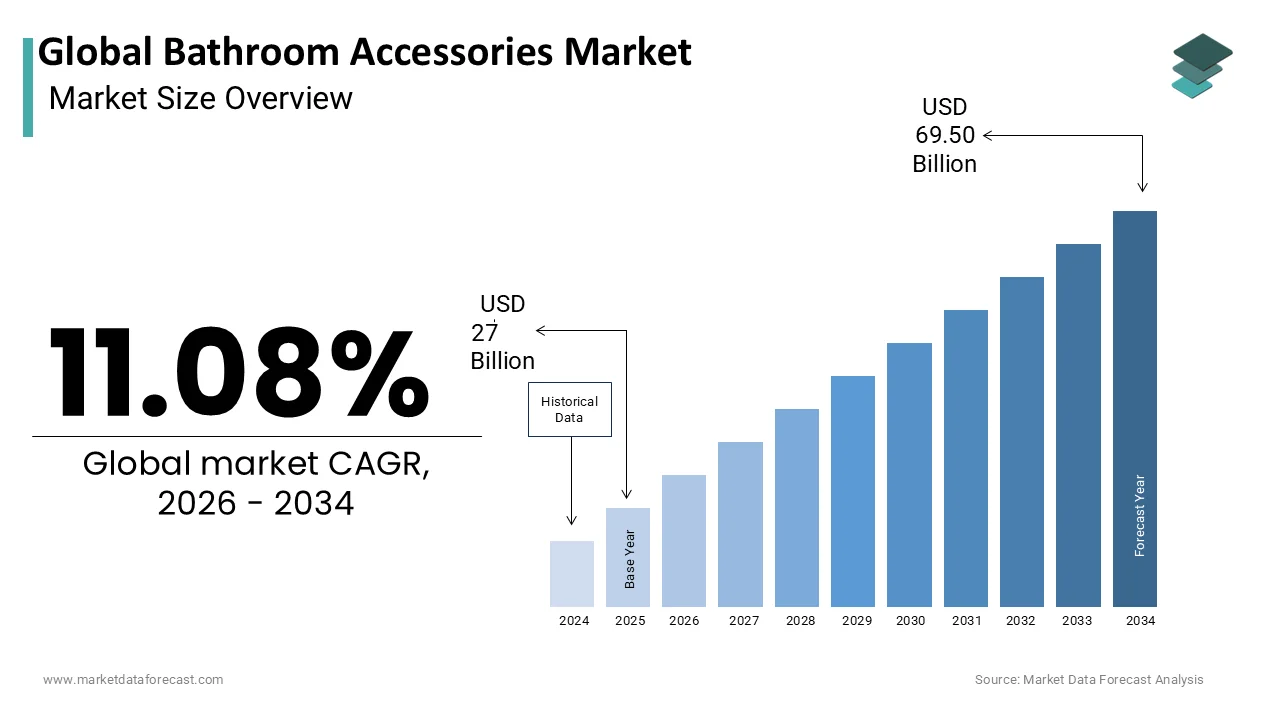
The global bathroom accessories market size was valued at USD 27 billion in 2025, is anticipated to reach USD 29.98 billion in 2026, and is projected to expand up to USD 69.50 billion by 2034, registering a compound annual growth rate (CAGR) of 11.08% during the forecast period from 2026 to 2034. Growth is driven by the surge in residential renovation and remodeling activities, a rising global emphasis on hygiene and sanitation standards, and the integration of smart technology and IoT connectivity in modern homes.
Key Executive Metrics (At-a-Glance)
- 2025 Base Valuation: USD 27.00 Billion
- 2026 Current Valuation: USD 29.98 Billion
- 2034 Forecast Valuation: USD 69.50 Billion
- Compound Annual Growth Rate (CAGR): 11.08% (2026–2034)
- Dominant Product Segment: Towel Racks and Towel Rings (Essential fixtures required for basic hygiene and universal bathroom design)
- Fastest-Growing Product Segment: Grab Bars (Driven by aging populations and increasing demand for accessible universal design)
- Dominant Region: North America (High disposable income, robust housing markets, and frequent luxury remodeling activities)
- Fastest-Growing Region: Asia-Pacific (Rapid urbanization, growing middle-class incomes, and extensive residential construction)
Core Market Drivers
- Residential Renovation & Remodeling: Homeowners prioritizing interior upgrades, spa-like bathroom transformations, and property value enhancement over relocation.
- Hygiene & Sanitation Standards: Post-pandemic awareness accelerating demand for touchless faucets, automated soap dispensers, and antimicrobial surfaces.
Primary Market Restraints & Challenges
- Raw Material Price Volatility: Fluctuations in stainless steel, brass, zinc, and plastics prices impacting manufacturing margins and retail pricing.
- Installation Complexities: Technical hurdles and skilled labor shortages associated with advanced smart systems or recessed fixtures.
Global Bathroom Accessories Market Segmentation Breakdown
| Segment Category | Largest (Dominant) Sub-Segment | Fastest-Growing Sub-Segment |
|---|---|---|
| By Product | Towel Racks and Towel Rings | Grab Bars |
| By Region | North America | Asia Pacific |
Major Industry Players Profiled
Key corporations dominating the global bathroom accessories market include LIXIL Group Corporation, TOTO Ltd., Kohler Co., Roca Sanitario, S.A., Moen Incorporated, Hansgrohe Group, Gerber Plumbing Fixtures LLC, Monarch Bath Pvt. Ltd., Bolina Holding Co., Ltd., and ASI American Specialties, Inc.
Global Bathroom Accessories Market Size
The global bathroom accessories market was valued at USD 27 billion in 2025, is expected to have an 11.08% CAGR from 2026 to 2034, and be worth USD 69.50 billion by 2034 from USD 29.98 billion in 2026.
Bathroom accessories are a diverse array of functional and decorative items designed to enhance the utility, aesthetics, and hygiene of personal bathing spaces. This sector includes essential fixtures such as towel bars, robe hooks, toilet paper holders, soap dispensers, shower caddies, and mirror cabinets. These products serve both practical purposes in organizing personal care items and aesthetic roles in defining the interior design theme of residential and commercial bathrooms. The evolution of this market is closely tied to broader trends in home improvement, real estate development, and consumer lifestyle preferences. According to the United States Census Bureau, the median value of owner-occupied housing units has risen significantly, indicating increased investment in property maintenance and renovation. As homeowners seek to maximize the comfort and visual appeal of their living spaces, the bathroom has emerged as a critical area for upgrades. According to reports from the National Kitchen and Bath Association, repair and remodeling spending in the kitchen and bath industry is projected to grow by 2.9% annually, reflecting the popularity of these upgrade projects. Furthermore, urbanization trends are influencing demand, and, as per the United Nations Department of Economic and Social Affairs, approximately 56% of the world population lives in urban areas, where compact living solutions drive the need for efficient storage and multifunctional accessories. Sustainability concerns are also reshaping product designs, with consumers increasingly preferring materials that are durable, recyclable, and environmentally friendly.
MARKET DRIVERS
Surge in Residential Renovation and Remodeling Activities
The robust growth in residential renovation and remodeling activities is fuelling the growth of the bathroom accessories market worldwide, as homeowners increasingly prioritize upgrading existing spaces rather than moving. Aging housing stock in developed regions necessitates modernization to meet contemporary standards of comfort and style. According to the Joint Center for Housing Studies at Harvard University, annual spending on improvements and maintenance to owner-occupied homes in the United States is projected to reach approximately $523 billion, representing substantial allocations to interior upgrades. Bathrooms are a focal point of these renovations due to their high usage and potential to increase property value. Consumers are replacing outdated fixtures with modern, sleek designs that offer better functionality and durability. The trend towards creating spa-like experiences at home has led to the installation of premium accessories, such as heated towel rails and smart mirrors. According to data from the Houzz House and Home Study, primary bathrooms remain the top priority for home remodels, with the median spend on primary bathroom renovations increasing to $15,000. This sustained activity creates consistent demand for a wide range of accessories, from basic hardware to luxury items. Additionally, the rise of do-it-yourself culture, empowered by online tutorials and easy-to-install products, has expanded the customer base. Retailers report increased sales of accessory bundles that allow consumers to coordinate finishes across multiple fixtures. This behavioural shift ensures a steady flow of revenue for manufacturers and retailers catering to the retrofit market.
Growing Emphasis on Hygiene and Sanitation Standards
The growing global focus on hygiene and sanitation has significantly influenced consumer purchasing behavior in the bathroom accessories market, which is further boosting the global market expansion. The recent pandemic accelerated awareness regarding the importance of touchless and antimicrobial surfaces in personal care spaces. According to the World Health Organization, maintaining clean and hygienic environments is crucial for preventing the spread of infectious diseases. This has led to a surge in demand for accessories that minimize contact points, such as automatic soap dispensers, touchless faucets, and hands-free toilet flush systems. Consumers are also seeking materials with inherent antimicrobial properties, like copper alloys or coated stainless steel, that inhibit bacterial growth. According to a specialized designer tracking survey from the American Society of Interior Designers, approximately 75% of design clients now prioritize hygiene features in their bathroom spaces. This shift is not limited to residential settings but extends to commercial establishments, such as hotels, offices, and healthcare facilities, which must adhere to strict sanitary regulations. The hospitality industry, in particular, is upgrading guest bathrooms with premium hygienic accessories to reassure travellers. Manufacturers are responding by innovating with self-cleaning technologies and easy-to-maintain surfaces. The integration of these health-focused features into standard product lines has become a competitive necessity. This enduring change in consumer priorities ensures long-term growth for products that promote cleanliness and safety.
MARKET RESTRAINTS
Volatility in Raw Material Prices
Fluctuations in the prices of key raw materials, such as stainless steel, brass, zinc, and plastics, act as a major restraint on the bathroom accessories market, which is impacting profit margins and pricing strategies. These materials are essential for manufacturing durable and corrosion-resistant fixtures that can withstand humid environments. According to global commodity tracking reports from the International Monetary Fund, industrial metal prices have experienced significant volatility due to supply chain disruptions, geopolitical tensions, and inflationary pressures. Stainless steel prices, for instance, have seen sharp increases, affecting the cost structure of manufacturers who rely heavily on this material for towel bars and shower heads. Brass, another common material for high-end fittings, is subject to market fluctuations driven by industrial demand and mining output. These cost increases often force manufacturers to raise retail prices, which can dampen consumer demand, particularly in price-sensitive segments. Small and medium-sized enterprises struggle to absorb these costs without compromising on quality or reducing their workforce. As per data from global producer price indexes, the cost of manufactured metal goods has risen steadily, leading to tighter margins for producers. Additionally, the unpredictability of raw material availability complicates inventory management and production planning. Companies may face delays in fulfilling orders if suppliers cannot deliver materials on time. This financial uncertainty discourages investment in new product development and expansion initiatives.
Complexity of Installation and Maintenance Requirements
The complexity associated with the installation and ongoing maintenance of certain bathroom accessories is another significant restraint for the global market growth, particularly for consumers who prefer hassle-free home improvement solutions. While some items, like towel rings, are easy to mount, others, such as recessed medicine cabinets or integrated lighting systems, require professional expertise. According to national construction employment audits from the National Association of Home Builders, persistent labor shortages in the construction and renovation sectors have led to higher installation costs and longer wait times for skilled tradespeople. Consumers may be deterred from purchasing sophisticated accessories if they perceive the installation process as difficult or expensive. Furthermore, bathroom accessories are exposed to constant moisture, humidity, and chemical cleaners, which can lead to corrosion, tarnishing, or mechanical failure over time. Products made from lower-quality materials may degrade quickly, requiring frequent replacement. According to consumer hardware analysis reports from Consumer Reports, durability issues and finish degradation are common complaints among buyers of bathroom hardware. The need for regular cleaning and specific care instructions can also be a burden for busy households. If accessories are not properly maintained, they can become unsightly or dysfunctional, diminishing the overall aesthetic of the bathroom. This perception of high maintenance effort can discourage potential buyers from opting for premium or intricate designs. Manufacturers must, therefore, balance innovation with ease of use and durability to overcome this barrier.
MARKET OPPORTUNITIES
Integration of Smart Technology and IoT Connectivity
The integration of smart technology and Internet of Things connectivity into bathroom accessories presents a substantial opportunity for market expansion. Consumers are increasingly seeking connected devices that offer convenience, personalization, and energy efficiency. Smart mirrors with built-in LED lighting, defogging capabilities, and digital displays for weather news or health metrics are gaining popularity. According to global technology indicators from Statista, the smart home market is expanding at a rapid pace, with automated bathroom innovations representing one of the fastest-growing segments. Voice-activated controls allow users to adjust lighting, temperature, or water flow without physical interaction, enhancing accessibility for elderly or disabled individuals. Smart shower systems can monitor water usage and temperature, providing data that helps conserve resources and reduce utility bills. Manufacturers are collaborating with tech companies to develop ecosystems where bathroom accessories communicate with other smart home devices. For example, a smart scale can sync with a health app to track fitness progress. The ability to customize settings via mobile applications adds value and appeals to tech-savvy demographics. As 5G networks expand and device interoperability improves, the adoption of smart bathroom solutions is expected to accelerate. This technological convergence opens new revenue streams through software subscriptions and data services. Companies that pioneer user-friendly and reliable smart accessories can capture a loyal customer base willing to pay a premium for enhanced functionality.
Expansion of Eco-Friendly and Sustainable Product Lines
The growing consumer preference for eco-friendly and sustainable products offers a significant opportunity for manufacturers in the bathroom accessories market. Environmental consciousness is driving demand for items made from recycled materials, biodegradable components, or sustainably sourced resources. According to climate and building analysis publications from the United Nations Environment Programme, the construction and building sector accounts for a large portion of global waste and emissions, prompting a shift towards green building practices. Accessories made from recycled aluminum, bamboo, or reclaimed wood are becoming attractive options for environmentally aware consumers. Water-saving features, such as low-flow aerators and dual-flush mechanisms integrated into faucet and toilet accessories, also align with sustainability goals. Certifications such as LEED and WaterSense influence purchasing decisions among architects and developers working on green building projects. According to consumer sustainability surveys from Nielsen, a clear majority of global consumers express a strong willingness to pay more for verified sustainable brands. Manufacturers can leverage this trend by adopting circular economy principles, such as designing products for disassembly and recycling. Transparent supply chains and ethical sourcing practices further enhance brand reputation. Collaborations with environmental organizations can validate sustainability claims and build trust. By innovating with green materials and processes, companies can differentiate themselves in a crowded market.
MARKET CHALLENGES
Intense Competition from Low-Cost Imports
The bathroom accessories market faces intense competition from low-cost imports, primarily from emerging economies, which challenges established brands on price and market share. Manufacturers in countries with lower labor and production costs can offer similar-looking products at significantly reduced prices. According to global trade statistics from the World Trade Organization, cross-border shipments of sanitary ware and bathroom fixtures have increased steadily, with developing nations becoming dominant exporters. These imported products often mimic the designs of premium brands but lack the same level of quality, durability, or warranty support. Price-sensitive consumers and budget-conscious contractors may opt for these cheaper alternatives, especially in the mid to low-end segments. This pressure forces established companies to either lower their prices, eroding margins, or invest heavily in branding to justify higher costs. The proliferation of online marketplaces has made it easier for consumers to compare prices and access international sellers directly. This transparency intensifies price competition and reduces brand loyalty. Counterfeit products further exacerbate the issue by undermining consumer trust in genuine brands. Protecting intellectual property rights across different jurisdictions is costly and complex. Established players must continuously innovate and emphasize superior craftsmanship, customer service, and after-sales support to retain their customer base.
Supply Chain Disruptions and Logistics Bottlenecks
Ongoing supply chain disruptions and logistics bottlenecks present a major challenge to the bathroom accessories market, affecting availability and delivery timelines. The global nature of the supply chain means that components and finished goods often traverse multiple borders before reaching the end consumer. According to maritime trade analytics from the International Chamber of Shipping, persistent congestion at major global ports and acute container shortages have caused significant delays in international transport. These logistical hurdles lead to inventory stockouts, forcing retailers to cancel orders or delay projects. Manufacturers struggle to predict lead times, making it difficult to plan production schedules accurately. The reliance on single-source suppliers for critical components increases vulnerability to localized disruptions, such as factory closures or natural disasters. Rising freight costs also impact the final price of goods, reducing competitiveness. According to operational tracking reports from the Institute for Supply Management, commercial supplier deliveries remain slow, contributing to operational inefficiencies across manufacturing sectors. These uncertainties frustrate customers who expect prompt service and reliable stock levels. Contractors working on tight deadlines may switch to alternative suppliers with better availability, potentially shifting brand allegiance. Companies are attempting to mitigate these risks by diversifying suppliers and increasing local inventory, but this requires substantial capital investment.
REPORT COVERAGE
| REPORT METRIC | DETAILS |
| Market Size Available | 2025 to 2034 |
| Base Year | 2025 |
| Forecast Period | 2026 to 2034 |
| Segments Covered | By Product and Region |
| Various Analyses Covered | Global, Regional & Country Level Analysis, Segment-Level Analysis, DROC, PESTLE Analysis, Porter’s Five Forces Analysis, Competitive Landscape, Analyst Overview of Investment Opportunities |
| Regions Covered | North America, Europe, APAC, Latin America, Middle East & Africa |
| Market Leaders Profiled | LIXIL Group Corporation, TOTO Ltd., Kohler Co., Roca Sanitario, S.A., Moen Incorporated, Hansgrohe Group, Gerber Plumbing Fixtures LLC, Monarch Bath Pvt. Ltd., Bolina Holding Co., Ltd., and ASI American Specialties, Inc. |
SEGMENTAL ANALYSIS
By Product Insights
The towel racks and towel rings segment dominated the market by holding the major share of the global market in 2025 due to their fundamental utility and universal requirement in both residential and commercial bathrooms. Every functional bathroom necessitates a dedicated space for drying and storing towels, making this product category an essential component of bathroom infrastructure. The primary factor driving the domination of towel racks and rings is their status as a mandatory fixture in virtually every bathroom design globally. Unlike decorative items, which are optional, towel holders are required for basic hygiene and organization. According to guidelines from the National Kitchen and Bath Association, nearly 100% of standard bathroom designs include at least one towel bar or ring to accommodate hand and bath towels. In commercial settings, such as hotels, gyms, and offices, the demand is even higher, with multiple units installed per facility to meet high usage demands. According to travel and lodging audits from the American Hotel and Lodging Association, the average mid-scale hotel room is equipped with two to three towel bars to ensure guest convenience. This ubiquitous need ensures consistent replacement and new installation demand, regardless of economic cycles. Homeowners often replace these items during minor refreshes due to wear and tear or style updates. The sheer volume of bathrooms constructed annually worldwide translates into massive unit sales. Manufacturers benefit from economies of scale in producing these standardized items. The simplicity of the product allows for wide distribution through various channels, including hardware stores, online retailers, and home improvement centers. This broad accessibility and constant replenishment cycle sustain the segment's leadership position in the global market.

On the other hand, the grab bars segment is a promising segment and is estimated to record a CAGR of 8.4% during the forecast period in the global market, owing to the aging population and increasing focus on accessible design in residential and public spaces. The rapidly growing elderly population globally is the primary catalyst for the increased adoption of grab bars in bathrooms. As individuals age, mobility issues and balance concerns become more prevalent, necessitating safety modifications in living spaces. According to demographic data from the World Health Organization, the number of people aged 60 years and older will double by 2050, reaching 2.1 billion worldwide. Many seniors prefer to age in place rather than move to assisted living facilities, leading to a surge in home retrofitting projects. According to safety reports from the Centers for Disease Control and Prevention, falls are the leading cause of injury-related death among older adults, with a significant portion occurring in the bathroom. Installing grab bars near toilets and showers significantly reduces the risk of slips and falls, providing critical support. Government programs in countries like the United States and Japan offer subsidies for home safety modifications, encouraging installation. As per educational publications from the National Institute on Aging, awareness campaigns about fall prevention have increased the acceptance of assistive devices among seniors and their caregivers. This demographic shift creates a sustained and growing demand for sturdy, reliable grab bars. Manufacturers are responding by offering products that combine safety with aesthetic appeal to reduce stigma. The integration of grab bars into universal design principles ensures broader market acceptance beyond just medical necessity.
COUNTRY LEVEL ANALYSIS
North America Bathroom Accessories Market Analysis
North America held the highest share of the global market in 2025 and is poised to drive high-end, style-driven home renovations over the next few years, cementing its role as a leading marketplace for luxury bathroom finishes and professional remodels. North America holds a significant share of the global bathroom accessories market, driven by high disposable income, a robust housing market, and a strong culture of home improvement. The United States is the largest contributor within the region, characterized by frequent remodeling activities and a preference for premium quality fixtures. According to the Joint Center for Housing Studies at Harvard University, expenditure on home improvements in the United States reached historic highs, with bathroom upgrades being a top priority for homeowners. The prevalence of large, single-family homes supports the demand for comprehensive accessory sets, including matching towel bars, hooks, and paper holders. Consumer preference for modern finishes, such as matte black and brushed gold, influences product development. The DIY sector is vibrant, with major retailers like Home Depot and Lowe’s driving volume sales. Canada also contributes to the market, with a focus on energy-efficient and durable products suitable for colder climates. The aging population in North America is accelerating the adoption of safety features like grab bars. Regulatory standards for water efficiency and accessibility further shape the market landscape. E-commerce penetration is high, allowing consumers easy access to a wide variety of styles and brands. The region serves as a trendsetter for design innovations, which often influence global markets. Strong brand loyalty and willingness to pay for quality sustain the market value.
Europe Bathroom Accessories Market Analysis
Europe is expected to experience a steady transition toward minimalist and high-durability wellness designs over the next few years, backed by strict green building policies and climate-specific demands. Europe occupies a mature and sophisticated position in the bathroom accessories market, characterized by high aesthetic standards and a strong emphasis on sustainability. Countries such as Germany, France, and the United Kingdom lead in terms of consumption and innovation. According to construction data from Eurostat, the building sector in the European Union has shown steady growth, with renovation activities outpacing new builds. European consumers prioritize eco-friendly materials and long-lasting durability, influencing manufacturing processes. The popularity of heated towel rails is particularly high in Northern and Central Europe due to climate conditions and energy efficiency goals. As per commercial research tracking from the European Heating Industry Federation, the adoption of smart heating solutions in bathrooms is rising. Design minimalism and functionality are key drivers, with brands focusing on sleek, integrated solutions. Strict environmental regulations, such as the EU Ecodesign Directive, impact material sourcing and production methods. The region has a well-established distribution network comprising specialized showrooms and online platforms. Urbanization in major cities drives demand for space-saving accessories for compact apartments. The hospitality sector in tourist hotspots like Italy and Spain continuously upgrades facilities, maintaining steady demand. Sustainability certifications play a crucial role in purchasing decisions. The market is highly competitive, with both local artisanal brands and international giants vying for share.
Asia Pacific Bathroom Accessories Market Analysis
The Asia Pacific region is anticipated to see unparalleled volume growth in residential constructions over the next few years, driven by extensive urbanization and a rising urban middle class. The Asia Pacific region is emerging as the fastest-growing market for bathroom accessories, driven by rapid urbanization, rising middle-class incomes, and extensive real estate development. China, India, Japan, and Southeast Asian nations are key contributors to this expansion. According to demographic data from the United Nations Department of Economic and Social Affairs, the urban population in Asia is growing rapidly, leading to a boom in residential construction. In China, the government’s urbanization initiatives have resulted in millions of new housing units requiring complete bathroom fittings. India is witnessing a surge in organized retail and e-commerce, making branded accessories more accessible to a wider audience. Japan represents a mature market with high demand for advanced technological features, such as smart toilets and automated accessories. As per specialized tracking logs from the Japan Sanitary Equipment Industry Association, continuous innovation in hygiene and comfort drives product upgrades across domestic lines. Southeast Asian countries like Vietnam and Indonesia are experiencing increased foreign investment in hospitality and commercial real estate, boosting demand for durable, commercial-grade accessories. Cultural preferences for specific materials, such as stainless steel and brass, influence product offerings. The growing awareness of hygiene post-pandemic has accelerated the adoption of touchless and antimicrobial products. Local manufacturing capabilities are improving, reducing costs and increasing availability. The region offers vast potential for growth as living standards continue to rise.
Latin America Bathroom Accessories Market Analysis
Latin America is projected to expand its affordable housing infrastructure over the next few years, creating steady mass-market demand for essential bathroom accessories. Latin America represents a developing market for bathroom accessories, with growth driven by economic stabilization and increasing investment in housing infrastructure. Brazil, Mexico, and Argentina are the primary markets in the region. According to infrastructure research papers from the Economic Commission for Latin America and the Caribbean, the construction sector is recovering, with government programs aimed at addressing housing deficits. In Brazil, the Minha Casa Minha Vida program has facilitated the construction of affordable housing units, creating a high demand for basic bathroom accessories. Mexico benefits from its proximity to the United States, with a strong manufacturing base exporting to North America while also serving domestic needs. The middle class in urban centers is expanding, leading to greater interest in home renovation and premium products. As per regional trade monitoring statistics from national statistical institutes, import levels of sanitary ware and related home accessories have risen, indicating growing consumption. Economic volatility remains a challenge, affecting purchasing power and import costs. However, the resilience of the housing market supports steady demand. Local designers are increasingly incorporating international trends, appealing to younger demographics. The hospitality industry in tourist destinations like Cancun and Rio de Janeiro drives demand for high-end, durable accessories. Distribution channels are evolving, with online retail gaining traction. The market is characterized by a mix of imported premium brands and cost-effective local products.
Middle East and Africa Bathroom Accessories Market Analysis
The Middle East and Africa region is expected to showcase two highly distinct growth paths over the next few years, with ultra-luxury mega-projects defining the Gulf while basic infrastructural needs drive sub-Saharan volumes. The Middle East and Africa region presents a niche but growing market for bathroom accessories, driven by luxury real estate developments and infrastructure projects. Gulf Cooperation Council countries, such as the United Arab Emirates and Saudi Arabia, are the primary drivers due to high spending on opulent residential and commercial properties. According to development trackers from the World Bank, infrastructure investment in the GCC remains robust, with mega projects like NEOM in Saudi Arabia requiring vast quantities of high-end bathroom fixtures. The hospitality sector in Dubai and Doha sets global standards for luxury, influencing demand for premium designer accessories. In Africa, South Africa and Egypt have more developed markets with growing urban populations. As per infrastructure funding reviews from the African Development Bank, urbanization rates are increasing across key economic zones, leading to higher demand for modern housing solutions. However, affordability remains a constraint in many sub-Saharan countries, limiting the market to essentials. The preference for durable materials that withstand heat and humidity influences product selection. International brands dominate the luxury segment, while local manufacturers serve the mass market. Religious and cultural norms influence design preferences, such as the inclusion of bidet sprays. The market is heavily reliant on imports, particularly for high-end items. Tourism development in North Africa also contributes to commercial demand. The region offers opportunities for premium brands targeting the affluent segment.
COMPETITIVE LANDSCAPE
The competition in the global bathroom accessories market is highly fragmented and intense, characterized by the presence of numerous multinational corporations alongside regional manufacturers and local artisans. Established brands compete based on design aesthetics, product durability, and brand reputation,n while smaller players often differentiate through price competitiveness and niche customization. Innovation in smart technology and sustainable materials serves as a key differentiator as consumers become more environmentally conscious and tech-savvy. The rise of e-commerce has lowered entry barriers, allowing new entrants to reach global customers directly,y increasing pressure on traditional retailers. Price sensitivity varies significantly acrossregionso, ns with emerging marketsfavoring cost-effectivee solutions and developed regions prioritizing premium quality. Companies must continuously adapt to changing interior design trends and consumer preferences to maintain relevance. Supply chain efficiency and raw material sourcing capabilities also play a crucial role in determining competitive advantage. Strategic collaborations with real estate developers and hospitality chains provide stable revenue streams. Brand loyalty is cultivated through consistent quality and excellent after-sales service. The market dynamics require agility and continuous investment in marketing and product development to sustain growth amidst fluctuating economic conditions.
KEY MARKET PLAYERS
Some of the companies that are playing a dominating role in the Global Bathroom Accessories Market include
- LIXIL Group Corporation
- TOTO Ltd.
- Kohler Co.
- Roca Sanitario, S.A.
- Moen Incorporated
- Hansgrohe Group
- Gerber Plumbing Fixtures LLC
- Monarch Bath Pvt. Ltd.
- Bolina Holding Co., Ltd.
- ASI American Specialties, Inc.
TOP LEADING PLAYERS IN THE MARKET
- Kohler Co maintains a prestigious position in the global bathroom accessories market by offering a comprehensive portfolio of high-quality fixtures and hardware. The company integrates innovative design with advanced technology to create cohesive bathroom ecosystems. Kohler recently expanded its smart home integration capabilities, enabling users to control lighting and water features through voice commands. The brand focuses on sustainability by developing water efficient products and using recycled materials in manufacturing. Its strong distribution network ensures wide availability across residential and commercial sectors. Kohler also invests heavily in brand marketing and designer collaborations to maintain its luxury image. These efforts reinforce its reputation for excellence and drive consumer preference for premium bathroom solutions globally.
- Moen Incorporated is a leading manufacturer known for its durable and stylish bathroom accessories that cater to diverse consumer preferences. The company emphasizes innovation through its Smart Water Technologies, which enhance user convenience and conservation. Moen recently launched new collections featuring modern finishes and ergonomic designs to align with current interior trends. The brand strengthens its market position by offering extensive warranty programs and superior customer service. Moen actively partners with builders and contractors to secure specifications in new construction projects. Its commitment to accessibility includes designing products that support aging in place. By focusing on reliability and aesthetic appeal,l Moen continues to attract homeowners seeking long-lasting and functional bathroom upgrades.
- Grohe AG stands out as a premier European brand recognized for its precision engineering and sustainable bathroom solutions. The company combines German craftsmanship with digital innovation to deliver high-performance accessories. Grohe recently introduced its Blue Home system, which provides filtered sparkling and chilled water directly from the tap. The brand prioritizes environmental responsibility by achieving carbon-neutral production in many facilities. Grohe expands its global reach through strategic partnerships with hospitality groups and luxury real estate developers. Its focus on holistic wellness includes products that promote relaxation and hygiene. By maintaining strict quality standards and embracing digital transformation, Grohe solidifies its leadership in the premium segment of the international market.
TOP STRATEGIES USED BY KEY MARKET PARTICIPANTS
Key players in the bathroom accessories market primarily focus on product innovation and design differentiation to capture consumer interest in a crowded landscape. Companies invest heavily in research and development to create smart connected devices that enhance user convenience and water efficiency. Strategic partnerships with interior designers and architects help secure specifications for new construction and renovation projects. Brands expand their distribution channels by strengthening e-commerce platforms and omnichannel retail experiences to reach wider audiences. Sustainability initiatives such as using recycled materials and reducing carbon footprints are increasingly central to corporate strategies. Manufacturers also emphasize customization options, allowing consumers to choose from various finishes and styles. Mergers and acquisitions enable companies to broaden their product portfolios and enter new geographic markets effectively.
MARKET SEGMENTATION
This research report on the global bathroom accessories market has been segmented and sub-segmented based on product and region.
By Product
- Towel Rack or Towel Ring
- Hook
- Paper Holder
- Grab Bars
- Others
By Region
- North America
- Europe
- Asia Pacific
- Latin America
- The Middle East and Africa