- Product Description Description
- Table of Contents TOC
- List of Table & Figure LOT
- Get Free Sample PDF Sample PDF
Market Size, 2025
$471 MnMarket Estimate, 2026
$523 MnMarket Forecast, 2034
$1205 MnCAGR, 2026–2034
11%Global Blood Bags Market Report Summary
The global blood bags market was valued at USD 471.08 million in 2025 and is projected to grow from USD 522.90 million in 2026 to USD 1,205 million by 2034, registering a strong CAGR of 11% from 2026 to 2034. Market growth is driven by rising blood donation activities, increasing demand for safe blood storage and transfusion systems, and expanding healthcare infrastructure worldwide. Blood bags are essential components in blood collection, processing, storage, and transfusion procedures, supporting emergency care, surgeries, and chronic disease management. Increasing focus on blood safety standards, adoption of advanced storage materials, and growing awareness regarding voluntary blood donation are further accelerating market expansion.
Key Market Trends
- Increasing emphasis on safe blood collection and transfusion practices.
- Rising adoption of advanced blood storage materials and DEHP-free blood bags.
- Growing investments in blood bank modernization and healthcare infrastructure.
- Expansion of voluntary blood donation and awareness programs globally.
- Strengthening regulatory focus on infection prevention and blood safety compliance.
Segmental Insights
- Based on product type, the collection bag segment dominated the global blood bags market in 2025 by holding 70.8% market share, driven by high demand for blood collection and storage systems across hospitals and blood banks.
- Based on end user, the hospitals segment represented the dominant category by accounting for 60.4% market share in 2025, supported by rising surgical procedures, emergency care requirements, and increasing blood transfusion volumes.
Regional Insights
The global blood bags market is witnessing steady growth across major regions, supported by increasing healthcare investments, rising blood donation programs, and growing awareness regarding transfusion safety.
- North America led the market in 2025 with 35.5% share, driven by advanced healthcare infrastructure, strong blood safety regulations, and high demand for transfusion services.
- Europe is expected to witness progressive growth over the forecast period, supported by modern blood safety mandates, adoption of alternative materials, and evolving procurement standards.
- Asia-Pacific is anticipated to register rapid growth in the coming years, fueled by expanding healthcare access, increasing investments in clinical infrastructure, and rising demand for blood management systems.
Competitive Landscape
The global blood bags market is characterized by the presence of established medical device manufacturers and specialized blood management solution providers focusing on product quality, safety compliance, and material innovation. Market players are emphasizing development of advanced blood storage systems, expansion of manufacturing capacities, and strategic collaborations with healthcare institutions and blood banks. Investments in sustainable and biocompatible materials are further shaping competitive dynamics across the market.
Prominent companies operating in the global blood bags market include Fresenius SE & Co. KGaA, Terumo Corporation, Grifols, S.A., MacoPharma, S.A., HLL Lifecare Limited, Poly Medicure Limited, INNVOL Medical India Limited, Span Healthcare Private Limited, Haemonetics Corporation, and Neomedic International.
Global Blood Bags Market Size
The global blood bags market was worth US$ 471.08 million in 2025 and is anticipated to reach a valuation of US$ 1,205 million by 2034 from US$ 522.90 million in 2026, and it is predicted to register a CAGR of 11% during the forecast period 2026 to 2034.

Blood bags are sterile containers designed for the collection, processing, storage, and transfusion of human blood and its components. These medical devices play a fundamental role in modern healthcare infrastructure by enabling safe blood component separation and extended preservation of red blood cells, platelets, and plasma. According to the World Health Organization, approximately 118.5 million blood donations are collected globally each year, yet significant disparities persist across economic regions. High-income nations demonstrate a median donation rate of 31.5 donations per 1000 people, whereas low-income countries report only 5.0 donations per 1000 people. Blood component processing capabilities further illustrate this divide, as 96% of collected blood in high-income countries undergoes separation into therapeutic components compared to merely 38% in low-income settings, according to World Health Organization assessments. The European region maintains robust blood safety frameworks with national policies governing collection, testing, and distribution protocols. Temperature-controlled storage between 1 and 6 degrees Celsius remains critical for red blood cell preservation, as per established clinical guidelines. Technological advancements in pathogen inactivation and closed system designs continue to enhance product safety, while regulatory bodies enforce stringent quality standards for materials and manufacturing processes. The clinical demand for blood bags extends beyond transfusion medicine to support surgical procedures, trauma care, oncology treatments, and management of chronic hematological conditions.
MARKET DRIVERS
Escalating Global Surgical Procedure Volumes Drive Blood Bag Utilization
The expanding frequency of complex surgical interventions worldwide creates sustained demand for reliable blood collection and storage systems, which is a major factor propelling the global blood bags market expansion. According to clinical data published in transfusion medicine literature, approximately 118.5 million units of blood are collected globally each year, supporting diverse medical procedures from cardiovascular surgery to organ transplantation. Europe alone performs over 25 million surgical procedures annually that may require blood product availability, as per healthcare utilization statistics. The aging demographic profile across developed nations intensifies this requirement, since patients over 60 years account for up to 76% of all transfusions in high-income countries, according to World Health Organization assessments. Orthopedic procedures, particularly joint replacements and spinal surgeries, frequently necessitate preoperative blood reservation and intraoperative transfusion support. Trauma care protocols in emergency departments mandate immediate access to compatible blood components, which rely on efficient blood bag systems for rapid component separation and storage. The growing prevalence of cancer treatments involving myelosuppressive chemotherapy further amplifies transfusion dependency as patients require regular platelet and red blood cell support. Hospital blood banks maintain inventory levels based on historical utilization patterns and anticipated surgical caseloads, ensuring continuous availability of sterile blood bags. Manufacturers respond to this clinical demand by developing multi-compartment bag systems that facilitate component separation within closed sterile environments, minimizing contamination risks during processing.
Advancing Pathogen Inactivation Technologies Enhance Blood Product Safety
The integration of pathogen reduction systems into blood bag manufacturing is further fuelling the growth of the global blood bags market. According to research published in transfusion science journals, pathogen inactivation technologies can reduce residual risks of viral, bacterial, and parasitic contamination by over 99.9% in treated blood components. European regulatory frameworks increasingly encourage the adoption of these safety enhancements as part of comprehensive hemovigilance programs. The INTERCEPT Blood System and similar platforms utilize photochemical agents combined with ultraviolet light exposure to inactivate pathogens while preserving cellular function. Clinical studies demonstrate that pathogen-reduced platelets maintain therapeutic efficacy for up to 5 days of storage, meeting standard transfusion requirements. Blood centers implementing these technologies report decreased incidence of transfusion-transmitted infections and reduced need for post-donation testing protocols. The economic justification for pathogen inactivation extends beyond infection prevention to include potential reductions in donor screening costs and liability management. Manufacturers investing in compatible bag materials that withstand photochemical treatment without compromising integrity gain a competitive advantage. Healthcare institutions prioritize suppliers offering integrated safety solutions that align with national blood safety objectives. The technological sophistication of modern blood bags now encompasses features such as integrated sampling ports, barcode tracking systems, and temperature monitoring capabilities that support traceability throughout the transfusion chain.
MARKET RESTRAINTS
Stringent Regulatory Compliance Requirements Increase Production Complexity
The medical device regulatory landscape imposes substantial operational constraints on blood bag manufacturers, particularly within the European Union, which is primarily hampering the global blood bags market expansion. According to the European Medical Device Regulation 2017/745, all blood contact materials must undergo rigorous biocompatibility assessment and clinical evaluation before market authorization. The classification of certain plasticizers, such as DEHP, as substances of very great concern necessitates extensive justification documentation for continued use in blood storage applications. Manufacturers must demonstrate that alternatives do not compromise red blood cell viability or storage duration, which remains limited to approximately 35 days for many DEHP-free formulations, according to pharmacopoeial standards. The validation process for new materials involves multi-year development cycles, including in vitro testing, clinical trials, and post-market surveillance activities. Small and medium-sized enterprises face disproportionate resource burdens in meeting these requirements, potentially limiting market entry and innovation diversity. Regulatory harmonization challenges across global jurisdictions further complicate product development strategies, as specifications vary between the FDA, EMA, and other national authorities. The administrative overhead associated with maintaining technical files, risk management documentation, and quality management systems diverts resources from research and development initiatives. Compliance costs ultimately influence product pricing, which may affect procurement decisions in resource-constrained healthcare settings.
Limited Shelf Life of Blood Components Constrains Inventory Management
The inherent biological limitations of stored blood components create operational challenges for blood bag utilization and distribution logistics, which further hinder the global market growth. For instance, red blood cells maintain therapeutic efficacy for a maximum of 42 days under refrigerated conditions between 1 and 6 degrees Celsius. Platelet concentrates present even greater constraints, with a shelf life of only 5 to 7 days, requiring continuous agitation at 20 to 24 degrees Celsius to prevent clumping. These temporal restrictions necessitate sophisticated inventory rotation systems and precise demand forecasting to minimize product wastage. European blood services report discard rates ranging from 2 to 8% for red blood cells and up to 15% for platelets due to expiration before transfusion, according to hemovigilance data. The geographical distribution of collection centers relative to transfusion sites further complicates logistics, as transportation time consumes valuable shelf life. Rural healthcare facilities face particular challenges in maintaining adequate inventory without incurring excessive wastage. Blood bag designs that extend component viability through improved gas permeability or additive solutions represent active research areas, but clinical validation remains time-intensive. The economic impact of component expiration influences procurement strategies and may limit the adoption of advanced bag systems with higher unit costs. Healthcare administrators must balance safety margins against wastage risks when establishing inventory policies, creating inherent tension in supply chain optimization.
MARKET OPPORTUNITIES
Expansion of Automated Blood Collection Systems in Emerging Healthcare Markets
The modernization of blood collection infrastructure in developing regions presents significant growth potential for advanced blood bag technologies. According to World Health Organization assessments, many low and middle-income countries are investing in national blood system strengthening initiatives that include equipment procurement and staff training. The transition from manual collection methods to automated apheresis platforms creates demand for specialized bag systems designed for single-component collection. European manufacturers with established regulatory approvals and quality certifications are well-positioned to supply these expanding markets. The implementation of closed system collection devices reduces contamination risks and supports compliance with international blood safety standards. Emerging economies increasingly prioritize voluntary non-remunerated donation programs, which align with WHO recommendations and generate sustainable demand for sterile collection sets. The integration of digital tracking capabilities into blood bag systems enables improved inventory management and traceability across distributed healthcare networks. Training partnerships between European blood services and emerging market institutions facilitate technology transfer and capacity building. Manufacturers offering comprehensive solutions, including collection devices, storage containers, and compatibility testing reagents, gain a competitive advantage in these developing procurement ecosystems. The anticipated growth in surgical capacity and trauma care infrastructure across Asia, Africa, and Latin America will further amplify demand for reliable blood component storage systems.
Innovation in Sustainable Materials for Blood Storage Applications
The development of environmentally responsible materials for blood bag manufacturing represents an emerging opportunity for the global blood bags market. According to regulatory guidance documents, the medical device sector faces increasing pressure to reduce plasticizer content and improve end-of-life recyclability. Research initiatives focusing on bio-based polymers and alternative plasticizers that maintain red blood cell viability offer differentiation potential for forward-looking manufacturers. The European Green Deal and related circular economy frameworks incentivize investment in sustainable medical device design. Clinical validation studies demonstrating equivalent or superior performance of novel materials compared to conventional PVC formulations create market entry pathways. Healthcare institutions with environmental procurement policies increasingly prioritize suppliers with transparent sustainability credentials. The development of mono-material bag systems that simplify recycling processes without compromising sterility or functionality addresses both ecological and operational considerations. Collaboration between material science researchers, blood services, and regulatory bodies accelerates the translation of laboratory innovations into clinically approved products. Manufacturers establishing early expertise in sustainable blood bag technologies position themselves favorably for future regulatory requirements and market preferences. The convergence of clinical performance, environmental responsibility, and cost effectiveness defines the next generation of blood storage solutions.
MARKET CHALLENGES
Supply Chain Vulnerabilities for Specialized Medical Grade Polymers
The dependence on limited global suppliers for medical-grade plastics creates operational risks for blood bag manufacturers, which is a significant challenge to the growth of the global blood bags market. For instance, the production of polyvinyl chloride and alternative polymers suitable for blood contact applications requires specialized manufacturing capabilities and regulatory oversight. Geopolitical tensions, trade restrictions, and raw material price volatility can disrupt supply continuity and increase production costs. The qualification of alternative polymer sources involves extensive testing to ensure compatibility with blood components and compliance with pharmacopoeial standards. European manufacturers face particular challenges in maintaining supply security while adhering to stringent quality requirements and environmental regulations. The limited number of qualified suppliers for critical additives such as plasticizers, stabilizers, and anticoagulant solutions concentrates risk within the supply chain. Inventory buffering strategies increase working capital requirements and may not fully mitigate disruption impacts. Manufacturers investing in vertical integration or strategic partnerships with polymer producers enhance supply resilience, but require significant capital commitment. The development of standardized material specifications across jurisdictions could facilitate supplier diversification, but regulatory harmonization progresses slowly. Healthcare systems, depending on just-in-time inventory models, remain vulnerable to supply interruptions that could affect blood product availability.
Balancing Cost Containment Pressures with Advanced Safety Features
The economic constraints facing healthcare systems create tension between procurement budgets and the adoption of technologically advanced blood bag systems, which is further challenges the global market expansion. For instance, European payers increasingly require demonstration of clinical and economic value before approving reimbursement for premium medical devices. The incremental cost of pathogen-inactivation-compatible bags or extended storage formulations must be justified through measurable outcomes, such as reduced infection rates or decreased component wastage. Public procurement processes emphasizing lowest price criteria may disadvantage innovative products with higher upfront costs, despite long-term benefits. Manufacturers face difficult decisions regarding feature prioritization and pricing strategies to maintain market access across diverse healthcare economies. The documentation burden for health economic evaluations diverts resources from product development and clinical research activities. Smaller healthcare facilities with limited procurement expertise may struggle to assess the total cost of ownership for advanced blood bag systems. The alignment of clinical evidence generation with payer requirements represents an ongoing challenge for market access strategies. Manufacturers must navigate complex stakeholder landscapes, including clinicians, procurement officers, health technology assessment bodies, and patient advocates, to achieve sustainable market penetration for value-enhancing innovations.
REPORT COVERAGE
| REPORT METRIC | DETAILS |
| Market Size Available | 2025 to 2034 |
| Base Year | 2025 |
| Forecast Period | 2026 to 2034 |
| Segments Covered | By Product Type, End-User, and Region. |
| Various Analyses Covered | Global, Regional and Country-Level Analysis, Segment-Level Analysis, Drivers, Restraints, Opportunities, Challenges; PESTLE Analysis; Porter’s Five Forces Analysis, Competitive Landscape, Analyst Overview of Investment Opportunities |
| Regions Covered | North America, Europe, Asia Pacific, Latin America, the Middle East, and Africa |
| Market Leaders Profiled | Fresenius SE & Co. KGaA, Terumo Corporation, Grifols, S.A., MacoPharma, S.A., HLL Lifecare Limited, Poly Medicure Limited, INNVOL Medical India Limited, Span Healthcare Private Limited, Haemonetics Corporation, and Neomedic International. |
SEGMENTAL ANALYSIS
By Product Type Insights
The collection bag segment dominated the market by holding the highest share of 70.8% of the global market in 2025. The dominance of the collection bag segment in the global market is attributed to the fundamental role collection bags play in initial blood procurement processes across healthcare facilities worldwide. Collection bags serve as the primary interface between donor and blood banking infrastructure, enabling safe, sterile extraction of whole blood for subsequent processing. According to the World Health Organization, global blood donation volumes exceed 118.5 million units annually, creating sustained demand for reliable collection systems. The versatility of collection bags supports multiple configurations, including single, double, triple, and quadruple designs that accommodate diverse clinical protocols for component separation. Healthcare facilities prioritize collection bags with integrated anticoagulant solutions and leukoreduction filters that enhance product safety and extend shelf life. Manufacturers invest in biocompatible polymer formulations that minimize hemolysis and maintain cellular integrity during storage periods ranging from 35 to 42 days, according to pharmacopoeial standards. The standardization of collection bag capacities at 350 milliliter, 450 milliliter, and 500 milliliter volumes facilitates compatibility with automated processing equipment used in high-throughput blood centers. Regulatory frameworks in Europe and North America mandate rigorous validation of collection bag materials, ensuring compliance with medical device directives and biocompatibility requirements. The economic efficiency of collection bags relative to specialized transfer systems further reinforces their market leadership, particularly in resource-constrained settings where cost-effectiveness drives procurement decisions.
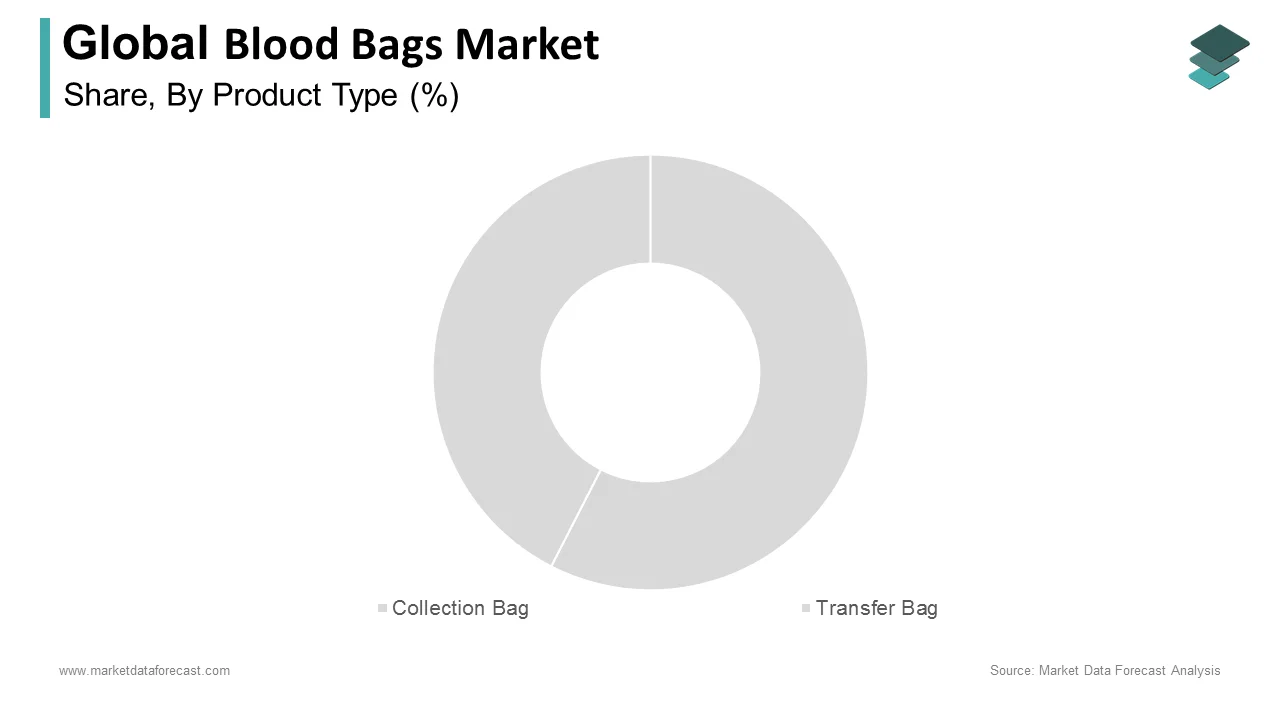
On the other hand, the transfer bag segment is predicted to showcase a promising CAGR of 10.4% during the forecast period in the global market, owing to the increasing clinical emphasis on blood component therapy, where separated plasma platelets and red blood cells require specialized transfer systems for targeted administration. For instance, component-based transfusions now represent over 85% of all blood product utilization in high-income countries, creating sustained demand for transfer bag configurations. Transfer bags enable precise volume delivery and compatibility with infusion pumps that support controlled administration in critical care, oncology, and surgical settings. The integration of closed system designs with sterile docking capabilities reduces contamination risks during component transfer operations, according to hemovigilance data. Healthcare institutions increasingly adopt transfer bags with integrated sampling ports that facilitate pre-transfusion testing without compromising sterility. Manufacturers respond to this demand by developing transfer systems with enhanced gas permeability and additive solution compatibility that preserve component viability during extended storage. The growing prevalence of pathogen inactivation protocols further amplifies transfer bag requirements, as treated components need specialized containers that withstand photochemical processing. European blood services report increasing utilization of transfer bags for plasma exchange procedures and therapeutic apheresis applications, according to clinical utilization statistics. The economic justification for transfer bag adoption extends beyond clinical efficacy to include reduced wastage through precise volume management and improved inventory rotation within blood bank operations.
By End User Insights
The hospitals segment represented the dominant end-user segment by accounting for 60.4% of the global market share in 2025. The dominance of the hospital segment in the global market can be credited to the comprehensive scope of hospital-based care that encompasses emergency, trauma, surgical oncology, and intensive care services requiring immediate blood product availability. According to the American National Red Cross, United States hospitals alone transfuse approximately 10 million units of red blood cells annually, creating substantial demand for sterile collection and storage systems. The aging demographic profile across developed nations intensifies hospital-based transfusion requirements, since patients over 60 years account for up to 76% of all transfusions, according to World Health Organization assessments. Hospital blood banks maintain sophisticated inventory management systems that track component expiration dates, storage conditions, and compatibility testing results, ensuring optimal product utilization. The integration of electronic cross-matching and barcode tracking within hospital information systems enhances traceability and reduces transfusion errors, according to clinical safety reports. Hospitals increasingly adopt multi-compartment blood bag systems that facilitate component separation at the point of collection, minimizing processing time and contamination risks. The economic scale of hospital procurement enables bulk purchasing agreements that favor established manufacturers with comprehensive product portfolios and reliable supply chains. Regulatory compliance requirements within hospital settings mandate rigorous documentation of blood product handling, administration, and adverse event reporting, creating demand for blood bags with integrated tracking capabilities. The expansion of hospital-based transfusion medicine services, including therapeutic apheresis and cellular therapy programs, further amplifies demand for specialized blood bag configurations.
However, the stand-alone blood centers segment is estimated to showcase the fastest CAGR of 9.4% during the forecast period in the global market, owing to the strategic investments in dedicated blood collection infrastructure that optimize donor experience and operational efficiency independent of hospital-based workflows. According to World Health Organization guidelines, voluntary non-remunerated donation programs increasingly utilize standalone centers to enhance donor accessibility and streamline collection processes. Stand-alone facilities benefit from specialized staffing protocols that focus exclusively on donor screening, collection, and component processing, improving throughput and quality metrics. The implementation of automated apheresis platforms within standalone centers creates demand for specialized bag systems designed for single-component collection, according to industry reports. These facilities often serve as regional hubs that distribute processed components to multiple hospital partners, amplifying their impact on blood bag utilization. The adoption of digital donor management systems within standalone centers enables personalized scheduling, reminder notifications, and post-donation follow-up, enhancing donor retention rates, according to operational studies. Stand-alone centers increasingly implement pathogen inactivation technologies that require compatible bag materials and processing protocols, according to regulatory guidance. The economic model of standalone centers emphasizes cost recovery through component sales to hospitals, creating incentives for efficient inventory management and minimal wastage. The expansion of mobile donation units operated by standalone centers further extends collection reach into underserved communities, according to public health initiatives. Regulatory frameworks in Europe and North America support standalone center development through accreditation pathways that ensure quality standards while promoting innovation in collection methodologies.
REGIONAL ANALYSIS
North America Blood Bags Market Analysis
North America led the market in 2025 by capturing 35.5% of the global market share and is expected to showcase high demand and secure a dominant position in the industry over the next few years, backed by advanced clinical systems and a highly organized healthcare network. This dominance reflects the region's advanced healthcare infrastructure, comprehensive blood safety regulations, and high per capita transfusion utilization rates. According to the American National Red Cross, the United States alone requires approximately 29000 units of red blood cells daily to support surgical trauma and chronic disease management. The region benefits from widespread adoption of automated blood collection systems that integrate seamlessly with sophisticated blood bag configurations designed for component separation. North American blood centers implement rigorous hemovigilance programs that mandate traceability from donor to recipient, creating demand for blood bags with integrated barcode and RFID tracking capabilities. The regulatory environment enforced by the Food and Drug Administration ensures stringent quality standards for blood contact materials, driving innovation in biocompatible polymer formulations. Hospital-based transfusion services in North America increasingly adopt pathogen inactivation technologies that require specialized bag systems compatible with photochemical processing, according to clinical guidelines. The economic capacity of North American healthcare systems supports premium pricing for advanced blood bag features, including leukoreduction filters, additive solutions, and extended storage formulations. The region's robust research infrastructure facilitates clinical validation of novel blood bag designs, accelerating technology adoption cycles. Supply chain resilience within North America ensures the reliable availability of medical-grade polymers and sterilization services critical for blood bag manufacturing. The concentration of major blood bag manufacturers within the region further strengthens market leadership through localized production and rapid response to clinical demand fluctuations.

Europe Blood Bags Market Analysis
Europe is poised for progressive advancement over the coming years as modern blood safety mandates and alternative materials shape procurement trends. This position reflects the region's comprehensive blood safety frameworks, standardized transfusion protocols, and strong public healthcare systems that prioritize blood product availability. According to the European Directorate for the Quality of Medicines, member states implement harmonized standards for blood collection, processing, and distribution, ensuring consistent quality across national boundaries. The European Medical Device Regulation 2017/745 imposes rigorous requirements for blood contact materials, driving innovation in phthalate-free and biocompatible polymer formulations. European blood services increasingly adopt closed system collection devices that minimize contamination risks during component processing, according to hemovigilance reports. The region benefits from robust voluntary donation programs supported by national blood agencies that maintain stable supply chains for blood bag procurement. Hospital-based transfusion medicine in Europe emphasizes component therapy, creating sustained demand for multi-compartment bag systems that facilitate plasma, platelet, and red blood cell separation. The economic integration of European Union member states enables cross-border procurement strategies that optimize pricing and supply security for blood bag products. Research collaborations between European academic institutions and manufacturers accelerate the development of sustainable blood bag materials aligned with circular economy objectives. The region's aging demographic profile intensifies transfusion requirements, particularly for oncology and cardiovascular interventions, according to epidemiological data. Regulatory harmonization efforts within Europe facilitate market access for innovative blood bag technologies, while maintaining stringent safety standards that protect patient welfare.
Asia Pacific Blood Bags Market Analysis
Asia Pacific is anticipated to exhibit rapid growth during the next several years, fueled by major investments in healthcare access and clinical infrastructure development. This accelerated expansion reflects rapid healthcare infrastructure development, increasing surgical volumes, and growing awareness of blood safety across emerging economies. According to World Health Organization assessments, many Asia Pacific nations are investing in national blood system strengthening initiatives that include equipment procurement and staff training. China and India lead regional growth, driven by expanding hospital networks, rising trauma care capacity, and increasing prevalence of chronic diseases requiring transfusion support. The transition from manual collection methods to automated apheresis platforms creates demand for specialized bag systems designed for single-component collection, according to industry reports. Asia Pacific manufacturers increasingly achieve international quality certifications, enabling export to regulated markets and enhancing regional supply security. The implementation of closed system collection devices reduces contamination risks and supports compliance with international blood safety standards, according to regulatory guidance. Emerging economies within the region prioritize voluntary non-remunerated donation programs, which align with WHO recommendations and generate sustainable demand for sterile collection sets. The integration of digital tracking capabilities into blood bag systems enables improved inventory management and traceability across distributed healthcare networks. Training partnerships between established blood services and emerging market institutions facilitate technology transfer and capacity building, according to development initiatives. The anticipated growth in surgical capacity and trauma care infrastructure across the Asia Pacific will further amplify demand for reliable blood component storage systems, according to healthcare planning documents.
Latin America Blood Bags Market Analysis
Latin America is projected to witness steady improvements over the upcoming years, driven by the expansion of centralized clinical frameworks and rural blood drives. This position reflects ongoing healthcare system development, varying regulatory frameworks, and diverse economic conditions across member nations. According to Pan American Health Organization assessments, many Latin American countries are strengthening national blood programs to improve collection safety and component availability. Brazil and Mexico lead regional demand, driven by large population bases, expanding hospital networks, and increasing surgical procedure volumes. The region faces infrastructure challenges, including limited cold chain capacity and variable quality control systems that affect blood bag utilization efficiency, according to operational studies. Latin American blood services increasingly adopt standardized collection protocols aligned with international guidelines to enhance product safety and traceability. The growing prevalence of dengue and other vector-borne diseases creates seasonal demand fluctuations for blood products, requiring flexible inventory management strategies, according to epidemiological data. Regional manufacturers focus on cost-effective blood bag designs that balance quality requirements with affordability constraints prevalent in public healthcare procurement. The implementation of mobile collection units extends blood donation access to rural communities, creating demand for portable sterile collection systems, according to public health initiatives. Regulatory harmonization efforts within Latin America facilitate cross-border trade and technology transfer, while maintaining national sovereignty over blood safety standards. The economic volatility affecting some Latin American nations influences procurement budgets and may limit the adoption of premium blood bag features, according to market intelligence.
COMPETITIVE LANDSCAPE
The blood bags market features a moderately consolidated competitive landscape where established manufacturers leverage technological expertise, regulatory experience, and global distribution networks to maintain leadership positions. Competition centers on product innovation, quality assurance, and supply reliability rather than price alone, as healthcare institutions prioritize patient safety and clinical outcomes in procurement decisions. Leading players differentiate through integrated system offerings that combine collection processing and storage capabilities within closed sterile environments, minimizing contamination risks during component preparation. Regulatory compliance represents a significant barrier to entry as blood contact materials require rigorous biocompatibility assessment, clinical evaluation, and post-market surveillance according to medical device directives. Smaller manufacturers focus on niche applications or regional markets where specialized configurations or cost-effective designs address specific clinical or economic requirements. The market witnesses increasing collaboration between manufacturers and blood services to develop pathogen-inactivation-compatible systems, additive solutions, and digital tracking capabilities that enhance product safety and traceability. Sustainability considerations are emerging as competitive differentiators as healthcare institutions increasingly prioritize environmentally responsible materials and end-of-life recyclability in procurement decisions. Supply chain resilience has become critical following global disruptions that highlighted vulnerabilities in medical device manufacturing and distribution networks. Companies investing in vertical integration, strategic partnerships, and diversified sourcing strategies gain a competitive advantage in maintaining reliable product availability. The competitive dynamics favor manufacturers with comprehensive portfolios that support diverse clinical protocols from whole blood collection to component therapy and specialized transfusion applications.
KEY MARKET PLAYERS
Key market participants playing a crucial role in the global blood bags market profiled in the report are
- Fresenius SE & Co. KGaA
- Terumo Corporation
- Grifols, S.A.
- MacoPharma, S.A.
- HLL Lifecare Limited
- Poly Medicure Limited
- INNVOL Medical India Limited
- Span Healthcare Private Limited
- Haemonetics Corporation
- Neomedic International
TOP PLAYERS IN THE MARKET
- Terumo Corporation maintains a prominent position in the global blood bags market through its comprehensive portfolio of collection and transfer systems designed for diverse clinical applications. The company's Teruflex bag series integrates advanced polymer formulations that minimize hemolysis and extend red blood cell storage duration according to clinical validation studies. Terumo Blood and Cell Technologies recently expanded its Reveos automated processing platform deployment in North America, enhancing compatibility with specialized blood bag configurations for component separation. The company invests in closed system designs that reduce contamination risks during collection and processing, aligning with international blood safety standards. Terumo's research collaborations with academic institutions accelerate the development of pathogen-inactivation-compatible bag materials that withstand photochemical treatment without compromising integrity. The company's global distribution network ensures reliable supply to blood centers across regulated and emerging markets, supporting consistent product availability. Terumo emphasizes sustainability initiatives, including exploration of biobased polymers and recyclable packaging solutions aligned with environmental objectives. The company's quality management systems comply with FDA, EMA,, and other international regulatory requirements, ensuring consistent product performance. Terumo's customer support programs provide technical training and clinical education that enhance optimal utilization of blood bag systems across diverse healthcare settings.
- Fresenius Kabi contributes significantly to the blood bags market through its CompoFlow and CompoFlex system platforms that enable efficient blood component preparation and storage. The company's blood bag designs incorporate integrated sampling ports and barcode tracking capabilities that support traceability throughout the transfusion chain according to hemovigilance requirements. Fresenius Kabi recently expanded production capacity in the Asia Pacific to meet growing demand for disposable blood bags in emerging markets, according to corporate disclosures. The company emphasizes phthalate-free formulations that maintain red blood cell viability while addressing regulatory concerns regarding plasticizer safety. Fresenius Kabi's research initiatives focus on additive solutions that extend component shelf life and improve post-transfusion recovery outcomes according to clinical studies. The company's global supply chain ensures reliable availability of blood bag systems across diverse healthcare settings, supporting consistent product quality. Fresenius Kabi collaborates with blood services to implement pathogen inactivation protocols that require specialized bag materials compatible with photochemical processing. The company's quality systems comply with international medical device regulations, ensuring consistent performance and patient safety. Fresenius Kabi provides comprehensive training programs that enhance optimal utilization of blood bag systems across clinical and laboratory settings.
- Macopharma maintains a strong position in the blood bags market through its specialized portfolio of collection, processing, and storage systems designed for component therapy applications. The company's blood bag configurations support leukoreduction pathogen inactivation and extended storage protocols that enhance product safety and efficacy according to clinical guidelines. Macopharma recently acquired Lmb Technologie to deepen its equipment and software capabilities that complement single-use blood bag systems, according to corporate announcements. The company emphasizes biocompatible polymer formulations that minimize adverse reactions and maintain cellular integrity during storage periods according to pharmacopoeial standards. Macopharma's research collaborations with academic institutions accelerate the development of sustainable blood bag materials aligned with circular economy objectives. The company's global distribution network ensures reliable supply to blood centers across regulated and emerging markets, supporting consistent product availability. Macopharma provides comprehensive technical support and clinical education programs that enhance optimal utilization of blood bag systems across diverse healthcare settings. The company's quality management systems comply with FDA, EMA, and other international regulatory requirements, ensuring consistent product performance. Macopharma's innovation pipeline focuses on integrated systems that streamline blood collection, processing, and administration workflows according to operational efficiency objectives.
TOP STRATEGIES USED BY KEY MARKET PARTICIPANTS
Key players in the blood bags market employ strategic approaches centered on technological innovation, regulatory compliance, and supply chain optimization to strengthen competitive positioning. Companies invest significantly in research and development to advance biocompatible polymer formulations that enhance blood component viability while addressing environmental sustainability concerns. Strategic partnerships with academic institutions and blood services facilitate clinical validation of novel blood bag designs, accelerating technology adoption cycles across diverse healthcare settings. Manufacturers prioritize regulatory harmonization efforts to streamline market access across multiple jurisdictions while maintaining stringent quality standards that protect patient welfare. Supply chain resilience initiatives include vertical integration with polymer producers and strategic inventory buffering to mitigate disruption risks from geopolitical tensions or raw material volatility. Companies increasingly emphasize digital integration capabilities, including barcode tracking, RFID systems, and temperature monitoring that support traceability throughout the transfusion chain. Sustainability initiatives focus on developing recyclable packaging, mono-material bag systems, and biobased polymers aligned with circular economy frameworks. Customer engagement strategies encompass comprehensive training programs, technical support, and clinical education that enhance optimal utilization of blood bag systems. Pricing strategies balance cost containment pressures with value demonstration through measurable outcomes such as reduced infection rates or decreased component wastage.
MARKET SEGMENTATION
This research report on the global blood bags market is segmented and sub-segmented based on product type, end-user, and region.
By Product Type
- Collection Bag
- Single Collection Bags
- Double Collection Bags
- Triple Collection Bags
- Quadruple Collection Bags
- Transfer Bag
By End-user
- Hospitals
- Stand Alone
- Others
By Region
- North America
- The U.S.
- Canada
- Rest of North America
- Europe
- UK
- France
- Spain
- Germany
- Italy
- Rest of EU
- Asia Pacific
- India
- China
- Japan
- South Korea
- Australia & New Zealand
- Rest of APAC
- Latin America
- Brazil
- Mexico
- Argentina
- Chile
- Rest of LATAM
- Middle East
- Africa