- Product Description Description
- Table of Contents TOC
- List of Table & Figure LOT
- Get Free Sample PDF Sample PDF
Market Size, 2025
$5.84 BnMarket Estimate, 2026
$6.20 BnMarket Forecast, 2034
$10.05 BnCAGR, 2026–2034
6.22%Executive Summary: Global Blood Transfusion Devices Market
- Market Scope: Comprehensive global analysis of the blood transfusion devices sector, covering product types (apheresis systems, infusion devices, blood warmers, venous access, filters), clinical end-users, and regional adoption.
- Market Valuation: Valued at USD 5.84 billion in 2025, reaching USD 6.20 billion in 2026, and projected to expand to USD 10.05 billion by 2034, growing at a steady CAGR of 6.22% from 2026 to 2034.
- Primary Growth Drivers: Rising global incidence of chronic disorders, trauma, and blood conditions requiring regular transfusions, technological innovations in automated and RFID-tracked transfusion systems, and an aging worldwide population.
Key Market Segment Metrics
| Category | Leading Segment (Base Position) | Fastest-Growing / High-Growth Segment |
|---|---|---|
| By Product Type | Infusion Devices (captures substantial share driven by precise, controlled blood component administration and smart pump features) | Venous Access Devices (high-growth segment featuring advanced catheter materials and improved patient comfort designs) |
| By End-User | Hospitals (held the leading market share due to high inpatient volumes, trauma care, and multidisciplinary surgical needs) | Ambulatory Surgical Centers (fastest-growing segment propelled by rising preference for minimally invasive outpatient procedures) |
| By Region | North America (market leader backed by advanced healthcare infrastructure, high expenditure, and stringent blood safety standards) | Asia-Pacific (fastest-growing regional market driven by large patient pools, rising healthcare access, and expanding blood banking) |
Major Market Players & Industry Landscape
Market Structure: Highly consolidated global medical technology landscape featuring major healthcare corporations advancing automated safety features, leukoreduction filtration, and real-time tracking.
Key Companies: Becton, Dickinson and Company, Fresenius Kabi AG, Haemonetics Corporation, Terumo Corporation, Grifols, S.A., Abbott Laboratories, Immucor, Inc., Macopharma SA, Kawasumi Laboratories, Inc., and Lmb Technologie GmbH.
 Download Free Sample Report
Global Blood Transfusion Devices Market Size
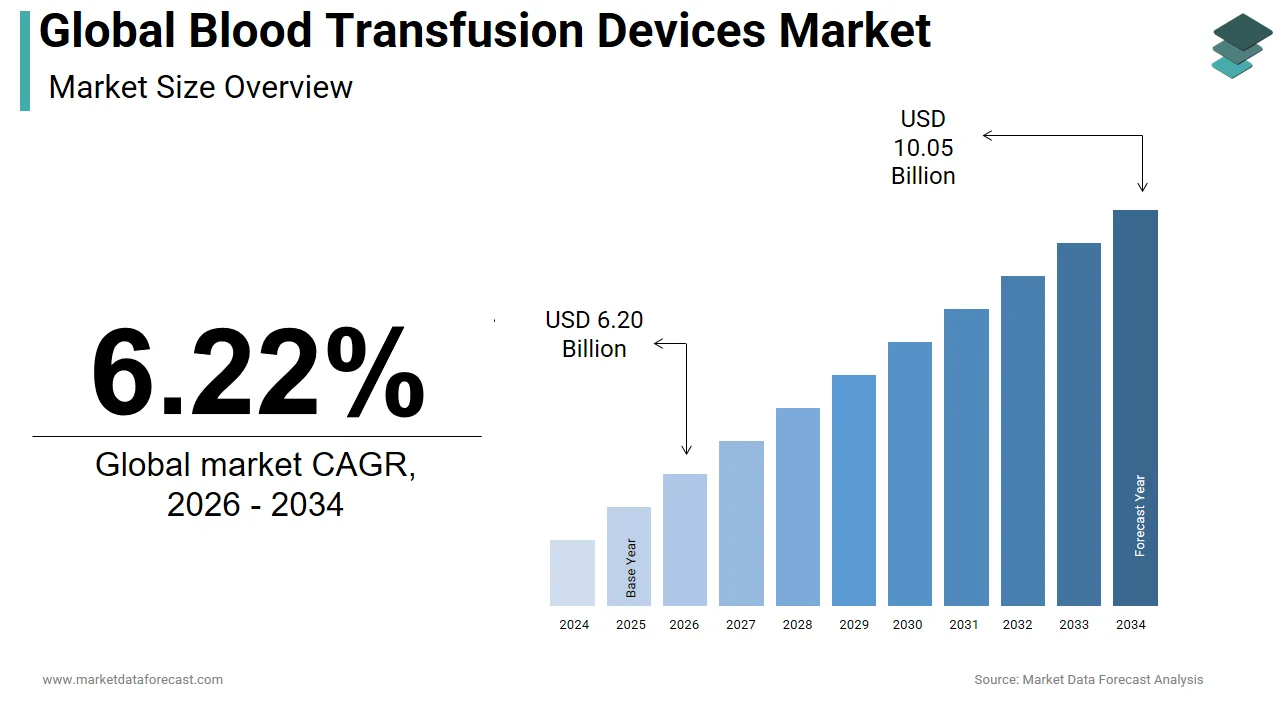
The global blood transfusion devices market was valued at USD 5.84 billion in 2025, is estimated to reach USD 6.20 billion in 2026, and is projected to reach USD 10.05 billion by 2034, growing at a CAGR of 6.22% from 2026 to 2034.
MARKET DRIVERS
The growing need for blood and blood components majorly drives the growth of the blood transfusion devices market.
According to the World Health Organization (WHO), the demand for blood and blood components is projected to increase by 10% to 20% over the next decade due to the rising prevalence of chronic diseases, increasing surgeries globally and the growing aging population worldwide. As a result, the demand for efficient and reliable blood transfusion devices is anticipated to improve significantly in the upcoming years.
Technology breakthroughs continue to drive the development of new blood transfusion devices and fuel the market’s growth rate. In healthcare settings, patient safety continues to be a primary focus. The emphasis on reducing transfusion-related challenges, such as infections and adverse reactions, will boost demand for blood transfusion equipment with safety features and infection control measures. Devices with integrated air detection systems and leukoreduction filters, for example, help to lower the incidence of transfusion-associated complications. Moreover, the development of automated transfusion systems and RFID-based tracking systems have enabled real-time monitoring, improved compatibility, and traceability, leading to improved patient outcomes and greater demand for such devices.
The growing efforts to improve awareness among healthcare professionals and the public about the significance of safe blood transfusion practices support the market growth. Organisations like the World Health Organization (WHO) and the International Federation of Red Cross and Red Crescent Societies (IFRC) actively promote safe transfusion practices and education programs.
The growing demand for blood transfusion procedures due to rising disease prevalence and surgical interventions, increasing number of advancements in blood transfusion technology, such as automated blood processing systems and safety features and rising awareness about the importance of blood safety and the need for reliable and efficient transfusion devices drive the market growth. The growing geriatric population that requires frequent blood transfusions for various medical conditions, technological innovations in blood storage and transportation systems to ensure the integrity and quality of blood products and stringent regulations and guidelines by regulatory authorities to ensure patient safety and prevent transfusion-related complications contribute to the market growth. The growing number of improvements in the healthcare infrastructure in developing regions, rising incidence of blood disorders, such as anemia, hemophilia, and leukemia that require regular transfusions and increasing number of investments by key market players in research and development activities to introduce advanced transfusion devices with improved efficiency, accuracy, and patient comfort further fuel the growth rate of the blood transfusion devices market.
MARKET RESTRAINTS
Stringent regulatory requirements and compliance standards, limited availability and high cost of skilled healthcare professionals trained in blood transfusion procedures primarily hampers the market growth. Concerns regarding the risk of transfusion-transmitted infections, budget constraints and cost pressures on healthcare facilities, challenges associated with blood storage, including temperature control, expiration, and wastage that affect the utilization of transfusion devices and limited awareness and understanding of the benefits and advancements in blood transfusion technology among healthcare providers inhibit the market’s growth rate. Insufficient infrastructure and resources in certain regions, especially in low-income countries, inadequate reimbursement policies and limited coverage for blood transfusion devices and related procedures impede the market growth.
REPORT COVERAGE
| REPORT METRIC | DETAILS |
| Market Size Available | 2025 to 2034 |
| Base Year | 2025 |
| Forecast Period | 2026 to 2034 |
| Segments Covered | By Product Type, End-User, and Region. |
| Various Analyses Covered | Global, Regional, and Country-Level Analysis, Segment-Level Analysis, Drivers, Restraints, Opportunities, Challenges; PESTLE Analysis; Porter’s Five Forces Analysis, Competitive Landscape, Analyst Overview of Investment Opportunities |
| Regions Covered | North America, Europe, Asia Pacific, Latin America, Middle East & Africa |
| Market Leaders Profiled | Becton, Dickinson and Company, Fresenius Kabi AG, Haemonetics Corporation, Terumo Corporation, Grifols, S.A., Abbott Laboratories, Immucor, Inc., Macopharma SA, Kawasumi Laboratories, Inc., and Lmb Technologie GmbH. |
SEGMENT ANALYSIS
By Product Type Insights
Based on product type, the infusion devices segment is estimated to capture a considerable share of the global market during the forecast period. The growing demand for accurate and controlled administration of blood components and fluids during transfusion procedures and increasing number of advancements in infusion device technology, such as smart pumps and programmable features that improve safety and efficiency drive the growth of the infusion devices segment.
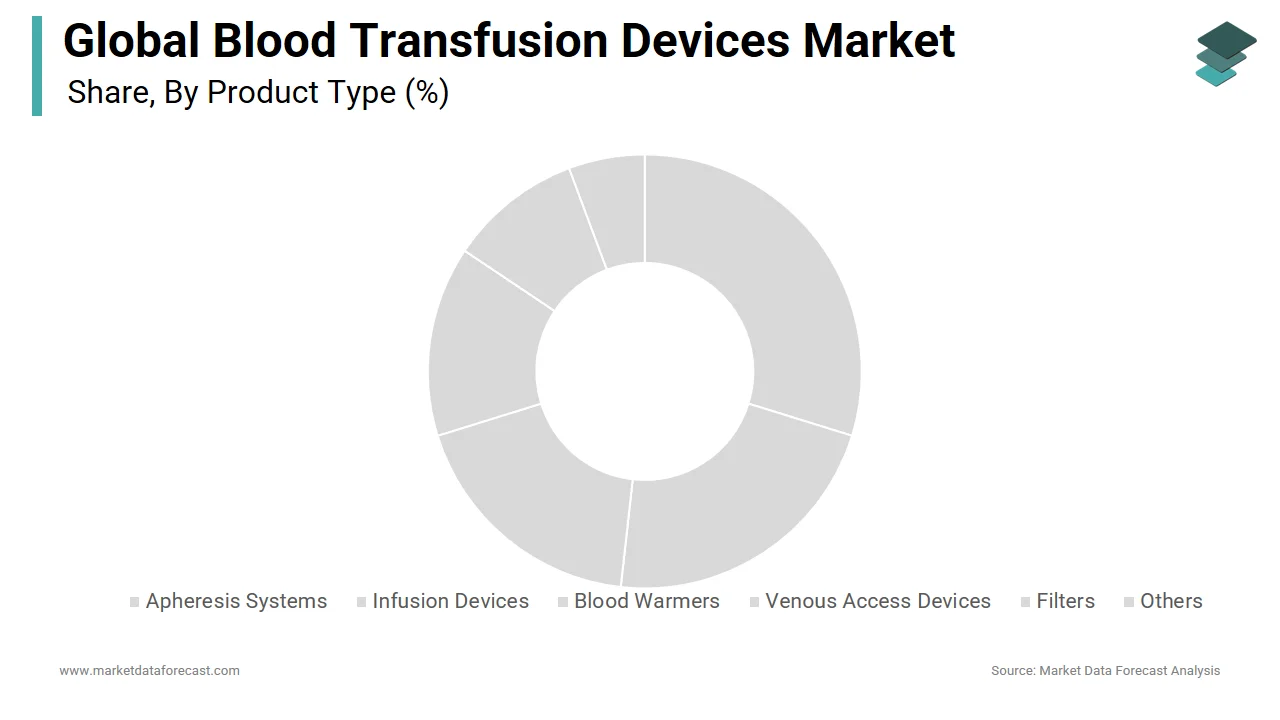
The venous access devices segment is expected to account for a notable share of the global market during the forecast period owing to the growing need for reliable and efficient devices for venous access during blood transfusions and other medical procedures and technological advancements in venous access devices, such as improved catheter materials and designs that enhance patient comfort and minimizing complications.
By End User Insights
Based on end-user, the hospital segment will hold the major share of the worldwide market during the forecast period. High patient volume and the growing need for blood transfusions in various departments and specialties is one of the major factors driving the growth of the hospitals segment in the worldwide market. The growing prevalence of chronic diseases requiring frequent blood transfusions and increasing number of advancements in hospital infrastructure and technology that enable efficient blood transfusion services further boost the growth rate of the hospital segment.
The ASCs segment is anticipated to grow at a noteworthy CAGR during the forecast period. Factors such as growing popularity of outpatient procedures and surgeries, rising preference for minimally invasive procedures that may require blood transfusions and growing focus on cost-effective healthcare delivery and shorter hospital stays drive the growth of the ambulatory surgical centers segment in the global market.
REGIONAL ANALYSIS
North America led the blood transfusion devices market worldwide in 2024 and the lead of the North American region in the global market is most likely to continue throughout the forecast period. The availability of advanced healthcare infrastructure, high healthcare expenditure, growing prevalence of chronic diseases requiring blood transfusions and stringent regulatory standards for blood safety primarily drive the North American market growth. Technological advancements in blood transfusion devices, rising awareness about the importance of blood safety and transfusion practices and the presence of well-established blood banking systems further fuel the growth rate of the North American market. The U.S. is predicted to occupy the major share of the North American market during the forecast period, followed by Canada. The United States has a well-established blood banking system with numerous blood centers and organizations.
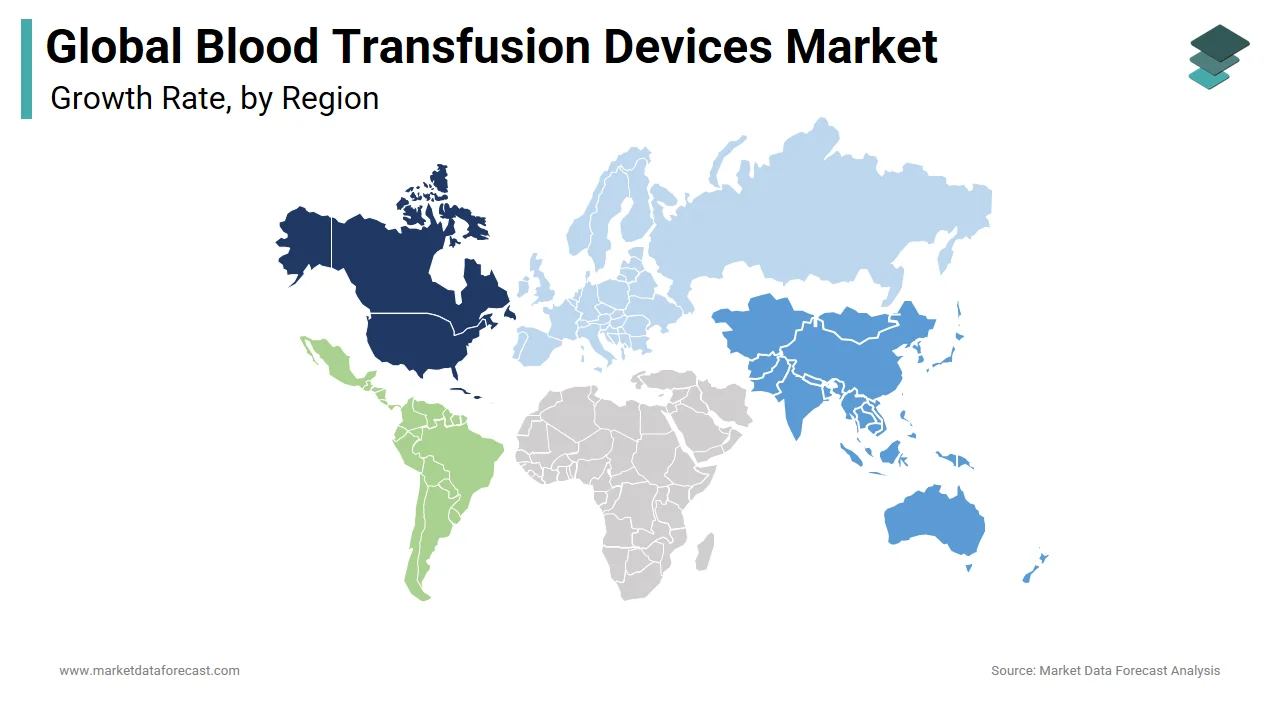
Europe is a prominent regional market for blood transfusion devices and is anticipated to account for a substantial share of the worldwide market during the forecast period. The growing demand for blood transfusions due to an aging population, increasing number of initiatives from the European governments to ensure blood safety and regulate transfusion practices and rising number of blood transfusion procedures in hospitals and healthcare facilities drive the European market growth. The growing number of collaborations between blood centers and hospitals to streamline blood supply and transfusion processes, rapid adoption of advanced blood transfusion devices for enhanced patient safety and rising awareness about voluntary blood donation and blood transfusion services further contribute to the European market growth. The UK, Germany and Spain are expected to account for the major share of the European market during the forecast period.
APAC is expected to register the fastest CAGR among all the regions worldwide during the forecast period. The presence of large patient population, increasing prevalence of blood disorders, increasing number of improvements in healthcare infrastructure and access to healthcare services, growing healthcare expenditure and government initiatives to strengthen blood transfusion services primarily propel the APAC market growth. The rising awareness about blood safety and the need for reliable transfusion devices, expansion of blood banking facilities and blood donor recruitment programs and growing demand for blood transfusion devices in emerging economies like China and India contribute to the APAC market growth. China held the leading share of the APAC market in 2022, followed by India.
Latin America is estimated to witness a healthy growth rate in the coming years. Factors such as growing prevalence of blood-related disorders and chronic diseases, government initiatives to improve blood safety and transfusion practices and rising demand for advanced blood transfusion devices in hospitals and clinics drive the Latin American market growth.
MEA is anticipated to account for a moderate share of the global market during the forecast period.
KEY MARKET PLAYERS
Some of the companies that are playing a dominating role in the global blood transfusion devices market include
- Becton, Dickinson and Company
- Fresenius Kabi AG
- Haemonetics Corporation
- Terumo Corporation
- Grifols, S.A.
- Abbott Laboratories
- Immucor, Inc.
- Macopharma SA
- Kawasumi Laboratories, Inc.
- Lmb Technologie GmbH
GLOBAL BLOOD TRANSFUSION DEVICES MARKET NEWS
- In June 2023, the Joint Clinical Research Centre (JCRC) launched the first-ever advanced blood irradiator system worth 1.4 billion in Uganda, called ‘The RS3400 system”. The machine is designed for the purpose of irradiation (meaning purification through radiation) of blood products to reduce the risk of blood infections and rejections before they are given to eligible patients.
MARKET SEGMENTATION
This research report on the global blood transfusion devices market has been segmented and sub-segmented based on product type, end-user, and region.
By Product Type
- Apheresis Systems
- Infusion Devices
- Blood Warmers
- Venous Access Devices
- Filters
- Others
By End User
- Hospital
- Ambulatory Surgical Centers
- Others
By Region
- North America
- Europe
- APAC
- Latin America
- Middle East and Africa